

A SOP Template for Technical Support Escalation provides a structured framework to ensure efficient handling of unresolved technical issues by defining clear escalation paths, roles, and response times. This template standardizes communication and decision-making processes, minimizing downtime and improving customer satisfaction. Implementing a well-designed SOP enhances team coordination and ensures consistent, timely resolutions for complex support cases.
Initial Issue Logging and Ticket Creation
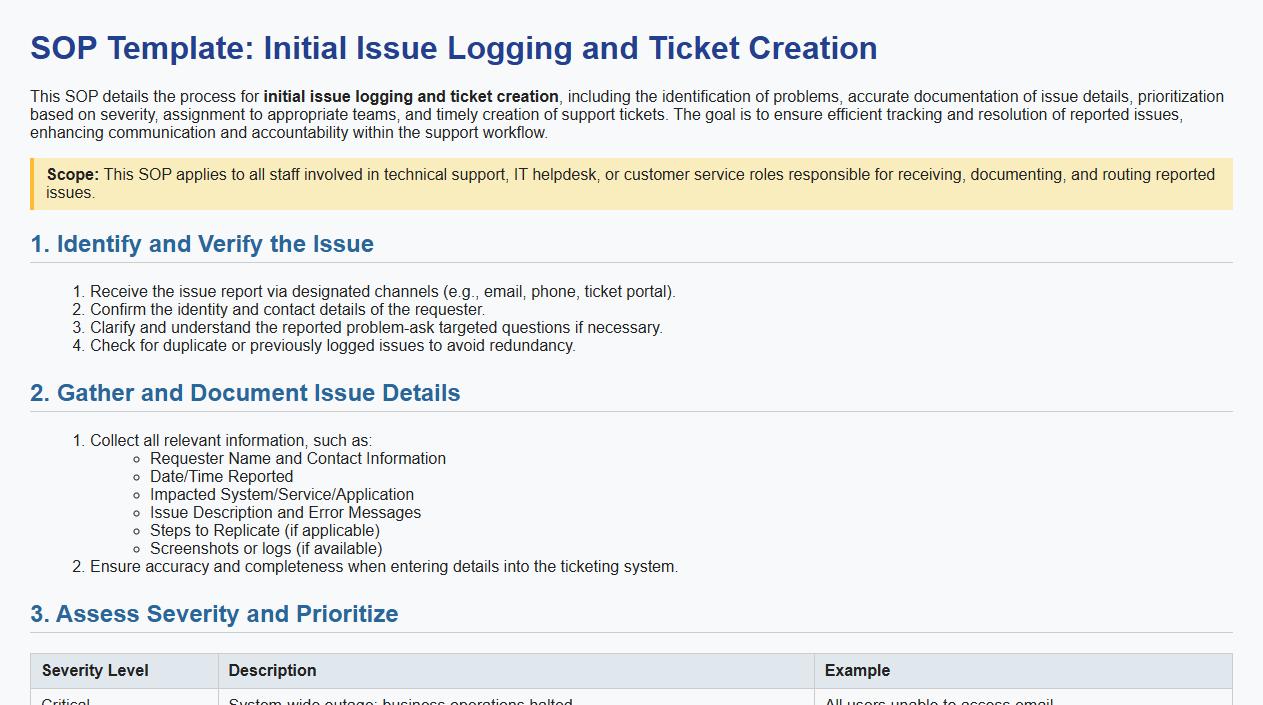
This SOP details the process for initial issue logging and ticket creation, including the identification of problems, accurate documentation of issue details, prioritization based on severity, assignment to appropriate teams, and timely creation of support tickets. The goal is to ensure efficient tracking and resolution of reported issues, enhancing communication and accountability within the support workflow.
Problem Diagnosis and Troubleshooting Checklist
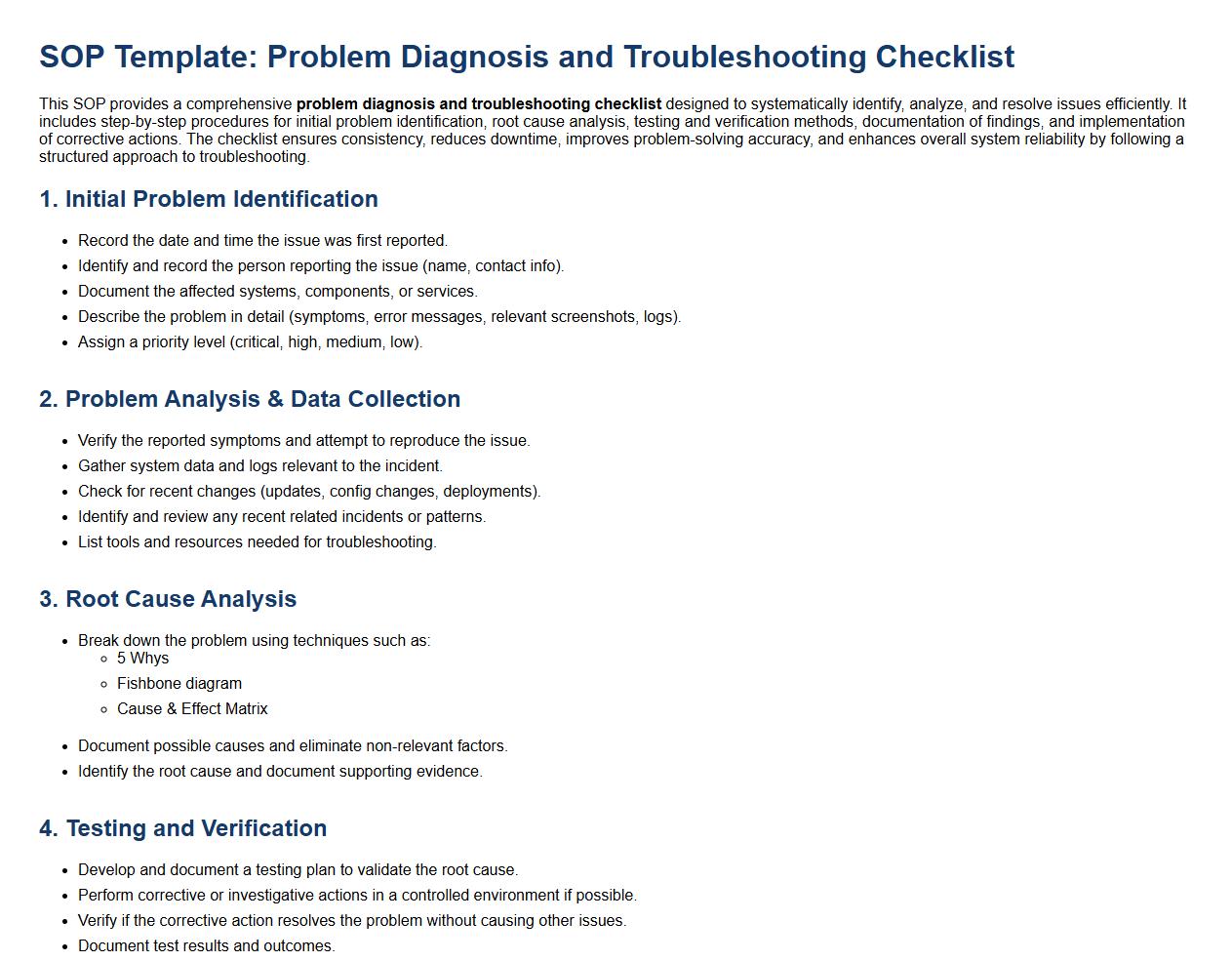
This SOP provides a comprehensive problem diagnosis and troubleshooting checklist designed to systematically identify, analyze, and resolve issues efficiently. It includes step-by-step procedures for initial problem identification, root cause analysis, testing and verification methods, documentation of findings, and implementation of corrective actions. The checklist ensures consistency, reduces downtime, improves problem-solving accuracy, and enhances overall system reliability by following a structured approach to troubleshooting.
Tiered Escalation Criteria and Trigger Points
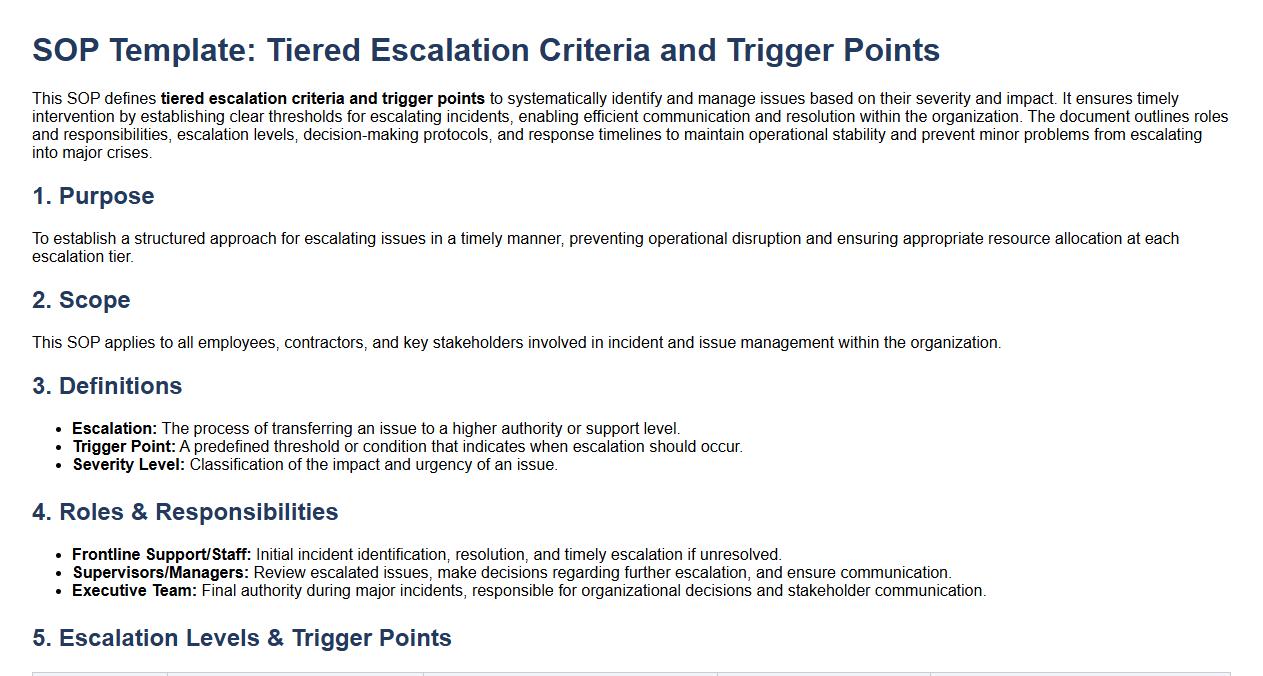
This SOP defines tiered escalation criteria and trigger points to systematically identify and manage issues based on their severity and impact. It ensures timely intervention by establishing clear thresholds for escalating incidents, enabling efficient communication and resolution within the organization. The document outlines roles and responsibilities, escalation levels, decision-making protocols, and response timelines to maintain operational stability and prevent minor problems from escalating into major crises.
Internal Communication and Handover Protocols
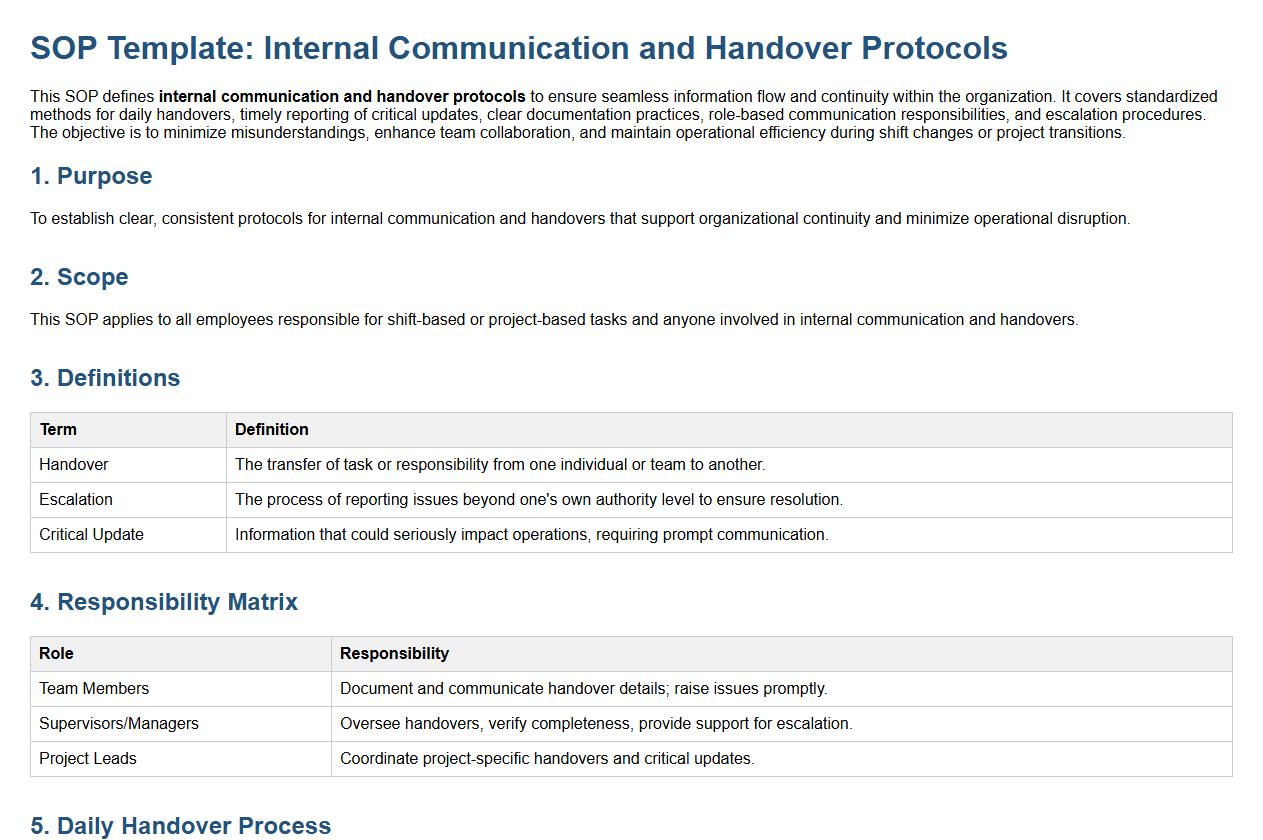
This SOP defines internal communication and handover protocols to ensure seamless information flow and continuity within the organization. It covers standardized methods for daily handovers, timely reporting of critical updates, clear documentation practices, role-based communication responsibilities, and escalation procedures. The objective is to minimize misunderstandings, enhance team collaboration, and maintain operational efficiency during shift changes or project transitions.
Required Documentation for Escalation
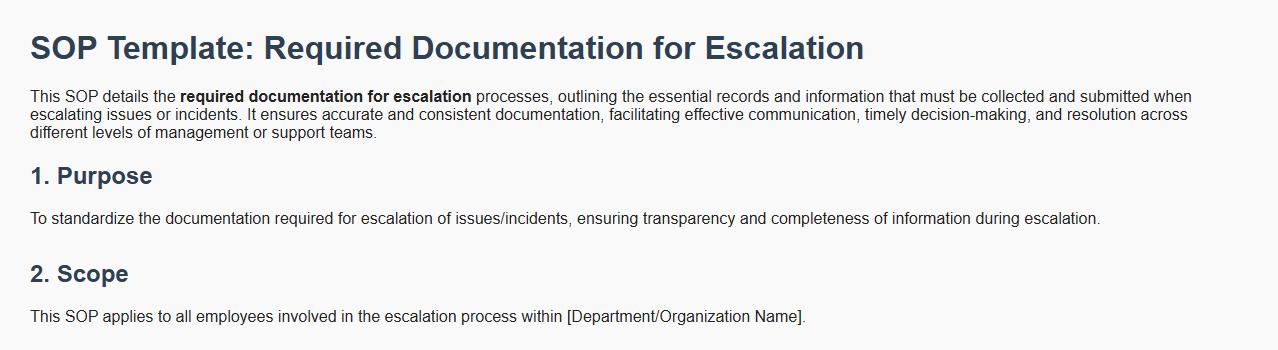
This SOP details the required documentation for escalation processes, outlining the essential records and information that must be collected and submitted when escalating issues or incidents. It ensures accurate and consistent documentation, facilitating effective communication, timely decision-making, and resolution across different levels of management or support teams.
Service Level Agreement (SLA) Adherence Guidelines
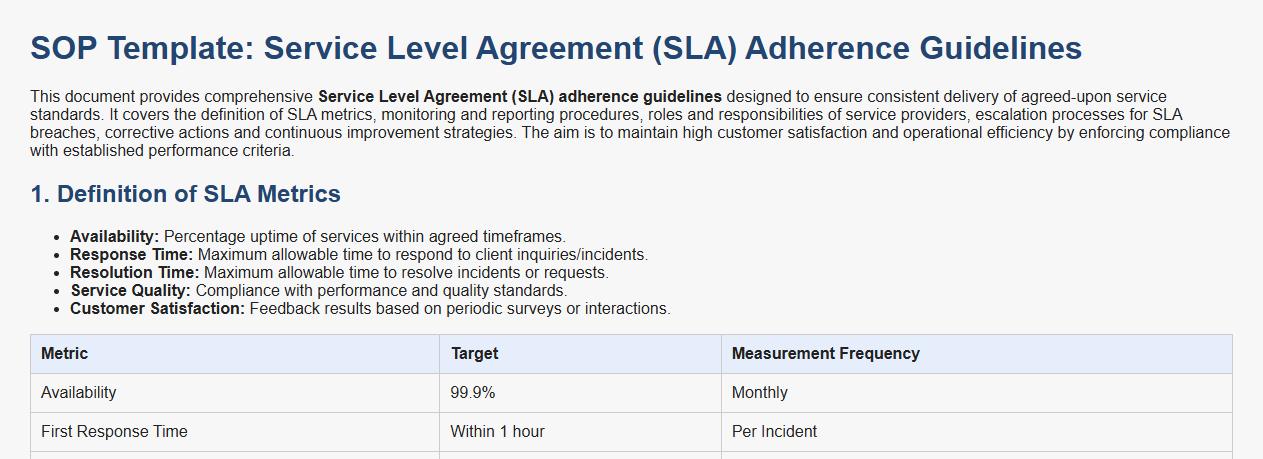
This document provides comprehensive Service Level Agreement (SLA) adherence guidelines designed to ensure consistent delivery of agreed-upon service standards. It covers the definition of SLA metrics, monitoring and reporting procedures, roles and responsibilities of service providers, escalation processes for SLA breaches, corrective actions and continuous improvement strategies. The aim is to maintain high customer satisfaction and operational efficiency by enforcing compliance with established performance criteria.
Customer Notification and Status Update Procedures
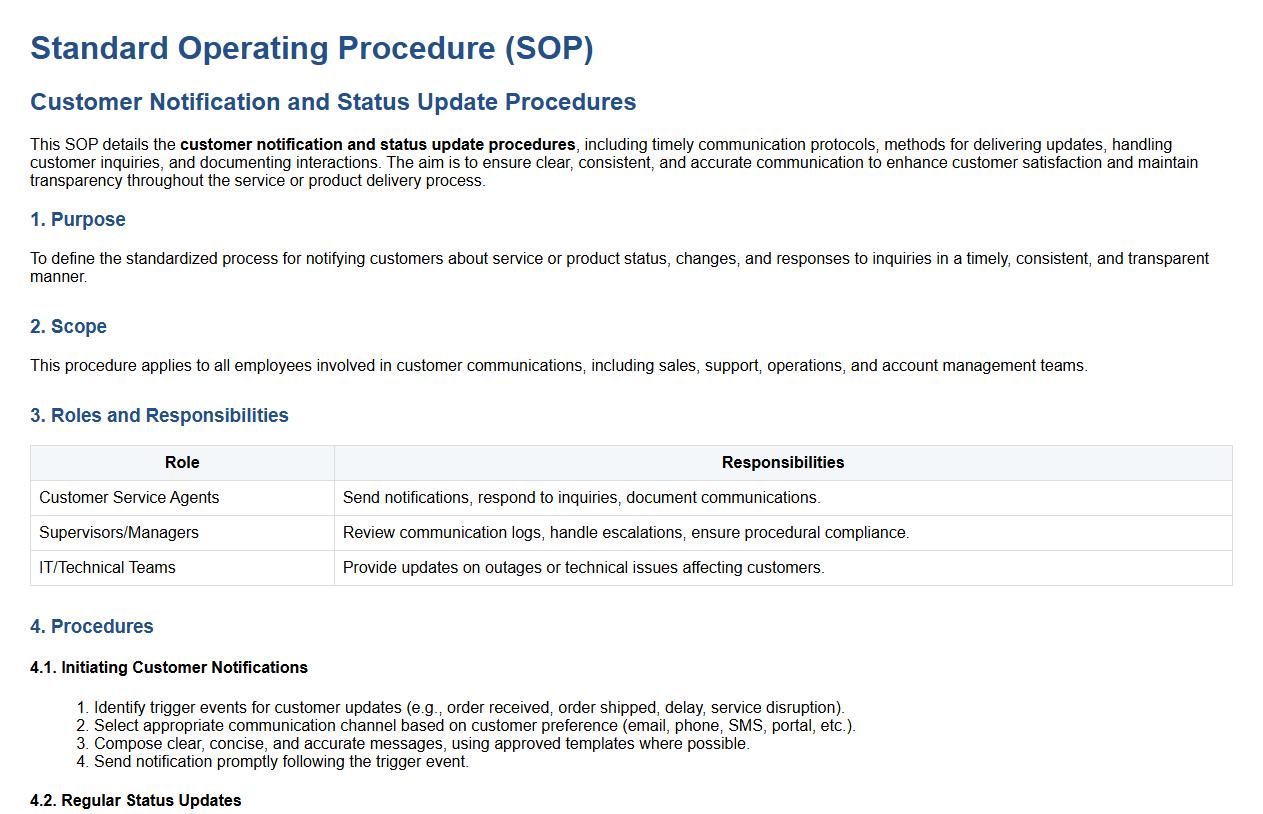
This SOP details the customer notification and status update procedures, including timely communication protocols, methods for delivering updates, handling customer inquiries, and documenting interactions. The aim is to ensure clear, consistent, and accurate communication to enhance customer satisfaction and maintain transparency throughout the service or product delivery process.
Cross-Department Collaboration Framework
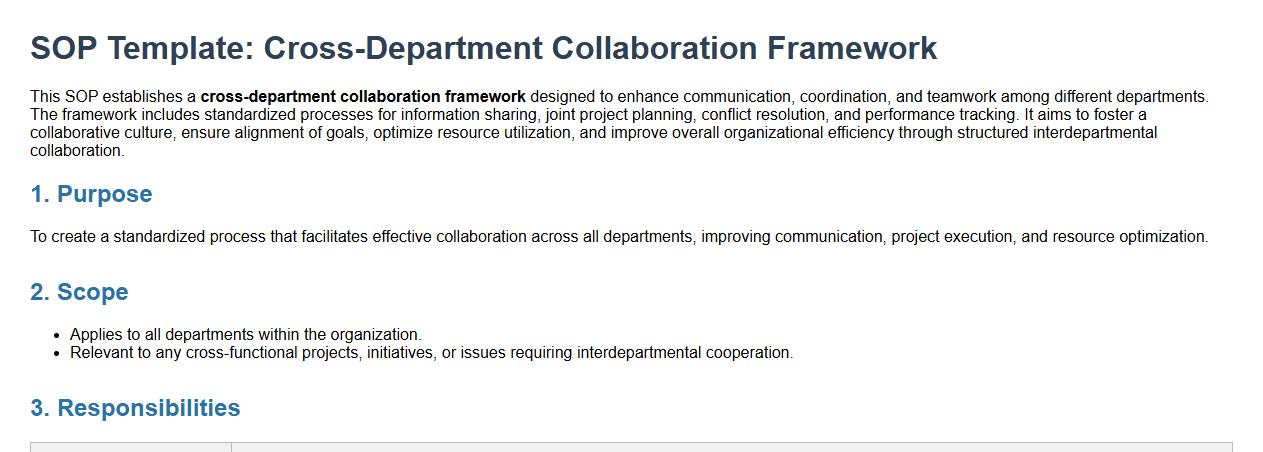
This SOP establishes a cross-department collaboration framework designed to enhance communication, coordination, and teamwork among different departments. The framework includes standardized processes for information sharing, joint project planning, conflict resolution, and performance tracking. It aims to foster a collaborative culture, ensure alignment of goals, optimize resource utilization, and improve overall organizational efficiency through structured interdepartmental collaboration.
Resolution Confirmation and Closure Verification
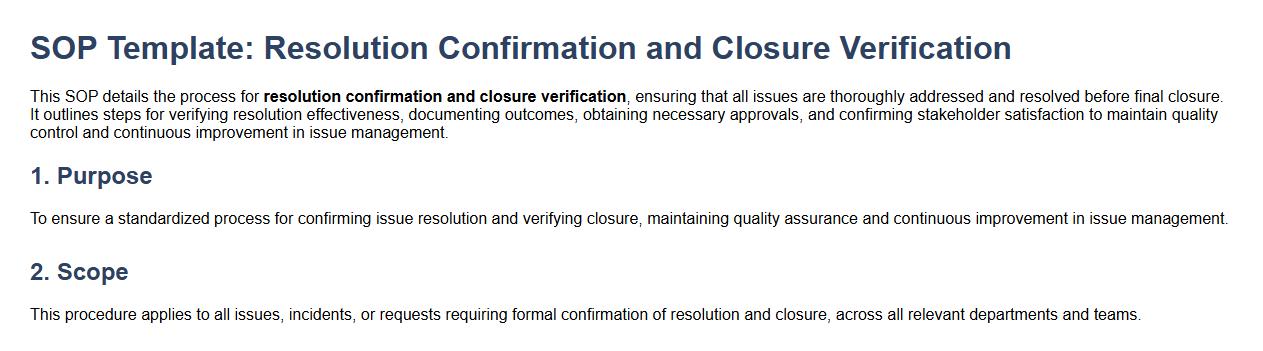
This SOP details the process for resolution confirmation and closure verification, ensuring that all issues are thoroughly addressed and resolved before final closure. It outlines steps for verifying resolution effectiveness, documenting outcomes, obtaining necessary approvals, and confirming stakeholder satisfaction to maintain quality control and continuous improvement in issue management.
Post-Escalation Review and Feedback Collection
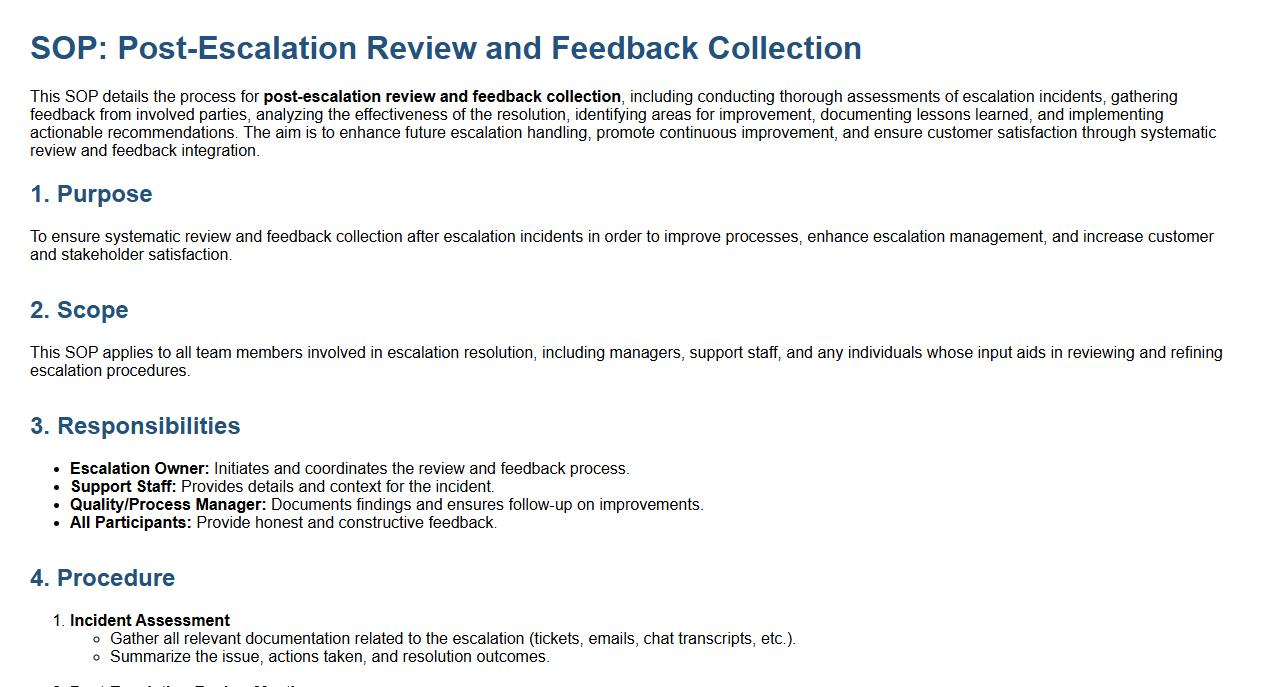
This SOP details the process for post-escalation review and feedback collection, including conducting thorough assessments of escalation incidents, gathering feedback from involved parties, analyzing the effectiveness of the resolution, identifying areas for improvement, documenting lessons learned, and implementing actionable recommendations. The aim is to enhance future escalation handling, promote continuous improvement, and ensure customer satisfaction through systematic review and feedback integration.
What are the specific criteria for escalating a technical support issue according to the SOP?
The criteria for escalating a technical support issue include unresolved problems beyond the first response team's capability. Issues must meet predefined severity levels, such as critical system failures or repeated outages. Prompt escalation ensures timely intervention by specialized technical experts.
Who are the designated escalation points and their roles in the escalation process?
The designated escalation points include Level 2 and Level 3 support engineers, as well as technical managers. Each point is responsible for progressively handling more complex issues and providing expert resolution. Managers oversee the process and coordinate resources to ensure issue closure.
What documentation and information must be included when submitting an escalation request?
An escalation request must include detailed problem description, troubleshooting steps taken, and system logs or error codes. Additionally, contact information and impact assessment are critical for prioritization. Proper documentation enables efficient issue analysis and resolution.
What are the defined timeframes for each escalation level outlined in the SOP?
The SOP specifies clear timeframes for escalation to maintain service quality, such as initial response within 30 minutes and Level 2 escalation within 2 hours. Further escalation to Level 3 occurs if the issue remains unresolved after 4 hours. These timeframes ensure timely resolution and minimize downtime.
How does the SOP ensure communication and resolution tracking during and after escalation?
The SOP mandates regular status updates and communication via email or ticketing systems throughout the escalation process. Resolution tracking is managed through documented ticket history and follow-up reviews post-incident. This approach guarantees transparency and continuous improvement.