
A SOP Template for Technical Support Procedures streamlines the process of troubleshooting and resolving customer issues efficiently. It ensures consistent communication and step-by-step guidelines for technical support teams, enhancing service quality and reducing resolution time. This template promotes standardized workflows and helps maintain detailed records of support activities.
Issue identification and ticket logging.
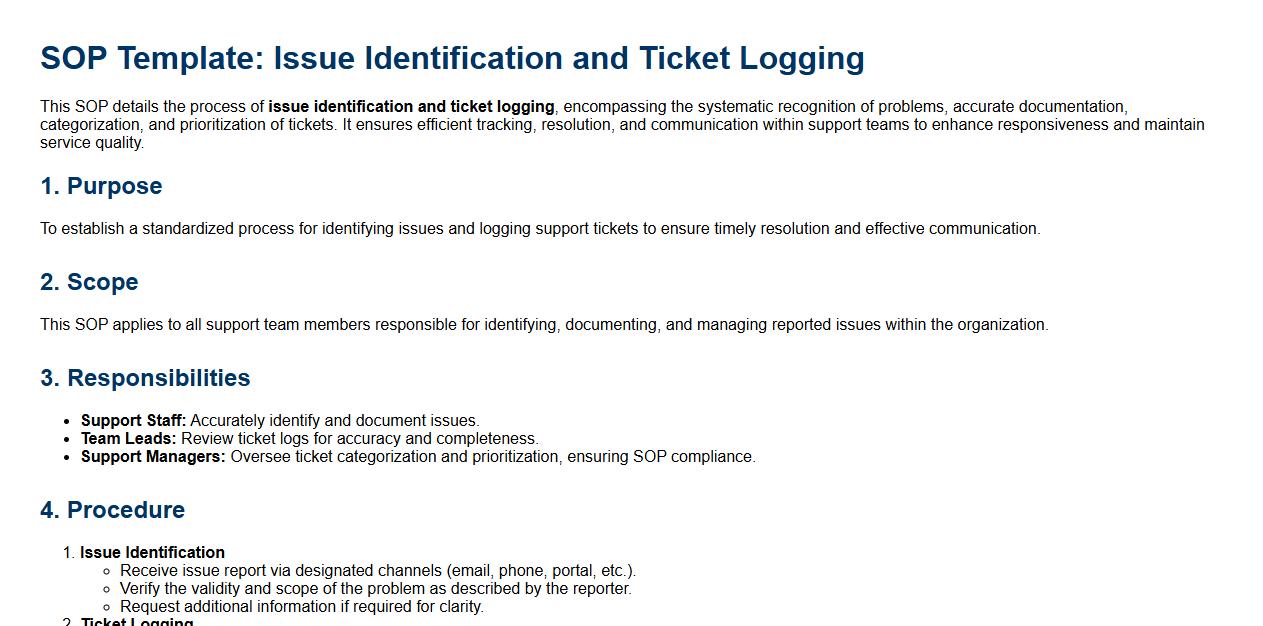
This SOP details the process of issue identification and ticket logging, encompassing the systematic recognition of problems, accurate documentation, categorization, and prioritization of tickets. It ensures efficient tracking, resolution, and communication within support teams to enhance responsiveness and maintain service quality.
Initial customer contact and information gathering.
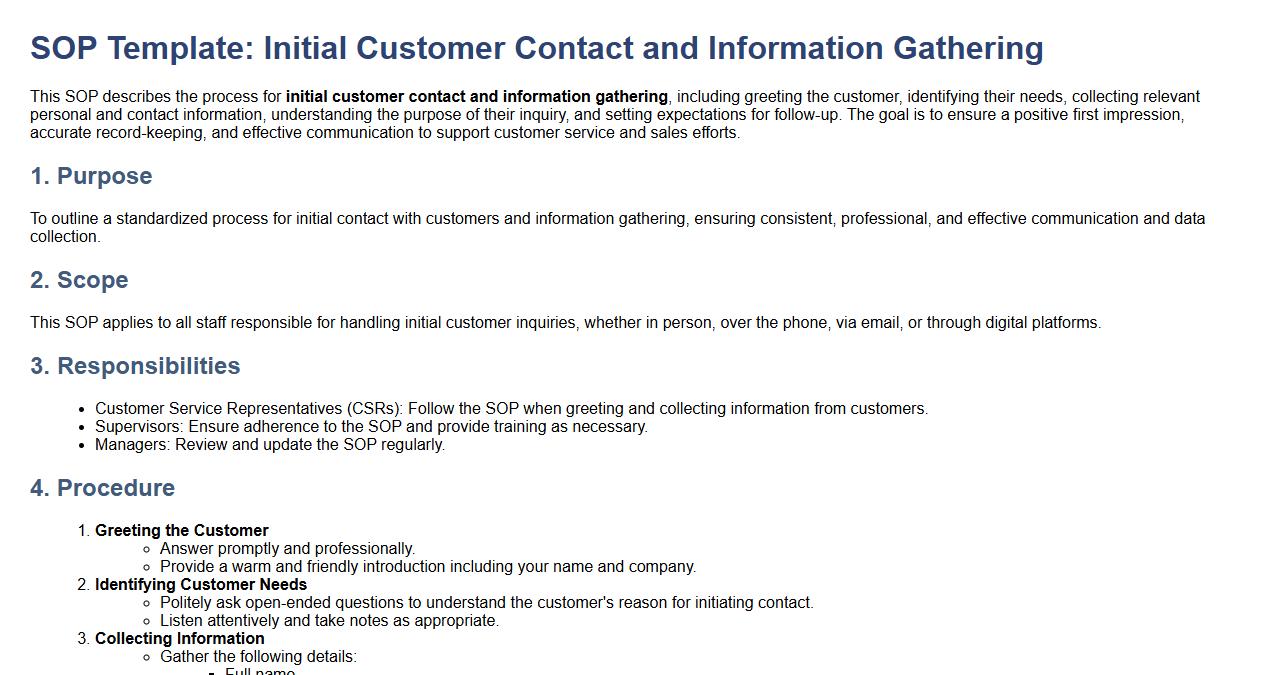
This SOP describes the process for initial customer contact and information gathering, including greeting the customer, identifying their needs, collecting relevant personal and contact information, understanding the purpose of their inquiry, and setting expectations for follow-up. The goal is to ensure a positive first impression, accurate record-keeping, and effective communication to support customer service and sales efforts.
Tiered issue triage and escalation process.
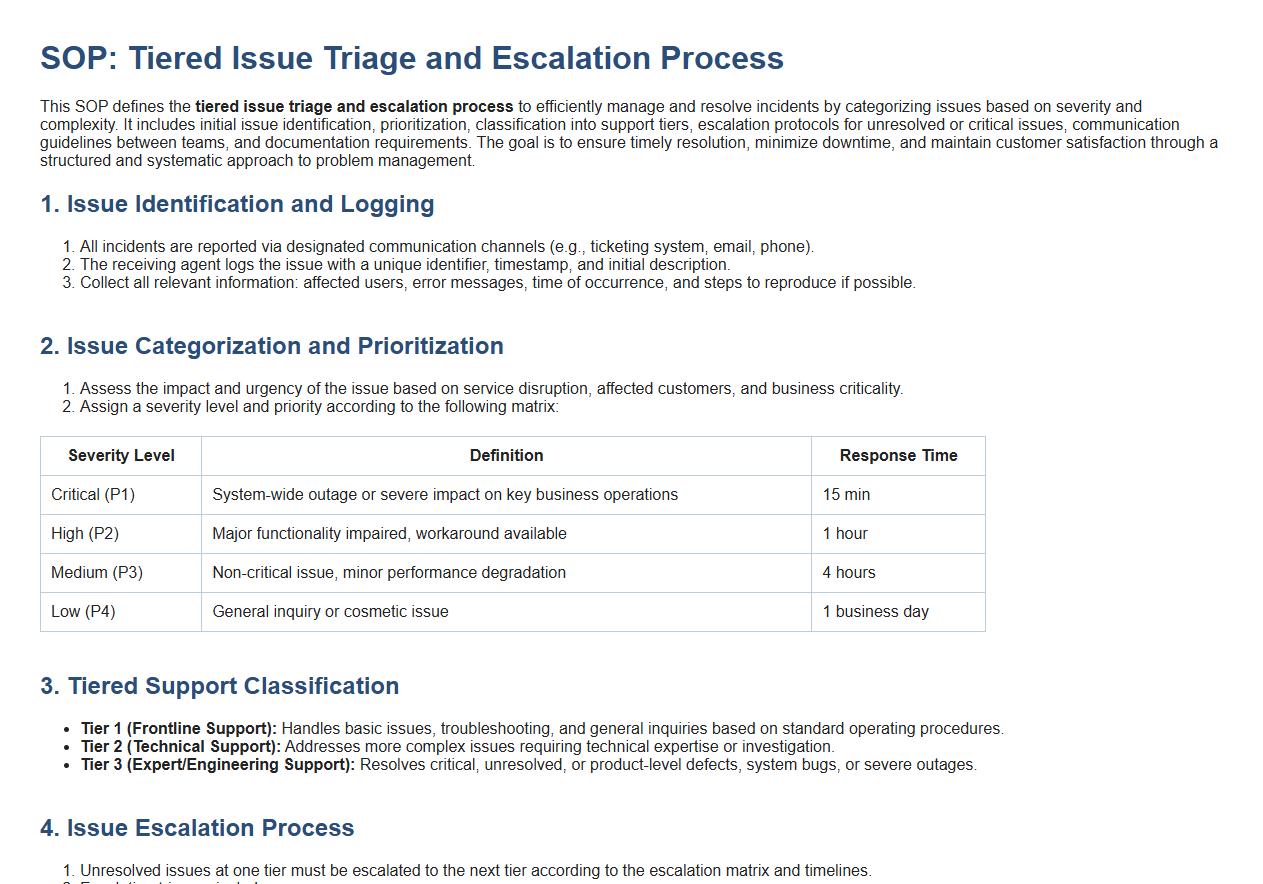
This SOP defines the tiered issue triage and escalation process to efficiently manage and resolve incidents by categorizing issues based on severity and complexity. It includes initial issue identification, prioritization, classification into support tiers, escalation protocols for unresolved or critical issues, communication guidelines between teams, and documentation requirements. The goal is to ensure timely resolution, minimize downtime, and maintain customer satisfaction through a structured and systematic approach to problem management.
Remote troubleshooting and diagnostics procedure.
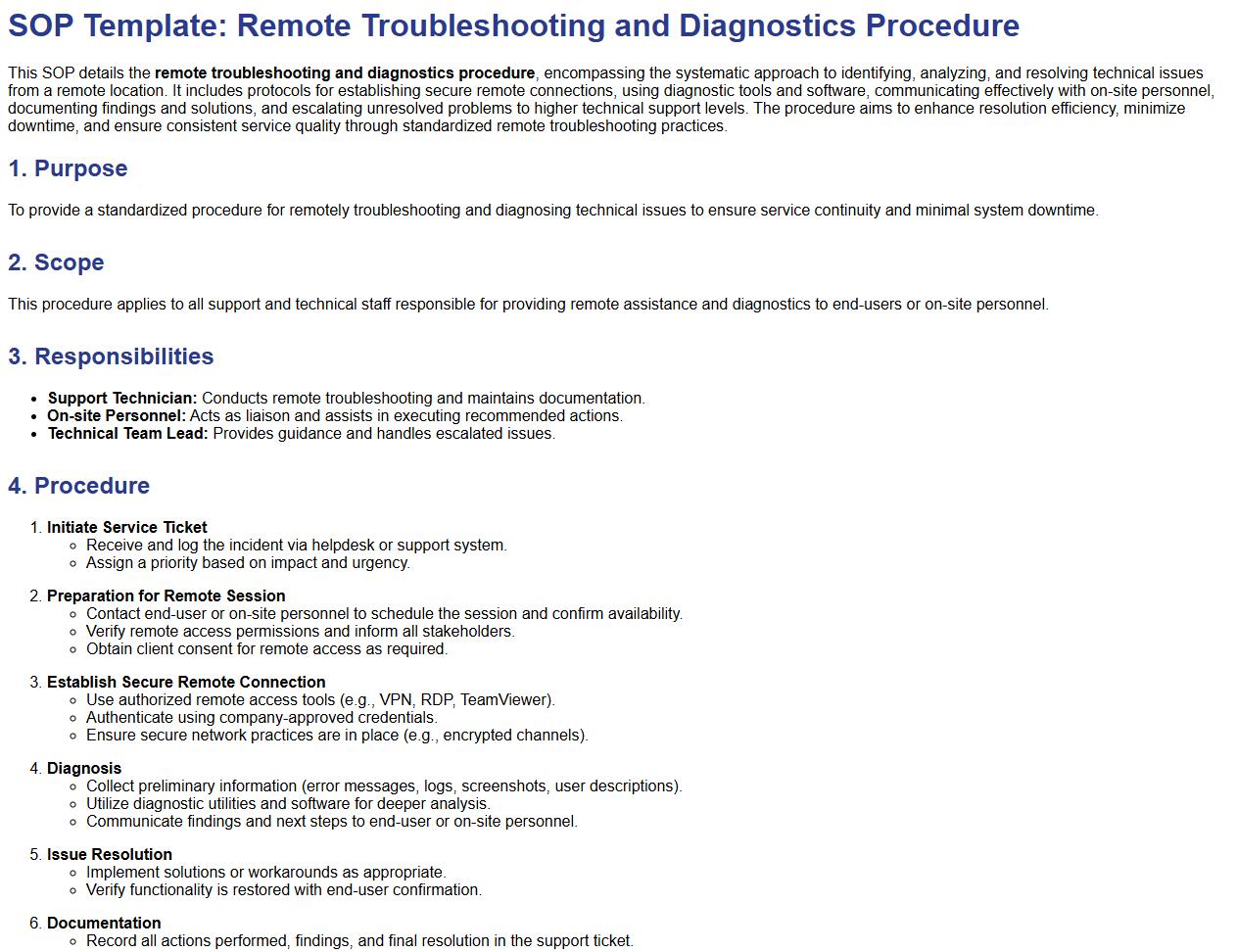
This SOP details the remote troubleshooting and diagnostics procedure, encompassing the systematic approach to identifying, analyzing, and resolving technical issues from a remote location. It includes protocols for establishing secure remote connections, using diagnostic tools and software, communicating effectively with on-site personnel, documenting findings and solutions, and escalating unresolved problems to higher technical support levels. The procedure aims to enhance resolution efficiency, minimize downtime, and ensure consistent service quality through standardized remote troubleshooting practices.
On-site support visit scheduling and execution.
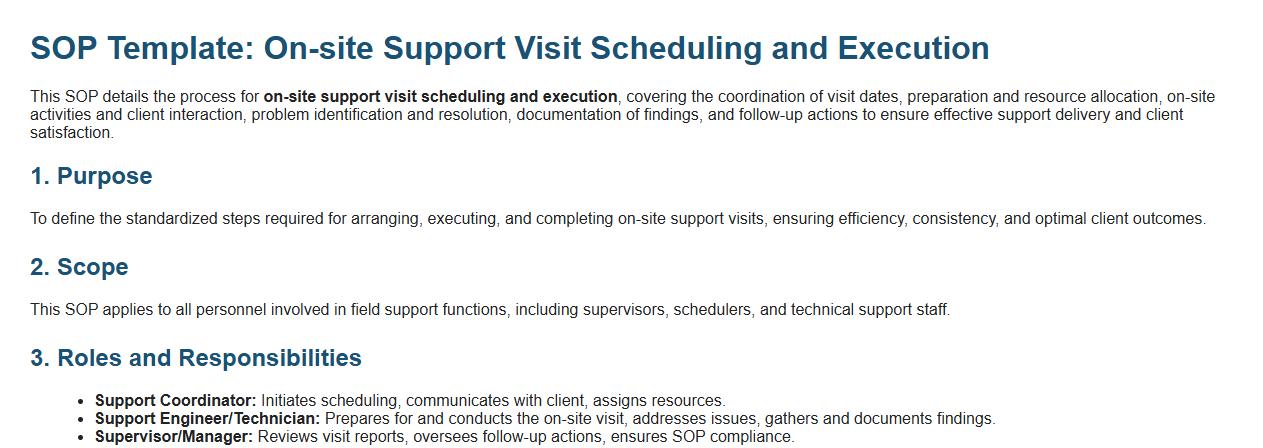
This SOP details the process for on-site support visit scheduling and execution, covering the coordination of visit dates, preparation and resource allocation, on-site activities and client interaction, problem identification and resolution, documentation of findings, and follow-up actions to ensure effective support delivery and client satisfaction.
Parts ordering and replacement authorization process.
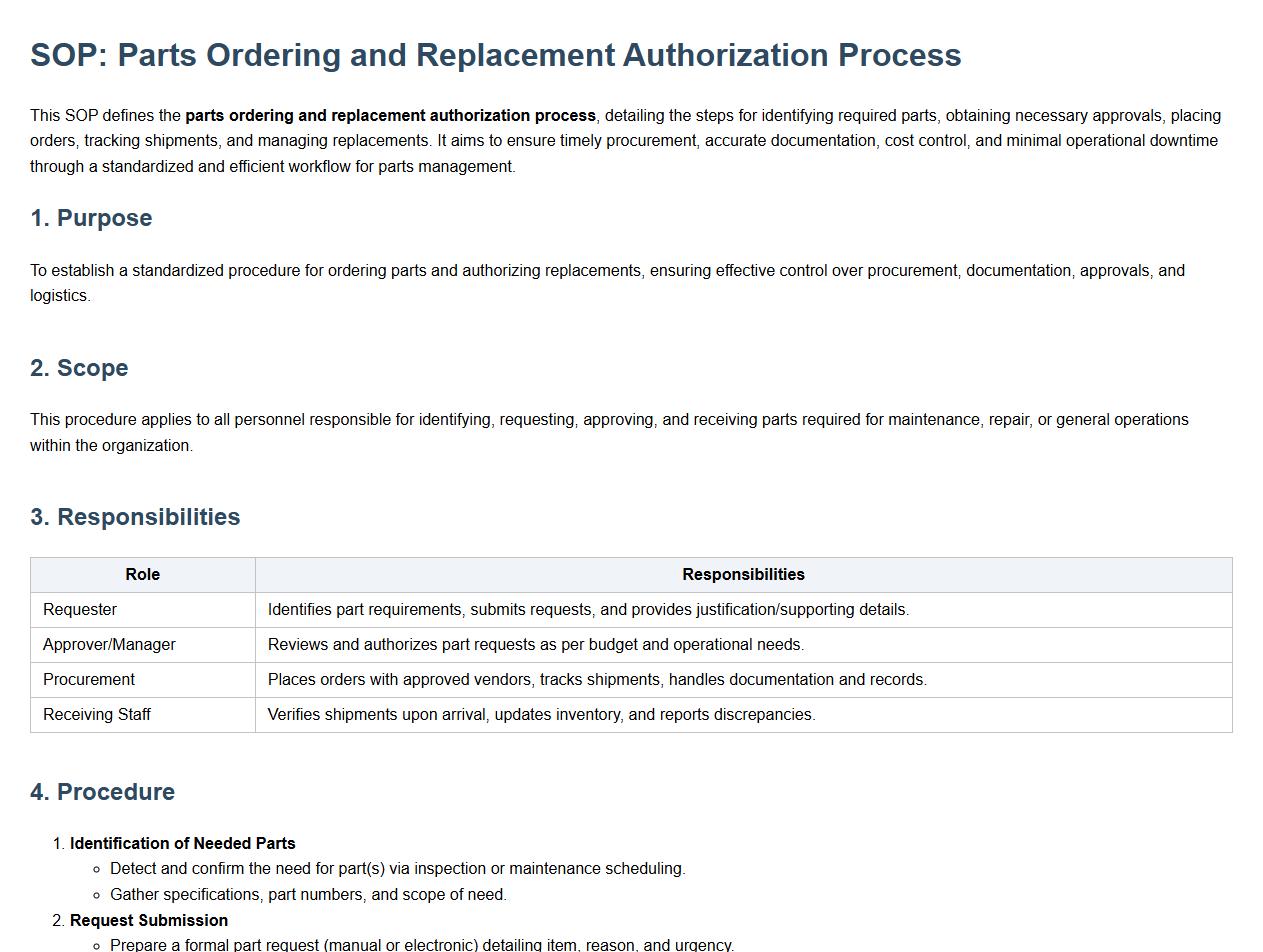
This SOP defines the parts ordering and replacement authorization process, detailing the steps for identifying required parts, obtaining necessary approvals, placing orders, tracking shipments, and managing replacements. It aims to ensure timely procurement, accurate documentation, cost control, and minimal operational downtime through a standardized and efficient workflow for parts management.
Resolution documentation and solution communication.
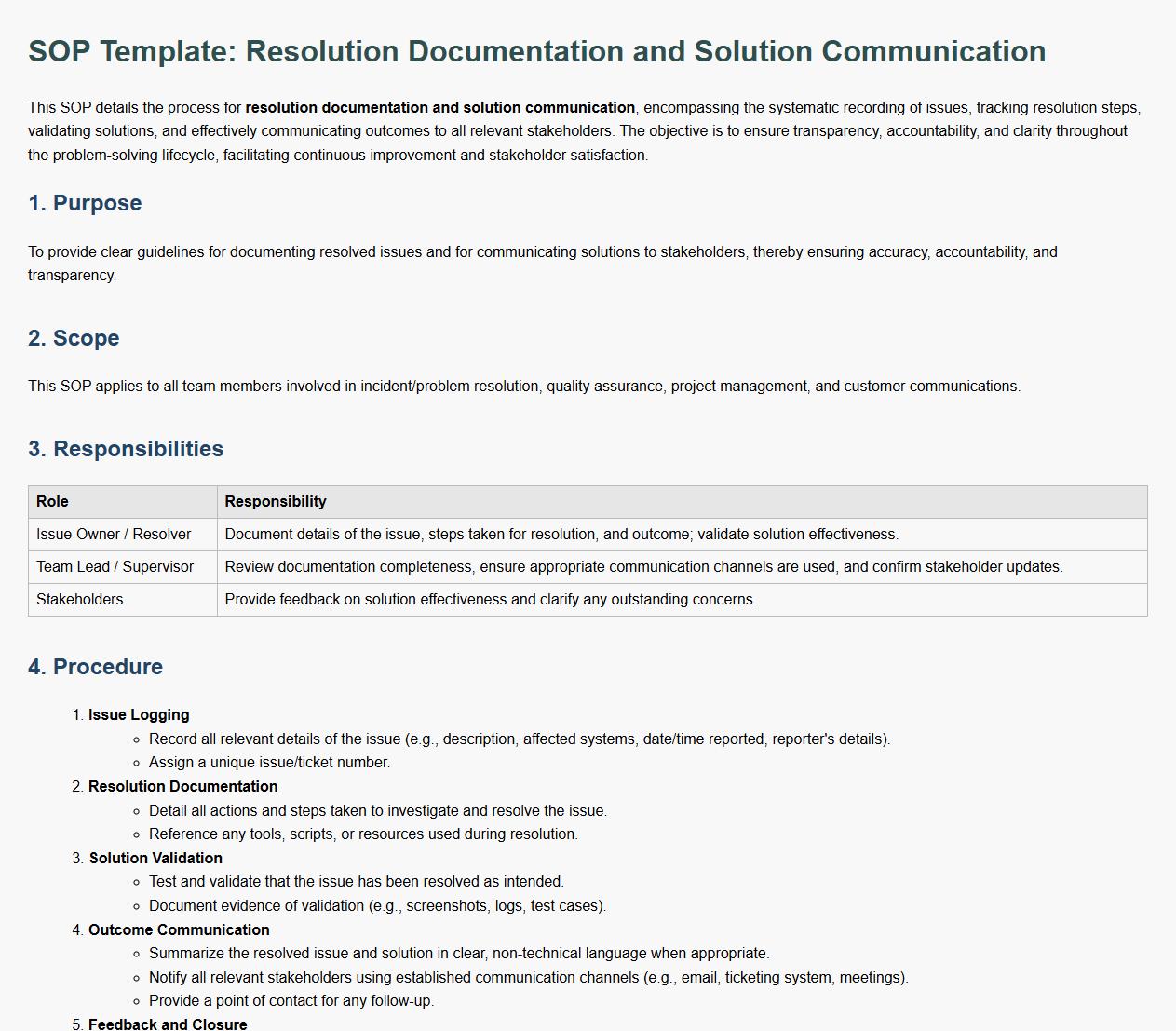
This SOP details the process for resolution documentation and solution communication, encompassing the systematic recording of issues, tracking resolution steps, validating solutions, and effectively communicating outcomes to all relevant stakeholders. The objective is to ensure transparency, accountability, and clarity throughout the problem-solving lifecycle, facilitating continuous improvement and stakeholder satisfaction.
Customer feedback collection and review.
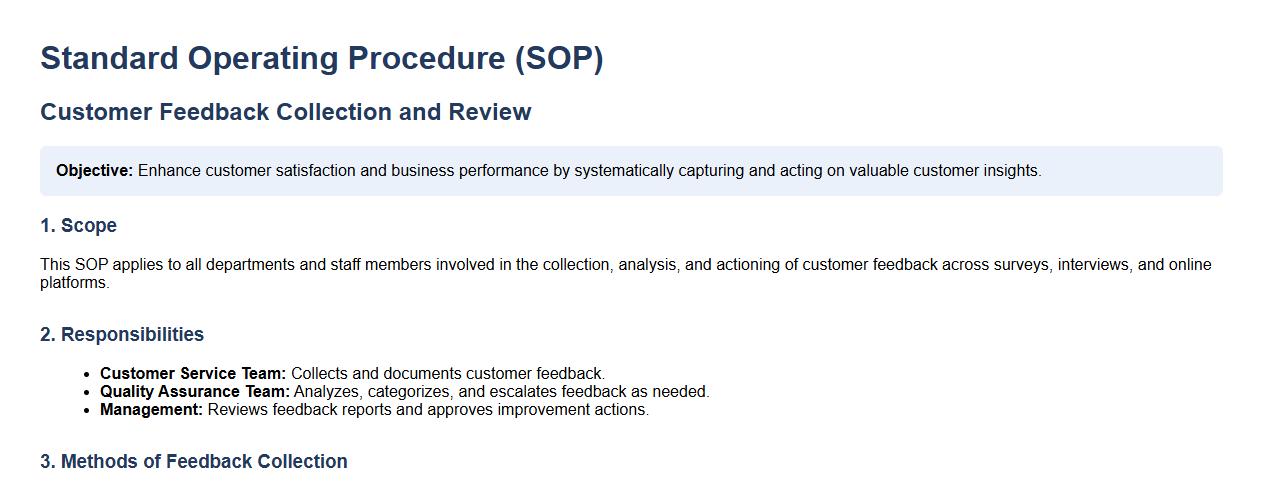
This SOP details the customer feedback collection and review process, including methods for gathering feedback through surveys, interviews, and online platforms, procedures for analyzing and categorizing customer responses, steps for addressing and resolving customer concerns, and guidelines for using feedback to improve products and services. The objective is to enhance customer satisfaction and business performance by systematically capturing and acting on valuable customer insights.
Post-resolution follow-up and closure confirmation.
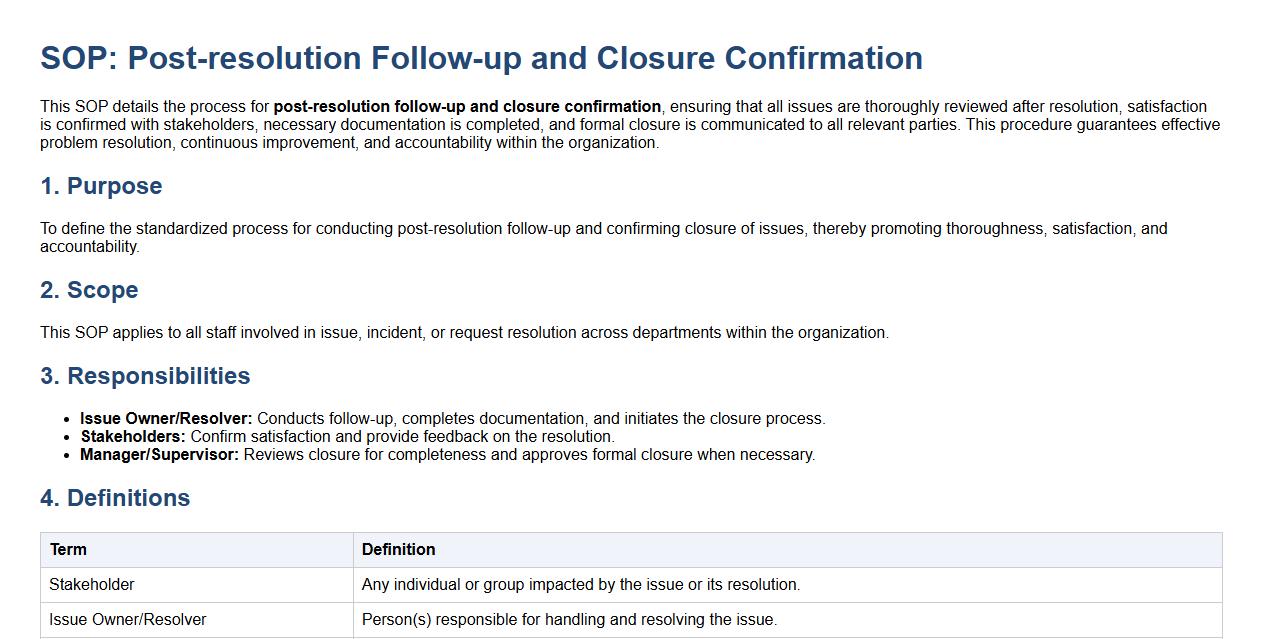
This SOP details the process for post-resolution follow-up and closure confirmation, ensuring that all issues are thoroughly reviewed after resolution, satisfaction is confirmed with stakeholders, necessary documentation is completed, and formal closure is communicated to all relevant parties. This procedure guarantees effective problem resolution, continuous improvement, and accountability within the organization.
SOP review, update, and continuous improvement protocol.
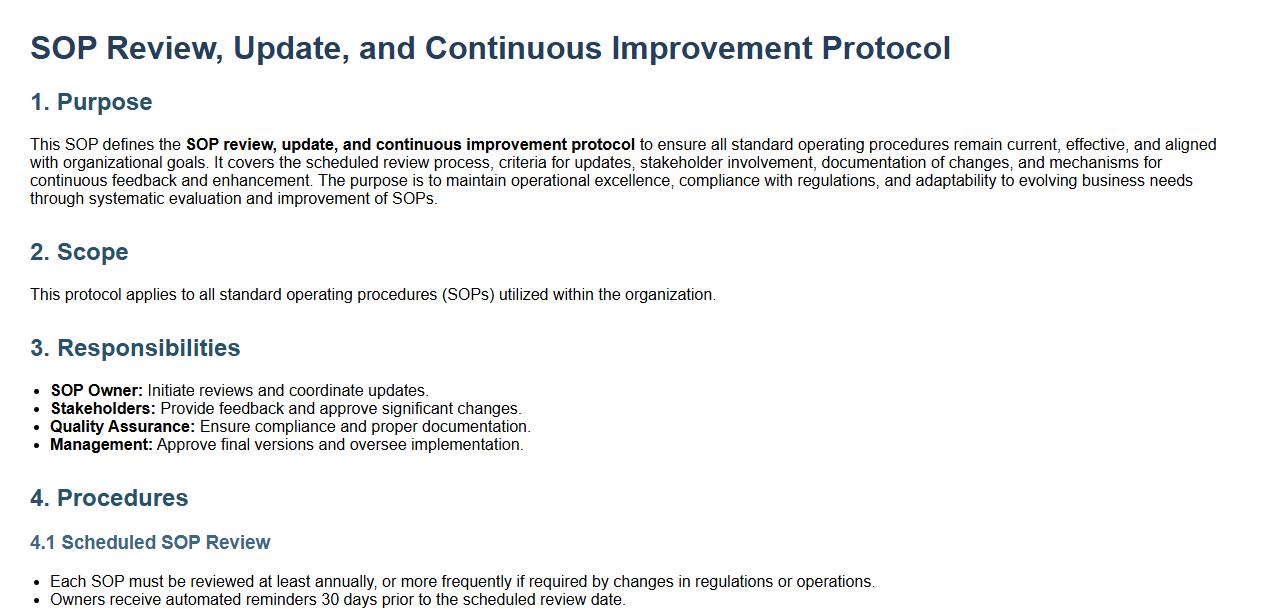
This SOP defines the SOP review, update, and continuous improvement protocol to ensure all standard operating procedures remain current, effective, and aligned with organizational goals. It covers the scheduled review process, criteria for updates, stakeholder involvement, documentation of changes, and mechanisms for continuous feedback and enhancement. The purpose is to maintain operational excellence, compliance with regulations, and adaptability to evolving business needs through systematic evaluation and improvement of SOPs.
What are the key steps outlined in the SOP for addressing and escalating technical support tickets?
The SOP emphasizes the initial ticket categorization to identify the nature of the issue accurately. Next, support agents follow a structured troubleshooting process to resolve common problems efficiently. If unresolved, tickets are escalated to higher-tier specialists based on predefined criteria to ensure swift resolution.
How does the SOP define and prioritize different levels of technical support issues?
The SOP categorizes issues into priority levels such as Critical, High, Medium, and Low based on impact and urgency. Critical issues affecting business operations receive immediate attention, while lower priority tickets are addressed according to their severity. This prioritization ensures resources are optimally allocated for timely problem-solving.
What documentation is required at each stage of the technical support process according to the SOP?
At every step, agents must maintain detailed records including issue description, steps taken, and communication logs. This documentation facilitates accountability and provides valuable information for potential escalations. Proper recording also supports trend analysis and continuous improvement in support services.
Which communication protocols and channels are specified in the SOP for interacting with customers and internal teams?
The SOP mandates the use of email, ticketing systems, and phone calls as primary communication channels for customer interaction. Internally, collaboration tools and defined escalation paths ensure seamless coordination among support teams. Clear protocols promote professionalism and consistency in all communications.
What are the standard response and resolution timeframes established in the SOP for technical support requests?
The SOP sets specific response and resolution timeframes based on issue priority, ensuring expectations are managed effectively. For example, Critical issues require a response within 30 minutes and resolution within 4 hours, while Low priority may allow longer timelines. Adhering to these timeframes enhances customer satisfaction and operational efficiency.