

A SOP Template for Professional Consulting Engagements ensures consistent and efficient project execution by outlining standardized procedures and best practices. It provides clear guidelines for client communication, deliverable management, and quality assurance throughout the consulting process. Using this template enhances professionalism and helps maintain accountability across all consulting activities.
Client onboarding and initial needs assessment.
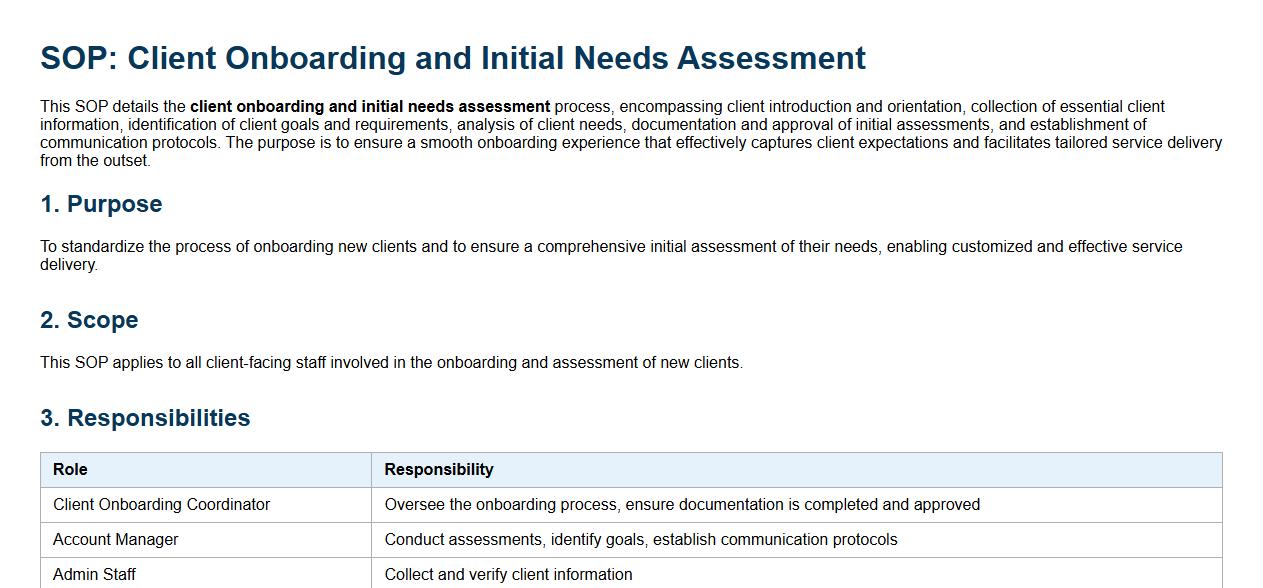
This SOP details the client onboarding and initial needs assessment process, encompassing client introduction and orientation, collection of essential client information, identification of client goals and requirements, analysis of client needs, documentation and approval of initial assessments, and establishment of communication protocols. The purpose is to ensure a smooth onboarding experience that effectively captures client expectations and facilitates tailored service delivery from the outset.
Proposal development and contract finalization.
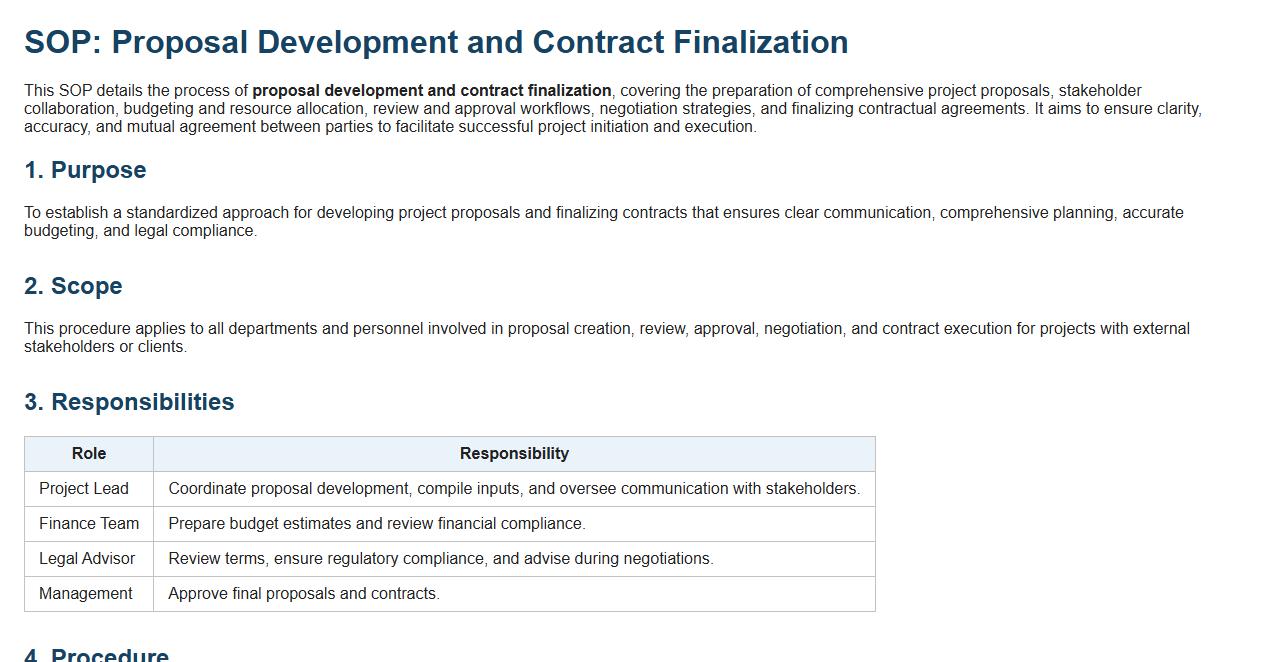
This SOP details the process of proposal development and contract finalization, covering the preparation of comprehensive project proposals, stakeholder collaboration, budgeting and resource allocation, review and approval workflows, negotiation strategies, and finalizing contractual agreements. It aims to ensure clarity, accuracy, and mutual agreement between parties to facilitate successful project initiation and execution.
Confidentiality and data protection protocols.
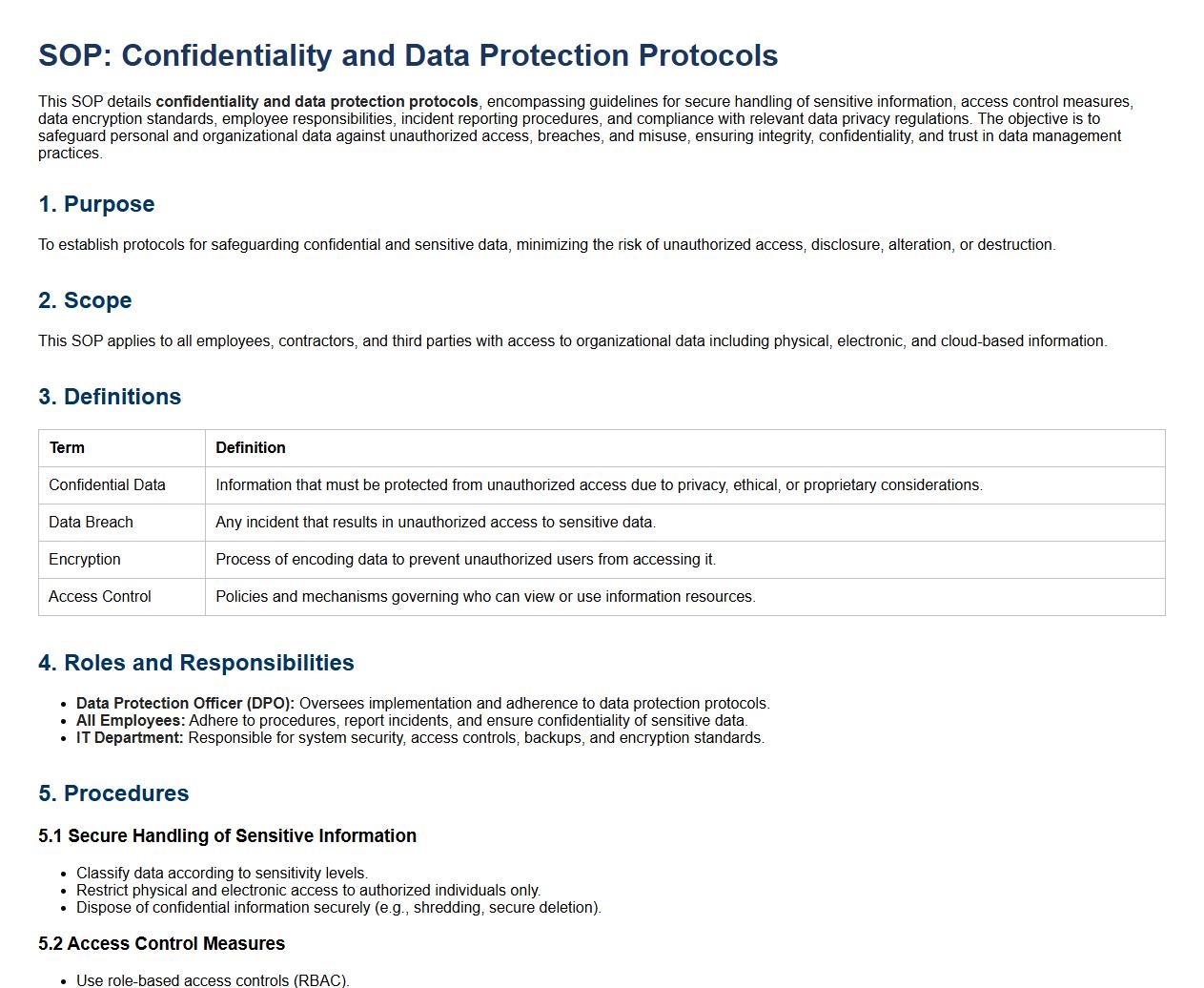
This SOP details confidentiality and data protection protocols, encompassing guidelines for secure handling of sensitive information, access control measures, data encryption standards, employee responsibilities, incident reporting procedures, and compliance with relevant data privacy regulations. The objective is to safeguard personal and organizational data against unauthorized access, breaches, and misuse, ensuring integrity, confidentiality, and trust in data management practices.
Project planning and timeline establishment.
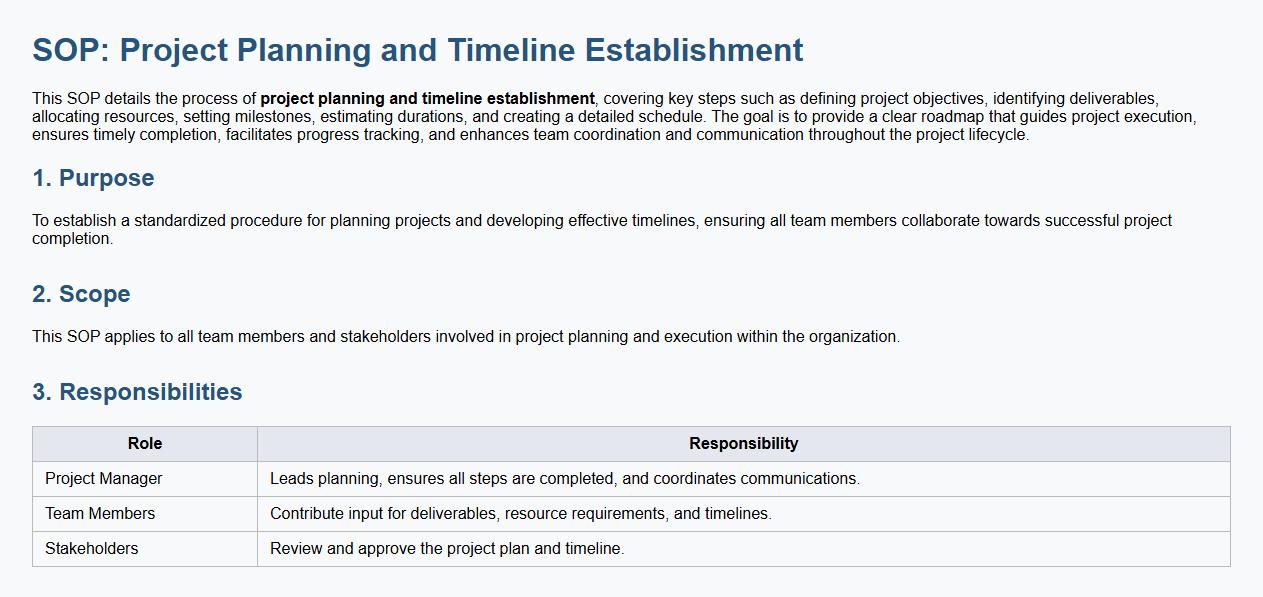
This SOP details the process of project planning and timeline establishment, covering key steps such as defining project objectives, identifying deliverables, allocating resources, setting milestones, estimating durations, and creating a detailed schedule. The goal is to provide a clear roadmap that guides project execution, ensures timely completion, facilitates progress tracking, and enhances team coordination and communication throughout the project lifecycle.
Stakeholder communication and reporting procedures.
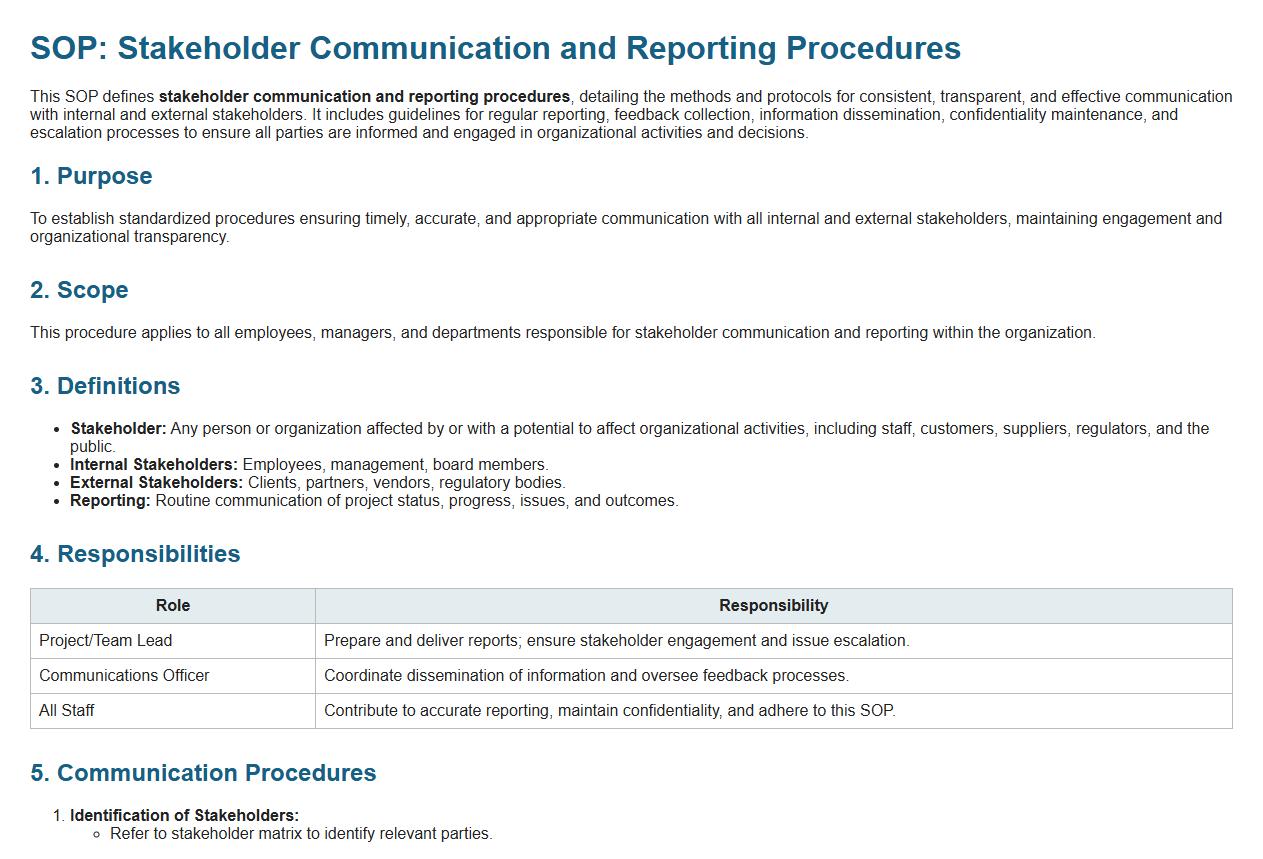
This SOP defines stakeholder communication and reporting procedures, detailing the methods and protocols for consistent, transparent, and effective communication with internal and external stakeholders. It includes guidelines for regular reporting, feedback collection, information dissemination, confidentiality maintenance, and escalation processes to ensure all parties are informed and engaged in organizational activities and decisions.
Research, data collection, and analysis methodology.
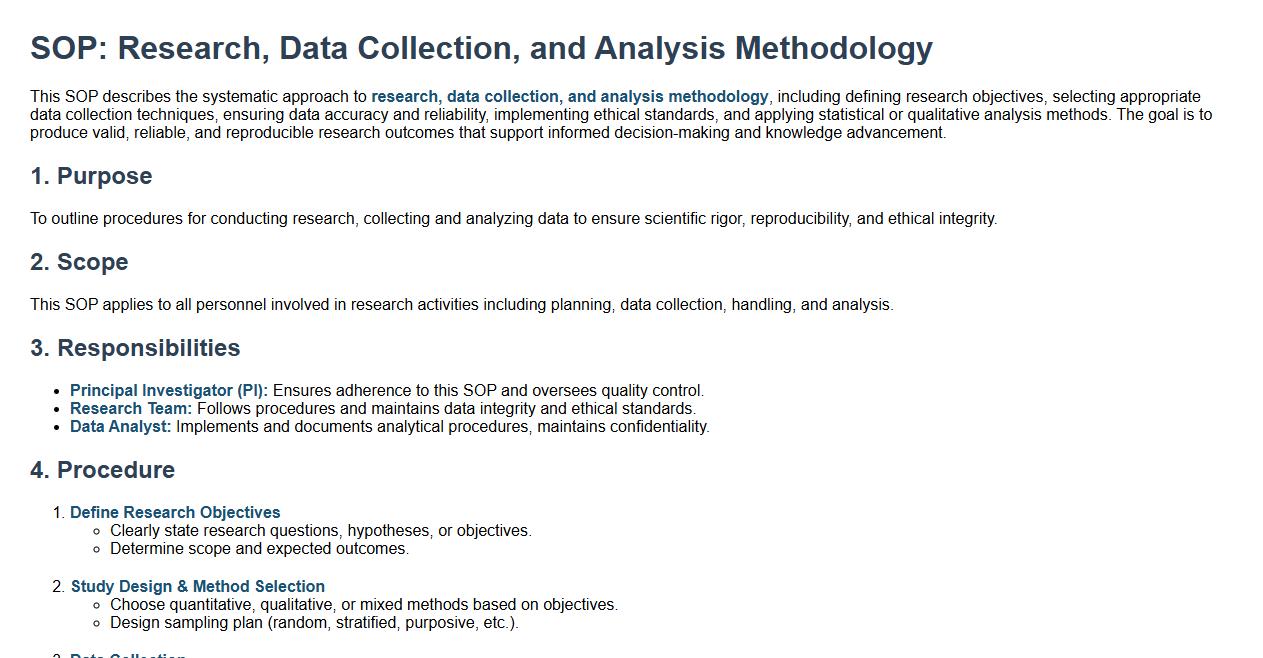
This SOP describes the systematic approach to research, data collection, and analysis methodology, including defining research objectives, selecting appropriate data collection techniques, ensuring data accuracy and reliability, implementing ethical standards, and applying statistical or qualitative analysis methods. The goal is to produce valid, reliable, and reproducible research outcomes that support informed decision-making and knowledge advancement.
Quality assurance and deliverable review processes.
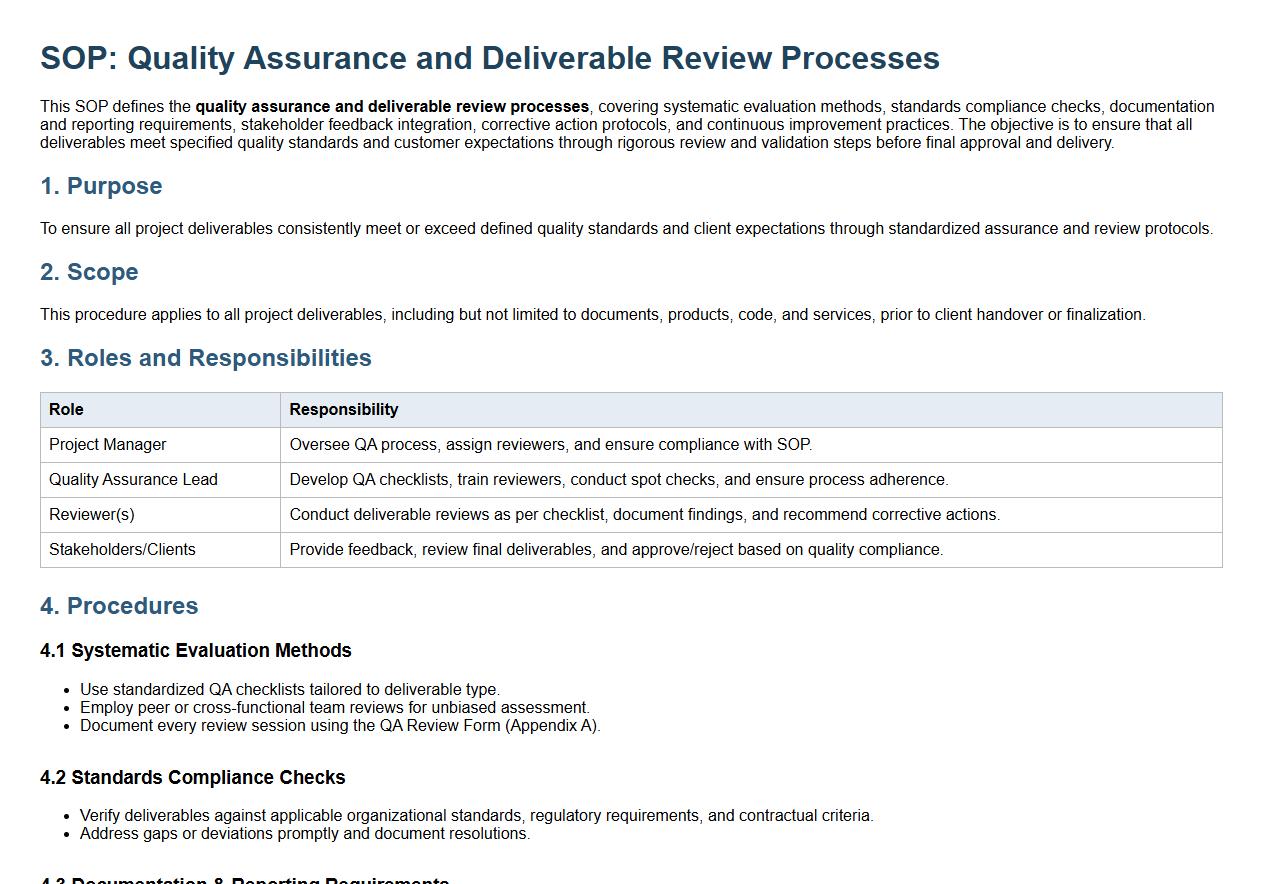
This SOP defines the quality assurance and deliverable review processes, covering systematic evaluation methods, standards compliance checks, documentation and reporting requirements, stakeholder feedback integration, corrective action protocols, and continuous improvement practices. The objective is to ensure that all deliverables meet specified quality standards and customer expectations through rigorous review and validation steps before final approval and delivery.
Issue escalation and risk management.
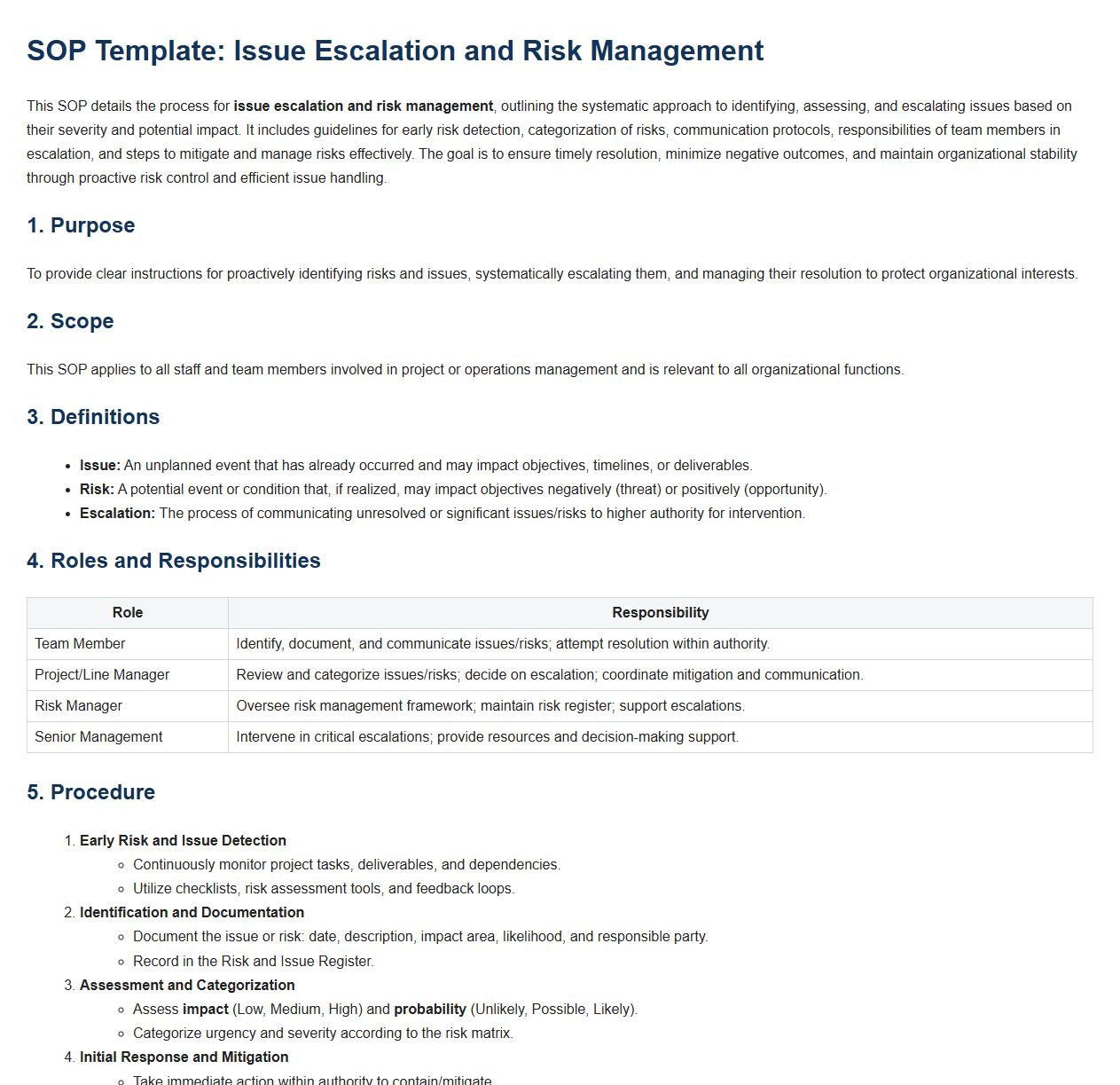
This SOP details the process for issue escalation and risk management, outlining the systematic approach to identifying, assessing, and escalating issues based on their severity and potential impact. It includes guidelines for early risk detection, categorization of risks, communication protocols, responsibilities of team members in escalation, and steps to mitigate and manage risks effectively. The goal is to ensure timely resolution, minimize negative outcomes, and maintain organizational stability through proactive risk control and efficient issue handling.
Invoice submission and payment tracking.
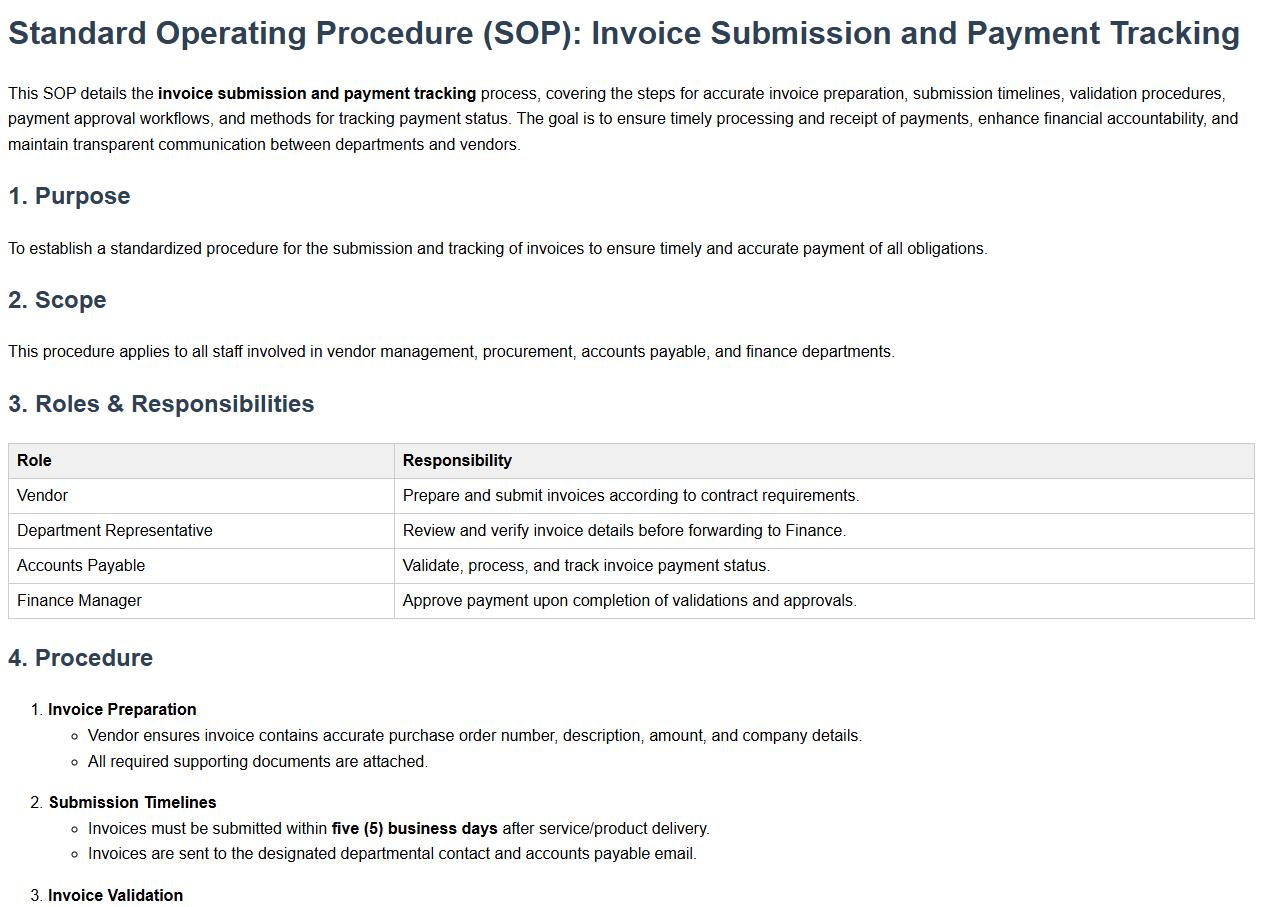
This SOP details the invoice submission and payment tracking process, covering the steps for accurate invoice preparation, submission timelines, validation procedures, payment approval workflows, and methods for tracking payment status. The goal is to ensure timely processing and receipt of payments, enhance financial accountability, and maintain transparent communication between departments and vendors.
Project closure, documentation, and feedback collection.
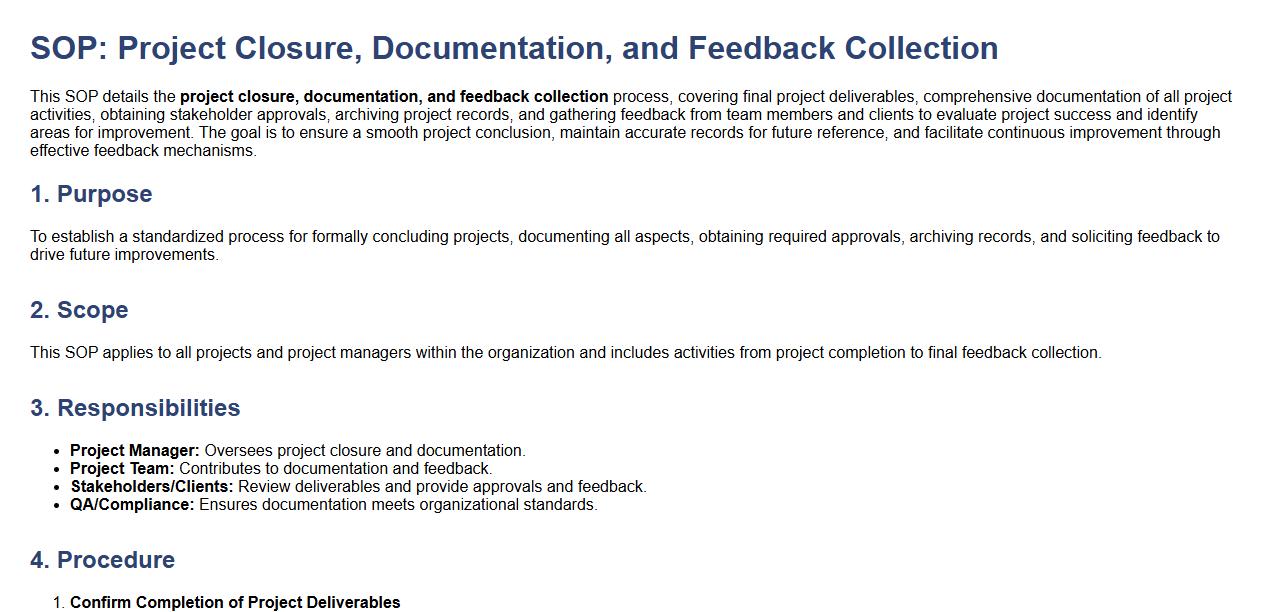
This SOP details the project closure, documentation, and feedback collection process, covering final project deliverables, comprehensive documentation of all project activities, obtaining stakeholder approvals, archiving project records, and gathering feedback from team members and clients to evaluate project success and identify areas for improvement. The goal is to ensure a smooth project conclusion, maintain accurate records for future reference, and facilitate continuous improvement through effective feedback mechanisms.
What are the key objectives outlined in the SOP for Professional Consulting Engagements?
The key objectives of the SOP for Professional Consulting Engagements include ensuring consistent service delivery and maintaining high-quality standards. It aims to provide a clear framework for managing client expectations and project outcomes effectively. Additionally, the SOP focuses on optimizing resource utilization and promoting transparent communication throughout the engagement.
Which stakeholders are responsible for each stage of a consulting engagement as per the SOP?
The SOP designates specific stakeholders for each stage of the consulting engagement, including project managers, consultants, and client representatives. Project managers oversee planning and execution, while consultants handle technical deliverables and client interaction. Client representatives are responsible for approval and feedback, ensuring alignment with business goals.
What are the required documentation and approval processes specified in the SOP?
The SOP mandates comprehensive documentation including project proposals, progress reports, and final deliverables, which must be maintained for transparency and audit purposes. Each stage requires formal approvals from designated authorities such as the client and internal review boards. This structured approval process ensures accountability and quality control throughout the engagement.
How does the SOP define and measure successful completion of a consulting engagement?
Successful completion is defined by the SOP as delivering agreed-upon outcomes within the specified timeline and budget. It measures success through client satisfaction surveys, achievement of project objectives, and adherence to quality standards. Post-engagement evaluations are conducted to capture lessons learned and areas for improvement.
What compliance and confidentiality standards are mandated within the SOP for Professional Consulting Engagements?
The SOP enforces strict compliance with legal, regulatory, and ethical standards relevant to consulting services. Confidentiality clauses require safeguarding client information and restricting data access to authorized personnel only. These standards are critical to maintaining trust and protecting sensitive business information during and after the engagement.