

A SOP Template for Business Consulting Engagement streamlines the process of defining project scopes, deliverables, and client expectations. It ensures consistent communication and standardized procedures across consulting teams, improving efficiency and client satisfaction. Using this template helps maintain clarity and accountability throughout the business consulting engagement.
Client onboarding and initial assessment procedures.
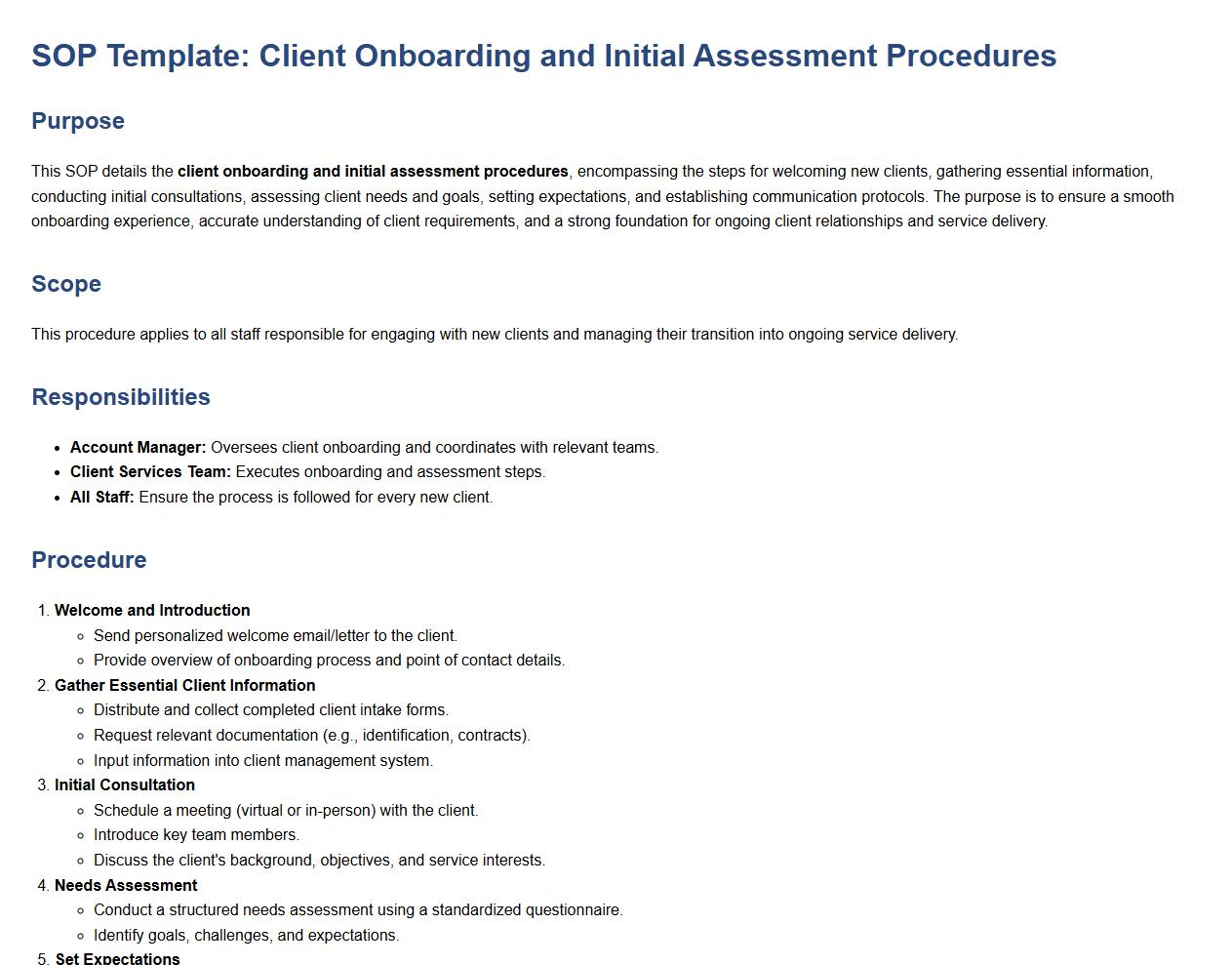
This SOP details the client onboarding and initial assessment procedures, encompassing the steps for welcoming new clients, gathering essential information, conducting initial consultations, assessing client needs and goals, setting expectations, and establishing communication protocols. The purpose is to ensure a smooth onboarding experience, accurate understanding of client requirements, and a strong foundation for ongoing client relationships and service delivery.
Proposal development and contract finalization.
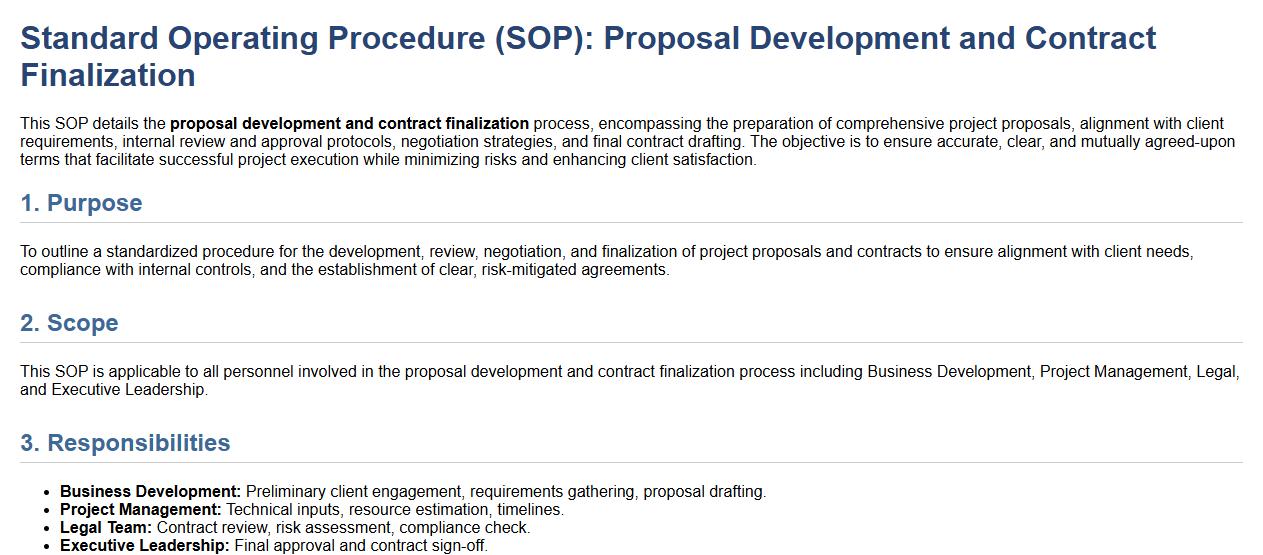
This SOP details the proposal development and contract finalization process, encompassing the preparation of comprehensive project proposals, alignment with client requirements, internal review and approval protocols, negotiation strategies, and final contract drafting. The objective is to ensure accurate, clear, and mutually agreed-upon terms that facilitate successful project execution while minimizing risks and enhancing client satisfaction.
Project scope definition and deliverables outlining.
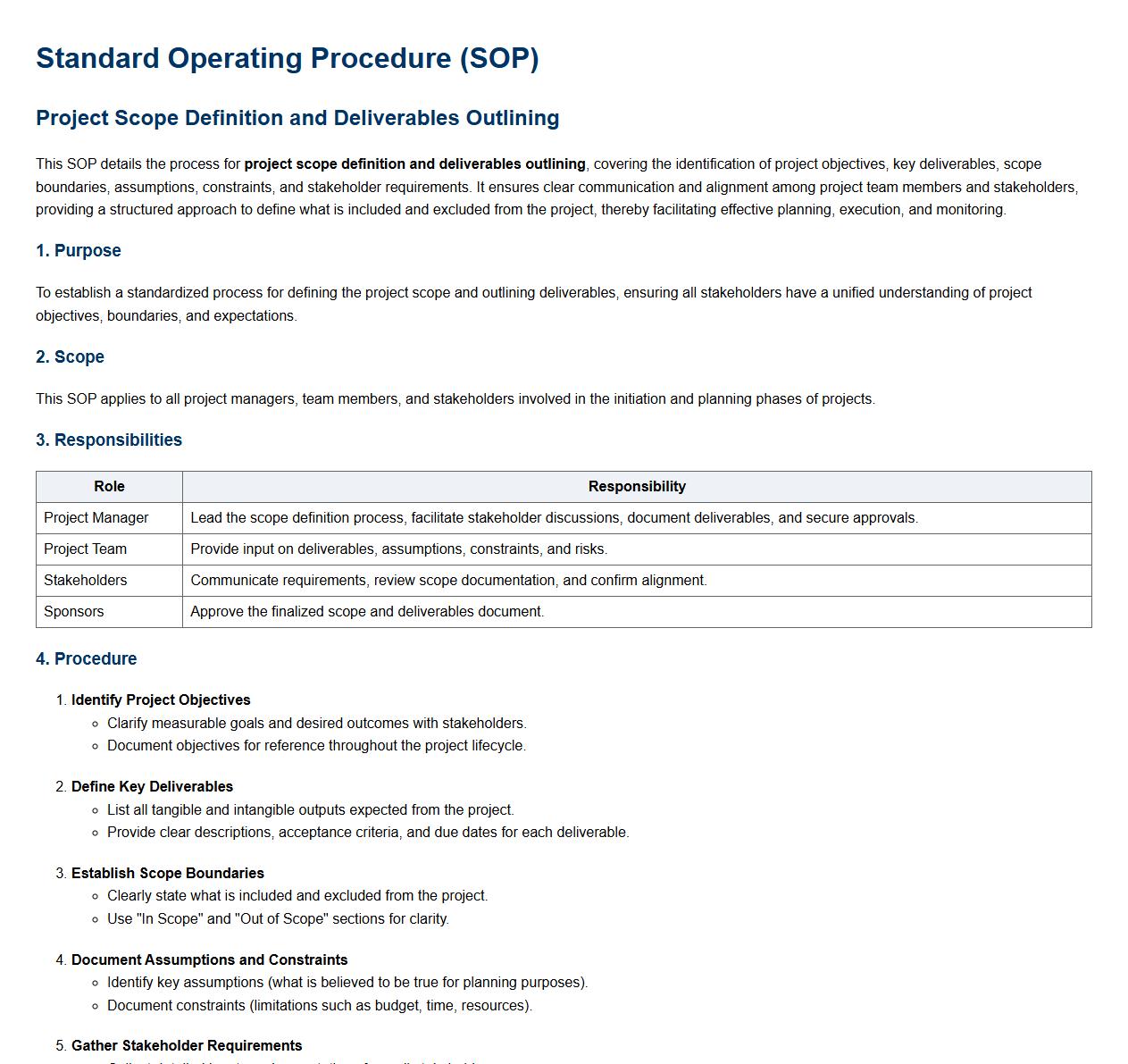
This SOP details the process for project scope definition and deliverables outlining, covering the identification of project objectives, key deliverables, scope boundaries, assumptions, constraints, and stakeholder requirements. It ensures clear communication and alignment among project team members and stakeholders, providing a structured approach to define what is included and excluded from the project, thereby facilitating effective planning, execution, and monitoring.
Kickoff meeting and stakeholder alignment process.
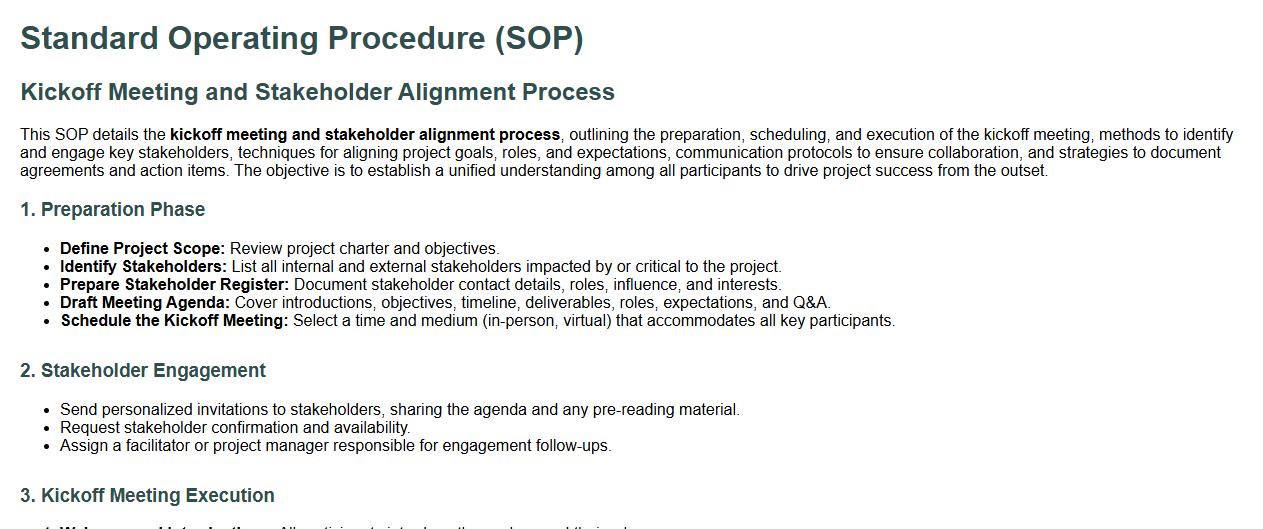
This SOP details the kickoff meeting and stakeholder alignment process, outlining the preparation, scheduling, and execution of the kickoff meeting, methods to identify and engage key stakeholders, techniques for aligning project goals, roles, and expectations, communication protocols to ensure collaboration, and strategies to document agreements and action items. The objective is to establish a unified understanding among all participants to drive project success from the outset.
Information gathering and data collection protocol.
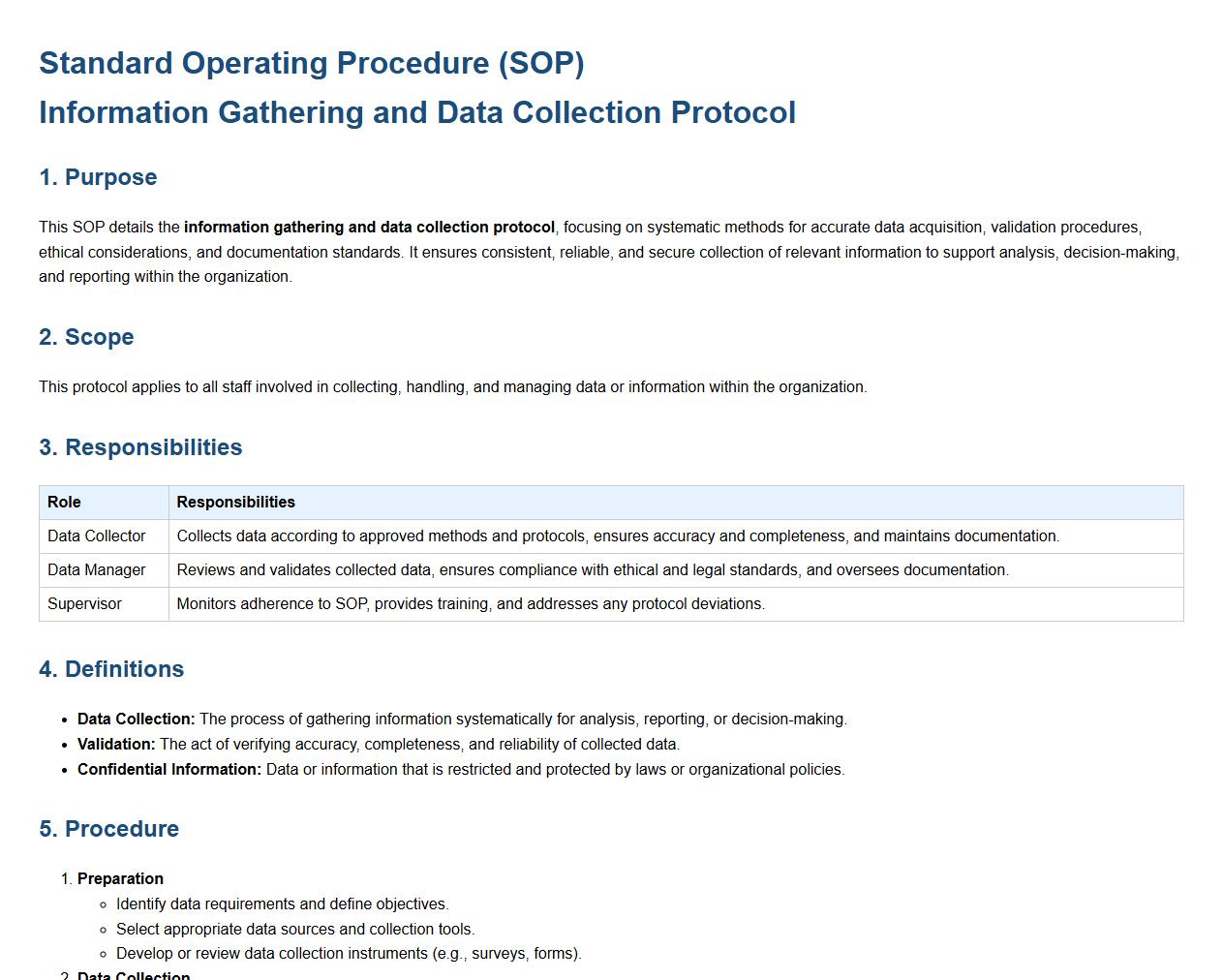
This SOP details the information gathering and data collection protocol, focusing on systematic methods for accurate data acquisition, validation procedures, ethical considerations, and documentation standards. It ensures consistent, reliable, and secure collection of relevant information to support analysis, decision-making, and reporting within the organization.
Analysis and solution recommendation methodologies.
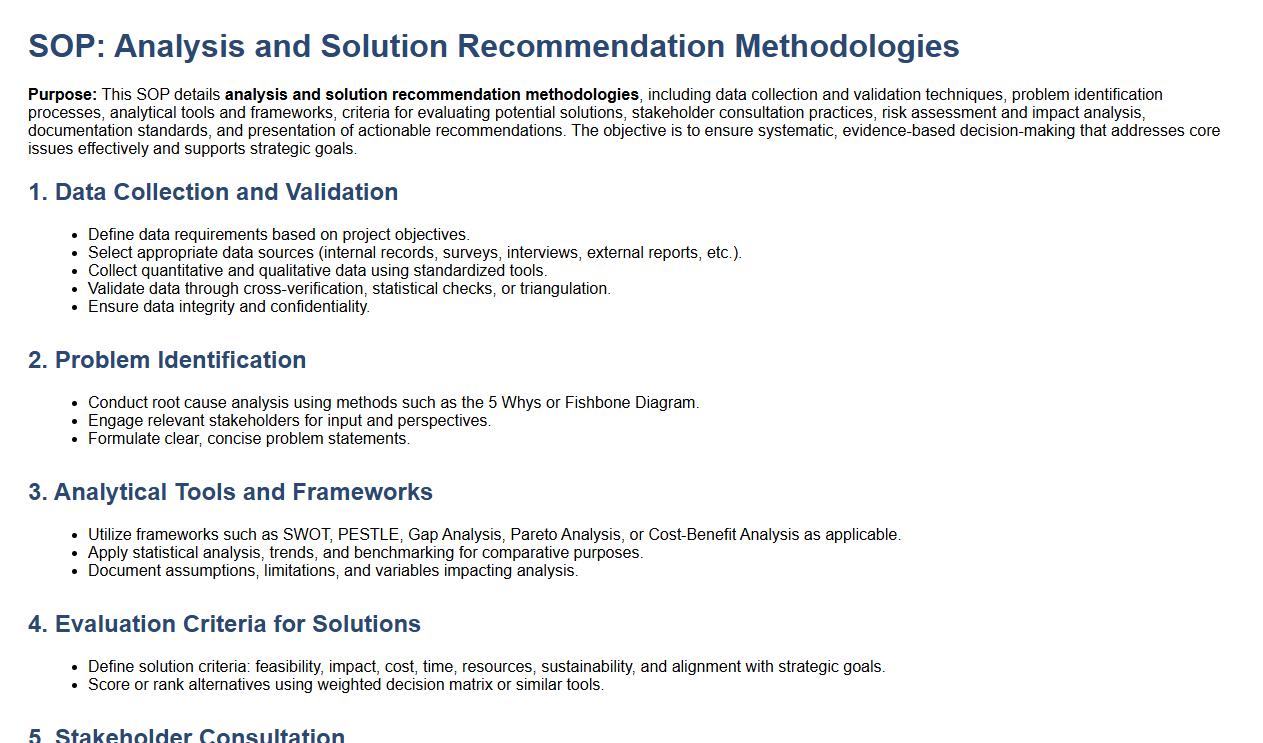
This SOP details analysis and solution recommendation methodologies, including data collection and validation techniques, problem identification processes, analytical tools and frameworks, criteria for evaluating potential solutions, stakeholder consultation practices, risk assessment and impact analysis, documentation standards, and presentation of actionable recommendations. The objective is to ensure systematic, evidence-based decision-making that addresses core issues effectively and supports strategic goals.
Progress reporting and client communication guidelines.
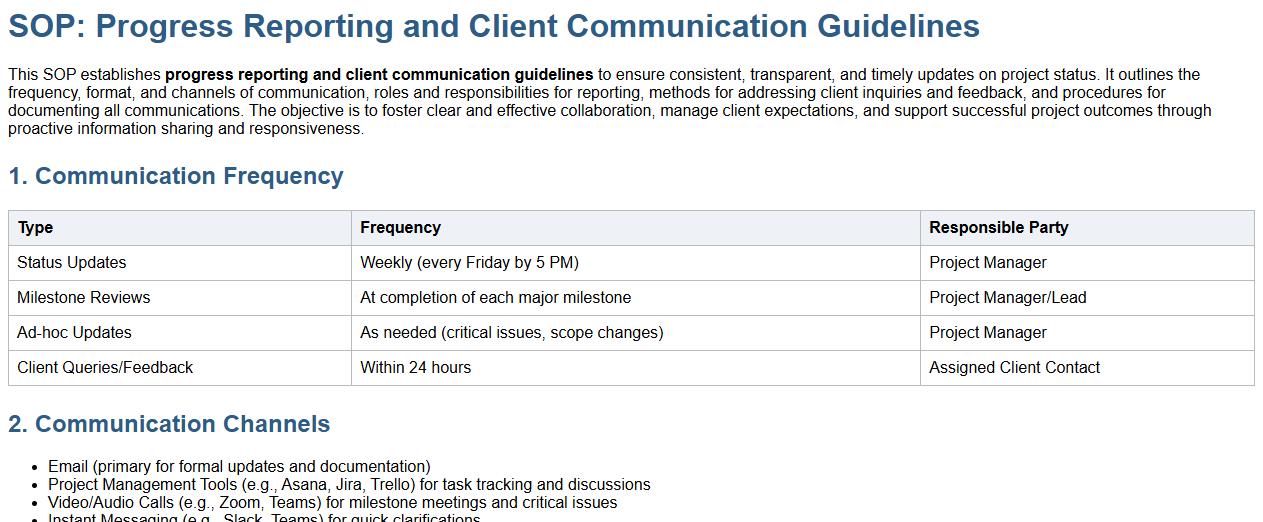
This SOP establishes progress reporting and client communication guidelines to ensure consistent, transparent, and timely updates on project status. It outlines the frequency, format, and channels of communication, roles and responsibilities for reporting, methods for addressing client inquiries and feedback, and procedures for documenting all communications. The objective is to foster clear and effective collaboration, manage client expectations, and support successful project outcomes through proactive information sharing and responsiveness.
Change management and issue escalation process.
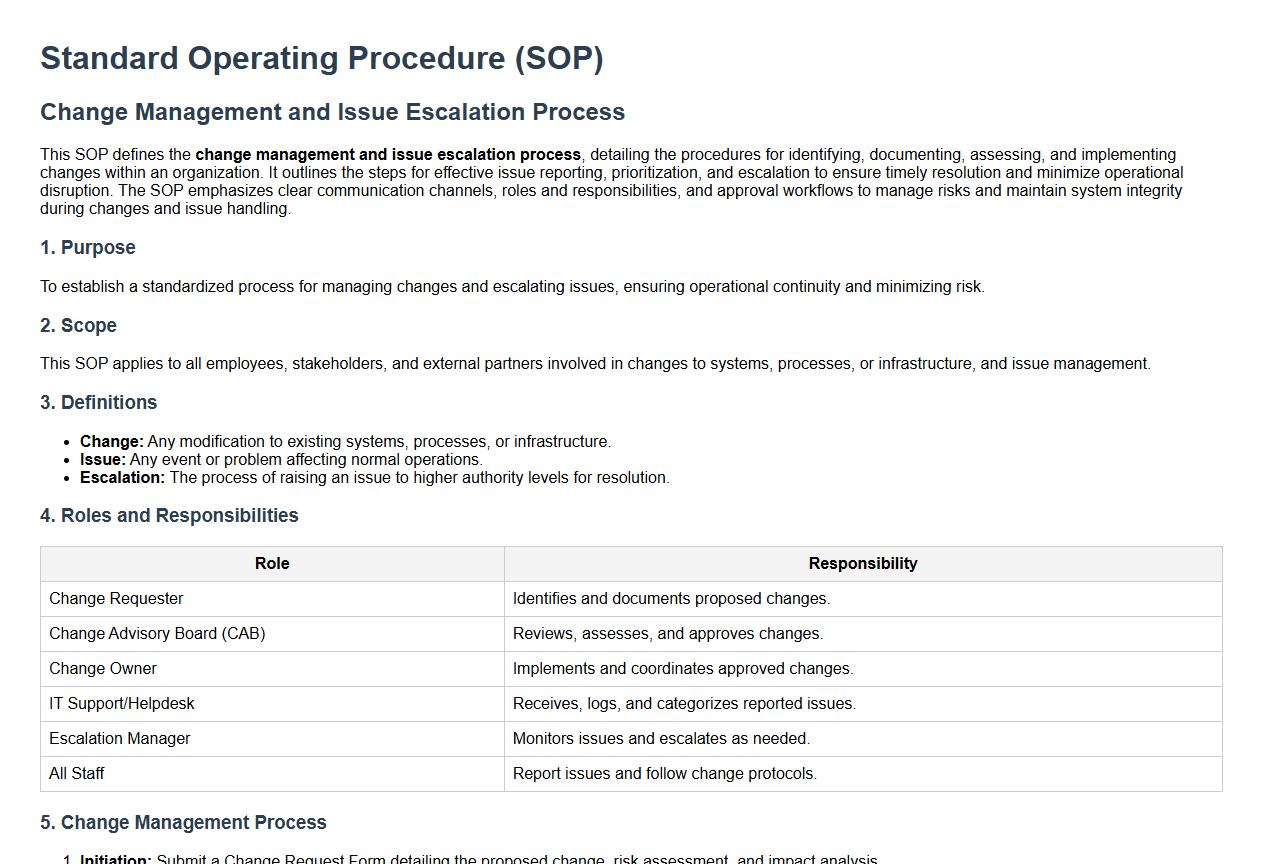
This SOP defines the change management and issue escalation process, detailing the procedures for identifying, documenting, assessing, and implementing changes within an organization. It outlines the steps for effective issue reporting, prioritization, and escalation to ensure timely resolution and minimize operational disruption. The SOP emphasizes clear communication channels, roles and responsibilities, and approval workflows to manage risks and maintain system integrity during changes and issue handling.
Project review and client feedback procedure.
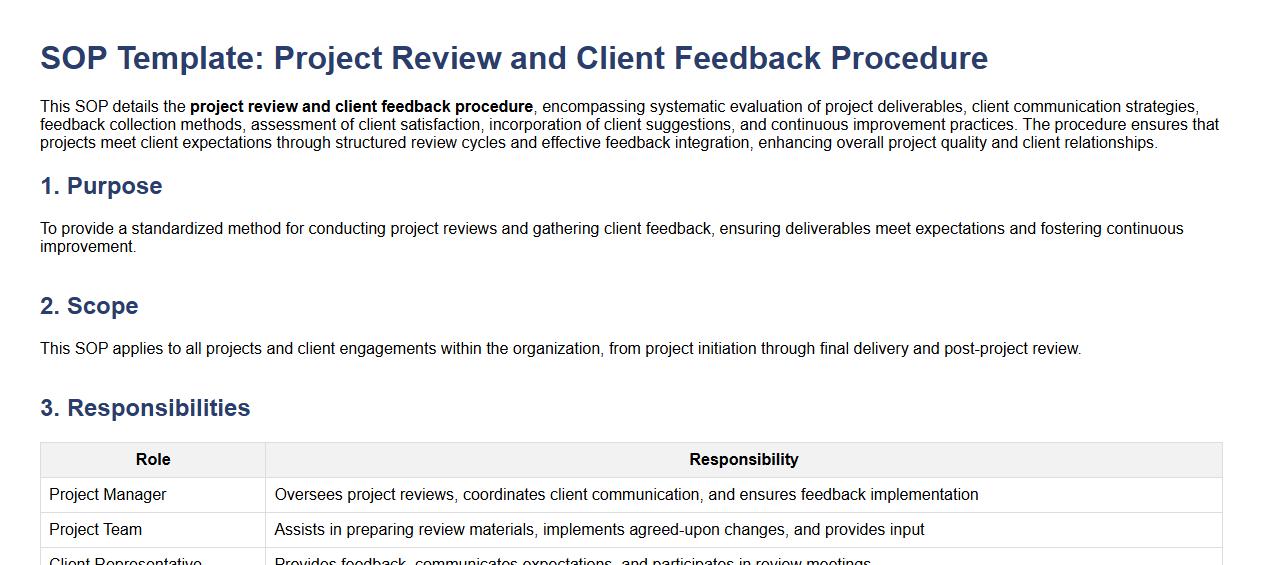
This SOP details the project review and client feedback procedure, encompassing systematic evaluation of project deliverables, client communication strategies, feedback collection methods, assessment of client satisfaction, incorporation of client suggestions, and continuous improvement practices. The procedure ensures that projects meet client expectations through structured review cycles and effective feedback integration, enhancing overall project quality and client relationships.
Engagement closure and post-project follow-up steps.
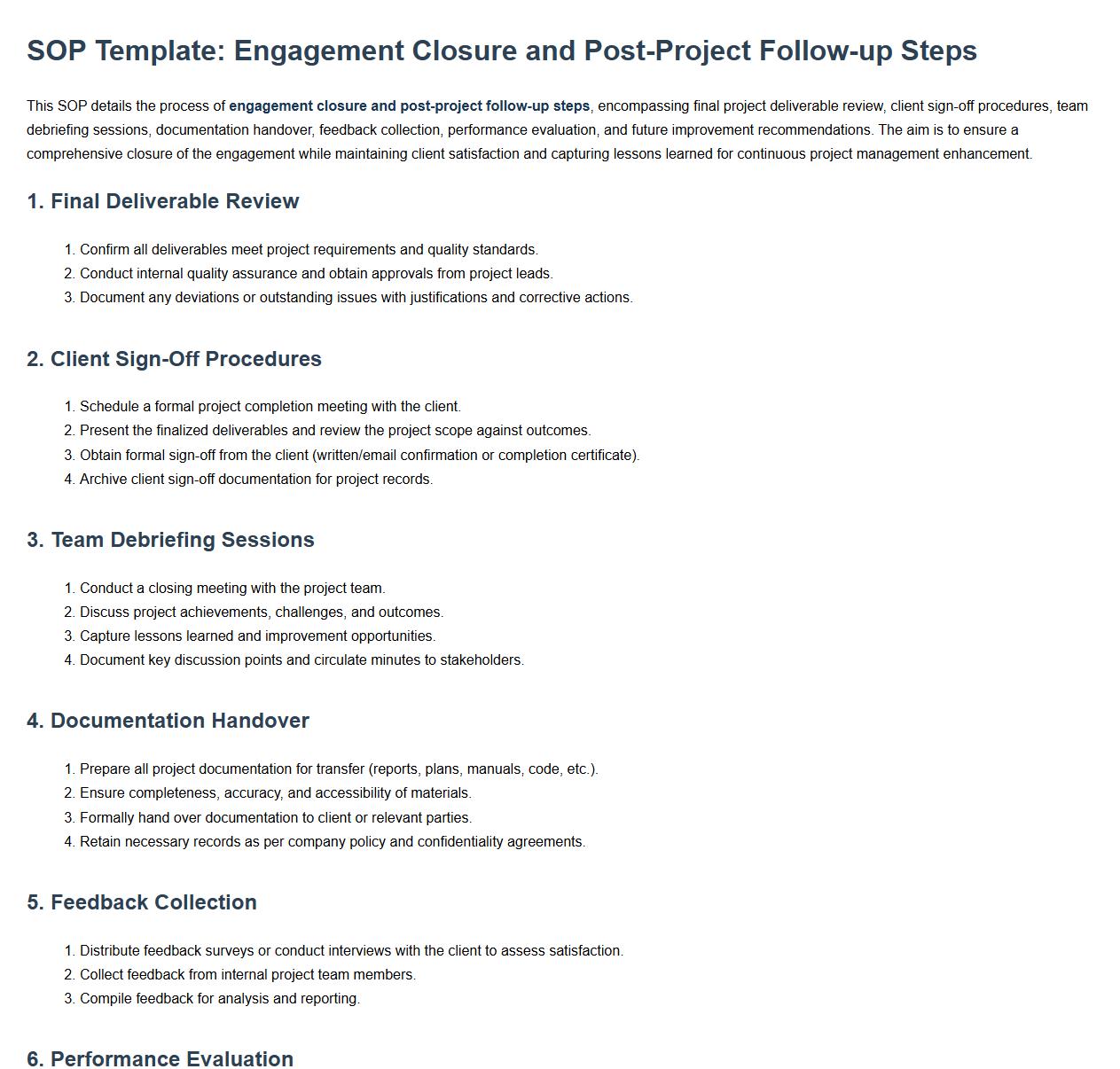
This SOP details the process of engagement closure and post-project follow-up steps, encompassing final project deliverable review, client sign-off procedures, team debriefing sessions, documentation handover, feedback collection, performance evaluation, and future improvement recommendations. The aim is to ensure a comprehensive closure of the engagement while maintaining client satisfaction and capturing lessons learned for continuous project management enhancement.
Key Objectives Outlined in the SOP for the Business Consulting Engagement Process
The SOP primarily aims to establish a standardized framework to guide business consulting engagements effectively. It focuses on ensuring consistent delivery of value to clients throughout the project lifecycle. Additionally, the SOP highlights the importance of aligning consulting activities with client goals and performance metrics.
Stakeholders and Roles Specified as Responsible Within Each Phase of the SOP
The SOP clearly defines roles such as consultants, project managers, and client representatives to manage each phase. It also outlines the responsibilities of executive sponsors and quality assurance teams to support project success. This role clarity ensures accountability and smooth coordination during the consulting engagement.
Approach for Client Communication and Documentation Standards in the SOP
The SOP mandates regular and transparent client communication through structured meetings and status reports. It establishes stringent documentation standards to ensure all deliverables, decisions, and changes are properly recorded. This approach promotes clarity, traceability, and mutual understanding between consultants and clients.
Quality Control and Review Mechanisms Described in the SOP to Ensure Deliverable Consistency
The SOP incorporates multiple quality control checkpoints including peer reviews and formal approval gates before deliverable submission. It emphasizes the use of standardized templates and best practices to maintain consistency across projects. Additionally, the SOP recommends ongoing monitoring and corrective actions to uphold quality standards.
Escalation and Issue Resolution Procedures Included in the SOP for Consulting Engagements
The SOP defines a clear escalation path involving immediate reporting of issues to project leads and senior management. It prescribes timely intervention protocols to resolve conflicts and mitigate risks effectively. The process ensures that issues are addressed promptly to minimize impact on project timelines and client satisfaction.