

SOP Template for Executive Calendar Management streamlines the process of organizing, scheduling, and prioritizing executive appointments efficiently. This template ensures consistent handling of calendar requests, conflicts, and follow-ups, enhancing productivity and time management. Clear guidelines within the template enable assistants and team members to maintain an accurate and up-to-date executive schedule.
Centralized calendar access and permissions setup.
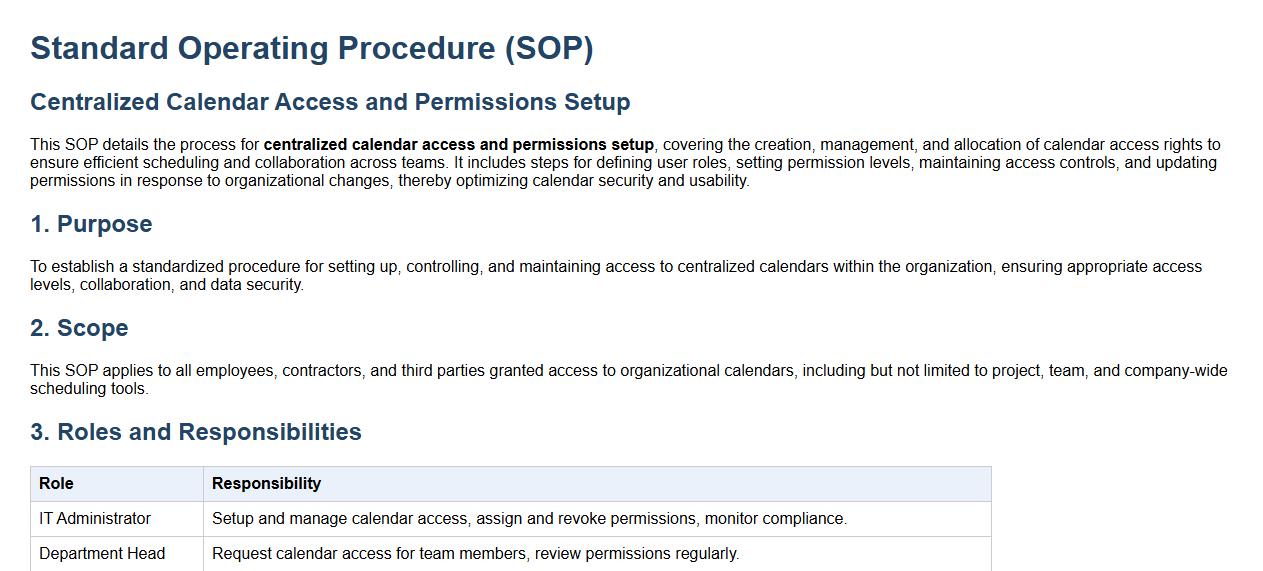
This SOP details the process for centralized calendar access and permissions setup, covering the creation, management, and allocation of calendar access rights to ensure efficient scheduling and collaboration across teams. It includes steps for defining user roles, setting permission levels, maintaining access controls, and updating permissions in response to organizational changes, thereby optimizing calendar security and usability.
Guidelines for scheduling meetings and appointments.
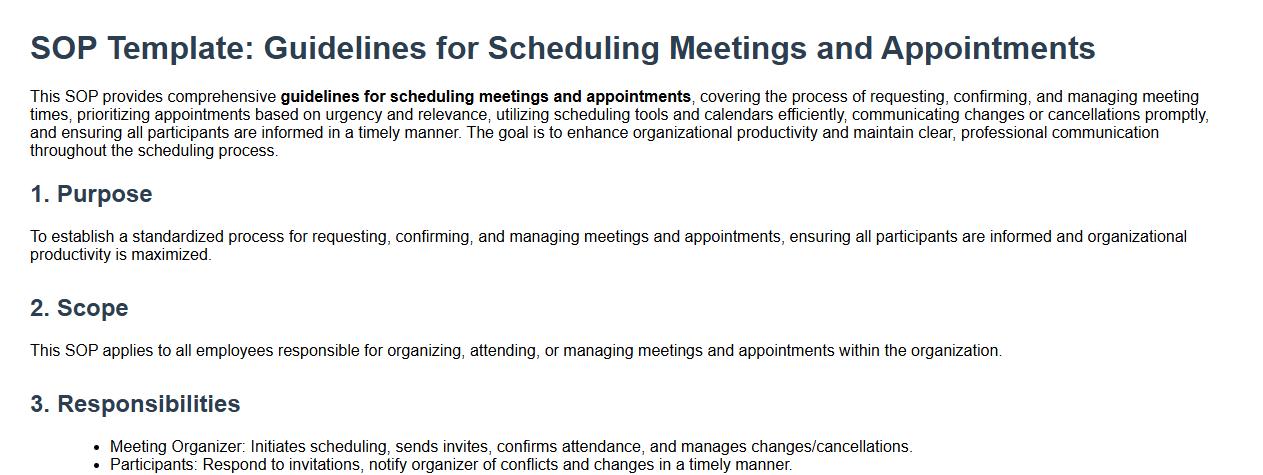
This SOP provides comprehensive guidelines for scheduling meetings and appointments, covering the process of requesting, confirming, and managing meeting times, prioritizing appointments based on urgency and relevance, utilizing scheduling tools and calendars efficiently, communicating changes or cancellations promptly, and ensuring all participants are informed in a timely manner. The goal is to enhance organizational productivity and maintain clear, professional communication throughout the scheduling process.
Process for managing meeting invitations and RSVPs.
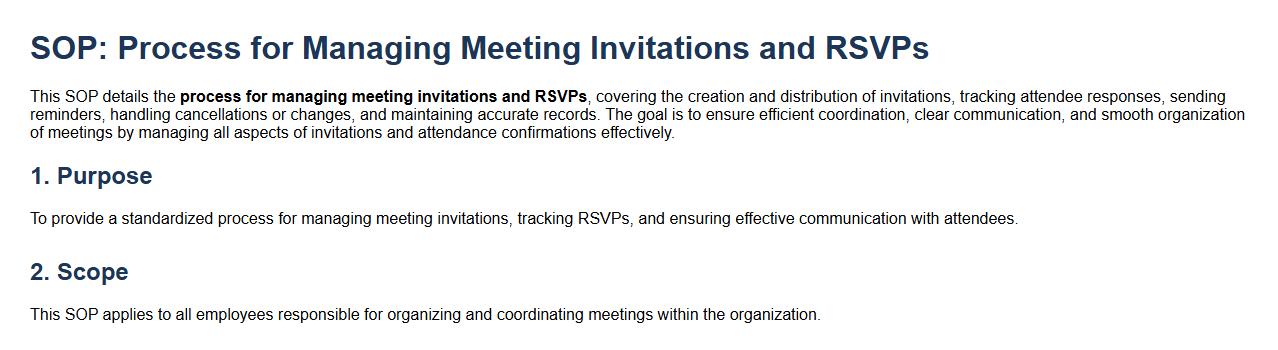
This SOP details the process for managing meeting invitations and RSVPs, covering the creation and distribution of invitations, tracking attendee responses, sending reminders, handling cancellations or changes, and maintaining accurate records. The goal is to ensure efficient coordination, clear communication, and smooth organization of meetings by managing all aspects of invitations and attendance confirmations effectively.
Protocol for handling meeting conflicts and rescheduling.
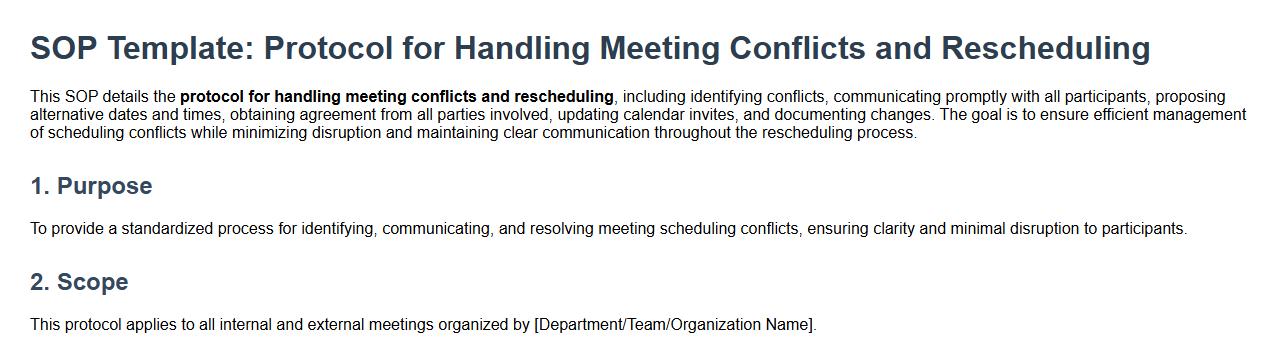
This SOP details the protocol for handling meeting conflicts and rescheduling, including identifying conflicts, communicating promptly with all participants, proposing alternative dates and times, obtaining agreement from all parties involved, updating calendar invites, and documenting changes. The goal is to ensure efficient management of scheduling conflicts while minimizing disruption and maintaining clear communication throughout the rescheduling process.
Standard operating hours and availability management.
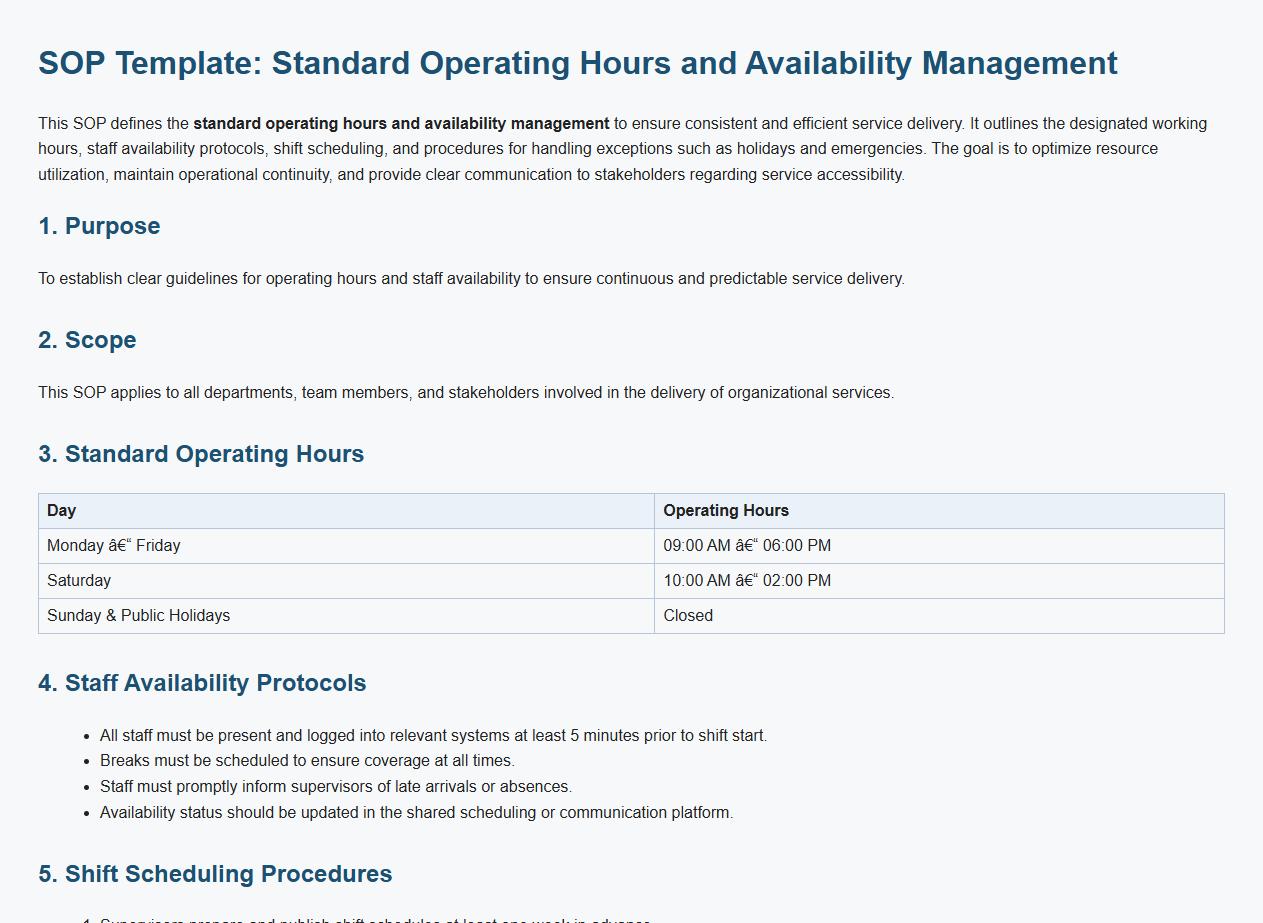
This SOP defines the standard operating hours and availability management to ensure consistent and efficient service delivery. It outlines the designated working hours, staff availability protocols, shift scheduling, and procedures for handling exceptions such as holidays and emergencies. The goal is to optimize resource utilization, maintain operational continuity, and provide clear communication to stakeholders regarding service accessibility.
Preparation and distribution of daily/weekly agenda summaries.
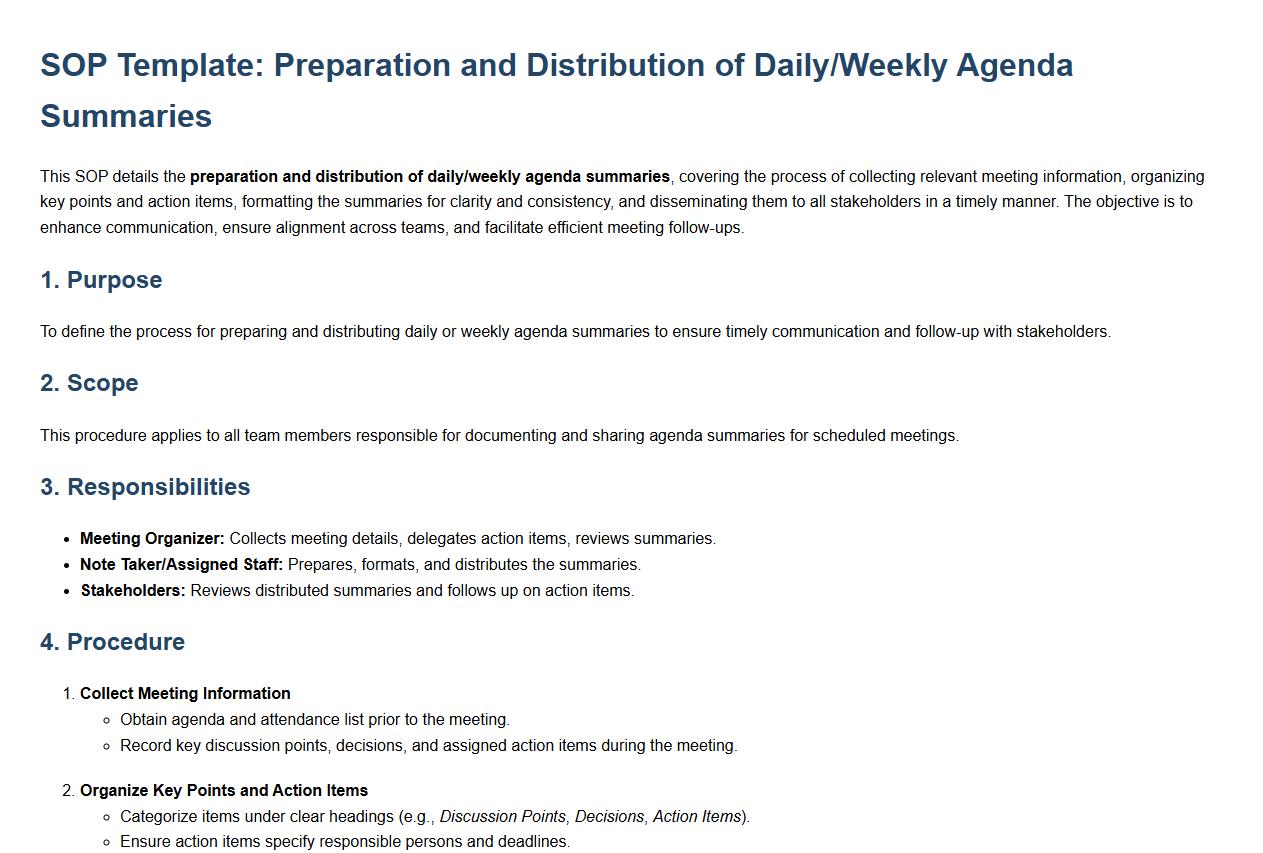
This SOP details the preparation and distribution of daily/weekly agenda summaries, covering the process of collecting relevant meeting information, organizing key points and action items, formatting the summaries for clarity and consistency, and disseminating them to all stakeholders in a timely manner. The objective is to enhance communication, ensure alignment across teams, and facilitate efficient meeting follow-ups.
Procedures for booking travel and accommodations via calendar.
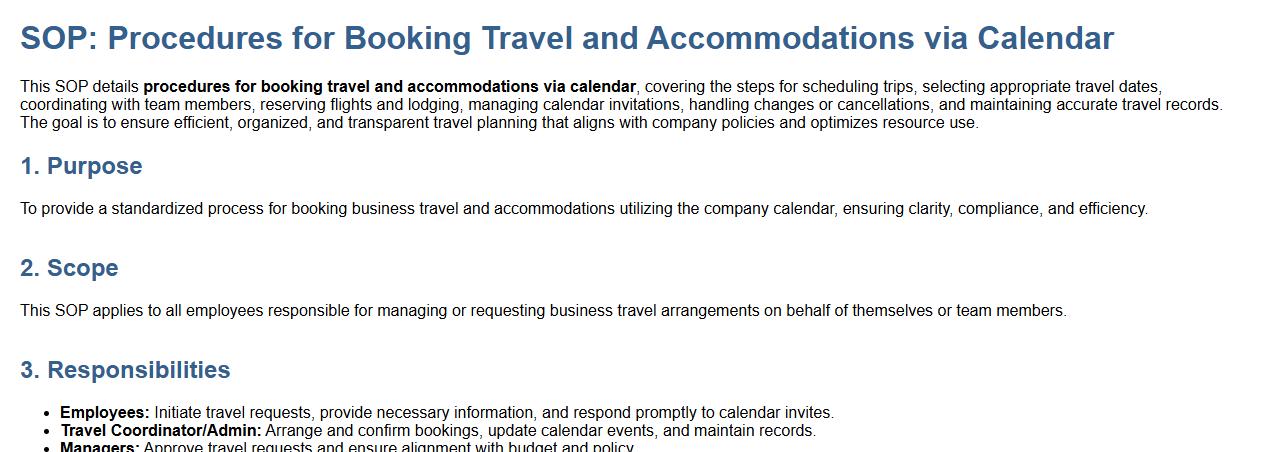
This SOP details procedures for booking travel and accommodations via calendar, covering the steps for scheduling trips, selecting appropriate travel dates, coordinating with team members, reserving flights and lodging, managing calendar invitations, handling changes or cancellations, and maintaining accurate travel records. The goal is to ensure efficient, organized, and transparent travel planning that aligns with company policies and optimizes resource use.
Confidentiality and data privacy measures for calendar content.
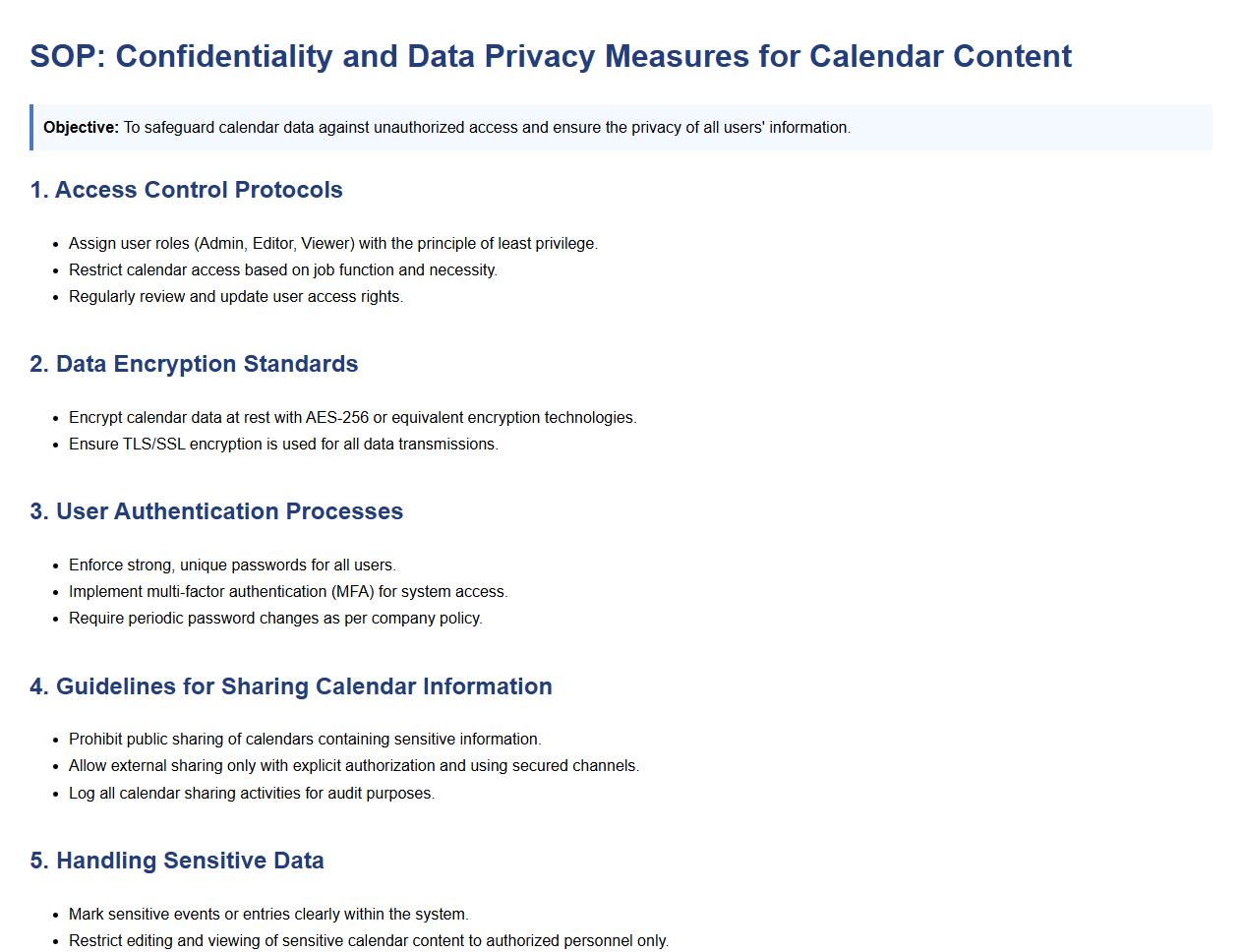
This SOP details confidentiality and data privacy measures for calendar content, including access control protocols, data encryption standards, user authentication processes, guidelines for sharing calendar information, procedures for handling sensitive data, compliance with relevant data protection regulations, regular audit and monitoring practices, incident response strategies for data breaches, and user training on privacy best practices. The objective is to safeguard calendar data against unauthorized access and ensure the privacy of all users' information.
Process for integrating external calendars and syncing devices.
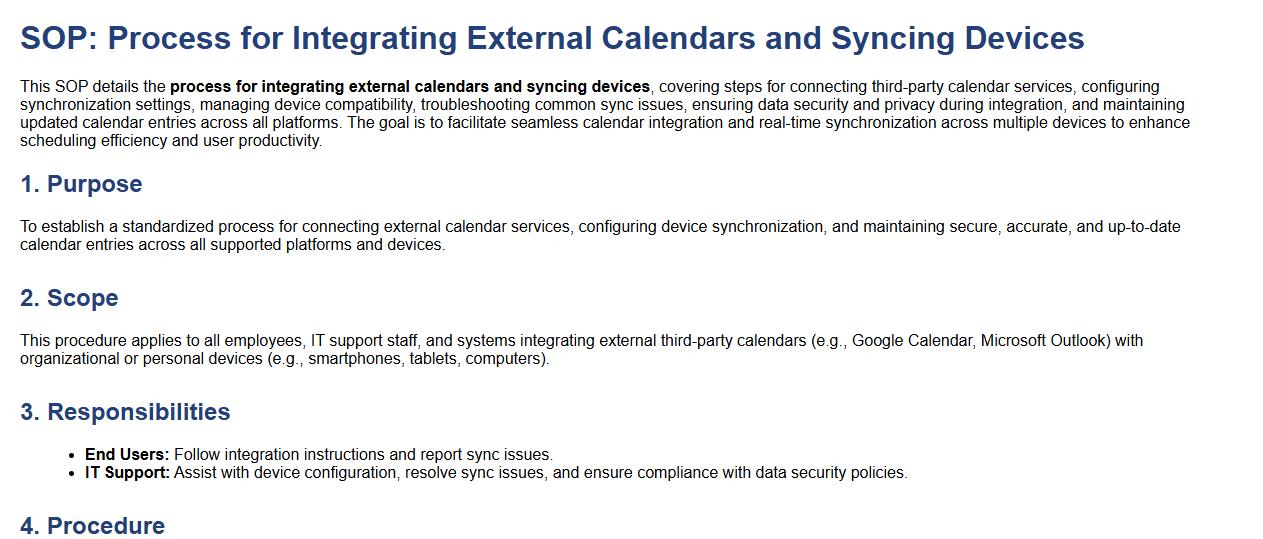
This SOP details the process for integrating external calendars and syncing devices, covering steps for connecting third-party calendar services, configuring synchronization settings, managing device compatibility, troubleshooting common sync issues, ensuring data security and privacy during integration, and maintaining updated calendar entries across all platforms. The goal is to facilitate seamless calendar integration and real-time synchronization across multiple devices to enhance scheduling efficiency and user productivity.
Documentation and reporting procedures for calendar changes.
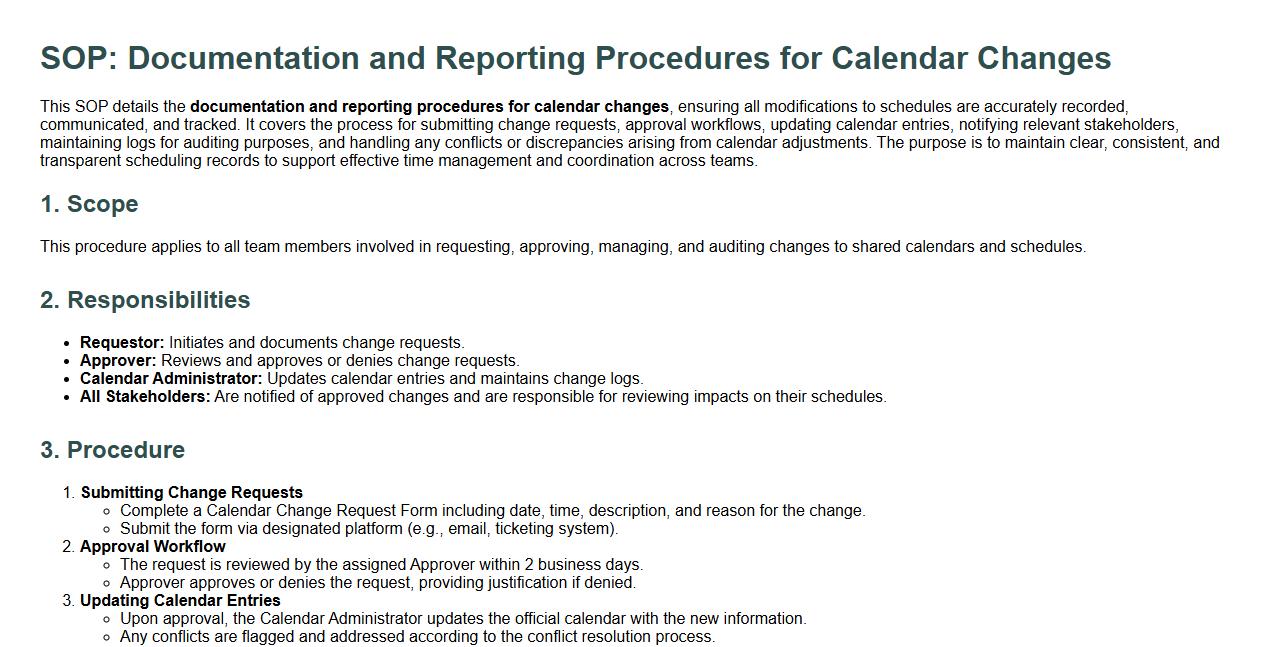
This SOP details the documentation and reporting procedures for calendar changes, ensuring all modifications to schedules are accurately recorded, communicated, and tracked. It covers the process for submitting change requests, approval workflows, updating calendar entries, notifying relevant stakeholders, maintaining logs for auditing purposes, and handling any conflicts or discrepancies arising from calendar adjustments. The purpose is to maintain clear, consistent, and transparent scheduling records to support effective time management and coordination across teams.
What is the primary objective of the SOP for Executive Calendar Management?
The primary objective of the SOP for Executive Calendar Management is to ensure seamless organization of executive schedules. It aims to maximize productivity by eliminating scheduling conflicts and prioritizing essential meetings. This SOP promotes efficient time management for executives and their teams.
Which roles are authorized to modify an executive's calendar according to this SOP?
Only designated authorized personnel such as executive assistants and specific administrative staff may modify an executive's calendar. This restriction ensures accuracy and protects the executive's time from unauthorized changes. The SOP mandates strict adherence to role-based permissions for calendar modifications.
What protocols should be followed when scheduling, rescheduling, or canceling executive meetings?
When scheduling, rescheduling, or canceling meetings, the protocols require timely communication to all involved parties. Proper documentation and confirmation must be maintained to avoid misunderstandings. Additionally, priority is given to critical meetings to prevent disruptions in the executive's agenda.
How does the SOP address handling of confidential or sensitive appointments?
The SOP emphasizes strict confidentiality for all sensitive appointments by restricting access and avoiding public disclosures. Secure communication channels are mandated for sharing details related to these meetings. Employees handling such appointments must follow privacy guidelines to protect executive and organizational data.
What are the escalation procedures outlined for calendar conflicts or urgent schedule changes?
In case of calendar conflicts or urgent changes, the SOP outlines a clear escalation procedure involving immediate notification of the executive and relevant managers. It requires prioritization based on meeting importance and fast resolution to minimize disruption. Escalation ensures critical issues are addressed promptly and efficiently.