

A SOP Template for Meeting Room Scheduling streamlines the process of booking and managing meeting spaces efficiently. It outlines clear procedures for request submission, approval workflows, and conflict resolution to ensure optimal room utilization. This template enhances organization and reduces scheduling errors by providing a standardized framework for all team members.
Meeting room booking request submission procedures.
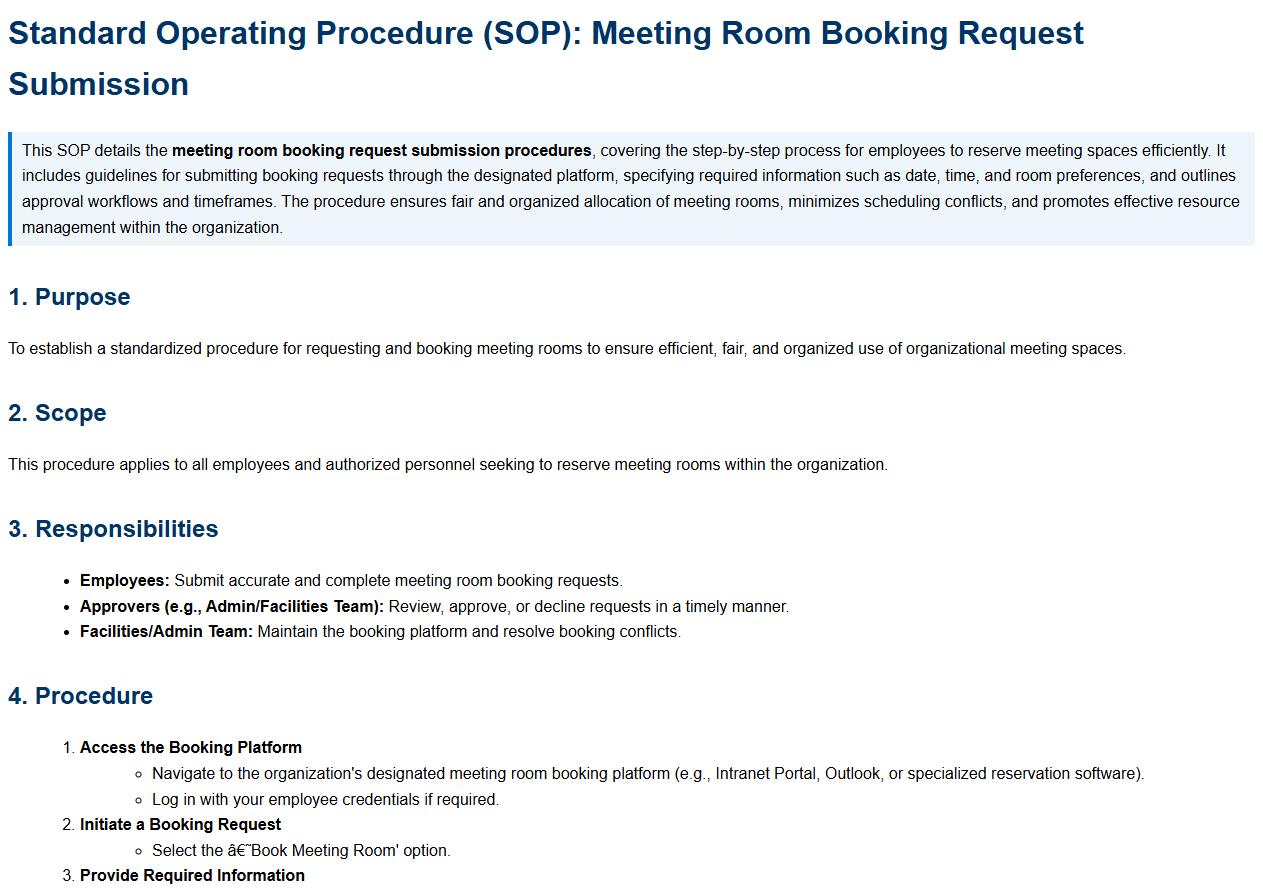
This SOP details the meeting room booking request submission procedures, covering the step-by-step process for employees to reserve meeting spaces efficiently. It includes guidelines for submitting booking requests through the designated platform, specifying required information such as date, time, and room preferences, and outlines approval workflows and timeframes. The procedure ensures fair and organized allocation of meeting rooms, minimizes scheduling conflicts, and promotes effective resource management within the organization.
Evaluation and approval workflow for booking requests.
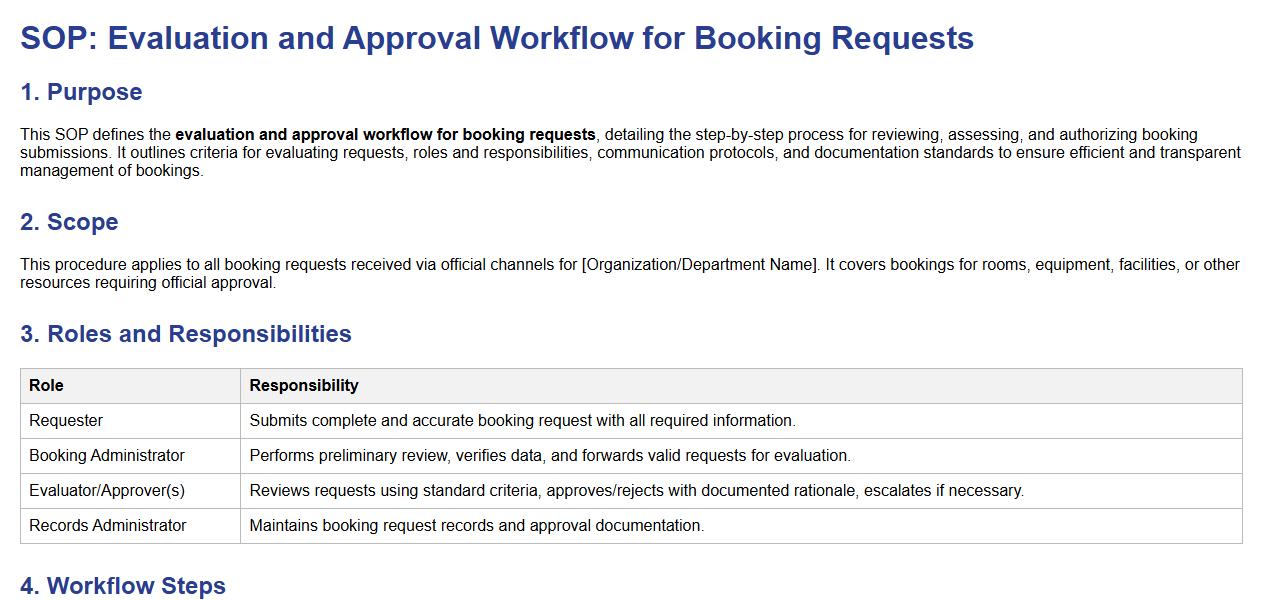
This SOP defines the evaluation and approval workflow for booking requests, detailing the step-by-step process for reviewing, assessing, and authorizing booking submissions. It includes criteria for evaluating requests, roles and responsibilities of approvers, communication protocols for confirmation or rejection, and documentation standards to ensure efficient and transparent management of bookings. The goal is to streamline booking operations, maintain accuracy, and ensure timely approvals to enhance customer satisfaction and operational efficiency.
Conflict-checking and resolution protocols for schedules.
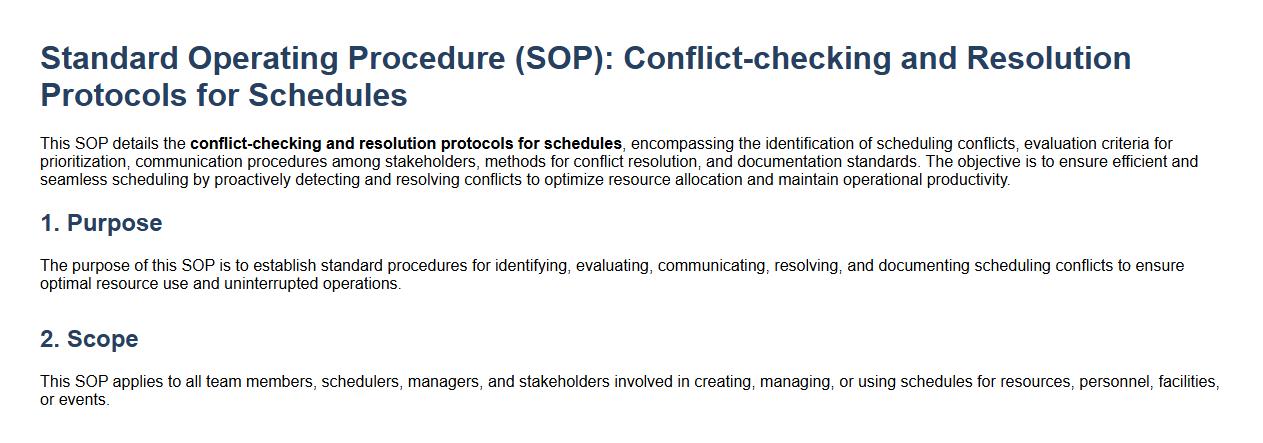
This SOP details the conflict-checking and resolution protocols for schedules, encompassing the identification of scheduling conflicts, evaluation criteria for prioritization, communication procedures among stakeholders, methods for conflict resolution, and documentation standards. The objective is to ensure efficient and seamless scheduling by proactively detecting and resolving conflicts to optimize resource allocation and maintain operational productivity.
Notification and confirmation process for participants.
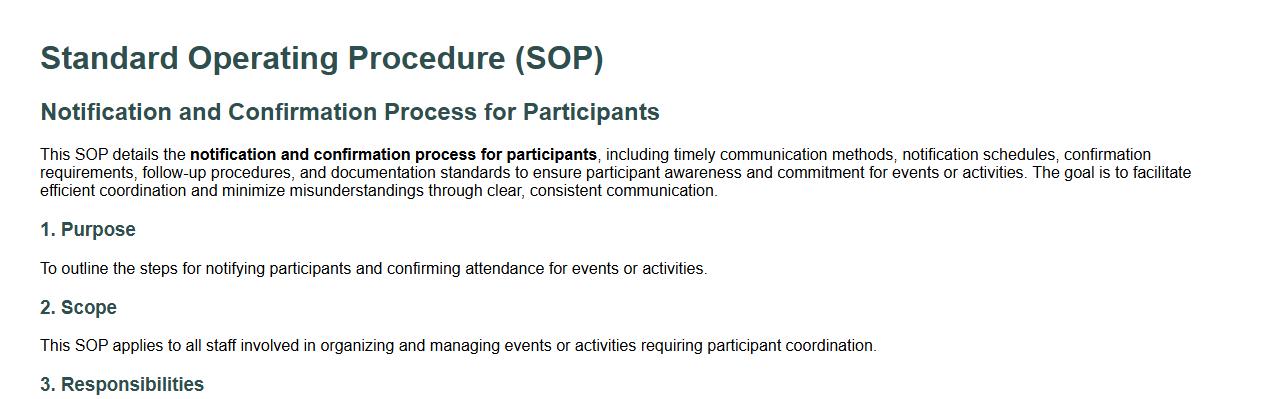
This SOP details the notification and confirmation process for participants, including timely communication methods, notification schedules, confirmation requirements, follow-up procedures, and documentation standards to ensure participant awareness and commitment for events or activities. The goal is to facilitate efficient coordination and minimize misunderstandings through clear, consistent communication.
Pre-meeting room setup and equipment checklist.
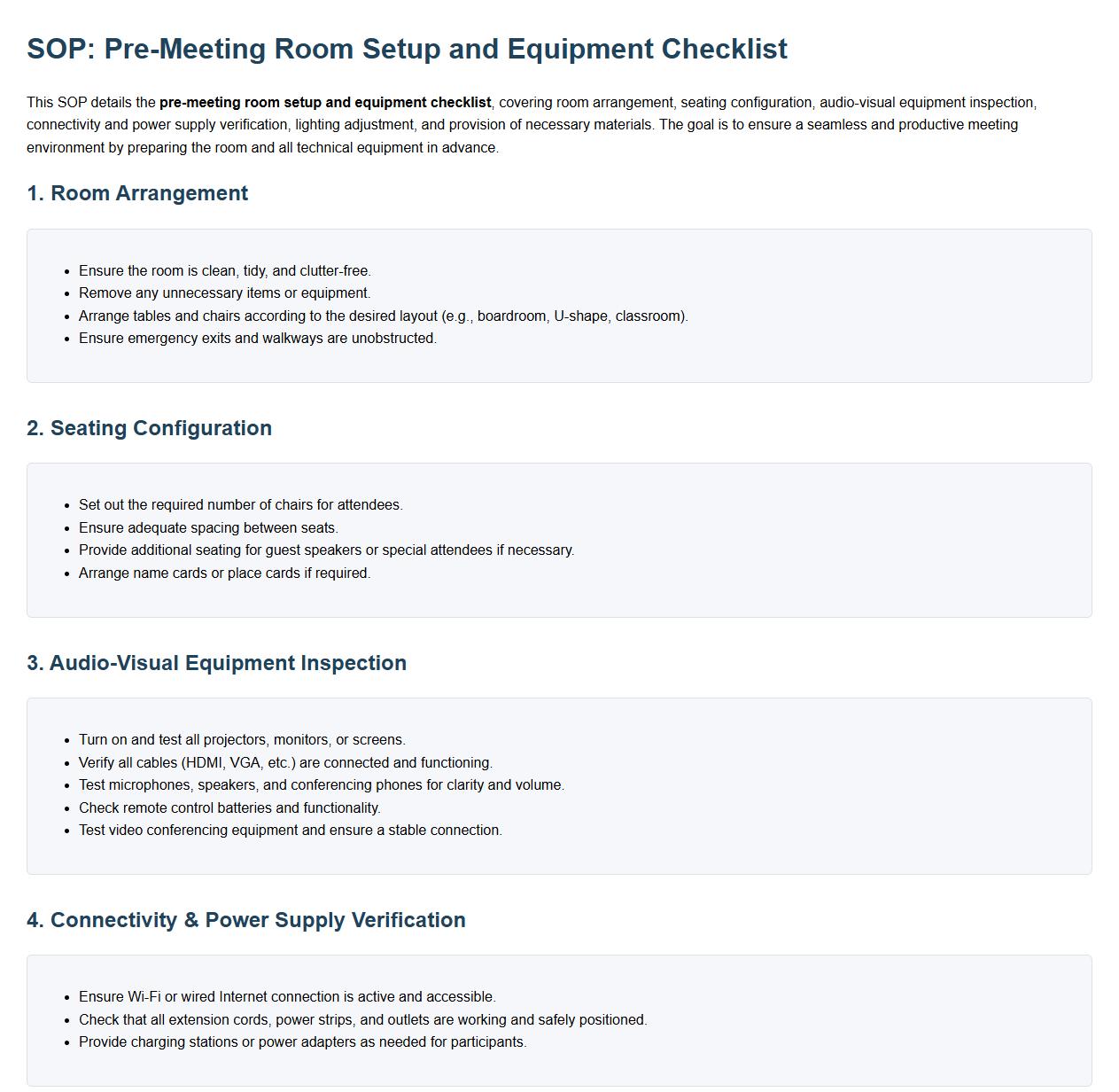
This SOP details the pre-meeting room setup and equipment checklist, covering room arrangement, seating configuration, audio-visual equipment inspection, connectivity and power supply verification, lighting adjustment, and provision of necessary materials. The goal is to ensure a seamless and productive meeting environment by preparing the room and all technical equipment in advance.
Guidelines for on-time room access and entry.
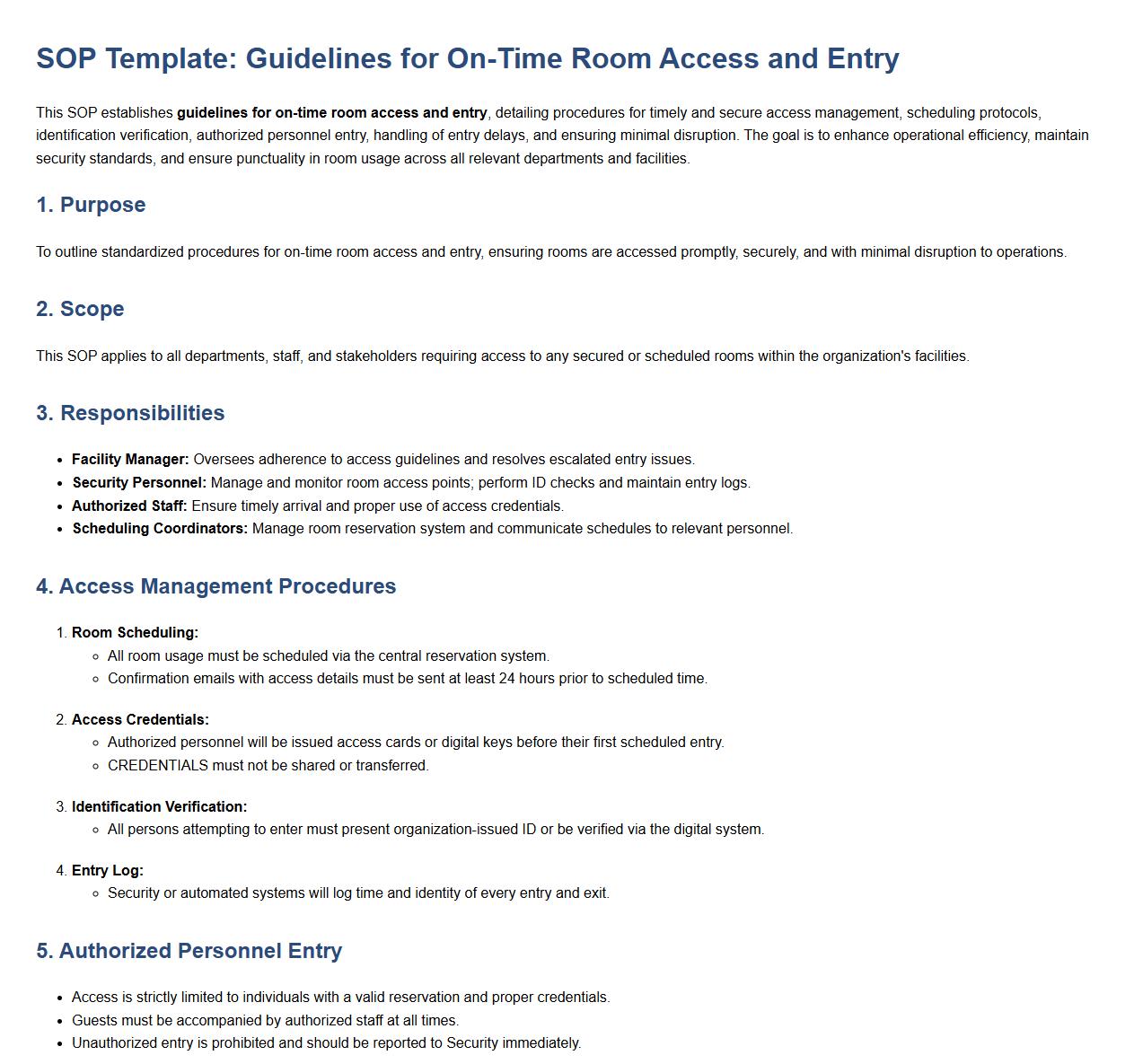
This SOP establishes guidelines for on-time room access and entry, detailing procedures for timely and secure access management, scheduling protocols, identification verification, authorized personnel entry, handling of entry delays, and ensuring minimal disruption. The goal is to enhance operational efficiency, maintain security standards, and ensure punctuality in room usage across all relevant departments and facilities.
Procedures for meeting room usage etiquette and restrictions.
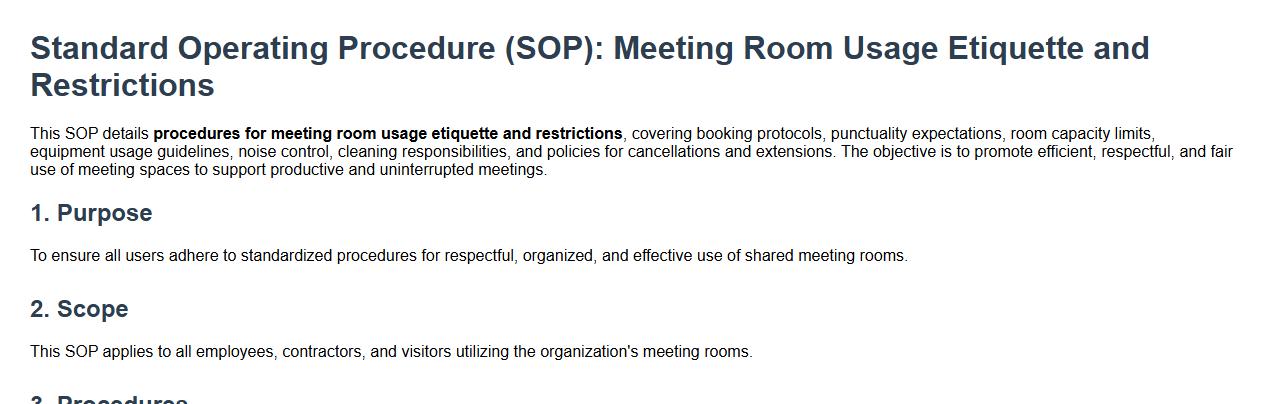
This SOP details procedures for meeting room usage etiquette and restrictions, covering booking protocols, punctuality expectations, room capacity limits, equipment usage guidelines, noise control, cleaning responsibilities, and policies for cancellations and extensions. The objective is to promote efficient, respectful, and fair use of meeting spaces to support productive and uninterrupted meetings.
Post-meeting room cleanup and reset requirements.
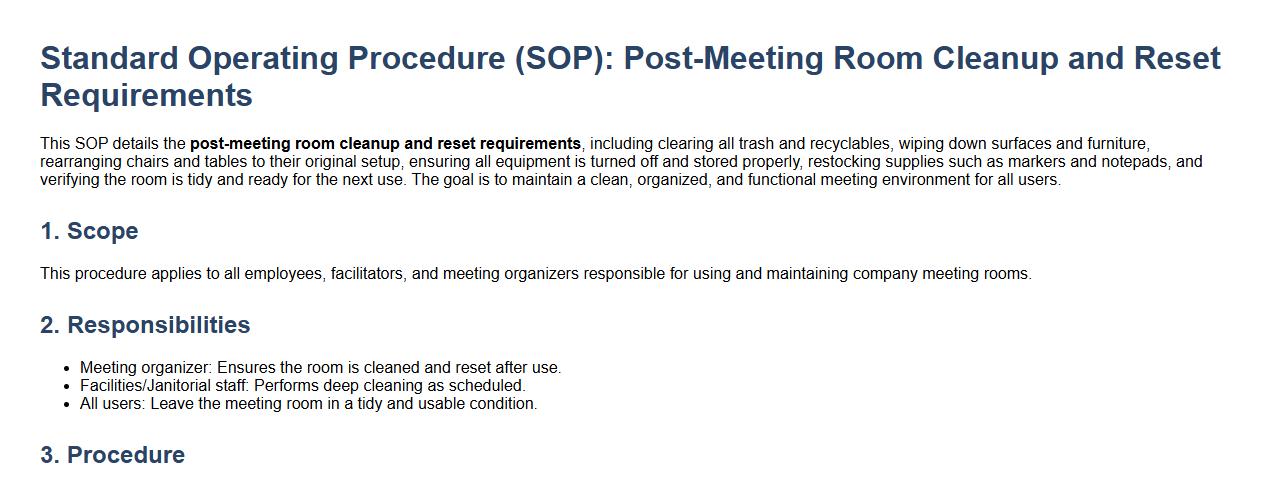
This SOP details the post-meeting room cleanup and reset requirements, including clearing all trash and recyclables, wiping down surfaces and furniture, rearranging chairs and tables to their original setup, ensuring all equipment is turned off and stored properly, restocking supplies such as markers and notepads, and verifying the room is tidy and ready for the next use. The goal is to maintain a clean, organized, and functional meeting environment for all users.
Incident and maintenance issue reporting process.
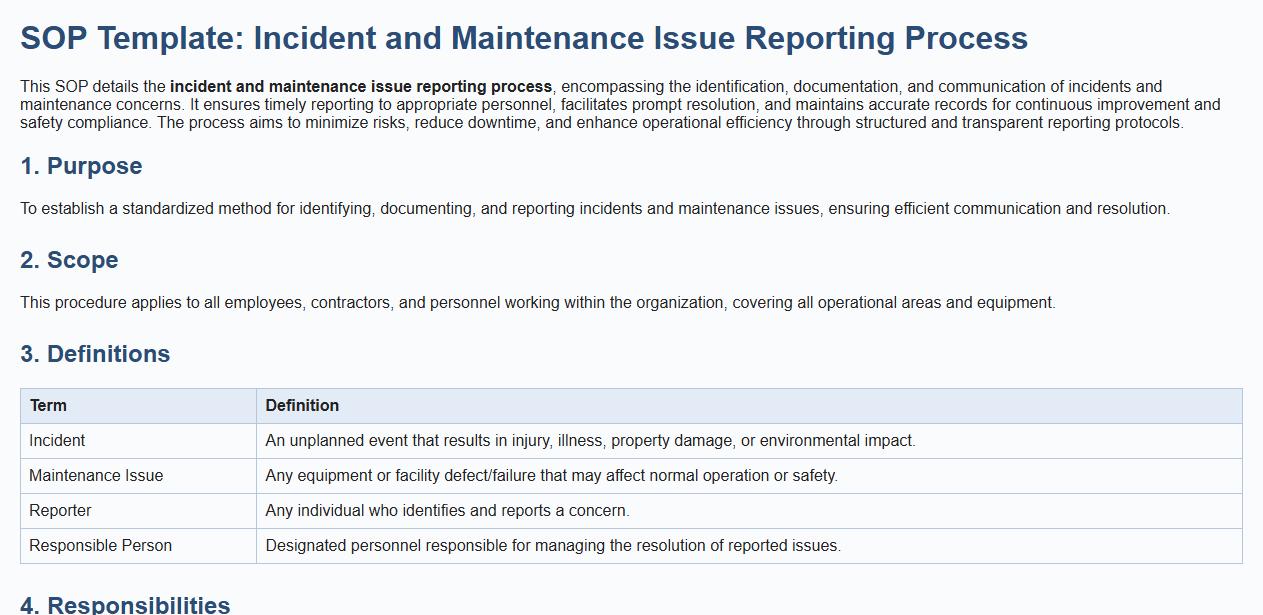
This SOP details the incident and maintenance issue reporting process, encompassing the identification, documentation, and communication of incidents and maintenance concerns. It ensures timely reporting to appropriate personnel, facilitates prompt resolution, and maintains accurate records for continuous improvement and safety compliance. The process aims to minimize risks, reduce downtime, and enhance operational efficiency through structured and transparent reporting protocols.
Meeting room usage logging and audit trail documentation.
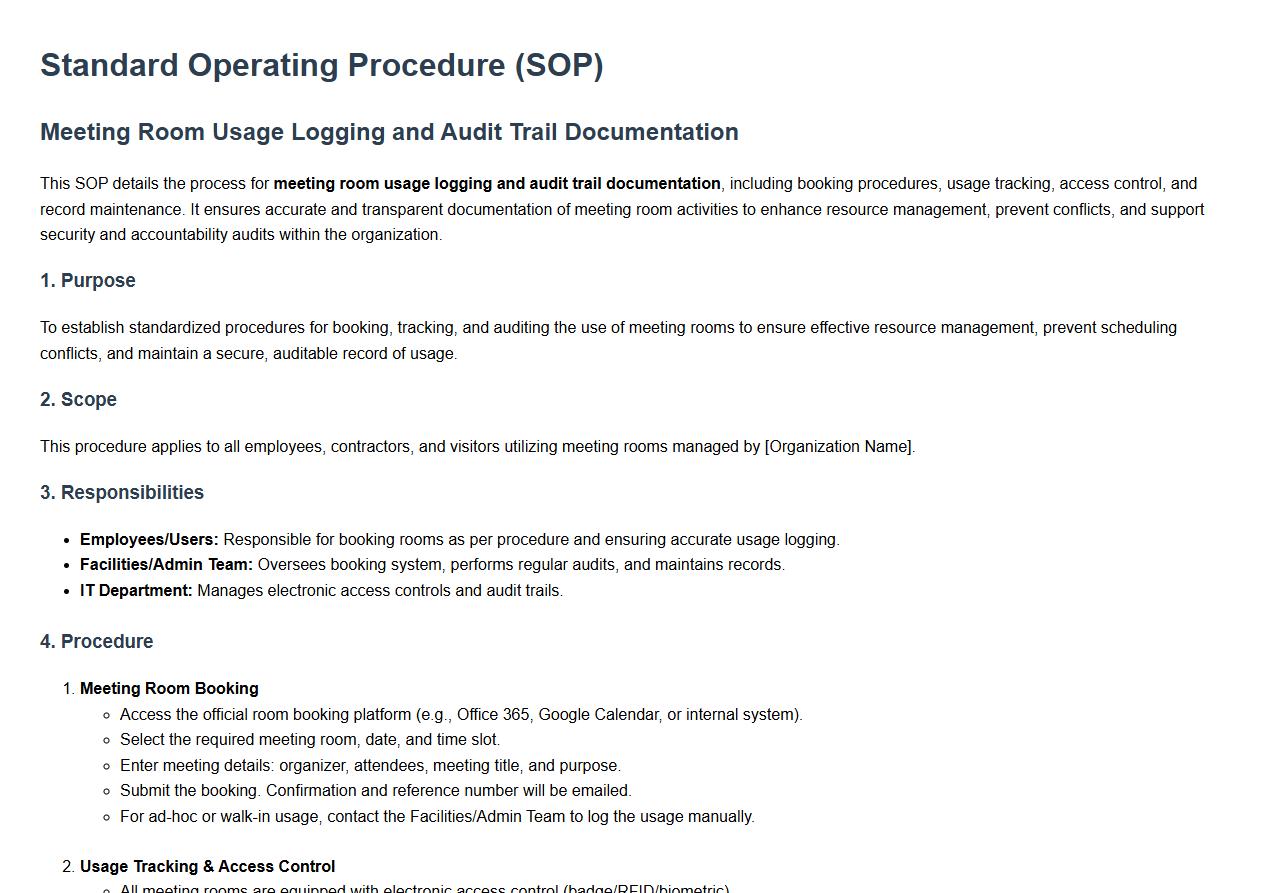
This SOP details the process for meeting room usage logging and audit trail documentation, including booking procedures, usage tracking, access control, and record maintenance. It ensures accurate and transparent documentation of meeting room activities to enhance resource management, prevent conflicts, and support security and accountability audits within the organization.
What are the required steps for booking a meeting room as per the SOP?
To book a meeting room, the first step is to check the availability of the desired meeting room through the centralized booking system. Next, the requester must fill out the booking form, providing details such as the date, time, purpose, and number of attendees. Finally, the request must be submitted for approval before the booking is confirmed.
Which stakeholders are authorized to approve meeting room scheduling requests?
Authorized stakeholders include department managers, office administrators, and facility coordinators who oversee room allocations. These individuals have the responsibility to review and approve or deny scheduling requests based on availability and organizational priorities. Approval ensures that resources are used efficiently and conflicts are minimized.
What procedures must be followed if a scheduled meeting is cancelled or rescheduled?
If a meeting is cancelled or rescheduled, the organizer must promptly update the booking system to reflect the changes. Notification should be sent to all affected participants and stakeholders, ensuring clear communication. This procedure helps maintain accurate scheduling and prevents misunderstandings.
What documentation or records must be maintained when scheduling meeting rooms?
The SOP requires maintaining records of all booking requests, approvals, and cancellations to ensure transparency and accountability. These documents are typically stored digitally in a centralized system that tracks meeting room utilization. Proper record-keeping supports audits and helps optimize resource management.
How does the SOP address conflict resolution when multiple requests for the same time slot occur?
When conflicting requests arise, the SOP prioritizes bookings based on factors such as the meeting's strategic importance and the requestor's role. Stakeholders involved may engage in negotiation or escalation to resolve the conflict amicably. This approach ensures fair allocation of meeting room resources and reduces scheduling disputes.