
The SOP Template for Invoice Processing and Record-Keeping streamlines the workflow by clearly outlining each step from invoice receipt to approval and archiving. This template ensures accurate financial documentation, reduces errors, and enhances accountability within the accounting department. Consistent use of the template supports compliance with regulatory standards and facilitates efficient auditing processes.
Invoice receipt and document verification.
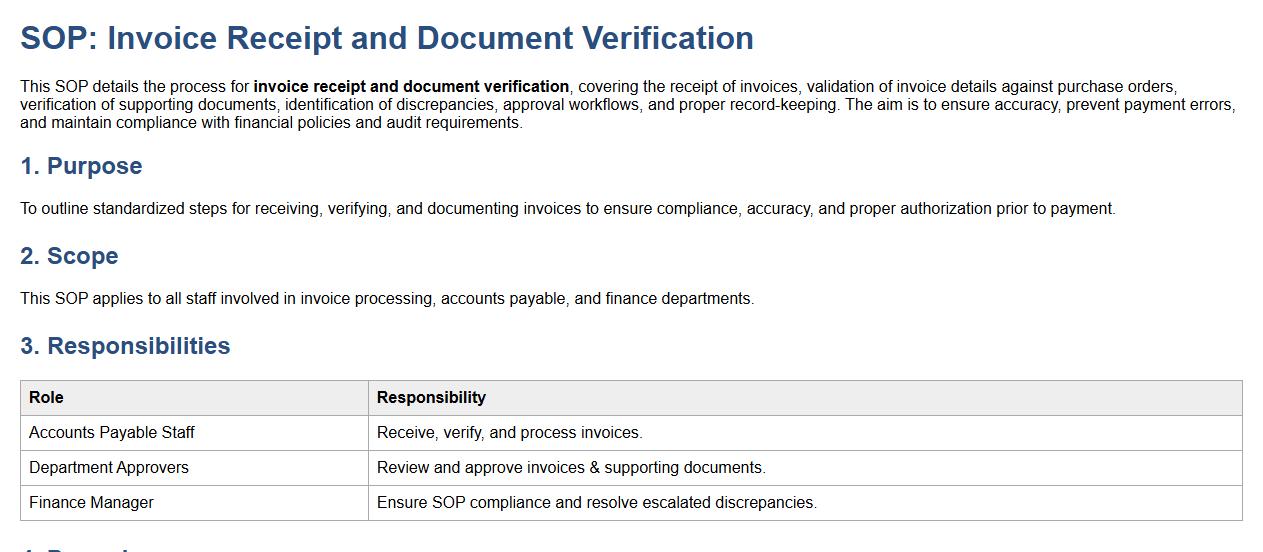
This SOP details the process for invoice receipt and document verification, covering the receipt of invoices, validation of invoice details against purchase orders, verification of supporting documents, identification of discrepancies, approval workflows, and proper record-keeping. The aim is to ensure accuracy, prevent payment errors, and maintain compliance with financial policies and audit requirements.
Vendor information validation and registration.
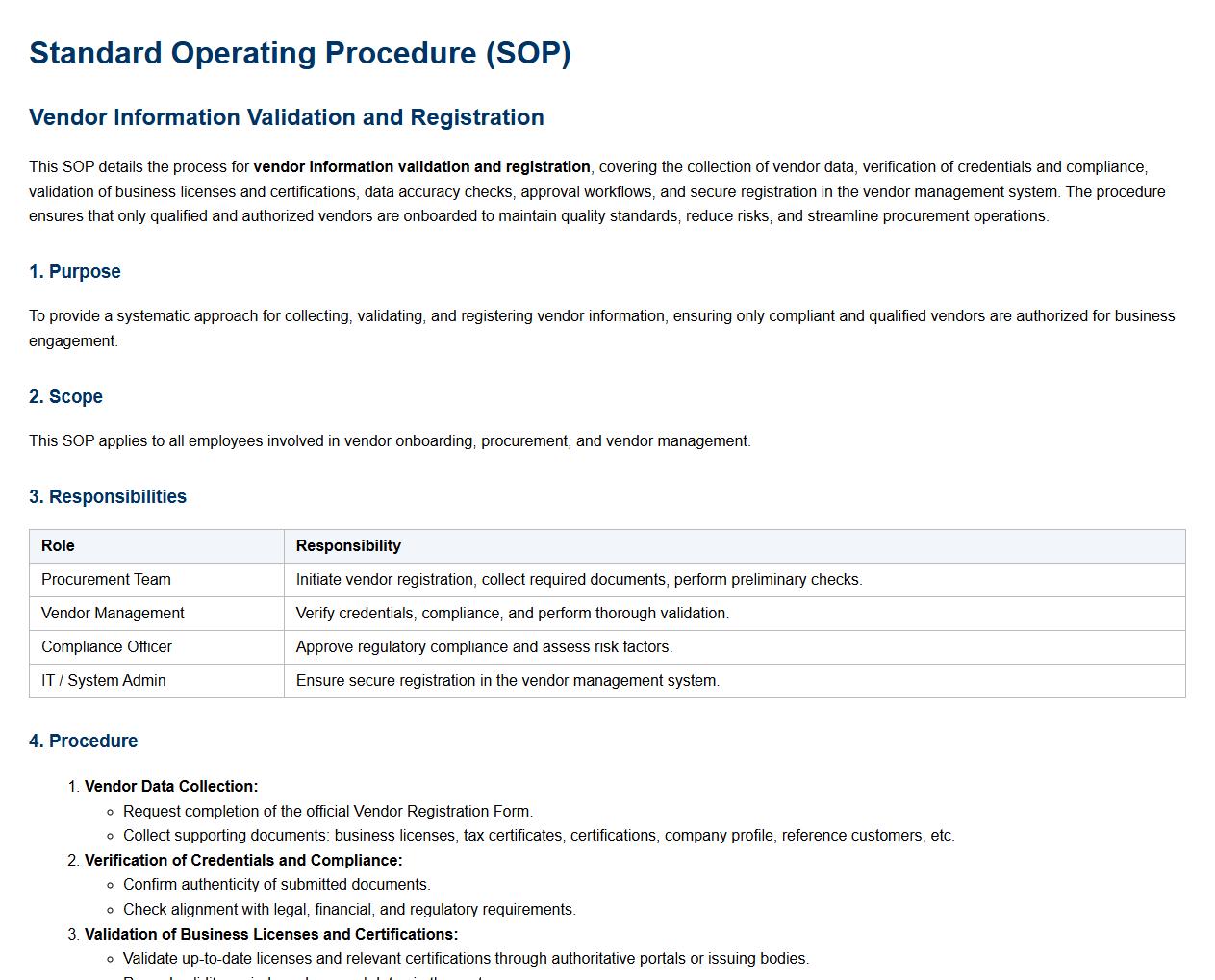
This SOP details the process for vendor information validation and registration, covering the collection of vendor data, verification of credentials and compliance, validation of business licenses and certifications, data accuracy checks, approval workflows, and secure registration in the vendor management system. The procedure ensures that only qualified and authorized vendors are onboarded to maintain quality standards, reduce risks, and streamline procurement operations.
Invoice data entry into accounting system.
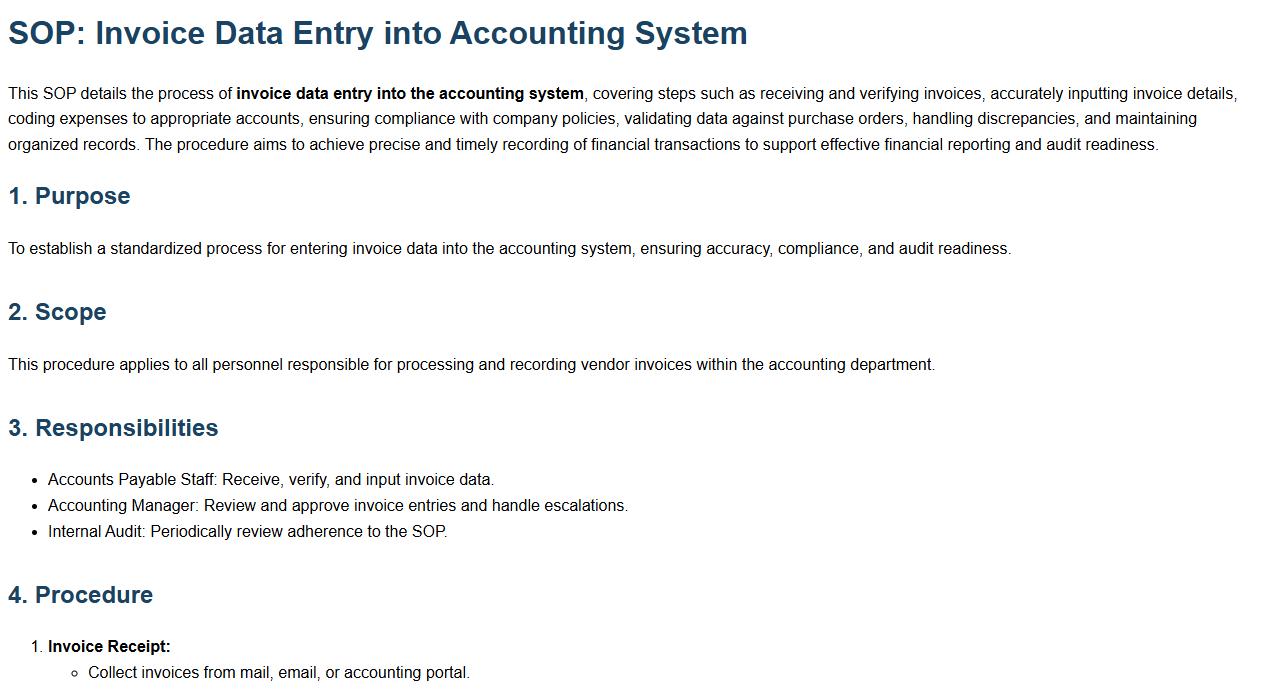
This SOP details the process of invoice data entry into the accounting system, covering steps such as receiving and verifying invoices, accurately inputting invoice details, coding expenses to appropriate accounts, ensuring compliance with company policies, validating data against purchase orders, handling discrepancies, and maintaining organized records. The procedure aims to achieve precise and timely recording of financial transactions to support effective financial reporting and audit readiness.
Purchase order (PO) and invoice matching procedures.
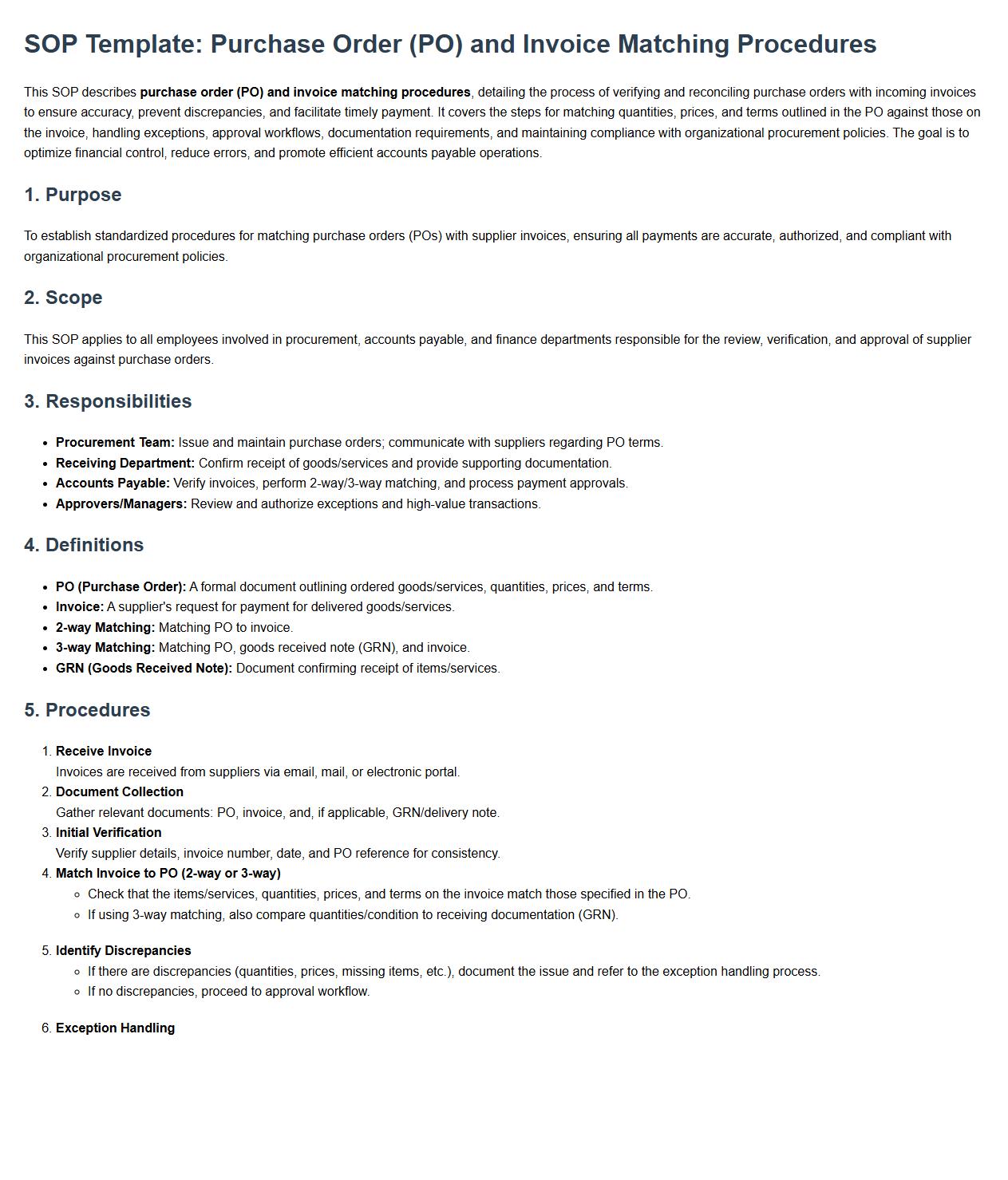
This SOP describes purchase order (PO) and invoice matching procedures, detailing the process of verifying and reconciling purchase orders with incoming invoices to ensure accuracy, prevent discrepancies, and facilitate timely payment. It covers the steps for matching quantities, prices, and terms outlined in the PO against those on the invoice, handling exceptions, approval workflows, documentation requirements, and maintaining compliance with organizational procurement policies. The goal is to optimize financial control, reduce errors, and promote efficient accounts payable operations.
Non-PO invoice approval and exception handling.
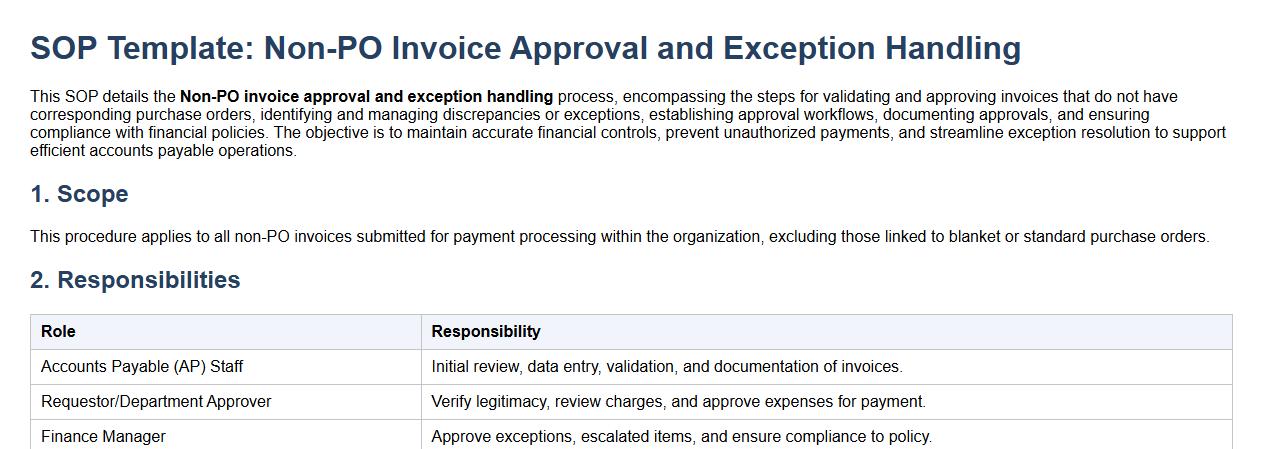
This SOP details the Non-PO invoice approval and exception handling process, encompassing the steps for validating and approving invoices that do not have corresponding purchase orders, identifying and managing discrepancies or exceptions, establishing approval workflows, documenting approvals, and ensuring compliance with financial policies. The objective is to maintain accurate financial controls, prevent unauthorized payments, and streamline exception resolution to support efficient accounts payable operations.
Payment authorization workflows and approval hierarchies.
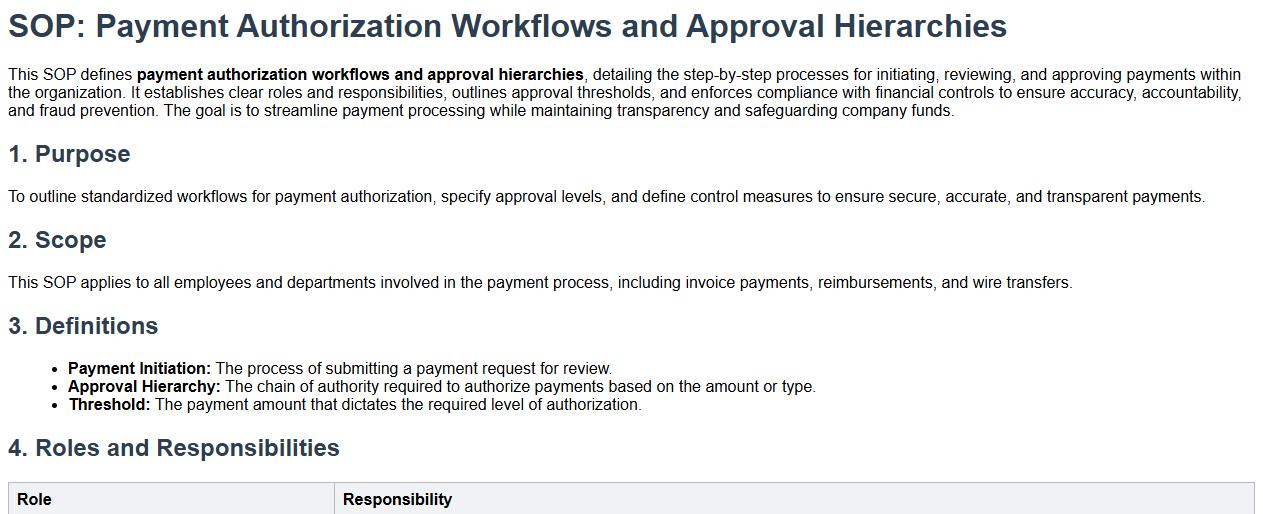
This SOP defines payment authorization workflows and approval hierarchies, detailing the step-by-step processes for initiating, reviewing, and approving payments within the organization. It establishes clear roles and responsibilities, outlines approval thresholds, and enforces compliance with financial controls to ensure accuracy, accountability, and fraud prevention. The goal is to streamline payment processing while maintaining transparency and safeguarding company funds.
Scheduled payment processing and disbursement protocols.
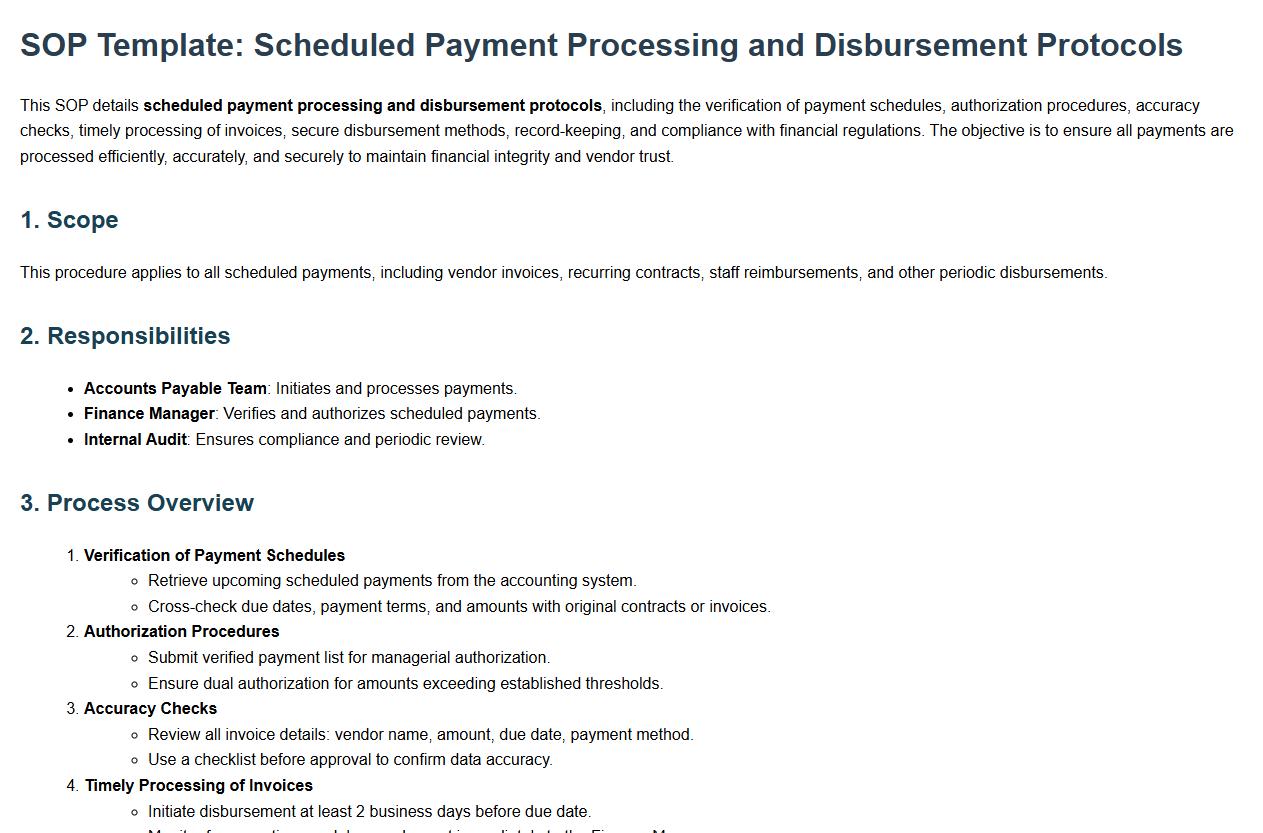
This SOP details scheduled payment processing and disbursement protocols, including the verification of payment schedules, authorization procedures, accuracy checks, timely processing of invoices, secure disbursement methods, record-keeping, and compliance with financial regulations. The objective is to ensure all payments are processed efficiently, accurately, and securely to maintain financial integrity and vendor trust.
Dispute resolution and correction procedures.
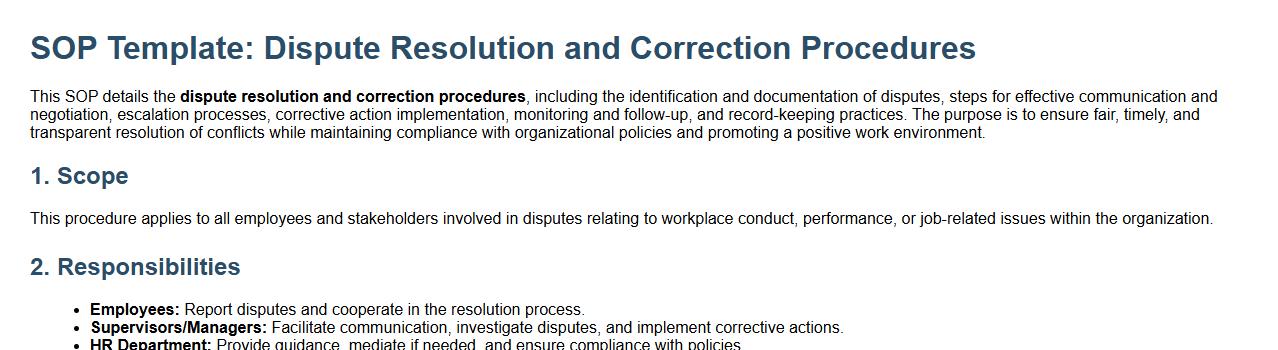
This SOP details the dispute resolution and correction procedures, including the identification and documentation of disputes, steps for effective communication and negotiation, escalation processes, corrective action implementation, monitoring and follow-up, and record-keeping practices. The purpose is to ensure fair, timely, and transparent resolution of conflicts while maintaining compliance with organizational policies and promoting a positive work environment.
Electronic and physical invoice storage and archiving.
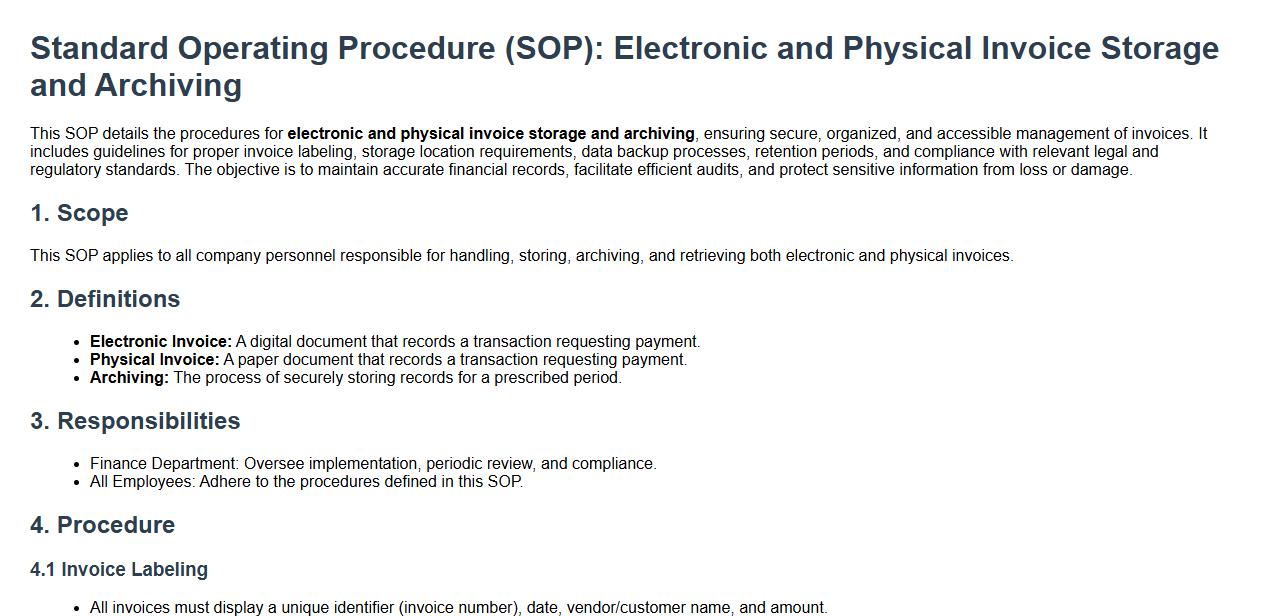
This SOP details the procedures for electronic and physical invoice storage and archiving, ensuring secure, organized, and accessible management of invoices. It includes guidelines for proper invoice labeling, storage location requirements, data backup processes, retention periods, and compliance with relevant legal and regulatory standards. The objective is to maintain accurate financial records, facilitate efficient audits, and protect sensitive information from loss or damage.
Periodic reconciliation and audit of invoice records.
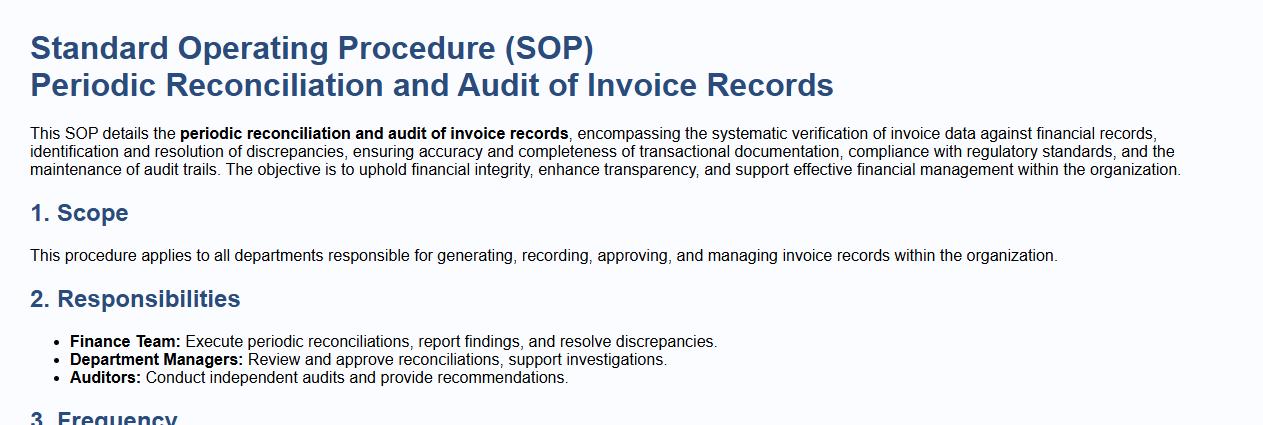
This SOP details the periodic reconciliation and audit of invoice records, encompassing the systematic verification of invoice data against financial records, identification and resolution of discrepancies, ensuring accuracy and completeness of transactional documentation, compliance with regulatory standards, and the maintenance of audit trails. The objective is to uphold financial integrity, enhance transparency, and support effective financial management within the organization.
What is the primary objective of the SOP for Invoice Processing and Record-Keeping?
The primary objective of the SOP is to ensure consistent and accurate handling of all invoices received by the organization. It aims to streamline the process to reduce errors and delays in payment. Ultimately, this improves financial compliance and audit readiness.
Which stages are included in the standard invoice processing workflow as per the SOP?
The workflow includes stages such as invoice receipt, verification, approval, and payment processing. Each stage is designed to ensure accuracy and proper authorization before moving forward. This structured approach helps maintain financial integrity throughout the process.
What mandatory documentation must be maintained according to the SOP?
The SOP requires maintaining copies of all received invoices, approval records, and payment confirmations. Additionally, supporting documents such as purchase orders and delivery receipts must be archived. This comprehensive documentation supports transparency and audit trails.
Who is responsible for verifying and approving invoices under this SOP?
Responsibility for verifying and approving invoices lies with designated finance personnel and departmental managers. These individuals ensure that invoices are accurate and legitimate before approval. Their oversight is critical to preventing fraudulent and erroneous payments.
What record retention period is specified in the SOP for processed invoices?
The SOP specifies a record retention period of seven years for all processed invoices and related documents. This duration complies with legal and regulatory standards, supporting potential audits and financial reviews. Proper retention safeguards organizational accountability.