

A SOP Template for School Event Organization provides a clear, step-by-step guide to planning and executing school events efficiently. It ensures all roles, responsibilities, and timelines are well-defined to maintain smooth coordination among staff and volunteers. Using this template helps minimize errors and enhances the overall success of school functions.
Event planning initiation and goal setting.
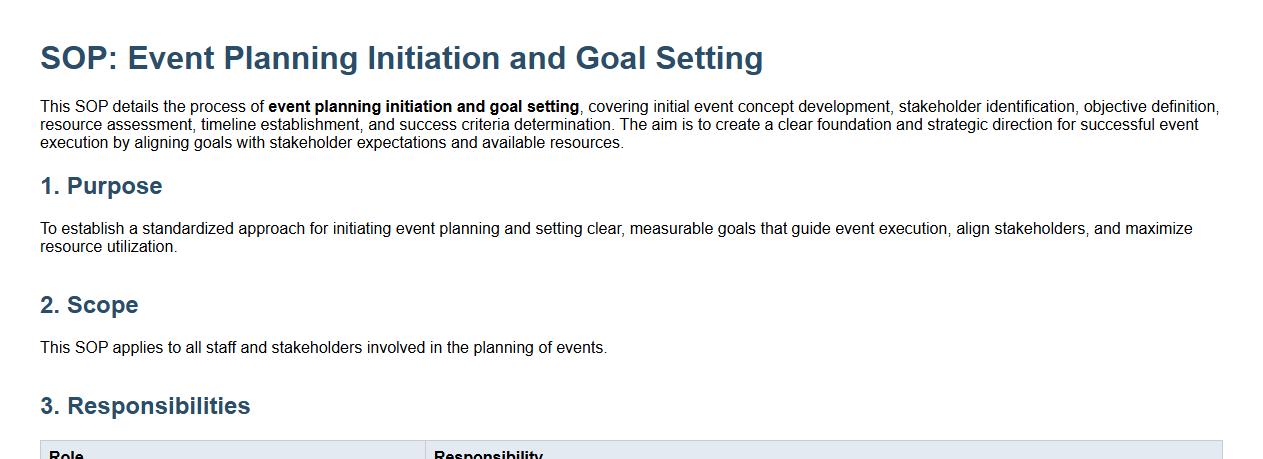
This SOP details the process of event planning initiation and goal setting, covering initial event concept development, stakeholder identification, objective definition, resource assessment, timeline establishment, and success criteria determination. The aim is to create a clear foundation and strategic direction for successful event execution by aligning goals with stakeholder expectations and available resources.
Budget preparation and financial approval process.
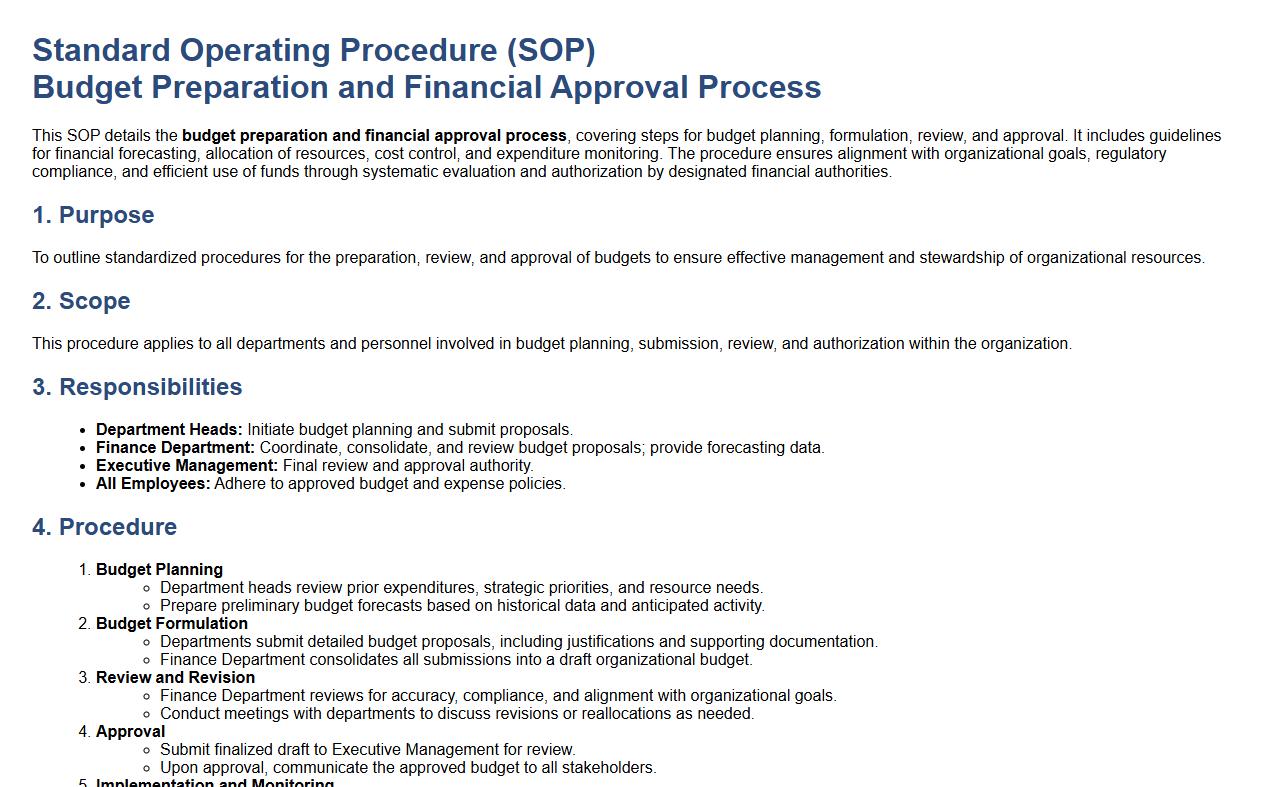
This SOP details the budget preparation and financial approval process, covering steps for budget planning, formulation, review, and approval. It includes guidelines for financial forecasting, allocation of resources, cost control, and expenditure monitoring. The procedure ensures alignment with organizational goals, regulatory compliance, and efficient use of funds through systematic evaluation and authorization by designated financial authorities.
Venue selection and booking procedure.
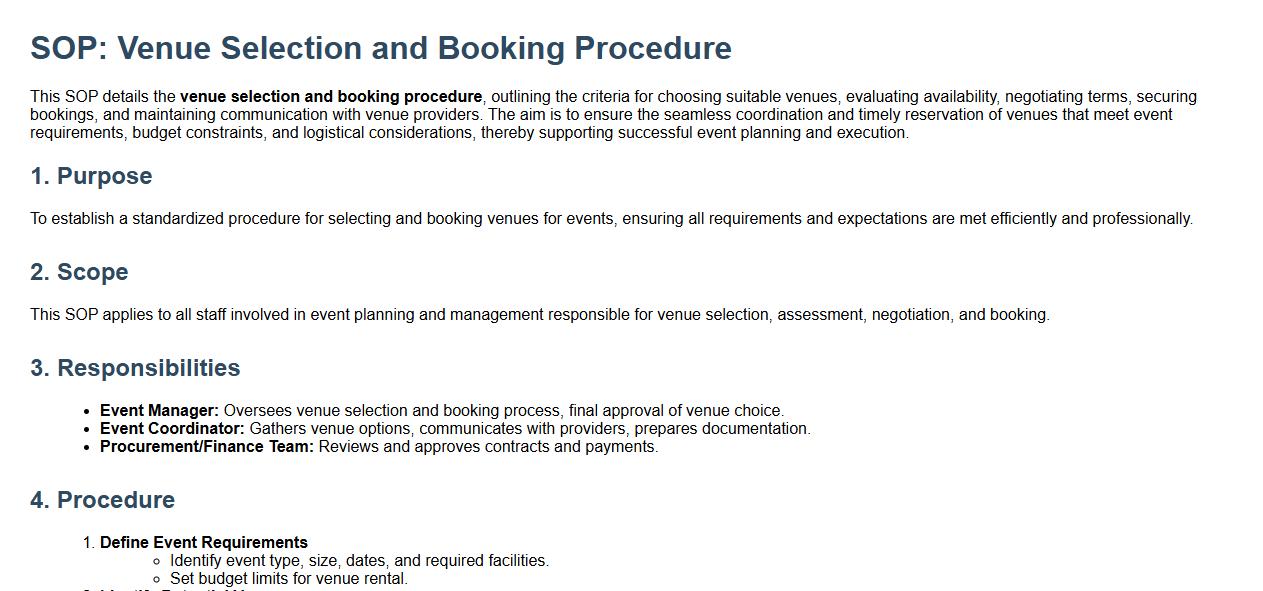
This SOP details the venue selection and booking procedure, outlining the criteria for choosing suitable venues, evaluating availability, negotiating terms, securing bookings, and maintaining communication with venue providers. The aim is to ensure the seamless coordination and timely reservation of venues that meet event requirements, budget constraints, and logistical considerations, thereby supporting successful event planning and execution.
Event promotion and communication strategy.
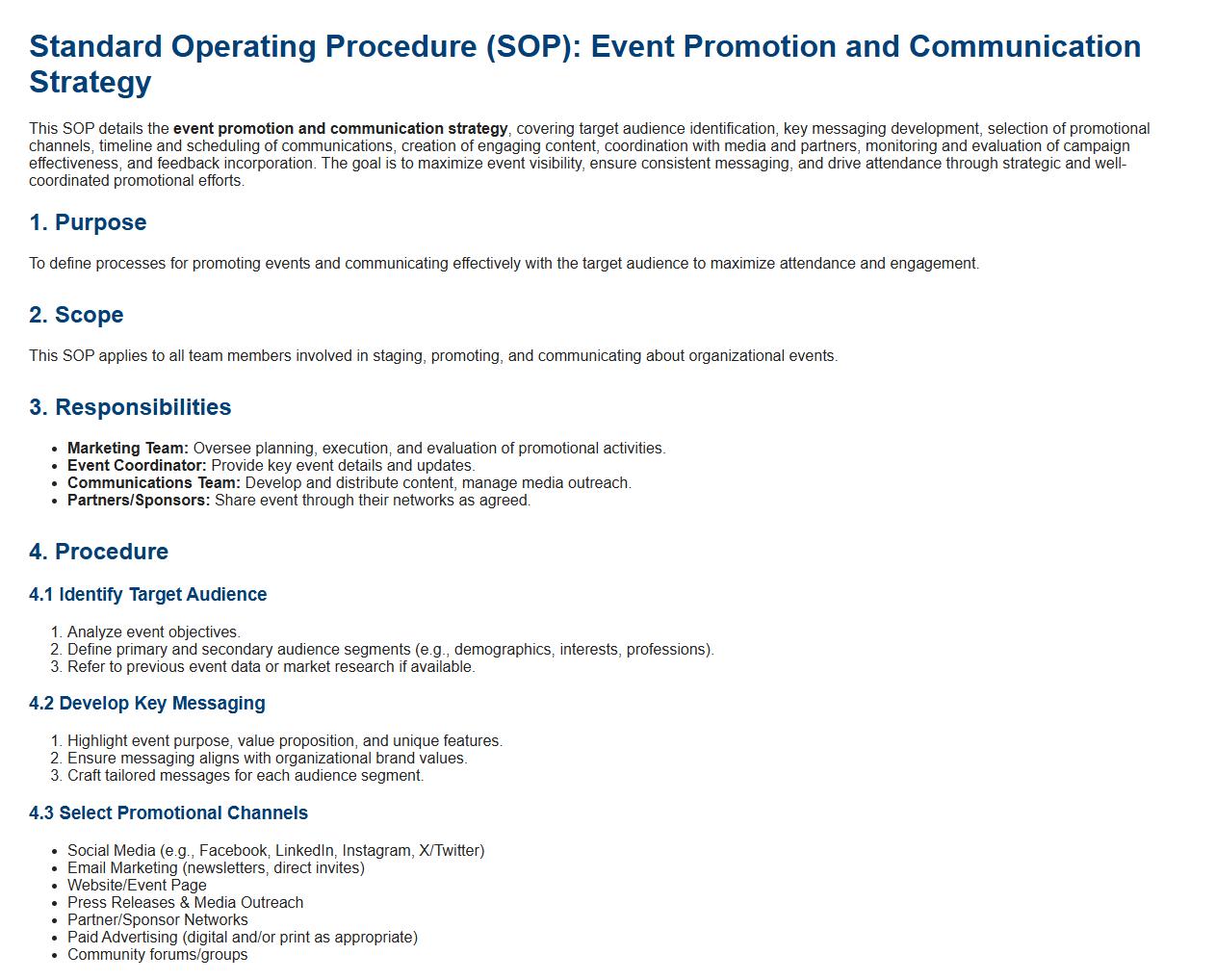
This SOP details the event promotion and communication strategy, covering target audience identification, key messaging development, selection of promotional channels, timeline and scheduling of communications, creation of engaging content, coordination with media and partners, monitoring and evaluation of campaign effectiveness, and feedback incorporation. The goal is to maximize event visibility, ensure consistent messaging, and drive attendance through strategic and well-coordinated promotional efforts.
Volunteer/staff recruitment and role assignment.
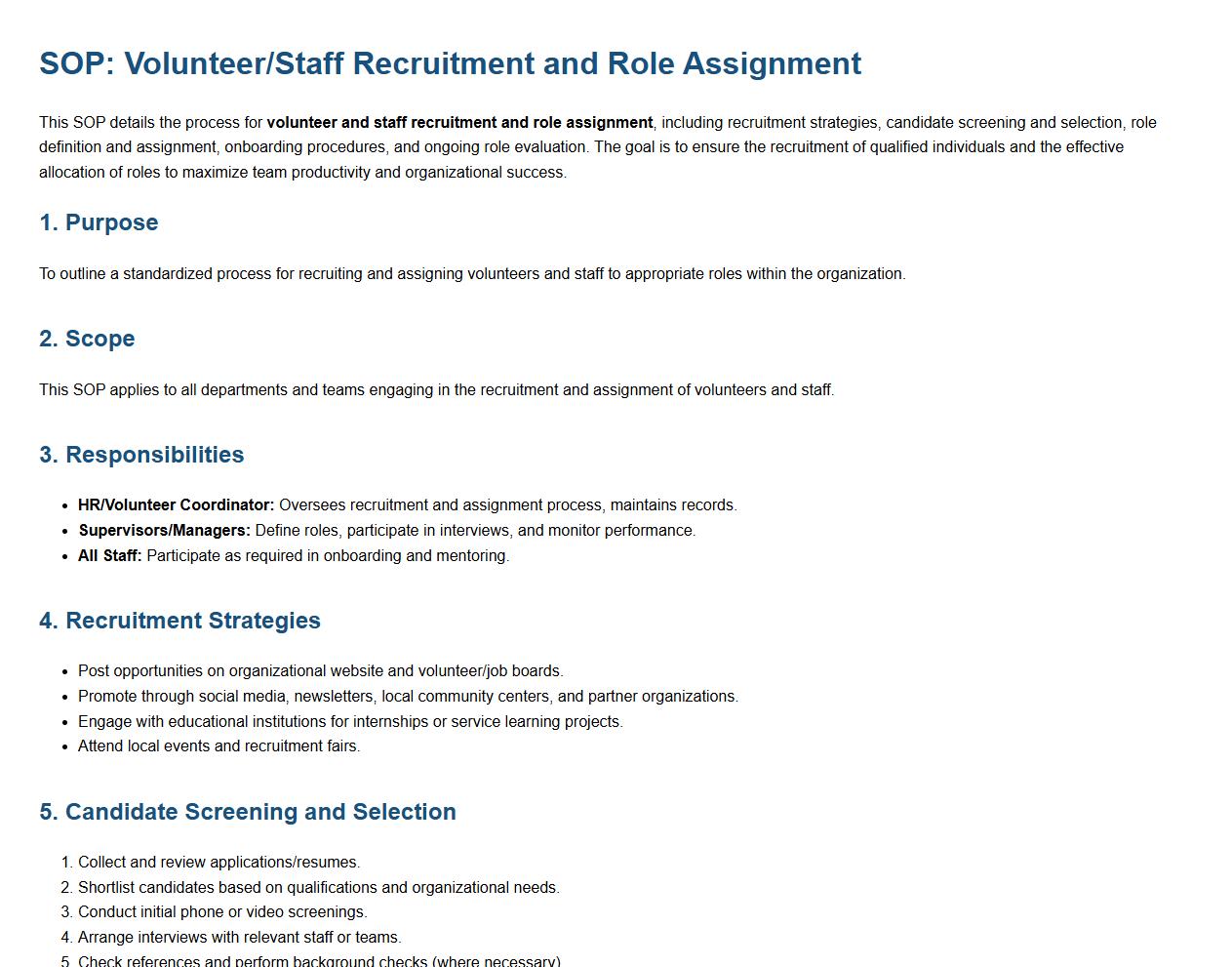
This SOP details the process for volunteer and staff recruitment and role assignment, including recruitment strategies, candidate screening and selection, role definition and assignment, onboarding procedures, and ongoing role evaluation. The goal is to ensure the recruitment of qualified individuals and the effective allocation of roles to maximize team productivity and organizational success.
RSVP and attendee registration management.
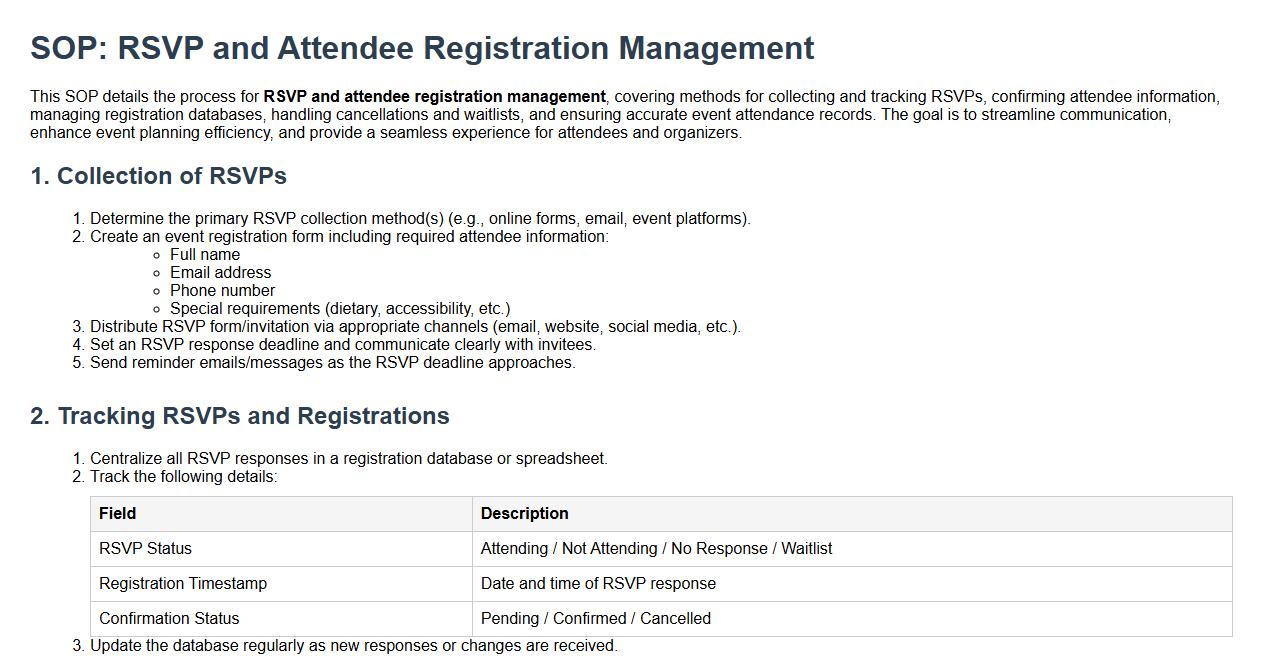
This SOP details the process for RSVP and attendee registration management, covering methods for collecting and tracking RSVPs, confirming attendee information, managing registration databases, handling cancellations and waitlists, and ensuring accurate event attendance records. The goal is to streamline communication, enhance event planning efficiency, and provide a seamless experience for attendees and organizers.
Procurement and vendor coordination guidelines.
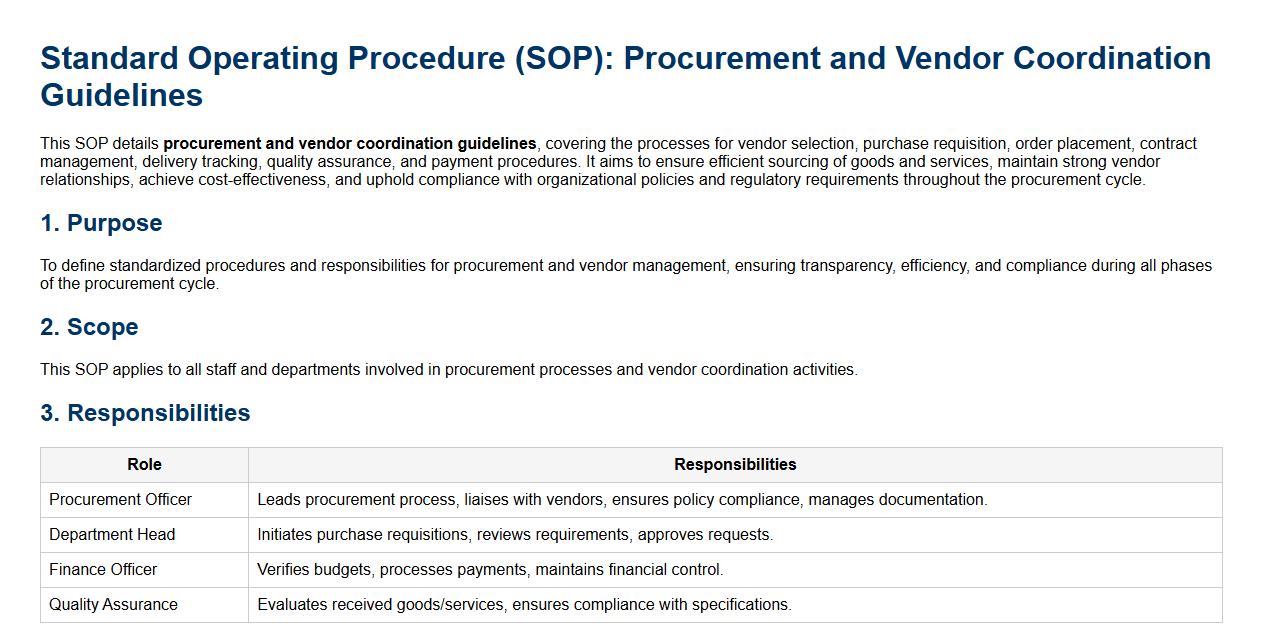
This SOP details procurement and vendor coordination guidelines, covering the processes for vendor selection, purchase requisition, order placement, contract management, delivery tracking, quality assurance, and payment procedures. It aims to ensure efficient sourcing of goods and services, maintain strong vendor relationships, achieve cost-effectiveness, and uphold compliance with organizational policies and regulatory requirements throughout the procurement cycle.
Health, safety, and emergency response protocols.
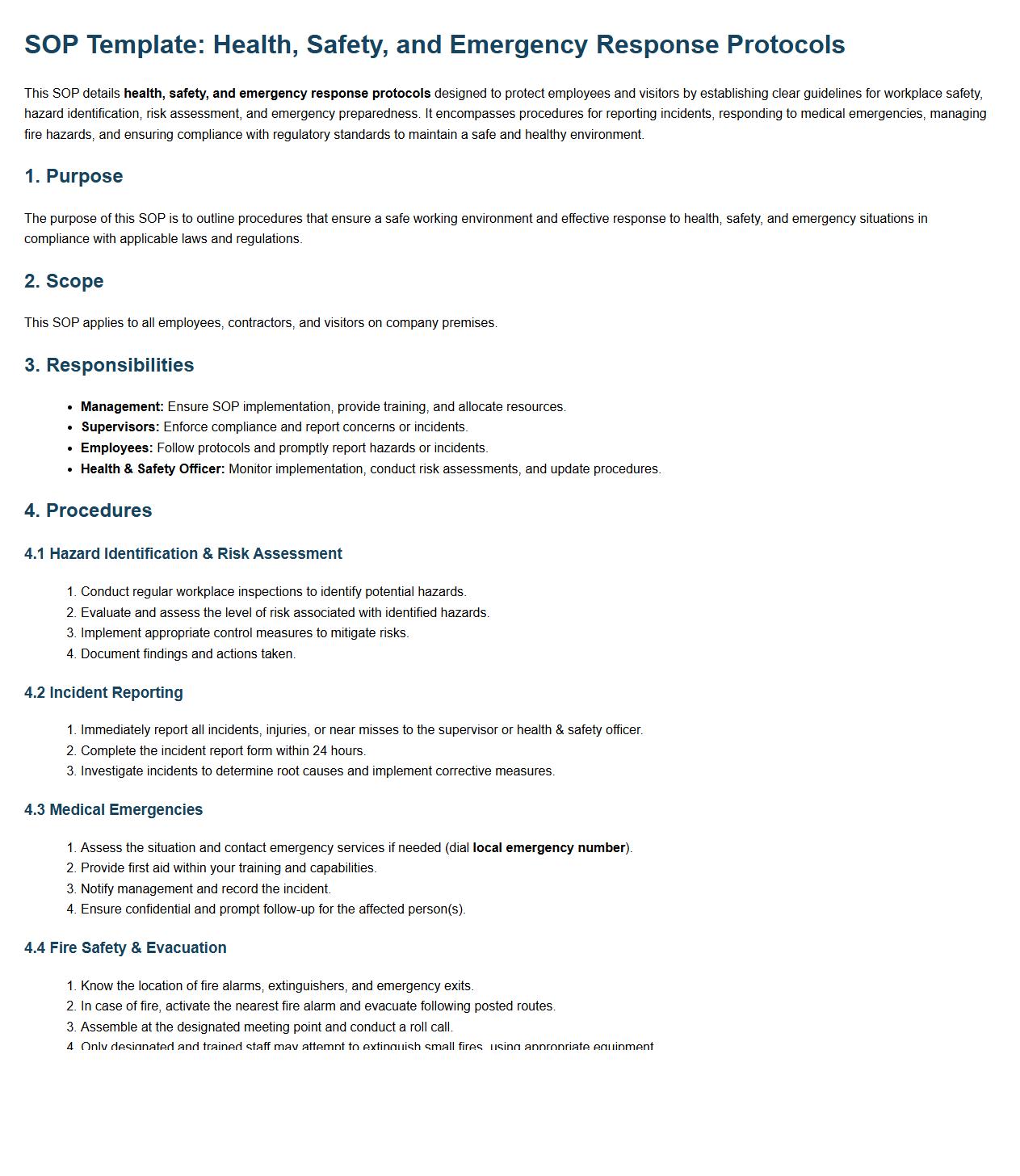
This SOP details health, safety, and emergency response protocols designed to protect employees and visitors by establishing clear guidelines for workplace safety, hazard identification, risk assessment, and emergency preparedness. It encompasses procedures for reporting incidents, responding to medical emergencies, managing fire hazards, and ensuring compliance with regulatory standards to maintain a safe and healthy environment.
Event day setup, execution, and management.
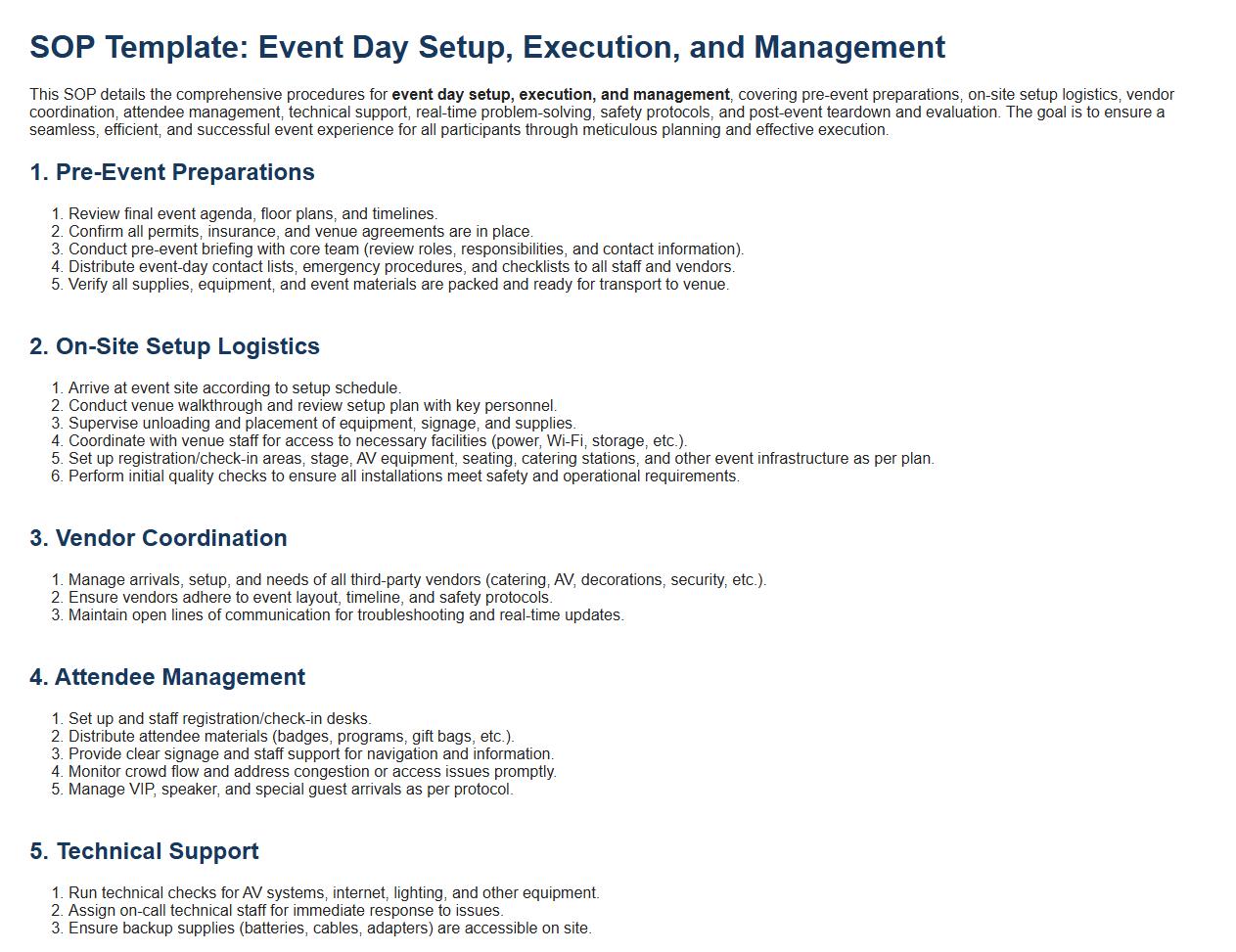
This SOP details the comprehensive procedures for event day setup, execution, and management, covering pre-event preparations, on-site setup logistics, vendor coordination, attendee management, technical support, real-time problem-solving, safety protocols, and post-event teardown and evaluation. The goal is to ensure a seamless, efficient, and successful event experience for all participants through meticulous planning and effective execution.
Post-event feedback collection and reporting.
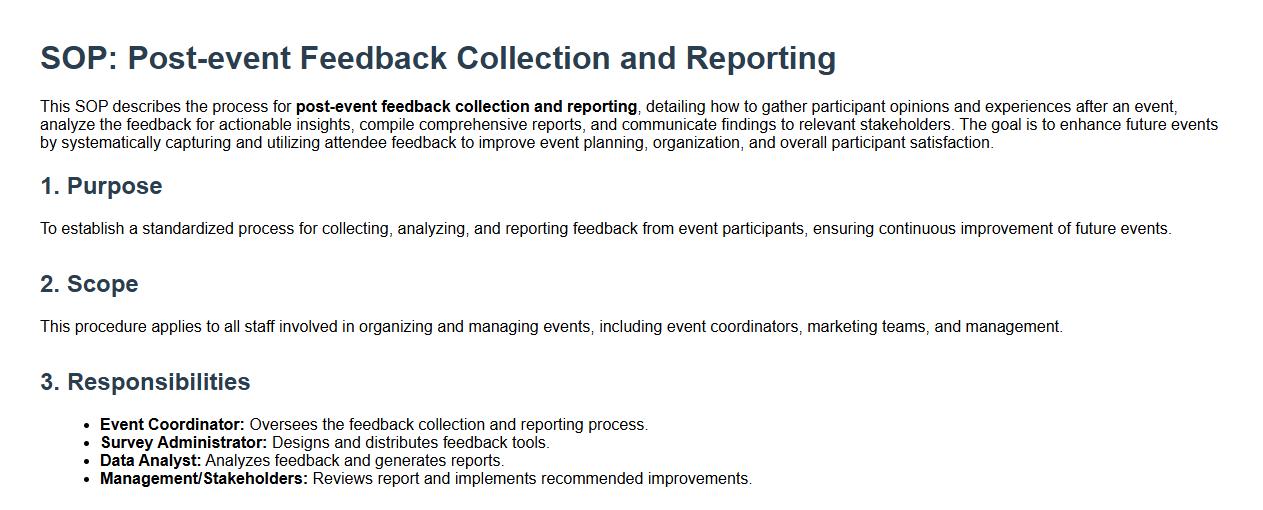
This SOP describes the process for post-event feedback collection and reporting, detailing how to gather participant opinions and experiences after an event, analyze the feedback for actionable insights, compile comprehensive reports, and communicate findings to relevant stakeholders. The goal is to enhance future events by systematically capturing and utilizing attendee feedback to improve event planning, organization, and overall participant satisfaction.
Key Roles and Responsibilities in the SOP for School Event Organization
The SOP clearly defines the roles and responsibilities for all individuals involved in school event planning to ensure smooth execution. Event coordinators are tasked with overall management, while specific teams handle logistics, publicity, and student participation. Clear delegation of duties minimizes confusion and streamlines task completion for successful event outcomes.
Approval Processes Required Before Conducting a School Event
According to the SOP, all school events must receive formal approval from designated authorities prior to commencement. This includes submitting detailed event proposals and risk assessments for review by the principal or event committee. Timely approval ensures compliance with school policies and mitigates potential issues during the event.
Standard Procedures for Risk Management and Safety Mandated in the SOP
The SOP mandates strict adherence to risk management and safety protocols to protect participants and staff during school events. This involves conducting risk assessments, securing emergency plans, and providing adequate supervision throughout the event duration. Compliance with these procedures is critical to maintaining a safe environment and minimizing liability.
Communication Protocols Between Event Organizers and Stakeholders
Effective communication protocols are specified in the SOP to ensure transparency and coordination among organizers, school staff, parents, and vendors. Regular updates, meetings, and formal channels for feedback are established to address concerns and disseminate information promptly. These protocols facilitate collaboration and prevent misunderstandings leading up to the event.
Documentation and Record-Keeping Requirements for School Events
The SOP outlines comprehensive documentation and record-keeping practices to capture event plans, approvals, and post-event evaluations. Detailed records support accountability, enable future reference, and assist in continuous improvement of event processes. Proper documentation also safeguards compliance with school regulations and external audit requirements.