
A SOP Template for Virtual Classroom Setup provides a clear and structured guide to streamline the process of preparing an online learning environment. It outlines essential steps, including technology requirements, platform configuration, and user access protocols to ensure a smooth and efficient virtual class experience. This template enhances consistency and helps educators maintain a professional and effective digital teaching space.
Virtual classroom platform selection and account setup.
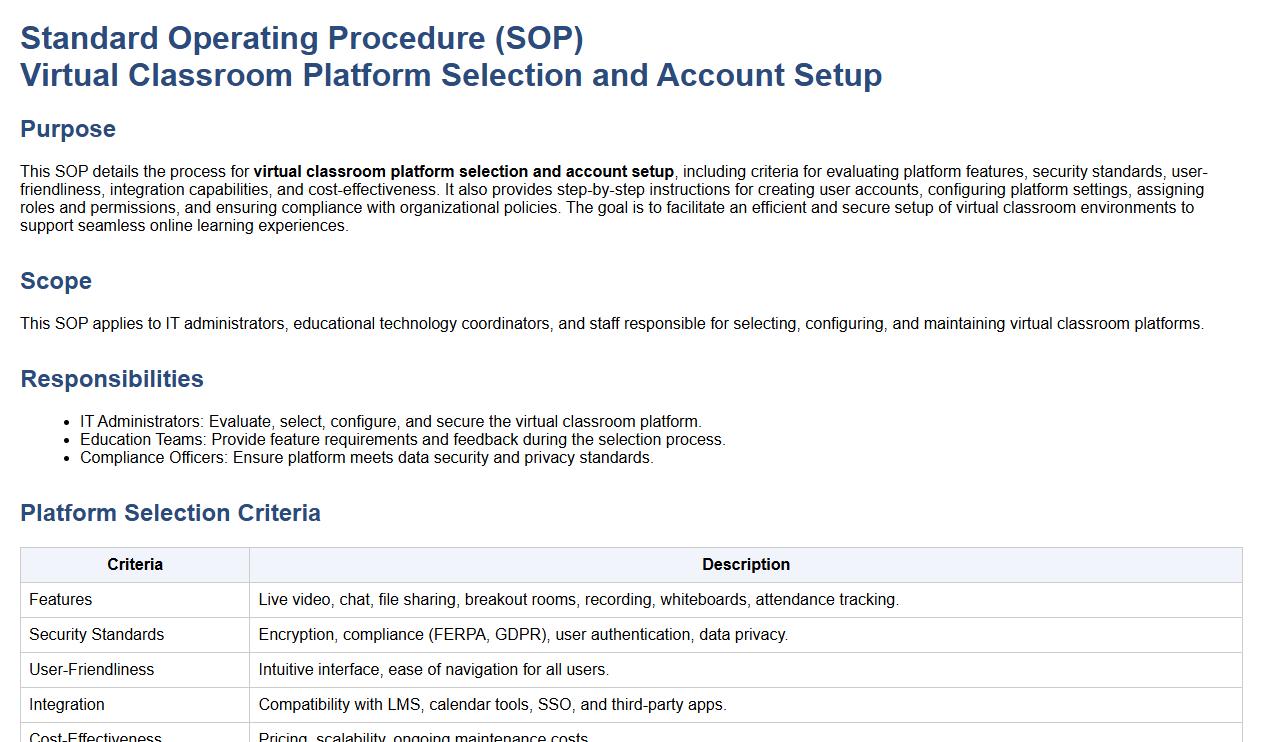
This SOP details the process for virtual classroom platform selection and account setup, including criteria for evaluating platform features, security standards, user-friendliness, integration capabilities, and cost-effectiveness. It also provides step-by-step instructions for creating user accounts, configuring platform settings, assigning roles and permissions, and ensuring compliance with organizational policies. The goal is to facilitate an efficient and secure setup of virtual classroom environments to support seamless online learning experiences.
Class schedule creation and time zone management.
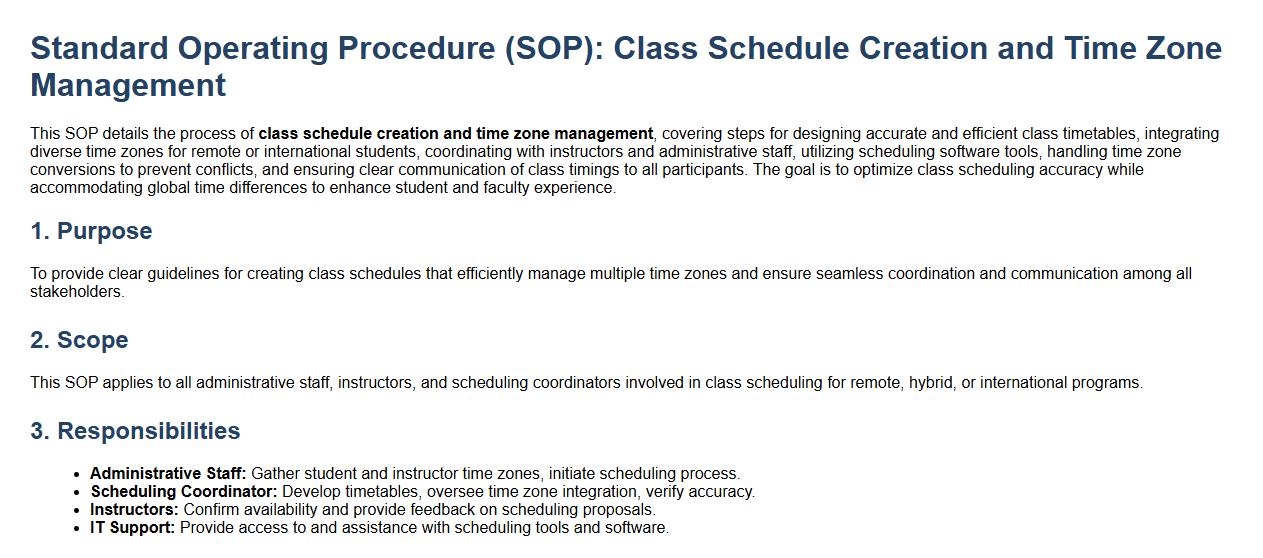
This SOP details the process of class schedule creation and time zone management, covering steps for designing accurate and efficient class timetables, integrating diverse time zones for remote or international students, coordinating with instructors and administrative staff, utilizing scheduling software tools, handling time zone conversions to prevent conflicts, and ensuring clear communication of class timings to all participants. The goal is to optimize class scheduling accuracy while accommodating global time differences to enhance student and faculty experience.
Participant invitation and access protocol.
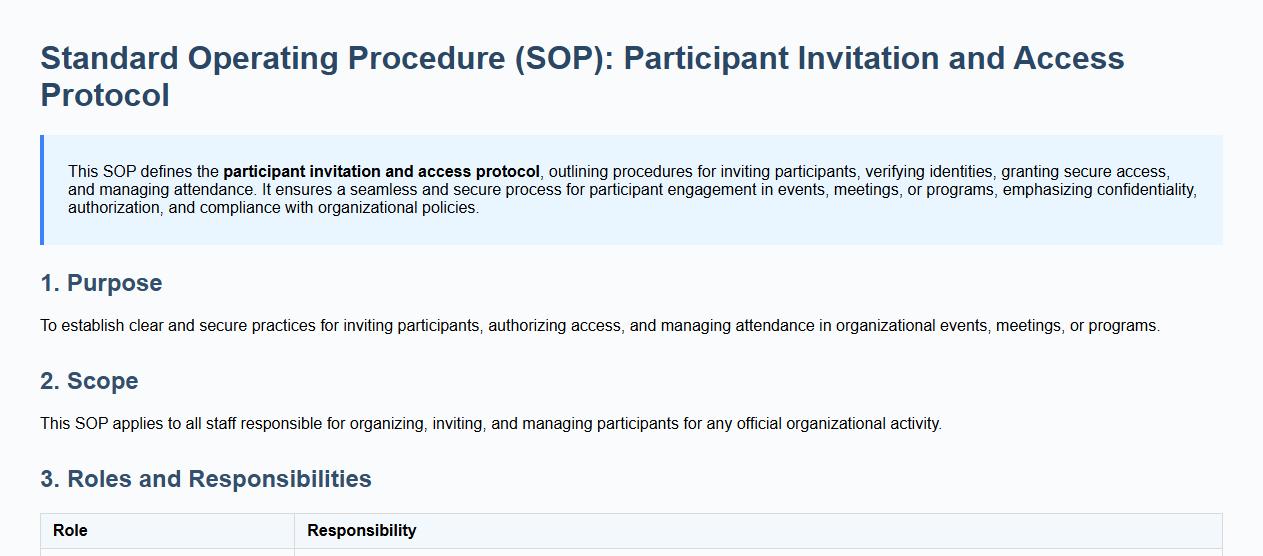
This SOP defines the participant invitation and access protocol, outlining procedures for inviting participants, verifying identities, granting secure access, and managing attendance. It ensures a seamless and secure process for participant engagement in events, meetings, or programs, emphasizing confidentiality, authorization, and compliance with organizational policies.
Pre-session technology check and troubleshooting.
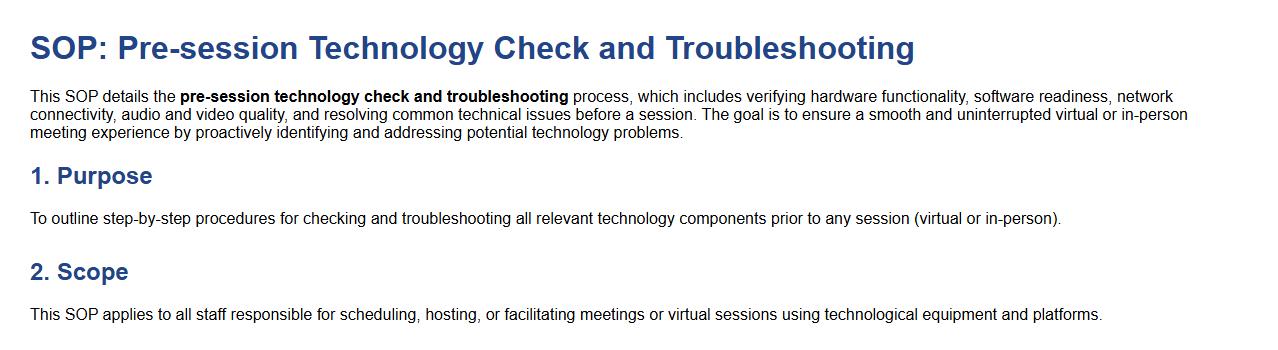
This SOP details the pre-session technology check and troubleshooting process, which includes verifying hardware functionality, software readiness, network connectivity, audio and video quality, and resolving common technical issues before a session. The goal is to ensure a smooth and uninterrupted virtual or in-person meeting experience by proactively identifying and addressing potential technology problems.
Digital classroom resource preparation and sharing.
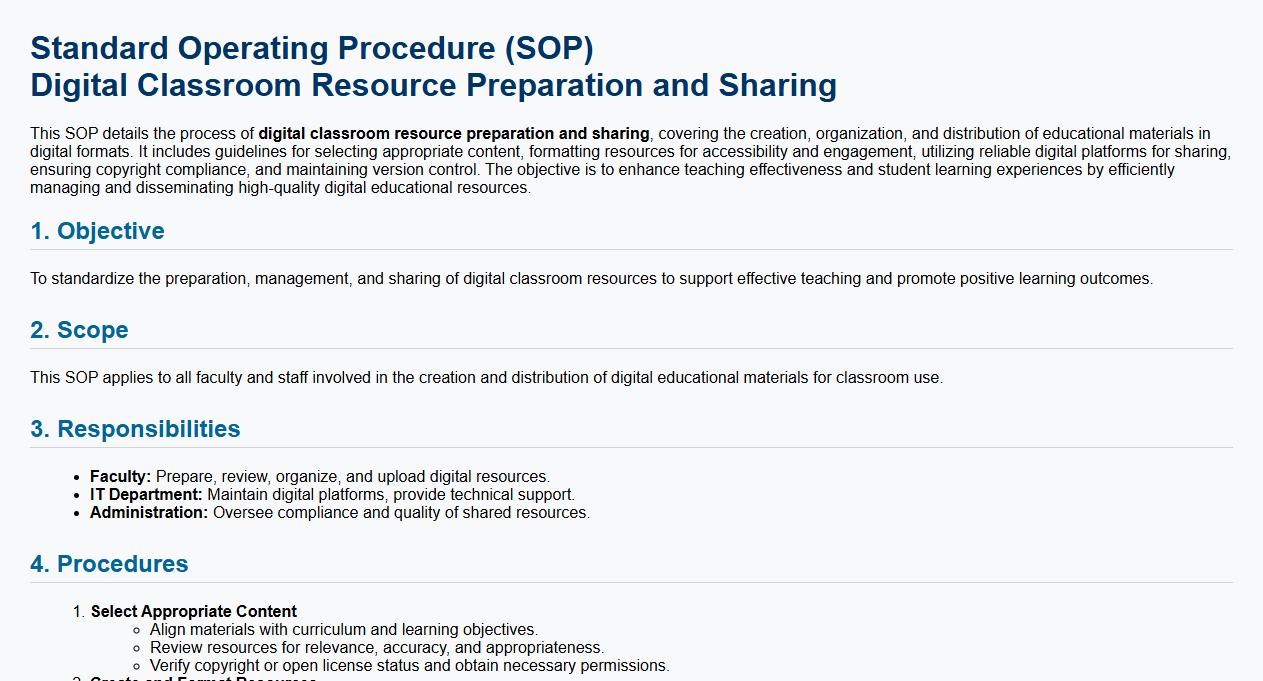
This SOP details the process of digital classroom resource preparation and sharing, covering the creation, organization, and distribution of educational materials in digital formats. It includes guidelines for selecting appropriate content, formatting resources for accessibility and engagement, utilizing reliable digital platforms for sharing, ensuring copyright compliance, and maintaining version control. The objective is to enhance teaching effectiveness and student learning experiences by efficiently managing and disseminating high-quality digital educational resources.
Student code of conduct and online etiquette.
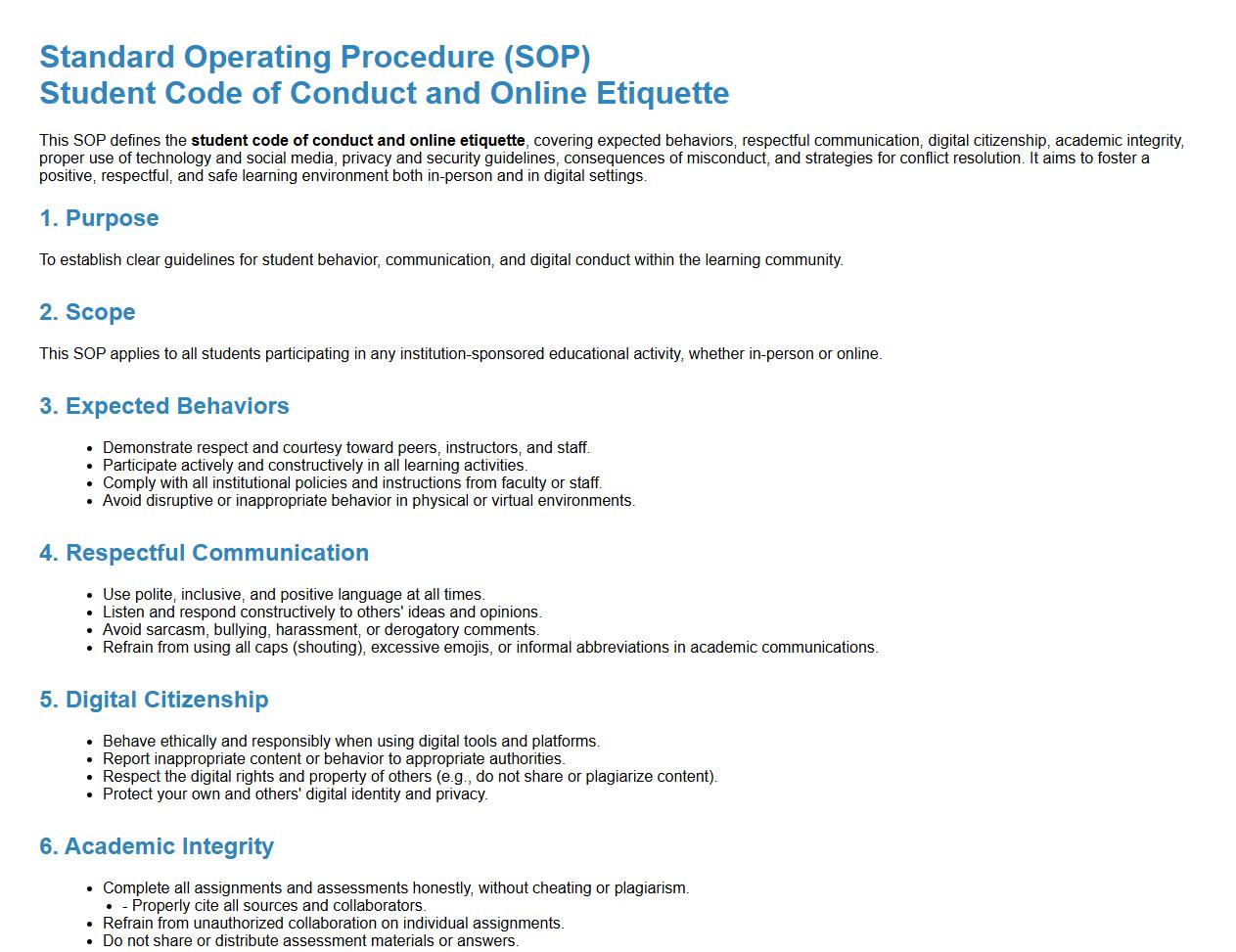
This SOP defines the student code of conduct and online etiquette, covering expected behaviors, respectful communication, digital citizenship, academic integrity, proper use of technology and social media, privacy and security guidelines, consequences of misconduct, and strategies for conflict resolution. It aims to foster a positive, respectful, and safe learning environment both in-person and in digital settings.
Attendance tracking and participant verification.
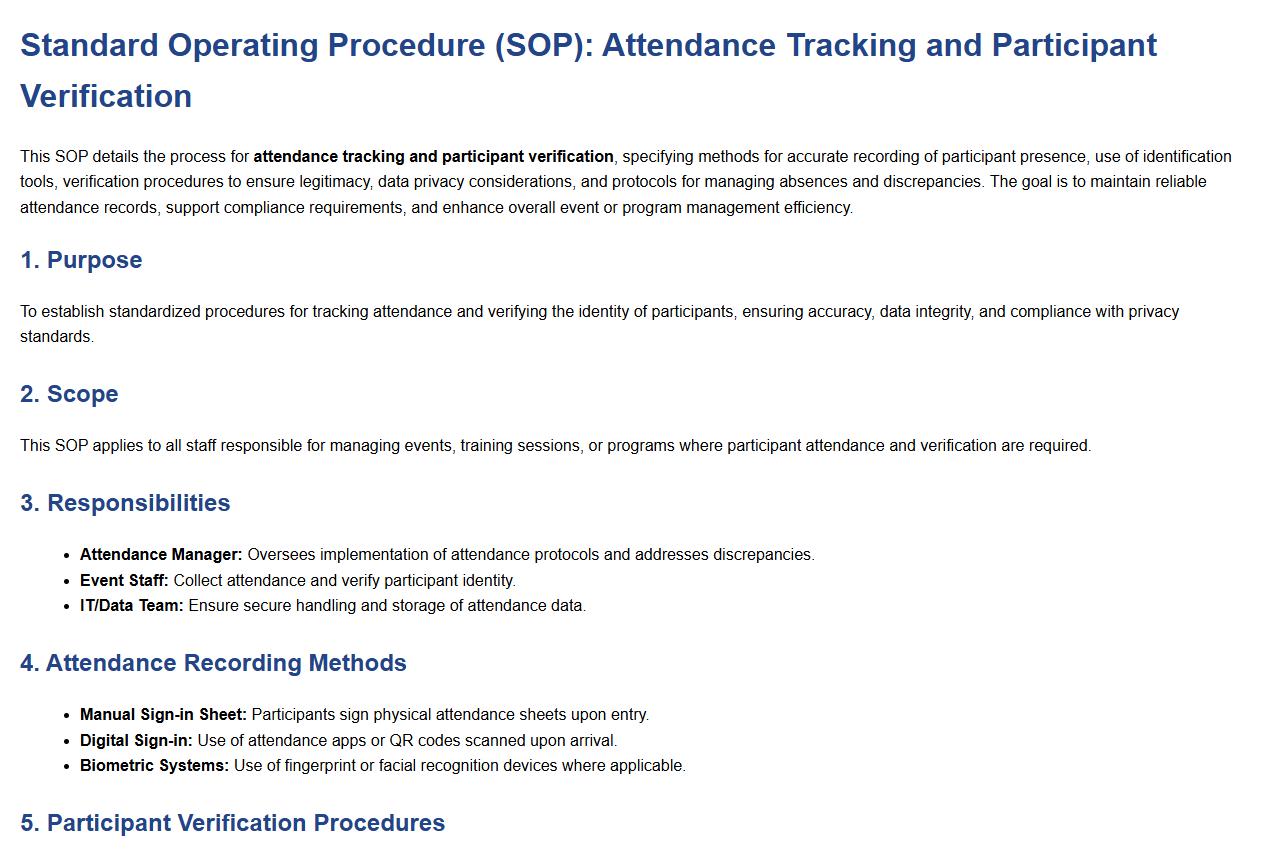
This SOP details the process for attendance tracking and participant verification, specifying methods for accurate recording of participant presence, use of identification tools, verification procedures to ensure legitimacy, data privacy considerations, and protocols for managing absences and discrepancies. The goal is to maintain reliable attendance records, support compliance requirements, and enhance overall event or program management efficiency.
Recording, storage, and sharing of session materials.
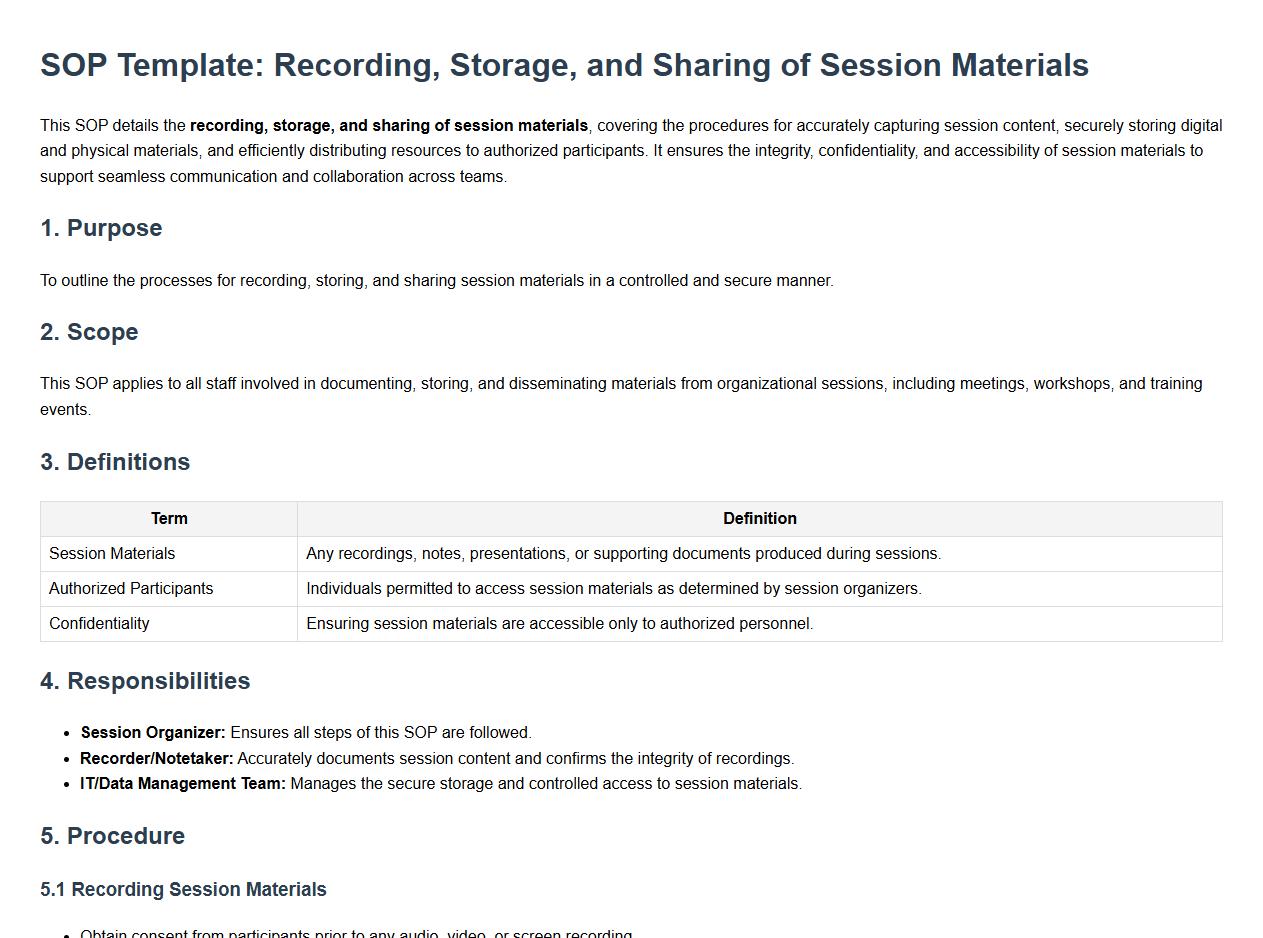
This SOP details the recording, storage, and sharing of session materials, covering the procedures for accurately capturing session content, securely storing digital and physical materials, and efficiently distributing resources to authorized participants. It ensures the integrity, confidentiality, and accessibility of session materials to support seamless communication and collaboration across teams.
Data privacy and cybersecurity measures.
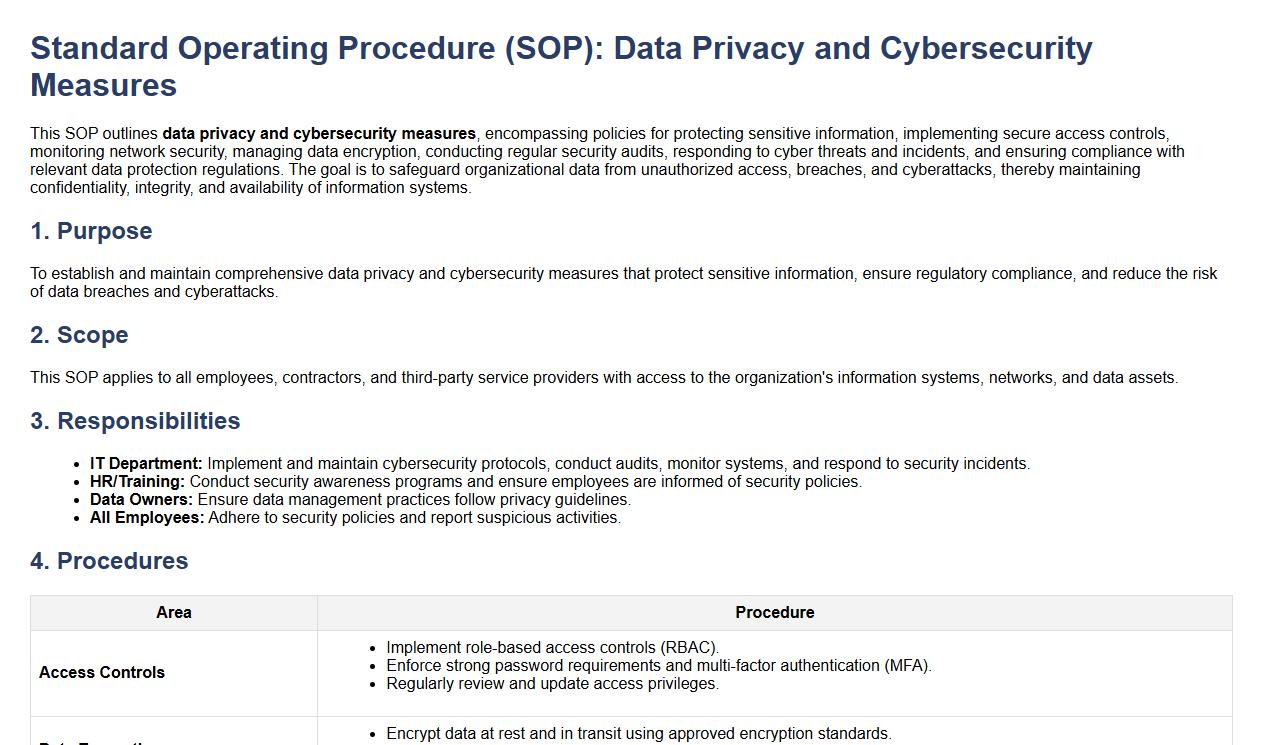
This SOP outlines data privacy and cybersecurity measures, encompassing policies for protecting sensitive information, implementing secure access controls, monitoring network security, managing data encryption, conducting regular security audits, responding to cyber threats and incidents, and ensuring compliance with relevant data protection regulations. The goal is to safeguard organizational data from unauthorized access, breaches, and cyberattacks, thereby maintaining confidentiality, integrity, and availability of information systems.
Post-class feedback collection and session review procedure.
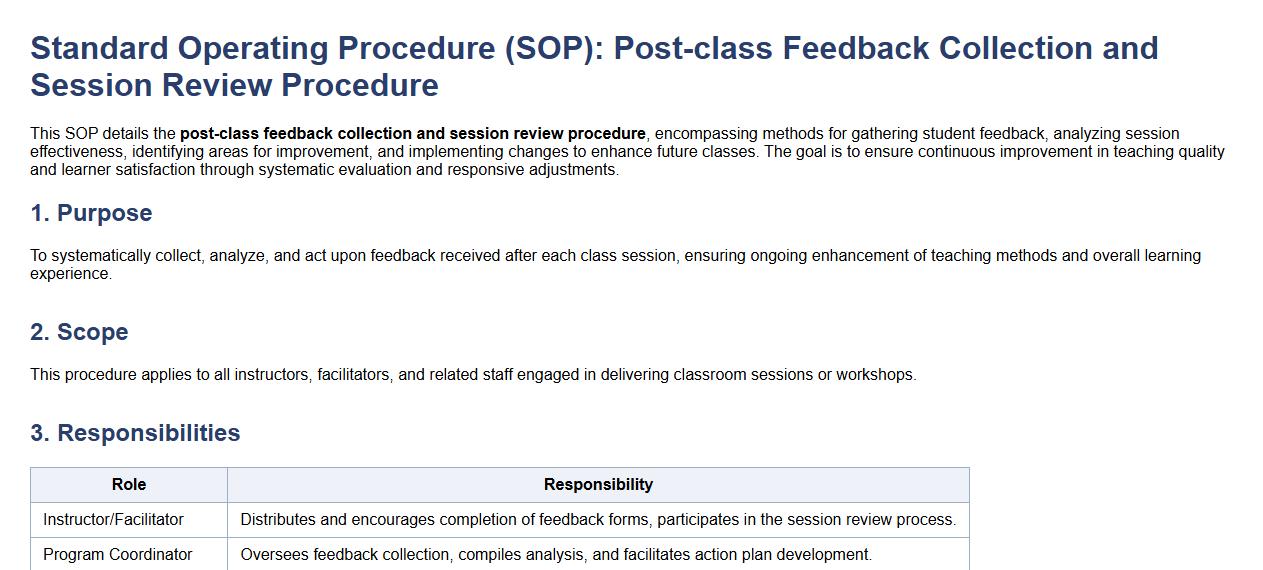
This SOP details the post-class feedback collection and session review procedure, encompassing methods for gathering student feedback, analyzing session effectiveness, identifying areas for improvement, and implementing changes to enhance future classes. The goal is to ensure continuous improvement in teaching quality and learner satisfaction through systematic evaluation and responsive adjustments.
What are the mandatory steps outlined in the SOP for initializing a virtual classroom session?
The SOP mandates the verification of participant access credentials before starting the session to ensure only authorized users join. It requires a preliminary system and network check to confirm all technical components are functioning properly. Additionally, the instructor must set up the virtual classroom environment, including screen sharing, permissions, and attendance tracking tools.
Which security protocols are specified in the SOP to ensure safe access for all participants?
The SOP specifies the use of multi-factor authentication (MFA) to enhance login security for all participants. It enforces end-to-end encryption to protect data integrity and privacy during the virtual class sessions. Furthermore, the protocol includes regular access control reviews to remove unauthorized or inactive users promptly.
How does the SOP detail troubleshooting procedures for common technical issues during a virtual class?
The SOP outlines immediate diagnostic steps such as checking internet connectivity and software updates to resolve connection problems. It recommends having technical support on standby to assist participants experiencing hardware or software difficulties. The document also includes step-by-step guides for resolving audio, video, and platform-specific issues to minimize class disruptions.
What roles and responsibilities are defined in the SOP for instructors and support staff?
Instructors are responsible for content delivery, participant engagement, and maintaining classroom discipline according to the SOP. Support staff handle technical support, session monitoring, and assisting with access issues to ensure smooth operation. Both roles are required to collaborate closely to address participant needs and uphold virtual classroom standards.
Which compliance and data privacy guidelines are addressed in the SOP for virtual classroom operations?
The SOP adheres to GDPR and relevant regional data protection laws to safeguard participant information and ensure lawful data handling. It emphasizes secure data storage and controlled access to personal and session-related information. The document also mandates regular compliance audits to maintain alignment with evolving privacy regulations and institutional policies.