

A SOP Template for Extracurricular Activities Management streamlines the organization and execution of student programs, ensuring clear roles, responsibilities, and standardized procedures. It helps maintain consistency and quality in managing diverse activities, from sports to clubs. This template supports effective communication among staff, students, and parents, enhancing overall participation and engagement.
Event planning and scheduling procedures.
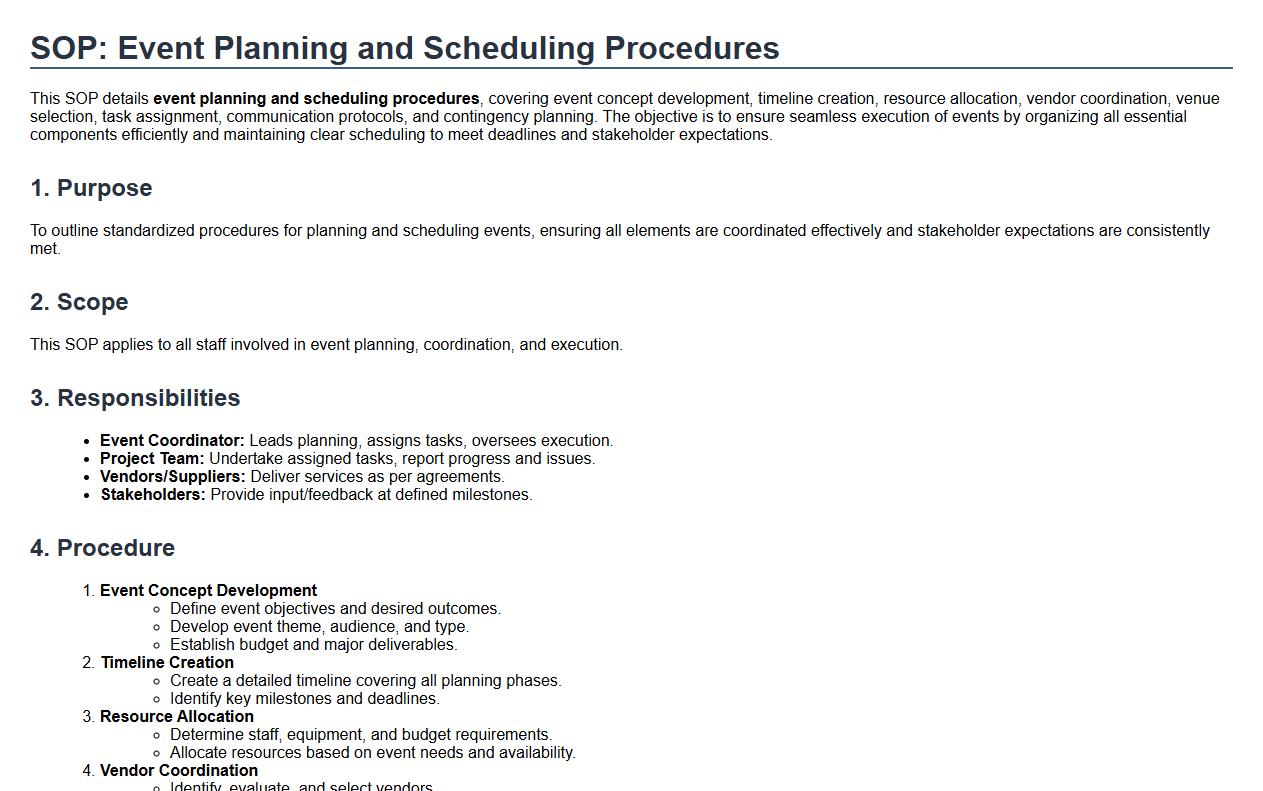
This SOP details event planning and scheduling procedures, covering event concept development, timeline creation, resource allocation, vendor coordination, venue selection, task assignment, communication protocols, and contingency planning. The objective is to ensure seamless execution of events by organizing all essential components efficiently and maintaining clear scheduling to meet deadlines and stakeholder expectations.
Student participation registration and tracking.
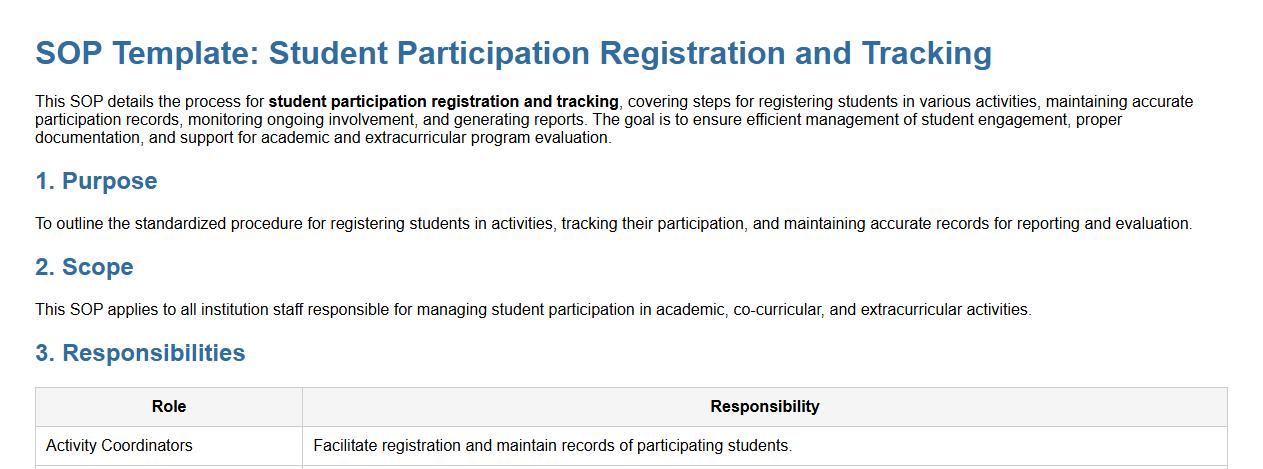
This SOP details the process for student participation registration and tracking, covering steps for registering students in various activities, maintaining accurate participation records, monitoring ongoing involvement, and generating reports. The goal is to ensure efficient management of student engagement, proper documentation, and support for academic and extracurricular program evaluation.
Club or activity leader appointment and training guidelines.
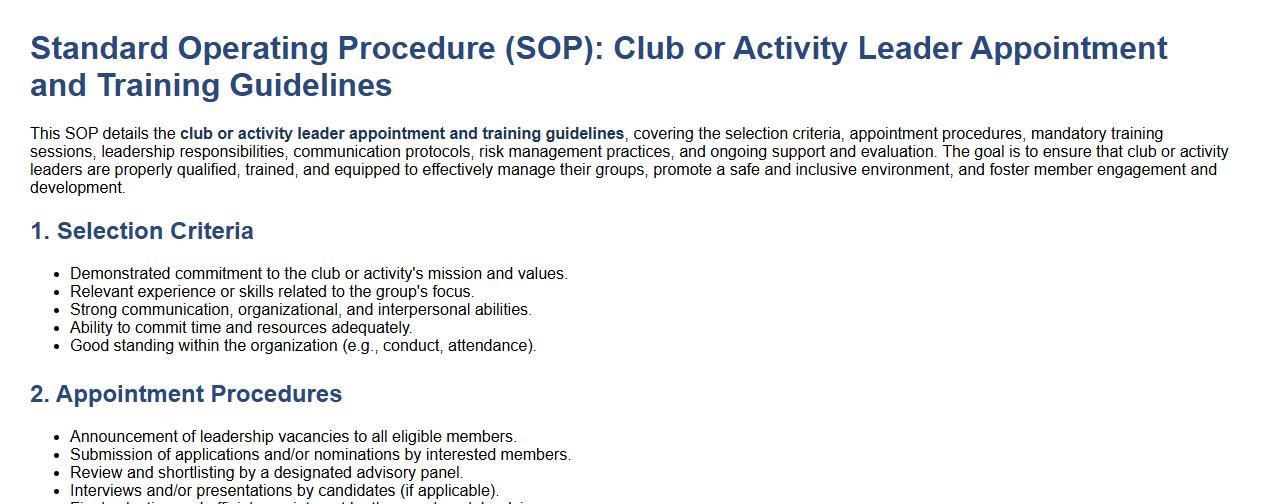
This SOP details the club or activity leader appointment and training guidelines, covering the selection criteria, appointment procedures, mandatory training sessions, leadership responsibilities, communication protocols, risk management practices, and ongoing support and evaluation. The goal is to ensure that club or activity leaders are properly qualified, trained, and equipped to effectively manage their groups, promote a safe and inclusive environment, and foster member engagement and development.
Resource and budget allocation processes.
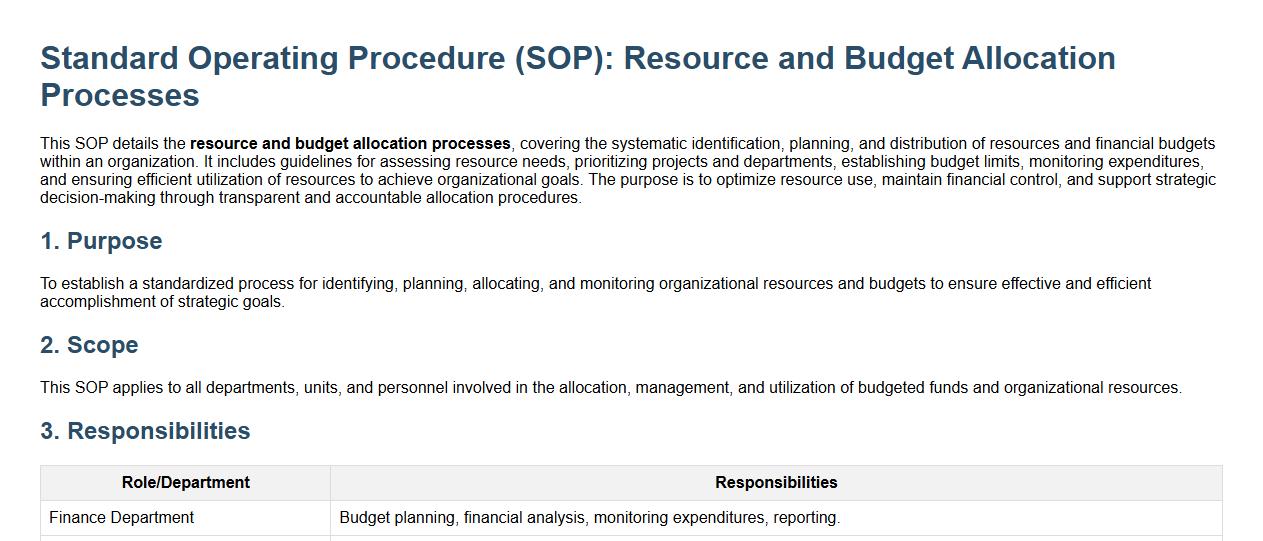
This SOP details the resource and budget allocation processes, covering the systematic identification, planning, and distribution of resources and financial budgets within an organization. It includes guidelines for assessing resource needs, prioritizing projects and departments, establishing budget limits, monitoring expenditures, and ensuring efficient utilization of resources to achieve organizational goals. The purpose is to optimize resource use, maintain financial control, and support strategic decision-making through transparent and accountable allocation procedures.
Activity risk assessment and safety protocols.
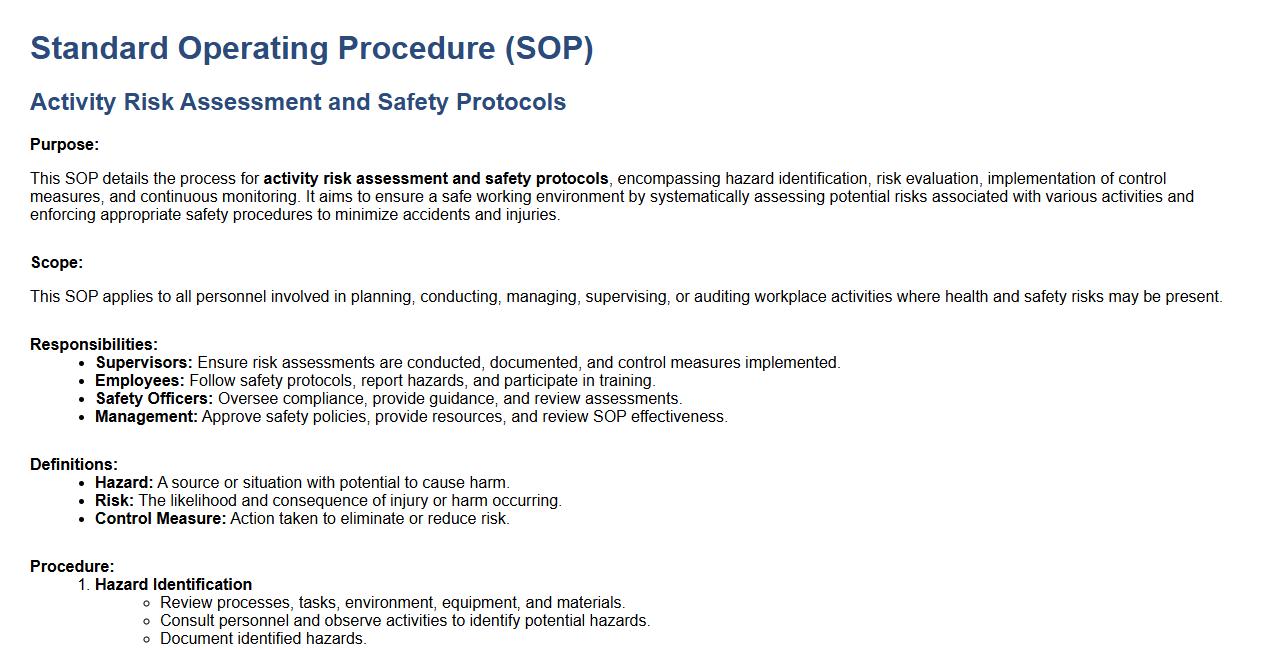
This SOP details the process for activity risk assessment and safety protocols, encompassing hazard identification, risk evaluation, implementation of control measures, and continuous monitoring. It aims to ensure a safe working environment by systematically assessing potential risks associated with various activities and enforcing appropriate safety procedures to minimize accidents and injuries.
Permission and consent form management.
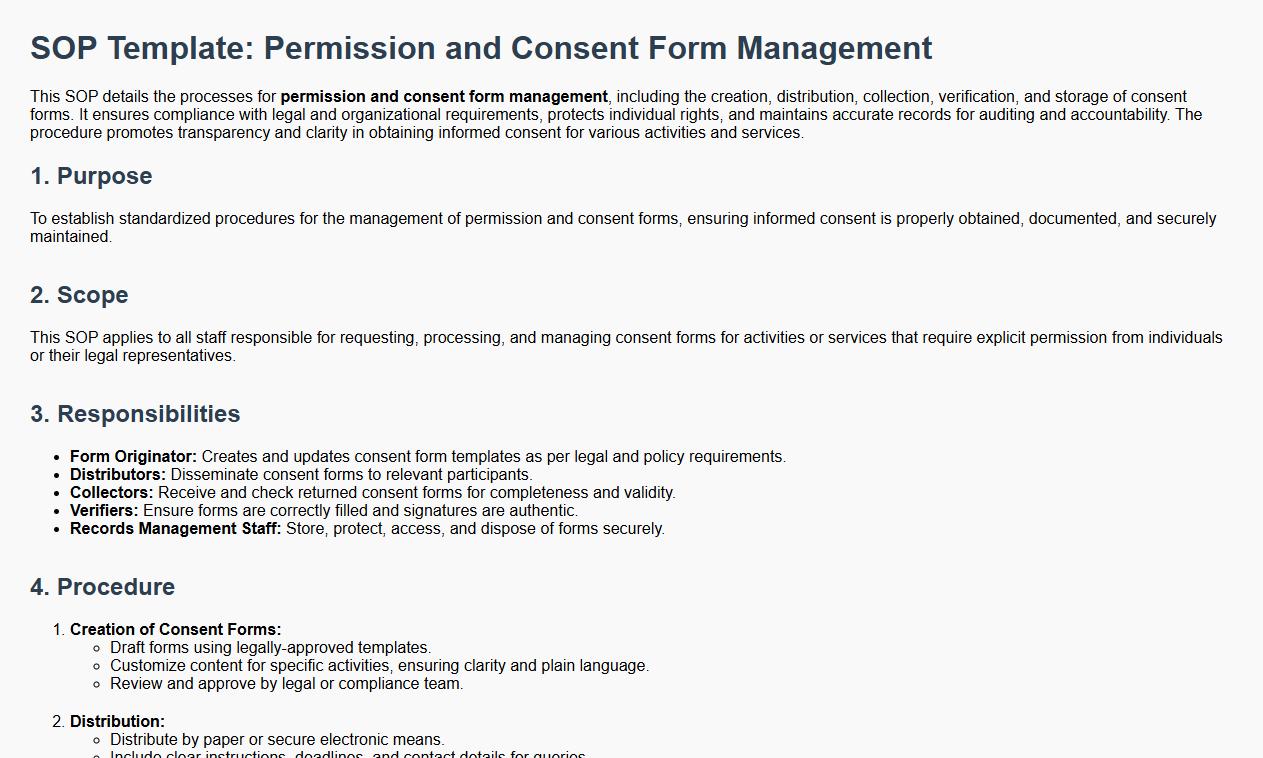
This SOP details the processes for permission and consent form management, including the creation, distribution, collection, verification, and storage of consent forms. It ensures compliance with legal and organizational requirements, protects individual rights, and maintains accurate records for auditing and accountability. The procedure promotes transparency and clarity in obtaining informed consent for various activities and services.
Communication and publicity strategies.
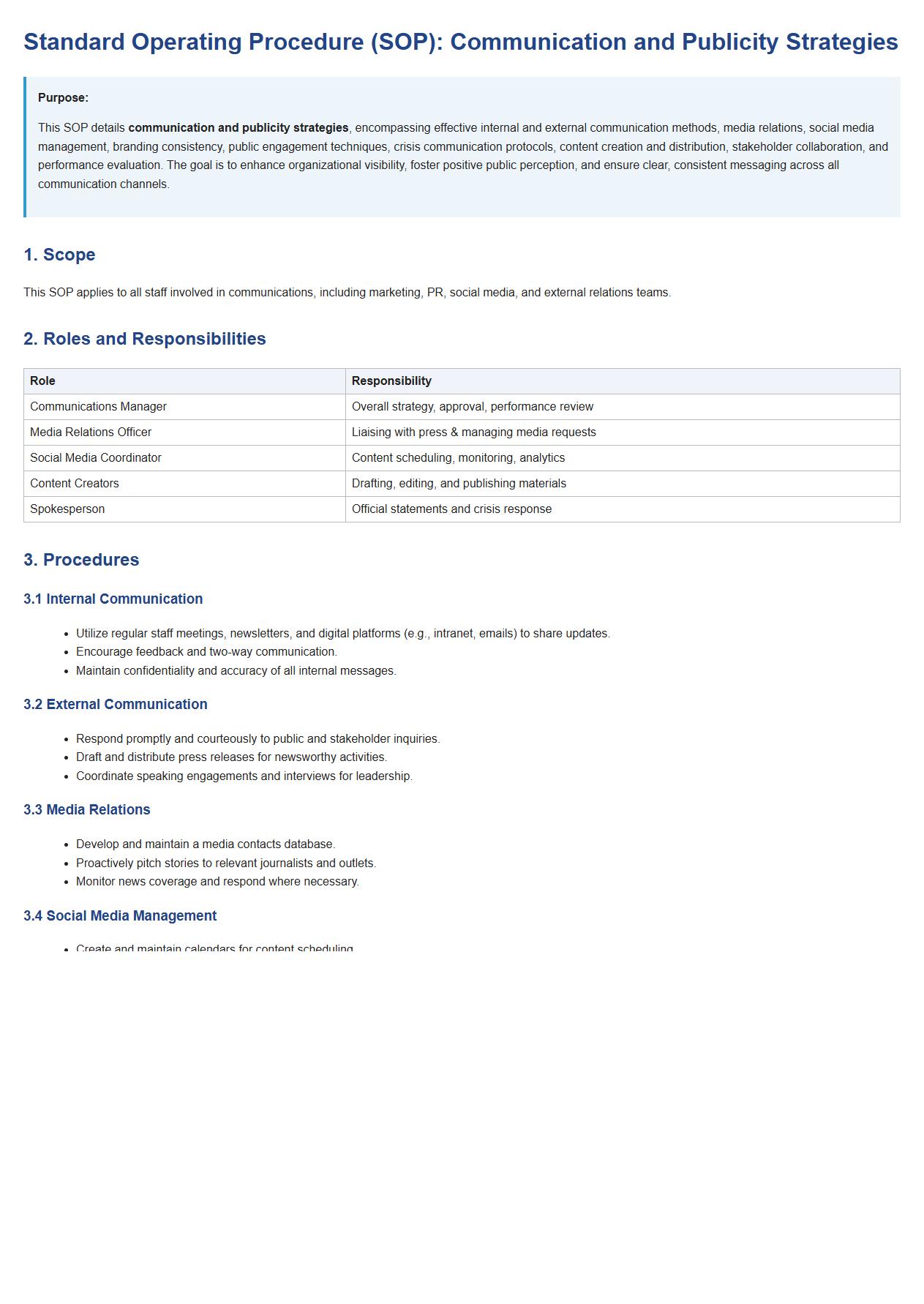
This SOP details communication and publicity strategies, encompassing effective internal and external communication methods, media relations, social media management, branding consistency, public engagement techniques, crisis communication protocols, content creation and distribution, stakeholder collaboration, and performance evaluation. The goal is to enhance organizational visibility, foster positive public perception, and ensure clear, consistent messaging across all communication channels.
Attendance and performance monitoring.
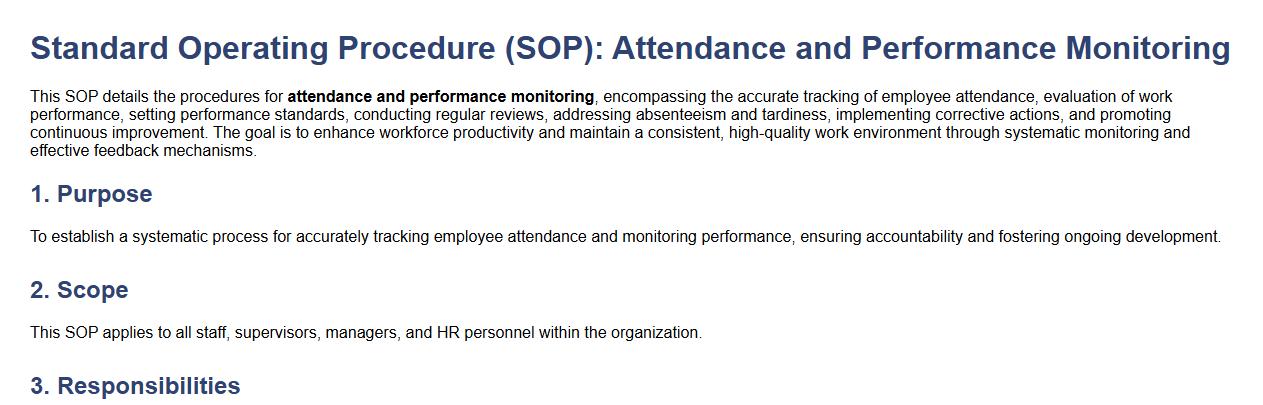
This SOP details the procedures for attendance and performance monitoring, encompassing the accurate tracking of employee attendance, evaluation of work performance, setting performance standards, conducting regular reviews, addressing absenteeism and tardiness, implementing corrective actions, and promoting continuous improvement. The goal is to enhance workforce productivity and maintain a consistent, high-quality work environment through systematic monitoring and effective feedback mechanisms.
Post-activity review and feedback collection.
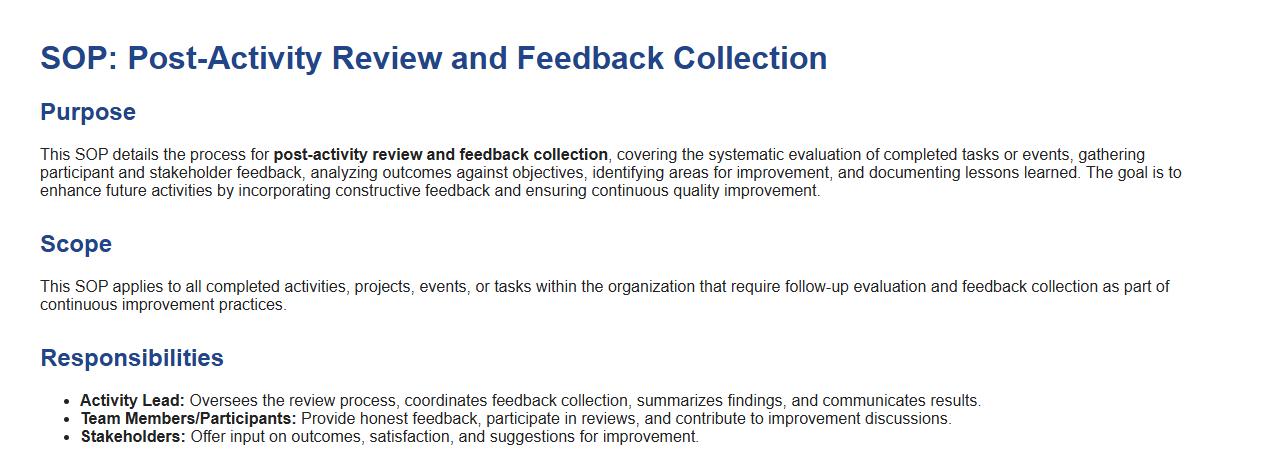
This SOP details the process for post-activity review and feedback collection, covering the systematic evaluation of completed tasks or events, gathering participant and stakeholder feedback, analyzing outcomes against objectives, identifying areas for improvement, and documenting lessons learned. The goal is to enhance future activities by incorporating constructive feedback and ensuring continuous quality improvement.
Documentation and reporting for school records.
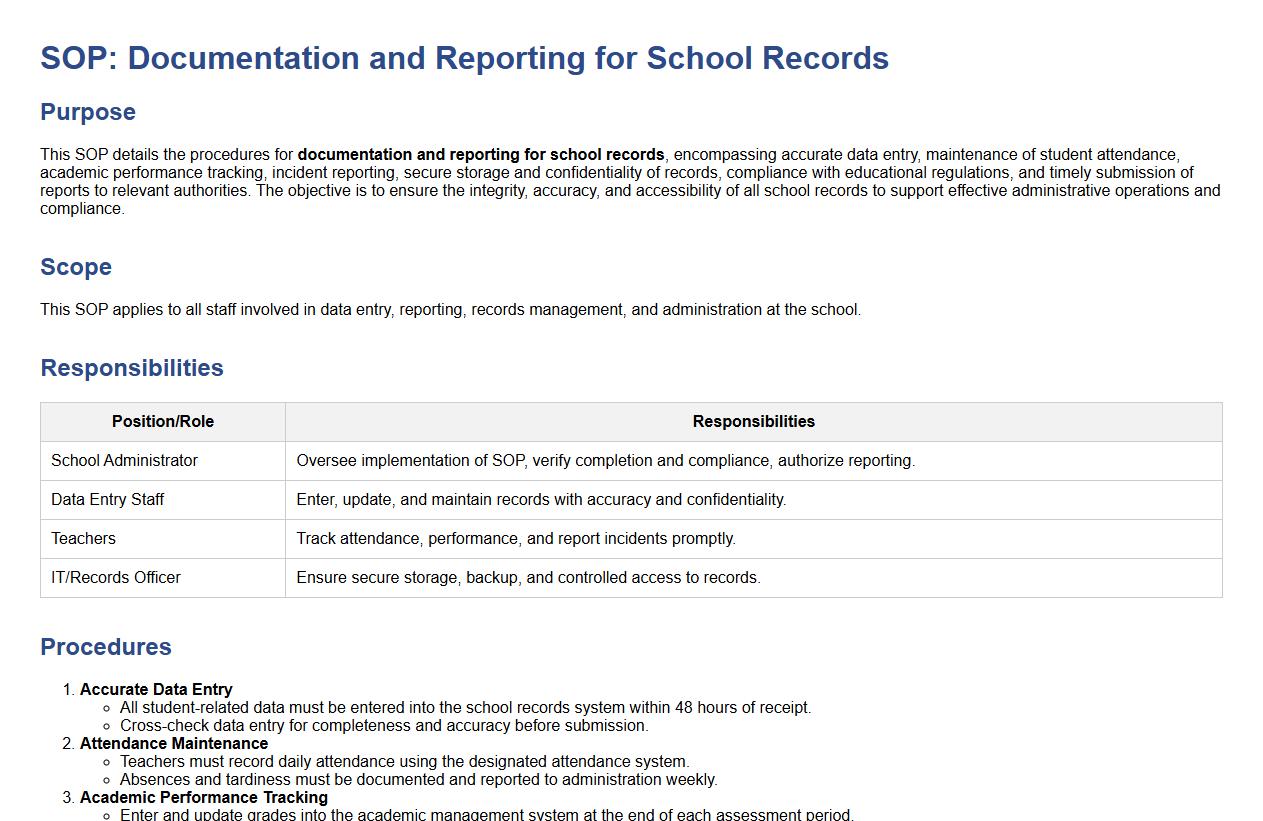
This SOP details the procedures for documentation and reporting for school records, encompassing accurate data entry, maintenance of student attendance, academic performance tracking, incident reporting, secure storage and confidentiality of records, compliance with educational regulations, and timely submission of reports to relevant authorities. The objective is to ensure the integrity, accuracy, and accessibility of all school records to support effective administrative operations and compliance.
What are the key steps outlined in the SOP for initiating new extracurricular activities?
The SOP clearly defines the process for proposing new extracurricular activities, starting with a formal proposal submission. It requires a detailed plan including objectives, resources, and expected outcomes to be reviewed by the committee. Approval must be obtained before any activity initiation to ensure alignment with organizational goals.
How does the SOP define roles and responsibilities for activity coordinators and participants?
The SOP specifies distinct roles and responsibilities for both activity coordinators and participants to ensure smooth operation. Coordinators are tasked with planning, organizing, and overseeing activities, while participants must adhere to guidelines and actively engage. Clear role definitions promote accountability and enhance the effectiveness of the extracurricular programs.
What procedures for risk assessment and safety management are detailed in the SOP?
The SOP mandates a comprehensive risk assessment prior to all activities, identifying potential hazards and implementing mitigation strategies. Safety protocols must be established and communicated to all stakeholders to minimize risks. Emergency procedures and regular safety drills are integral components of the safety management process.
What documentation and reporting processes are required according to the SOP for extracurricular activities?
The SOP requires maintaining thorough documentation including activity plans, attendance records, and incident reports. Regular reporting to supervisors ensures transparency and facilitates monitoring of activity progress. All records must be securely stored and readily accessible for audits and evaluations.
How does the SOP address evaluation and feedback mechanisms for continuous improvement of activities?
The SOP incorporates structured evaluation and feedback systems involving surveys, participant interviews, and performance reviews. Feedback is analyzed to identify strengths and areas for improvement in the extracurricular offerings. Continuous improvement is emphasized by using data-driven insights to refine future activities and enhance overall quality.