
A SOP Template for School Transportation Management provides a standardized framework to ensure the safe and efficient operation of student transport services. This template outlines key procedures including route planning, vehicle maintenance, driver responsibilities, and emergency protocols. Implementing this SOP helps schools maintain compliance with safety regulations and enhance overall transportation reliability.
Student pick-up and drop-off procedures.
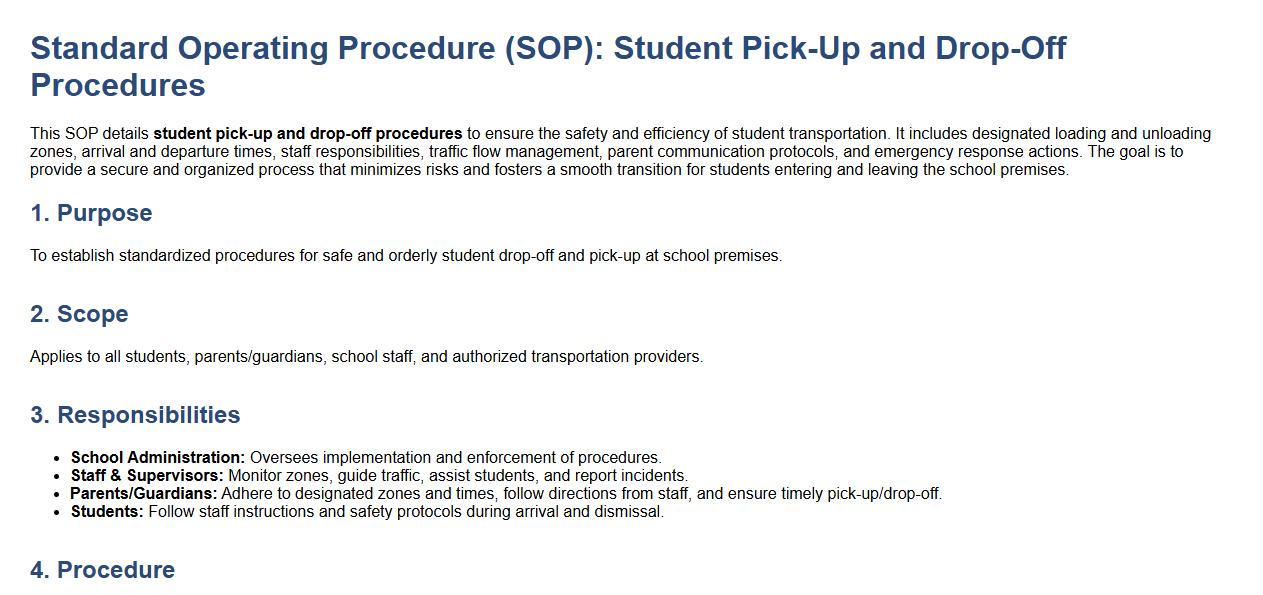
This SOP details student pick-up and drop-off procedures to ensure the safety and efficiency of student transportation. It includes designated loading and unloading zones, arrival and departure times, staff responsibilities, traffic flow management, parent communication protocols, and emergency response actions. The goal is to provide a secure and organized process that minimizes risks and fosters a smooth transition for students entering and leaving the school premises.
Driver recruitment, training, and evaluation guidelines.
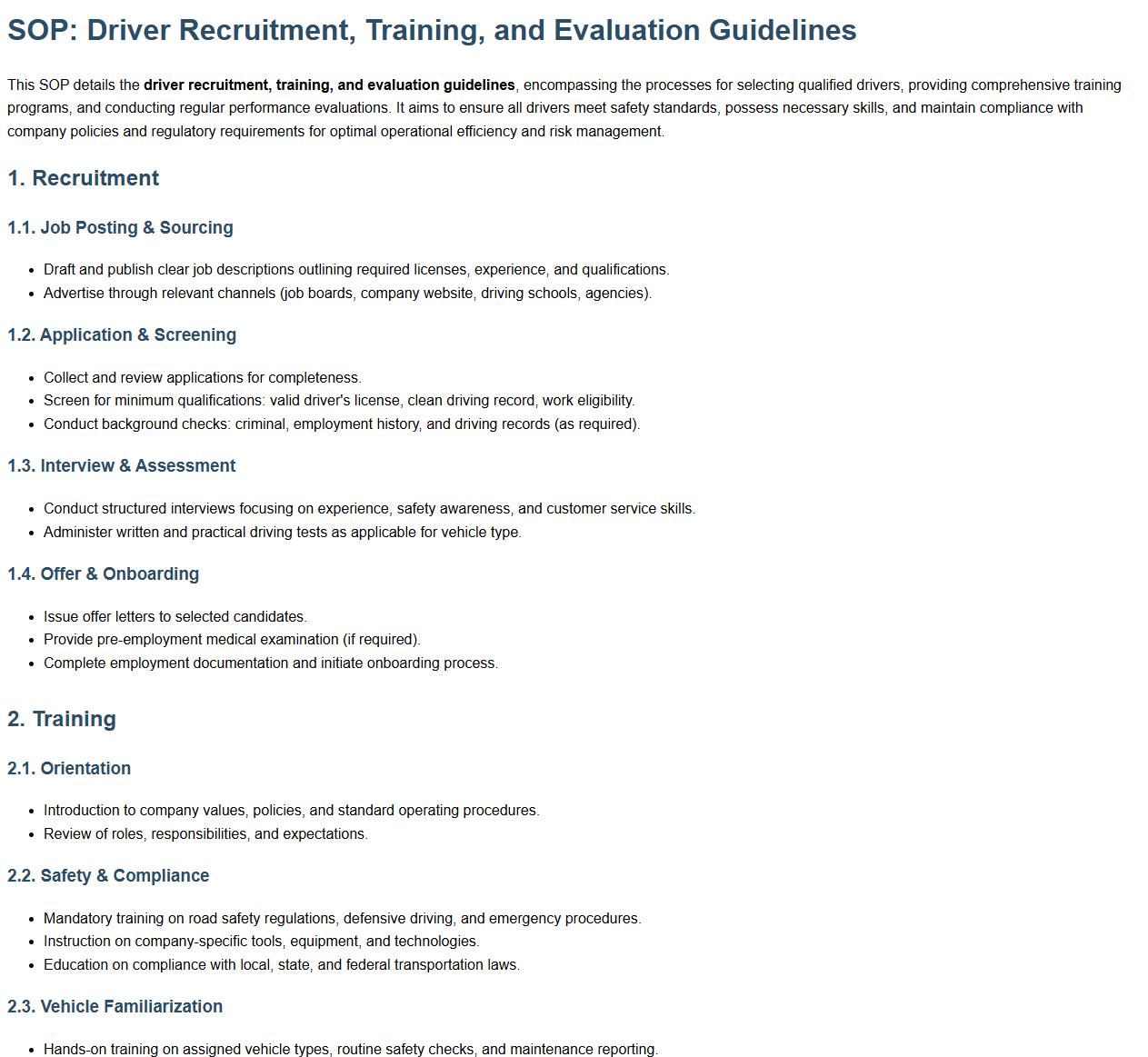
This SOP details the driver recruitment, training, and evaluation guidelines, encompassing the processes for selecting qualified drivers, providing comprehensive training programs, and conducting regular performance evaluations. It aims to ensure all drivers meet safety standards, possess necessary skills, and maintain compliance with company policies and regulatory requirements for optimal operational efficiency and risk management.
Vehicle maintenance and safety inspection protocols.
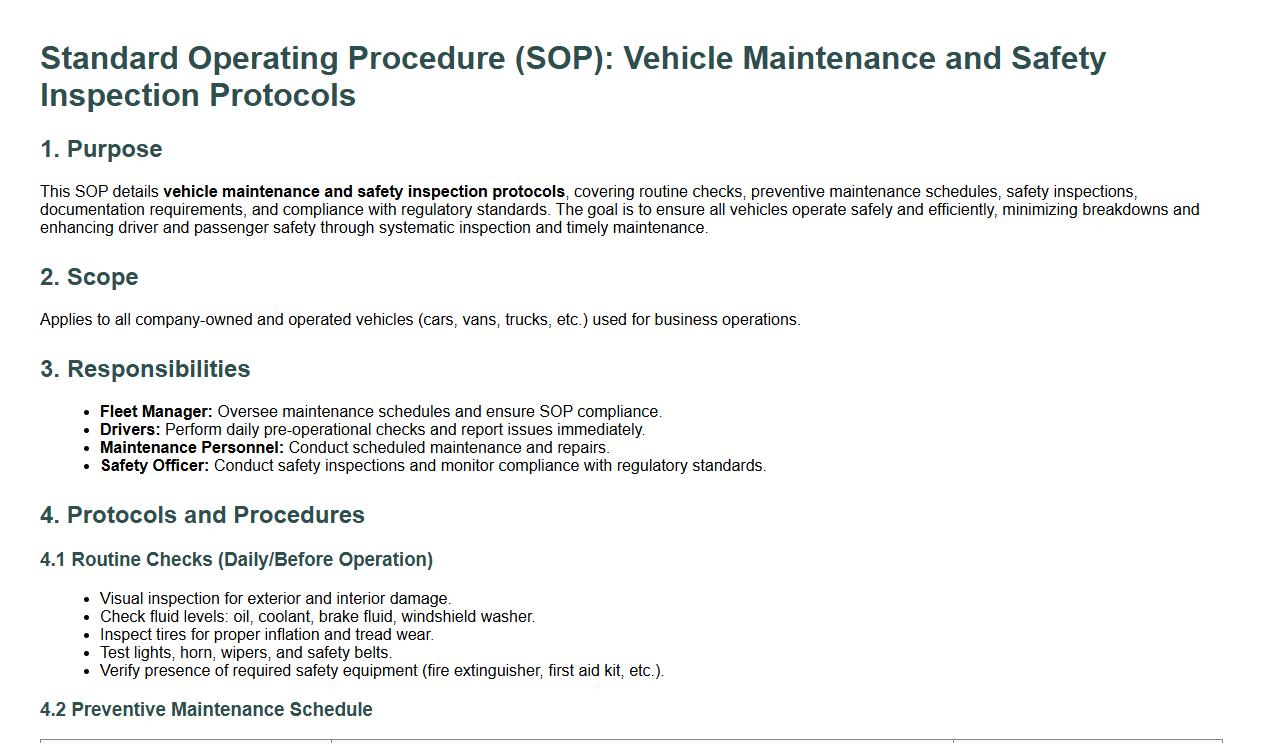
This SOP details vehicle maintenance and safety inspection protocols, covering routine checks, preventive maintenance schedules, safety inspections, documentation requirements, and compliance with regulatory standards. The goal is to ensure all vehicles operate safely and efficiently, minimizing breakdowns and enhancing driver and passenger safety through systematic inspection and timely maintenance.
Bus route planning and scheduling standards.
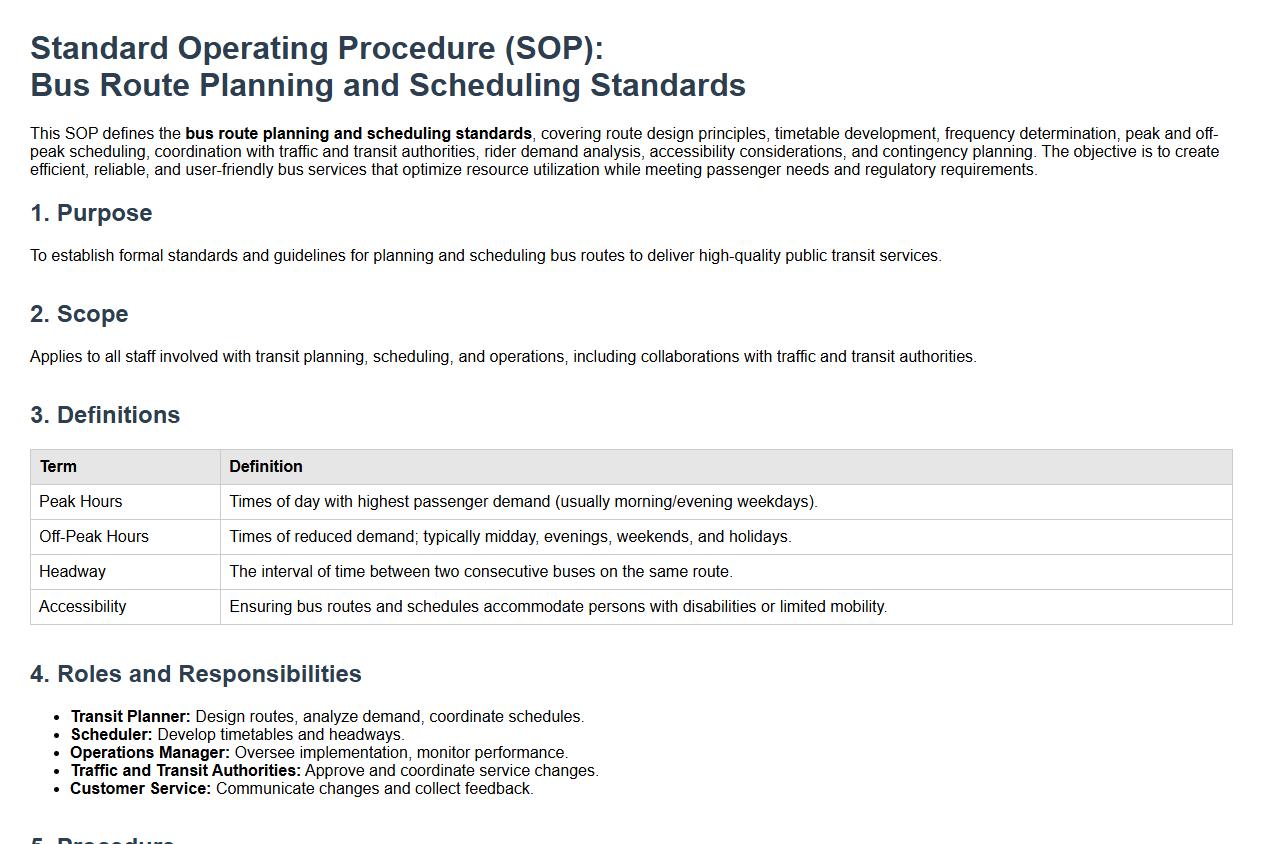
This SOP defines the bus route planning and scheduling standards, covering route design principles, timetable development, frequency determination, peak and off-peak scheduling, coordination with traffic and transit authorities, rider demand analysis, accessibility considerations, and contingency planning. The objective is to create efficient, reliable, and user-friendly bus services that optimize resource utilization while meeting passenger needs and regulatory requirements.
Emergency preparedness and incident response procedures.
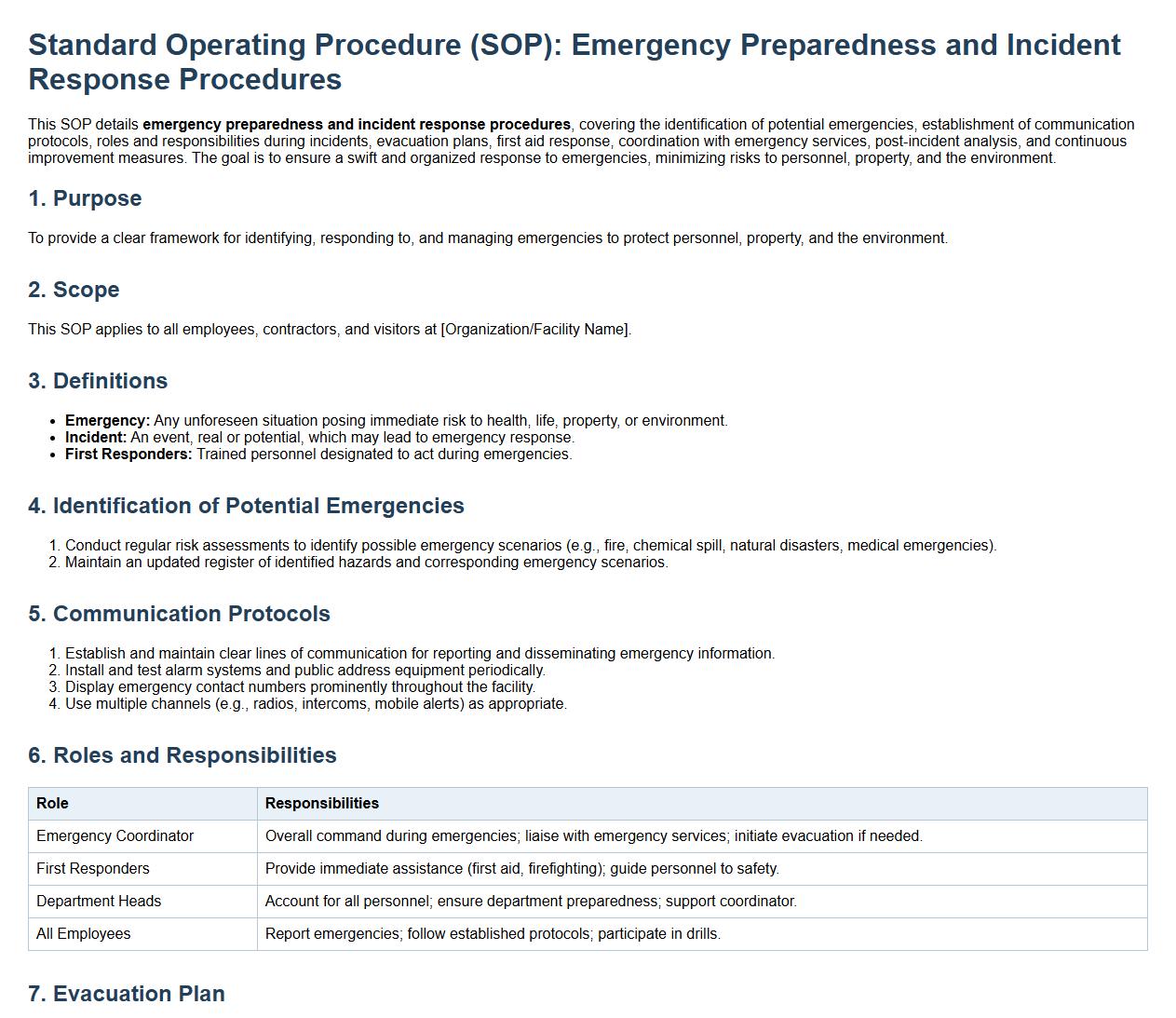
This SOP details emergency preparedness and incident response procedures, covering the identification of potential emergencies, establishment of communication protocols, roles and responsibilities during incidents, evacuation plans, first aid response, coordination with emergency services, post-incident analysis, and continuous improvement measures. The goal is to ensure a swift and organized response to emergencies, minimizing risks to personnel, property, and the environment.
Student behavior management and disciplinary actions.
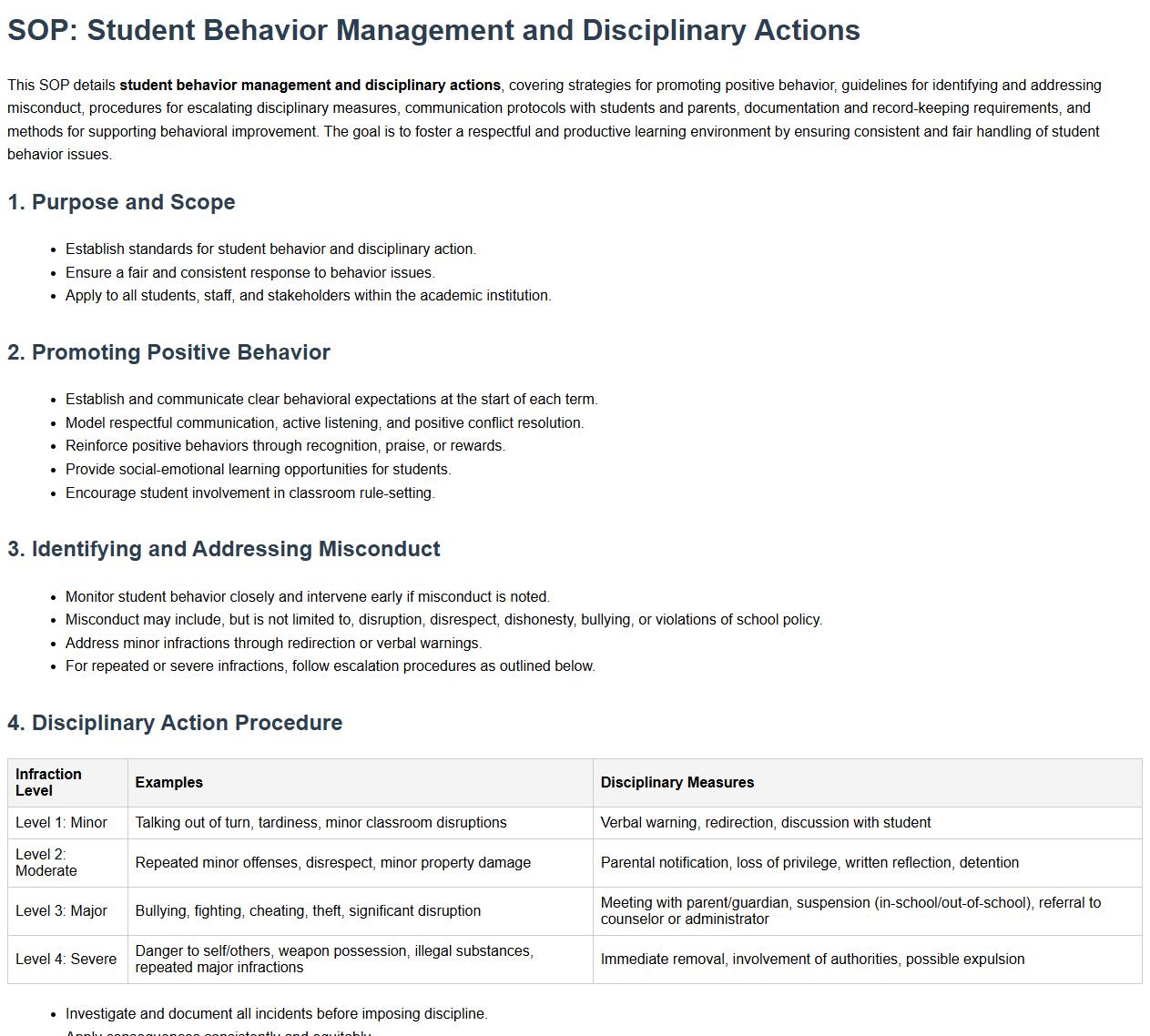
This SOP details student behavior management and disciplinary actions, covering strategies for promoting positive behavior, guidelines for identifying and addressing misconduct, procedures for escalating disciplinary measures, communication protocols with students and parents, documentation and record-keeping requirements, and methods for supporting behavioral improvement. The goal is to foster a respectful and productive learning environment by ensuring consistent and fair handling of student behavior issues.
Daily pre-trip and post-trip vehicle checklists.
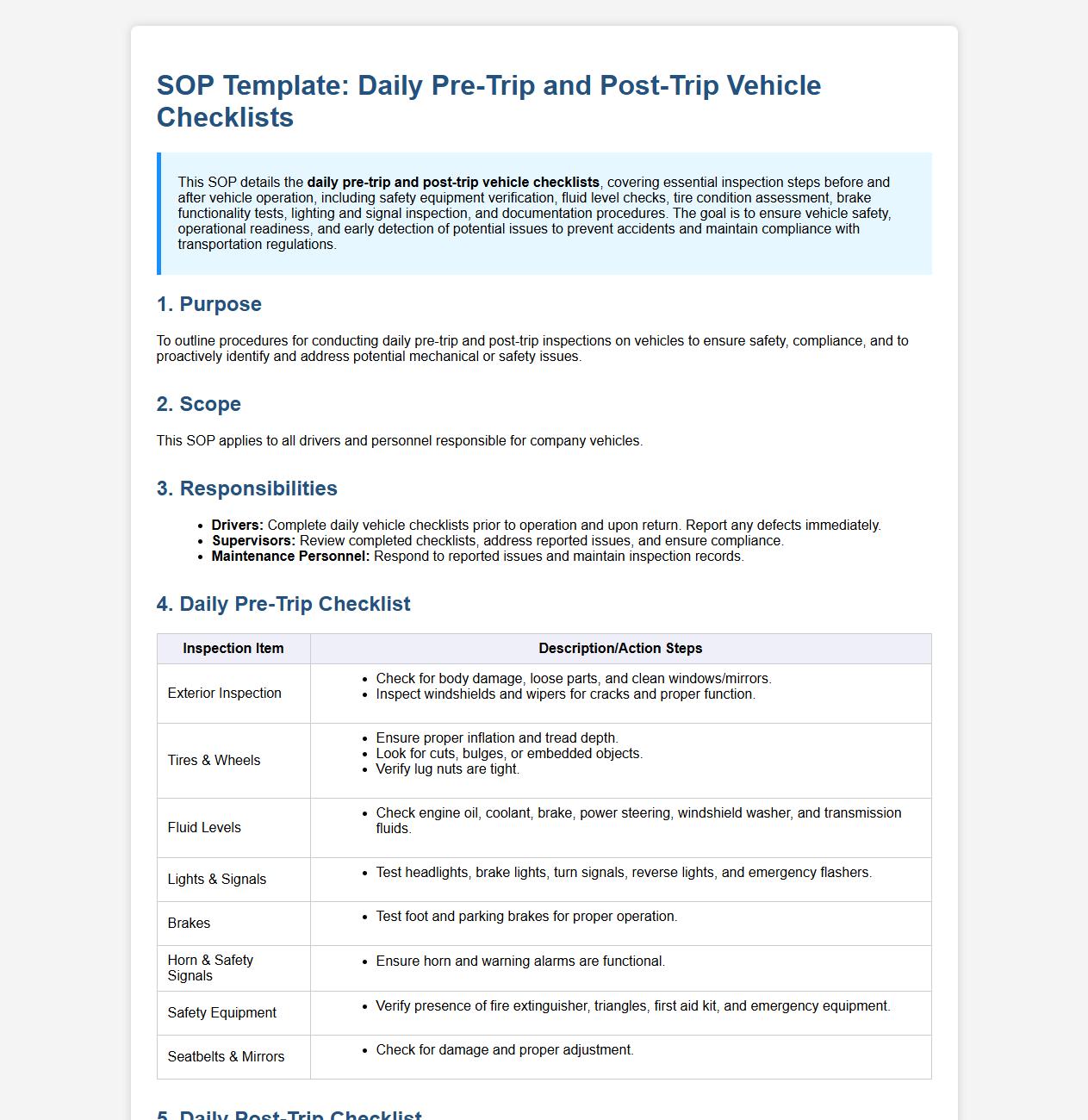
This SOP details the daily pre-trip and post-trip vehicle checklists, covering essential inspection steps before and after vehicle operation, including safety equipment verification, fluid level checks, tire condition assessment, brake functionality tests, lighting and signal inspection, and documentation procedures. The goal is to ensure vehicle safety, operational readiness, and early detection of potential issues to prevent accidents and maintain compliance with transportation regulations.
Communication protocols with parents and school staff.
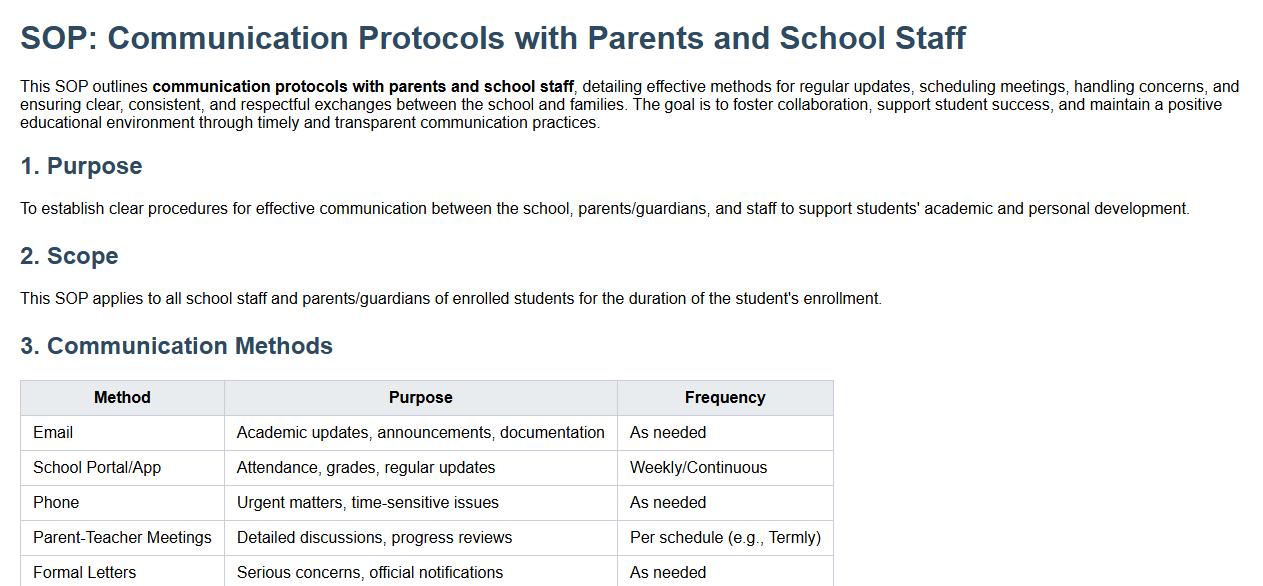
This SOP outlines communication protocols with parents and school staff, detailing effective methods for regular updates, scheduling meetings, handling concerns, and ensuring clear, consistent, and respectful exchanges between the school and families. The goal is to foster collaboration, support student success, and maintain a positive educational environment through timely and transparent communication practices.
Regulations for transport of students with special needs.
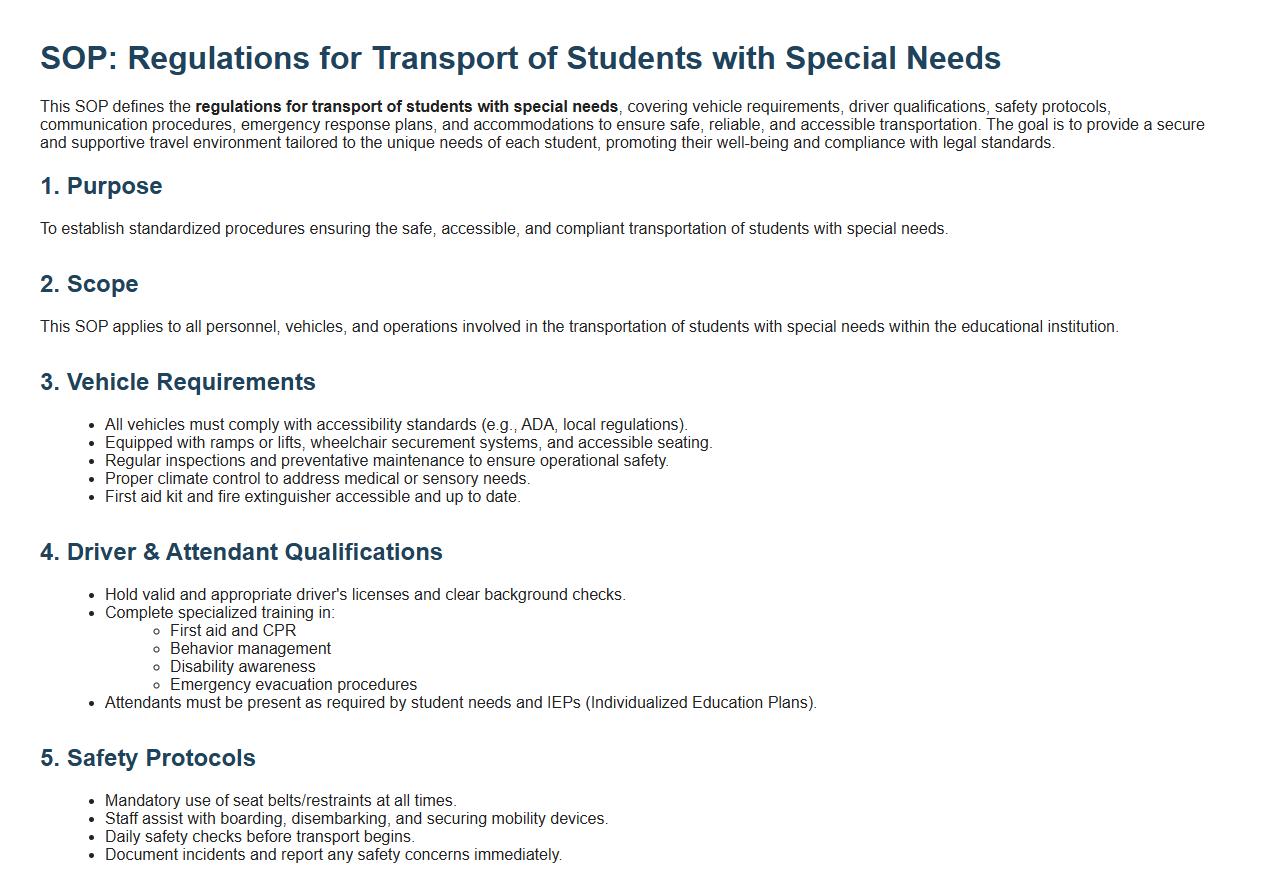
This SOP defines the regulations for transport of students with special needs, covering vehicle requirements, driver qualifications, safety protocols, communication procedures, emergency response plans, and accommodations to ensure safe, reliable, and accessible transportation. The goal is to provide a secure and supportive travel environment tailored to the unique needs of each student, promoting their well-being and compliance with legal standards.
Record-keeping for attendance, incidents, and vehicle logs.
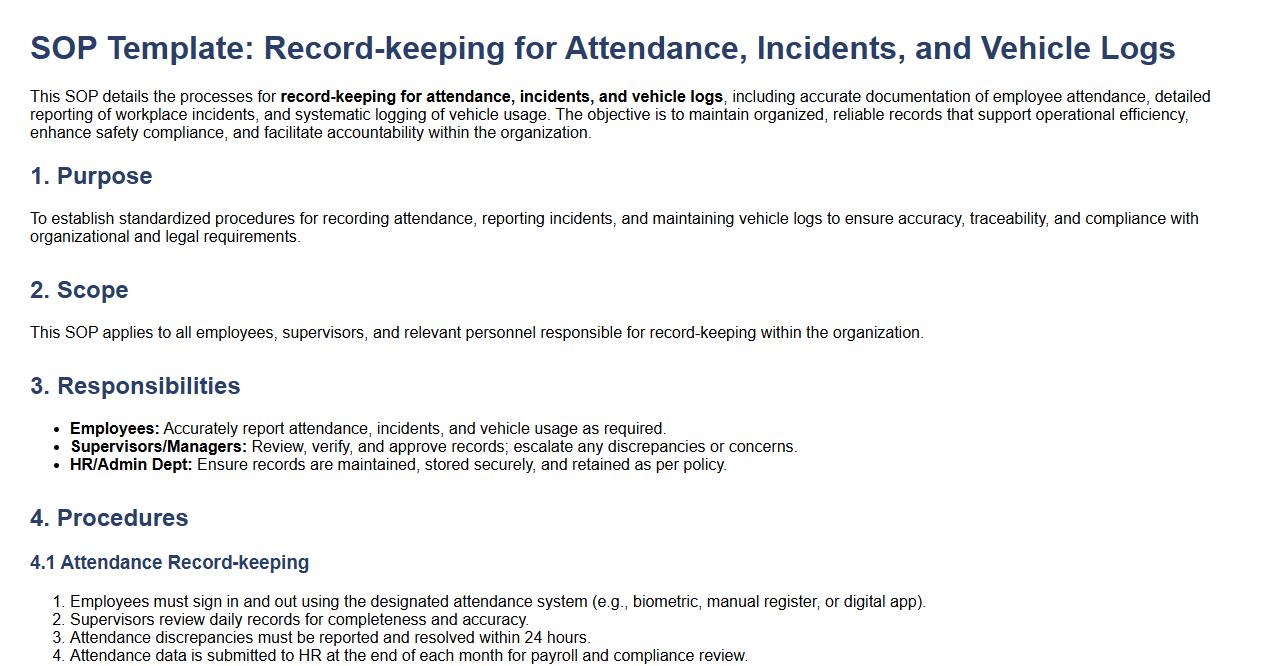
This SOP details the processes for record-keeping for attendance, incidents, and vehicle logs, including accurate documentation of employee attendance, detailed reporting of workplace incidents, and systematic logging of vehicle usage. The objective is to maintain organized, reliable records that support operational efficiency, enhance safety compliance, and facilitate accountability within the organization.
What procedures are outlined for daily vehicle inspection and maintenance in the SOP?
The daily vehicle inspection includes checking tire pressure, brake functionality, and fluid levels to ensure the vehicle is safe and operational. Maintenance tasks such as cleaning and refueling are also documented to prevent future issues. The SOP mandates a daily checklist to be completed by the driver before starting any route.
How does the SOP address student safety during boarding and disembarking?
The SOP emphasizes student supervision during boarding and disembarking to prevent accidents. Attendants are required to ensure students stay clear of moving vehicles and cross roads only at designated crossing points. Clear communication between the driver and attendants is critical for maintaining a safe environment.
What documentation and record-keeping requirements are specified in the SOP for drivers and attendants?
The SOP requires maintaining detailed logbooks that record daily inspections, mileage, and any incidents or delays. Drivers and attendants must also document training and safety briefings to ensure compliance with safety standards. These records are regularly reviewed by management for accuracy and accountability.
How does the SOP define emergency response protocols in case of accidents or breakdowns?
The SOP details clear emergency response steps, including securing the scene, notifying emergency services, and communicating with the school administration. Drivers are trained to remain calm and provide first aid if necessary until professional help arrives. All incidents must be reported immediately and followed up with a formal incident report.
What guidelines are provided in the SOP for route planning and scheduling?
The SOP outlines the need for efficient route planning to minimize travel time and ensure timely arrivals. It specifies regular reviews of routes to adapt to changes in traffic patterns or student locations. Scheduling must prioritize student safety while balancing operational efficiency and compliance with legal driving hours.