

A SOP Template for Campus Security Procedures provides a clear and structured framework to ensure the safety and security of students, staff, and visitors. It outlines specific protocols for emergency response, access control, and incident reporting, helping campus security teams maintain consistent and effective operations. Using this template enhances preparedness and compliance with institutional safety standards.
Access control and visitor management protocols.
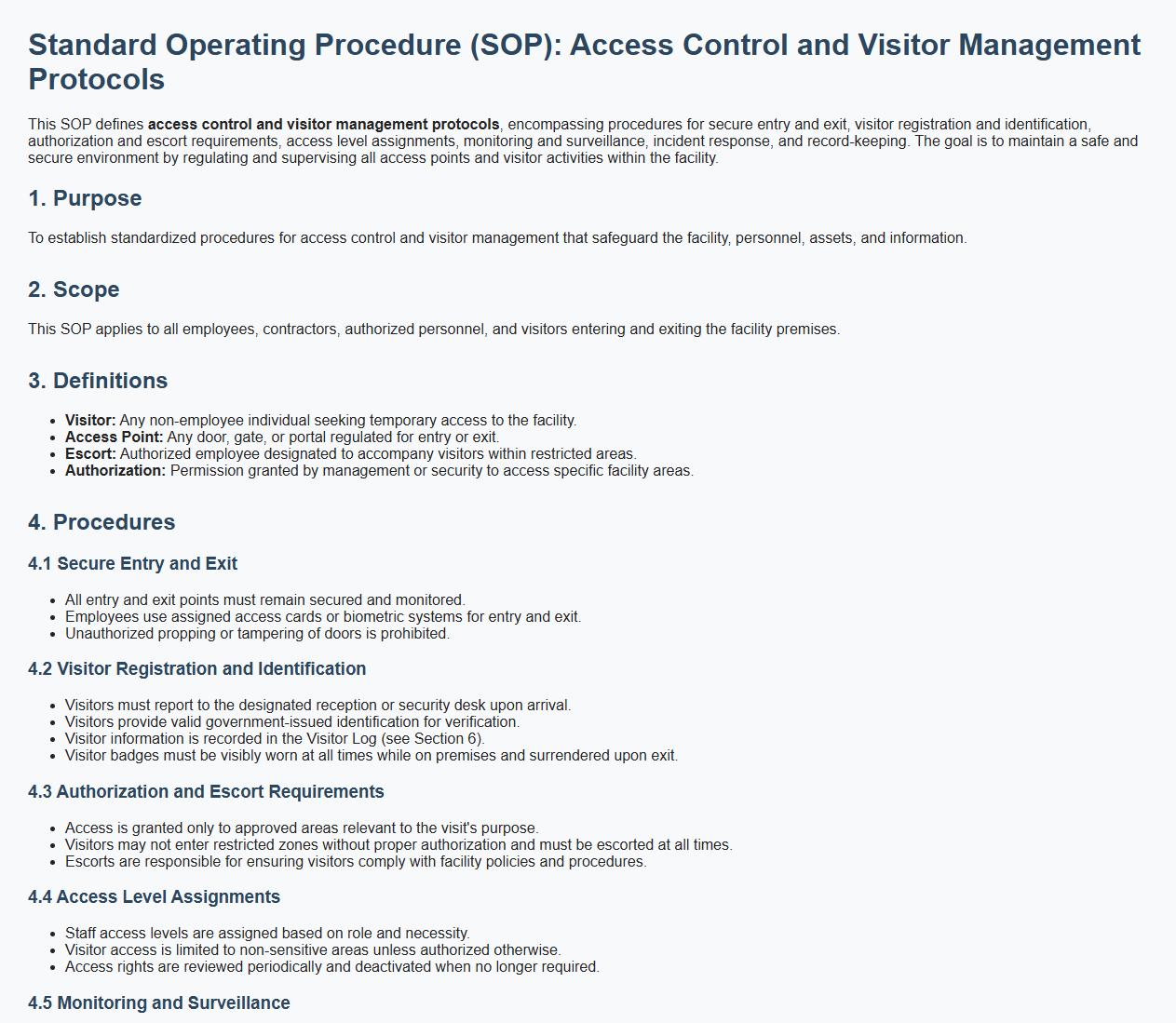
This SOP defines access control and visitor management protocols, encompassing procedures for secure entry and exit, visitor registration and identification, authorization and escort requirements, access level assignments, monitoring and surveillance, incident response, and record-keeping. The goal is to maintain a safe and secure environment by regulating and supervising all access points and visitor activities within the facility.
Patrol and surveillance scheduling procedures.
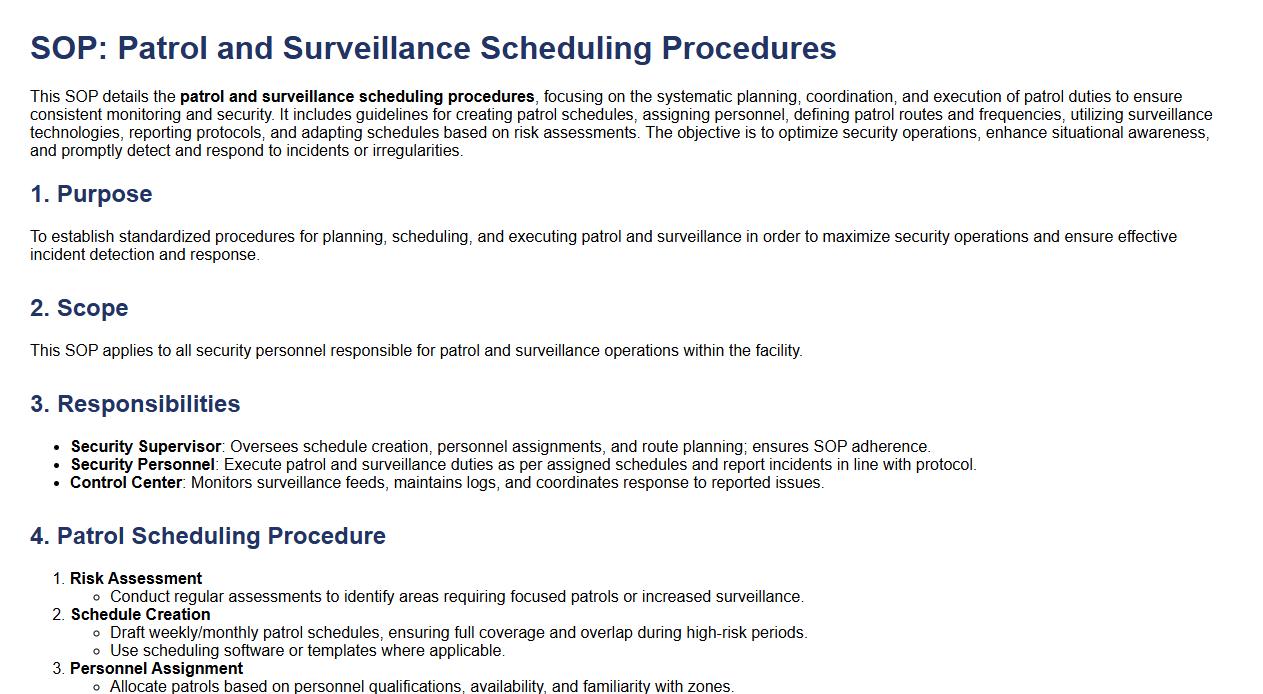
This SOP details the patrol and surveillance scheduling procedures, focusing on the systematic planning, coordination, and execution of patrol duties to ensure consistent monitoring and security. It includes guidelines for creating patrol schedules, assigning personnel, defining patrol routes and frequencies, utilizing surveillance technologies, reporting protocols, and adapting schedules based on risk assessments. The objective is to optimize security operations, enhance situational awareness, and promptly detect and respond to incidents or irregularities.
Incident reporting and response guidelines.
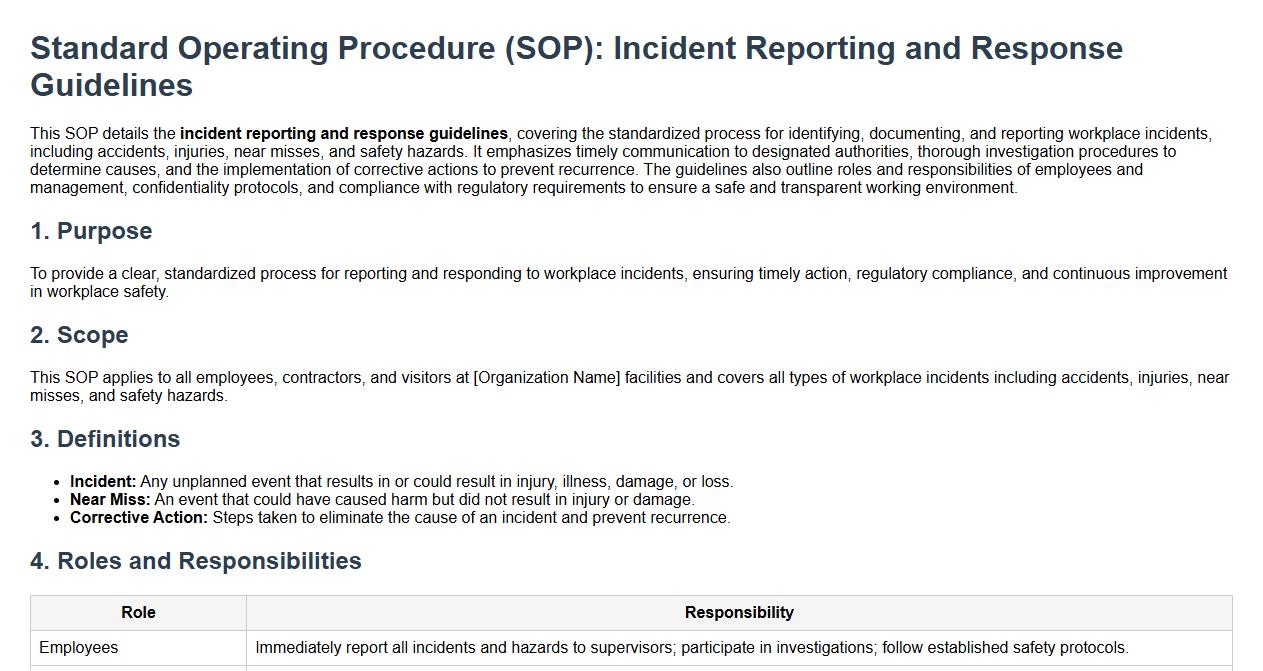
This SOP details the incident reporting and response guidelines, covering the standardized process for identifying, documenting, and reporting workplace incidents, including accidents, injuries, near misses, and safety hazards. It emphasizes timely communication to designated authorities, thorough investigation procedures to determine causes, and the implementation of corrective actions to prevent recurrence. The guidelines also outline roles and responsibilities of employees and management, confidentiality protocols, and compliance with regulatory requirements to ensure a safe and transparent working environment.
Emergency evacuation and lockdown procedures.
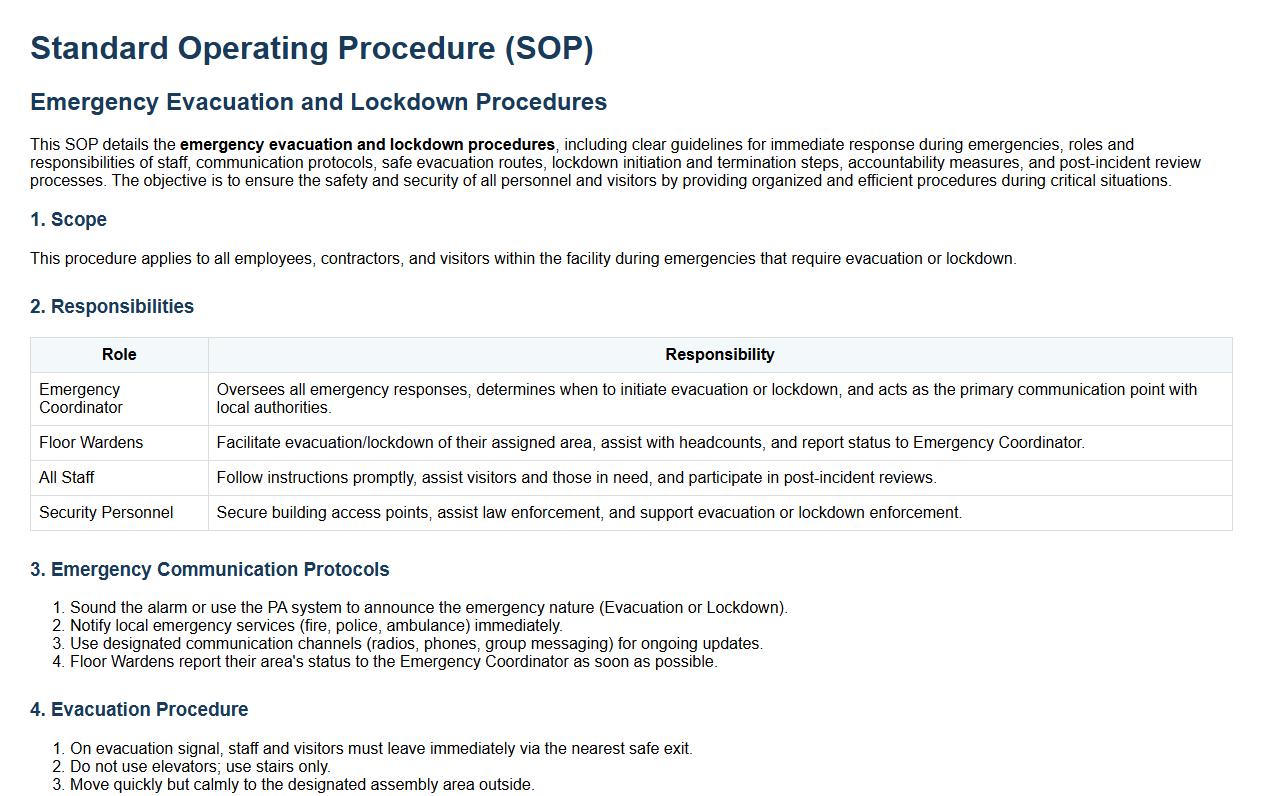
This SOP details the emergency evacuation and lockdown procedures, including clear guidelines for immediate response during emergencies, roles and responsibilities of staff, communication protocols, safe evacuation routes, lockdown initiation and termination steps, accountability measures, and post-incident review processes. The objective is to ensure the safety and security of all personnel and visitors by providing organized and efficient procedures during critical situations.
Key and electronic access management.
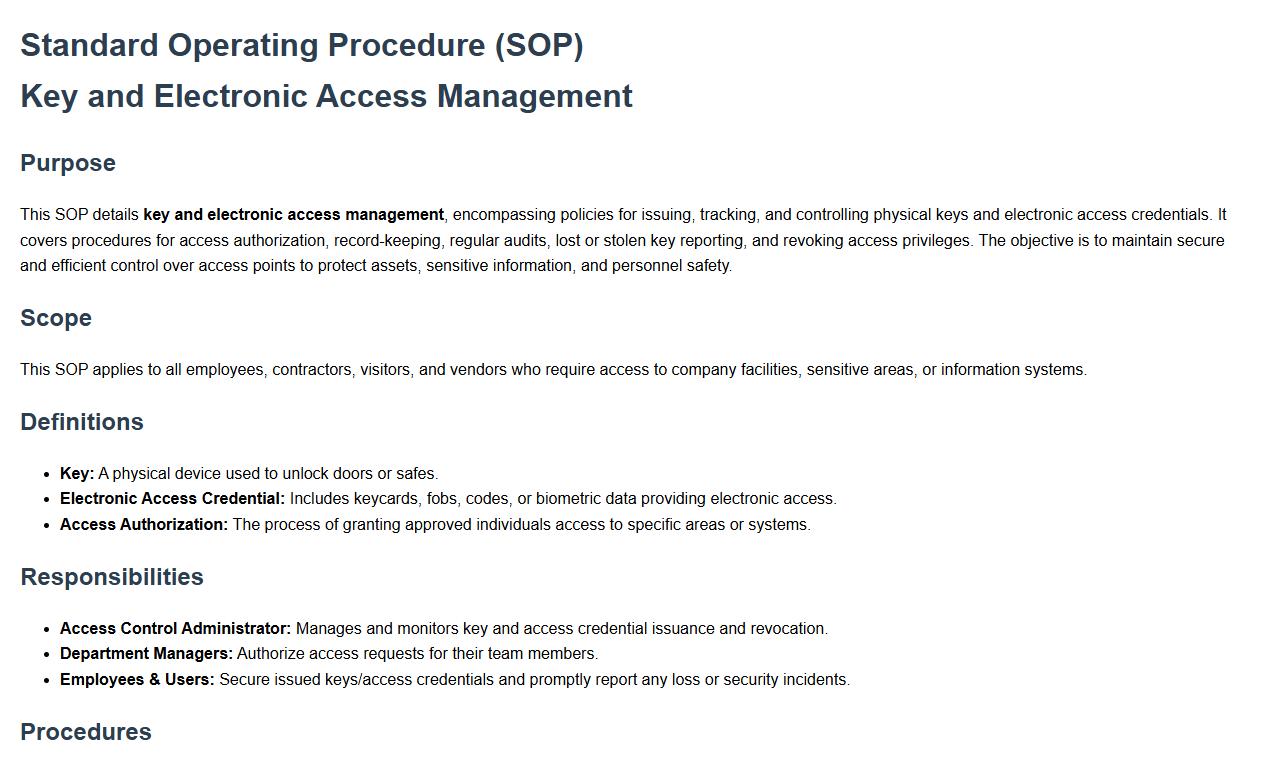
This SOP details key and electronic access management, encompassing policies for issuing, tracking, and controlling physical keys and electronic access credentials. It covers procedures for access authorization, record-keeping, regular audits, lost or stolen key reporting, and revoking access privileges. The objective is to maintain secure and efficient control over access points to protect assets, sensitive information, and personnel safety.
Security equipment usage and maintenance.
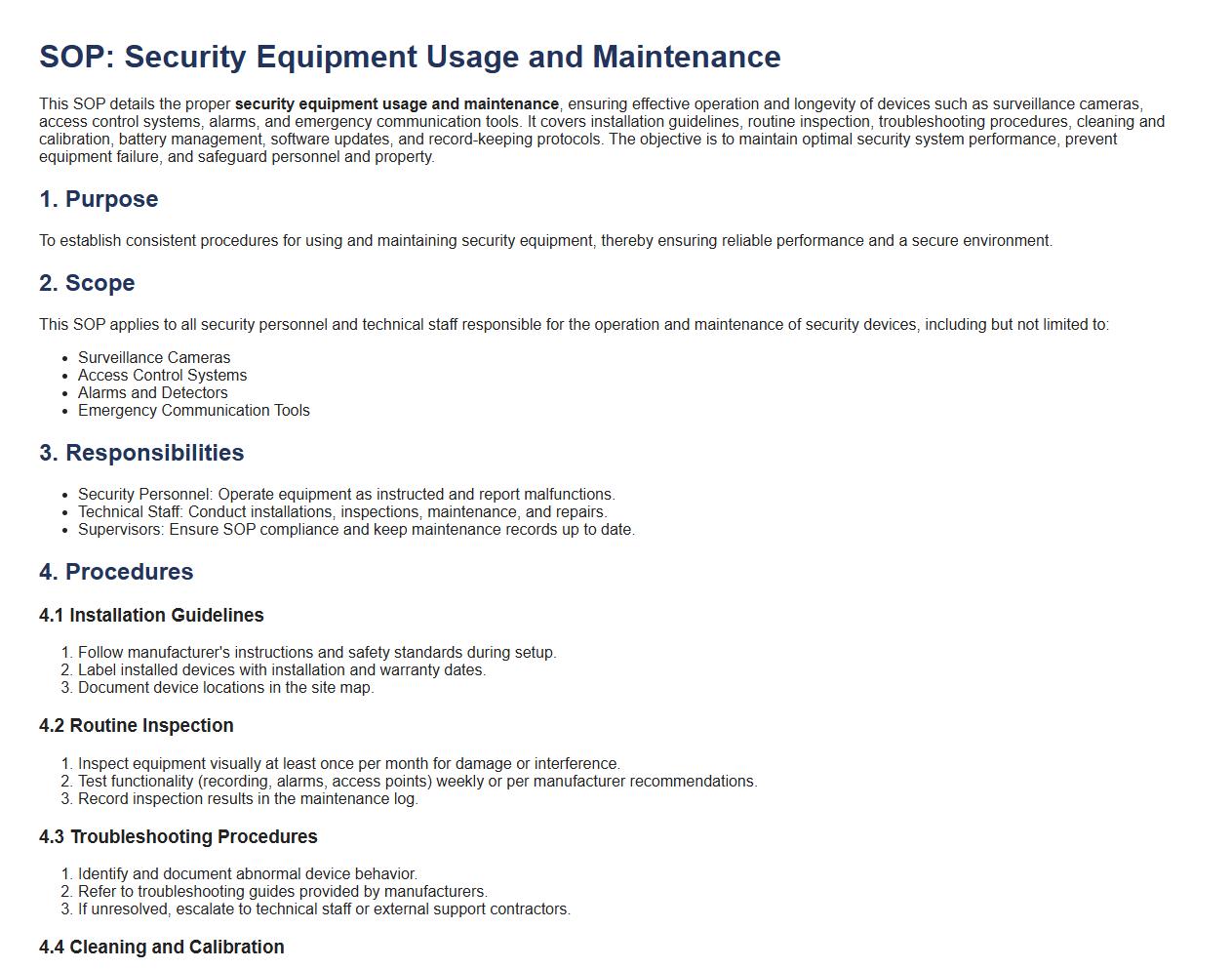
This SOP details the proper security equipment usage and maintenance, ensuring effective operation and longevity of devices such as surveillance cameras, access control systems, alarms, and emergency communication tools. It covers installation guidelines, routine inspection, troubleshooting procedures, cleaning and calibration, battery management, software updates, and record-keeping protocols. The objective is to maintain optimal security system performance, prevent equipment failure, and safeguard personnel and property.
Lost and found items handling protocol.
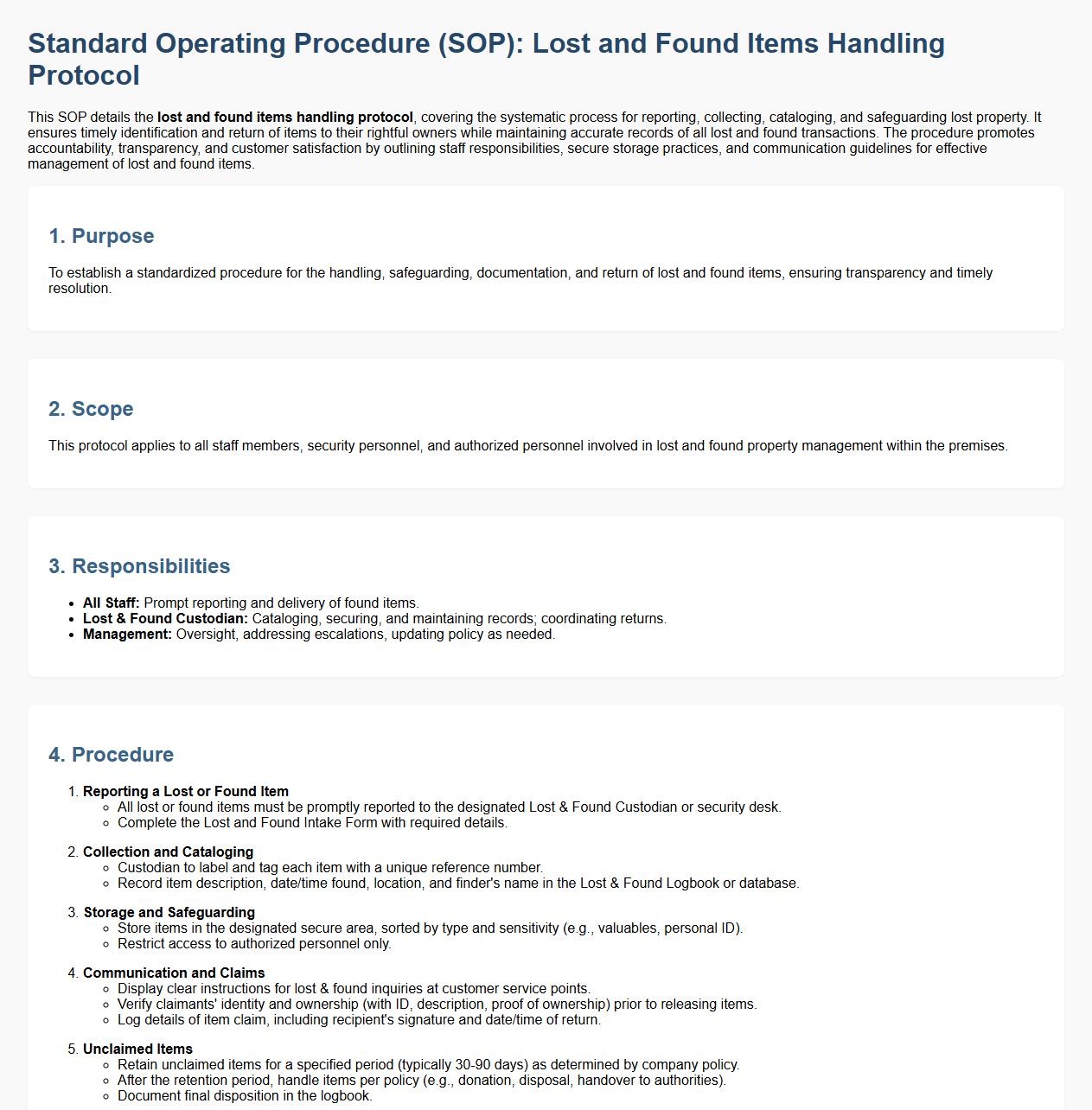
This SOP details the lost and found items handling protocol, covering the systematic process for reporting, collecting, cataloging, and safeguarding lost property. It ensures timely identification and return of items to their rightful owners while maintaining accurate records of all lost and found transactions. The procedure promotes accountability, transparency, and customer satisfaction by outlining staff responsibilities, secure storage practices, and communication guidelines for effective management of lost and found items.
After-hours campus access and escort procedures.
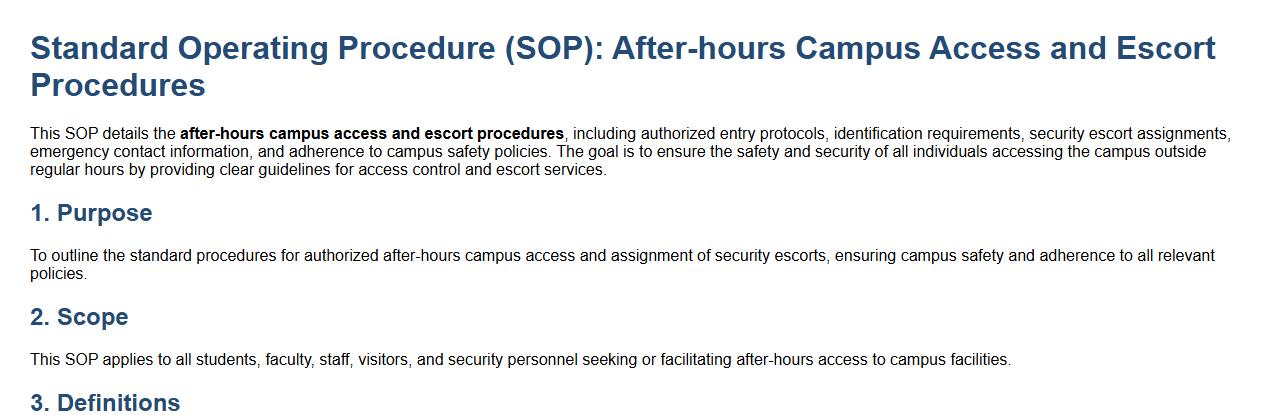
This SOP details the after-hours campus access and escort procedures, including authorized entry protocols, identification requirements, security escort assignments, emergency contact information, and adherence to campus safety policies. The goal is to ensure the safety and security of all individuals accessing the campus outside regular hours by providing clear guidelines for access control and escort services.
Communication protocols with law enforcement and first responders.
This SOP details the communication protocols with law enforcement and first responders, outlining the procedures for establishing clear, timely, and effective communication during emergencies. It includes guidelines for notification, information exchange, coordination of response efforts, incident reporting, and maintaining secure communication channels to ensure safety and efficient collaboration between internal teams and external emergency agencies.
Routine security audit and compliance checks.
This SOP details the process for conducting routine security audit and compliance checks, including scheduling regular audits, assessing security controls, verifying adherence to policies and regulations, documenting findings, addressing vulnerabilities, and ensuring continuous improvement of security measures. The objective is to maintain robust security posture and ensure compliance with organizational and legal requirements.
What are the primary objectives outlined in the SOP for Campus Security Procedures?
The primary objective of the Standard Operating Procedure (SOP) for campus security is to ensure a safe and secure environment for all students, staff, and visitors. It aims to prevent unauthorized access, reduce potential threats, and respond effectively to emergencies. Additionally, the SOP seeks to maintain order and protect campus property through well-defined security measures.
Which personnel are mandated to follow the campus security SOP, and what are their specific responsibilities?
All campus security personnel including security officers, administrative staff, and emergency responders must follow the SOP. Their responsibilities include monitoring campus access points, conducting regular patrols, and responding to incidents in a timely manner. Furthermore, all faculty and staff are required to comply with security protocols and report suspicious activities.
What are the standard protocols for responding to unauthorized entry or security breaches on campus?
The SOP mandates immediate identification and containment of any unauthorized entry or breach. Security personnel must alert campus authorities, document incidents, and take appropriate action such as escorting individuals off-campus or detaining until law enforcement arrives. Prompt communication with emergency services is crucial to mitigate risks.
How does the SOP define and manage emergency communication procedures during an incident?
The SOP defines a clear line of emergency communication involving security staff, campus administration, and law enforcement. It ensures timely notifications through designated communication channels such as alarms, radios, and mass notification systems. Effective communication protocols facilitate coordinated responses and the safety of all campus occupants.
What are the routine patrol and monitoring requirements specified in the campus security SOP?
The SOP requires security personnel to conduct routine patrols of all campus areas including entrances, parking lots, and common spaces. Patrols must be documented and include checks for suspicious activities or safety hazards. Continuous monitoring using CCTV and regular inspections form an integral part of maintaining campus security.