

A SOP Template for Special Education Services provides a structured framework to ensure consistent and compliant delivery of individualized educational support. It outlines step-by-step procedures for assessing student needs, developing personalized learning plans, and coordinating resources with educators and families. This template enhances clarity and accountability, facilitating effective special education program implementation.
Student referral and eligibility determination process.
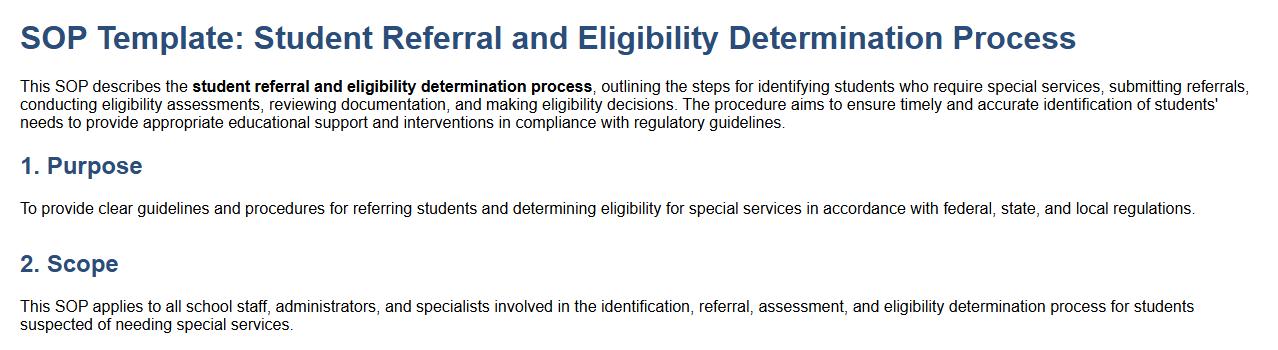
This SOP describes the student referral and eligibility determination process, outlining the steps for identifying students who require special services, submitting referrals, conducting eligibility assessments, reviewing documentation, and making eligibility decisions. The procedure aims to ensure timely and accurate identification of students' needs to provide appropriate educational support and interventions in compliance with regulatory guidelines.
Individualized Education Program (IEP) development and review procedures.
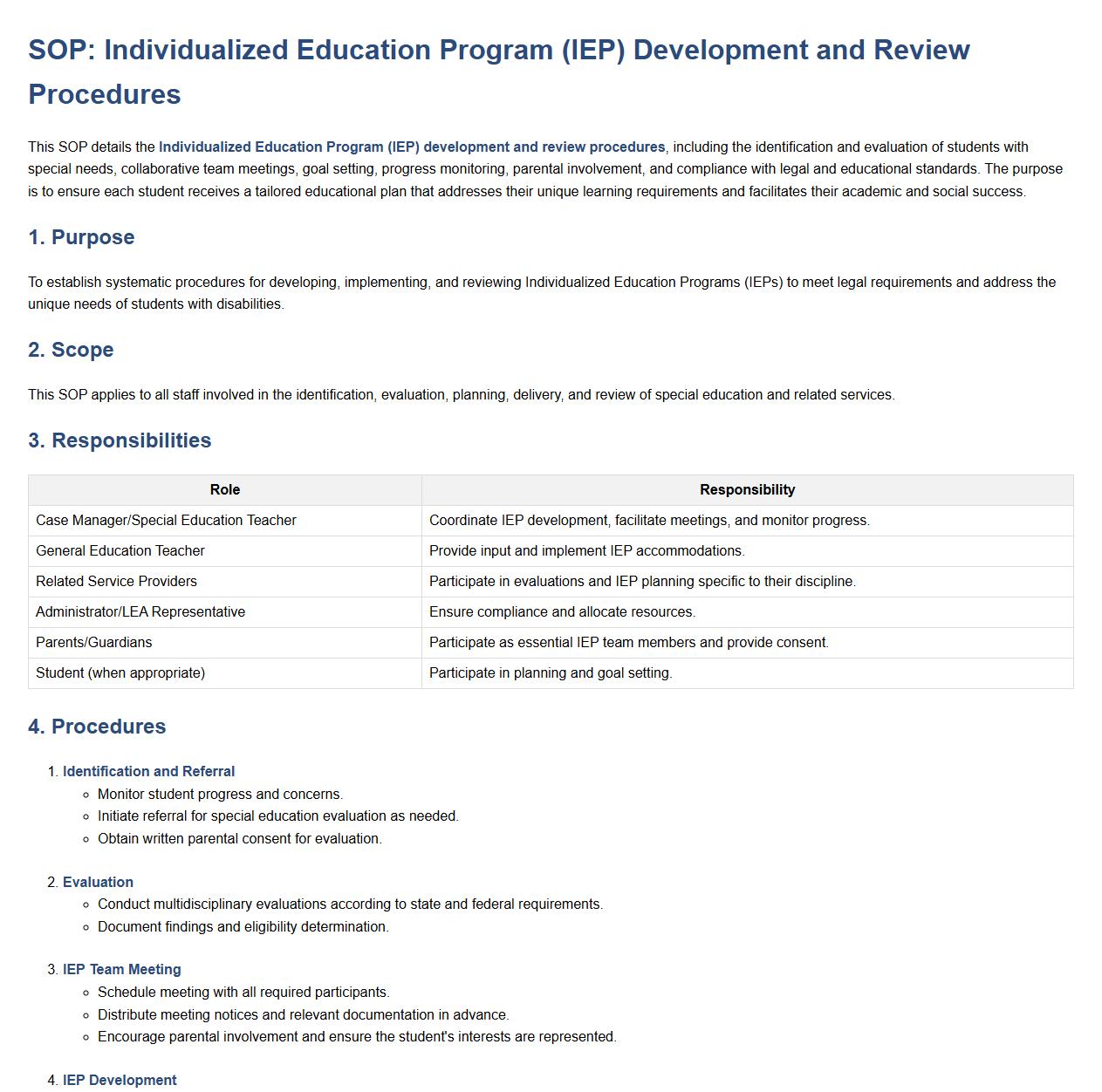
This SOP details the Individualized Education Program (IEP) development and review procedures, including the identification and evaluation of students with special needs, collaborative team meetings, goal setting, progress monitoring, parental involvement, and compliance with legal and educational standards. The purpose is to ensure each student receives a tailored educational plan that addresses their unique learning requirements and facilitates their academic and social success.
Parental notification and consent protocols.
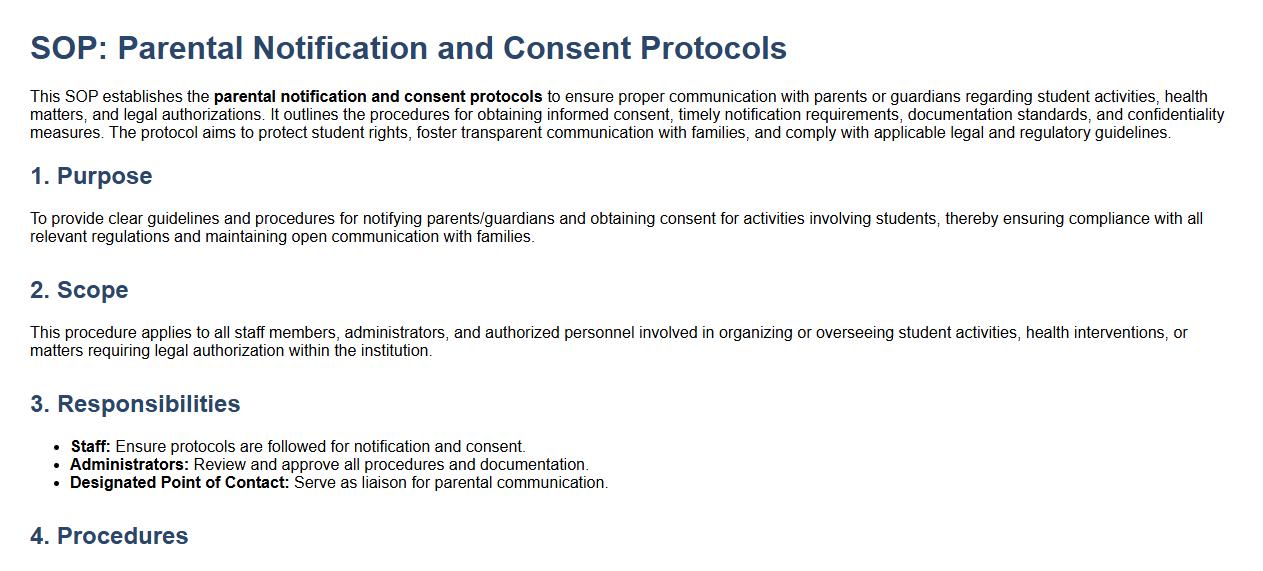
This SOP establishes the parental notification and consent protocols to ensure proper communication with parents or guardians regarding student activities, health matters, and legal authorizations. It outlines the procedures for obtaining informed consent, timely notification requirements, documentation standards, and confidentiality measures. The protocol aims to protect student rights, foster transparent communication with families, and comply with applicable legal and regulatory guidelines.
Assessment and progress monitoring for students with disabilities.
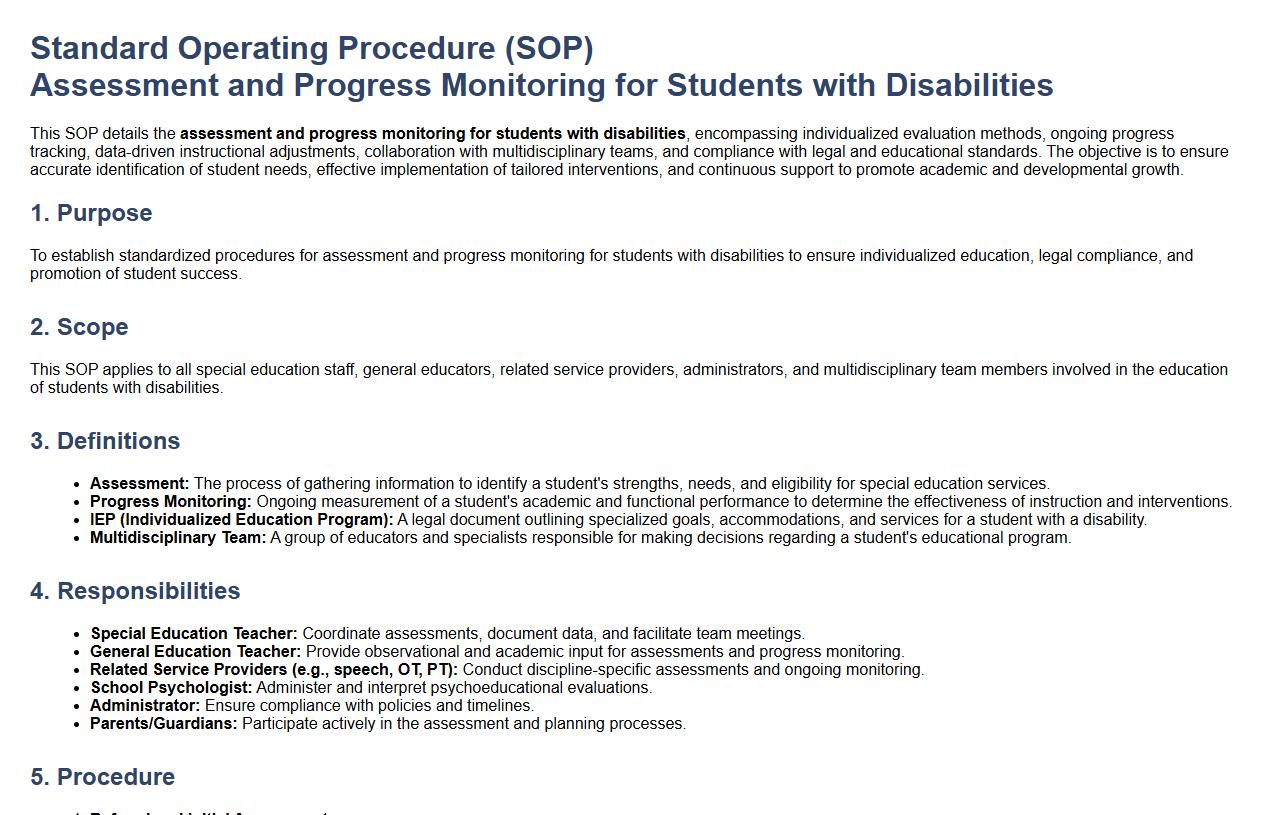
This SOP details the assessment and progress monitoring for students with disabilities, encompassing individualized evaluation methods, ongoing progress tracking, data-driven instructional adjustments, collaboration with multidisciplinary teams, and compliance with legal and educational standards. The objective is to ensure accurate identification of student needs, effective implementation of tailored interventions, and continuous support to promote academic and developmental growth.
Implementation of instructional accommodations and modifications.
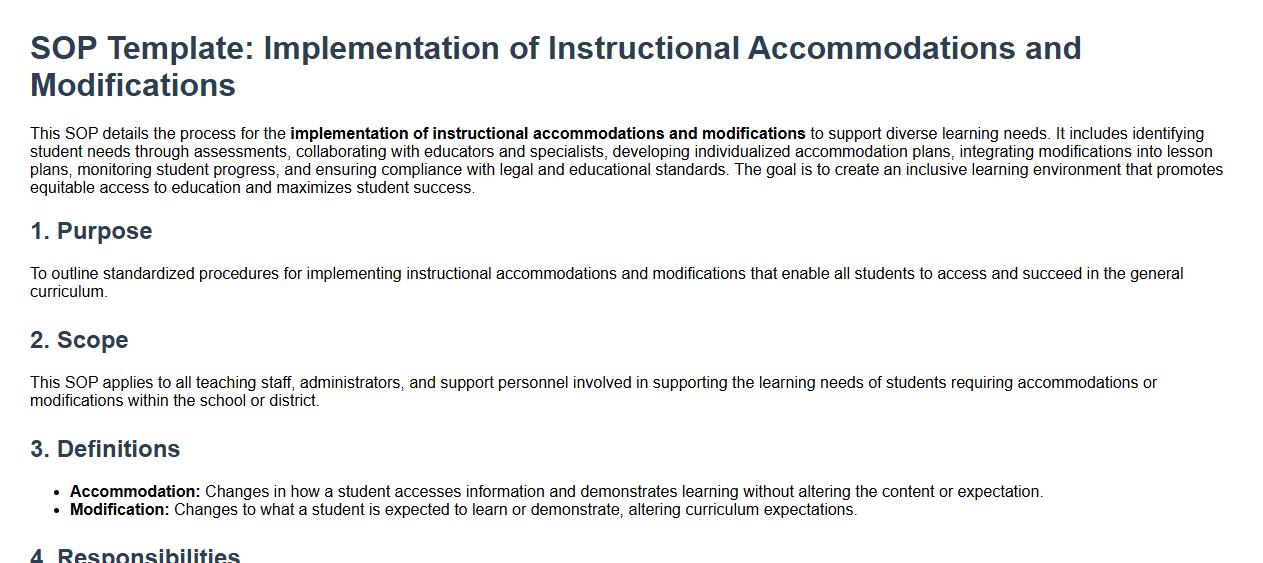
This SOP details the process for the implementation of instructional accommodations and modifications to support diverse learning needs. It includes identifying student needs through assessments, collaborating with educators and specialists, developing individualized accommodation plans, integrating modifications into lesson plans, monitoring student progress, and ensuring compliance with legal and educational standards. The goal is to create an inclusive learning environment that promotes equitable access to education and maximizes student success.
Collaboration and communication with general education teachers.
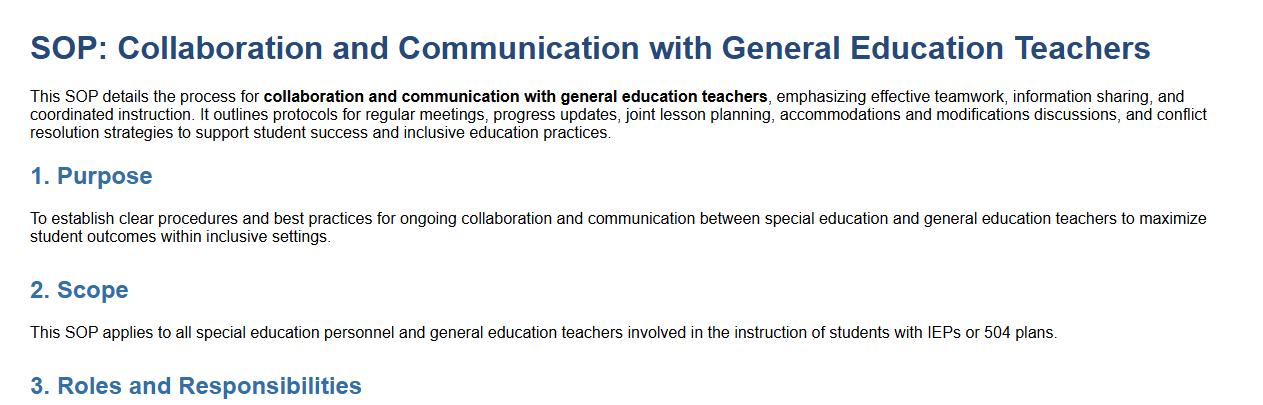
This SOP details the process for collaboration and communication with general education teachers, emphasizing effective teamwork, information sharing, and coordinated instruction. It outlines protocols for regular meetings, progress updates, joint lesson planning, accommodations and modifications discussions, and conflict resolution strategies to support student success and inclusive education practices.
Behavior intervention planning and documentation.
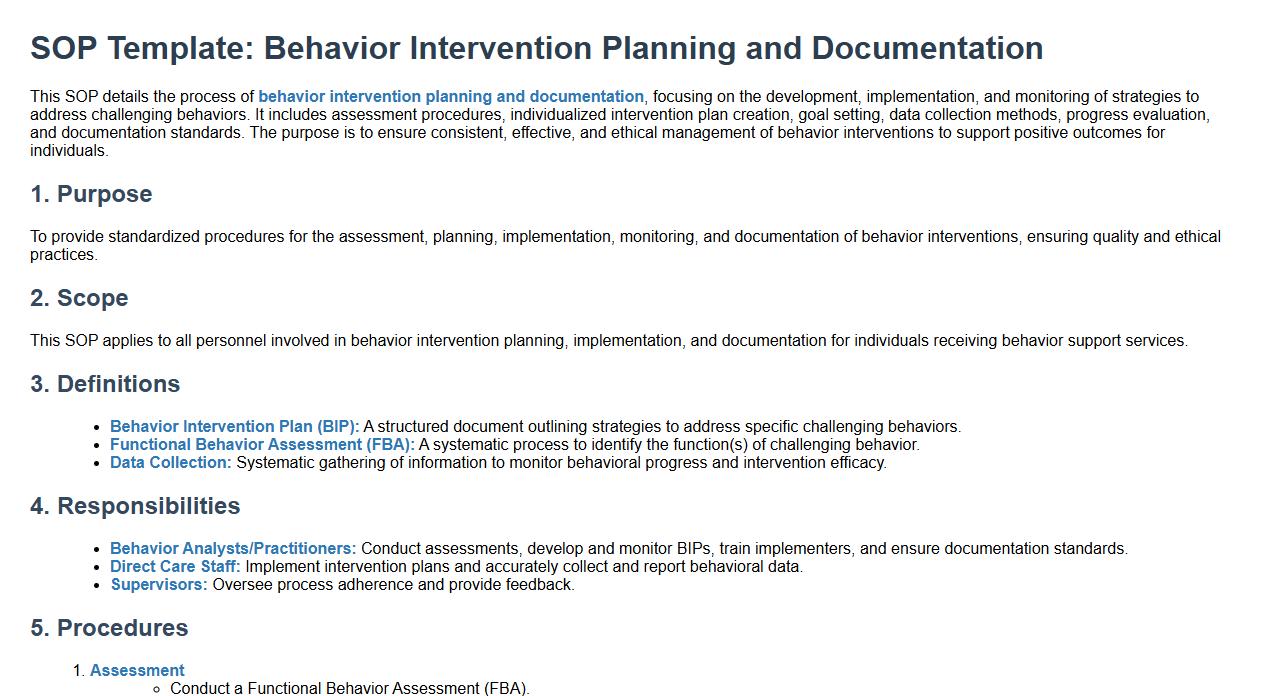
This SOP details the process of behavior intervention planning and documentation, focusing on the development, implementation, and monitoring of strategies to address challenging behaviors. It includes assessment procedures, individualized intervention plan creation, goal setting, data collection methods, progress evaluation, and documentation standards. The purpose is to ensure consistent, effective, and ethical management of behavior interventions to support positive outcomes for individuals.
Service delivery scheduling and caseload management.
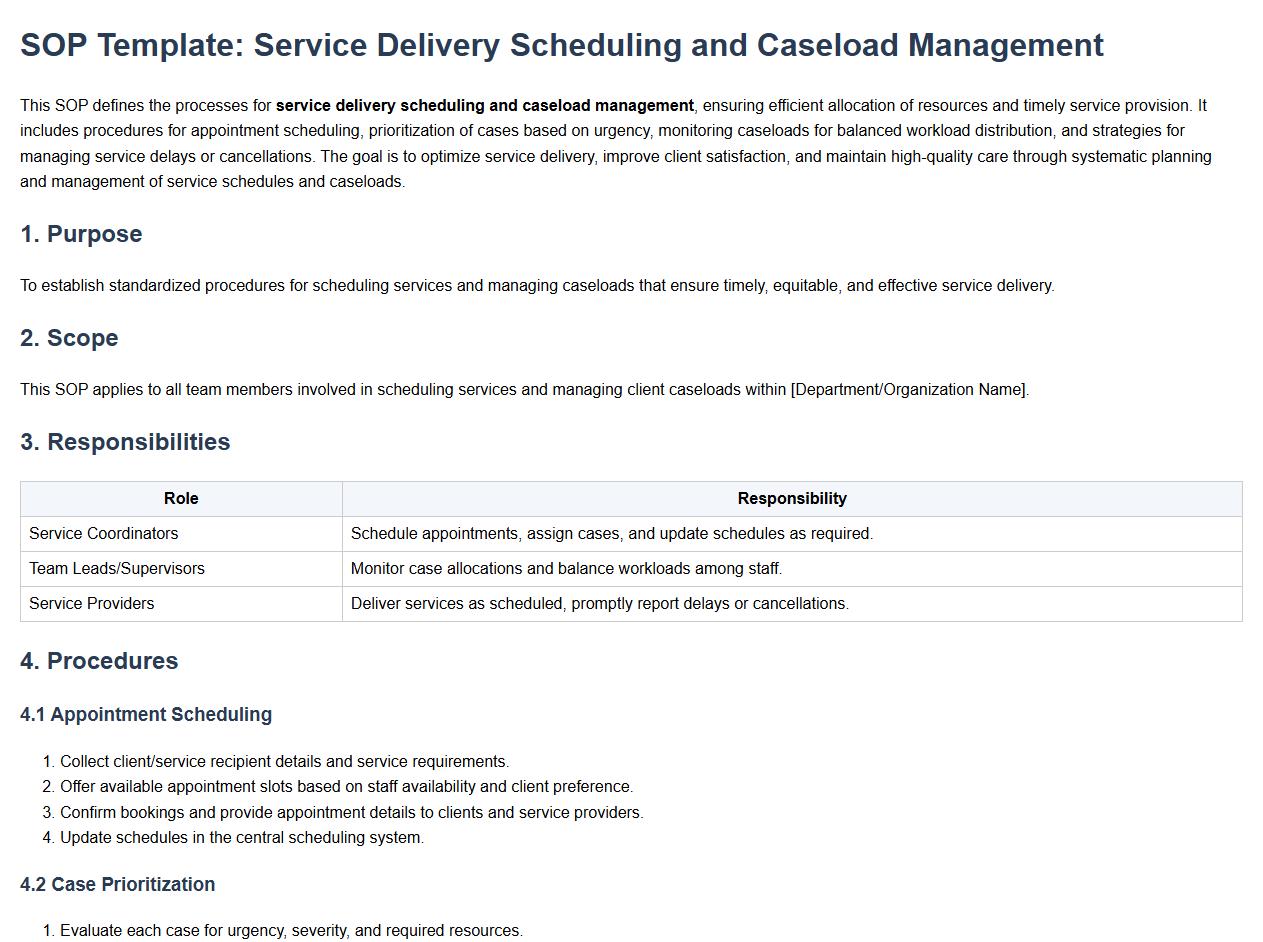
This SOP defines the processes for service delivery scheduling and caseload management, ensuring efficient allocation of resources and timely service provision. It includes procedures for appointment scheduling, prioritization of cases based on urgency, monitoring caseloads for balanced workload distribution, and strategies for managing service delays or cancellations. The goal is to optimize service delivery, improve client satisfaction, and maintain high-quality care through systematic planning and management of service schedules and caseloads.
Transition planning for students advancing grades or exiting services.
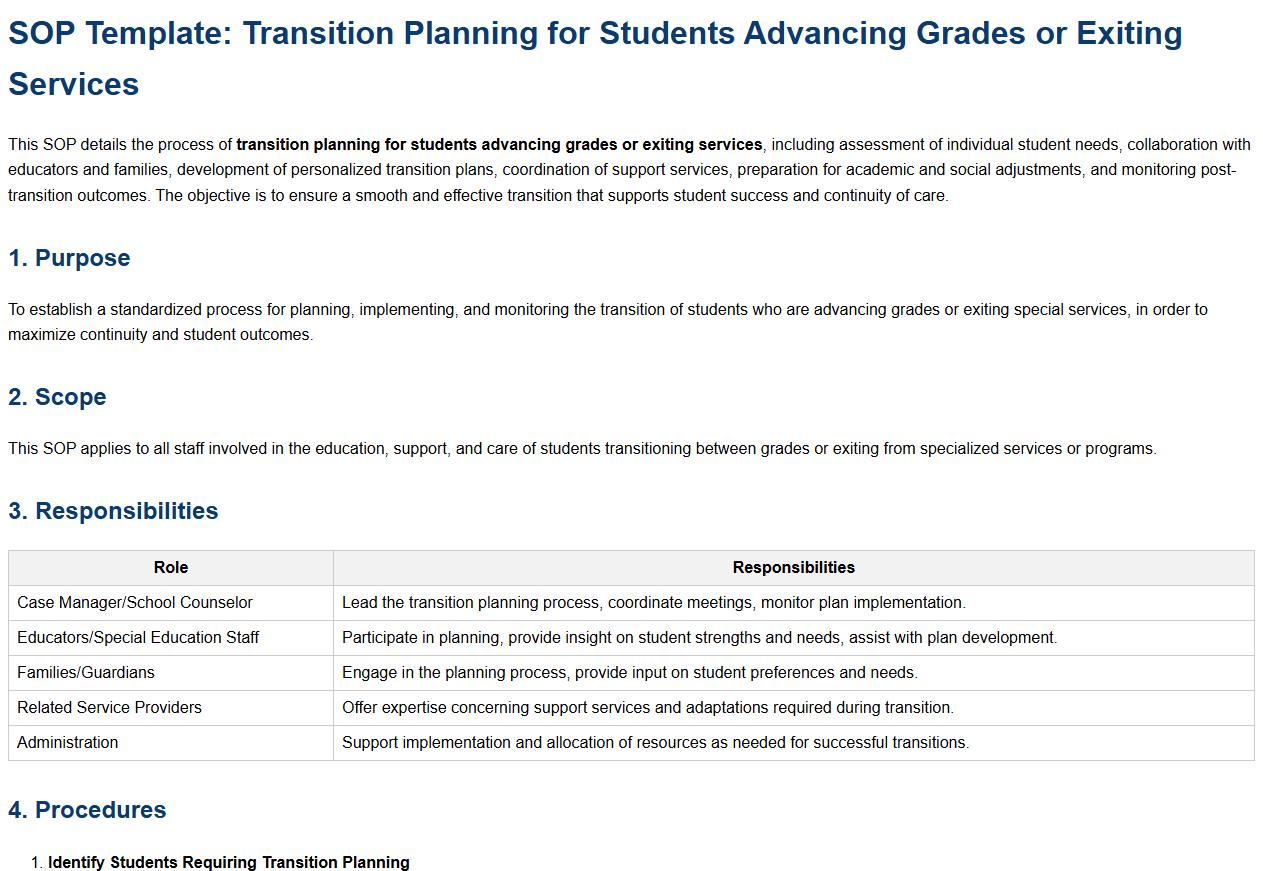
This SOP details the process of transition planning for students advancing grades or exiting services, including assessment of individual student needs, collaboration with educators and families, development of personalized transition plans, coordination of support services, preparation for academic and social adjustments, and monitoring post-transition outcomes. The objective is to ensure a smooth and effective transition that supports student success and continuity of care.
Confidentiality and student records management.
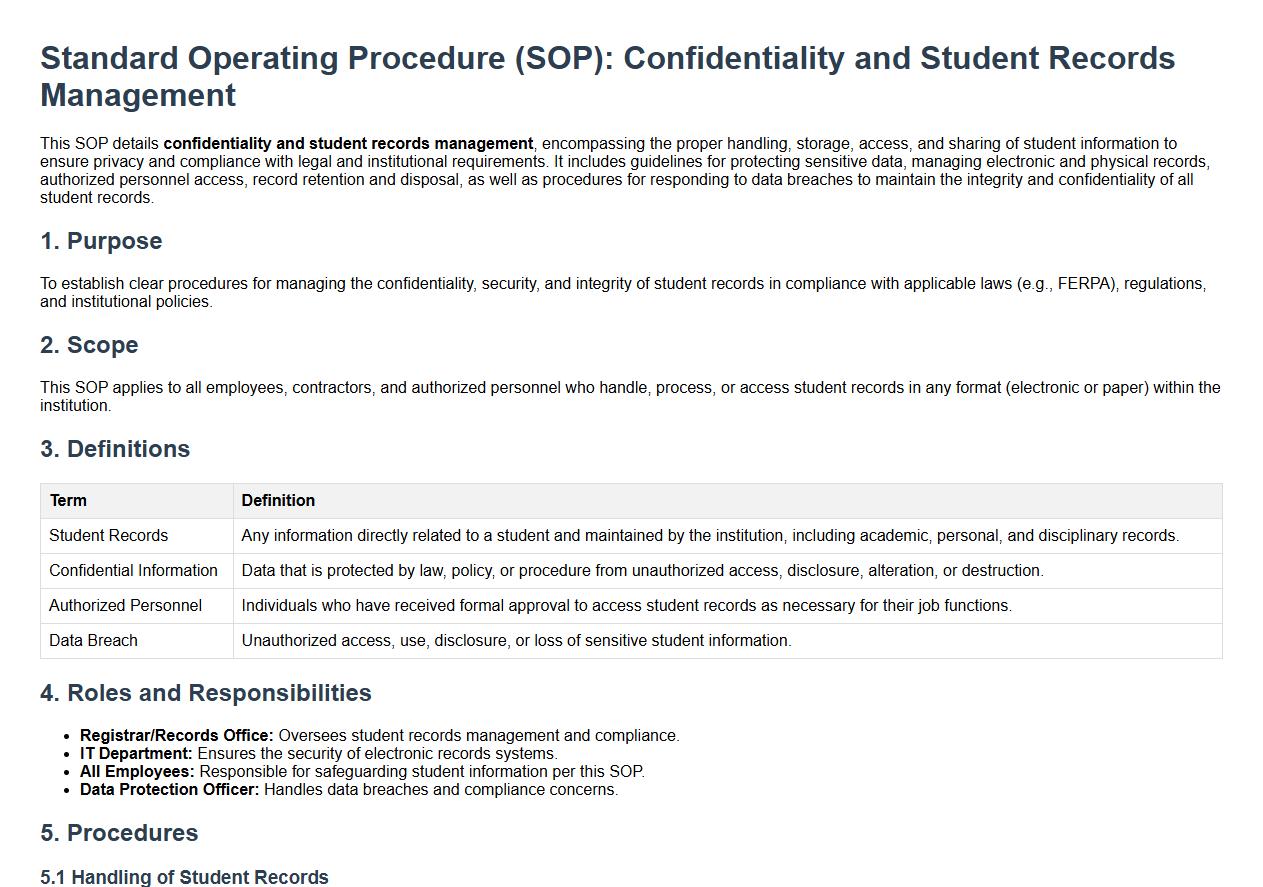
This SOP details confidentiality and student records management, encompassing the proper handling, storage, access, and sharing of student information to ensure privacy and compliance with legal and institutional requirements. It includes guidelines for protecting sensitive data, managing electronic and physical records, authorized personnel access, record retention and disposal, as well as procedures for responding to data breaches to maintain the integrity and confidentiality of all student records.
What criteria determine eligibility for special education services as outlined in the SOP?
The SOP specifies that eligibility for special education services is based on comprehensive evaluation results. Students must demonstrate a disability that adversely impacts their educational performance. The criteria align with federal and state regulations to ensure consistent identification.
Which procedures must be followed to develop and review individualized education plans (IEPs) according to the SOP?
The SOP mandates a collaborative process involving educators, specialists, parents, and the student where applicable. It emphasizes timely development, annual reviews, and updates to the Individualized Education Plans (IEPs). Adherence to strict timelines and proper documentation during meetings is required for compliance.
How does the SOP define roles and responsibilities of staff involved in special education services?
The SOP clearly outlines the duties of each staff member, including teachers, case managers, and support personnel. It underscores accountability for delivering appropriate services and maintaining communication with families. Staff roles are designed to ensure effective implementation of special education services.
What documentation and reporting requirements are specified in the SOP for compliance and monitoring?
The SOP requires meticulous documentation of evaluations, IEP meetings, progress reports, and service delivery records. Reporting protocols include regular updates to compliance officers and stakeholders. This ensures ongoing monitoring and accountability of special education programs.
How does the SOP ensure parent and student participation in decision-making processes?
The SOP facilitates active involvement of parents and students by mandating their inclusion in IEP meetings and planning sessions. It promotes transparent communication and provides opportunities for input on educational goals. Encouraging collaboration supports meaningful participation in the decision-making process.