
A SOP Template for Learning Management System Usage provides a structured guideline to ensure consistent and efficient operation of the LMS across an organization. It outlines key procedures for user access, content management, troubleshooting, and reporting to optimize the learning experience. Implementing this template helps maintain compliance, enhance user engagement, and streamline administrative tasks.
User account creation and authentication procedures.
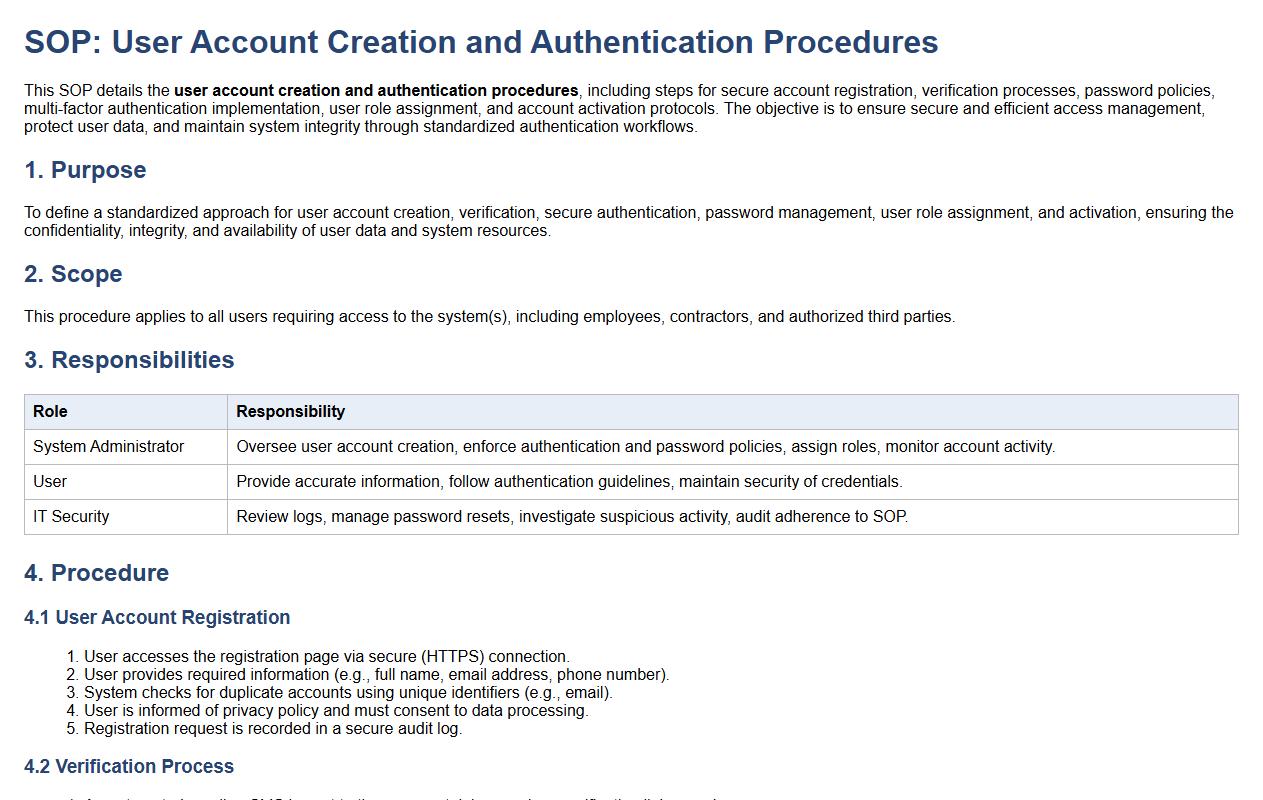
This SOP details the user account creation and authentication procedures, including steps for secure account registration, verification processes, password policies, multi-factor authentication implementation, user role assignment, and account activation protocols. The objective is to ensure secure and efficient access management, protect user data, and maintain system integrity through standardized authentication workflows.
Course content upload and organization guidelines.
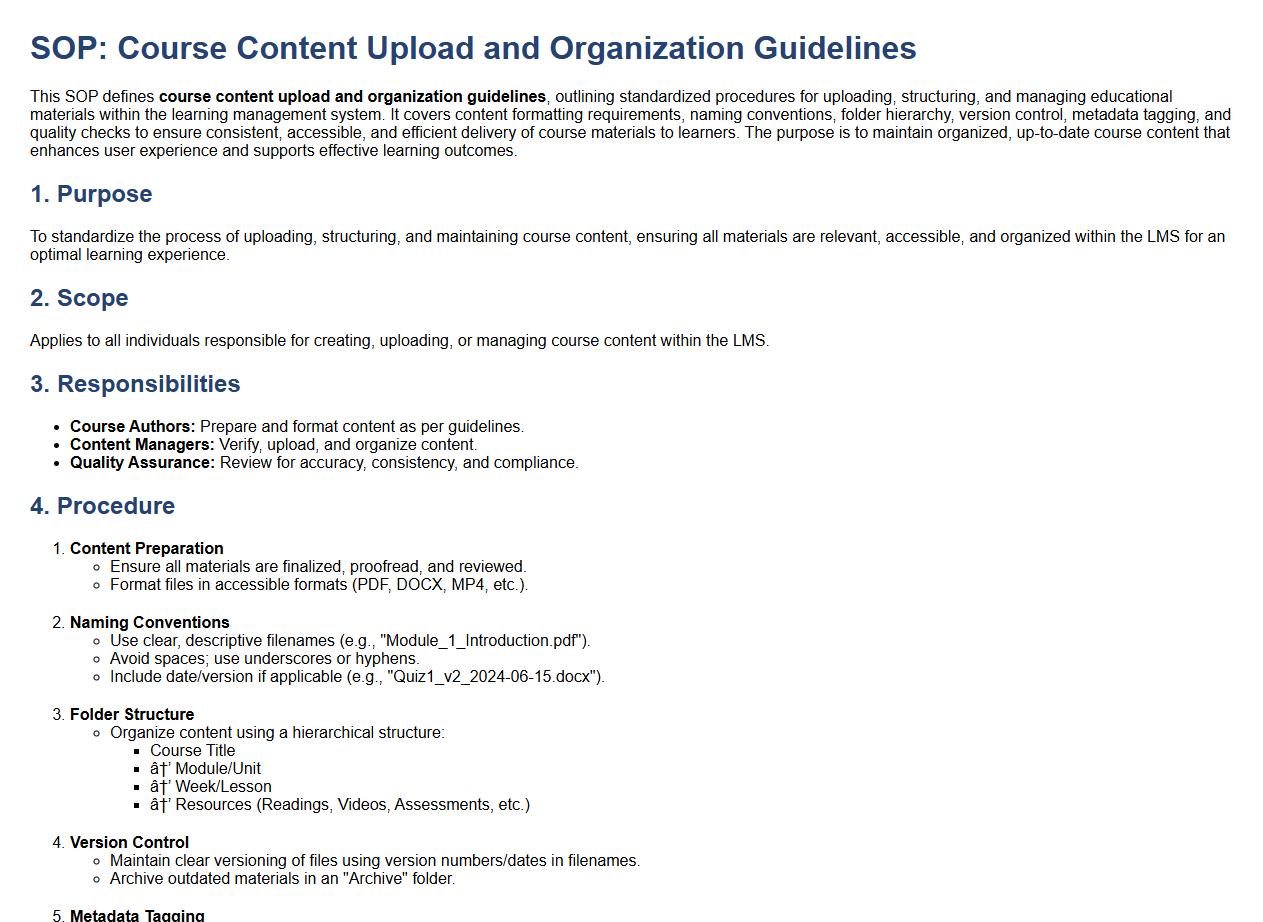
This SOP defines course content upload and organization guidelines, outlining the standardized procedures for uploading, structuring, and managing educational materials within the learning management system. It covers content formatting requirements, naming conventions, folder hierarchy, version control, metadata tagging, and quality checks to ensure consistent, accessible, and efficient delivery of course materials to learners. The purpose is to maintain organized, up-to-date course content that enhances user experience and supports effective learning outcomes.
Learner enrollment and access management protocols.
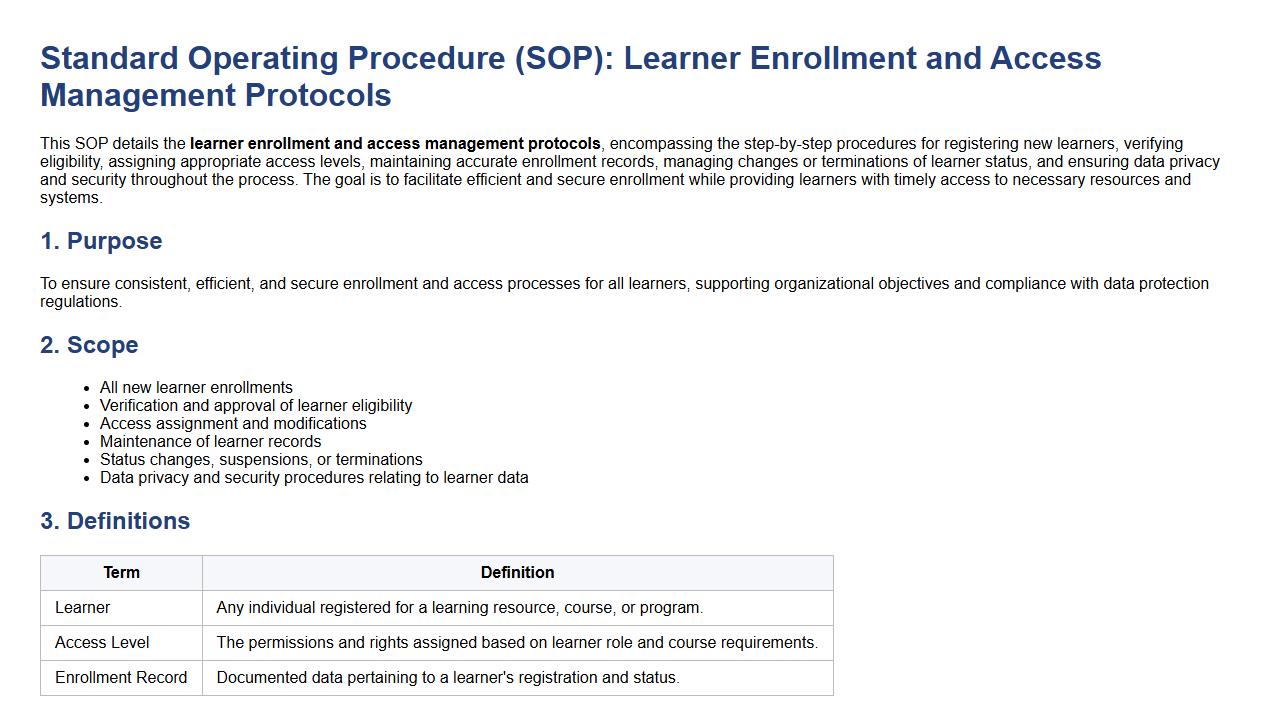
This SOP details the learner enrollment and access management protocols, encompassing the step-by-step procedures for registering new learners, verifying eligibility, assigning appropriate access levels, maintaining accurate enrollment records, managing changes or terminations of learner status, and ensuring data privacy and security throughout the process. The goal is to facilitate efficient and secure enrollment while providing learners with timely access to necessary resources and systems.
Step-by-step online course assignment and scheduling.
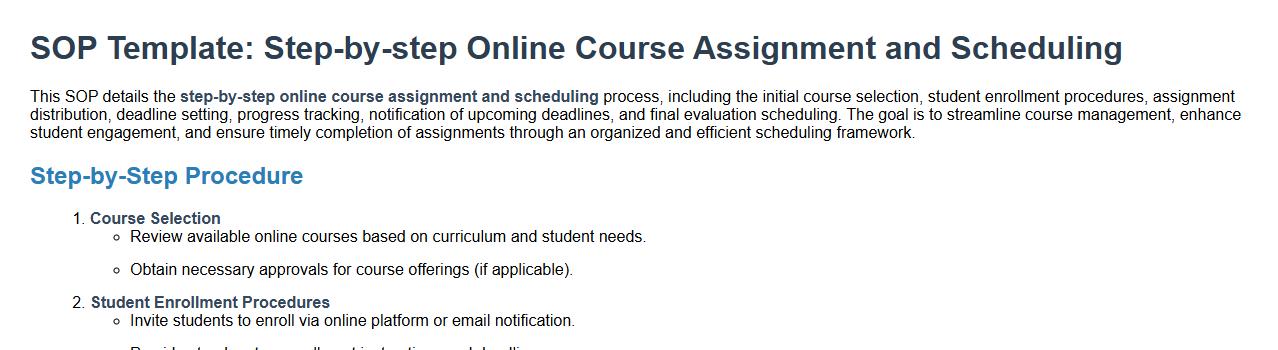
This SOP details the step-by-step online course assignment and scheduling process, including the initial course selection, student enrollment procedures, assignment distribution, deadline setting, progress tracking, notification of upcoming deadlines, and final evaluation scheduling. The goal is to streamline course management, enhance student engagement, and ensure timely completion of assignments through an organized and efficient scheduling framework.
Assessment creation, administration, and grading workflows.
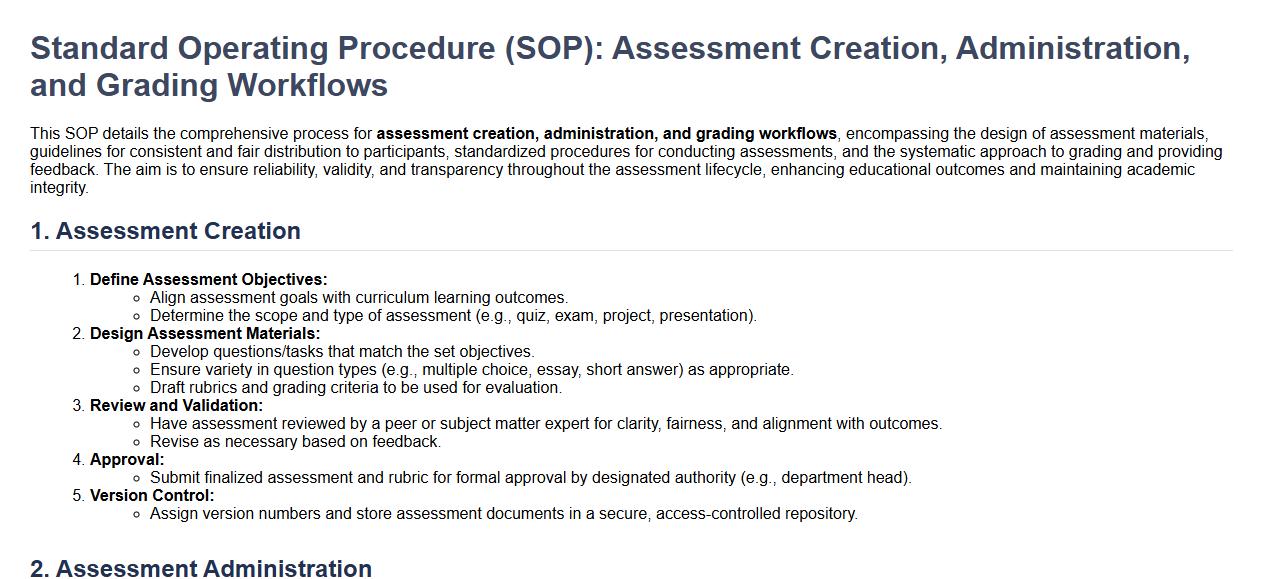
This SOP details the comprehensive process for assessment creation, administration, and grading workflows, encompassing the design of assessment materials, guidelines for consistent and fair distribution to participants, standardized procedures for conducting assessments, and the systematic approach to grading and providing feedback. The aim is to ensure reliability, validity, and transparency throughout the assessment lifecycle, enhancing educational outcomes and maintaining academic integrity.
Communication tools usage (announcements, forums, messaging).
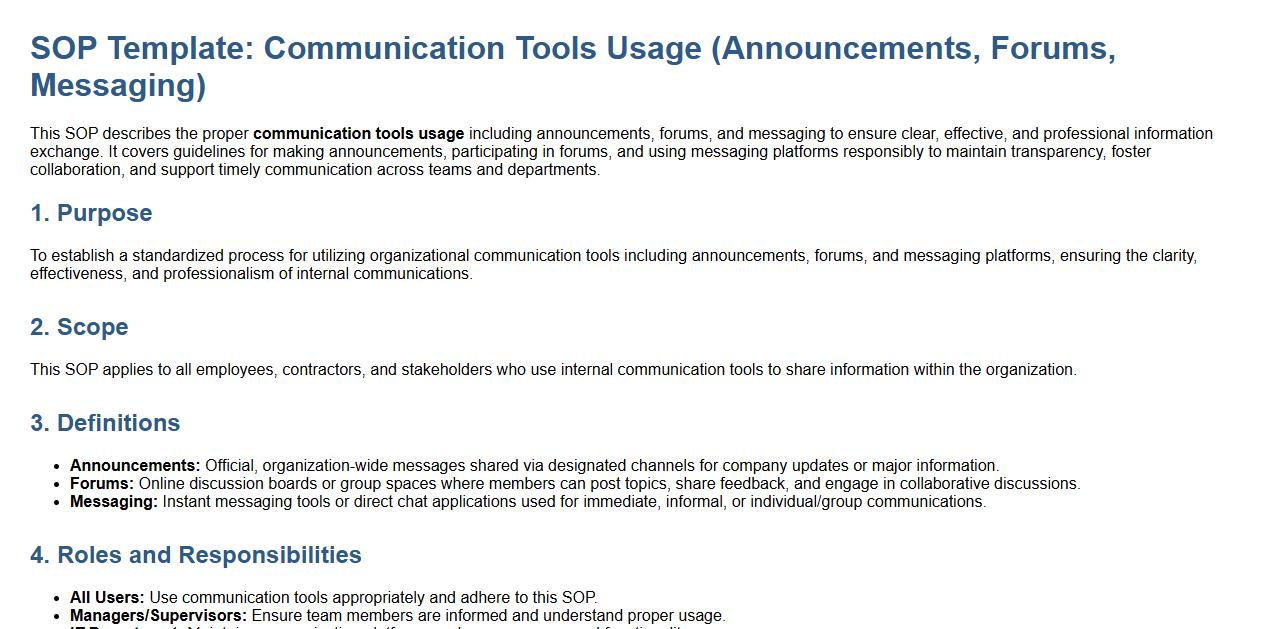
This SOP describes the proper communication tools usage including announcements, forums, and messaging to ensure clear, effective, and professional information exchange. It covers guidelines for making announcements, participating in forums, and using messaging platforms responsibly to maintain transparency, foster collaboration, and support timely communication across teams and departments.
Role-based permission and access control management.
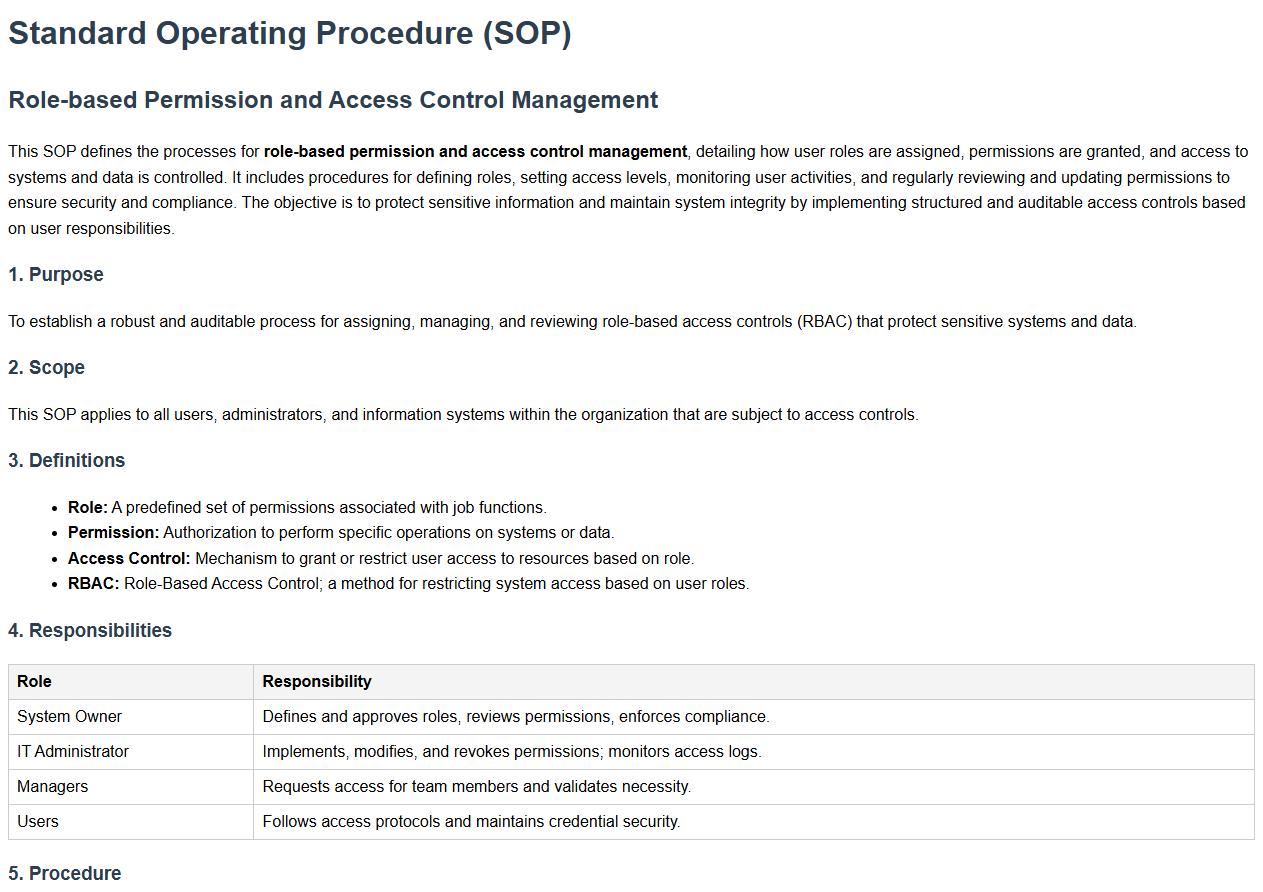
This SOP defines the processes for role-based permission and access control management, detailing how user roles are assigned, permissions are granted, and access to systems and data is controlled. It includes procedures for defining roles, setting access levels, monitoring user activities, and regularly reviewing and updating permissions to ensure security and compliance. The objective is to protect sensitive information and maintain system integrity by implementing structured and auditable access controls based on user responsibilities.
Periodic system backup and data recovery procedures.
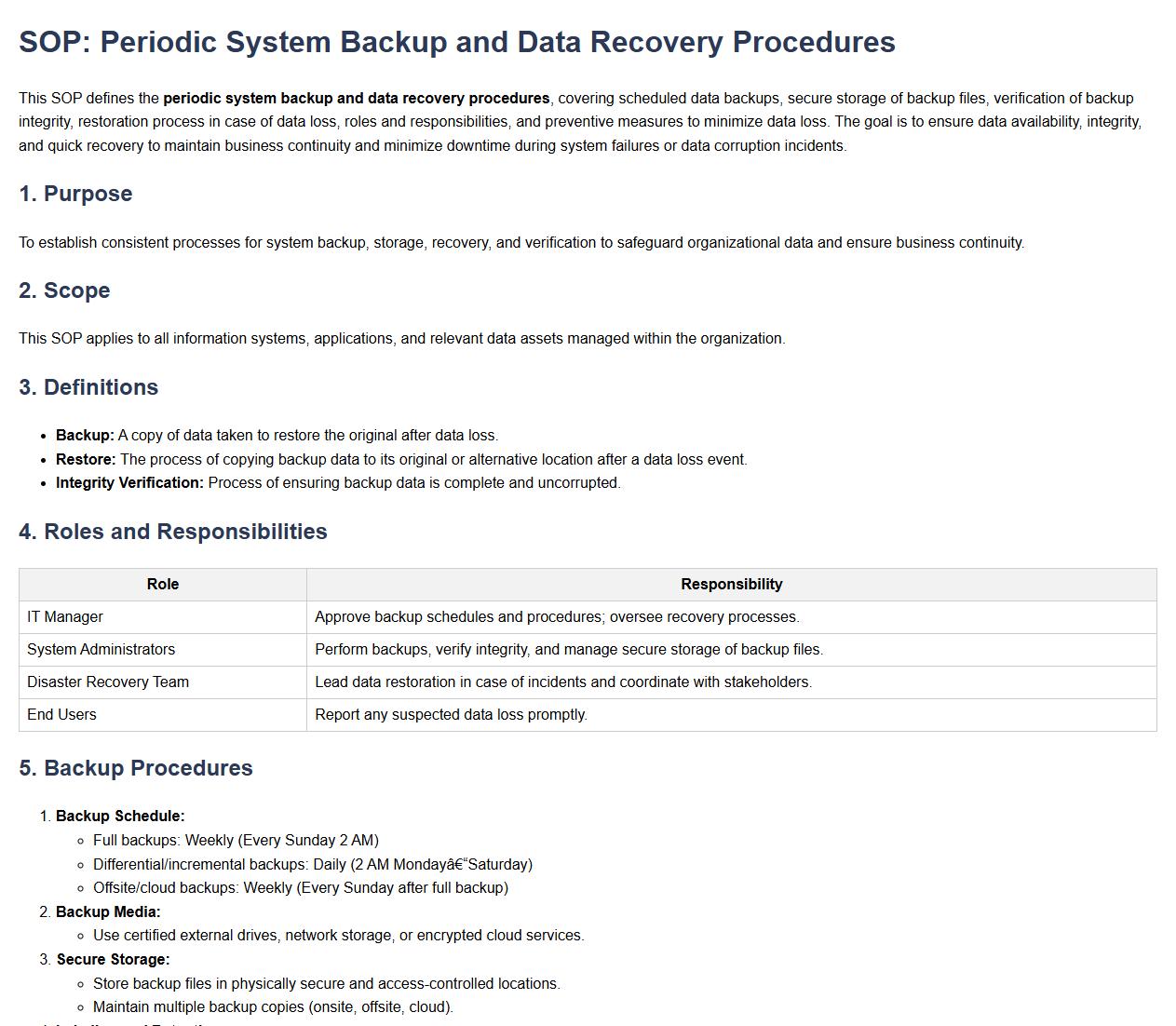
This SOP defines the periodic system backup and data recovery procedures, covering scheduled data backups, secure storage of backup files, verification of backup integrity, restoration process in case of data loss, roles and responsibilities, and preventive measures to minimize data loss. The goal is to ensure data availability, integrity, and quick recovery to maintain business continuity and minimize downtime during system failures or data corruption incidents.
Data privacy, user confidentiality, and compliance policies.
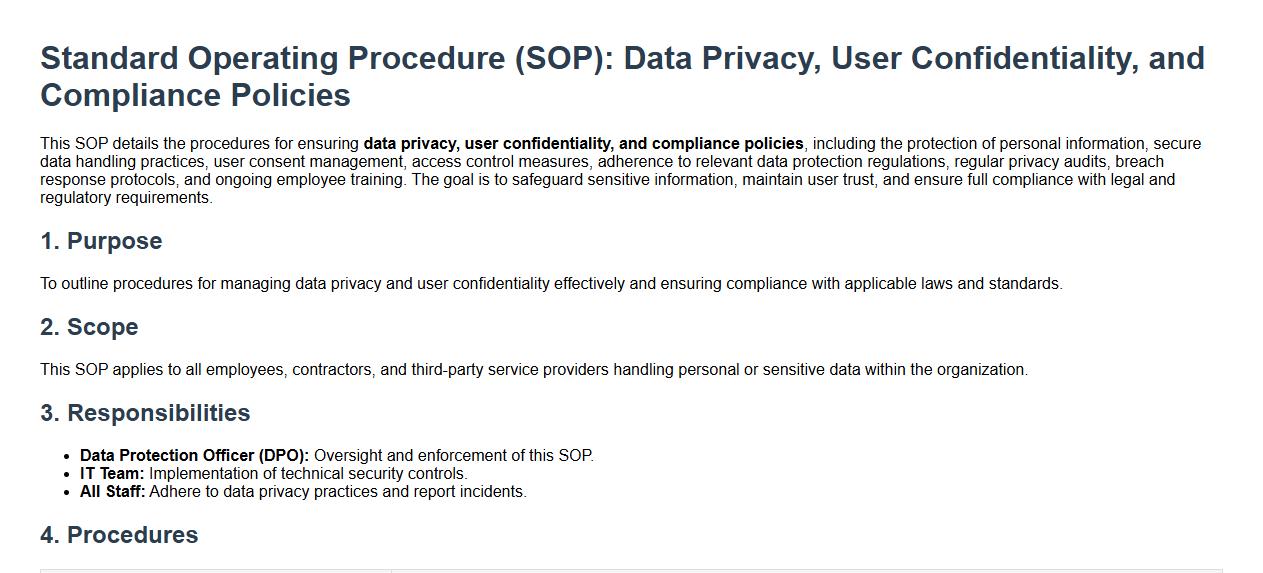
This SOP details the procedures for ensuring data privacy, user confidentiality, and compliance policies, including the protection of personal information, secure data handling practices, user consent management, access control measures, adherence to relevant data protection regulations, regular privacy audits, breach response protocols, and ongoing employee training. The goal is to safeguard sensitive information, maintain user trust, and ensure full compliance with legal and regulatory requirements.
Routine system maintenance, updates, and technical support.
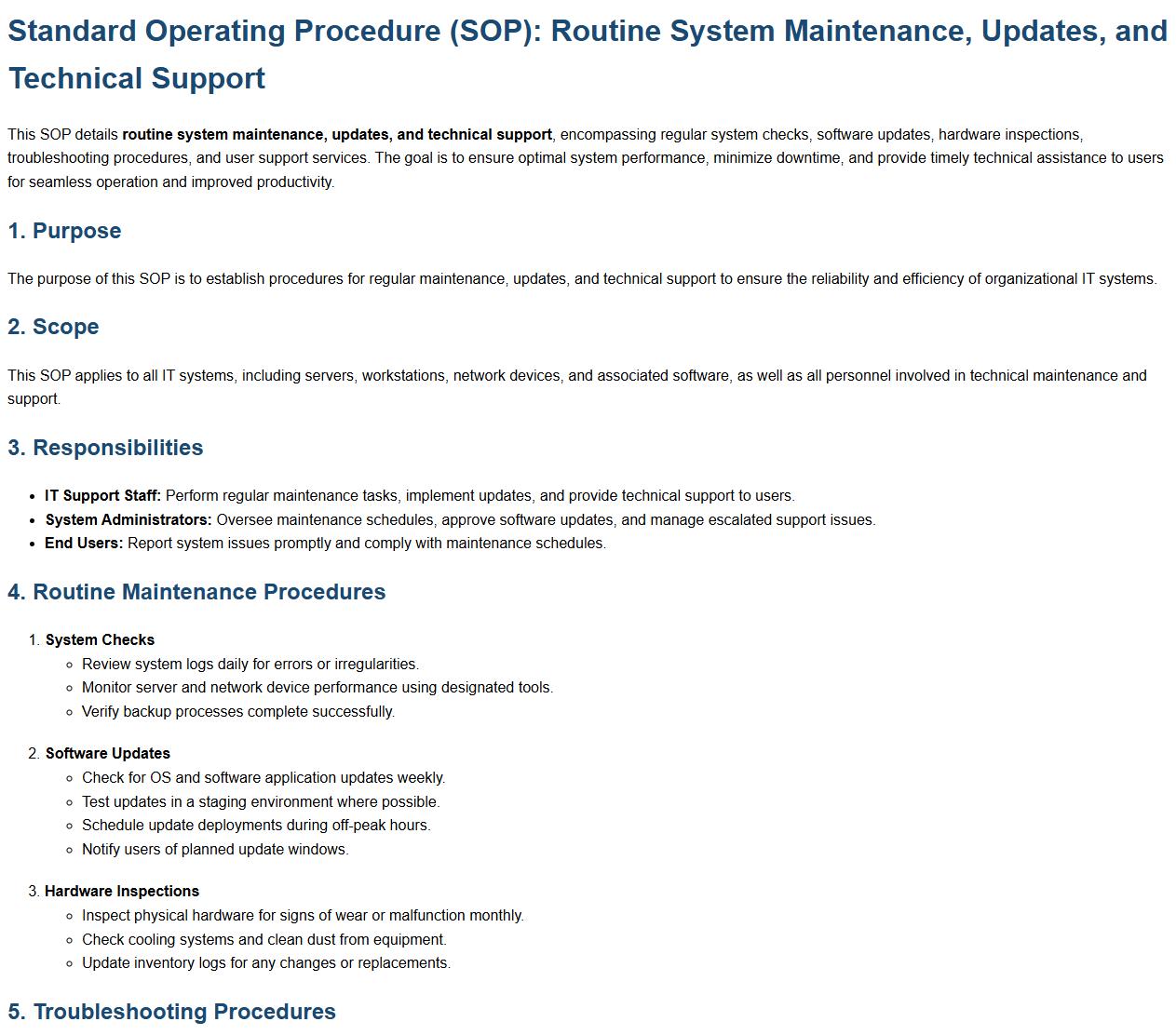
This SOP details routine system maintenance, updates, and technical support, encompassing regular system checks, software updates, hardware inspections, troubleshooting procedures, and user support services. The goal is to ensure optimal system performance, minimize downtime, and provide timely technical assistance to users for seamless operation and improved productivity.
Key Objectives Outlined in the SOP for Learning Management System (LMS) Usage
The SOP emphasizes the efficient utilization of the LMS to enhance learning experiences. It aims to standardize processes to ensure consistent user engagement and content delivery. Additionally, the SOP focuses on promoting compliance with educational standards and organizational policies.
User Roles and Permissions Specified in the LMS SOP
The SOP delineates clear user roles, including administrators, instructors, and learners, each with specific permissions. Administrators have full control over system settings, while instructors can manage courses and trainee progress. Learners are granted access limited to content consumption and assessments to protect system integrity.
Data Privacy and Security Protocols Mandated in the LMS SOP
The SOP mandates strict adherence to data privacy laws and encryption standards to protect user information. It requires regular audits and updates to safeguard against unauthorized access or data breaches. User authentication and role-based permissions are critical elements of the LMS security framework.
Standard Procedures for Course Creation and Content Management in the LMS
The SOP outlines a structured process for course creation, including content validation and multimedia integration. Content managers must ensure accuracy, relevance, and compliance with instructional design principles. Periodic reviews and updates maintain the quality and effectiveness of learning materials.
Process for User Support and Issue Resolution within the LMS as Defined by the SOP
The SOP establishes a tiered support system with clear escalation protocols for resolving user issues. It emphasizes timely response and documentation for all support tickets to improve service quality. Training and FAQs are provided to empower users and minimize common problems.