

A SOP Template for Bullying Prevention Program provides a structured framework to establish clear guidelines and procedures for identifying, addressing, and preventing bullying in schools or workplaces. This template ensures consistent implementation of preventive measures, reporting protocols, and intervention strategies to create a safe and supportive environment. It serves as a vital tool for administrators and staff to maintain accountability and promote a culture of respect and inclusion.
Policy development and program objectives articulation.
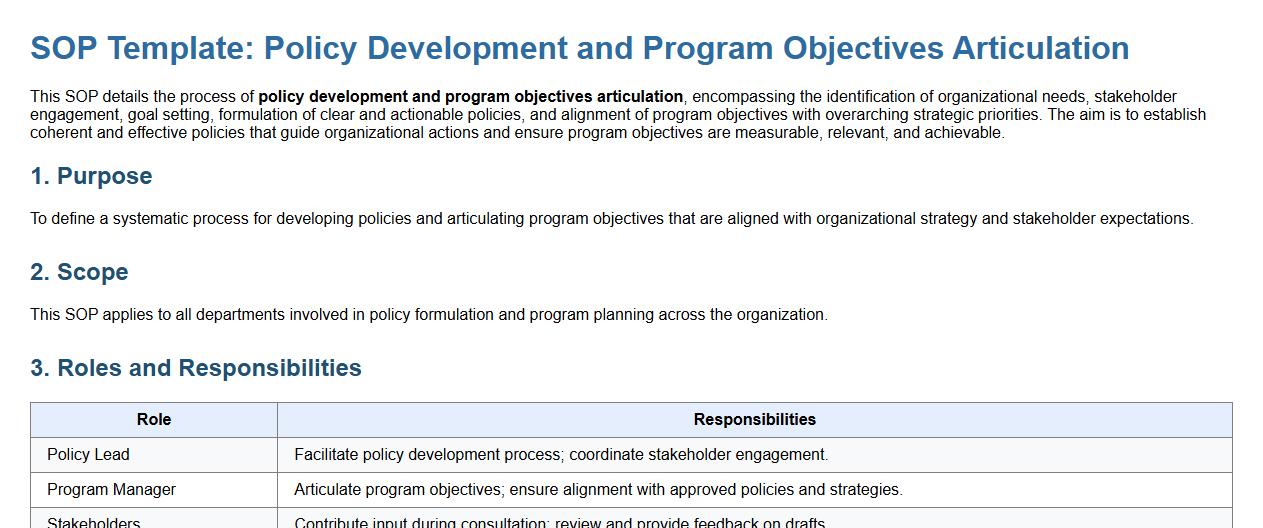
This SOP details the process of policy development and program objectives articulation, encompassing the identification of organizational needs, stakeholder engagement, goal setting, formulation of clear and actionable policies, and alignment of program objectives with overarching strategic priorities. The aim is to establish coherent and effective policies that guide organizational actions and ensure program objectives are measurable, relevant, and achievable.
Identification and definition of bullying behaviors.
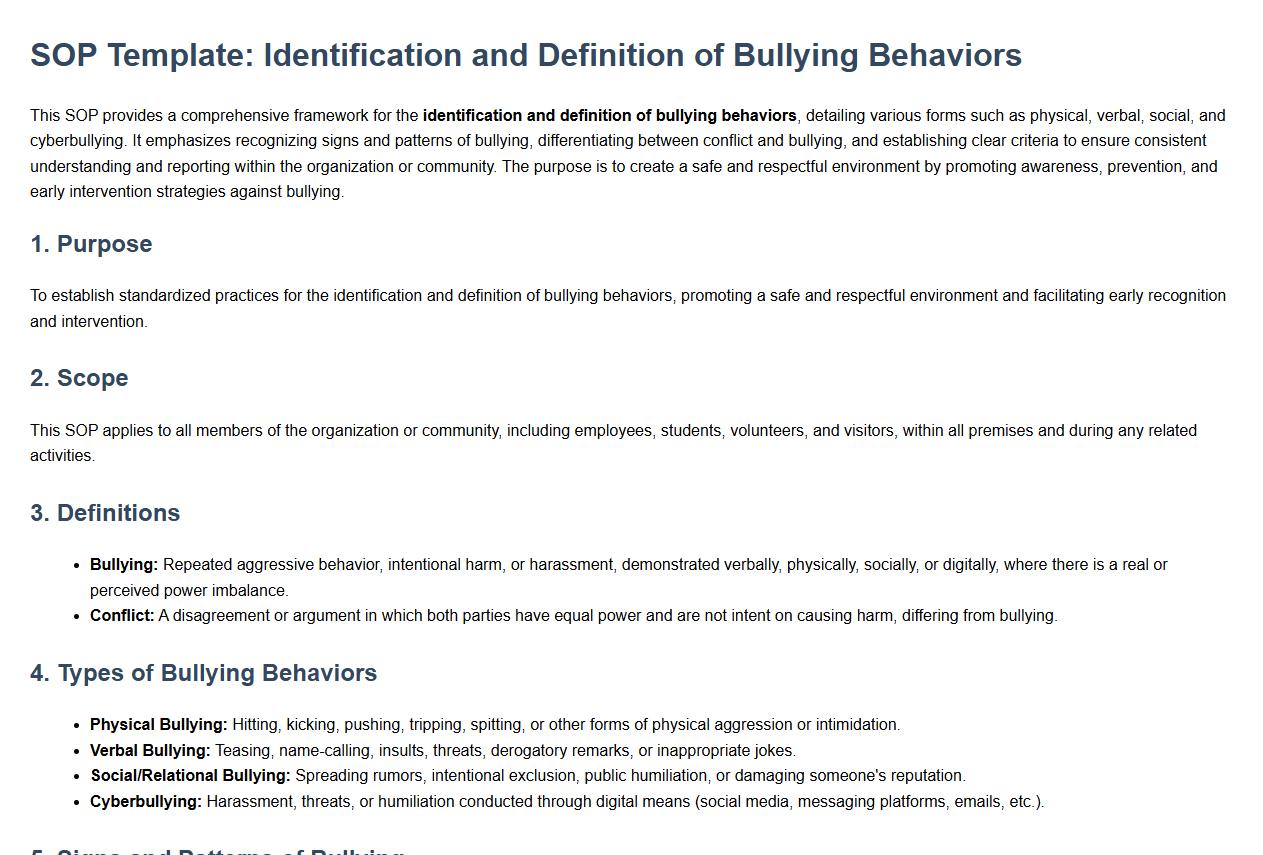
This SOP provides a comprehensive framework for the identification and definition of bullying behaviors, detailing various forms such as physical, verbal, social, and cyberbullying. It emphasizes recognizing signs and patterns of bullying, differentiating between conflict and bullying, and establishing clear criteria to ensure consistent understanding and reporting within the organization or community. The purpose is to create a safe and respectful environment by promoting awareness, prevention, and early intervention strategies against bullying.
Reporting and documentation procedures for bullying incidents.
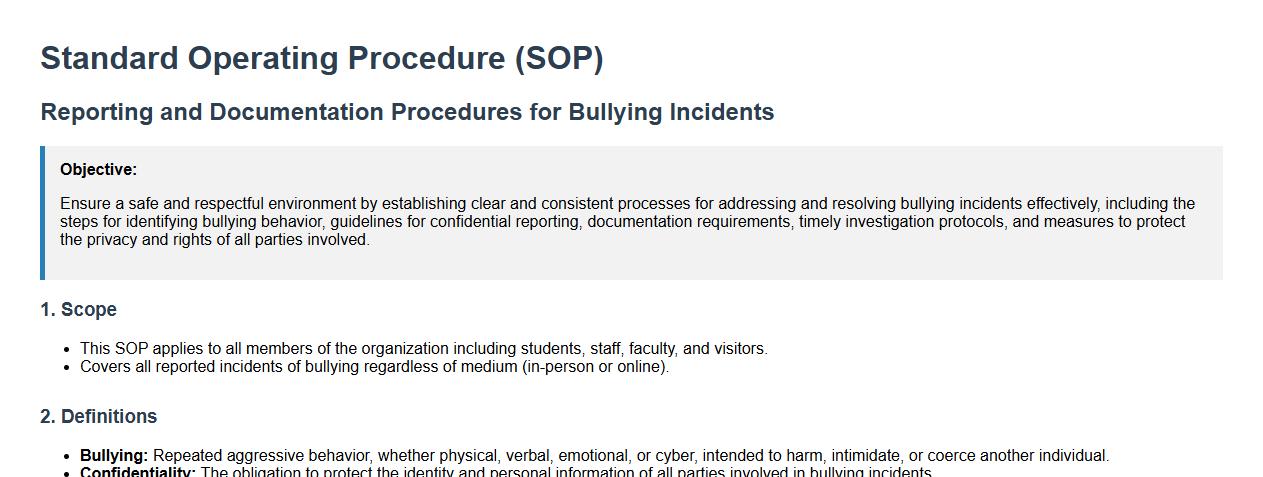
This SOP details the reporting and documentation procedures for bullying incidents, including the steps for identifying bullying behavior, guidelines for confidential reporting, documentation requirements, timely investigation protocols, and measures to protect the privacy and rights of all parties involved. The objective is to ensure a safe and respectful environment by establishing clear and consistent processes for addressing and resolving bullying incidents effectively.
Investigation protocols for reported cases.
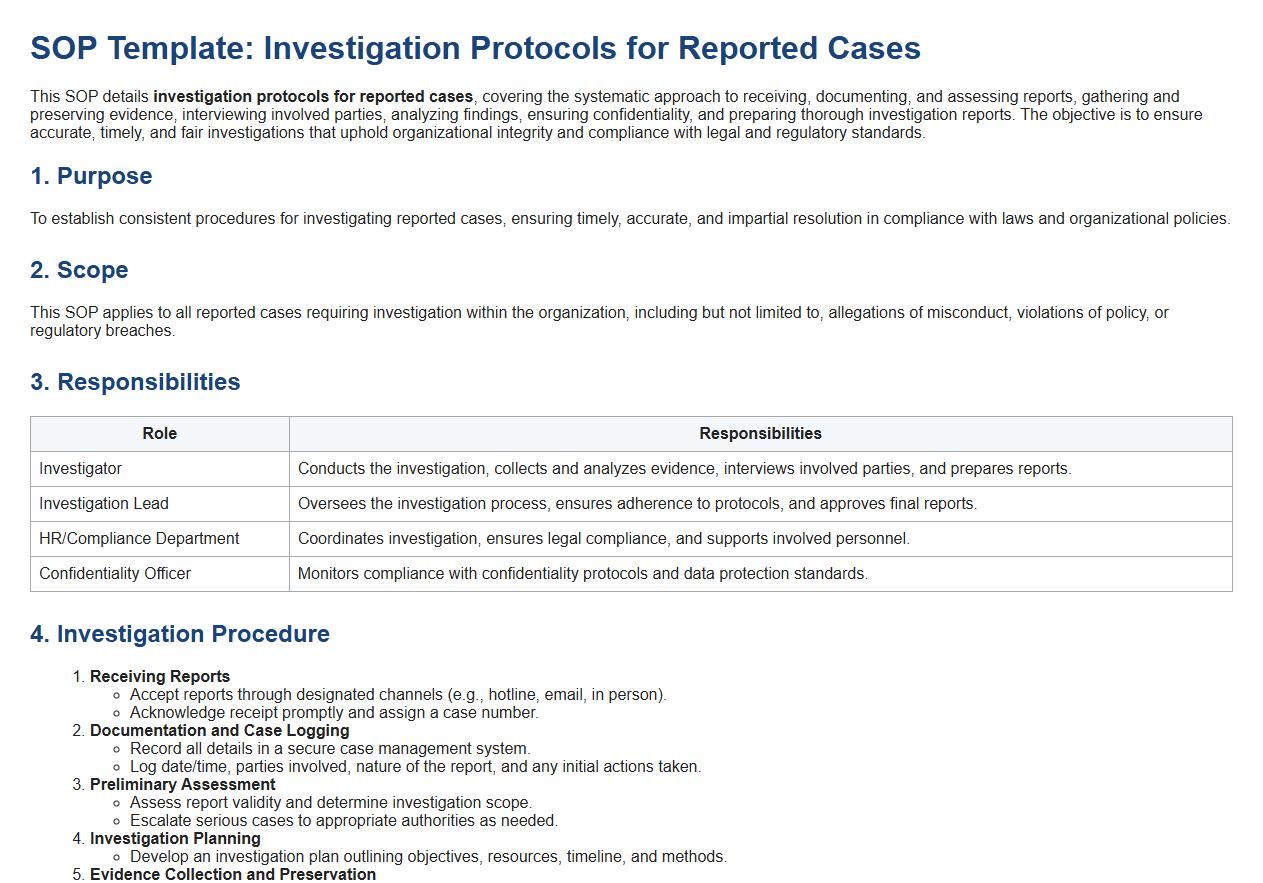
This SOP details investigation protocols for reported cases, covering the systematic approach to receiving, documenting, and assessing reports, gathering and preserving evidence, interviewing involved parties, analyzing findings, ensuring confidentiality, and preparing thorough investigation reports. The objective is to ensure accurate, timely, and fair investigations that uphold organizational integrity and compliance with legal and regulatory standards.
Immediate intervention and support actions for victims.
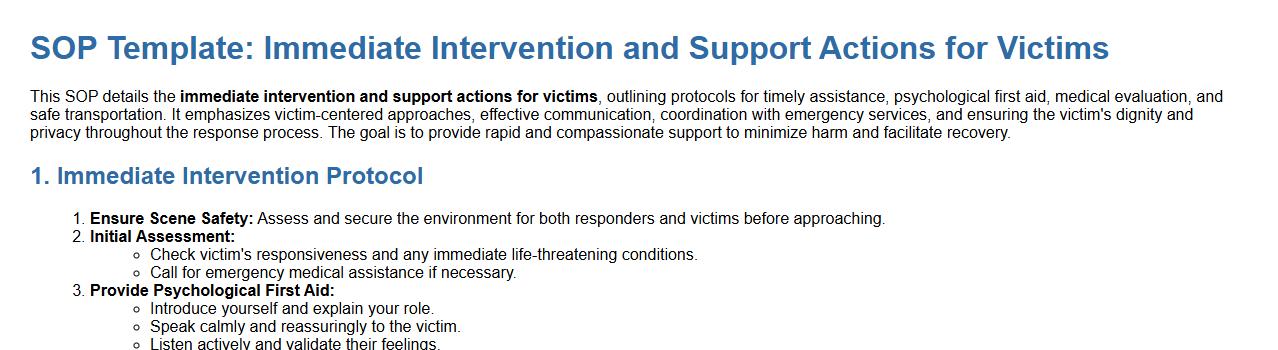
This SOP details the immediate intervention and support actions for victims, outlining protocols for timely assistance, psychological first aid, medical evaluation, and safe transportation. It emphasizes victim-centered approaches, effective communication, coordination with emergency services, and ensuring the victim's dignity and privacy throughout the response process. The goal is to provide rapid and compassionate support to minimize harm and facilitate recovery.
Consequences and disciplinary actions for perpetrators.
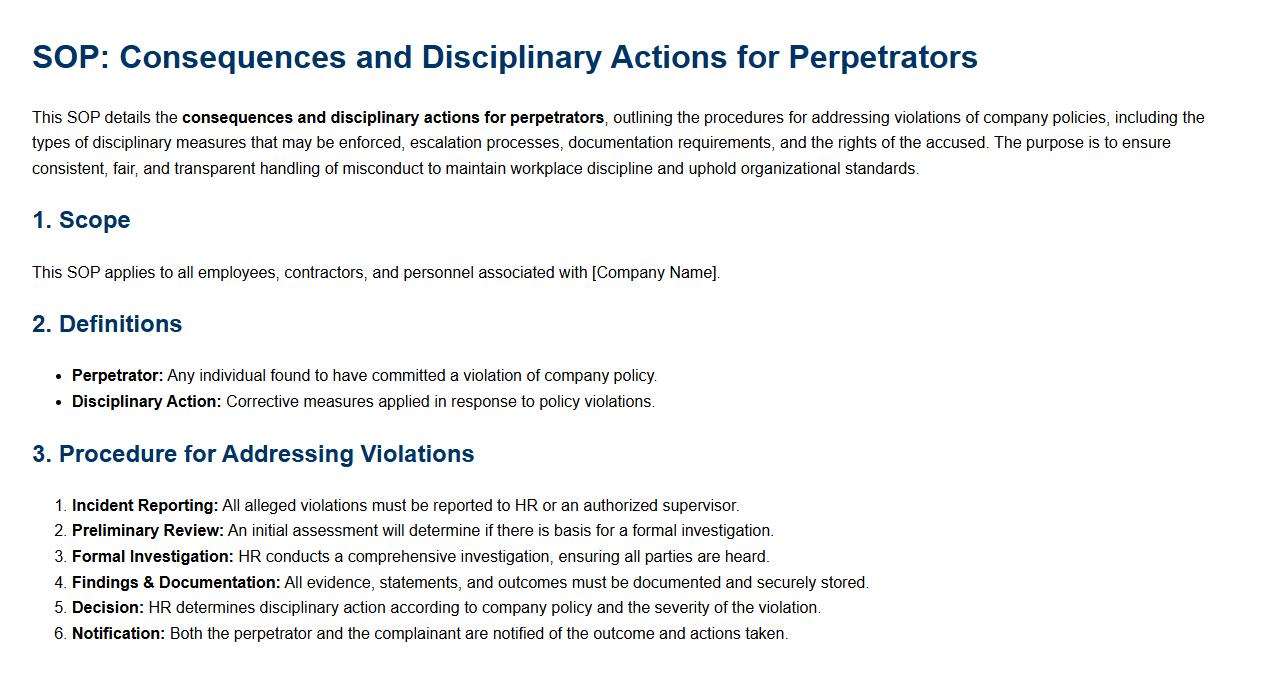
This SOP details the consequences and disciplinary actions for perpetrators, outlining the procedures for addressing violations of company policies, including the types of disciplinary measures that may be enforced, escalation processes, documentation requirements, and the rights of the accused. The purpose is to ensure consistent, fair, and transparent handling of misconduct to maintain workplace discipline and uphold organizational standards.
Communication guidelines with parents and guardians.
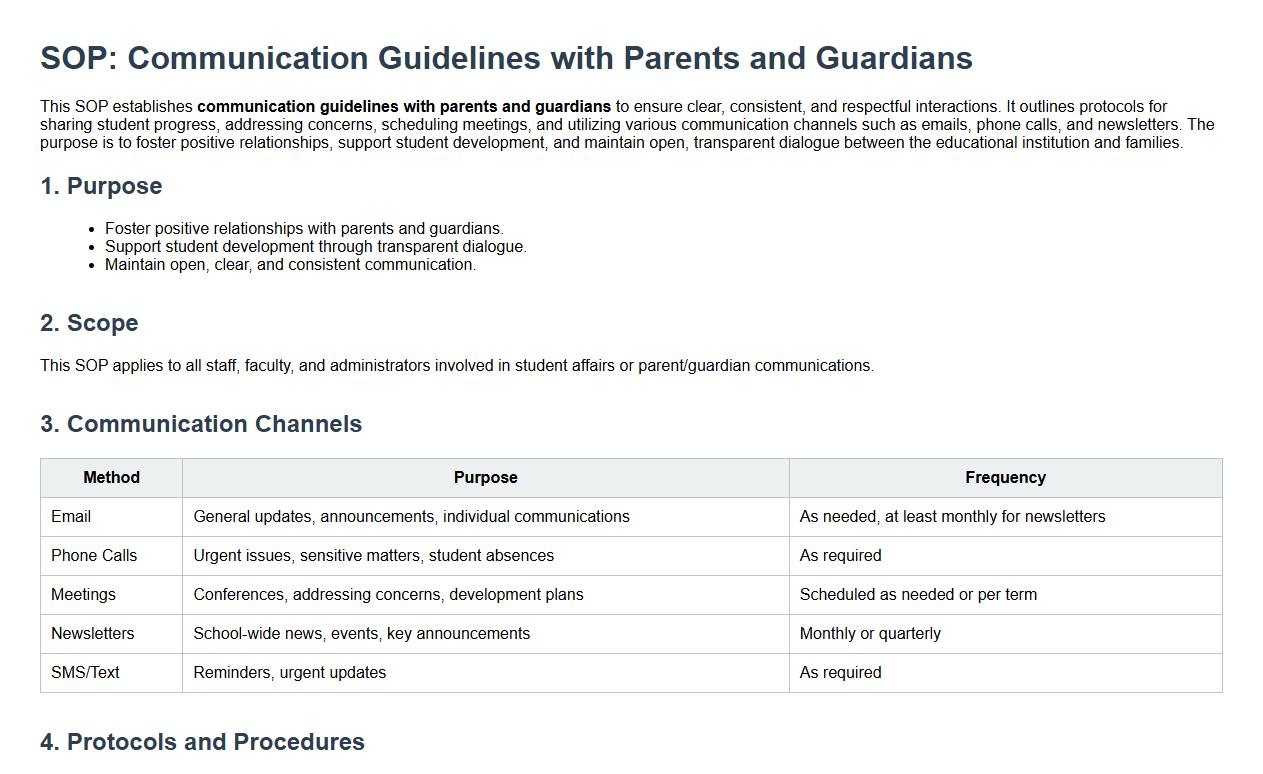
This SOP establishes communication guidelines with parents and guardians to ensure clear, consistent, and respectful interactions. It outlines protocols for sharing student progress, addressing concerns, scheduling meetings, and utilizing various communication channels such as emails, phone calls, and newsletters. The purpose is to foster positive relationships, support student development, and maintain open, transparent dialogue between the educational institution and families.
Education and training requirements for staff and students.
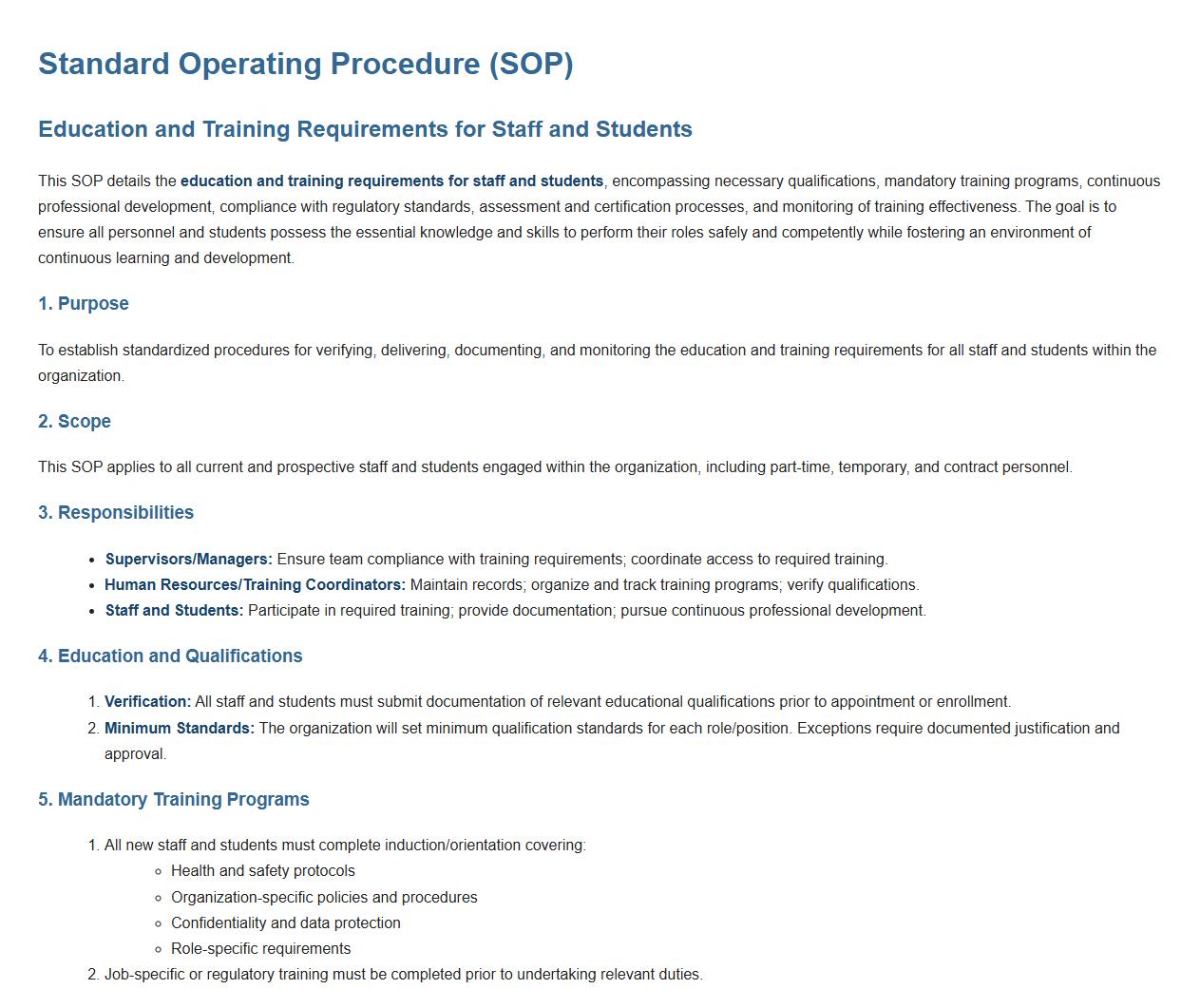
This SOP details the education and training requirements for staff and students, encompassing necessary qualifications, mandatory training programs, continuous professional development, compliance with regulatory standards, assessment and certification processes, and monitoring of training effectiveness. The goal is to ensure all personnel and students possess the essential knowledge and skills to perform their roles safely and competently while fostering an environment of continuous learning and development.
Monitoring, follow-up, and case closure process.
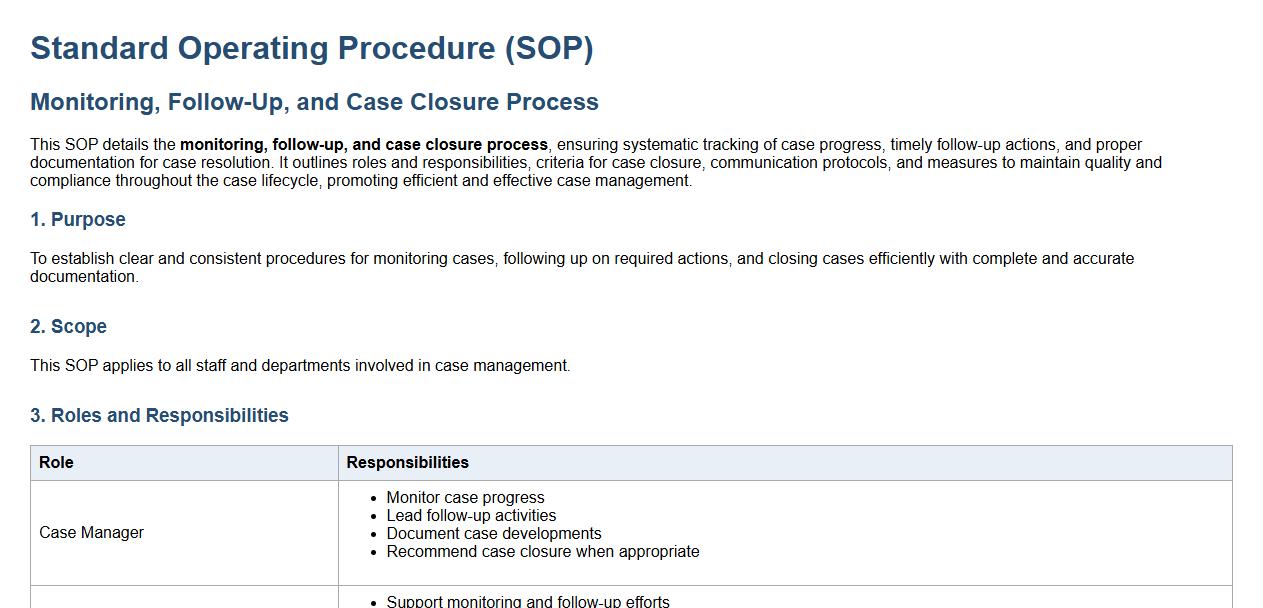
This SOP details the monitoring, follow-up, and case closure process, ensuring systematic tracking of case progress, timely follow-up actions, and proper documentation for case resolution. It outlines roles and responsibilities, criteria for case closure, communication protocols, and measures to maintain quality and compliance throughout the case lifecycle, promoting efficient and effective case management.
Periodic program evaluation and review mechanisms.
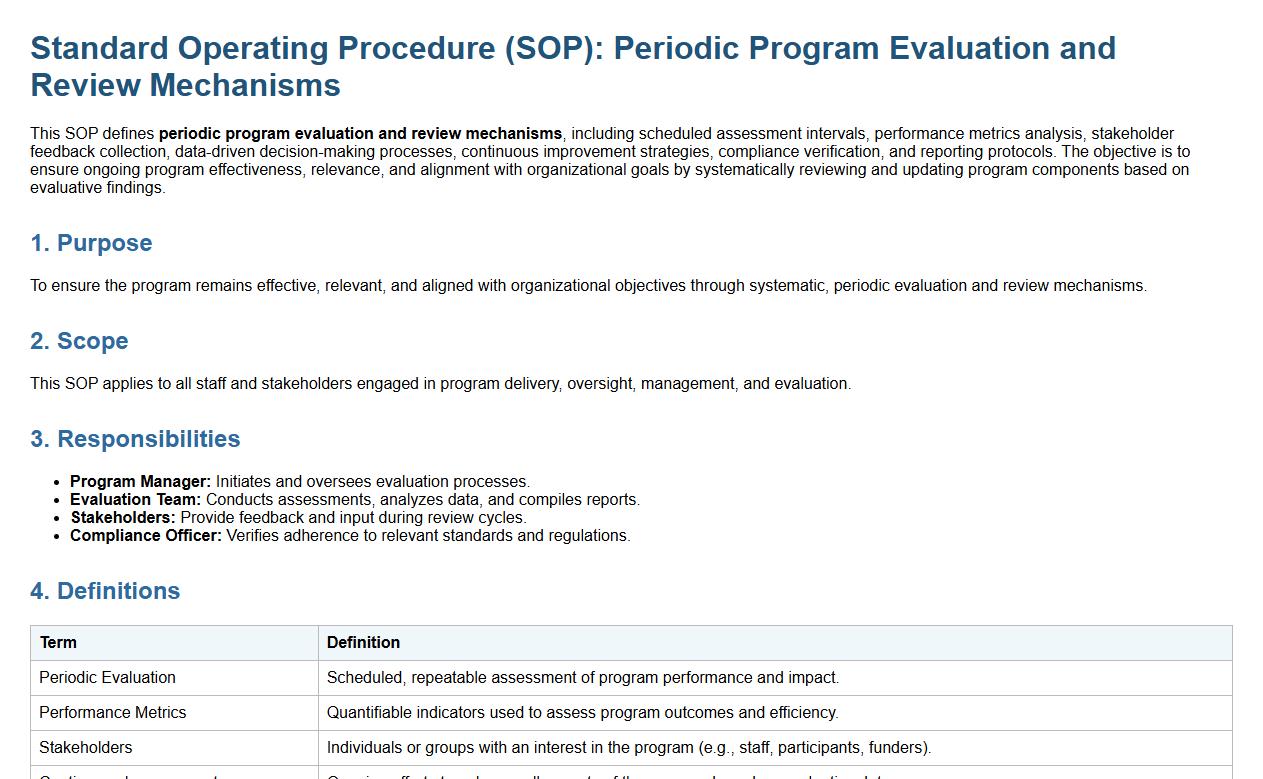
This SOP defines periodic program evaluation and review mechanisms, including scheduled assessment intervals, performance metrics analysis, stakeholder feedback collection, data-driven decision-making processes, continuous improvement strategies, compliance verification, and reporting protocols. The objective is to ensure ongoing program effectiveness, relevance, and alignment with organizational goals by systematically reviewing and updating program components based on evaluative findings.
What key objectives does the SOP for the Bullying Prevention Program aim to achieve within the organization?
The key objectives of the SOP focus on creating a safe and respectful environment free from bullying. It aims to promote awareness, prevention, and timely intervention to protect all members of the organization. These objectives ensure that bullying is consistently addressed and reduced across all organizational levels.
Which roles and responsibilities are defined in the SOP to ensure consistent bullying prevention and response?
The SOP clearly defines roles for management, supervisors, and employees to ensure accountability in bullying prevention. Each role includes specific responsibilities such as conducting training, monitoring behavior, and responding to incidents. This structured framework promotes consistent and effective handling of bullying cases.
What are the standardized procedures outlined in the SOP for reporting and investigating bullying incidents?
The SOP establishes standardized reporting channels to ensure all bullying incidents are formally documented. It includes a detailed investigation process that maintains confidentiality and fairness. These procedures facilitate prompt resolution while protecting the rights of all parties involved.
How does the SOP specify communication and escalation protocols for bullying-related concerns?
The SOP outlines clear communication protocols to ensure transparency and timely information sharing regarding bullying concerns. It defines escalation paths for unresolved issues, involving higher management or external bodies as needed. These protocols guarantee that bullying is addressed at the appropriate level without delay.
What monitoring, evaluation, and review mechanisms are established in the SOP to ensure the program's effectiveness?
The SOP includes monitoring and evaluation mechanisms such as regular audits, feedback collection, and incident trend analysis. These tools help measure the program's impact and identify areas for improvement. Periodic reviews ensure the bullying prevention strategies remain effective and up to date with organizational needs.