

A SOP Template for School Event Management provides a structured framework to streamline the planning and execution of school events, ensuring consistency and efficiency. It outlines key procedures, roles, and timelines to help staff coordinate activities and manage resources effectively. Using this template enhances communication and minimizes risks during every phase of the event.
Event planning and approval process.
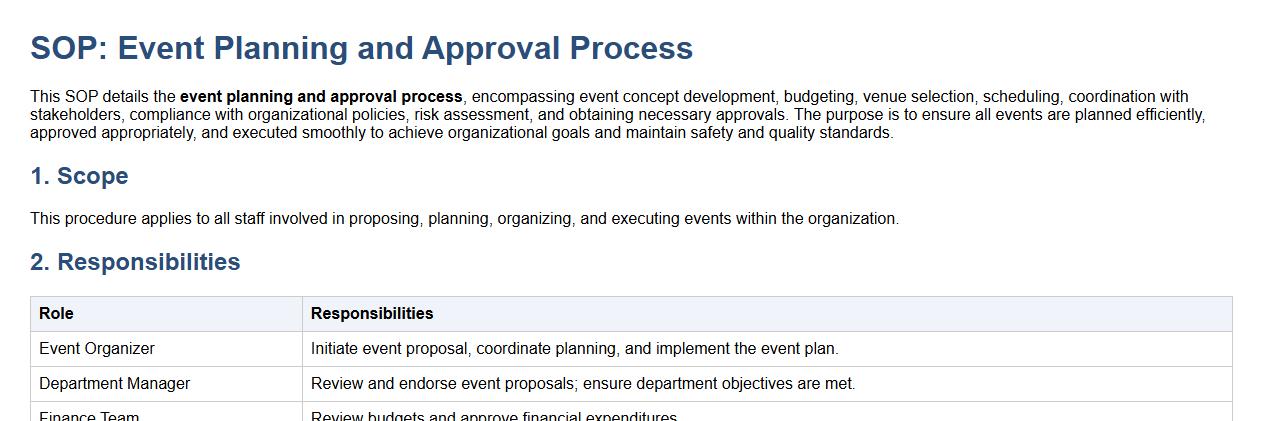
This SOP details the event planning and approval process, encompassing event concept development, budgeting, venue selection, scheduling, coordination with stakeholders, compliance with organizational policies, risk assessment, and obtaining necessary approvals. The purpose is to ensure all events are planned efficiently, approved appropriately, and executed smoothly to achieve organizational goals and maintain safety and quality standards.
Venue booking and logistics coordination.
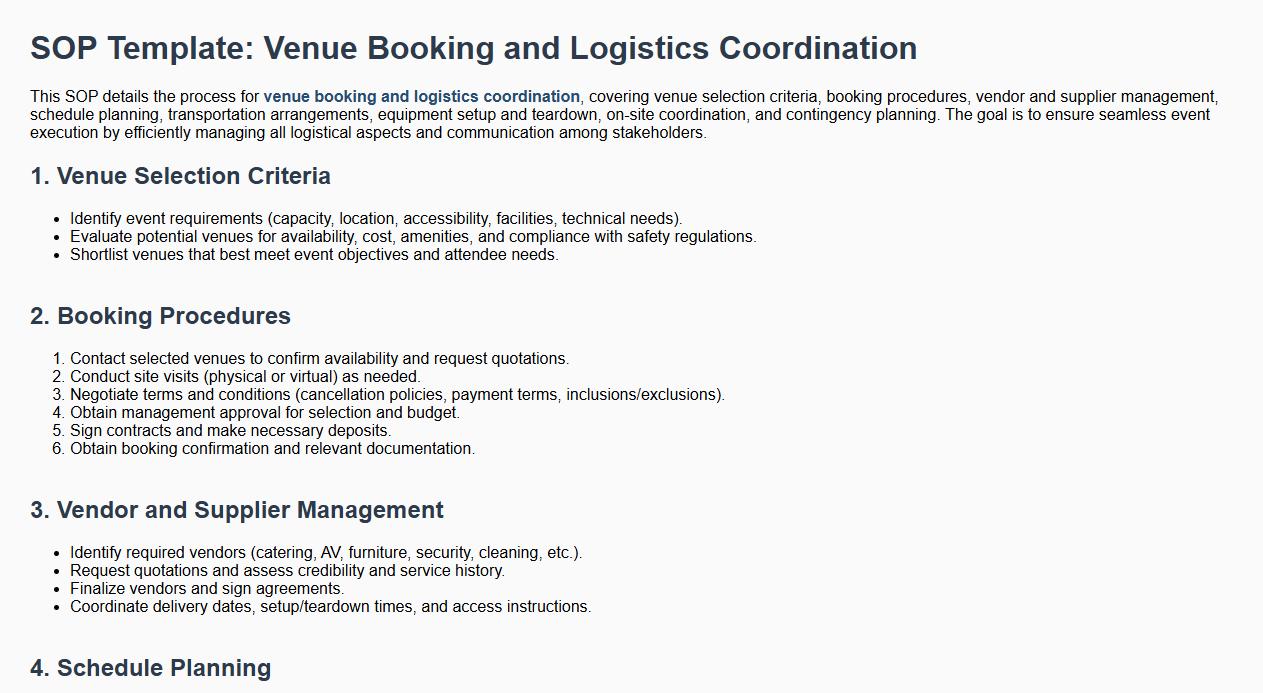
This SOP details the process for venue booking and logistics coordination, covering venue selection criteria, booking procedures, vendor and supplier management, schedule planning, transportation arrangements, equipment setup and teardown, on-site coordination, and contingency planning. The goal is to ensure seamless event execution by efficiently managing all logistical aspects and communication among stakeholders.
Budget preparation and expense tracking.
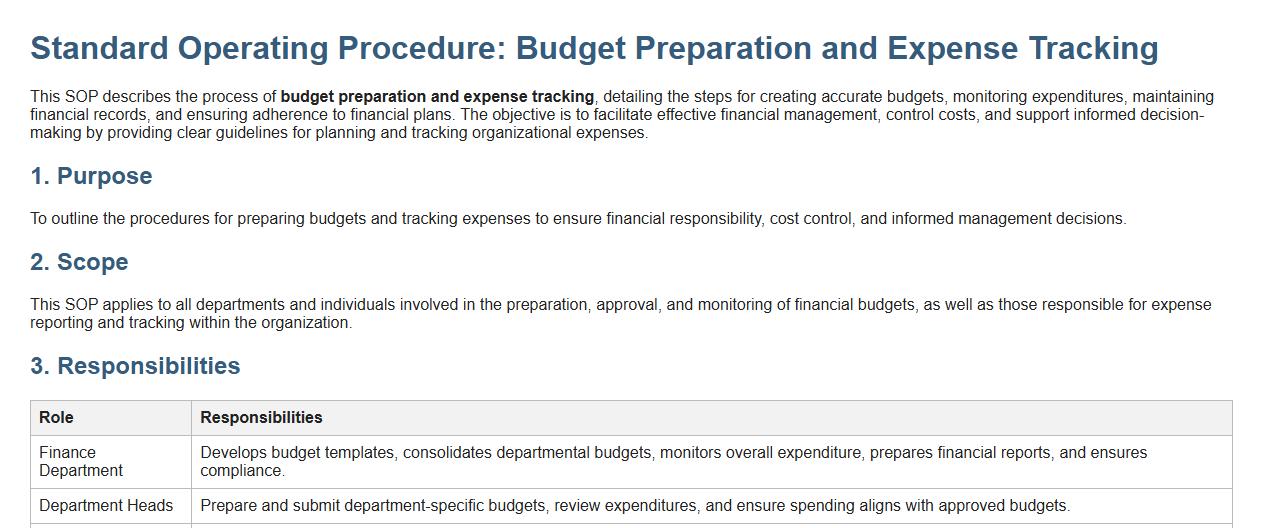
This SOP describes the process of budget preparation and expense tracking, detailing the steps for creating accurate budgets, monitoring expenditures, maintaining financial records, and ensuring adherence to financial plans. The objective is to facilitate effective financial management, control costs, and support informed decision-making by providing clear guidelines for planning and tracking organizational expenses.
Vendor selection and contract management.
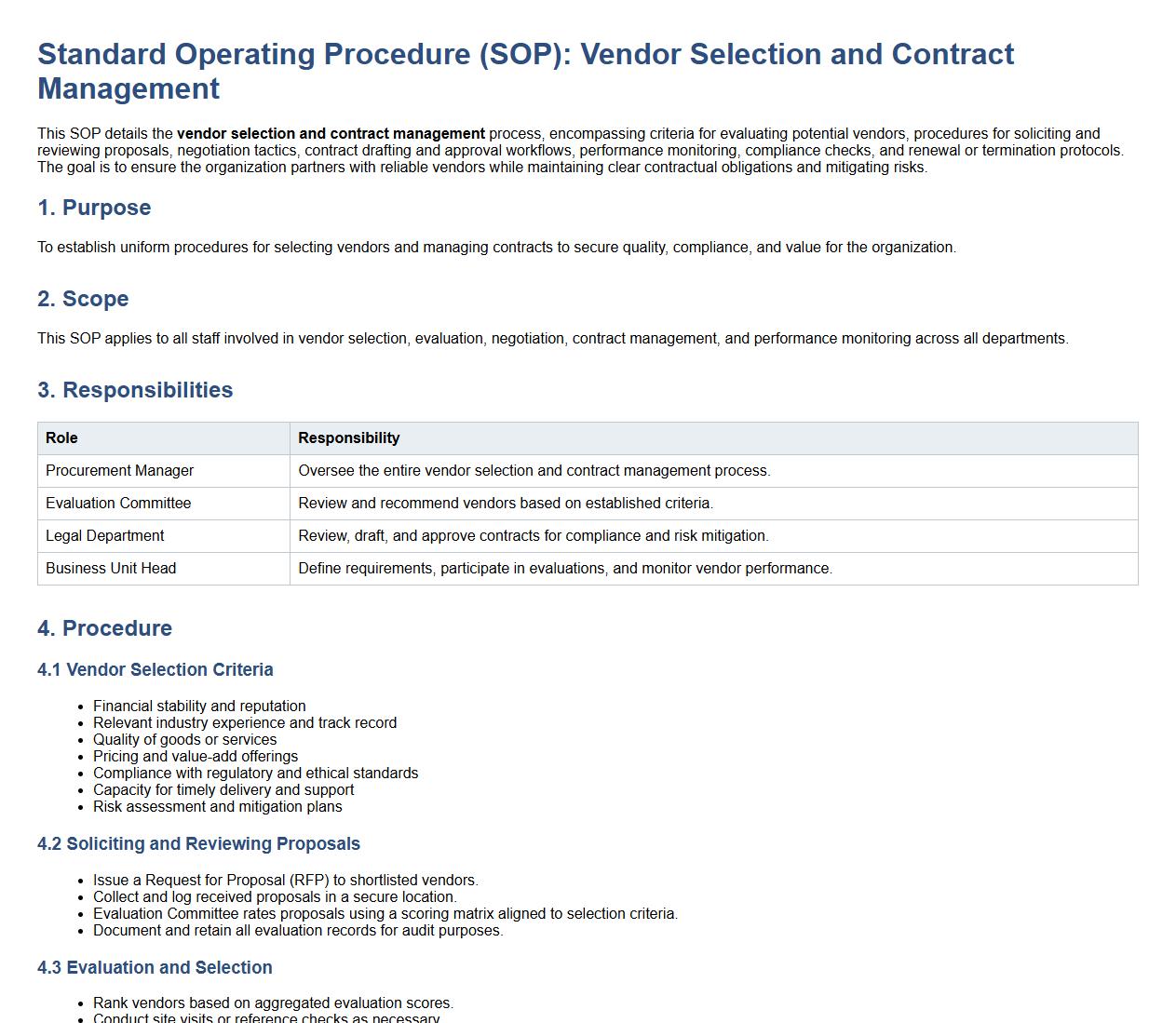
This SOP details the vendor selection and contract management process, encompassing criteria for evaluating potential vendors, procedures for soliciting and reviewing proposals, negotiation tactics, contract drafting and approval workflows, performance monitoring, compliance checks, and renewal or termination protocols. The goal is to ensure the organization partners with reliable vendors while maintaining clear contractual obligations and mitigating risks.
Promotion and communication strategy.
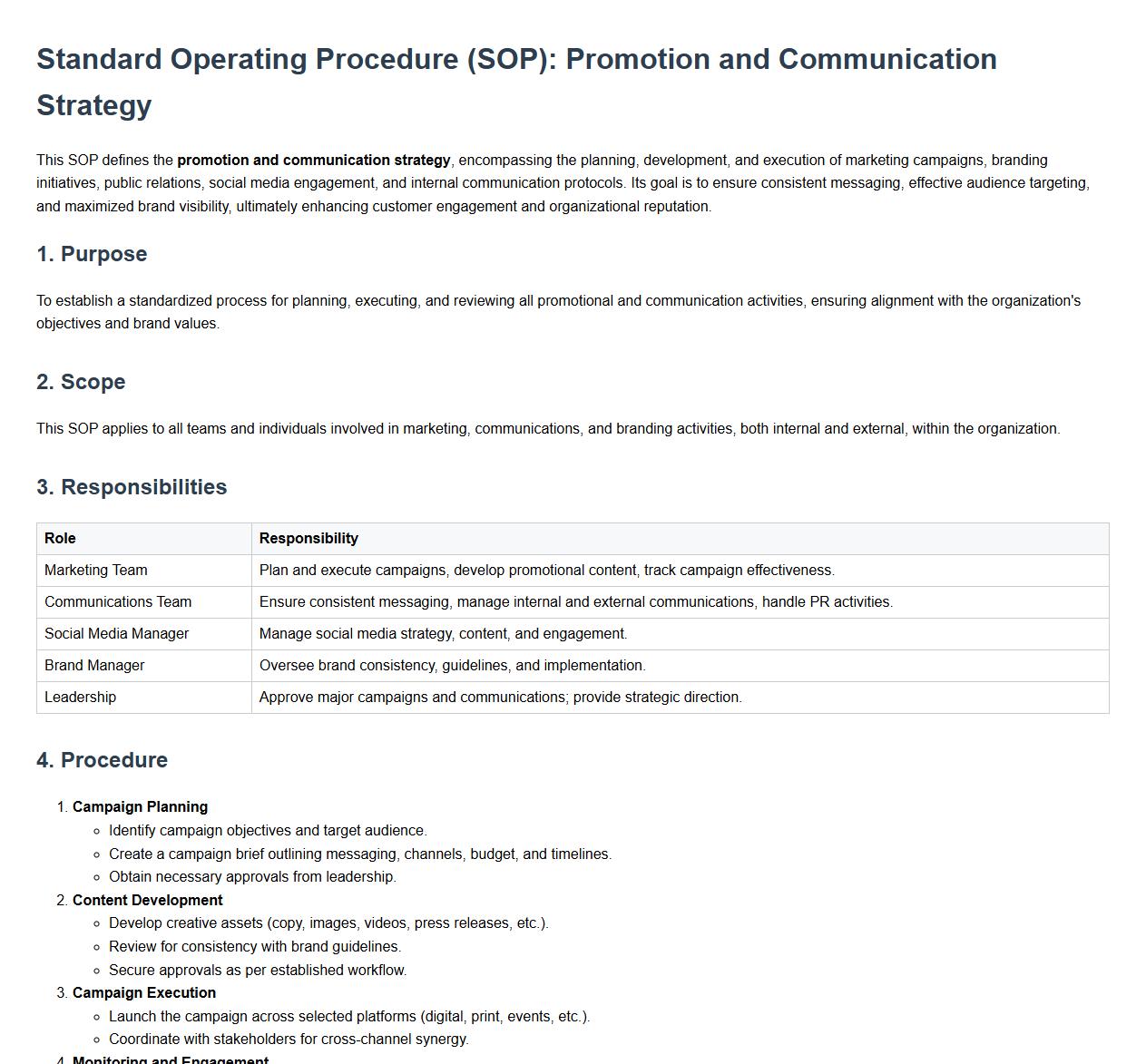
This SOP defines the promotion and communication strategy, encompassing the planning, development, and execution of marketing campaigns, branding initiatives, public relations, social media engagement, and internal communication protocols. Its goal is to ensure consistent messaging, effective audience targeting, and maximized brand visibility, ultimately enhancing customer engagement and organizational reputation.
Registration and attendee management.
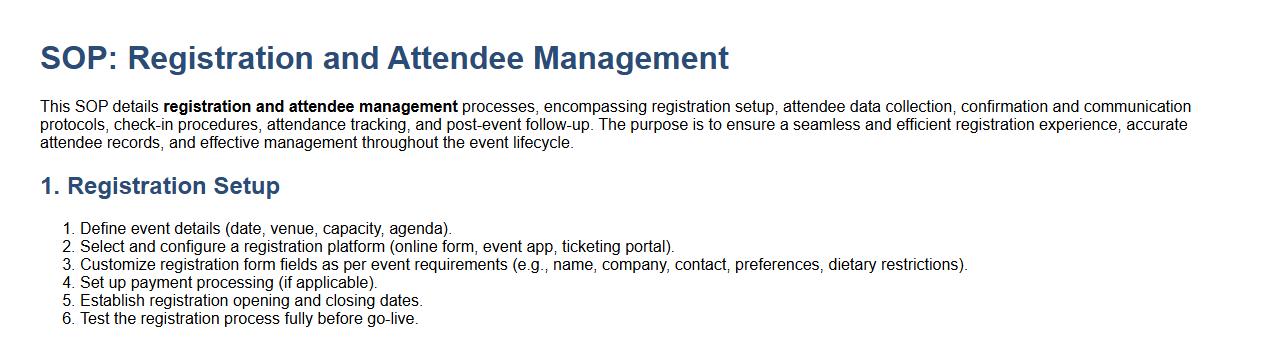
This SOP details registration and attendee management processes, encompassing registration setup, attendee data collection, confirmation and communication protocols, check-in procedures, attendance tracking, and post-event follow-up. The purpose is to ensure a seamless and efficient registration experience, accurate attendee records, and effective management throughout the event lifecycle.
Event safety and emergency protocols.
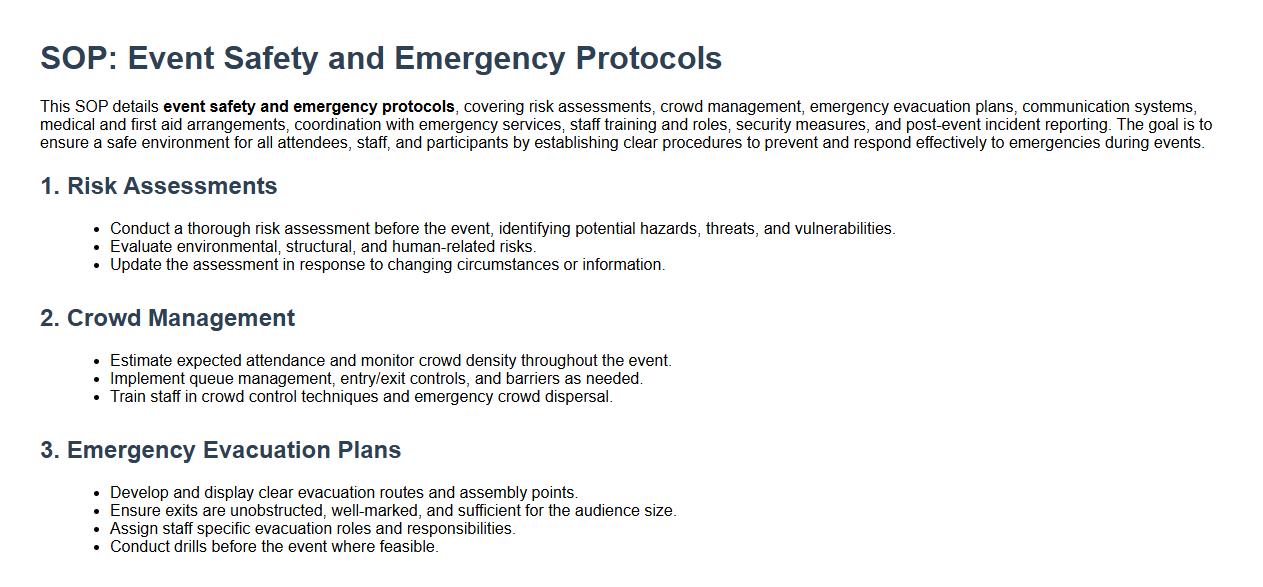
This SOP details event safety and emergency protocols, covering risk assessments, crowd management, emergency evacuation plans, communication systems, medical and first aid arrangements, coordination with emergency services, staff training and roles, security measures, and post-event incident reporting. The goal is to ensure a safe environment for all attendees, staff, and participants by establishing clear procedures to prevent and respond effectively to emergencies during events.
Audio-visual and technical arrangements.
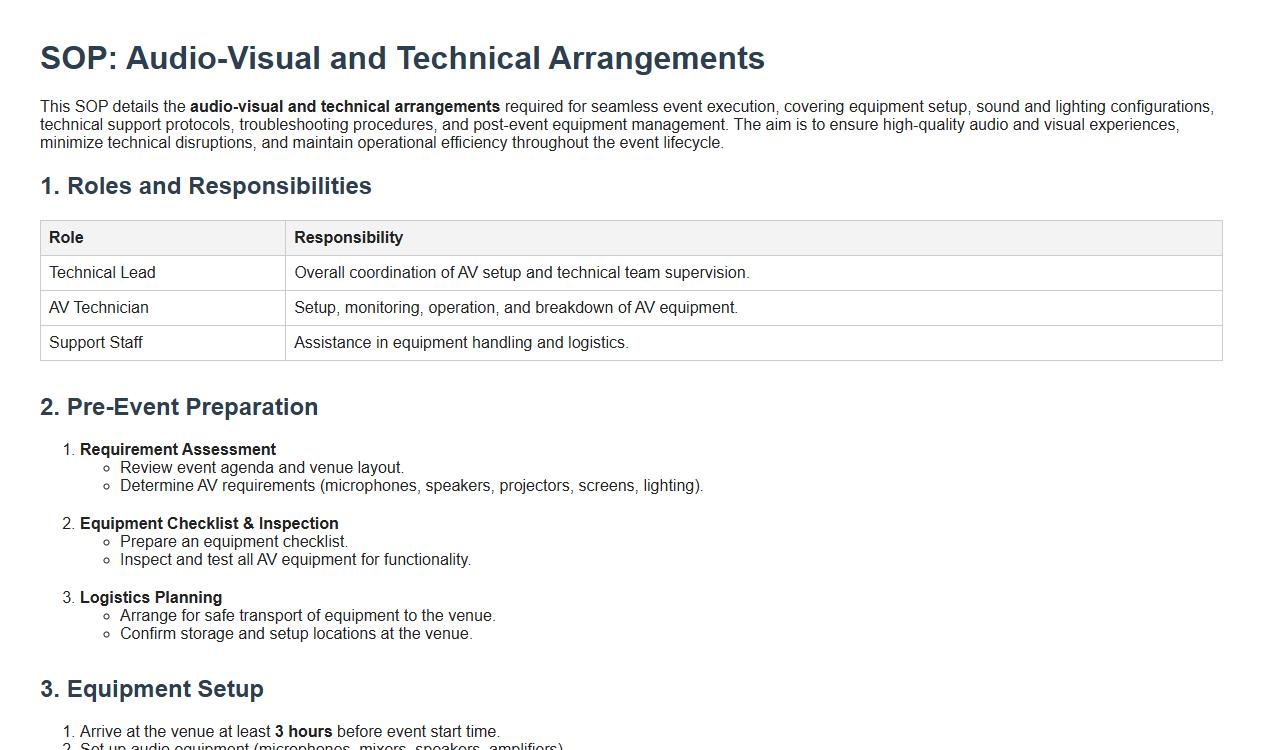
This SOP details the audio-visual and technical arrangements required for seamless event execution, covering equipment setup, sound and lighting configurations, technical support protocols, troubleshooting procedures, and post-event equipment management. The aim is to ensure high-quality audio and visual experiences, minimize technical disruptions, and maintain operational efficiency throughout the event lifecycle.
Volunteer recruitment and task assignment.
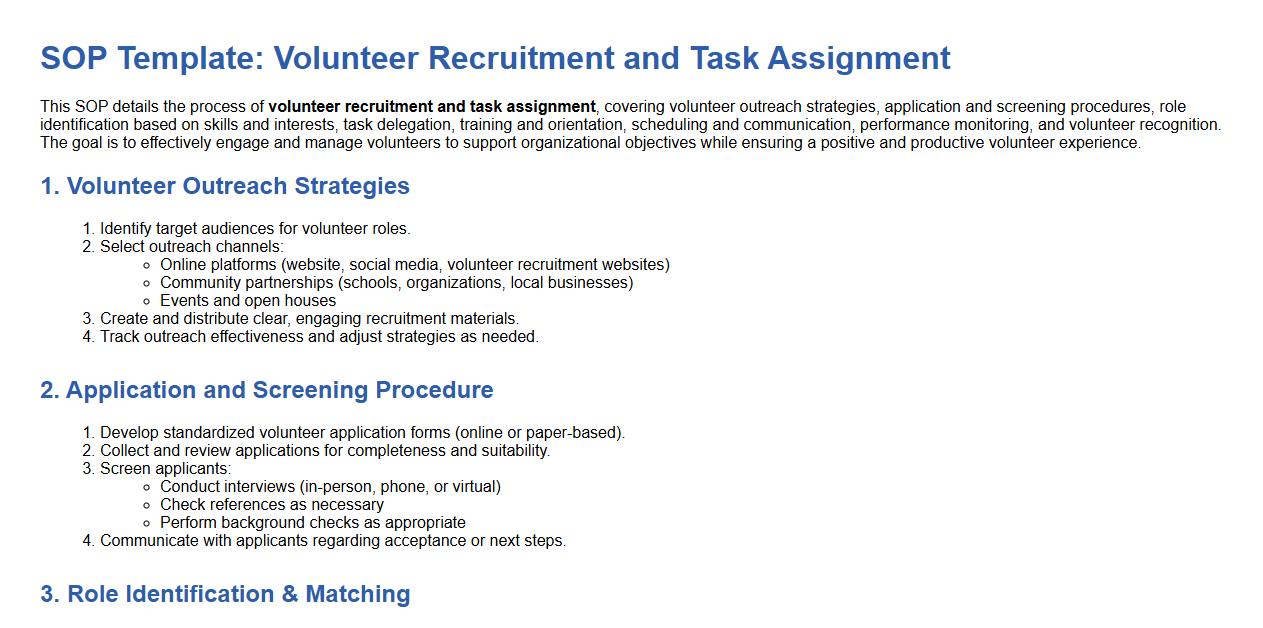
This SOP details the process of volunteer recruitment and task assignment, covering volunteer outreach strategies, application and screening procedures, role identification based on skills and interests, task delegation, training and orientation, scheduling and communication, performance monitoring, and volunteer recognition. The goal is to effectively engage and manage volunteers to support organizational objectives while ensuring a positive and productive volunteer experience.
Post-event evaluation and reporting.
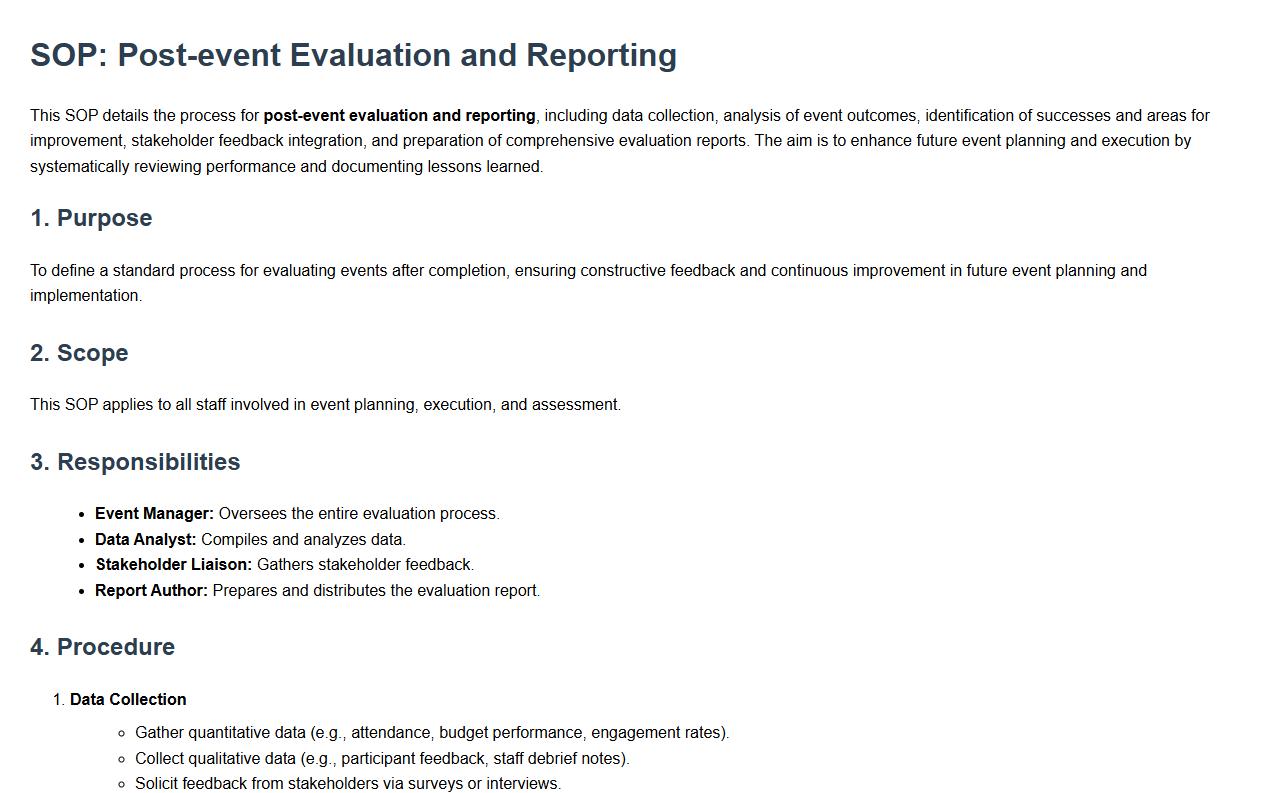
This SOP details the process for post-event evaluation and reporting, including data collection, analysis of event outcomes, identification of successes and areas for improvement, stakeholder feedback integration, and preparation of comprehensive evaluation reports. The aim is to enhance future event planning and execution by systematically reviewing performance and documenting lessons learned.
What core objectives and guidelines does the SOP establish for school event planning and execution?
The SOP sets clear objectives to ensure every event aligns with the school's mission and educational values. It provides detailed guidelines aimed at promoting inclusivity, safety, and efficiency throughout the planning process. These guidelines help streamline efforts, ensuring that each event enhances community engagement and student development.
Which roles and responsibilities are defined for staff and students in the event management SOP?
The SOP defines specific roles and responsibilities for both staff and students to ensure accountability in event management. Staff members are generally tasked with oversight, coordination, and ensuring compliance, while students often assist with execution and participant engagement. This clear division of duties promotes effective teamwork and successful event outcomes.
How does the SOP standardize communication and coordination among event organizers, participants, and stakeholders?
The SOP standardizes communication through established channels, regular updates, and designated points of contact among all parties involved. It enforces coordination by scheduling consistent meetings and utilizing unified platforms for information sharing. This approach ensures transparency and smooth collaboration throughout the event lifecycle.
What procedures does the SOP outline for managing event logistics, resources, and risk mitigation?
The SOP outlines detailed procedures for organizing logistics, including venue booking, equipment management, and resource allocation. It incorporates thorough risk mitigation strategies such as safety assessments, emergency plans, and contingency measures. These procedures are designed to minimize disruptions and safeguard participants during events.
Which compliance, safety, and evaluation measures are mandated by the SOP for all school events?
The SOP mandates strict adherence to compliance with legal, school, and health regulations to ensure safe event environments. It requires comprehensive safety measures including risk assessments, first aid availability, and emergency protocols. Post-event, the SOP enforces evaluation processes to assess effectiveness and identify areas for improvement.