

A SOP Template for Special Needs Support provides a structured framework to ensure consistent and effective assistance tailored to individuals with diverse requirements. It outlines clear procedures, roles, and responsibilities to enhance communication and deliver personalized care. This template helps organizations maintain compliance and improve the quality of support services.
Client intake and assessment procedures.
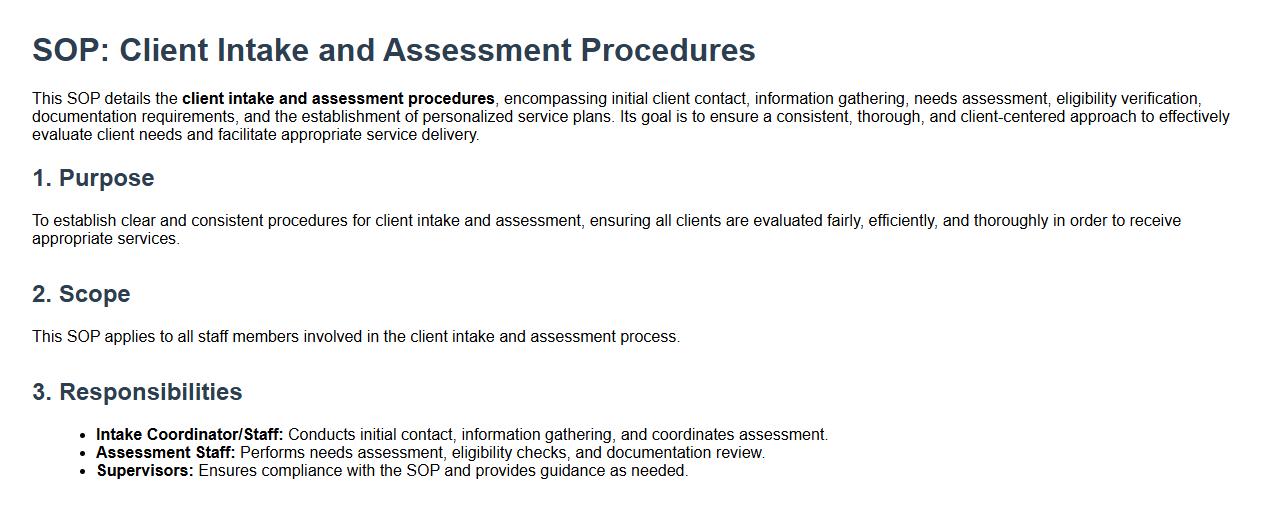
This SOP details the client intake and assessment procedures, encompassing initial client contact, information gathering, needs assessment, eligibility verification, documentation requirements, and the establishment of personalized service plans. Its goal is to ensure a consistent, thorough, and client-centered approach to effectively evaluate client needs and facilitate appropriate service delivery.
Individualized support plan development.
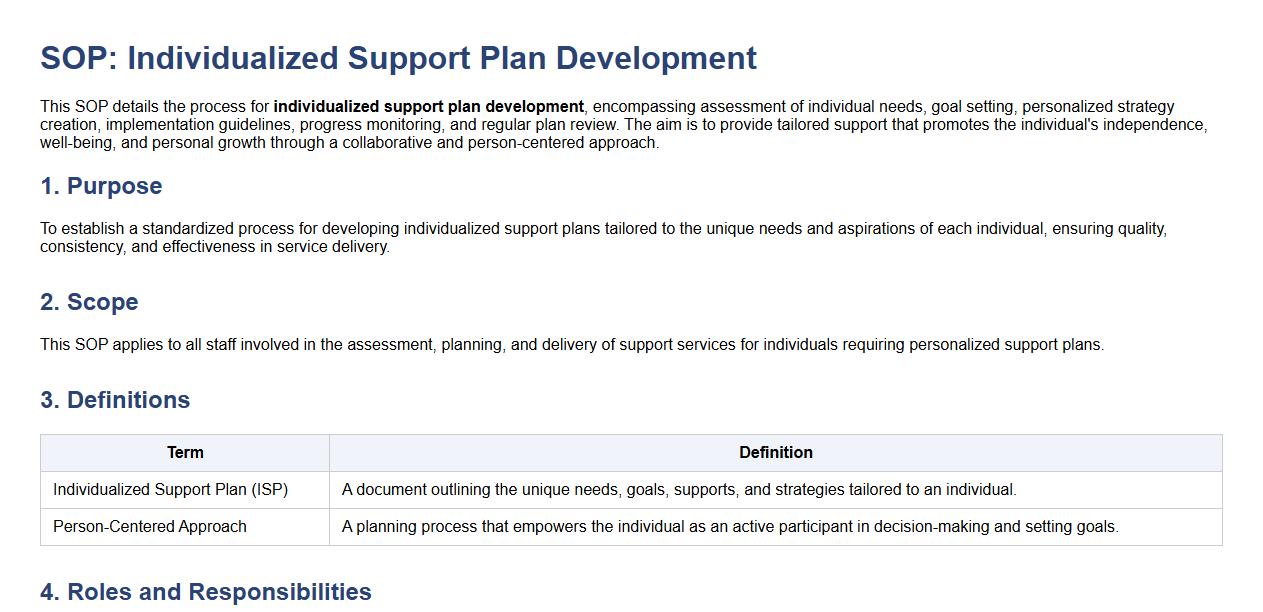
This SOP details the process for individualized support plan development, encompassing assessment of individual needs, goal setting, personalized strategy creation, implementation guidelines, progress monitoring, and regular plan review. The aim is to provide tailored support that promotes the individual's independence, well-being, and personal growth through a collaborative and person-centered approach.
Staff training and orientation protocols.
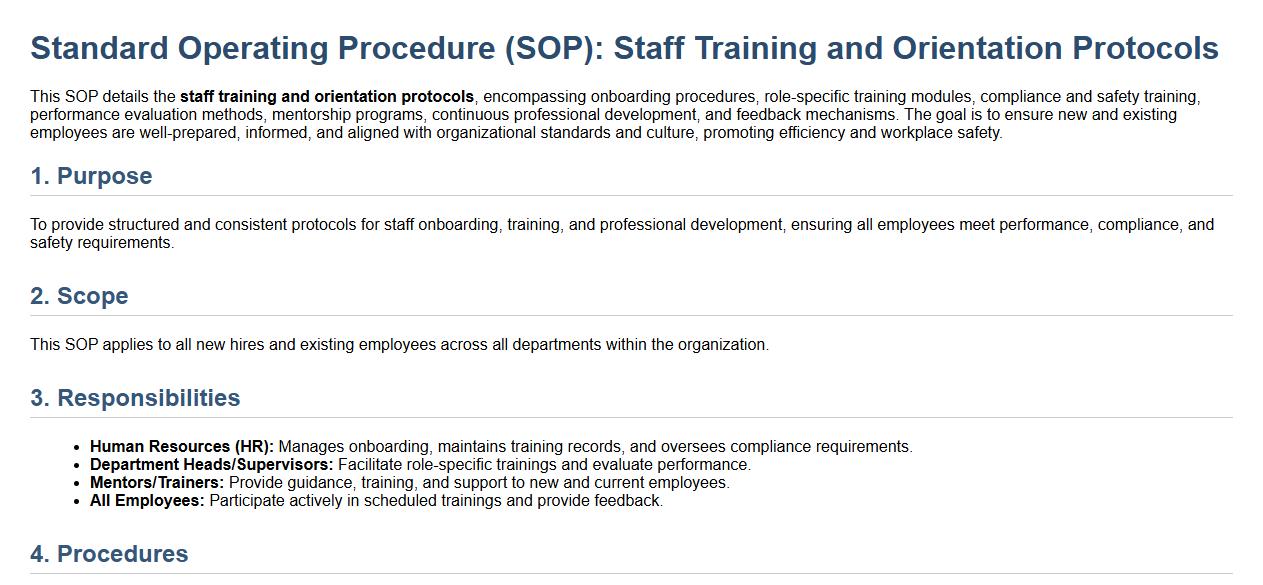
This SOP details the staff training and orientation protocols, encompassing onboarding procedures, role-specific training modules, compliance and safety training, performance evaluation methods, mentorship programs, continuous professional development, and feedback mechanisms. The goal is to ensure new and existing employees are well-prepared, informed, and aligned with organizational standards and culture, promoting efficiency and workplace safety.
Medication administration and documentation.
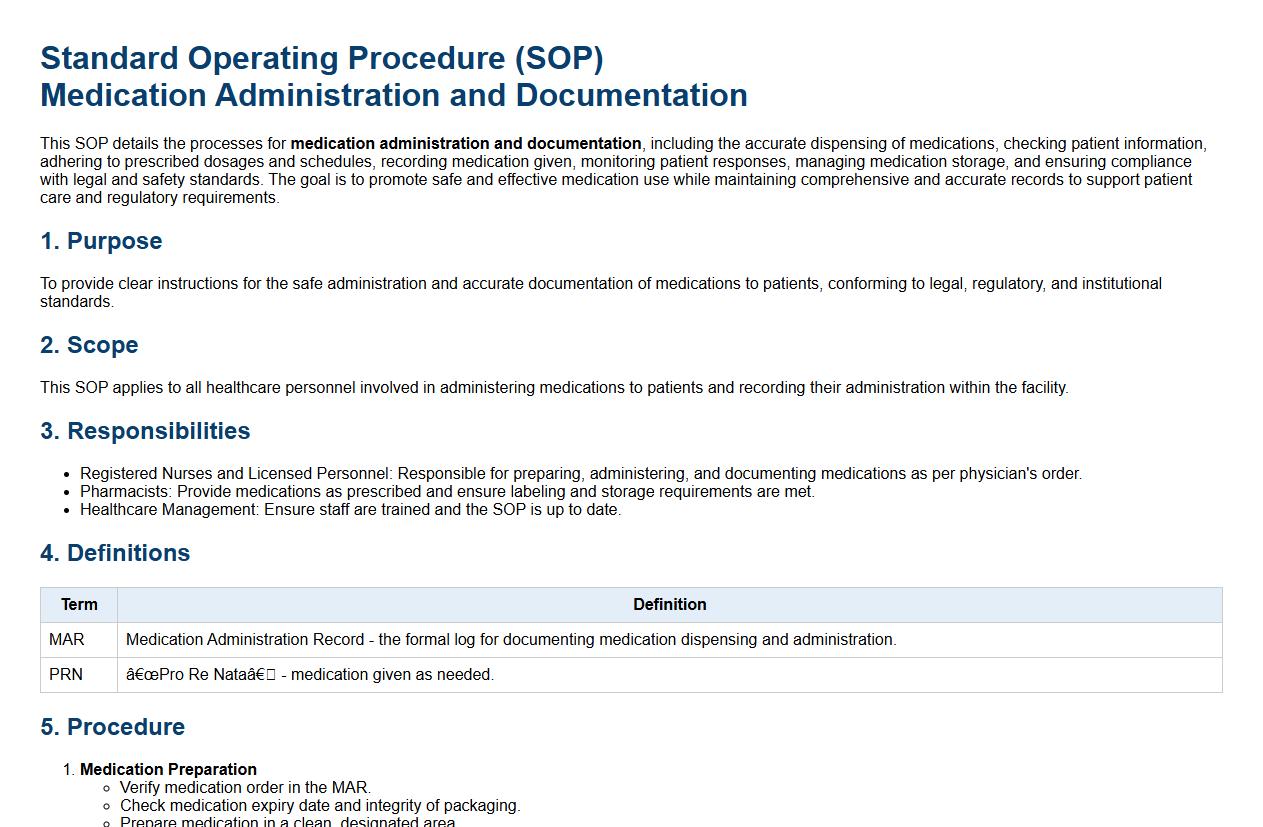
This SOP details the processes for medication administration and documentation, including the accurate dispensing of medications, checking patient information, adhering to prescribed dosages and schedules, recording medication given, monitoring patient responses, managing medication storage, and ensuring compliance with legal and safety standards. The goal is to promote safe and effective medication use while maintaining comprehensive and accurate records to support patient care and regulatory requirements.
Behavioral intervention and crisis management.
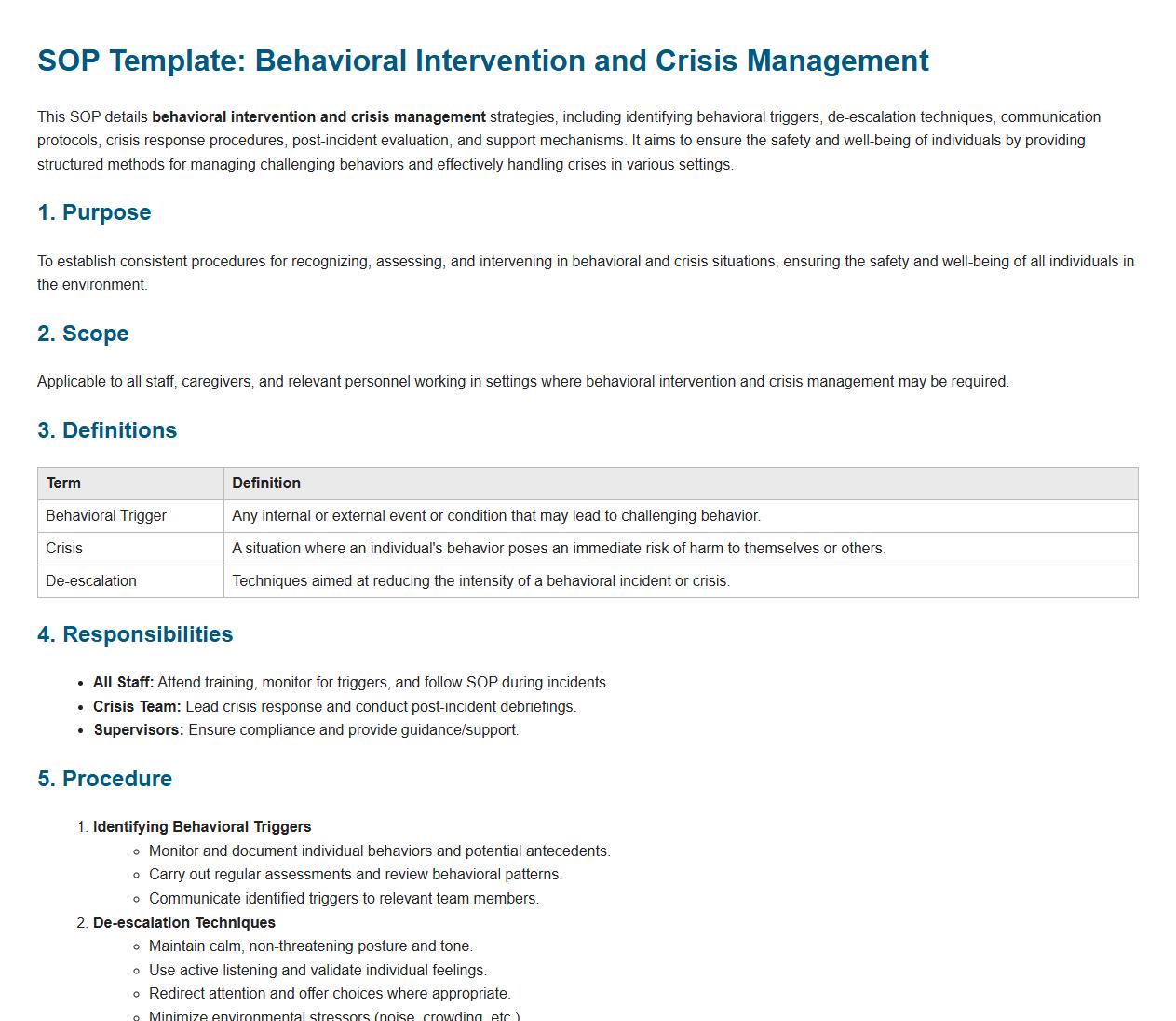
This SOP details behavioral intervention and crisis management strategies, including identifying behavioral triggers, de-escalation techniques, communication protocols, crisis response procedures, post-incident evaluation, and support mechanisms. It aims to ensure the safety and well-being of individuals by providing structured methods for managing challenging behaviors and effectively handling crises in various settings.
Communication with families and caregivers.
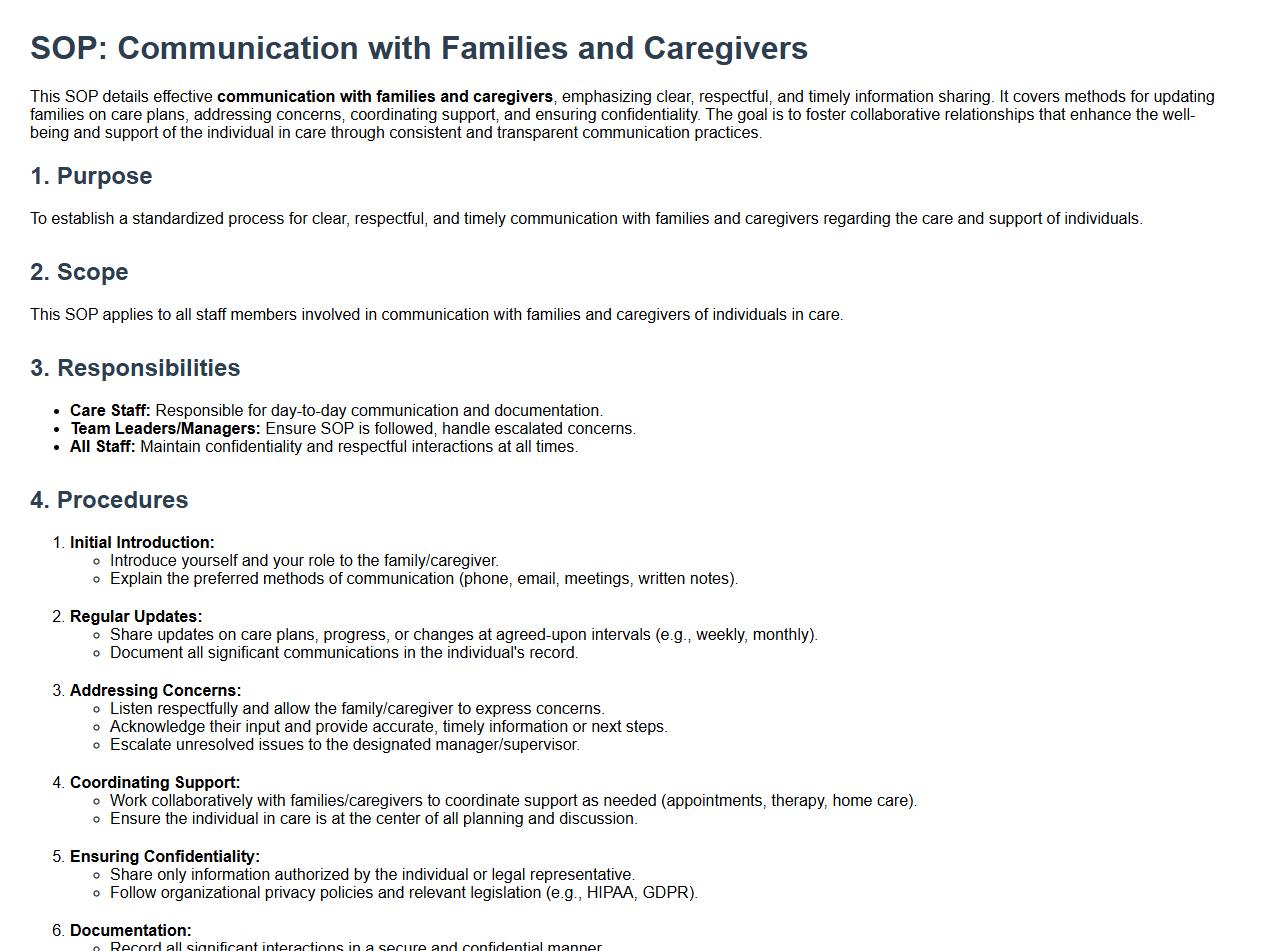
This SOP details effective communication with families and caregivers, emphasizing clear, respectful, and timely information sharing. It covers methods for updating families on care plans, addressing concerns, coordinating support, and ensuring confidentiality. The goal is to foster collaborative relationships that enhance the well-being and support of the individual in care through consistent and transparent communication practices.
Emergency response and evacuation plans.
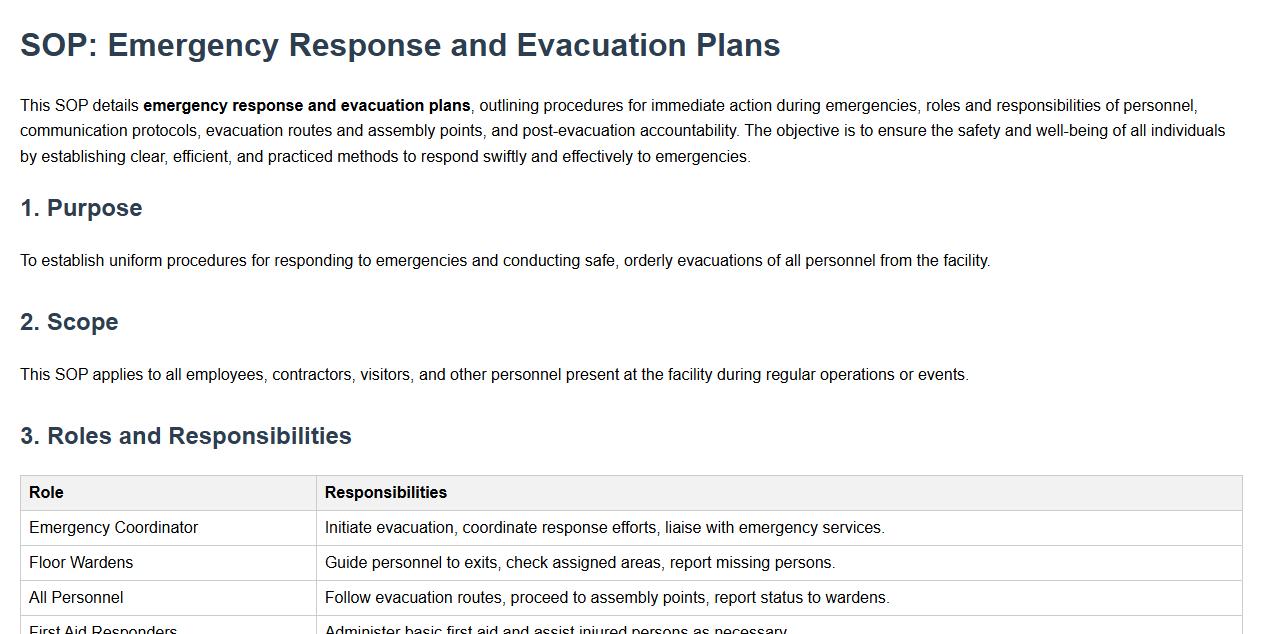
This SOP details emergency response and evacuation plans, outlining procedures for immediate action during emergencies, roles and responsibilities of personnel, communication protocols, evacuation routes and assembly points, and post-evacuation accountability. The objective is to ensure the safety and well-being of all individuals by establishing clear, efficient, and practiced methods to respond swiftly and effectively to emergencies.
Daily activity and engagement routines.
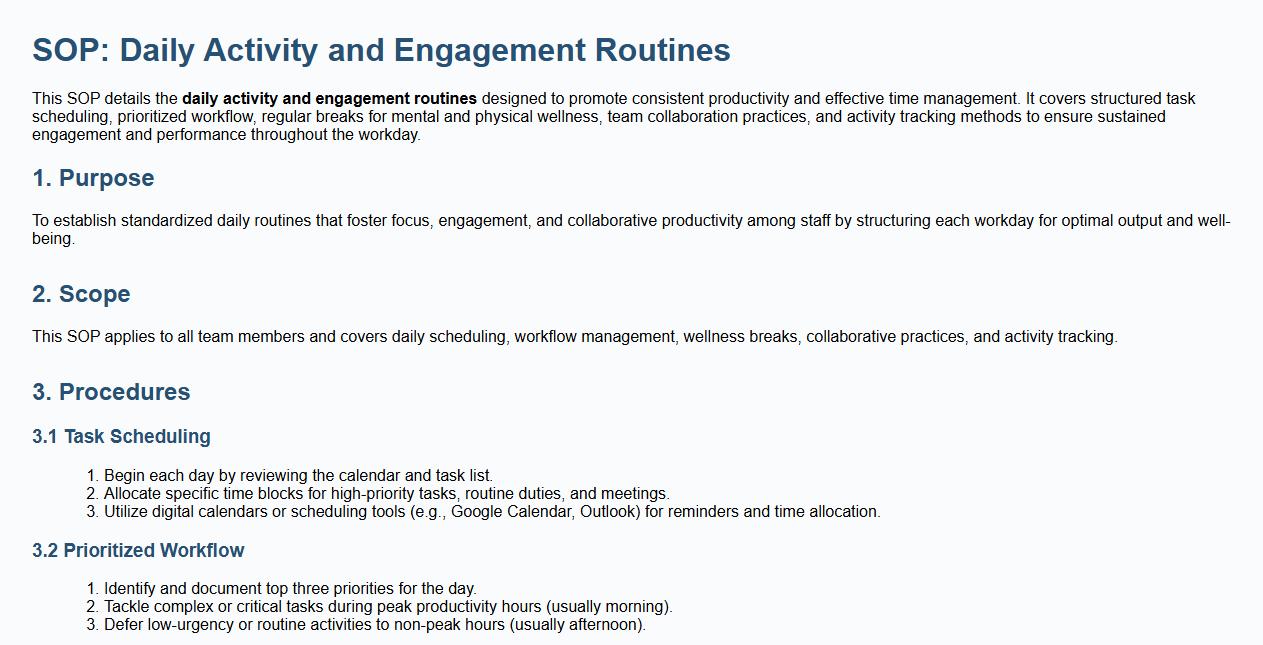
This SOP details the daily activity and engagement routines designed to promote consistent productivity and effective time management. It covers structured task scheduling, prioritized workflow, regular breaks for mental and physical wellness, team collaboration practices, and activity tracking methods to ensure sustained engagement and performance throughout the workday.
Personal care and hygiene support guidelines.
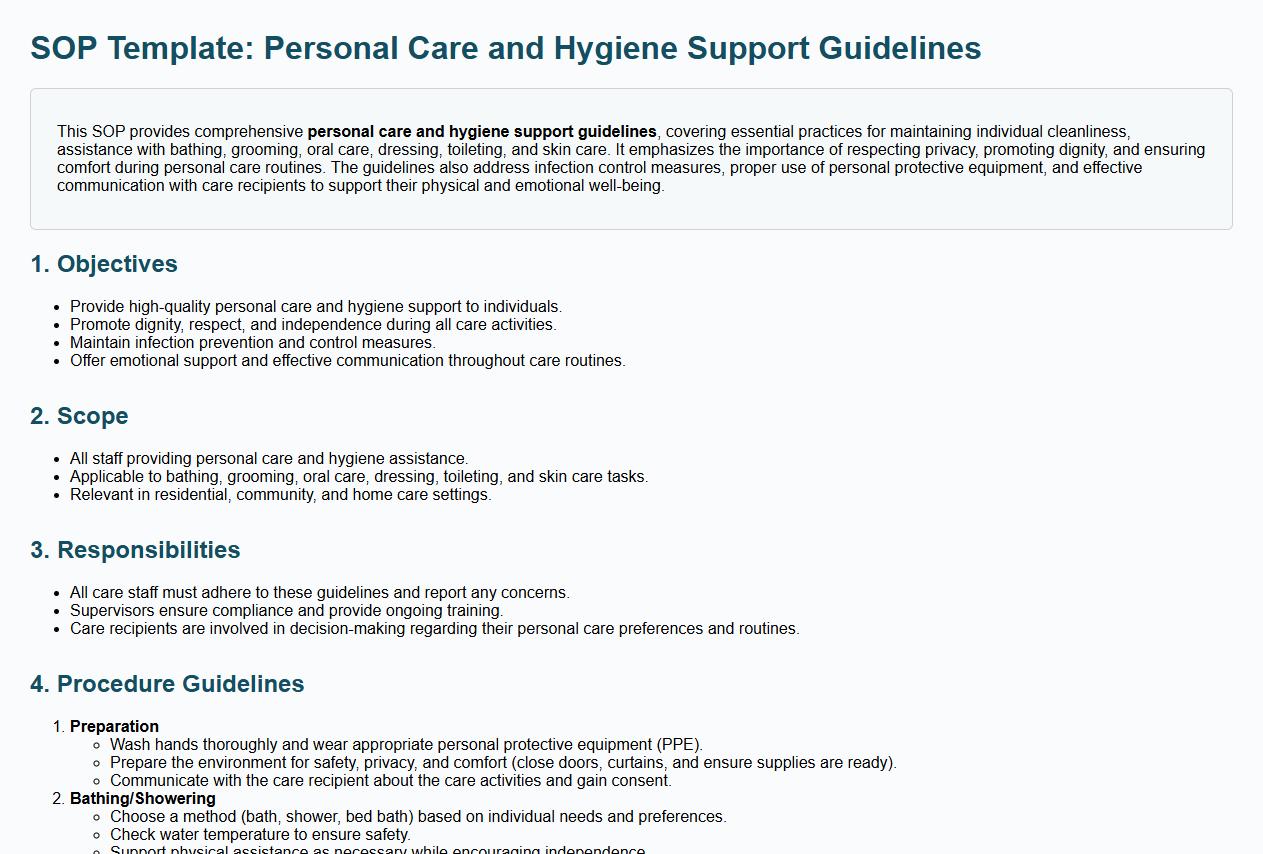
This SOP provides comprehensive personal care and hygiene support guidelines, covering essential practices for maintaining individual cleanliness, assistance with bathing, grooming, oral care, dressing, toileting, and skin care. It emphasizes the importance of respecting privacy, promoting dignity, and ensuring comfort during personal care routines. The guidelines also address infection control measures, proper use of personal protective equipment, and effective communication with care recipients to support their physical and emotional well-being.
Incident reporting and follow-up procedures.
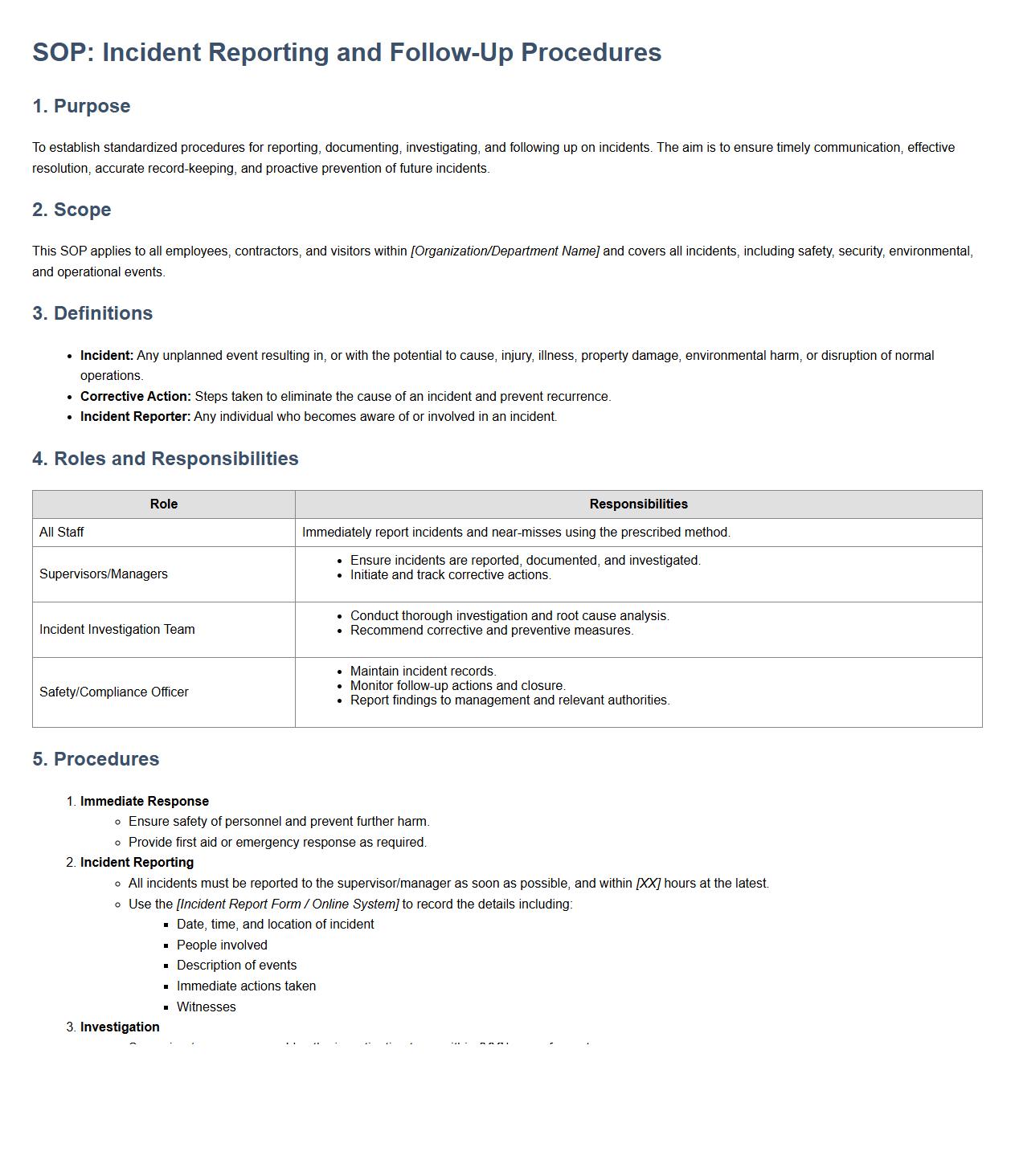
This SOP details the incident reporting and follow-up procedures, covering the timely documentation of incidents, roles and responsibilities for reporting, investigation protocols, corrective action implementation, and continuous monitoring. The objective is to ensure accurate record-keeping, effective resolution of incidents, and prevention of future occurrences through a systematic approach to incident management and communication.
Essential Steps in the SOP for Supporting Individuals with Special Needs
The SOP outlines comprehensive assessment as the first critical step to understand each individual's unique requirements. It emphasizes personalized planning tailored to enhance independence and inclusion. The final key step involves continuous monitoring and adjustment of support strategies to ensure effectiveness.
Roles and Responsibilities Defined in the SOP for Staff
The SOP clearly defines the role of specialized support staff responsible for direct assistance and interventions. It assigns accountability for case management and collaboration among healthcare, educational, and social services professionals. Additionally, it highlights ongoing training and professional development as essential duties.
Communication Protocols with Families and Caregivers
The SOP mandates regular, transparent, and respectful communication with families and caregivers to ensure collaborative care. It specifies scheduled updates and consultations to discuss progress and setbacks. Confidentiality and sensitivity in all interactions are strongly emphasized.
Procedures for Emergency Situations Involving Individuals with Special Needs
The SOP requires detailed emergency response plans tailored to the individual's specific needs and risks. Staff is trained to execute immediate and appropriate actions ensuring safety and well-being. Coordination with emergency services and timely family notification are also critical components.
Ensuring Individualized Accommodations and Modifications
The SOP guarantees that accommodations are based on thorough assessments and individualized to each person's functional abilities. It promotes the use of adaptive technologies and environmental modifications to maximize participation. Continuous evaluation ensures accommodations remain effective and relevant.