
A SOP Template for Allergen Management in Food Service provides a structured framework to identify, control, and communicate allergen risks effectively. It ensures consistent procedures for handling allergenic ingredients, prevents cross-contact, and supports staff training to maintain food safety. This template enhances compliance with regulatory standards while protecting consumers with food allergies.
Allergen risk assessment procedures.
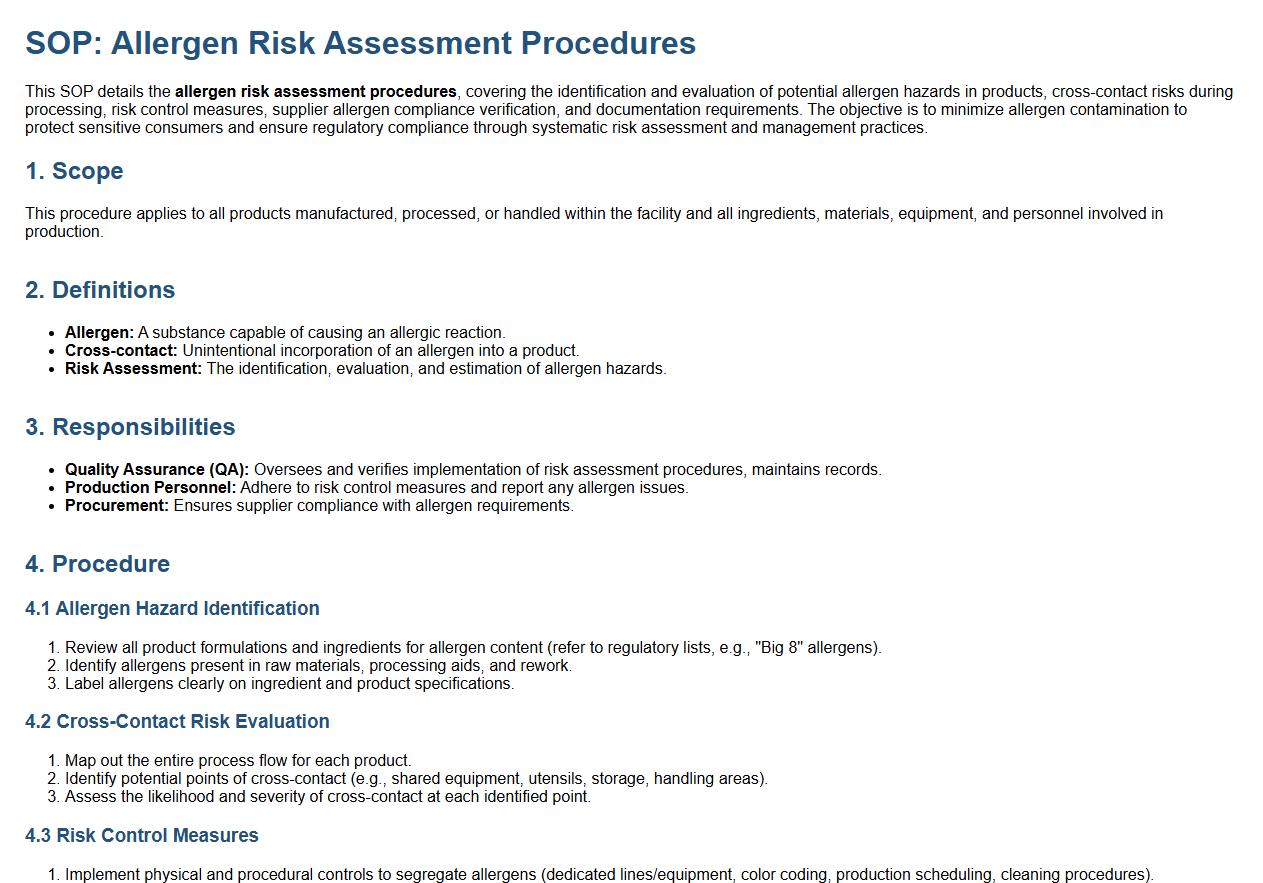
This SOP details the allergen risk assessment procedures, covering the identification and evaluation of potential allergen hazards in products, cross-contact risks during processing, risk control measures, supplier allergen compliance verification, and documentation requirements. The objective is to minimize allergen contamination to protect sensitive consumers and ensure regulatory compliance through systematic risk assessment and management practices.
Supplier verification and ingredient sourcing protocols.
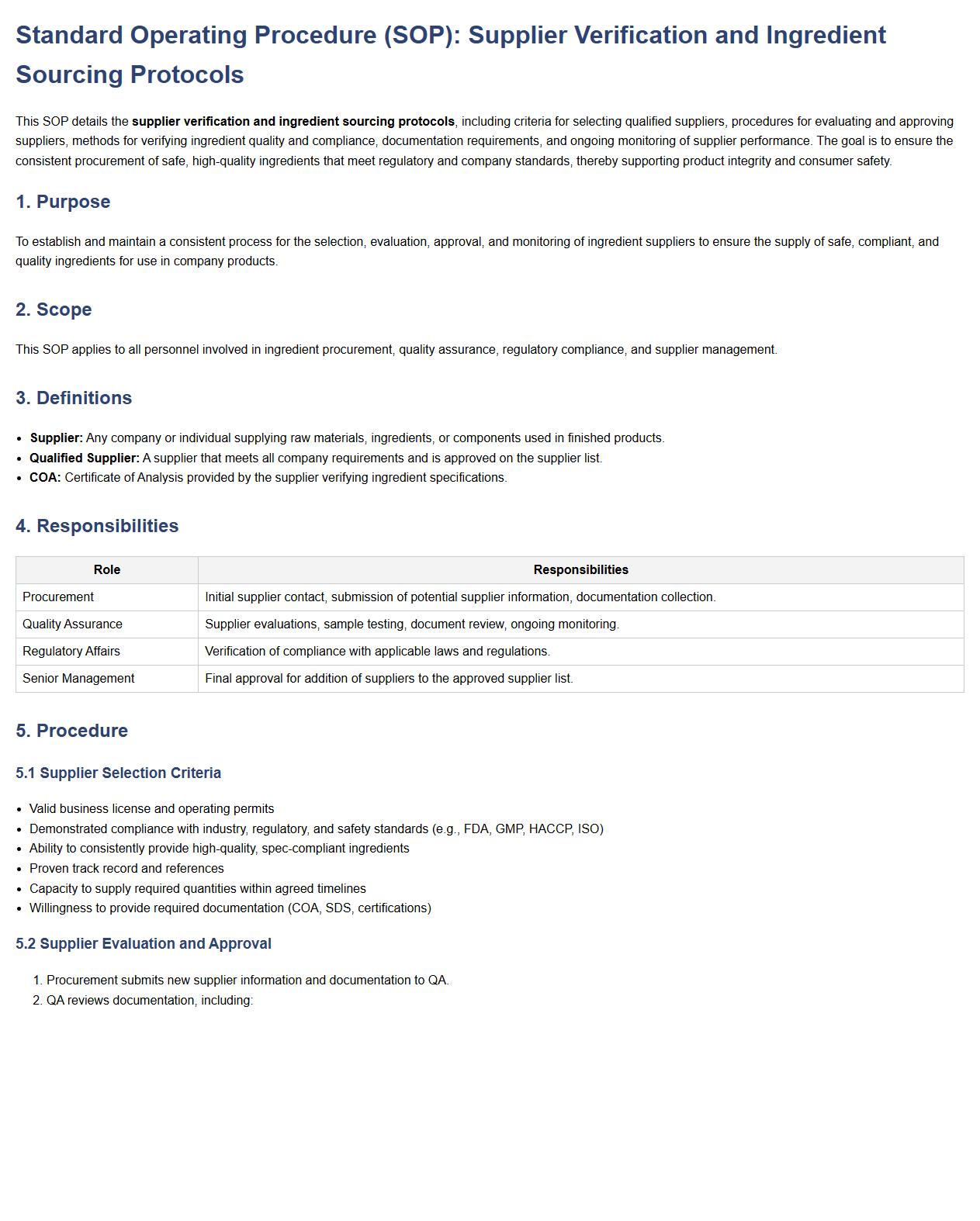
This SOP details the supplier verification and ingredient sourcing protocols, including criteria for selecting qualified suppliers, procedures for evaluating and approving suppliers, methods for verifying ingredient quality and compliance, documentation requirements, and ongoing monitoring of supplier performance. The goal is to ensure the consistent procurement of safe, high-quality ingredients that meet regulatory and company standards, thereby supporting product integrity and consumer safety.
Allergen labeling and signage requirements.
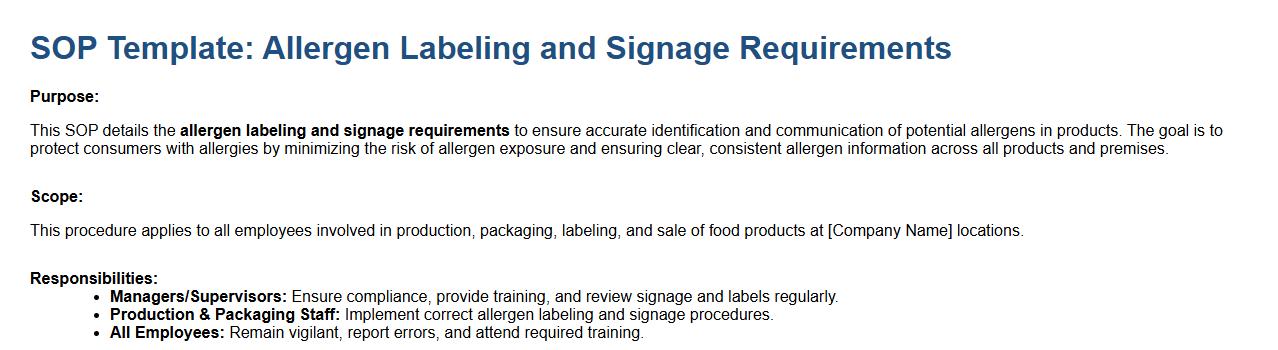
This SOP details the allergen labeling and signage requirements to ensure accurate identification and communication of potential allergens in products. It covers the proper labeling of allergenic ingredients, placement and visibility of allergen signage, compliance with regulatory standards, employee training on allergen awareness, and procedures for updating and reviewing allergen information. The goal is to protect consumers with allergies by minimizing the risk of allergen exposure and ensuring clear, consistent allergen information across all products and premises.
Receiving and storage procedures for allergen-containing foods.
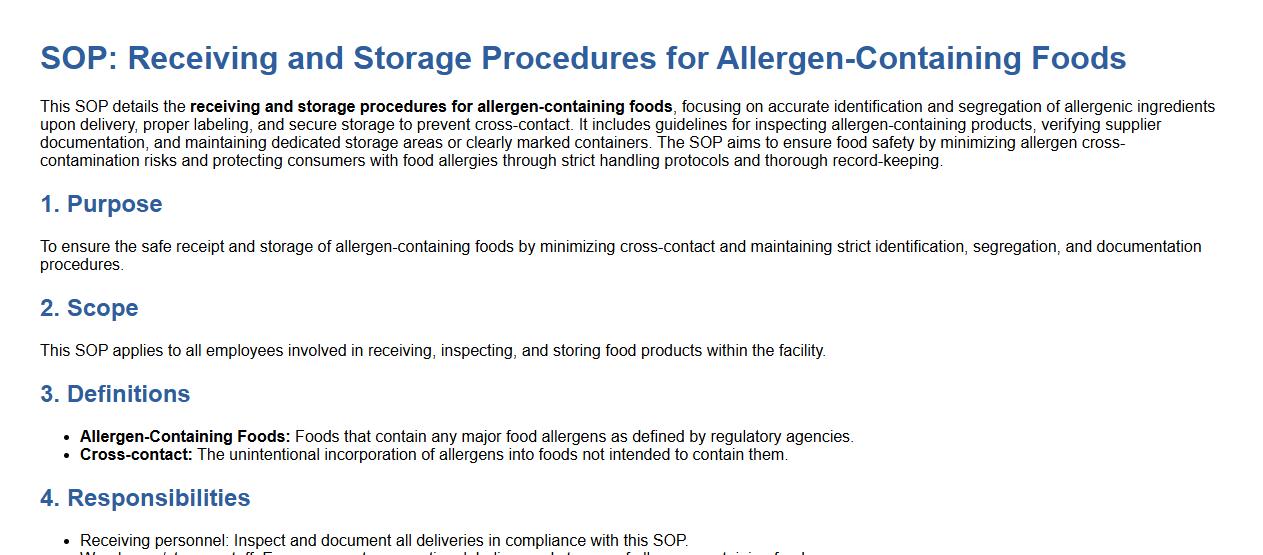
This SOP details the receiving and storage procedures for allergen-containing foods, focusing on accurate identification and segregation of allergenic ingredients upon delivery, proper labeling, and secure storage to prevent cross-contact. It includes guidelines for inspecting allergen-containing products, verifying supplier documentation, and maintaining dedicated storage areas or clearly marked containers. The SOP aims to ensure food safety by minimizing allergen cross-contamination risks and protecting consumers with food allergies through strict handling protocols and thorough record-keeping.
Segregation and prevention of cross-contact in food preparation areas.
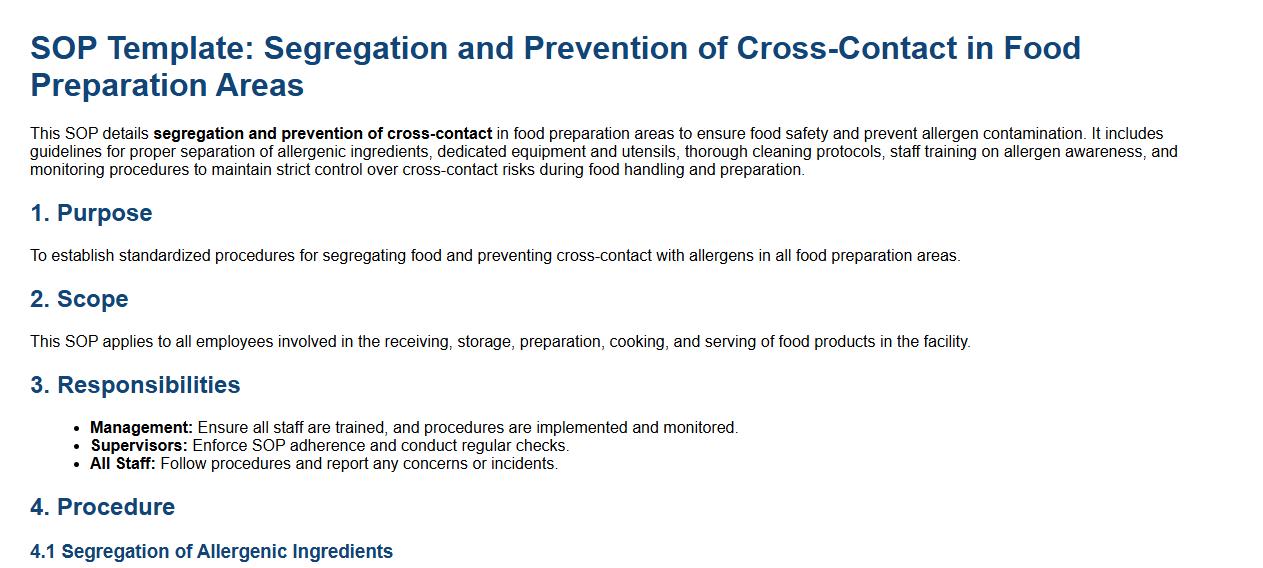
This SOP details segregation and prevention of cross-contact in food preparation areas to ensure food safety and prevent allergen contamination. It includes guidelines for proper separation of allergenic ingredients, dedicated equipment and utensils, thorough cleaning protocols, staff training on allergen awareness, and monitoring procedures to maintain strict control over cross-contact risks during food handling and preparation.
Hygiene and handwashing standards related to allergen control.
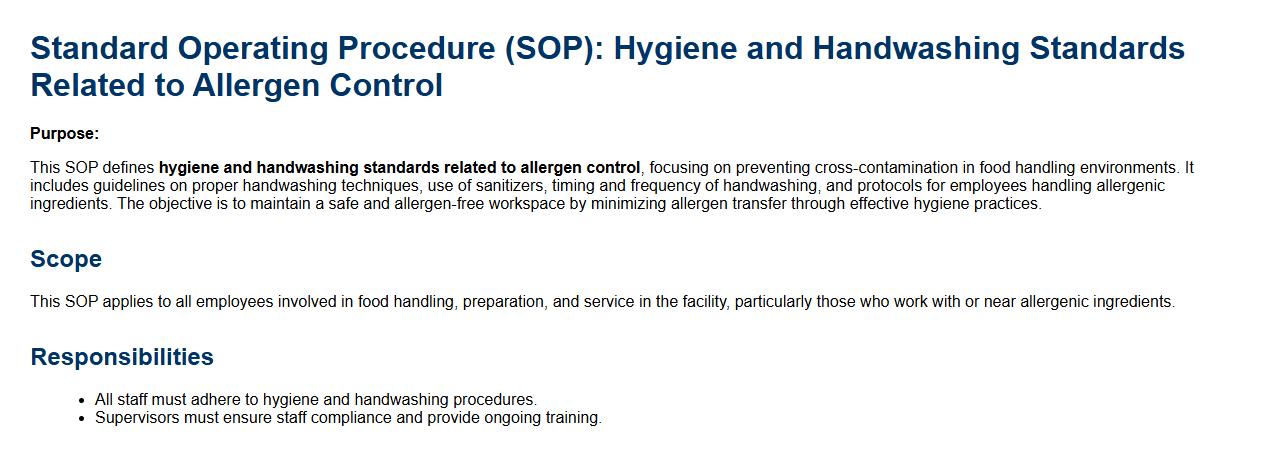
This SOP defines hygiene and handwashing standards related to allergen control, focusing on preventing cross-contamination in food handling environments. It includes guidelines on proper handwashing techniques, use of sanitizers, timing and frequency of handwashing, and protocols for employees handling allergenic ingredients. The objective is to maintain a safe and allergen-free workspace by minimizing allergen transfer through effective hygiene practices.
Cleaning and sanitation procedures for allergen management.
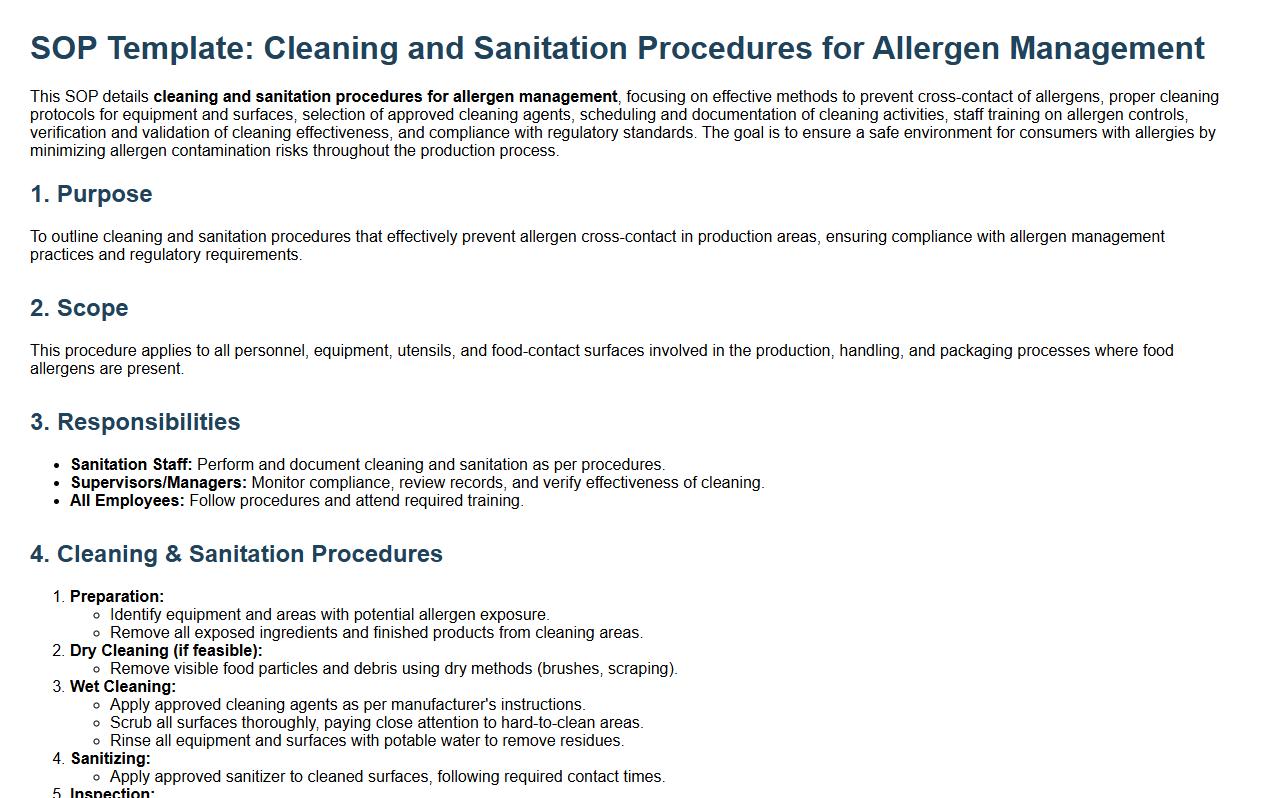
This SOP details cleaning and sanitation procedures for allergen management, focusing on effective methods to prevent cross-contact of allergens, proper cleaning protocols for equipment and surfaces, selection of approved cleaning agents, scheduling and documentation of cleaning activities, staff training on allergen controls, verification and validation of cleaning effectiveness, and compliance with regulatory standards. The goal is to ensure a safe environment for consumers with allergies by minimizing allergen contamination risks throughout the production process.
Employee allergen awareness and training programs.
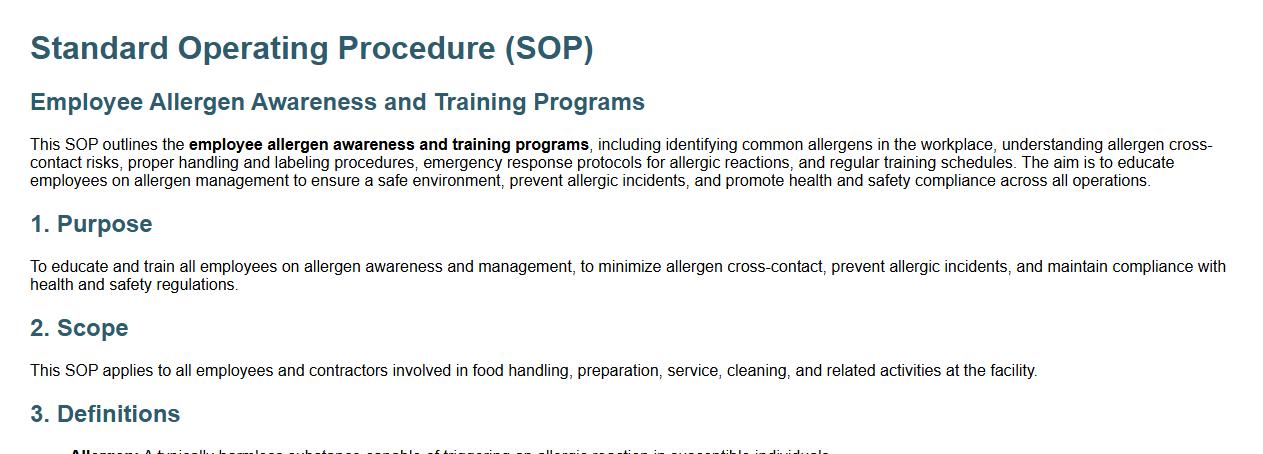
This SOP outlines the employee allergen awareness and training programs, including identifying common allergens in the workplace, understanding allergen cross-contact risks, proper handling and labeling procedures, emergency response protocols for allergic reactions, and regular training schedules. The aim is to educate employees on allergen management to ensure a safe environment, prevent allergic incidents, and promote health and safety compliance across all operations.
Allergen-specific communication with customers.
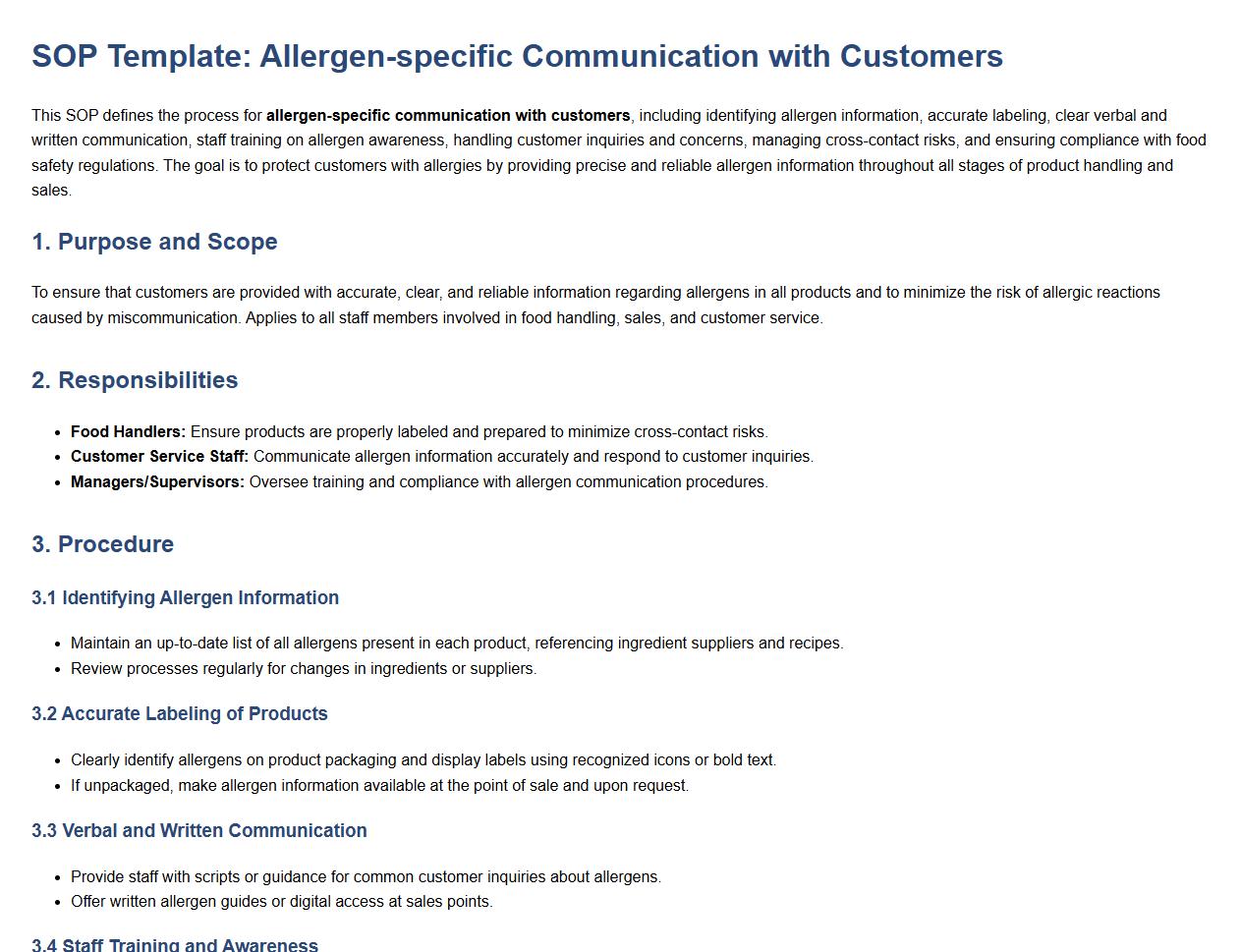
This SOP defines the process for allergen-specific communication with customers, including identifying allergen information, accurate labeling, clear verbal and written communication, staff training on allergen awareness, handling customer inquiries and concerns, managing cross-contact risks, and ensuring compliance with food safety regulations. The goal is to protect customers with allergies by providing precise and reliable allergen information throughout all stages of product handling and sales.
Incident response and reporting for allergen-related events.
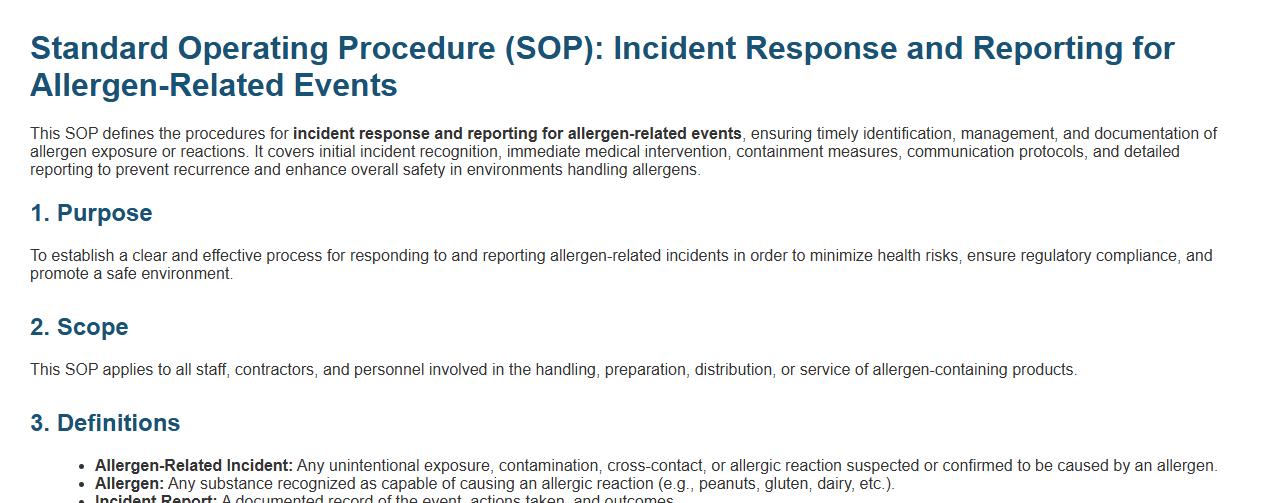
This SOP defines the procedures for incident response and reporting for allergen-related events, ensuring timely identification, management, and documentation of allergen exposure or reactions. It covers initial incident recognition, immediate medical intervention, containment measures, communication protocols, and detailed reporting to prevent recurrence and enhance overall safety in environments handling allergens.
What is the primary purpose of an Allergen Management SOP in food service operations?
The primary purpose of an Allergen Management Standard Operating Procedure (SOP) is to ensure the safety of customers by minimizing the risk of allergen exposure. It establishes clear guidelines to prevent allergic reactions by controlling the handling and preparation of allergenic foods. This SOP supports compliance with food safety regulations and enhances customer confidence in food service operations.
Which food allergens must be identified and controlled according to the SOP?
The SOP mandates the identification and control of the major food allergens recognized by regulatory authorities, such as peanuts, tree nuts, milk, eggs, fish, shellfish, soy, wheat, and sesame. Each allergen must be clearly labeled and managed throughout the food production process. Proper control ensures that these allergens do not contaminate allergen-free foods inadvertently.
What procedures must staff follow to prevent cross-contact between allergenic and non-allergenic foods?
Staff must strictly follow procedures such as using separate utensils, storage areas, and preparation surfaces for allergenic and non-allergenic foods to prevent cross-contact. They should also wash hands thoroughly and change gloves when handling different food types. Consistent training and adherence to these protocols are critical to maintaining allergen safety.
How should food ingredients and allergens be documented and communicated to customers and staff?
All food ingredients and potential allergens must be accurately documented on labels, menus, and ingredient lists. Clear communication with both customers and staff is essential to prevent accidental consumption of allergens. This transparency enables informed choices and efficient allergen risk management in food service settings.
What steps are required for cleaning and sanitizing equipment and surfaces exposed to food allergens?
Effective cleaning and sanitizing involve thorough removal of allergenic residues using approved cleaning agents and techniques. Equipment and surfaces must be cleaned immediately after contact with allergens to avoid contamination. Routine inspections ensure that allergen control is maintained throughout the food preparation process.