
A SOP Template for Food Truck Daily Operations provides a structured framework to streamline tasks such as inventory checks, food preparation, and sanitation protocols. This template ensures consistency, enhances efficiency, and maintains high standards of hygiene and customer service. Using an organized SOP helps food truck operators manage daily routines effectively and comply with health regulations.
Opening procedures and vehicle setup.
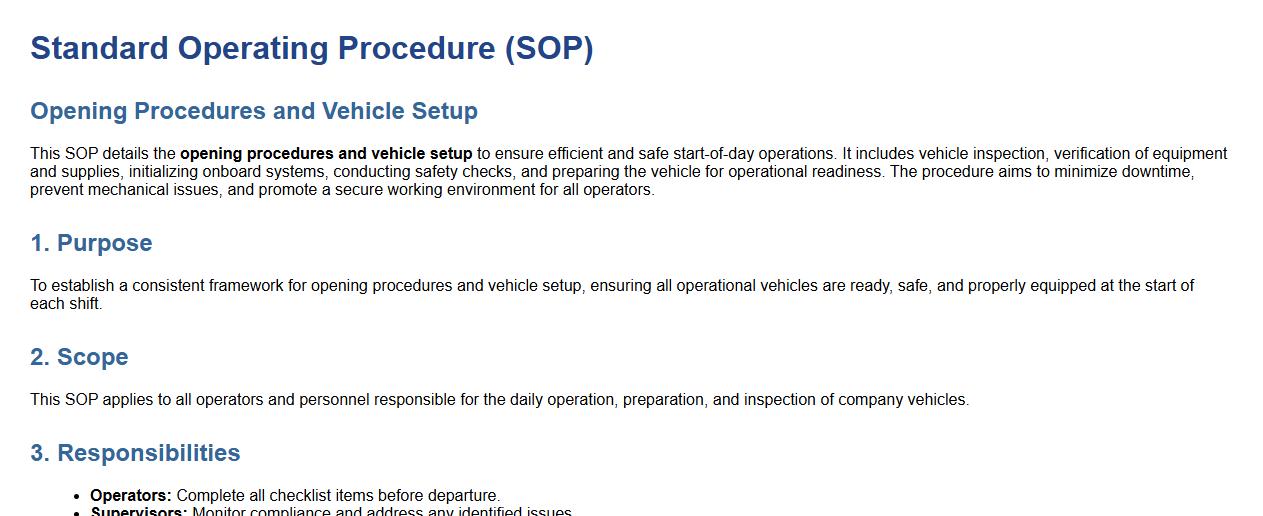
This SOP details the opening procedures and vehicle setup to ensure efficient and safe start-of-day operations. It includes vehicle inspection, verification of equipment and supplies, initializing onboard systems, conducting safety checks, and preparing the vehicle for operational readiness. The procedure aims to minimize downtime, prevent mechanical issues, and promote a secure working environment for all operators.
Food and equipment safety checks.
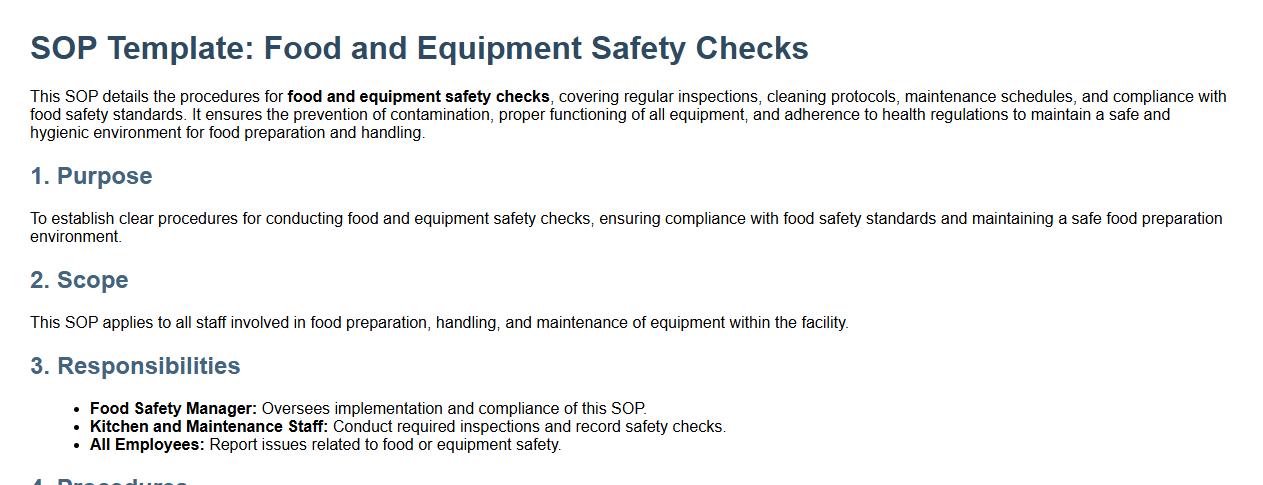
This SOP details the procedures for food and equipment safety checks, covering regular inspections, cleaning protocols, maintenance schedules, and compliance with food safety standards. It ensures the prevention of contamination, proper functioning of all equipment, and adherence to health regulations to maintain a safe and hygienic environment for food preparation and handling.
Ingredient preparation and stock replenishment.
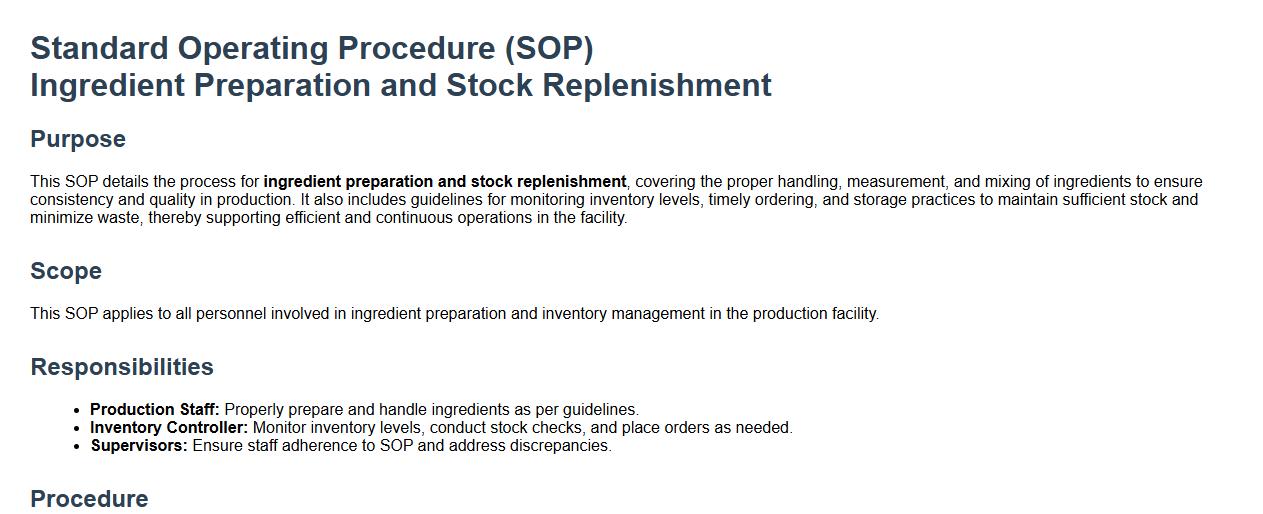
This SOP details the process for ingredient preparation and stock replenishment, covering the proper handling, measurement, and mixing of ingredients to ensure consistency and quality in production. It also includes guidelines for monitoring inventory levels, timely ordering, and storage practices to maintain sufficient stock and minimize waste, thereby supporting efficient and continuous operations in the facility.
Daily menu review and display setup.
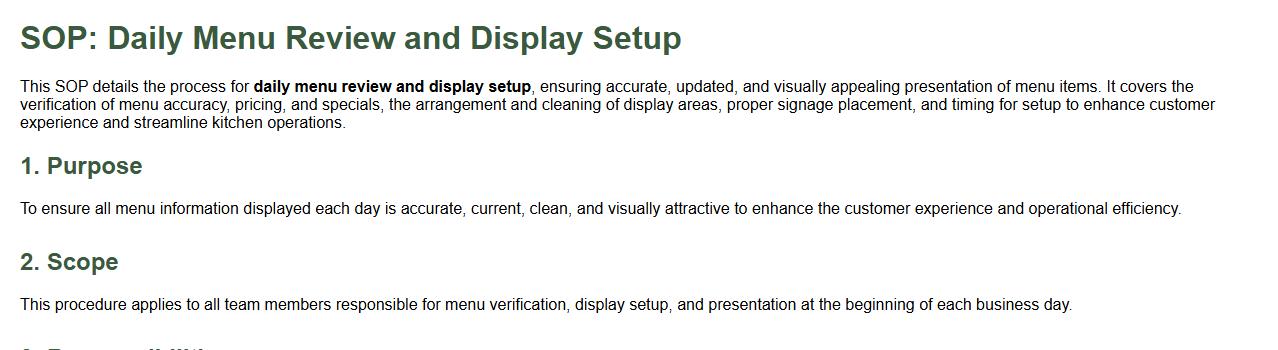
This SOP details the process for daily menu review and display setup, ensuring accurate, updated, and visually appealing presentation of menu items. It covers the verification of menu accuracy, pricing, and specials, the arrangement and cleaning of display areas, proper signage placement, and timing for setup to enhance customer experience and streamline kitchen operations.
Order taking and customer service protocols.
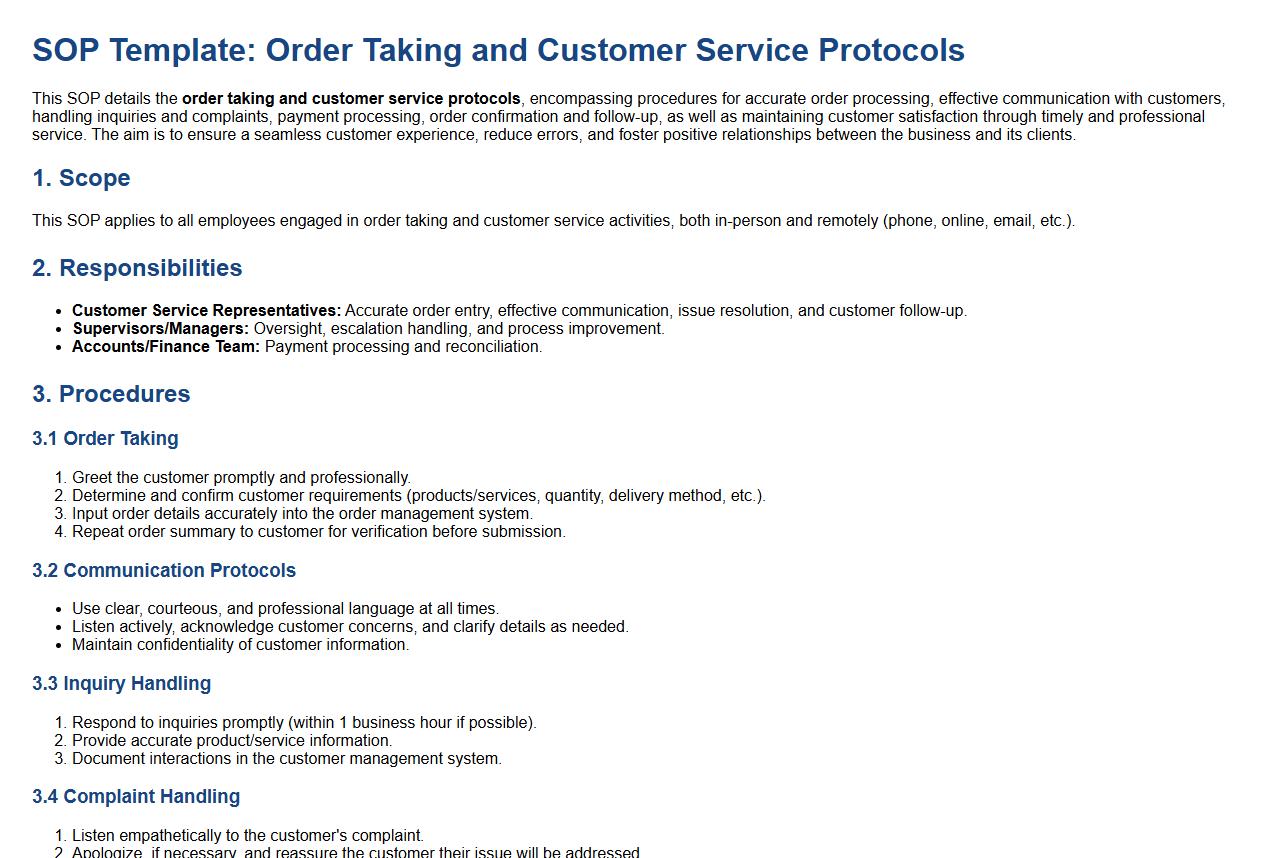
This SOP details the order taking and customer service protocols, encompassing procedures for accurate order processing, effective communication with customers, handling inquiries and complaints, payment processing, order confirmation and follow-up, as well as maintaining customer satisfaction through timely and professional service. The aim is to ensure a seamless customer experience, reduce errors, and foster positive relationships between the business and its clients.
Cooking and food assembly guidelines.
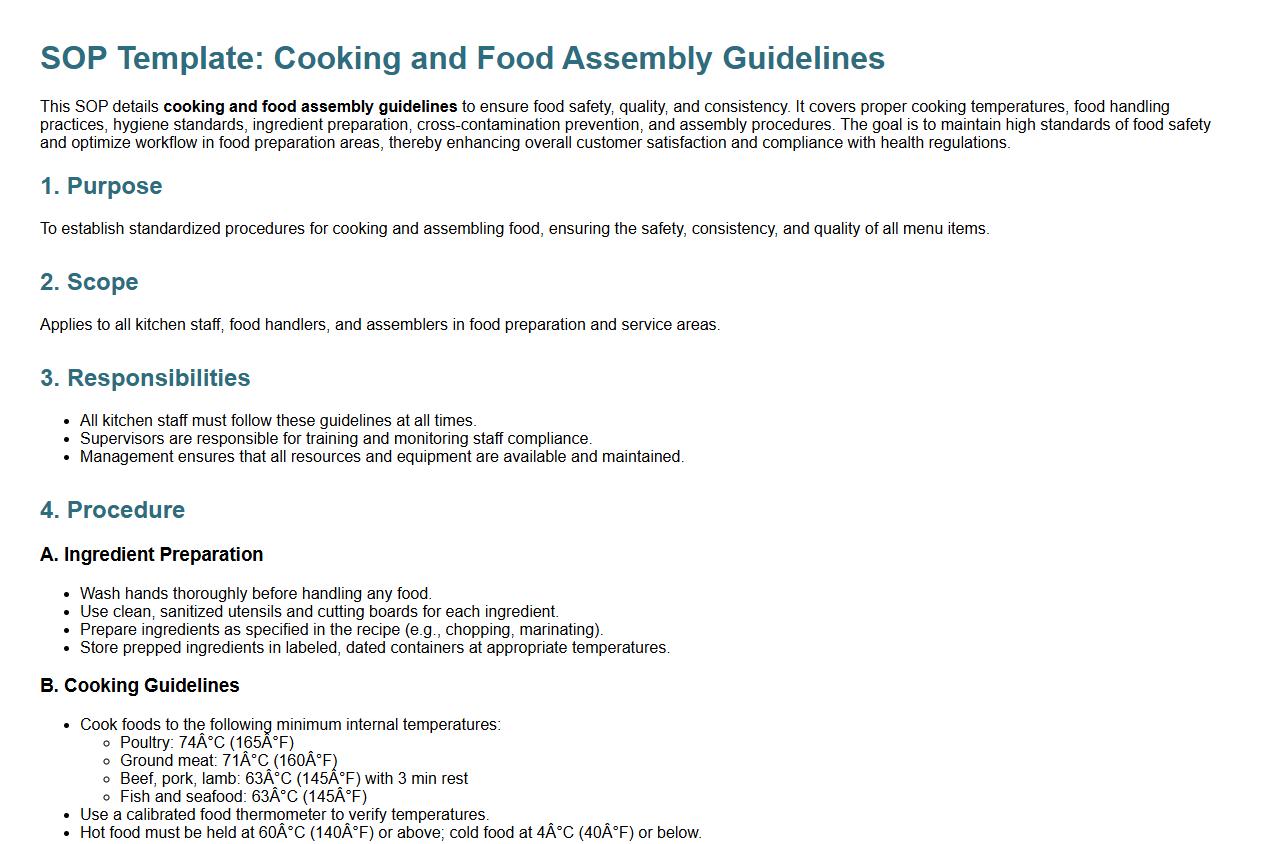
This SOP details cooking and food assembly guidelines to ensure food safety, quality, and consistency. It covers proper cooking temperatures, food handling practices, hygiene standards, ingredient preparation, cross-contamination prevention, and assembly procedures. The goal is to maintain high standards of food safety and optimize workflow in food preparation areas, thereby enhancing overall customer satisfaction and compliance with health regulations.
Cleaning and sanitizing workspaces.
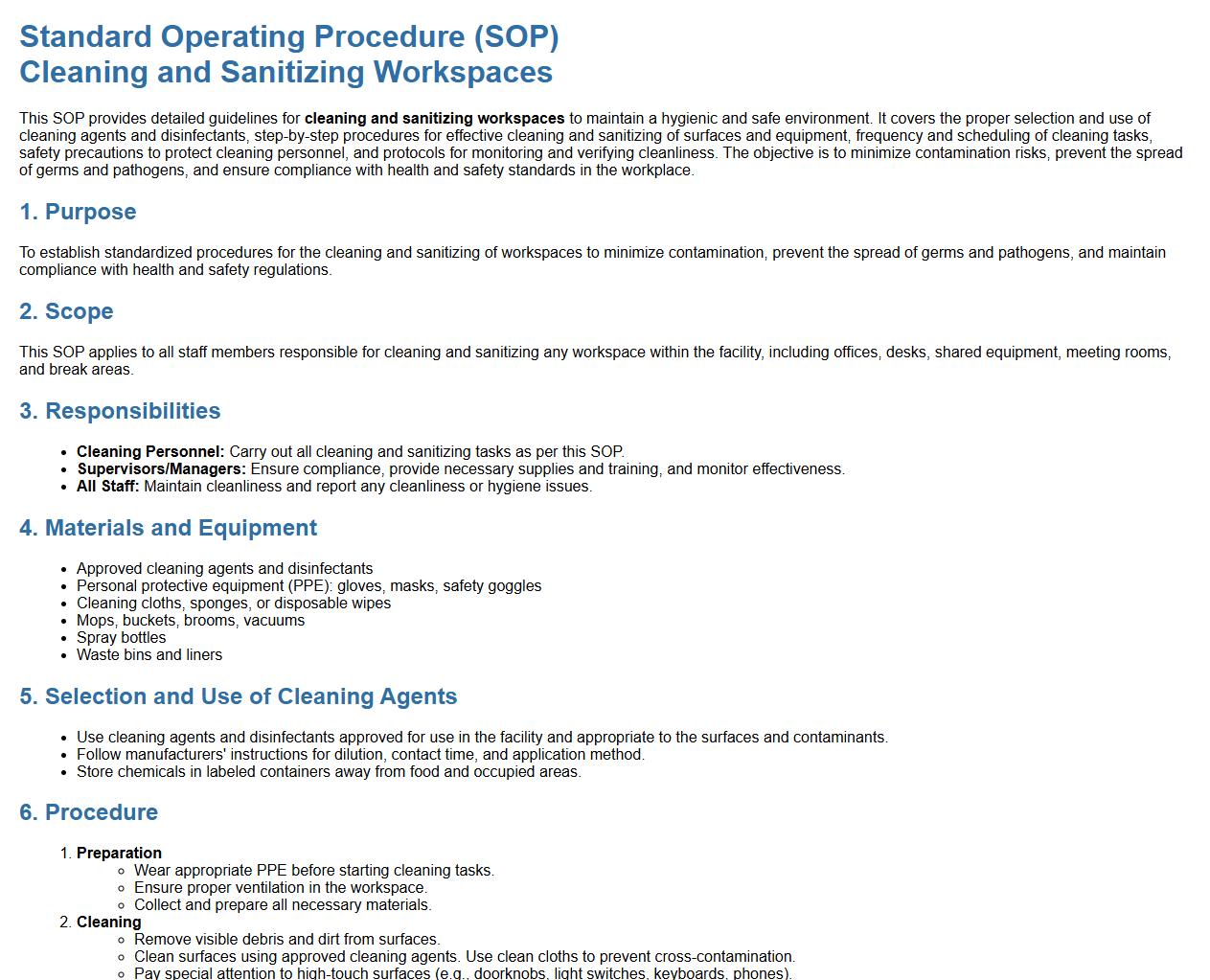
This SOP provides detailed guidelines for cleaning and sanitizing workspaces to maintain a hygienic and safe environment. It covers the proper selection and use of cleaning agents and disinfectants, step-by-step procedures for effective cleaning and sanitizing of surfaces and equipment, frequency and scheduling of cleaning tasks, safety precautions to protect cleaning personnel, and protocols for monitoring and verifying cleanliness. The objective is to minimize contamination risks, prevent the spread of germs and pathogens, and ensure compliance with health and safety standards in the workplace.
Waste management and disposal processes.
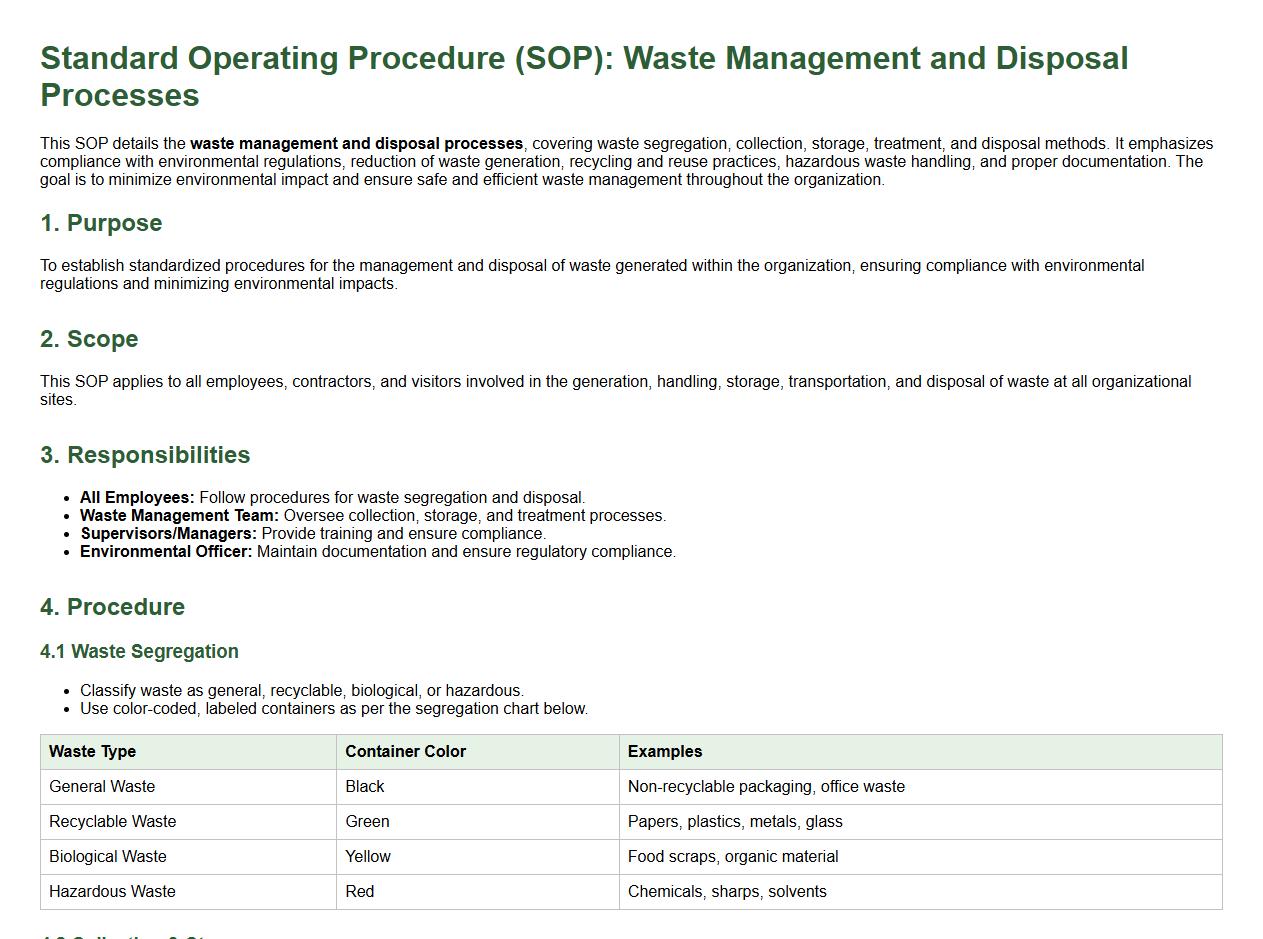
This SOP details the waste management and disposal processes, covering waste segregation, collection, storage, treatment, and disposal methods. It emphasizes compliance with environmental regulations, reduction of waste generation, recycling and reuse practices, hazardous waste handling, and proper documentation. The goal is to minimize environmental impact and ensure safe and efficient waste management throughout the organization.
End-of-day sales reconciliation and cash handling.
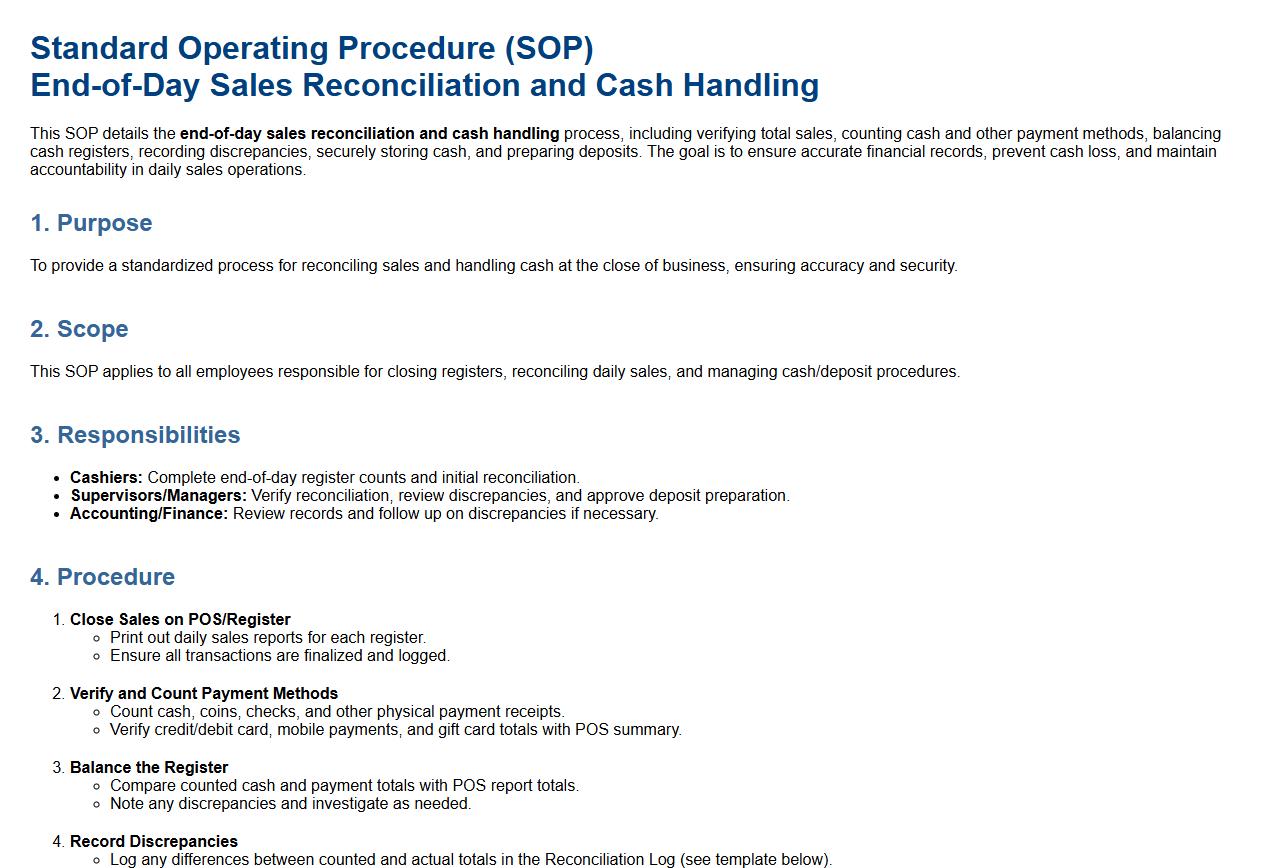
This SOP details the end-of-day sales reconciliation and cash handling process, including verifying total sales, counting cash and other payment methods, balancing cash registers, recording discrepancies, securely storing cash, and preparing deposits. The goal is to ensure accurate financial records, prevent cash loss, and maintain accountability in daily sales operations.
Closing checklist and truck shutdown procedures.
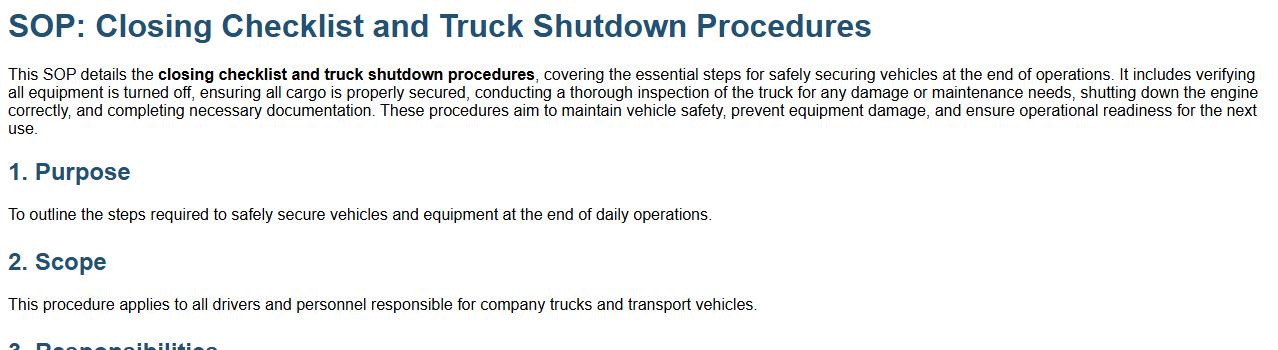
This SOP details the closing checklist and truck shutdown procedures, covering the essential steps for safely securing vehicles at the end of operations. It includes verifying all equipment is turned off, ensuring all cargo is properly secured, conducting a thorough inspection of the truck for any damage or maintenance needs, shutting down the engine correctly, and completing necessary documentation. These procedures aim to maintain vehicle safety, prevent equipment damage, and ensure operational readiness for the next use.
What are the required steps for opening and closing the food truck each day according to the SOP?
The SOP mandates a thorough inspection of all equipment to ensure everything is operational before opening. Staff must perform a detailed setup, including stocking supplies and checking inventory for the day. At closing, a comprehensive cleaning and secure shutdown process is required to maintain hygiene and safety.
How does the SOP specify the proper handling and storage of perishable ingredients?
The SOP emphasizes the importance of maintaining correct temperature controls to preserve freshness and prevent spoilage. Ingredients must be stored separately based on type to avoid cross-contamination. Staff are trained to frequently monitor expiration dates and use the FIFO (First In, First Out) method for inventory rotation.
What personal hygiene practices must staff follow as per the daily operations SOP?
All staff are required to wash hands thoroughly with soap at key intervals, especially before handling food. Wearing clean uniforms and hair restraints is mandatory to uphold food safety standards. Additionally, the SOP prohibits working while ill to prevent any risk of contamination.
Which cleaning and sanitation procedures are mandated by the SOP for equipment and surfaces?
The SOP requires regular cleaning of all food contact surfaces using approved sanitizers to eliminate harmful bacteria. Equipment must be disassembled, cleaned, and sanitized daily according to a detailed schedule. Documentation of these cleaning procedures ensures consistent compliance with health regulations.
How should cash handling and sales reconciliation be conducted as outlined in the SOP?
Cash handling must involve counting and verifying all monies at the beginning and end of each shift to ensure accuracy. The SOP prescribes secure storage of cash during operating hours to prevent theft. Daily sales reconciliation is performed to cross-verify transactions, ensuring completeness and accountability.