
A SOP Template for Food Safety and Sanitation provides a standardized framework to ensure consistent hygiene practices and compliance with regulatory standards. It outlines step-by-step procedures for cleaning, sanitizing, and handling food to prevent contamination and foodborne illnesses. Implementing this template helps maintain a safe environment for both employees and customers in food service operations.
Personal hygiene and handwashing procedures for staff.
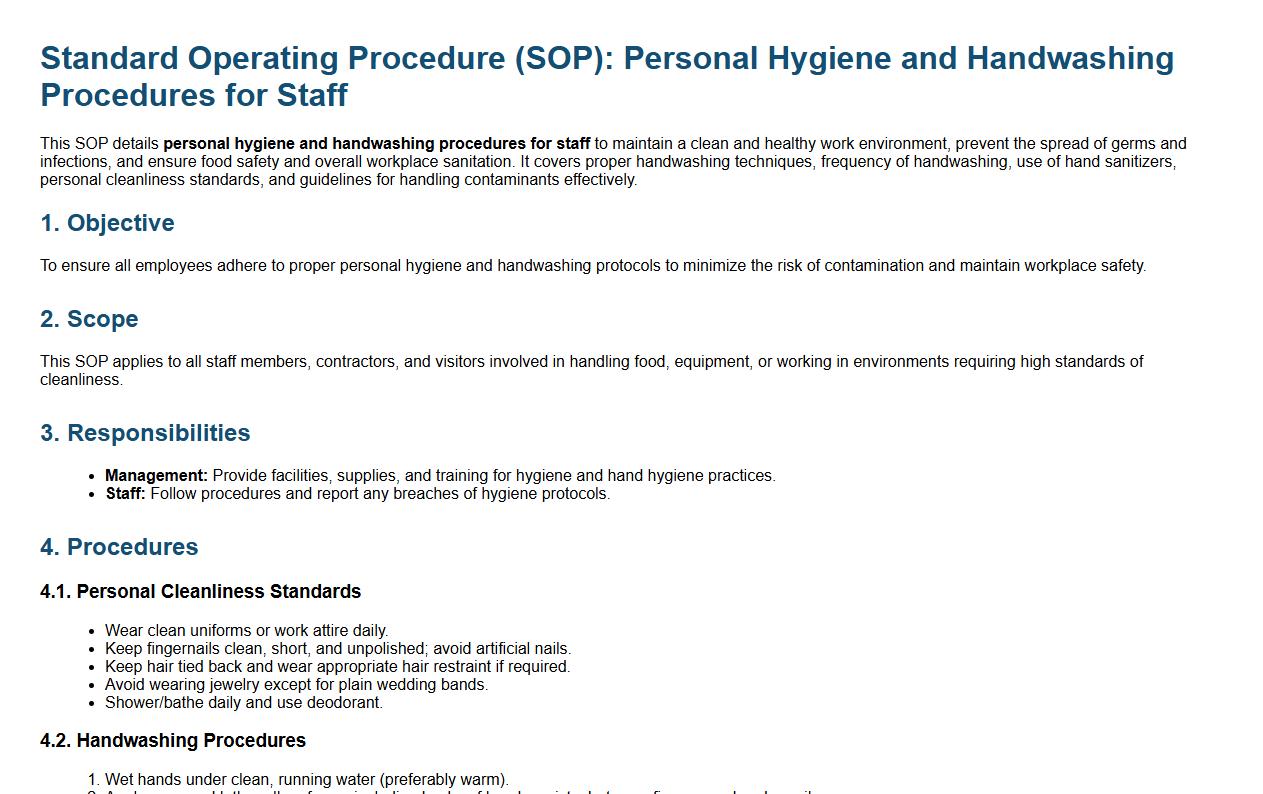
This SOP details personal hygiene and handwashing procedures for staff to maintain a clean and healthy work environment, prevent the spread of germs and infections, and ensure food safety and overall workplace sanitation. It covers proper handwashing techniques, frequency of handwashing, use of hand sanitizers, personal cleanliness standards, and guidelines for handling contaminants effectively.
Cleaning and sanitizing protocols for equipment and surfaces.
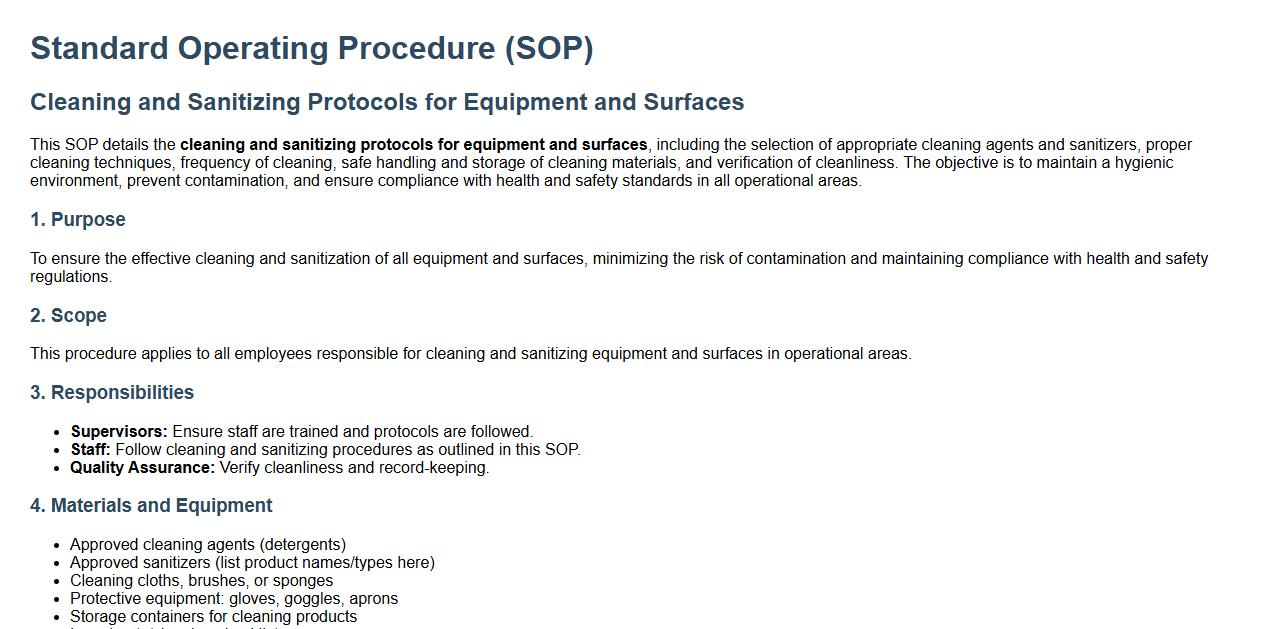
This SOP details the cleaning and sanitizing protocols for equipment and surfaces, including the selection of appropriate cleaning agents and sanitizers, proper cleaning techniques, frequency of cleaning, safe handling and storage of cleaning materials, and verification of cleanliness. The objective is to maintain a hygienic environment, prevent contamination, and ensure compliance with health and safety standards in all operational areas.
Food storage guidelines, including temperature control and labeling.
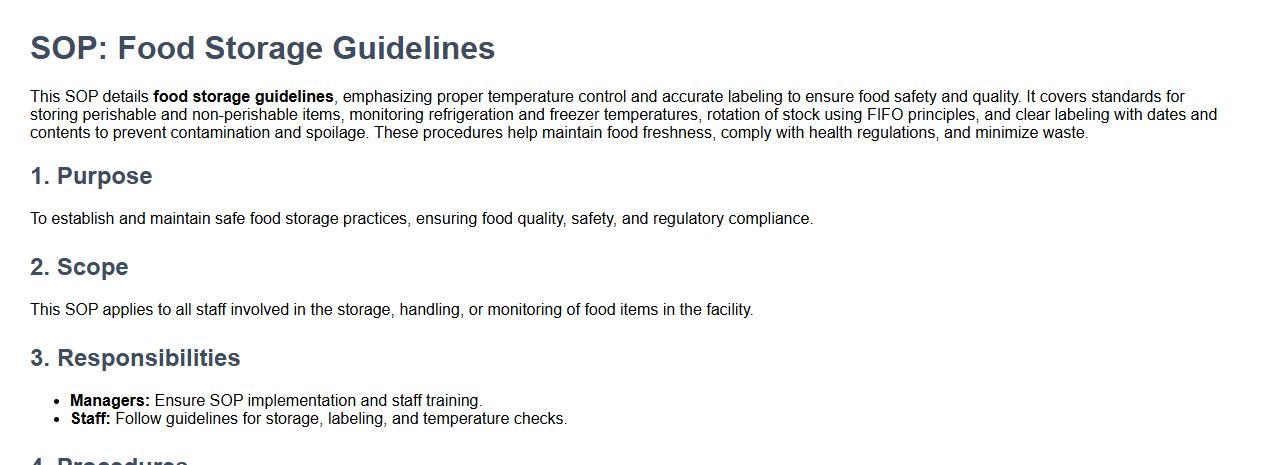
This SOP details food storage guidelines, emphasizing proper temperature control and accurate labeling to ensure food safety and quality. It covers standards for storing perishable and non-perishable items, monitoring refrigeration and freezer temperatures, rotation of stock using FIFO principles, and clear labeling with dates and contents to prevent contamination and spoilage. These procedures help maintain food freshness, comply with health regulations, and minimize waste.
Pest control and monitoring practices.
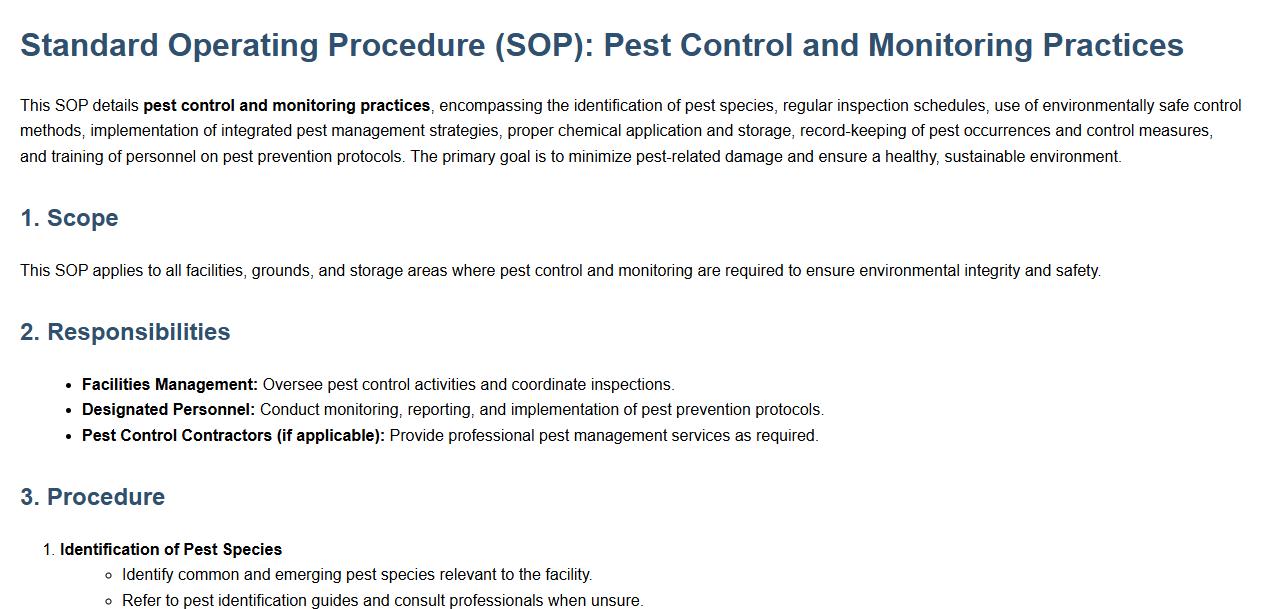
This SOP details pest control and monitoring practices, encompassing the identification of pest species, regular inspection schedules, use of environmentally safe control methods, implementation of integrated pest management strategies, proper chemical application and storage, record-keeping of pest occurrences and control measures, and training of personnel on pest prevention protocols. The primary goal is to minimize pest-related damage and ensure a healthy, sustainable environment.
Receiving and inspection of raw materials and ingredients.
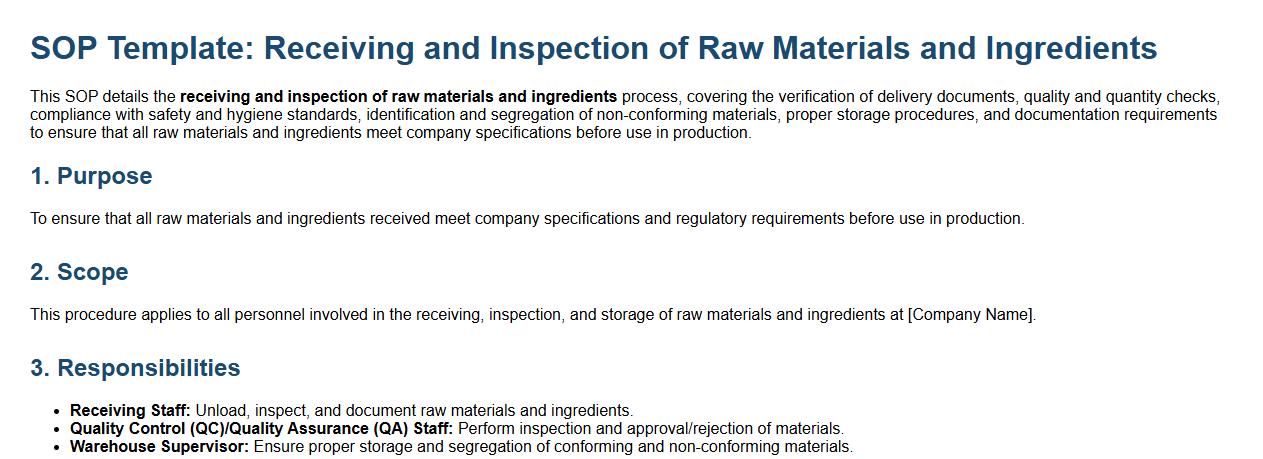
This SOP details the receiving and inspection of raw materials and ingredients process, covering the verification of delivery documents, quality and quantity checks, compliance with safety and hygiene standards, identification and segregation of non-conforming materials, proper storage procedures, and documentation requirements to ensure that all raw materials and ingredients meet company specifications before use in production.
Proper waste disposal and management procedures.
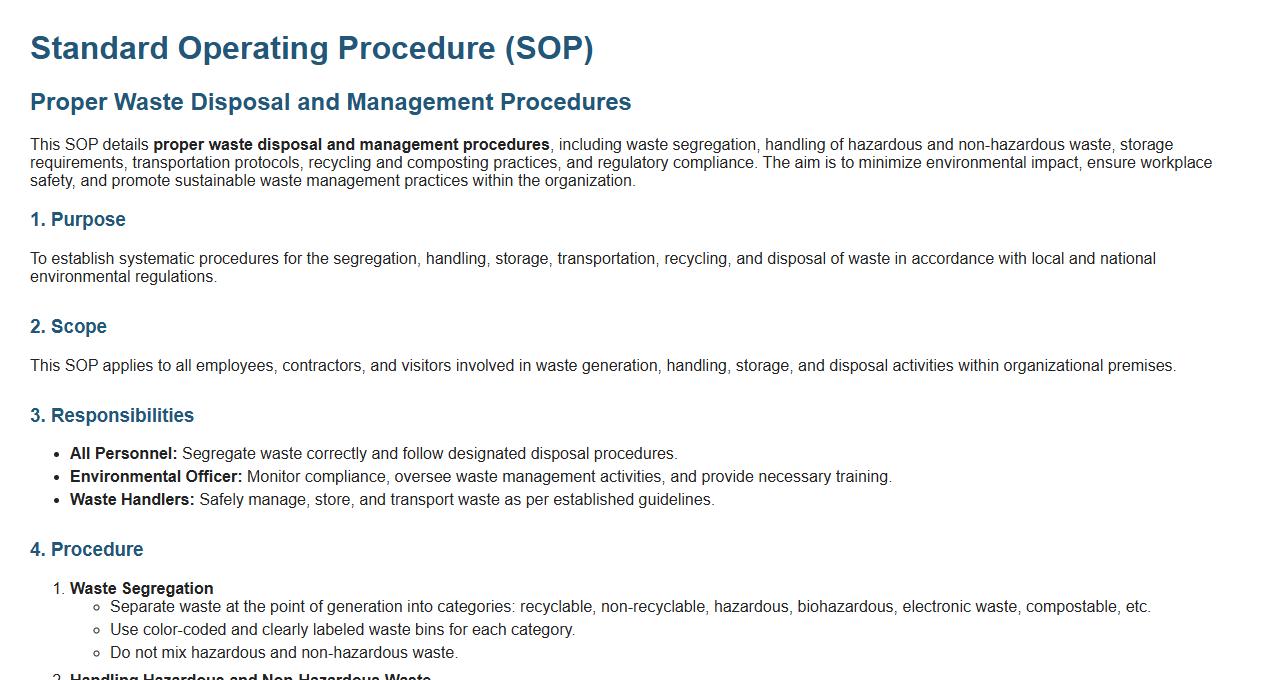
This SOP details proper waste disposal and management procedures, including waste segregation, handling of hazardous and non-hazardous waste, storage requirements, transportation protocols, recycling and composting practices, and regulatory compliance. The aim is to minimize environmental impact, ensure workplace safety, and promote sustainable waste management practices within the organization.
Allergen management and cross-contamination prevention.
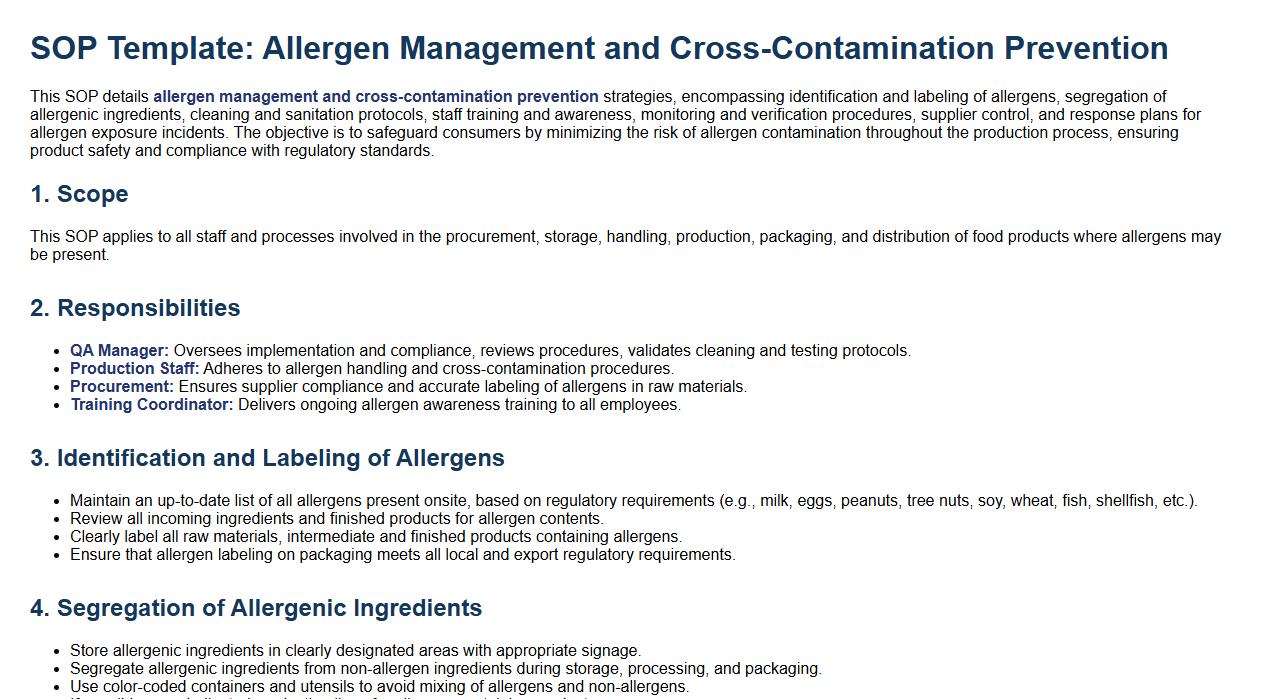
This SOP details allergen management and cross-contamination prevention strategies, encompassing identification and labeling of allergens, segregation of allergenic ingredients, cleaning and sanitation protocols, staff training and awareness, monitoring and verification procedures, supplier control, and response plans for allergen exposure incidents. The objective is to safeguard consumers by minimizing the risk of allergen contamination throughout the production process, ensuring product safety and compliance with regulatory standards.
Corrective action procedures for food safety deviations.
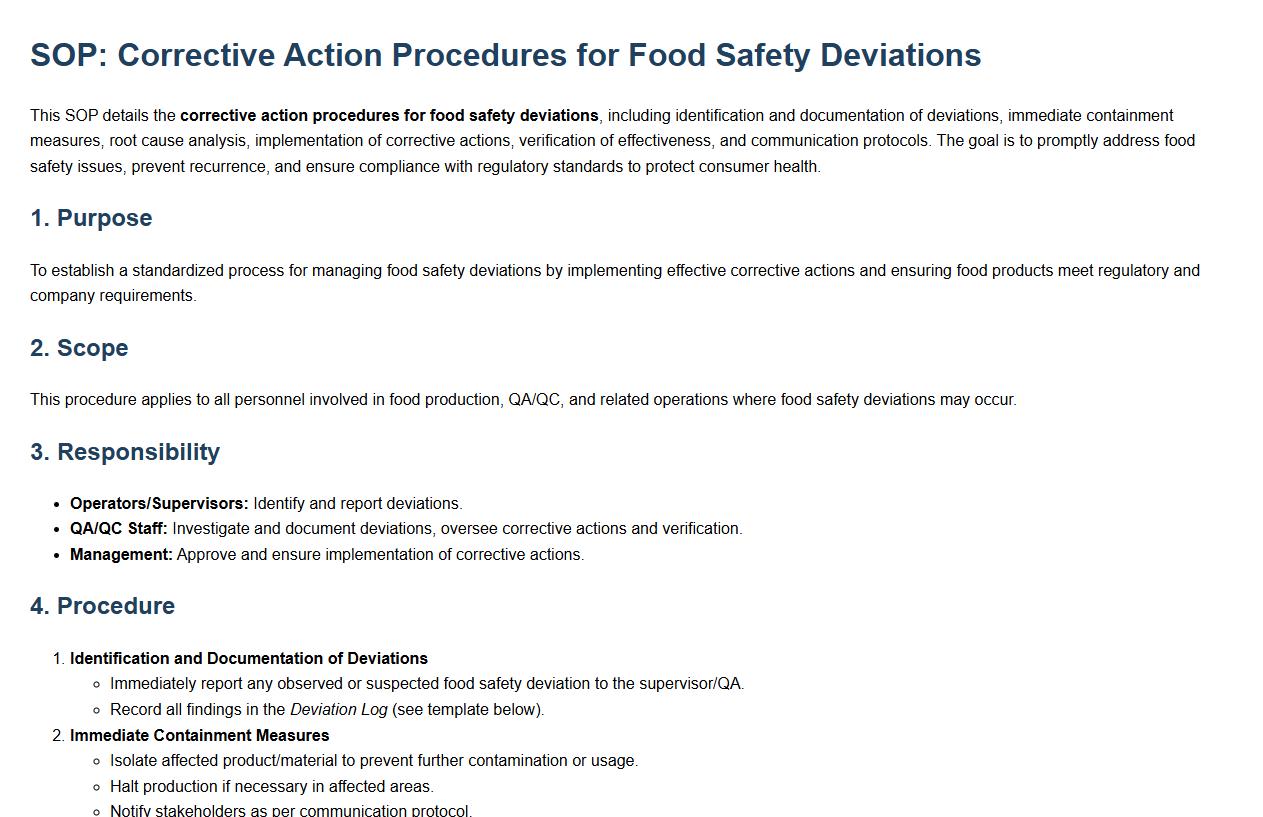
This SOP details the corrective action procedures for food safety deviations, including identification and documentation of deviations, immediate containment measures, root cause analysis, implementation of corrective actions, verification of effectiveness, and communication protocols. The goal is to promptly address food safety issues, prevent recurrence, and ensure compliance with regulatory standards to protect consumer health.
Documentation and record-keeping of sanitation activities.
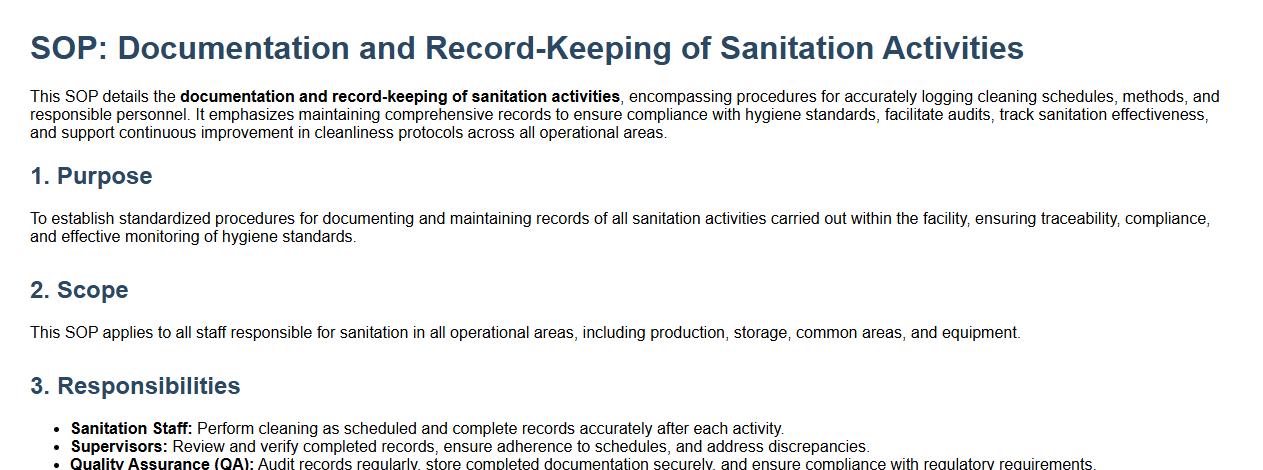
This SOP details the documentation and record-keeping of sanitation activities, encompassing procedures for accurately logging cleaning schedules, methods, and responsible personnel. It emphasizes maintaining comprehensive records to ensure compliance with hygiene standards, facilitate audits, track sanitation effectiveness, and support continuous improvement in cleanliness protocols across all operational areas.
Routine food safety training and competency assessments for employees.
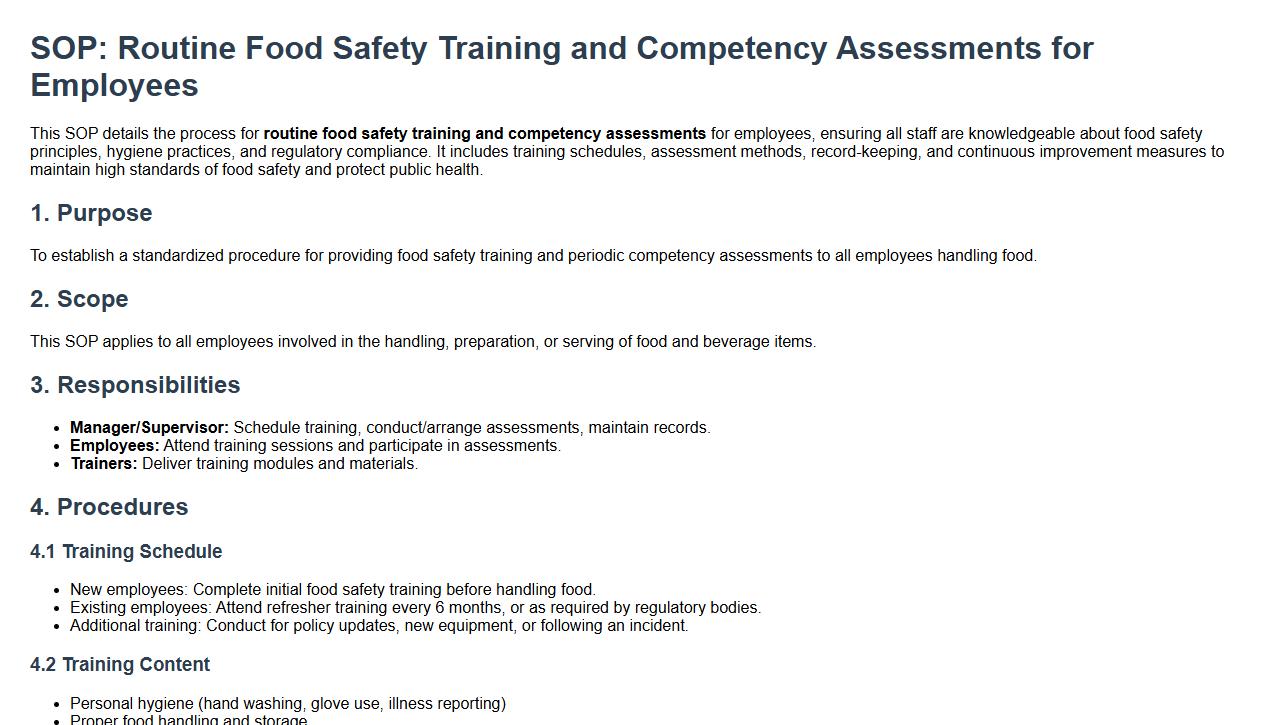
This SOP details the process for routine food safety training and competency assessments for employees, ensuring all staff are knowledgeable about food safety principles, hygiene practices, and regulatory compliance. It includes training schedules, assessment methods, record-keeping, and continuous improvement measures to maintain high standards of food safety and protect public health.
Key Steps Required in the SOP for Proper Food Handling and Storage
The SOP emphasizes proper food handling by mandating the separation of raw and cooked foods to prevent cross-contamination. It outlines temperature control guidelines, including keeping cold foods below 5degC and hot foods above 60degC. Additionally, it requires the use of appropriate storage containers and timely rotation based on the "First In, First Out" (FIFO) principle.
Definition and Monitoring of Critical Control Points for Food Safety in the SOP
The SOP identifies critical control points (CCPs) such as cooking, cooling, and storage temperatures where food safety risks are highest. It defines precise limits and corrective actions for each CCP to prevent hazards like bacterial growth and contamination. Continuous monitoring procedures, including regular checks and documentation, ensure CCPs remain within safe parameters.
Personal Hygiene Practices Mandated in the SOP for All Food Handlers
The SOP requires food handlers to maintain strict personal hygiene by regularly washing hands with soap and water, especially before food preparation. It mandates the use of clean uniforms, hair restraints, and minimal jewelry to reduce contamination risks. Additionally, handlers must report illnesses and avoid working when symptomatic to protect food safety.
Cleaning and Sanitizing Procedures for Equipment and Surfaces Specified in the SOP
The SOP outlines detailed cleaning and sanitizing protocols involving pre-cleaning, washing with detergent, rinsing, and applying approved sanitizers. It specifies frequencies for cleaning food contact surfaces and equipment based on their use and contamination risk. Moreover, sanitizing agents and methods must comply with safety regulations to ensure effective microbial control.
Documentation and Record-Keeping Requirements Outlined in the Food Safety and Sanitation SOP
The SOP enforces rigorous documentation and record-keeping to track all food safety activities, including CCP monitoring, cleaning schedules, and staff training. Records must be accurate, legible, and stored securely for easy retrieval during audits or inspections. This documentation supports accountability and continuous improvement in food safety management.