
A SOP Template for Food Preparation and Storage ensures consistent procedures for handling ingredients, cooking, and storing food safely to prevent contamination and spoilage. It provides clear guidelines for temperature controls, hygiene practices, and proper labeling to maintain food quality. This template helps businesses comply with health regulations and improve operational efficiency in the kitchen.
Food sourcing and receiving procedures.
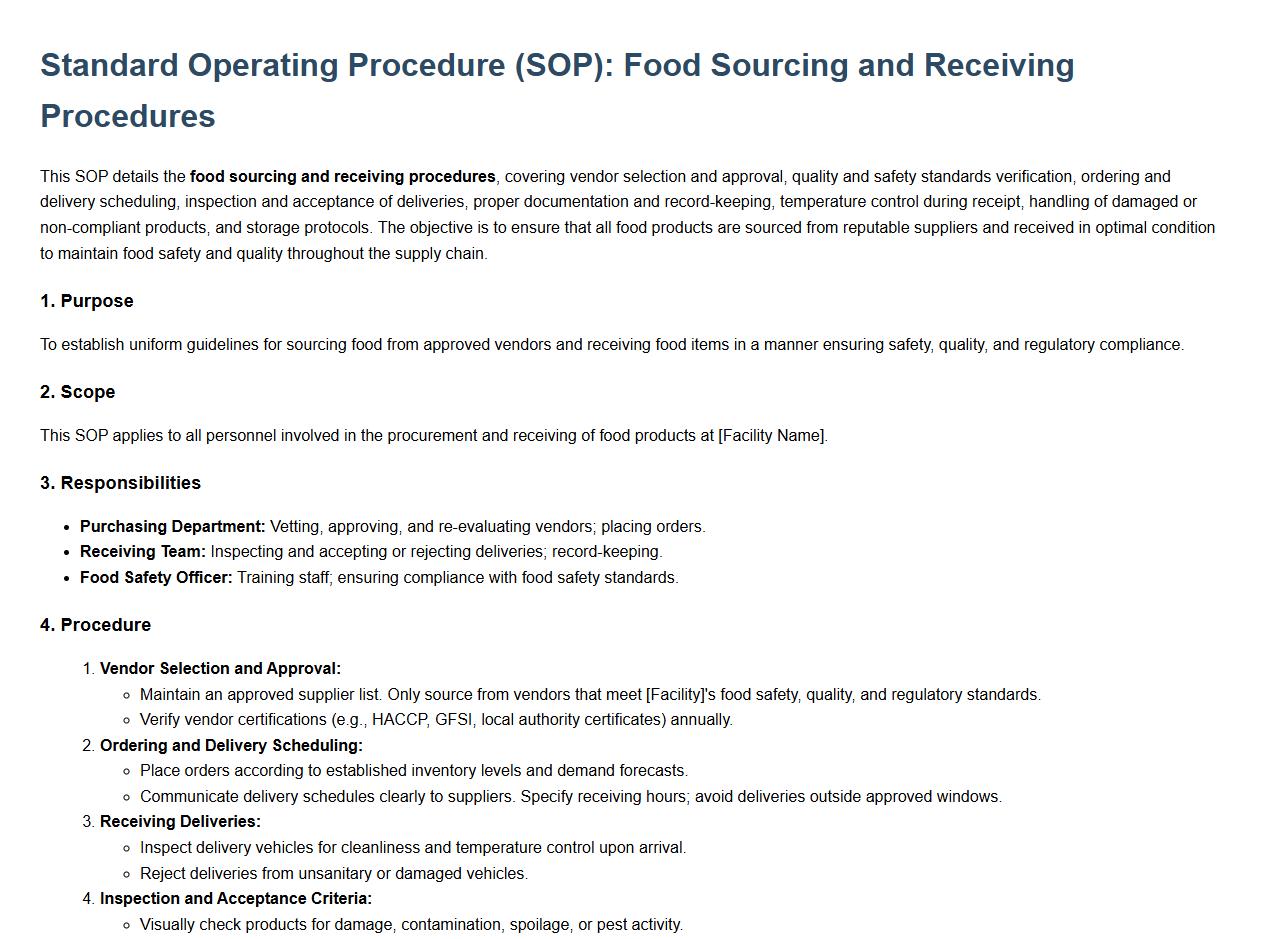
This SOP details the food sourcing and receiving procedures, covering vendor selection and approval, quality and safety standards verification, ordering and delivery scheduling, inspection and acceptance of deliveries, proper documentation and record-keeping, temperature control during receipt, handling of damaged or non-compliant products, and storage protocols. The objective is to ensure that all food products are sourced from reputable suppliers and received in optimal condition to maintain food safety and quality throughout the supply chain.
Ingredient inspection and quality control.
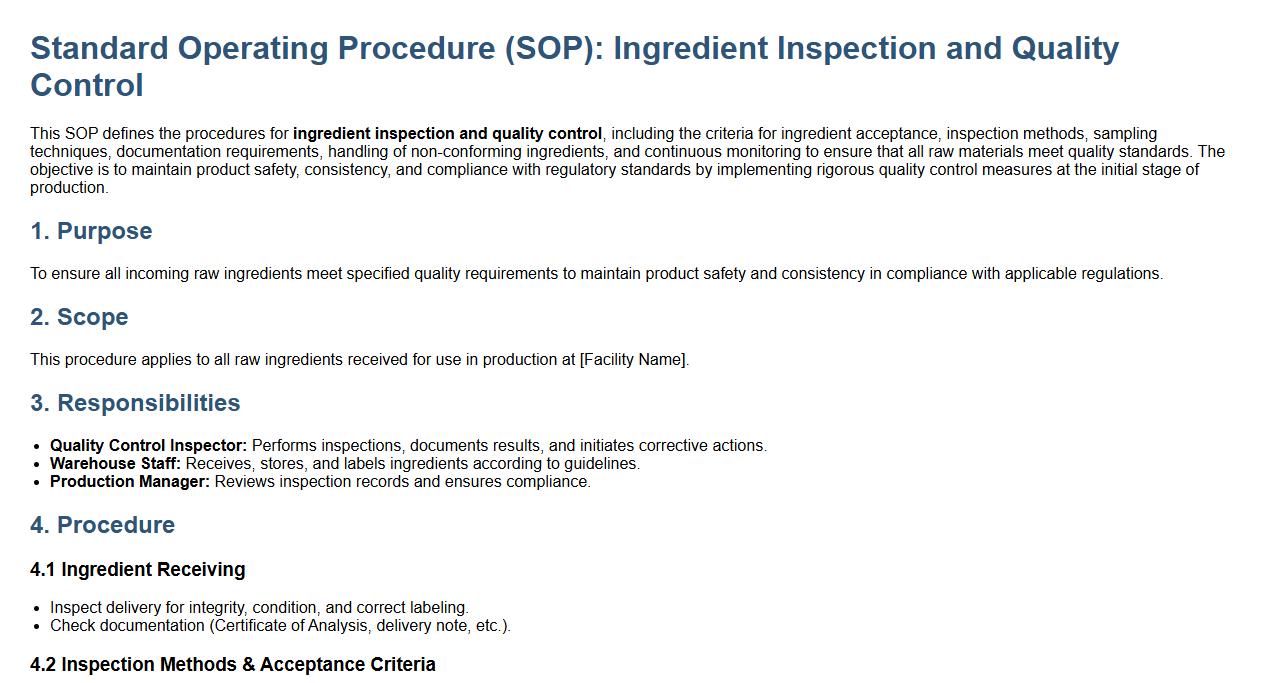
This SOP defines the procedures for ingredient inspection and quality control, including the criteria for ingredient acceptance, inspection methods, sampling techniques, documentation requirements, handling of non-conforming ingredients, and continuous monitoring to ensure that all raw materials meet quality standards. The objective is to maintain product safety, consistency, and compliance with regulatory standards by implementing rigorous quality control measures at the initial stage of production.
Personal hygiene and handwashing protocols.
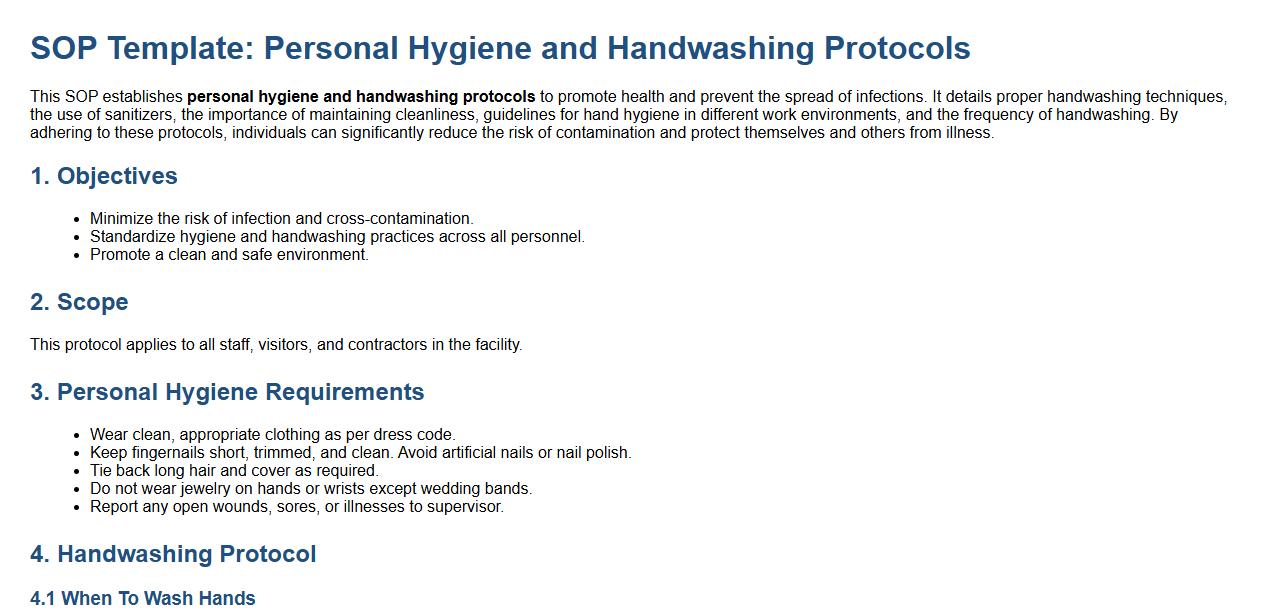
This SOP establishes personal hygiene and handwashing protocols to promote health and prevent the spread of infections. It details proper handwashing techniques, the use of sanitizers, the importance of maintaining cleanliness, guidelines for hand hygiene in different work environments, and the frequency of handwashing. By adhering to these protocols, individuals can significantly reduce the risk of contamination and protect themselves and others from illness.
Sanitization of equipment and work surfaces.
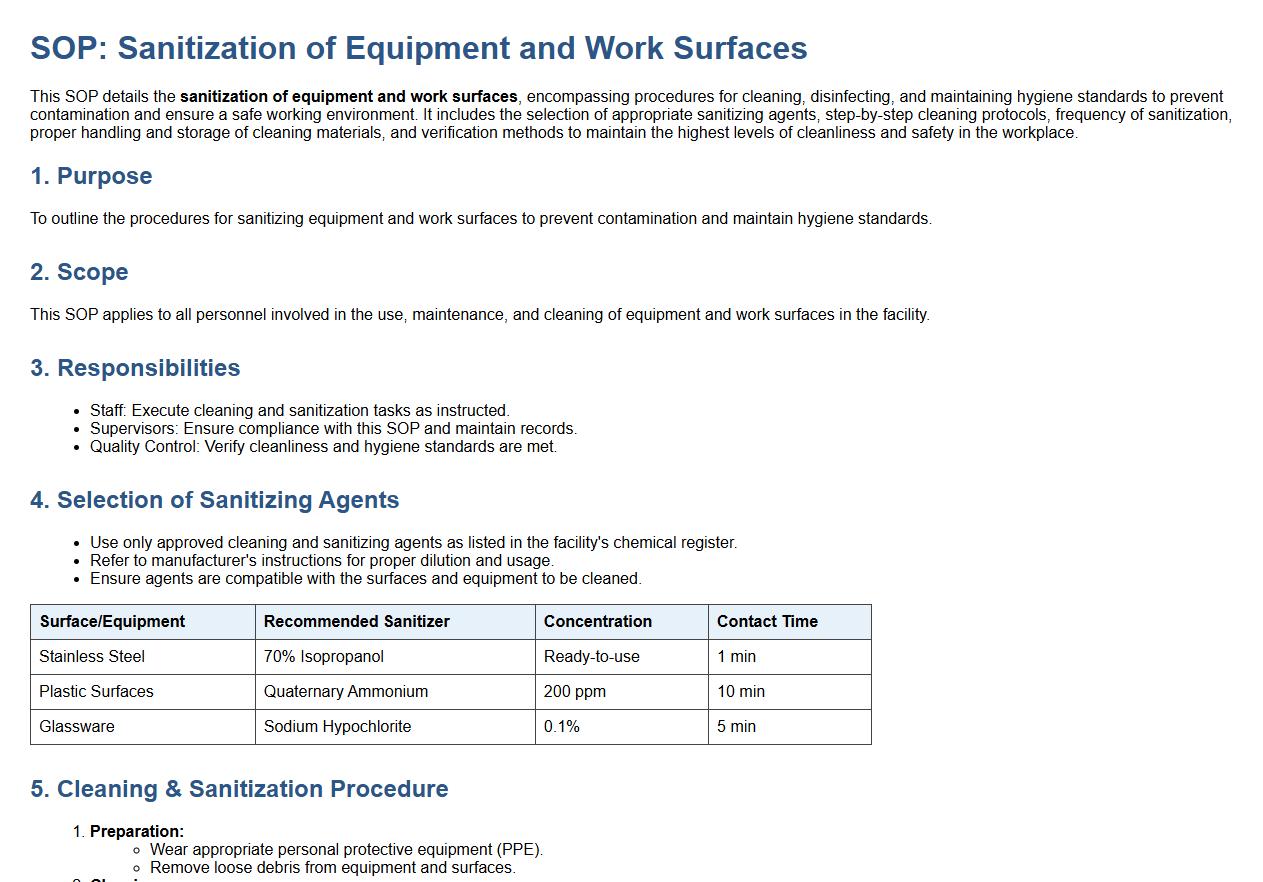
This SOP details the sanitization of equipment and work surfaces, encompassing procedures for cleaning, disinfecting, and maintaining hygiene standards to prevent contamination and ensure a safe working environment. It includes the selection of appropriate sanitizing agents, step-by-step cleaning protocols, frequency of sanitization, proper handling and storage of cleaning materials, and verification methods to maintain the highest levels of cleanliness and safety in the workplace.
Cross-contamination prevention guidelines.
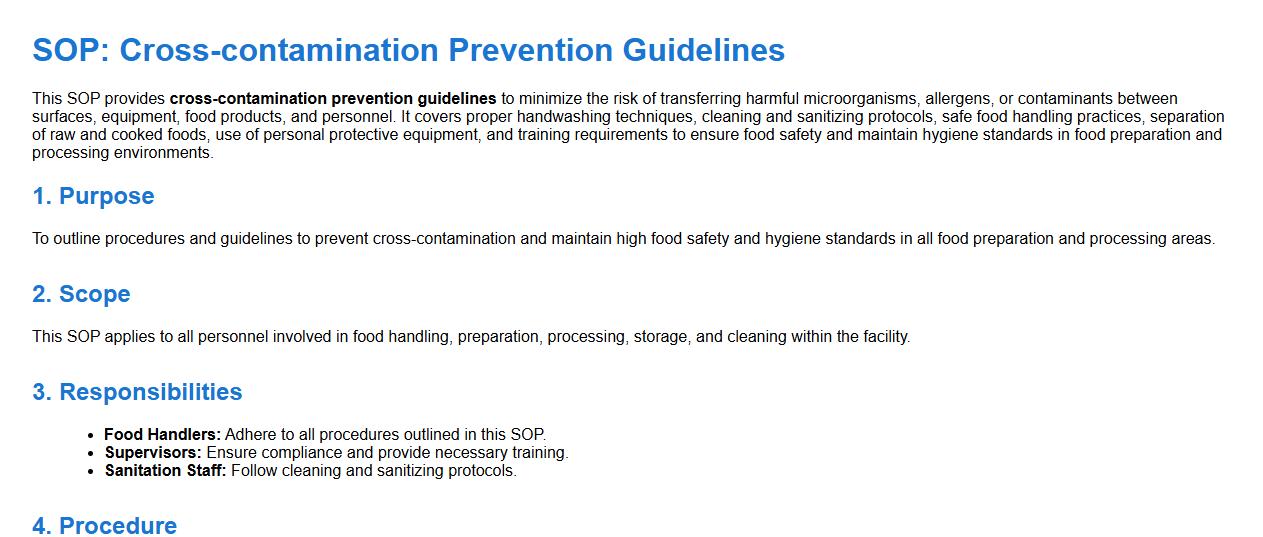
This SOP provides cross-contamination prevention guidelines to minimize the risk of transferring harmful microorganisms, allergens, or contaminants between surfaces, equipment, food products, and personnel. It covers proper handwashing techniques, cleaning and sanitizing protocols, safe food handling practices, separation of raw and cooked foods, use of personal protective equipment, and training requirements to ensure food safety and maintain hygiene standards in food preparation and processing environments.
Temperature control and monitoring during preparation.
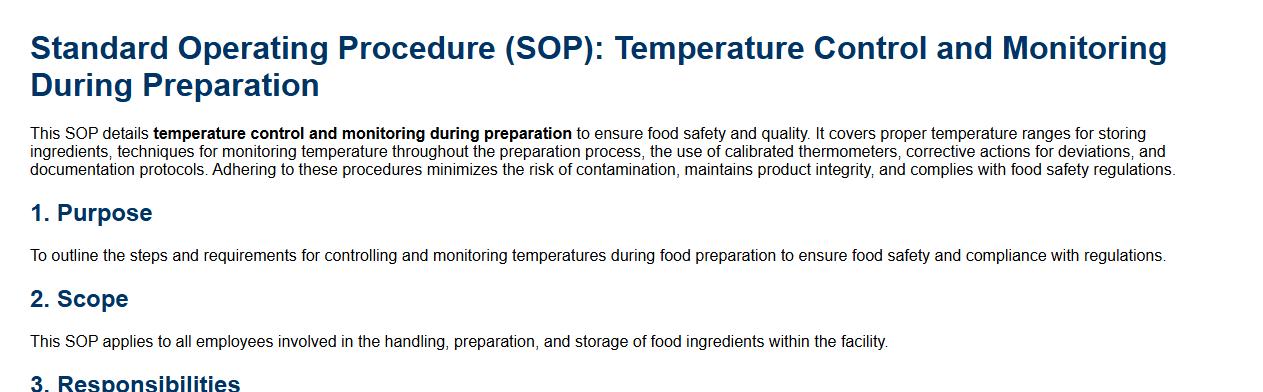
This SOP details temperature control and monitoring during preparation to ensure food safety and quality. It covers proper temperature ranges for storing ingredients, techniques for monitoring temperature throughout the preparation process, the use of calibrated thermometers, corrective actions for deviations, and documentation protocols. Adhering to these procedures minimizes the risk of contamination, maintains product integrity, and complies with food safety regulations.
Proper cooking and cooling methods.
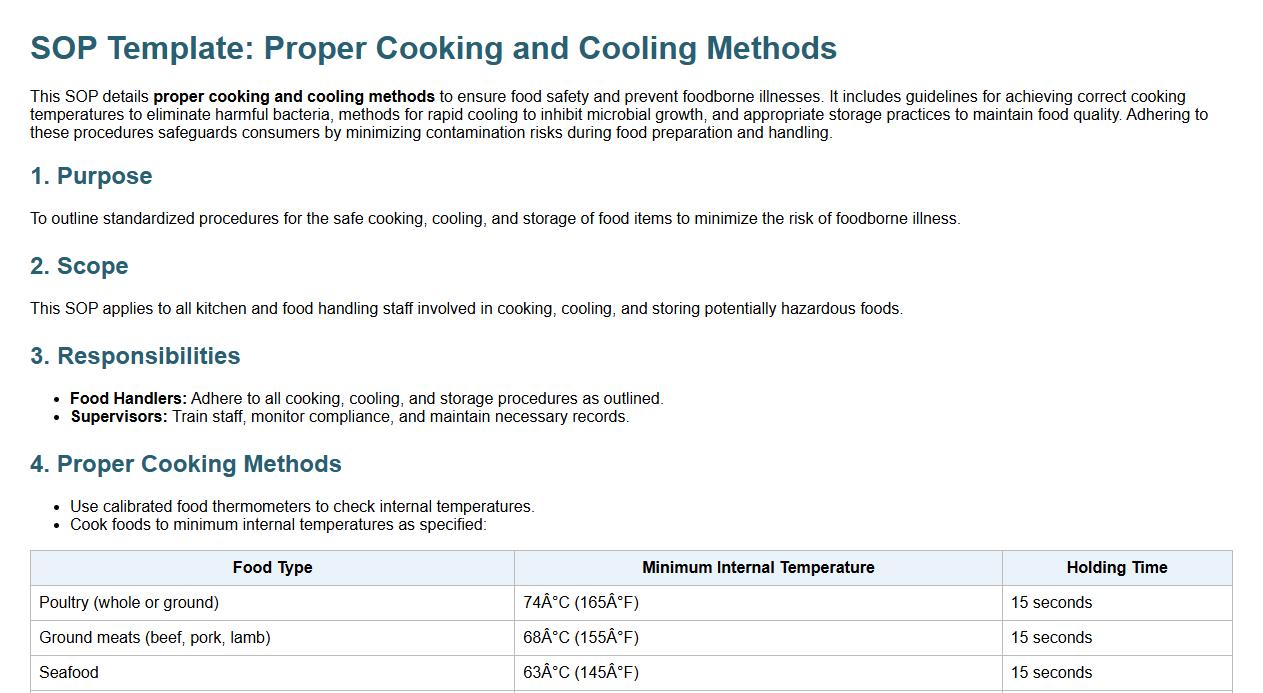
This SOP details proper cooking and cooling methods to ensure food safety and prevent foodborne illnesses. It includes guidelines for achieving correct cooking temperatures to eliminate harmful bacteria, methods for rapid cooling to inhibit microbial growth, and appropriate storage practices to maintain food quality. Adhering to these procedures safeguards consumers by minimizing contamination risks during food preparation and handling.
Safe food storage practices and labeling.
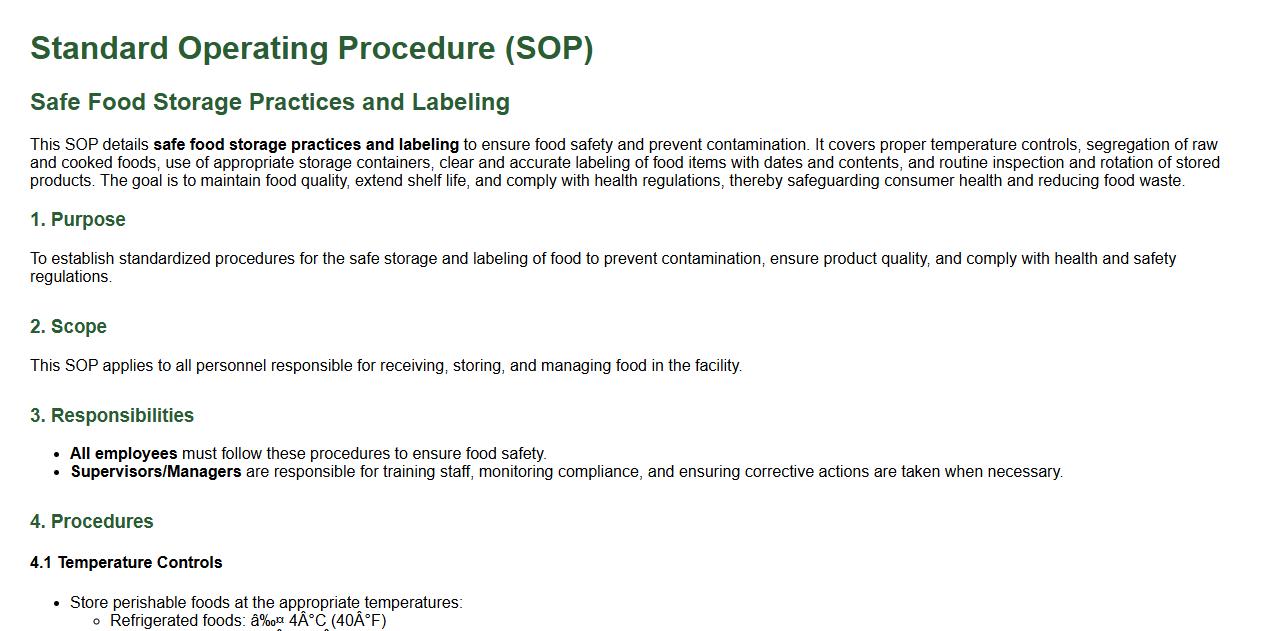
This SOP details safe food storage practices and labeling to ensure food safety and prevent contamination. It covers proper temperature controls, segregation of raw and cooked foods, use of appropriate storage containers, clear and accurate labeling of food items with dates and contents, and routine inspection and rotation of stored products. The goal is to maintain food quality, extend shelf life, and comply with health regulations, thereby safeguarding consumer health and reducing food waste.
Waste disposal and management.
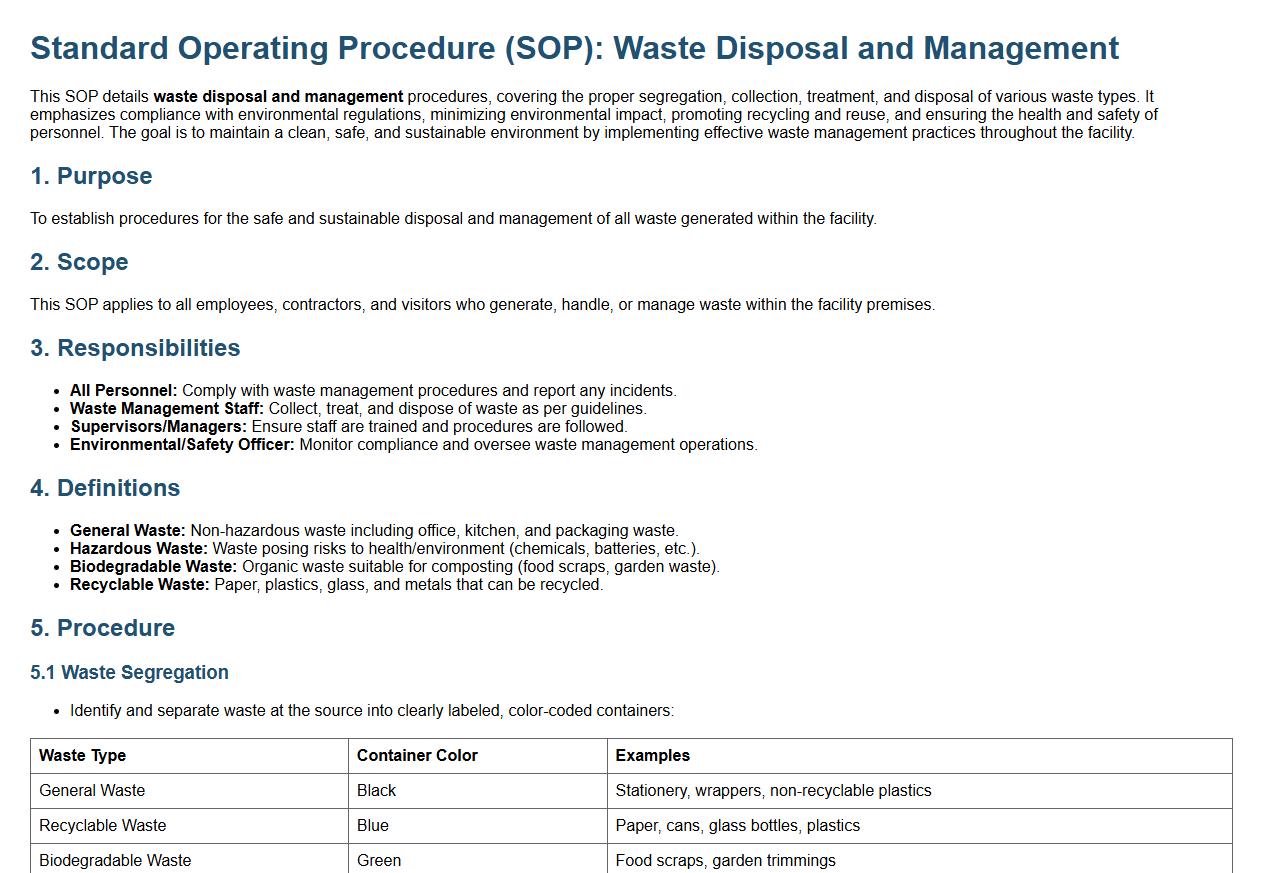
This SOP details waste disposal and management procedures, covering the proper segregation, collection, treatment, and disposal of various waste types. It emphasizes compliance with environmental regulations, minimizing environmental impact, promoting recycling and reuse, and ensuring the health and safety of personnel. The goal is to maintain a clean, safe, and sustainable environment by implementing effective waste management practices throughout the facility.
Daily cleaning and closing checklist.
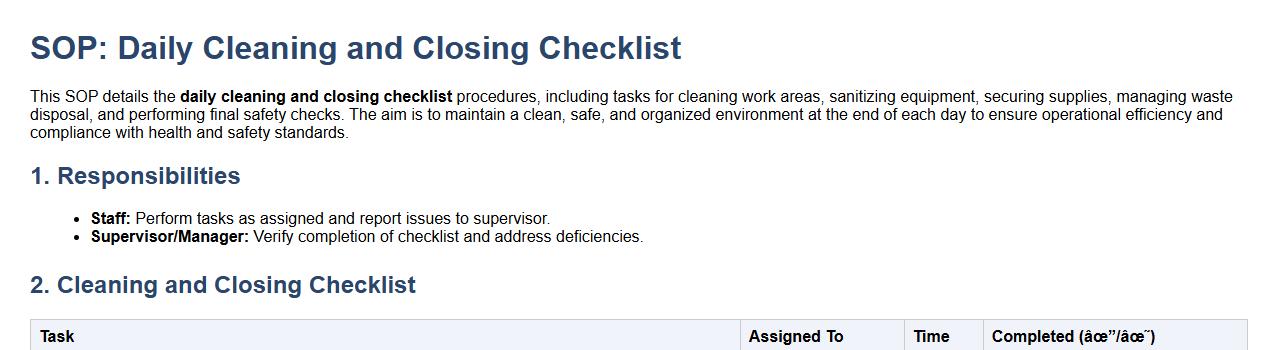
This SOP details the daily cleaning and closing checklist procedures, including tasks for cleaning work areas, sanitizing equipment, securing supplies, managing waste disposal, and performing final safety checks. The aim is to maintain a clean, safe, and organized environment at the end of each day to ensure operational efficiency and compliance with health and safety standards.
Key Steps for Safe Food Preparation to Prevent Cross-Contamination
The SOP highlights the importance of segregating raw and cooked foods to avoid cross-contamination. It requires using separate cutting boards and utensils for different food types. Proper handwashing between handling different foods is emphasized to maintain safety.
Temperature Guidelines for Storing Perishable Food Items
The SOP specifies maintaining perishable foods at or below 4degC (40degF) to prevent bacterial growth. It also advises cooking foods to the recommended internal temperatures before storage. Monitoring and recording storage temperatures regularly is mandatory.
Proper Labeling and Dating Requirements for Stored Food Products
The SOP mandates clear labeling of all stored items with preparation and expiration dates. Food containers must include ingredient details and allergen information where applicable. This ensures timely usage and reduces food waste.
Cleaning and Sanitation Procedures During Food Preparation and Storage
The SOP requires thorough cleaning of all surfaces and equipment with food-safe sanitizers throughout the preparation process. It emphasizes regular sanitation schedules to maintain hygiene in storage areas. Special attention is given to high-touch areas to prevent contamination.
Personal Hygiene Practices for Food Handlers During Preparation
The SOP enforces strict handwashing protocols before and after handling food or touching any non-food surfaces. Food handlers must wear clean uniforms and, when necessary, use hairnets and gloves. Reporting illness and refraining from food handling during sickness is also mandated.