

A SOP Template for Kitchen Safety provides a structured guideline to ensure all kitchen staff follow consistent safety practices, reducing risks of accidents and contamination. It outlines clear procedures for handling equipment, proper sanitation, and emergency protocols. Using this template helps maintain a safe working environment and compliance with health regulations.
Personal hygiene standards and handwashing procedures.
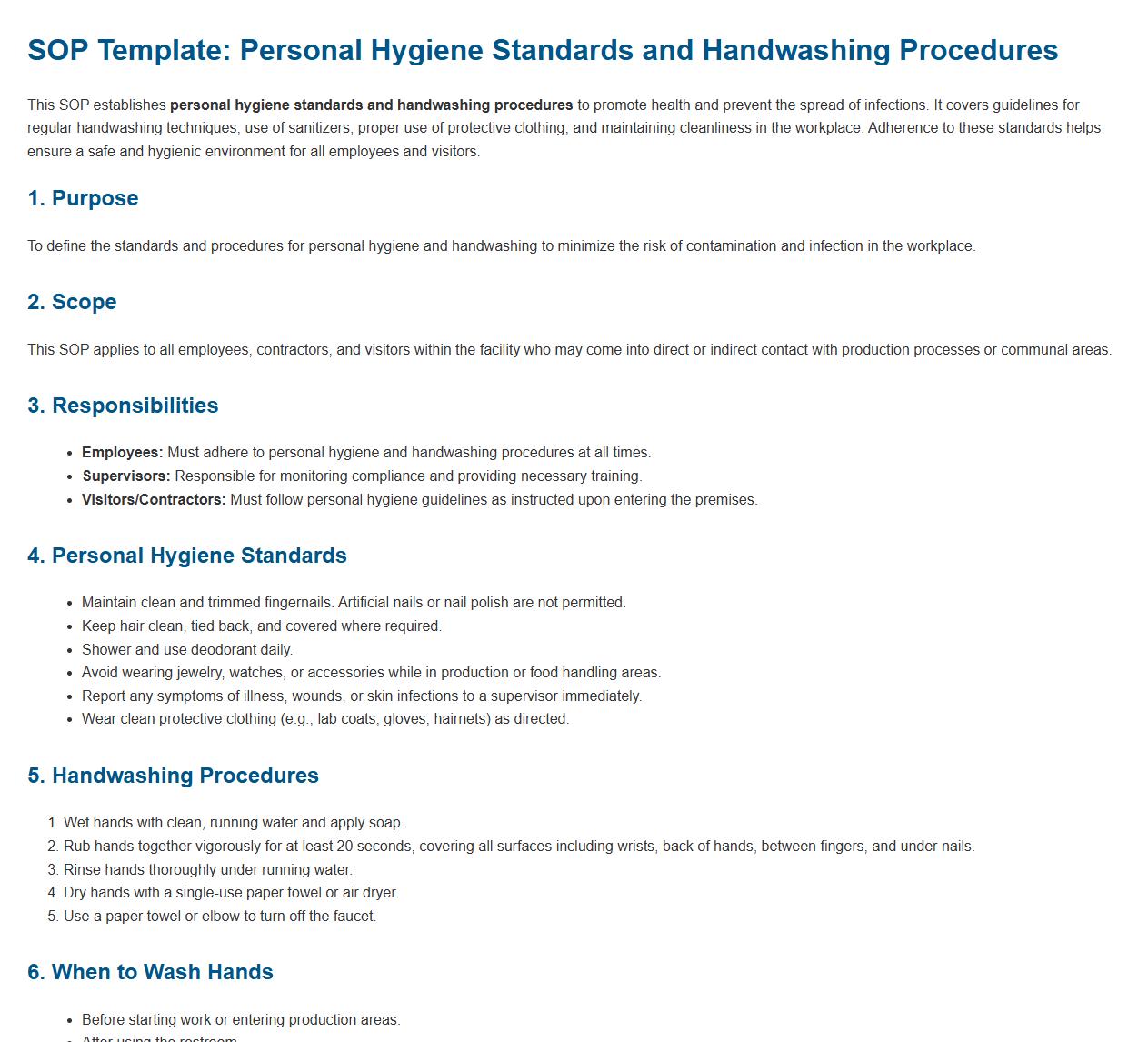
This SOP establishes personal hygiene standards and handwashing procedures to promote health and prevent the spread of infections. It covers guidelines for regular handwashing techniques, use of sanitizers, proper use of protective clothing, and maintaining cleanliness in the workplace. Adherence to these standards helps ensure a safe and hygienic environment for all employees and visitors.
Proper use and maintenance of kitchen equipment.
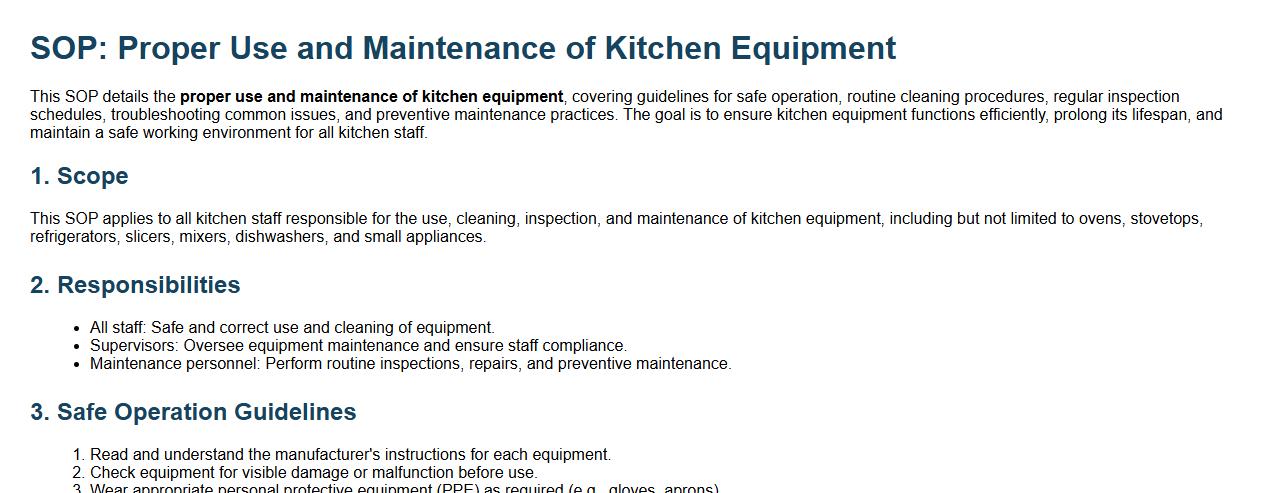
This SOP details the proper use and maintenance of kitchen equipment, covering guidelines for safe operation, routine cleaning procedures, regular inspection schedules, troubleshooting common issues, and preventive maintenance practices. The goal is to ensure kitchen equipment functions efficiently, prolong its lifespan, and maintain a safe working environment for all kitchen staff.
Safe food handling, storage, and labeling protocols.
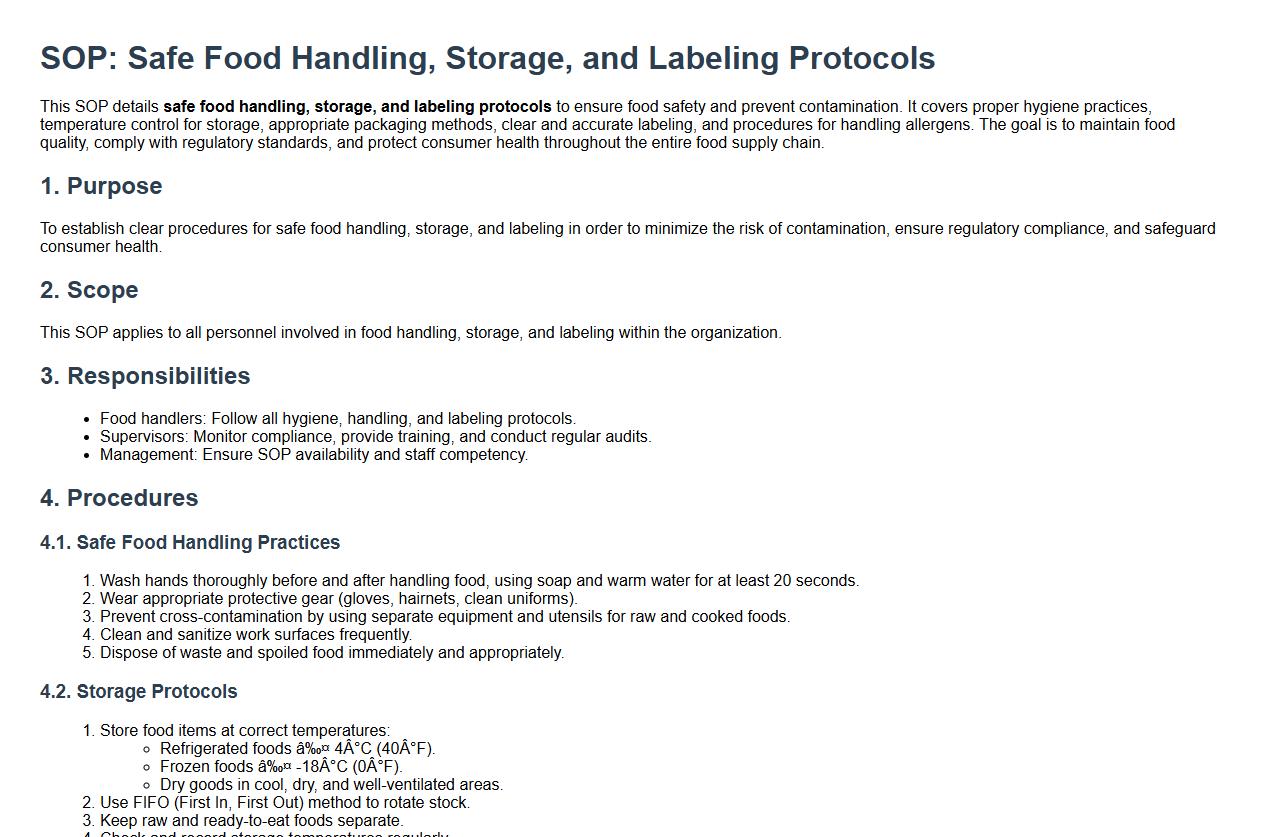
This SOP details safe food handling, storage, and labeling protocols to ensure food safety and prevent contamination. It covers proper hygiene practices, temperature control for storage, appropriate packaging methods, clear and accurate labeling, and procedures for handling allergens. The goal is to maintain food quality, comply with regulatory standards, and protect consumer health throughout the entire food supply chain.
Cleaning and sanitizing kitchen surfaces and utensils.
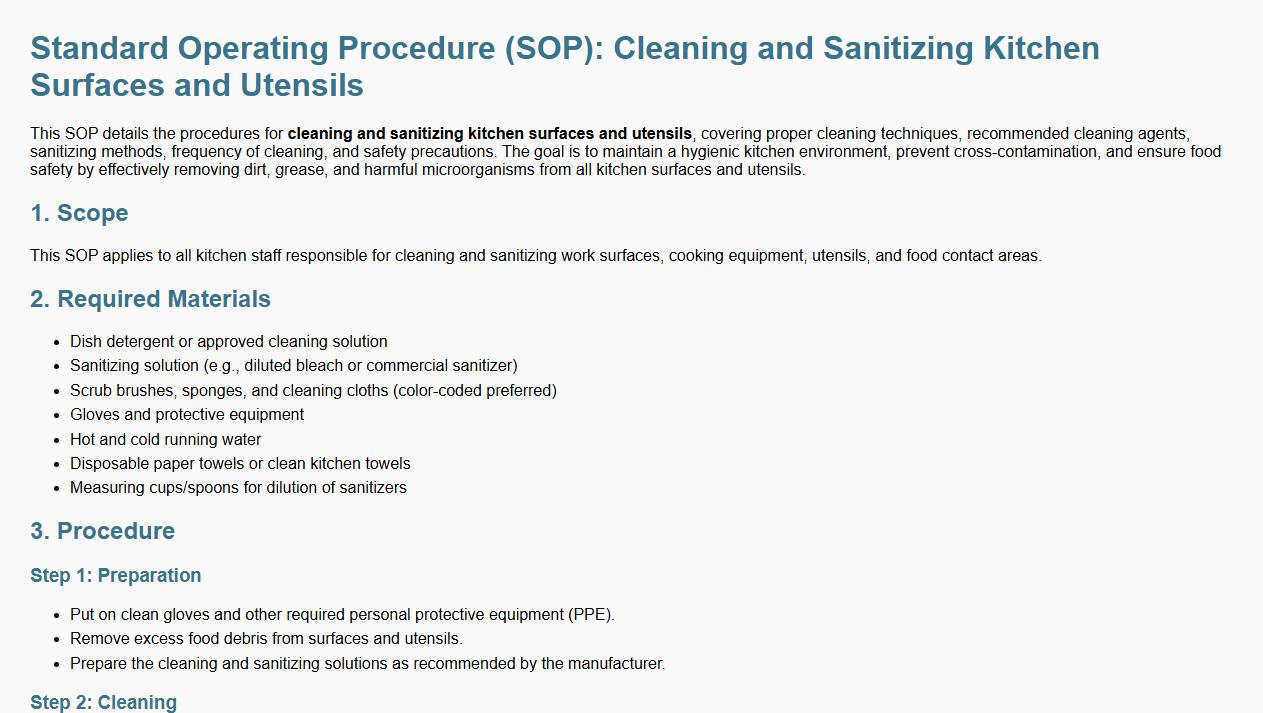
This SOP details the procedures for cleaning and sanitizing kitchen surfaces and utensils, covering proper cleaning techniques, recommended cleaning agents, sanitizing methods, frequency of cleaning, and safety precautions. The goal is to maintain a hygienic kitchen environment, prevent cross-contamination, and ensure food safety by effectively removing dirt, grease, and harmful microorganisms from all kitchen surfaces and utensils.
Knife safety and proper cutting techniques.
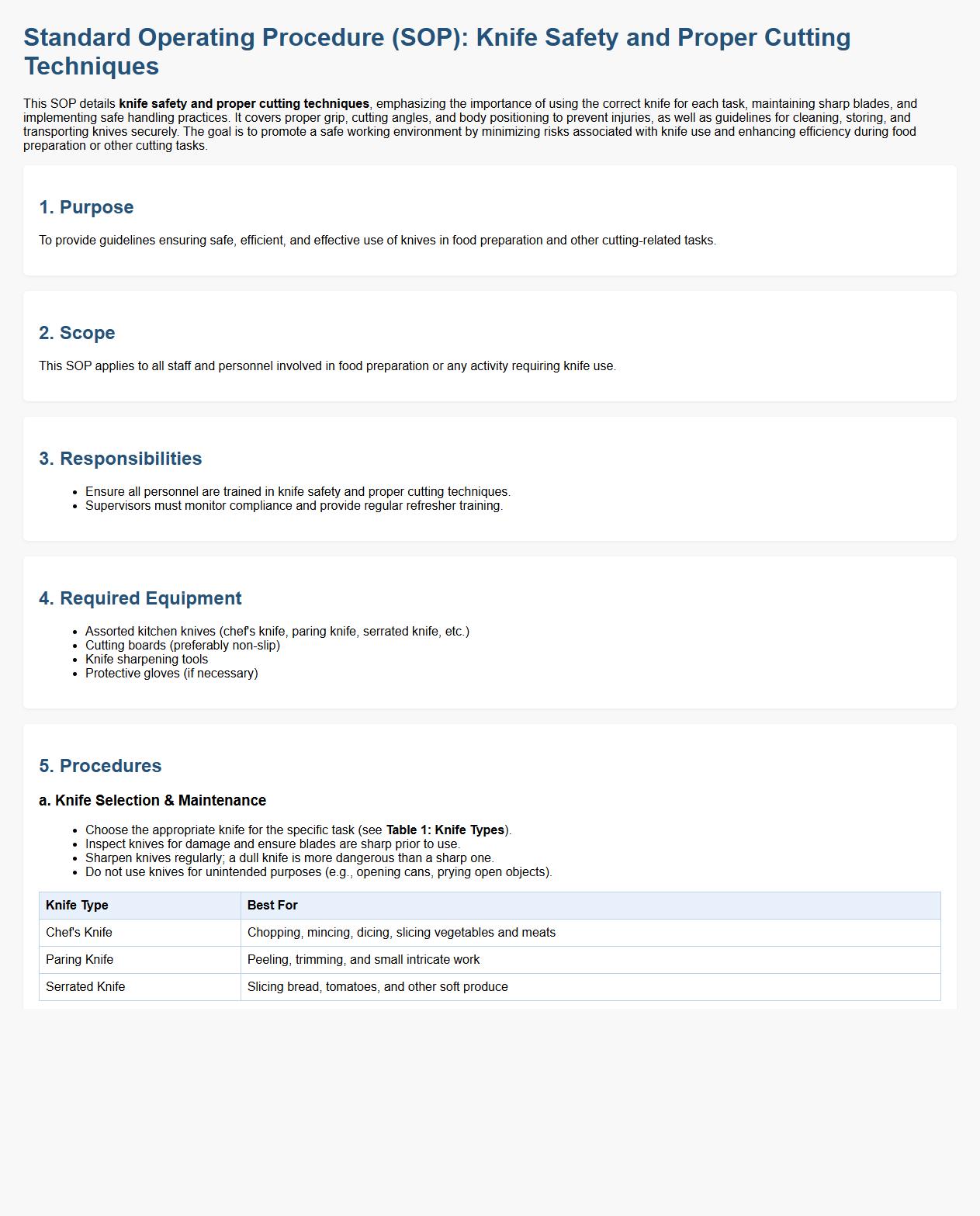
This SOP details knife safety and proper cutting techniques, emphasizing the importance of using the correct knife for each task, maintaining sharp blades, and implementing safe handling practices. It covers proper grip, cutting angles, and body positioning to prevent injuries, as well as guidelines for cleaning, storing, and transporting knives securely. The goal is to promote a safe working environment by minimizing risks associated with knife use and enhancing efficiency during food preparation or other cutting tasks.
Fire safety procedures and emergency response steps.
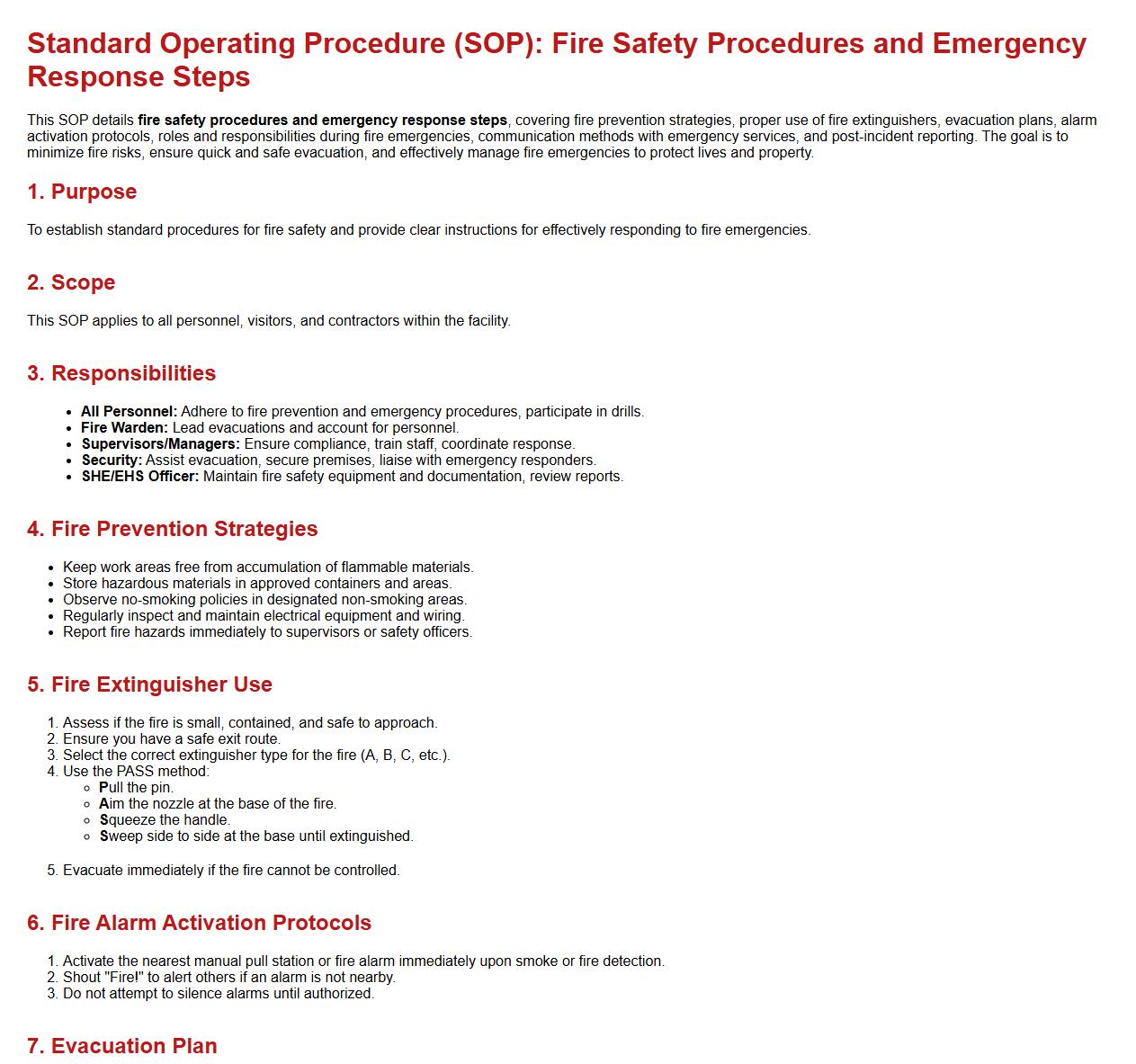
This SOP details fire safety procedures and emergency response steps, covering fire prevention strategies, proper use of fire extinguishers, evacuation plans, alarm activation protocols, roles and responsibilities during fire emergencies, communication methods with emergency services, and post-incident reporting. The goal is to minimize fire risks, ensure quick and safe evacuation, and effectively manage fire emergencies to protect lives and property.
Chemical storage and handling guidelines.
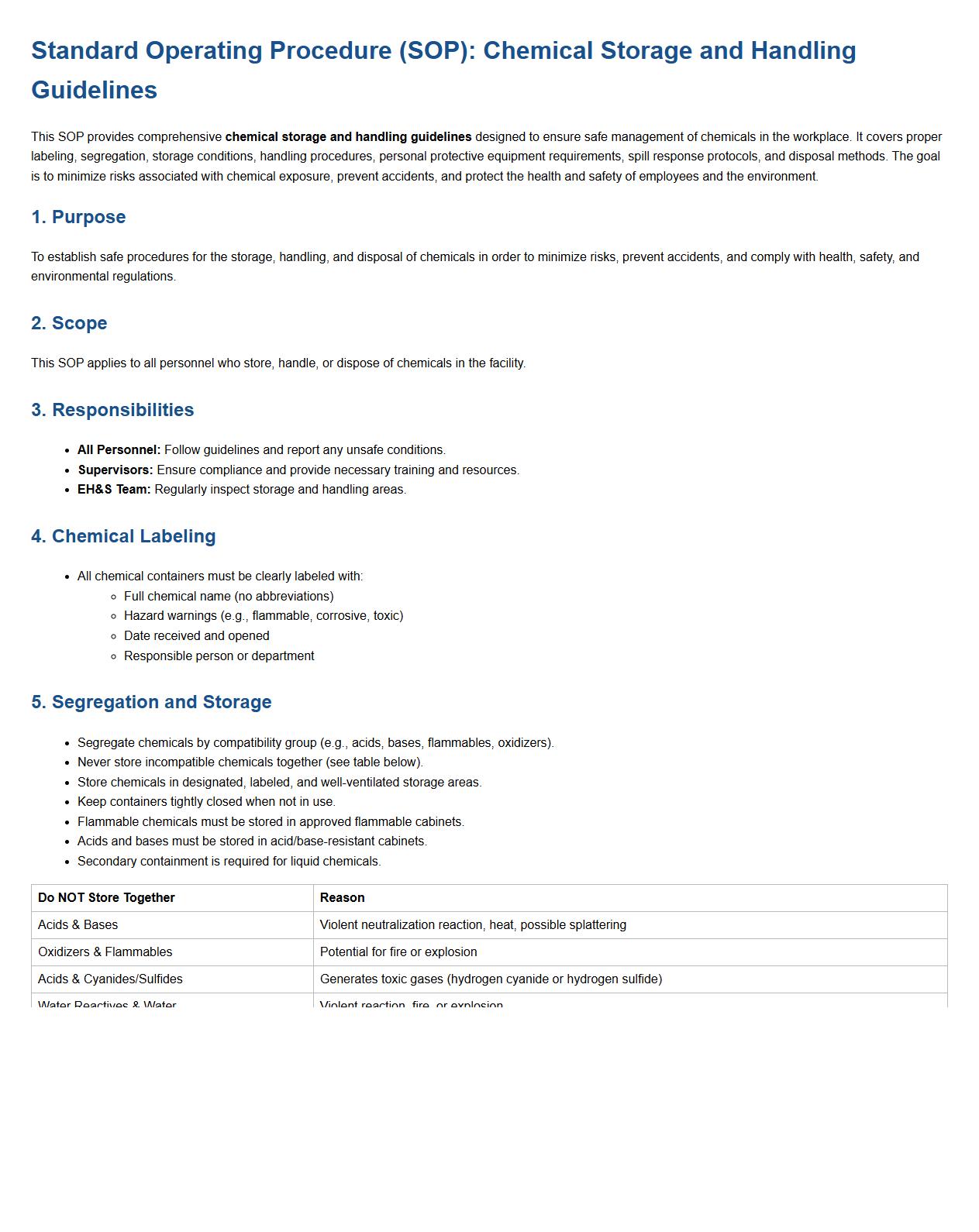
This SOP provides comprehensive chemical storage and handling guidelines designed to ensure safe management of chemicals in the workplace. It covers proper labeling, segregation, storage conditions, handling procedures, personal protective equipment requirements, spill response protocols, and disposal methods. The goal is to minimize risks associated with chemical exposure, prevent accidents, and protect the health and safety of employees and the environment.
Waste disposal and recycling procedures.
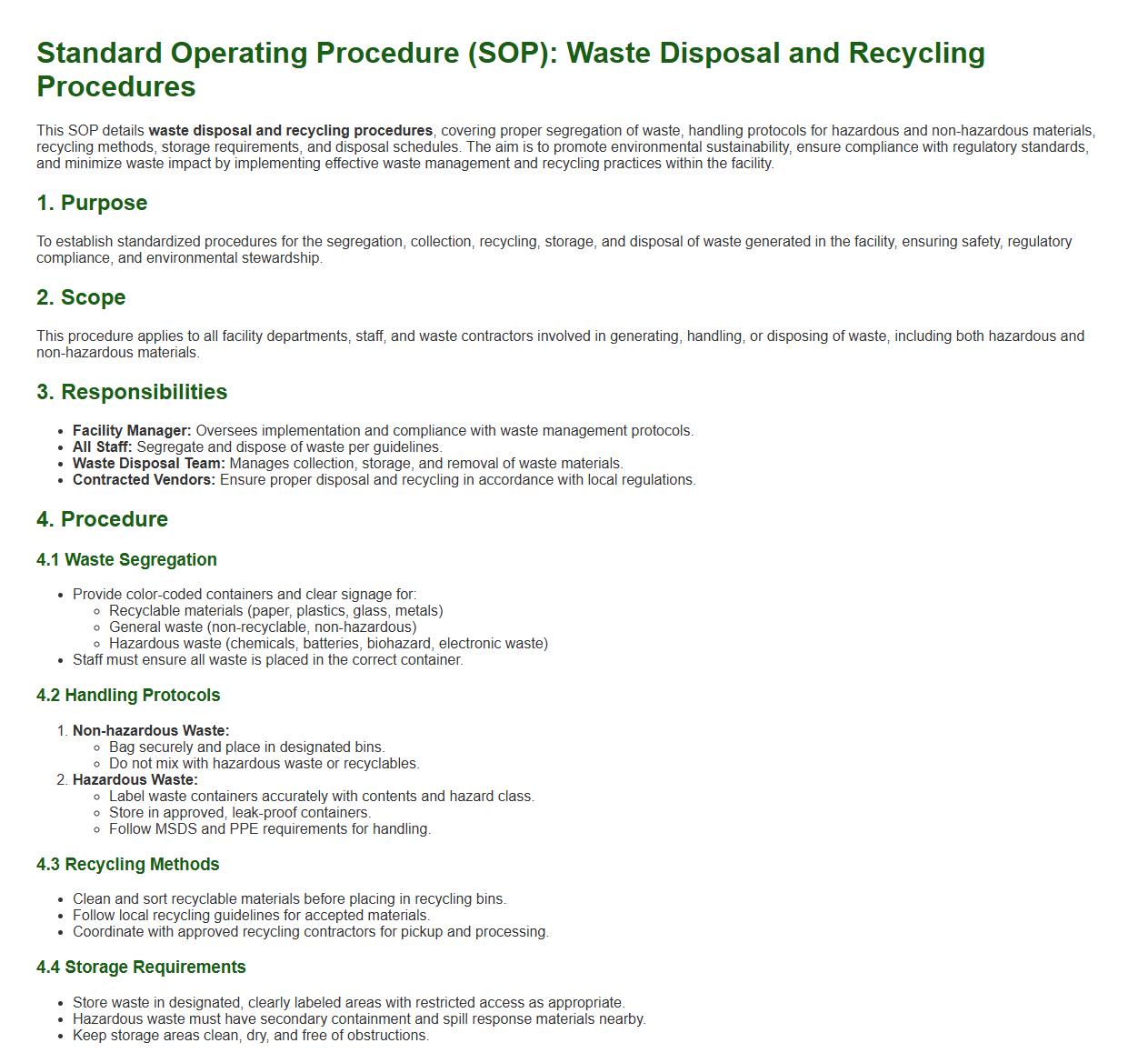
This SOP details waste disposal and recycling procedures, covering proper segregation of waste, handling protocols for hazardous and non-hazardous materials, recycling methods, storage requirements, and disposal schedules. The aim is to promote environmental sustainability, ensure compliance with regulatory standards, and minimize waste impact by implementing effective waste management and recycling practices within the facility.
Temperature control for food safety and storage.
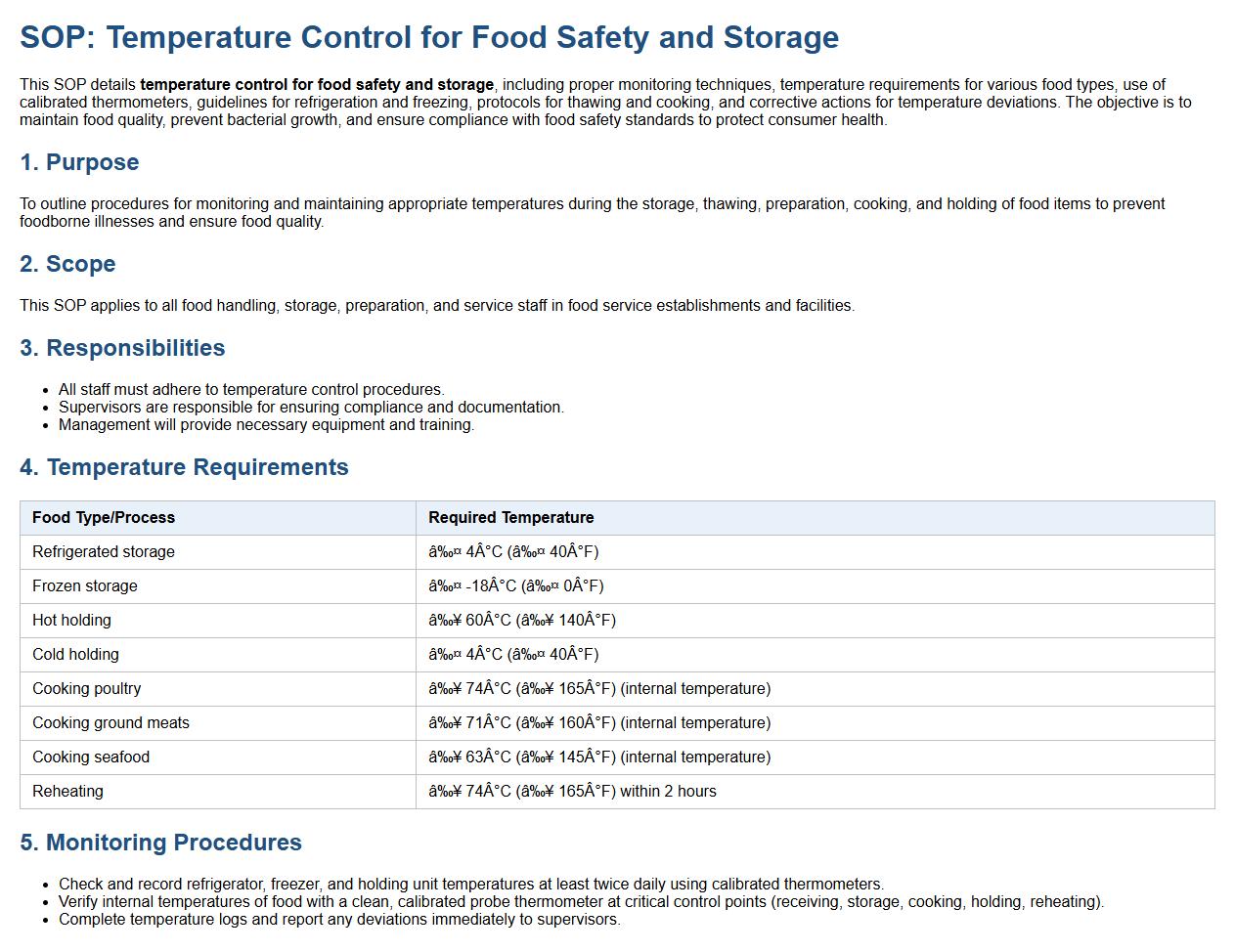
This SOP details temperature control for food safety and storage, including proper monitoring techniques, temperature requirements for various food types, use of calibrated thermometers, guidelines for refrigeration and freezing, protocols for thawing and cooking, and corrective actions for temperature deviations. The objective is to maintain food quality, prevent bacterial growth, and ensure compliance with food safety standards to protect consumer health.
Accident and incident reporting procedures.
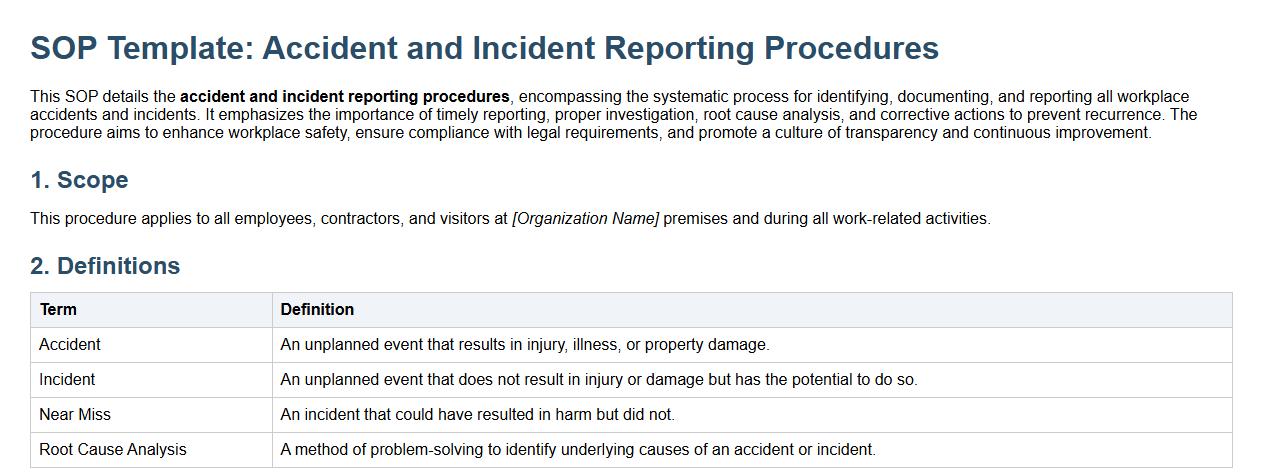
This SOP details the accident and incident reporting procedures, encompassing the systematic process for identifying, documenting, and reporting all workplace accidents and incidents. It emphasizes the importance of timely reporting, proper investigation, root cause analysis, and corrective actions to prevent recurrence. The procedure aims to enhance workplace safety, ensure compliance with legal requirements, and promote a culture of transparency and continuous improvement.
What are the primary hazards addressed in the kitchen safety SOP?
The primary hazards addressed in the kitchen safety SOP include slips, trips, and falls due to wet or greasy floors. It also highlights risks related to burns and cuts from hot surfaces and sharp tools. Additionally, the SOP addresses hazards from electrical equipment and chemical exposure.
Which personal protective equipment is mandatory as per the SOP for kitchen staff?
The SOP mandates the use of personal protective equipment (PPE) such as heat-resistant gloves, non-slip footwear, and aprons. It requires hairnets or caps to maintain hygiene and avoid contamination. Additionally, kitchen staff must wear cut-resistant gloves when handling sharp objects.
What procedures are outlined in the SOP for handling and storing sharp objects?
The SOP specifies that sharp objects must be handled with extreme care, always using designated cut-resistant gloves. Sharp tools should be stored in secure, marked containers or magnetic strips to prevent injuries. Immediate cleaning and safe disposal procedures are mandated for broken or damaged blades.
How does the SOP require staff to respond in case of a kitchen fire or emergency?
In case of a kitchen fire or emergency, the SOP requires staff to immediately activate the fire alarm and alert others. Staff must use appropriate fire extinguishers based on the fire type and follow evacuation routes calmly. Additionally, the SOP emphasizes regular fire drills and training for emergency preparedness.
What sanitation and hygiene protocols are specified in the kitchen safety SOP?
The SOP mandates strict sanitation and hygiene protocols, including frequent hand washing with antibacterial soap. All kitchen surfaces and equipment must be cleaned and sanitized regularly to prevent contamination. Staff are required to wear clean uniforms and avoid working when ill to ensure food safety.