
A SOP Template for Food Catering Services provides a standardized framework to ensure consistency and quality in food preparation, service, and safety. It outlines step-by-step procedures for staff to follow, covering everything from ingredient sourcing to event setup and client communication. This template helps streamline operations and maintain compliance with health regulations.
Client consultation and event requirement gathering.
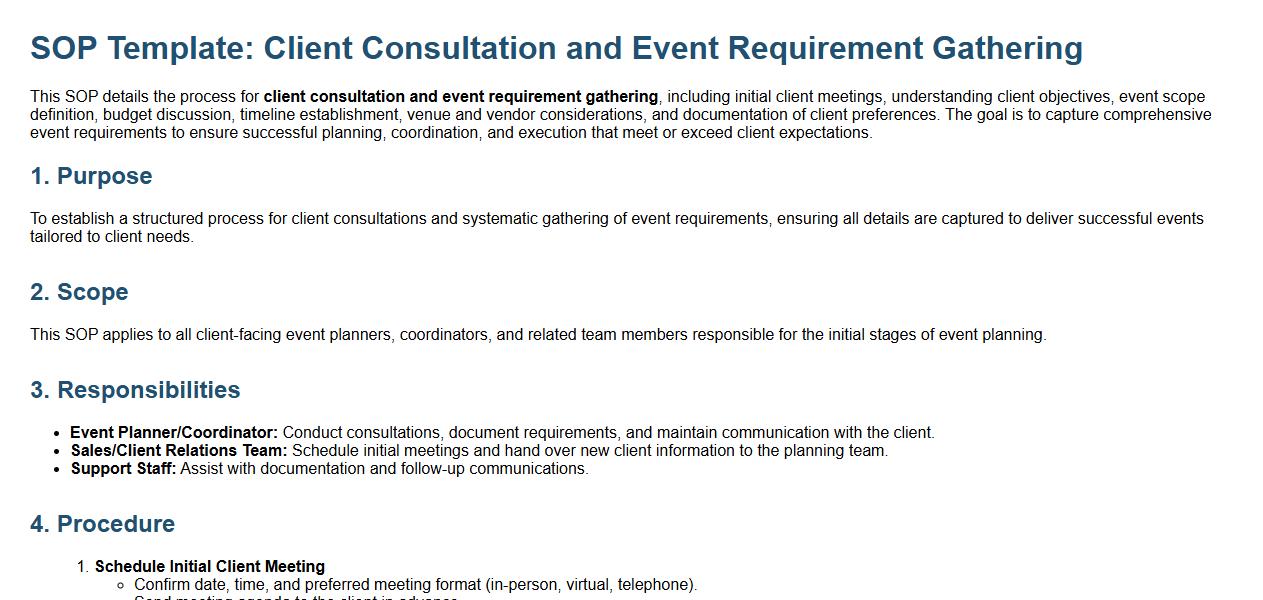
This SOP details the process for client consultation and event requirement gathering, including initial client meetings, understanding client objectives, event scope definition, budget discussion, timeline establishment, venue and vendor considerations, and documentation of client preferences. The goal is to capture comprehensive event requirements to ensure successful planning, coordination, and execution that meet or exceed client expectations.
Menu planning and recipe standardization.
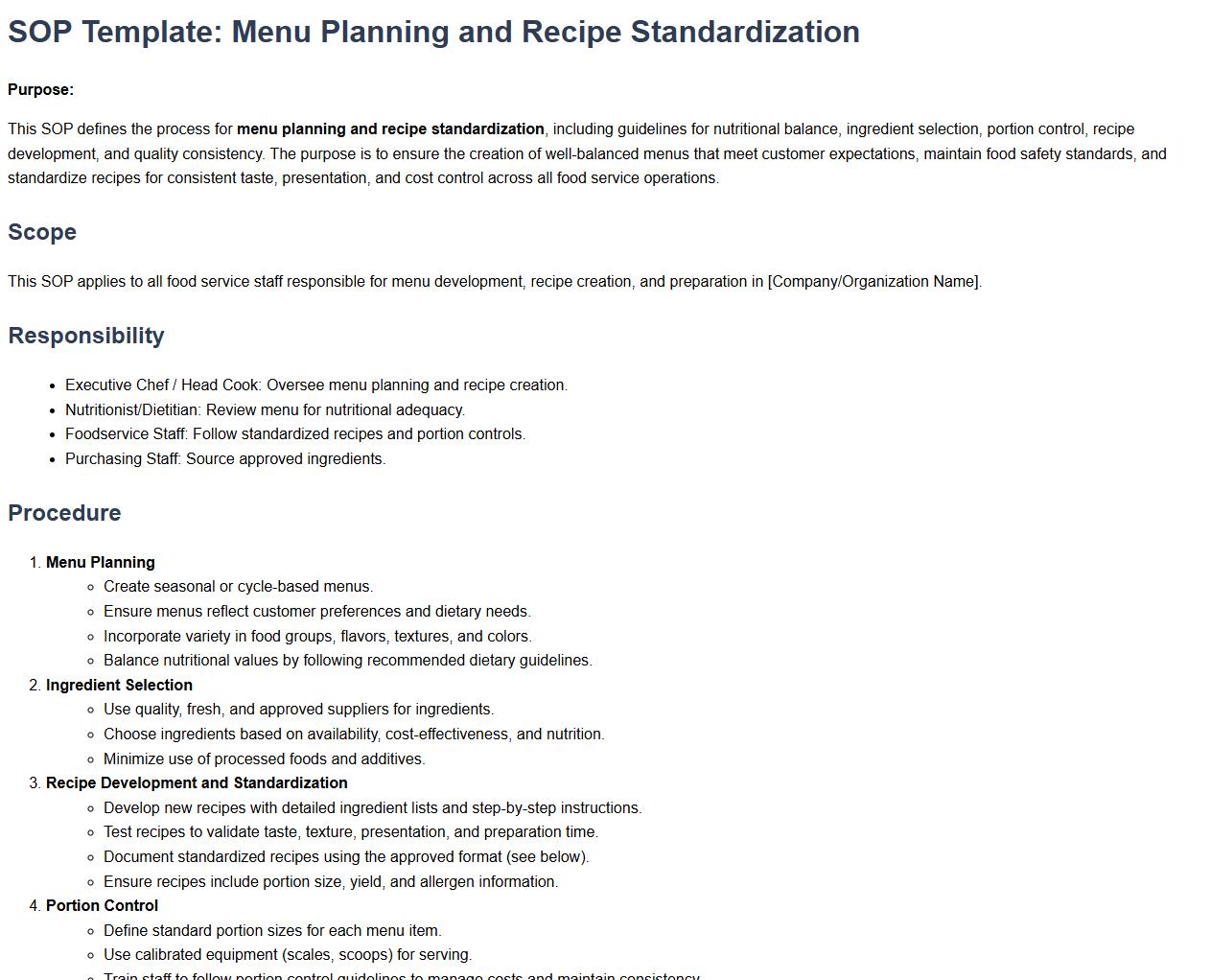
This SOP defines the process for menu planning and recipe standardization, including guidelines for nutritional balance, ingredient selection, portion control, recipe development, and quality consistency. The purpose is to ensure the creation of well-balanced menus that meet customer expectations, maintain food safety standards, and standardize recipes for consistent taste, presentation, and cost control across all food service operations.
Food sourcing and supplier coordination.
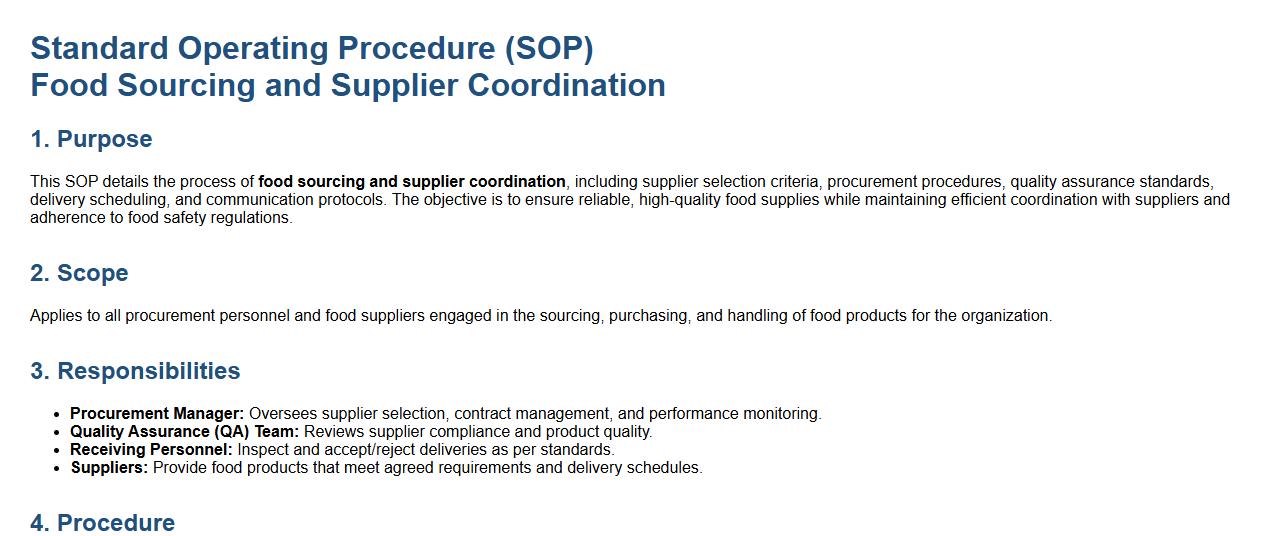
This SOP details the process of food sourcing and supplier coordination, covering supplier selection criteria, procurement procedures, quality assurance standards, delivery scheduling, and communication protocols. The objective is to ensure reliable, high-quality food supplies while maintaining efficient coordination with suppliers and adherence to food safety regulations.
Kitchen hygiene and sanitation protocols.
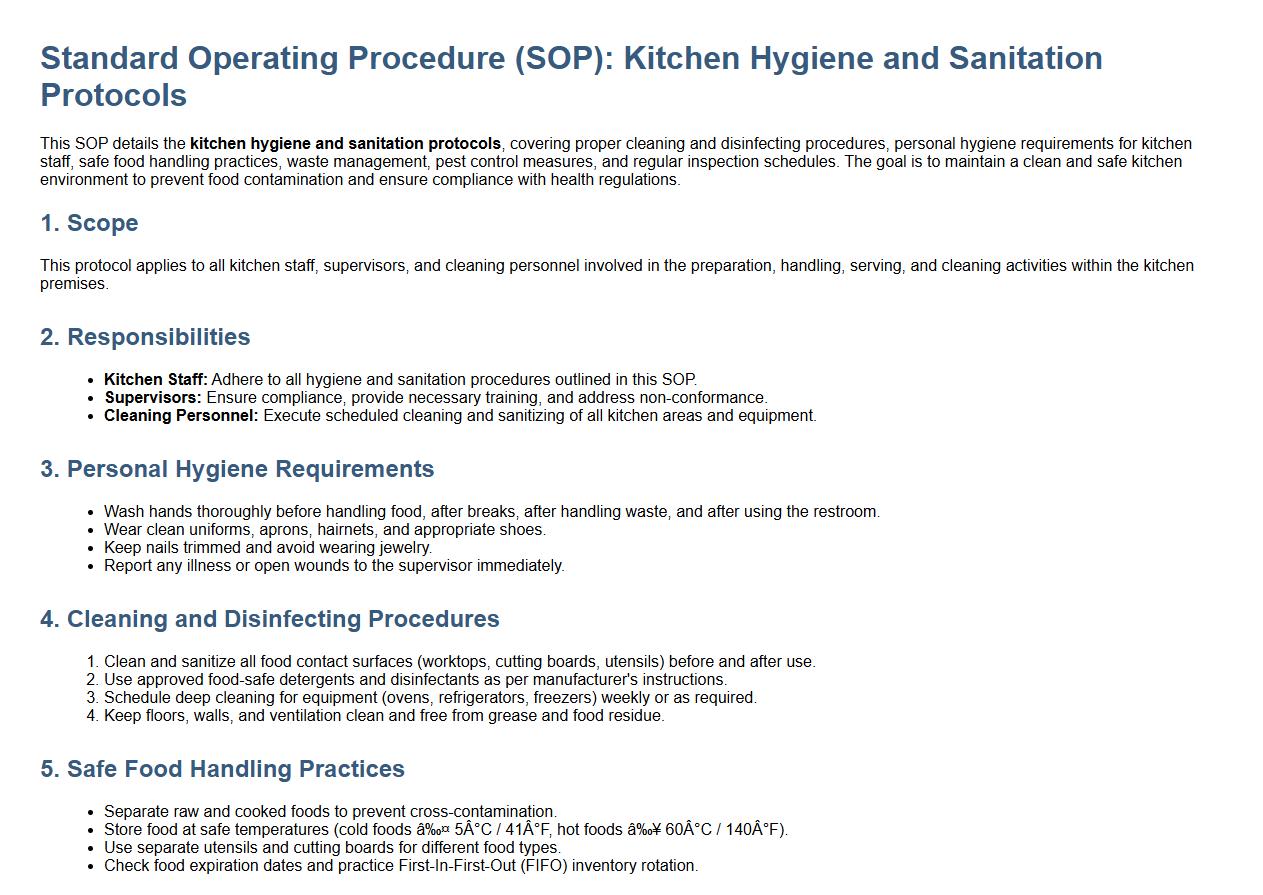
This SOP details the kitchen hygiene and sanitation protocols, covering proper cleaning and disinfecting procedures, personal hygiene requirements for kitchen staff, safe food handling practices, waste management, pest control measures, and regular inspection schedules. The goal is to maintain a clean and safe kitchen environment to prevent food contamination and ensure compliance with health regulations.
Food preparation and cooking procedures.
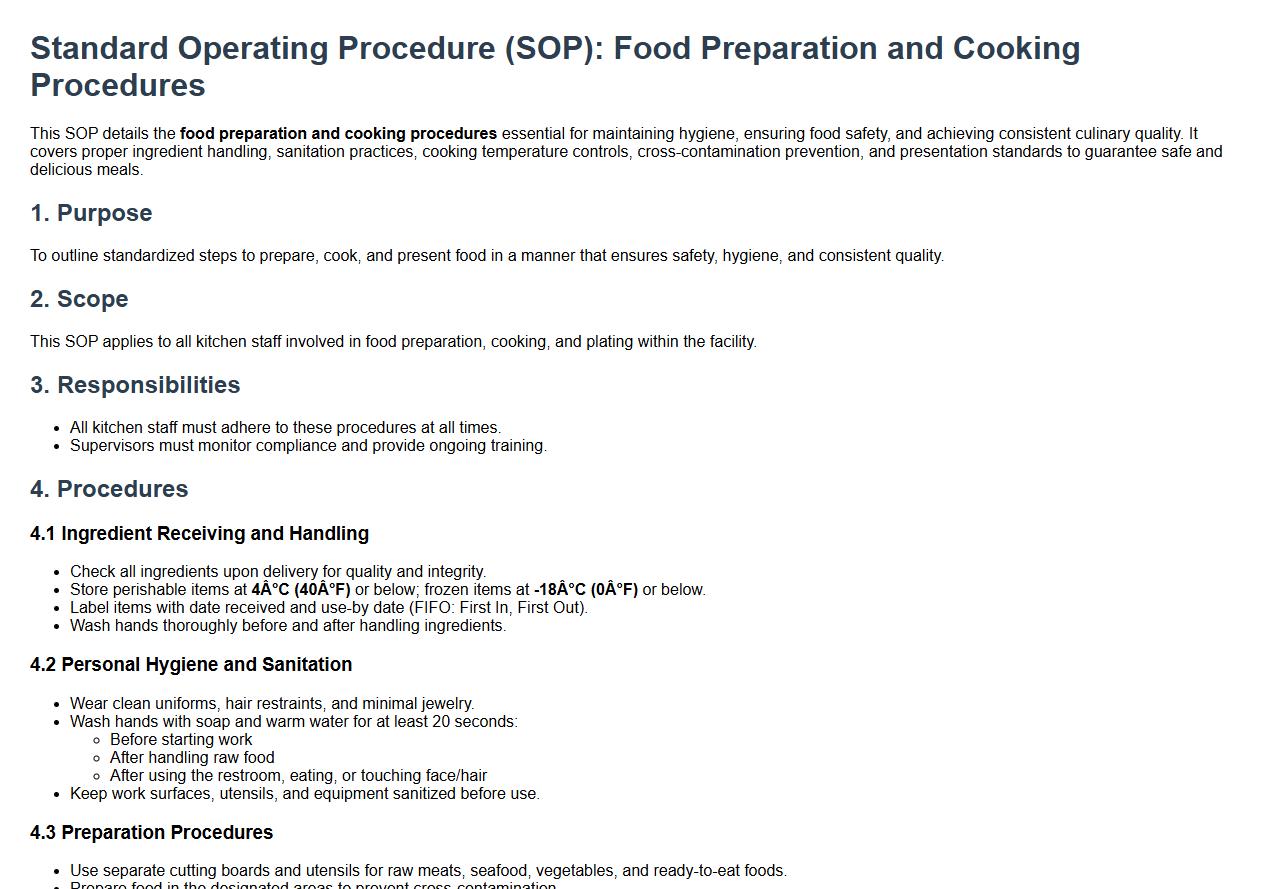
This SOP details the food preparation and cooking procedures essential for maintaining hygiene, ensuring food safety, and achieving consistent culinary quality. It covers proper ingredient handling, sanitation practices, cooking temperature controls, cross-contamination prevention, and presentation standards to guarantee safe and delicious meals.
Quality assurance and taste testing.
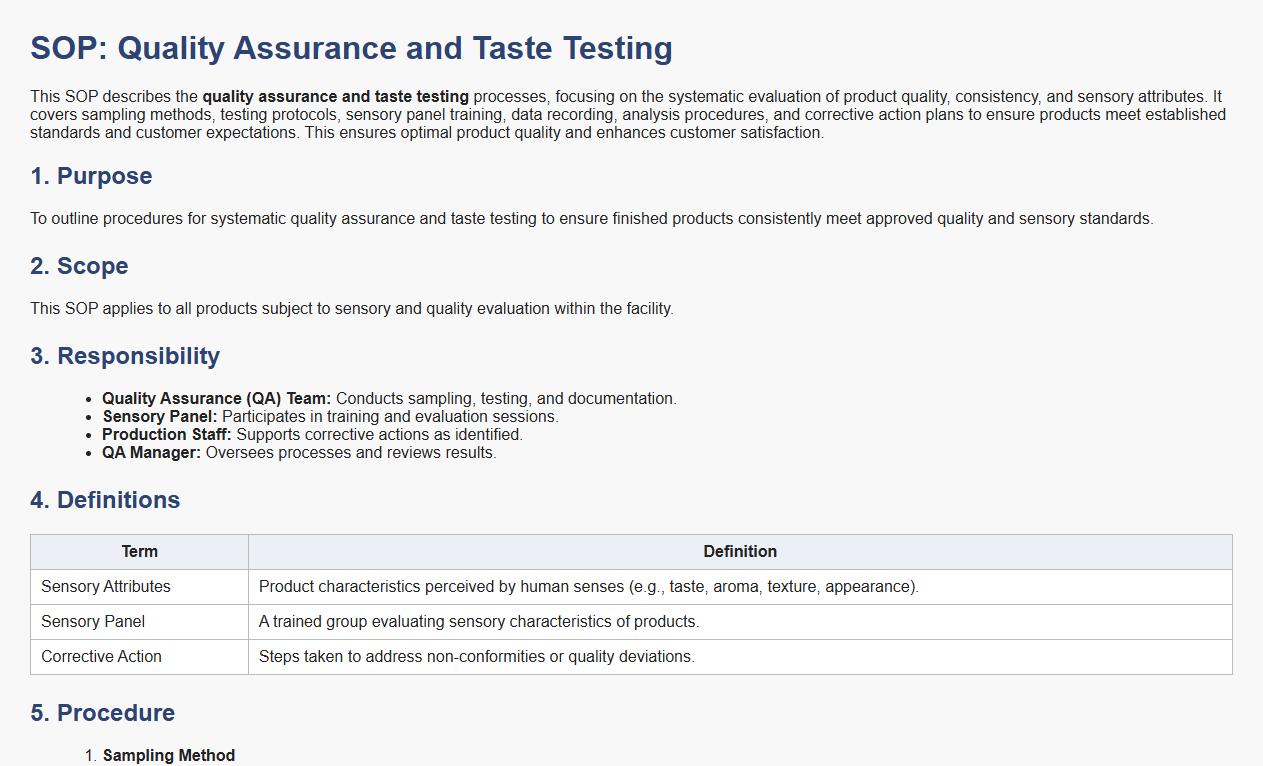
This SOP describes the quality assurance and taste testing processes, focusing on the systematic evaluation of product quality, consistency, and sensory attributes. It covers sampling methods, testing protocols, sensory panel training, data recording, analysis procedures, and corrective action plans to ensure products meet established standards and customer expectations. This ensures optimal product quality and enhances customer satisfaction.
Packaging, plating, and portion control.
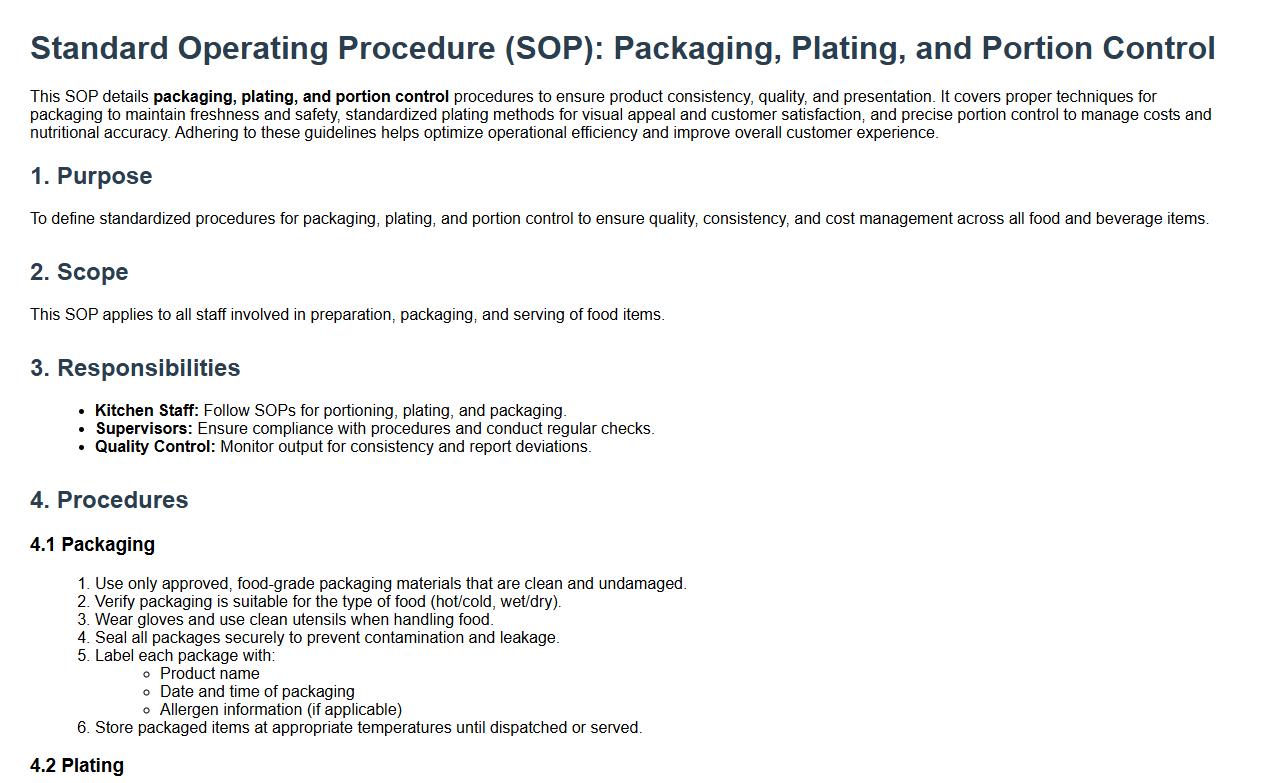
This SOP details packaging, plating, and portion control procedures to ensure product consistency, quality, and presentation. It covers proper techniques for packaging to maintain freshness and safety, standardized plating methods for visual appeal and customer satisfaction, and precise portion control to manage costs and nutritional accuracy. Adhering to these guidelines helps optimize operational efficiency and improve overall customer experience.
Food transportation and delivery logistics.
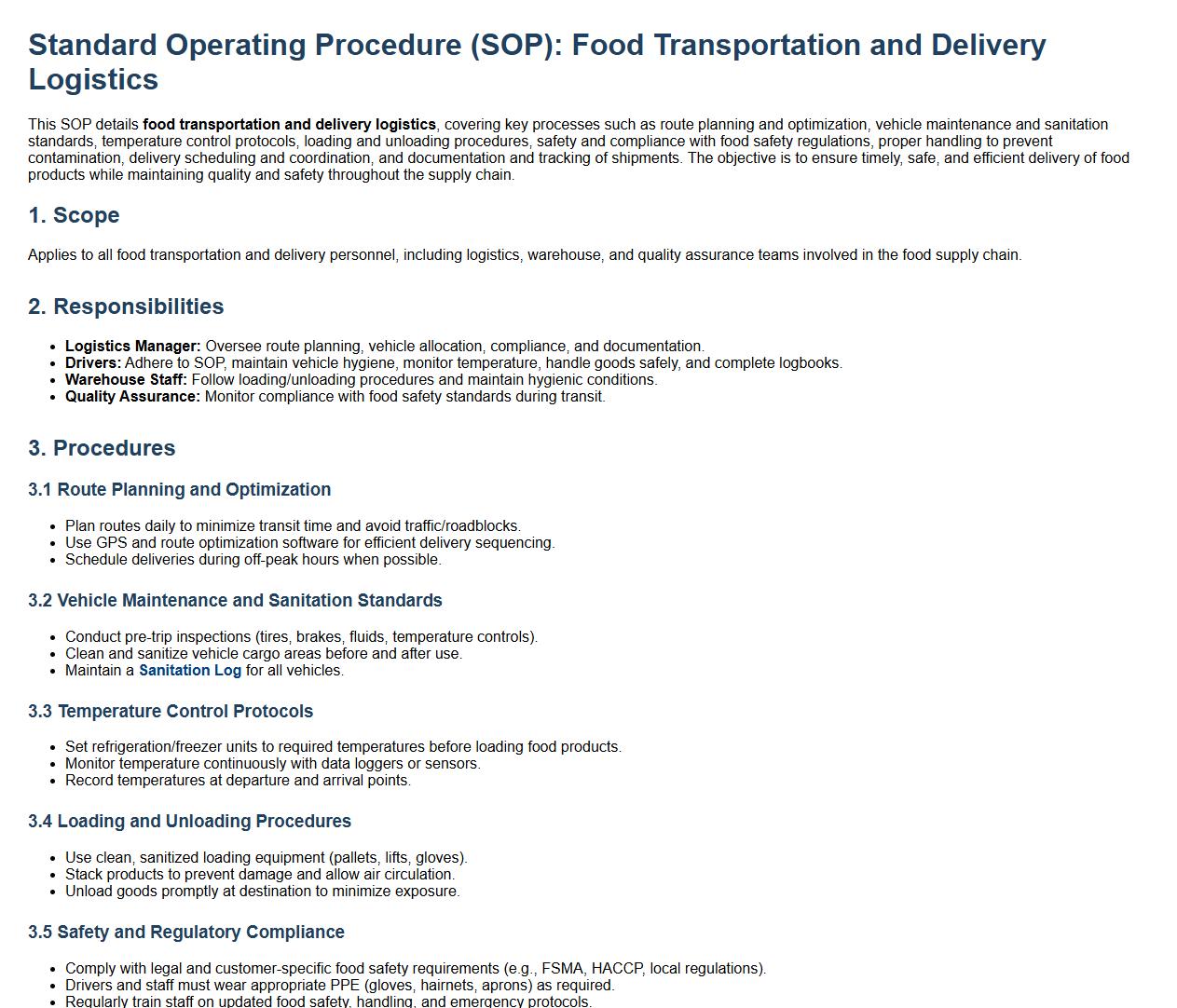
This SOP details food transportation and delivery logistics, covering key processes such as route planning and optimization, vehicle maintenance and sanitation standards, temperature control protocols, loading and unloading procedures, safety and compliance with food safety regulations, proper handling to prevent contamination, delivery scheduling and coordination, and documentation and tracking of shipments. The objective is to ensure timely, safe, and efficient delivery of food products while maintaining quality and safety throughout the supply chain.
On-site setup, service, and staff management.
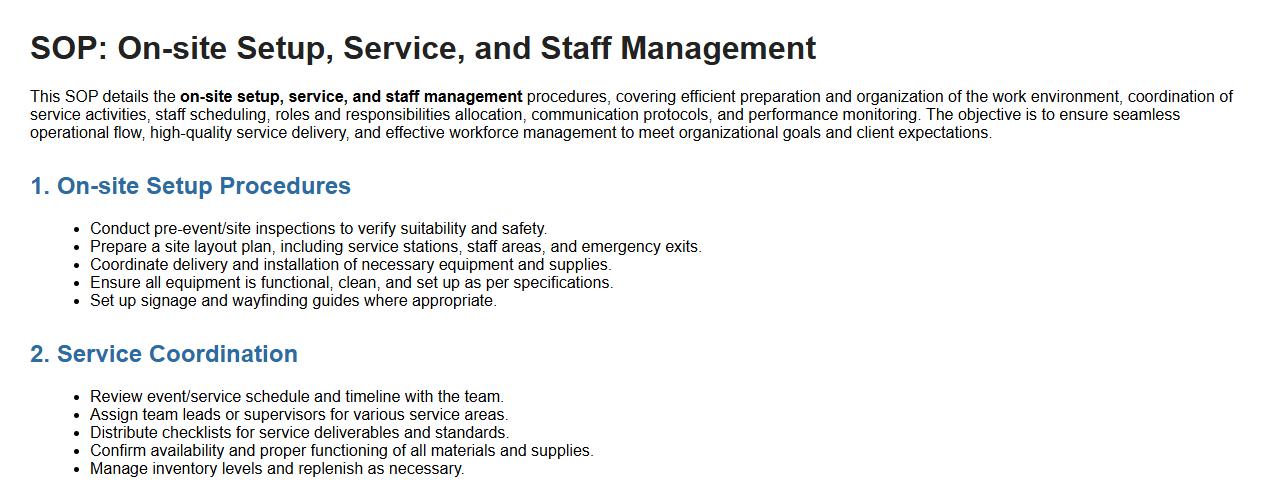
This SOP details the on-site setup, service, and staff management procedures, covering efficient preparation and organization of the work environment, coordination of service activities, staff scheduling, roles and responsibilities allocation, communication protocols, and performance monitoring. The objective is to ensure seamless operational flow, high-quality service delivery, and effective workforce management to meet organizational goals and client expectations.
Post-event cleanup and client feedback collection.
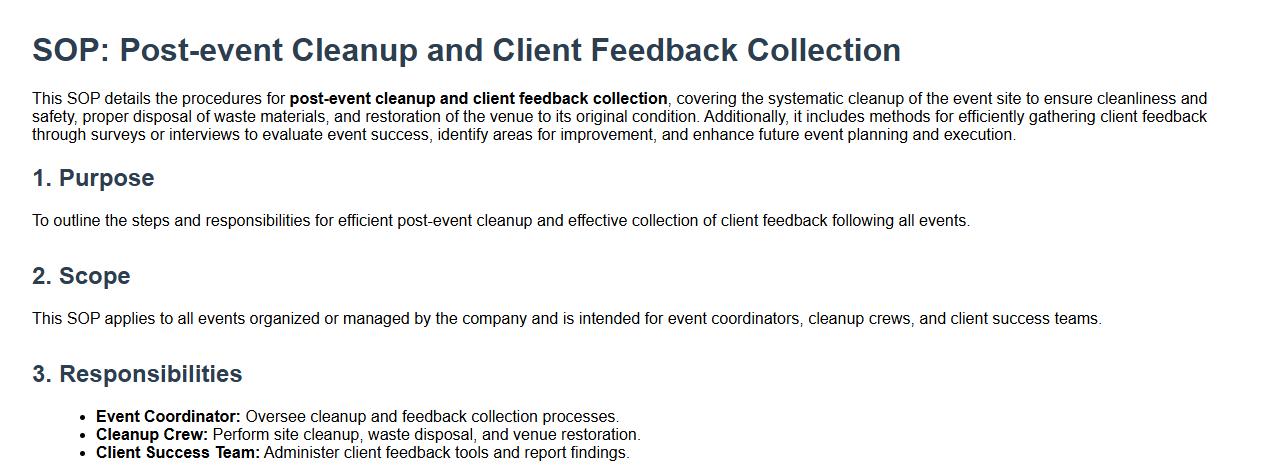
This SOP details the procedures for post-event cleanup and client feedback collection, covering the systematic cleanup of the event site to ensure cleanliness and safety, proper disposal of waste materials, and restoration of the venue to its original condition. Additionally, it includes methods for efficiently gathering client feedback through surveys or interviews to evaluate event success, identify areas for improvement, and enhance future event planning and execution.
What critical control points are identified in the SOP for ensuring food safety during preparation and service?
The SOP highlights critical control points such as proper cooking temperatures, preventing cross-contamination, and timely cooling of foods. Monitoring these points ensures harmful bacteria are eliminated and foodborne illnesses are prevented. Additionally, the SOP requires continuous temperature checks and staff alerts for any deviations.
Which personal hygiene standards must staff follow as outlined in the SOP?
The SOP mandates strict personal hygiene practices including regular hand washing, wearing clean uniforms, and using hair restraints. Staff must avoid working while ill and follow guidelines on nail and jewelry hygiene to prevent contamination. These standards are crucial to maintaining food safety throughout preparation and service.
How does the SOP specify procedures for the storage and transportation of food items?
According to the SOP, food items must be stored at controlled temperatures with proper labeling and separation to avoid cross-contamination. Transportation requires maintaining the cold chain and using sealed containers to preserve food quality and safety. These procedures ensure food remains safe from the point of storage to delivery.
What steps are detailed in the SOP for cleaning and sanitizing equipment and service areas?
The SOP outlines a rigorous cleaning and sanitizing schedule including the use of approved detergents and sanitizers on all equipment and surfaces. Staff must follow a specified sequence of cleaning to effectively remove debris and reduce pathogens. Documentation of cleaning activities is also required for accountability.
Which documentation and record-keeping practices are mandated by the SOP for compliance and traceability?
The SOP requires comprehensive documentation of temperature logs, cleaning schedules, and incident reports to ensure compliance. Records must be accurate, up-to-date, and accessible for audits and inspections. This traceability supports food safety management and continuous improvement efforts.