A SOP Template for Food Temperature Control ensures consistent monitoring and maintenance of food temperatures to prevent contamination and ensure safety. This template outlines specific procedures for measuring, recording, and managing temperature logs throughout food storage, preparation, and service. Following this standardized approach helps maintain compliance with health regulations and promotes food quality.
Food receiving temperature checks procedures.
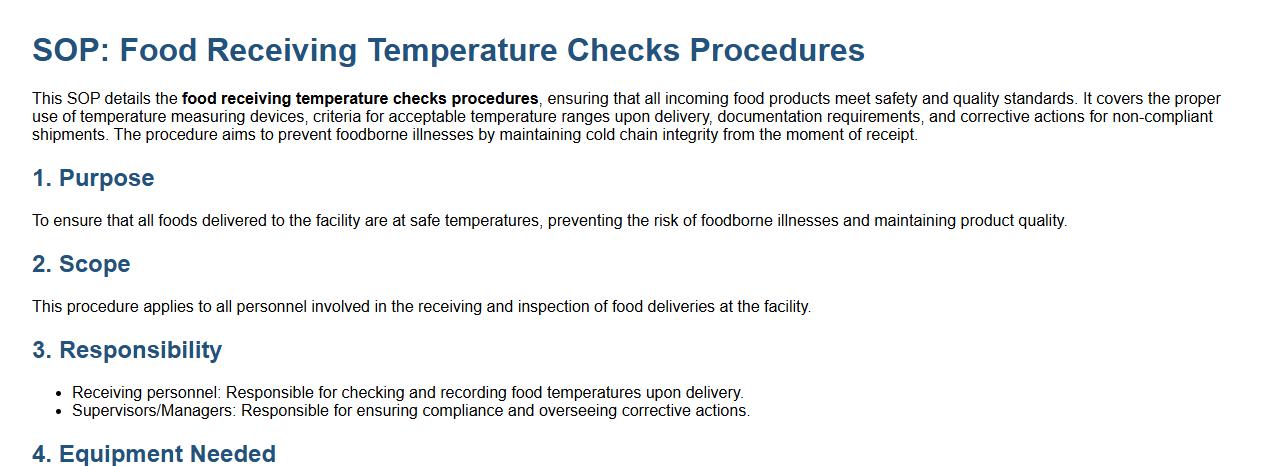
This SOP details the food receiving temperature checks procedures, ensuring that all incoming food products meet safety and quality standards. It covers the proper use of temperature measuring devices, criteria for acceptable temperature ranges upon delivery, documentation requirements, and corrective actions for non-compliant shipments. The procedure aims to prevent foodborne illnesses by maintaining cold chain integrity from the moment of receipt.
Storage temperature monitoring and recording.
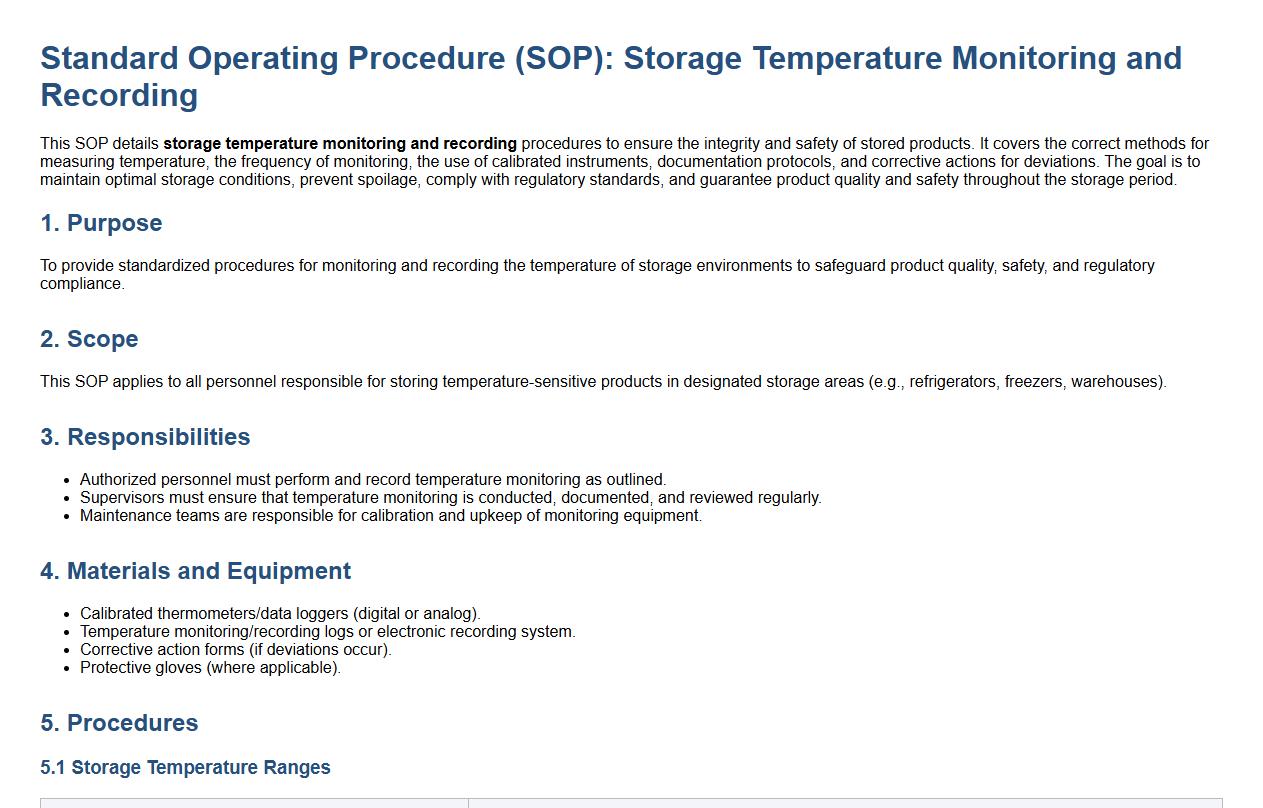
This SOP details storage temperature monitoring and recording procedures to ensure the integrity and safety of stored products. It covers the correct methods for measuring temperature, the frequency of monitoring, the use of calibrated instruments, documentation protocols, and corrective actions for deviations. The goal is to maintain optimal storage conditions, prevent spoilage, comply with regulatory standards, and guarantee product quality and safety throughout the storage period.
Preparation area temperature maintenance guidelines.
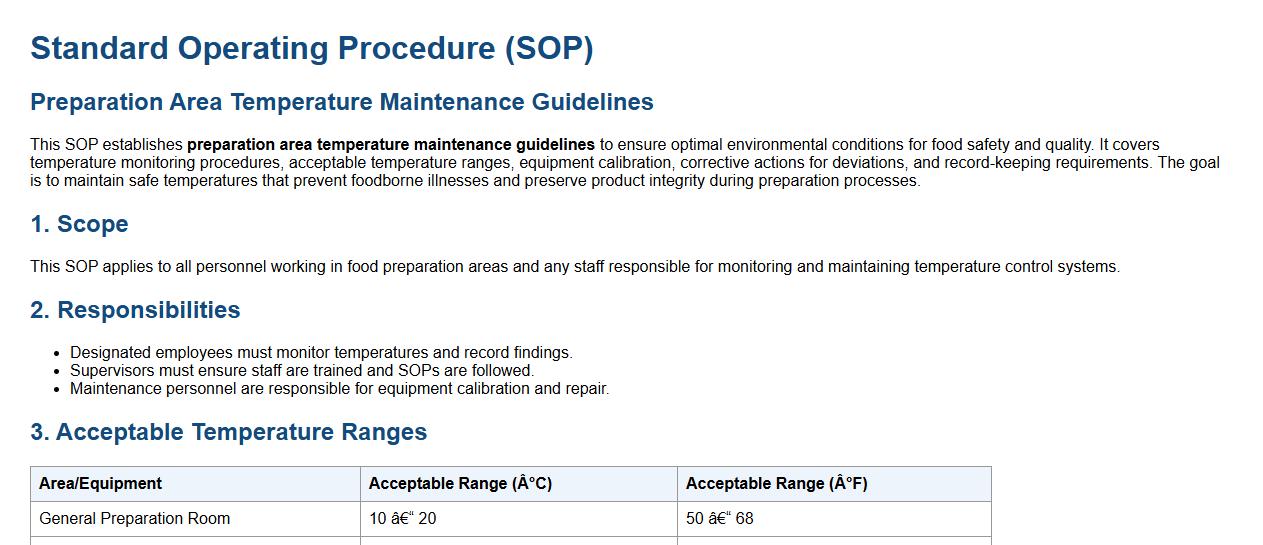
This SOP establishes preparation area temperature maintenance guidelines to ensure optimal environmental conditions for food safety and quality. It covers temperature monitoring procedures, acceptable temperature ranges, equipment calibration, corrective actions for deviations, and record-keeping requirements. The goal is to maintain safe temperatures that prevent foodborne illnesses and preserve product integrity during preparation processes.
Cooking temperature standards and verification steps.
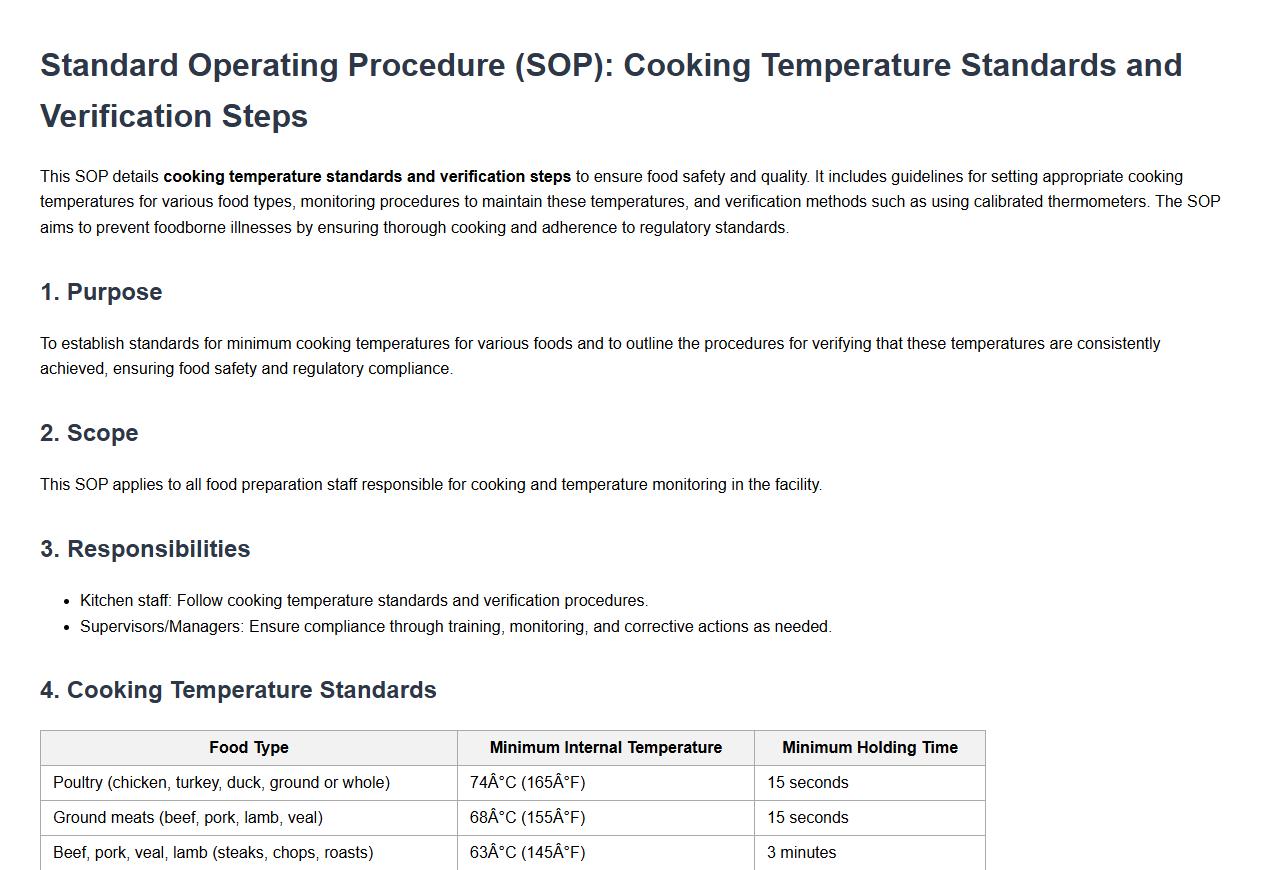
This SOP details cooking temperature standards and verification steps to ensure food safety and quality. It includes guidelines for setting appropriate cooking temperatures for various food types, monitoring procedures to maintain these temperatures, and verification methods such as using calibrated thermometers. The SOP aims to prevent foodborne illnesses by ensuring thorough cooking and adherence to regulatory standards.
Hot holding temperature control and monitoring.
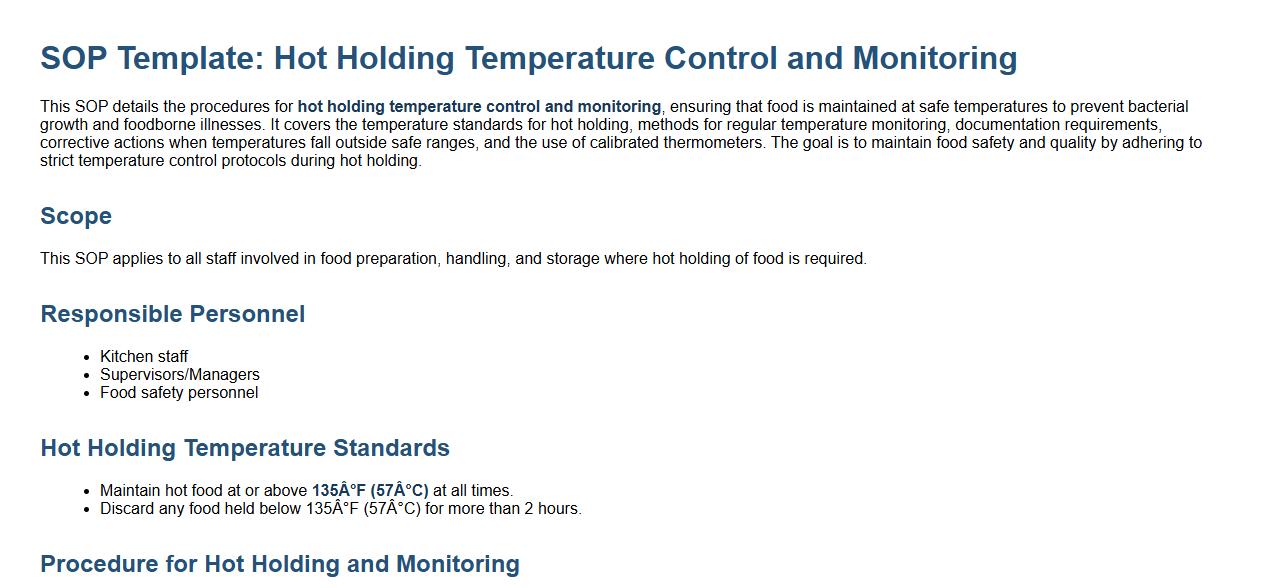
This SOP details the procedures for hot holding temperature control and monitoring, ensuring that food is maintained at safe temperatures to prevent bacterial growth and foodborne illnesses. It covers the temperature standards for hot holding, methods for regular temperature monitoring, documentation requirements, corrective actions when temperatures fall outside safe ranges, and the use of calibrated thermometers. The goal is to maintain food safety and quality by adhering to strict temperature control protocols during hot holding.
Cold holding temperature control and monitoring.
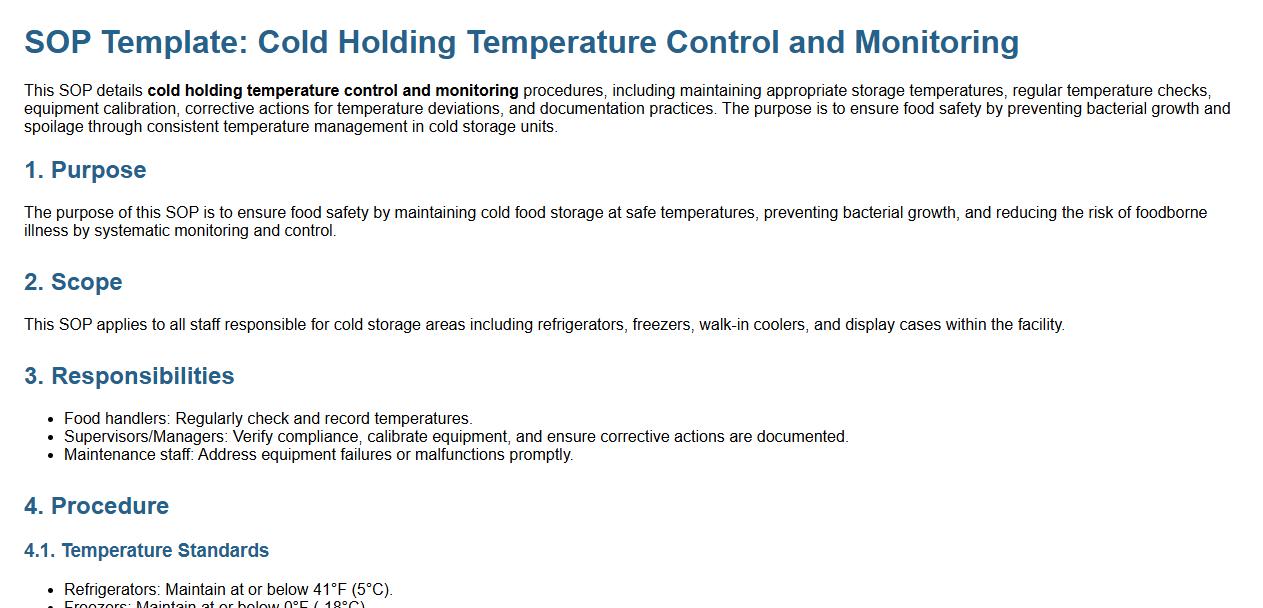
This SOP details cold holding temperature control and monitoring procedures, including maintaining appropriate storage temperatures, regular temperature checks, equipment calibration, corrective actions for temperature deviations, and documentation practices. The purpose is to ensure food safety by preventing bacterial growth and spoilage through consistent temperature management in cold storage units.
Cooling procedures and time/temperature tracking.
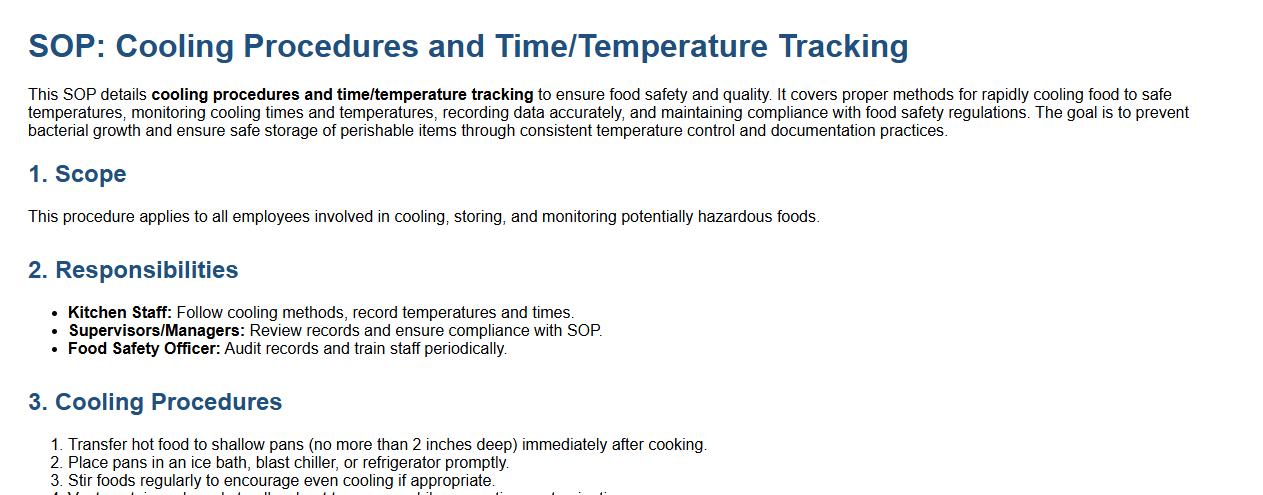
This SOP details cooling procedures and time/temperature tracking to ensure food safety and quality. It covers proper methods for rapidly cooling food to safe temperatures, monitoring cooling times and temperatures, recording data accurately, and maintaining compliance with food safety regulations. The goal is to prevent bacterial growth and ensure safe storage of perishable items through consistent temperature control and documentation practices.
Reheating food temperature requirements and checks.
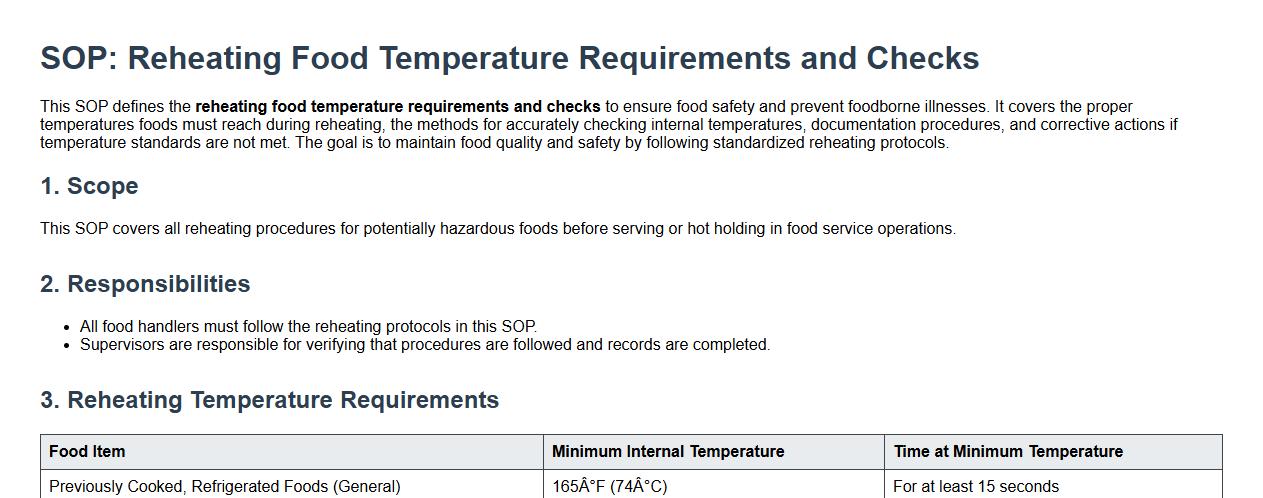
This SOP defines the reheating food temperature requirements and checks to ensure food safety and prevent foodborne illnesses. It covers the proper temperatures foods must reach during reheating, the methods for accurately checking internal temperatures, documentation procedures, and corrective actions if temperature standards are not met. The goal is to maintain food quality and safety by following standardized reheating protocols.
Temperature calibration for thermometers and equipment.
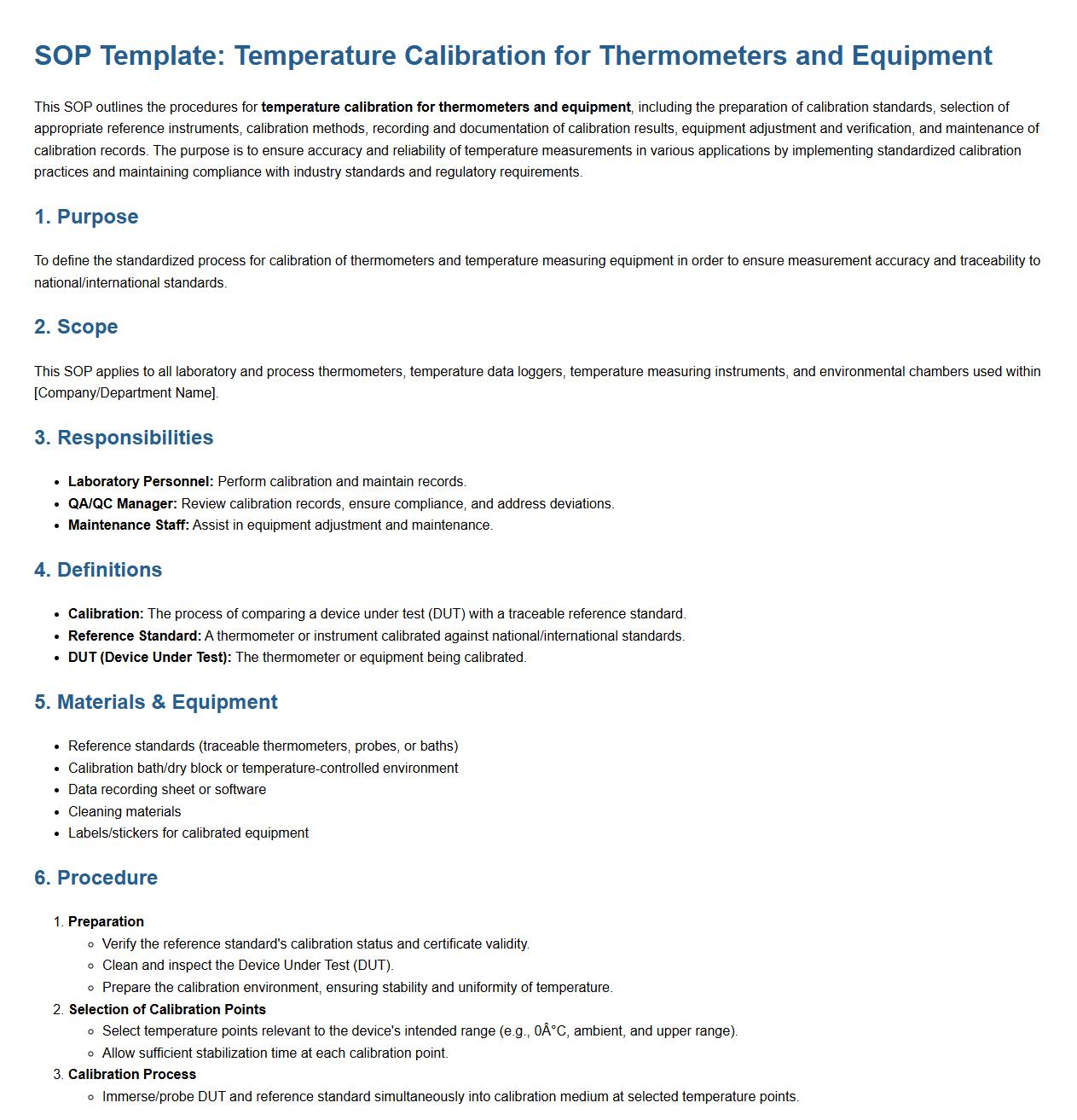
This SOP outlines the procedures for temperature calibration for thermometers and equipment, including the preparation of calibration standards, selection of appropriate reference instruments, calibration methods, recording and documentation of calibration results, equipment adjustment and verification, and maintenance of calibration records. The purpose is to ensure accuracy and reliability of temperature measurements in various applications by implementing standardized calibration practices and maintaining compliance with industry standards and regulatory requirements.
Corrective actions for temperature control failures.
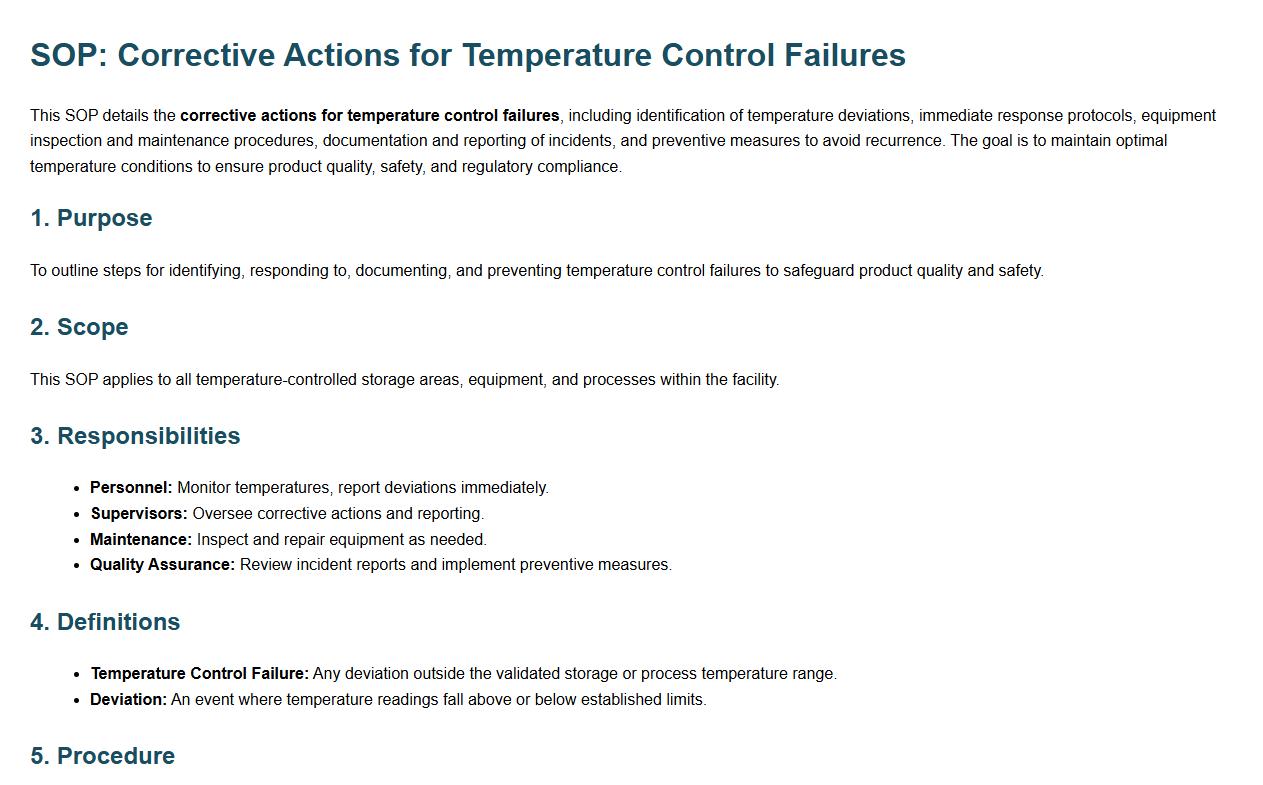
This SOP details the corrective actions for temperature control failures, including identification of temperature deviations, immediate response protocols, equipment inspection and maintenance procedures, documentation and reporting of incidents, and preventive measures to avoid recurrence. The goal is to maintain optimal temperature conditions to ensure product quality, safety, and regulatory compliance.
Specified Temperature Ranges for Storing Perishable Foods
According to the SOP, perishable foods must be stored at temperatures below 5degC (41degF) to prevent spoilage. Refrigeration units should consistently maintain this range to ensure food safety. Freezing perishable items requires storage at or below -18degC (0degF) for long-term preservation.
Frequency of Temperature Checks and Documentation
Temperature checks are mandated to be conducted at least twice daily to ensure compliance with storage standards. Each measurement must be accurately documented in a temperature log for audit and review purposes. This systematic recording helps in early detection of any deviations from the SOP.
Corrective Actions for Food Outside Recommended Temperature Range
If food is found outside the specified temperature range, immediate corrective actions must be implemented to mitigate risk. This includes relocating the items to a properly functioning unit or discarding them if safety cannot be assured. All incidents must be reported and logged for accountability and process improvement.
Equipment Mandated for Monitoring and Verifying Food Temperatures
The SOP requires the use of calibrated digital or dial thermometers for accurate temperature monitoring. Additionally, data loggers and temperature sensors integrated into storage equipment may be utilized for ongoing surveillance. Proper equipment ensures compliance with food safety standards and helps prevent contamination.
Responsibility for Overseeing Implementation and Compliance
The Food Safety Manager holds primary responsibility for overseeing the SOP's implementation and ensuring compliance. This role involves training staff, conducting regular audits, and managing corrective actions. Effective supervision helps maintain the integrity of food temperature controls throughout the facility.