
A SOP Template for Food Handling Procedures ensures consistent and safe practices in food preparation and storage. It outlines step-by-step guidelines to prevent contamination, maintain hygiene, and comply with health regulations. Using this template helps food businesses enhance safety standards and protect customer health.
Personal hygiene and handwashing requirements.
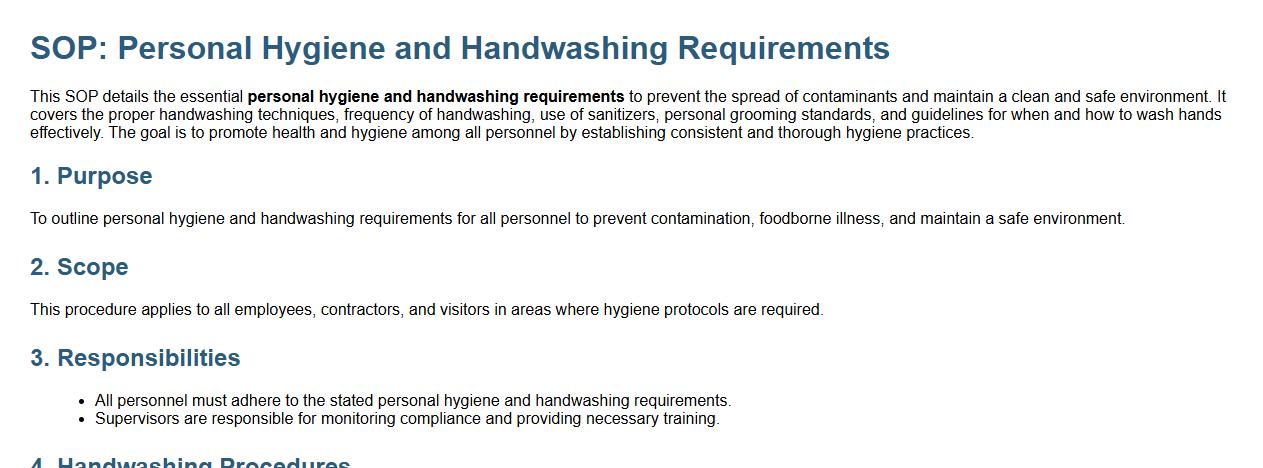
This SOP details the essential personal hygiene and handwashing requirements to prevent the spread of contaminants and maintain a clean and safe environment. It covers the proper handwashing techniques, frequency of handwashing, use of sanitizers, personal grooming standards, and guidelines for when and how to wash hands effectively. The goal is to promote health and hygiene among all personnel by establishing consistent and thorough hygiene practices.
Proper use of personal protective equipment (PPE).
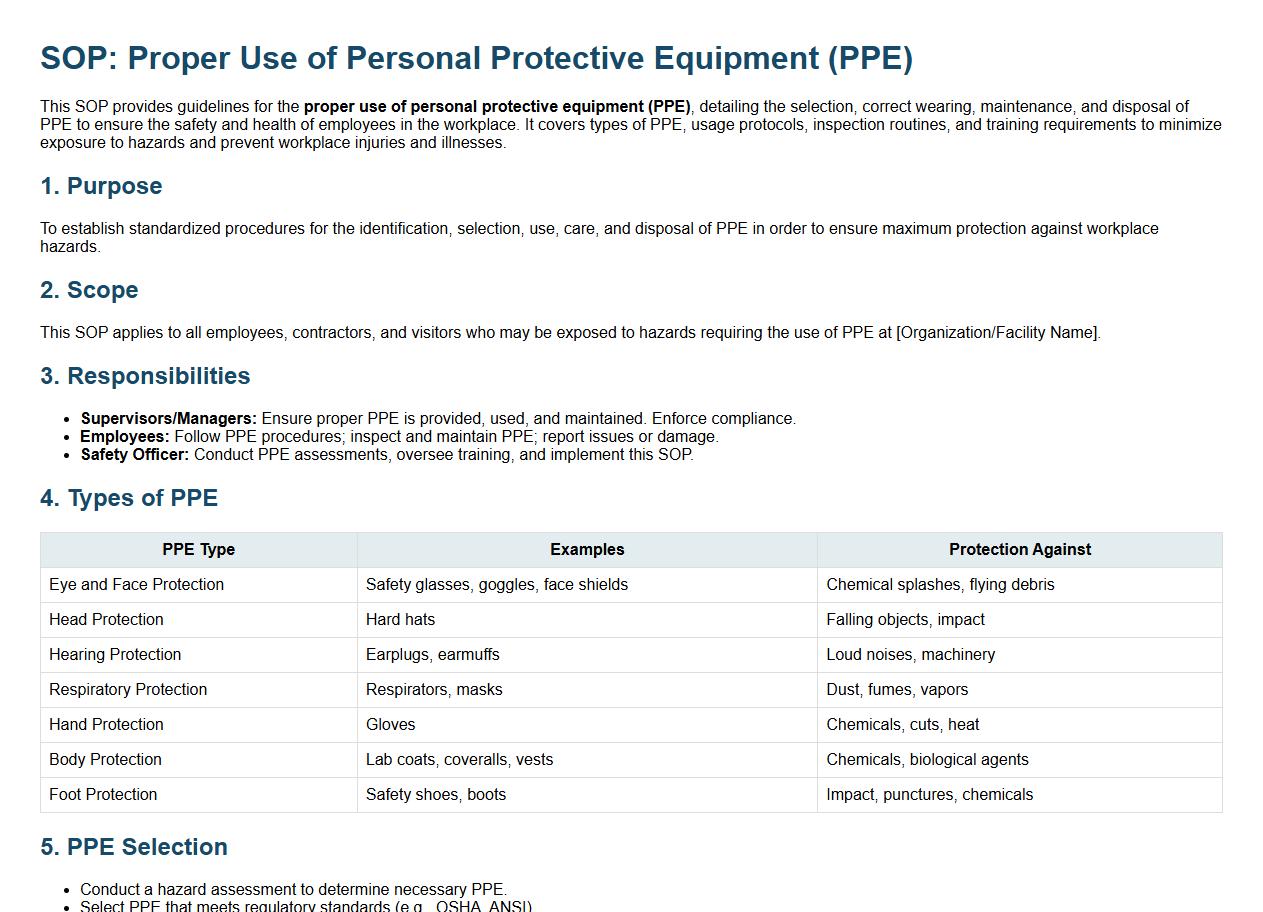
This SOP provides guidelines for the proper use of personal protective equipment (PPE), detailing the selection, correct wearing, maintenance, and disposal of PPE to ensure the safety and health of employees in the workplace. It covers types of PPE, usage protocols, inspection routines, and training requirements to minimize exposure to hazards and prevent workplace injuries and illnesses.
Receiving and inspecting food deliveries.
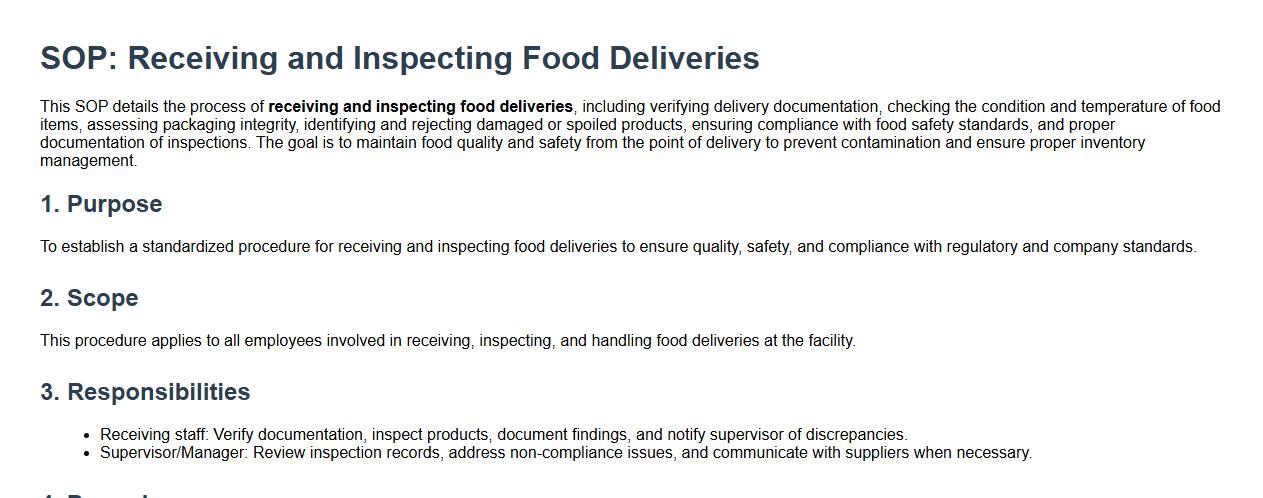
This SOP details the process of receiving and inspecting food deliveries, including verifying delivery documentation, checking the condition and temperature of food items, assessing packaging integrity, identifying and rejecting damaged or spoiled products, ensuring compliance with food safety standards, and proper documentation of inspections. The goal is to maintain food quality and safety from the point of delivery to prevent contamination and ensure proper inventory management.
Safe food storage protocols (temperature, labeling, rotation).
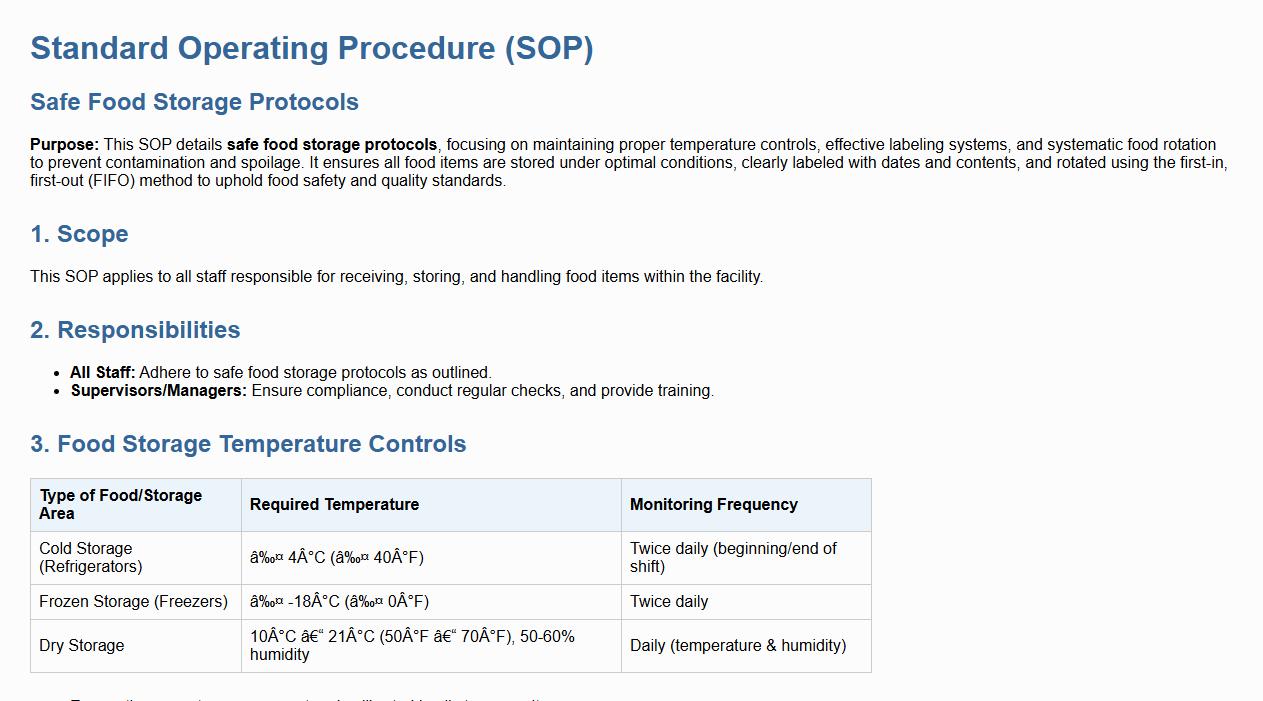
This SOP details safe food storage protocols, focusing on maintaining proper temperature controls, effective labeling systems, and systematic food rotation to prevent contamination and spoilage. It ensures all food items are stored under optimal conditions, clearly labeled with dates and contents, and rotated using the first-in, first-out (FIFO) method to uphold food safety and quality standards.
Cleaning and sanitizing food contact surfaces.
This SOP details the procedures for cleaning and sanitizing food contact surfaces to ensure food safety and prevent contamination. It covers the selection and use of appropriate cleaning agents and sanitizers, step-by-step cleaning techniques, proper rinsing and drying methods, frequency of cleaning cycles, verification of cleanliness, and compliance with regulatory standards. The objective is to maintain hygienic surfaces that meet food safety requirements and protect consumer health.
Guidelines for food preparation and cooking temperatures.
This SOP provides guidelines for food preparation and cooking temperatures to ensure food safety and prevent foodborne illnesses. It includes proper handling, thawing, cooking, and cooling techniques, recommended internal cooking temperatures for various foods, cross-contamination prevention, and hygienic practices. The goal is to maintain food quality and safety throughout the preparation and cooking process.
Prevention of cross-contamination procedures.
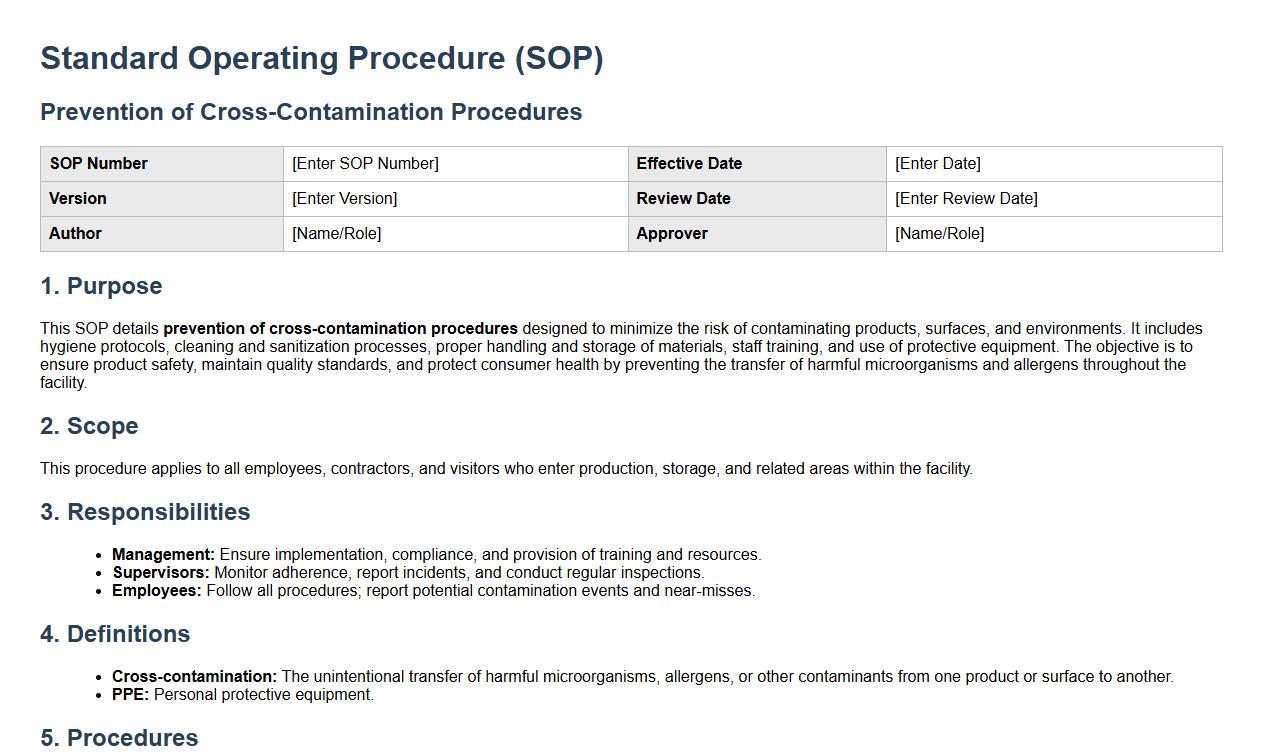
This SOP details prevention of cross-contamination procedures designed to minimize the risk of contaminating products, surfaces, and environments. It includes hygiene protocols, cleaning and sanitization processes, proper handling and storage of materials, staff training, and use of protective equipment. The objective is to ensure product safety, maintain quality standards, and protect consumer health by preventing the transfer of harmful microorganisms and allergens throughout the facility.
Allergen control and labeling protocols.
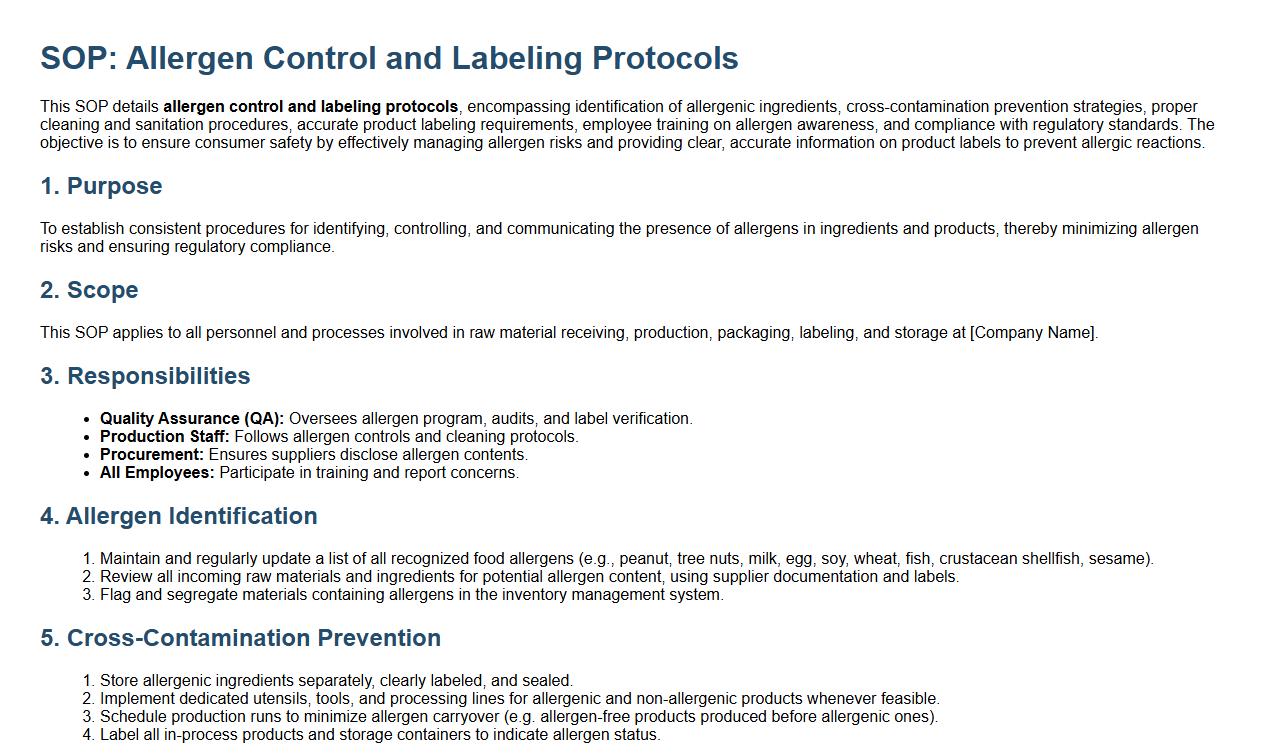
This SOP details allergen control and labeling protocols, encompassing identification of allergenic ingredients, cross-contamination prevention strategies, proper cleaning and sanitation procedures, accurate product labeling requirements, employee training on allergen awareness, and compliance with regulatory standards. The objective is to ensure consumer safety by effectively managing allergen risks and providing clear, accurate information on product labels to prevent allergic reactions.
Safe handling and disposal of food waste.
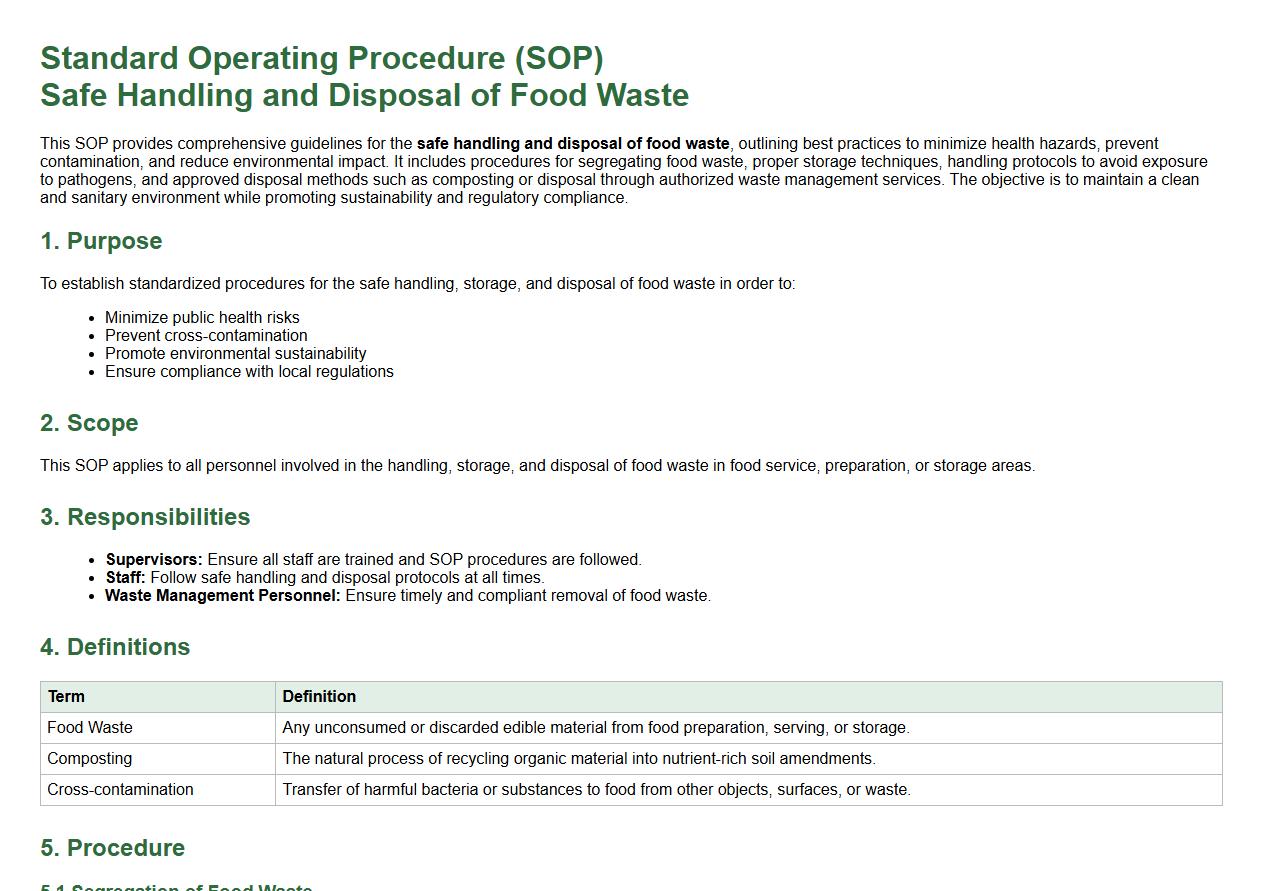
This SOP provides comprehensive guidelines for the safe handling and disposal of food waste, outlining best practices to minimize health hazards, prevent contamination, and reduce environmental impact. It includes procedures for segregating food waste, proper storage techniques, handling protocols to avoid exposure to pathogens, and approved disposal methods such as composting or disposal through authorized waste management services. The objective is to maintain a clean and sanitary environment while promoting sustainability and regulatory compliance.
Documentation and record-keeping for food safety compliance.
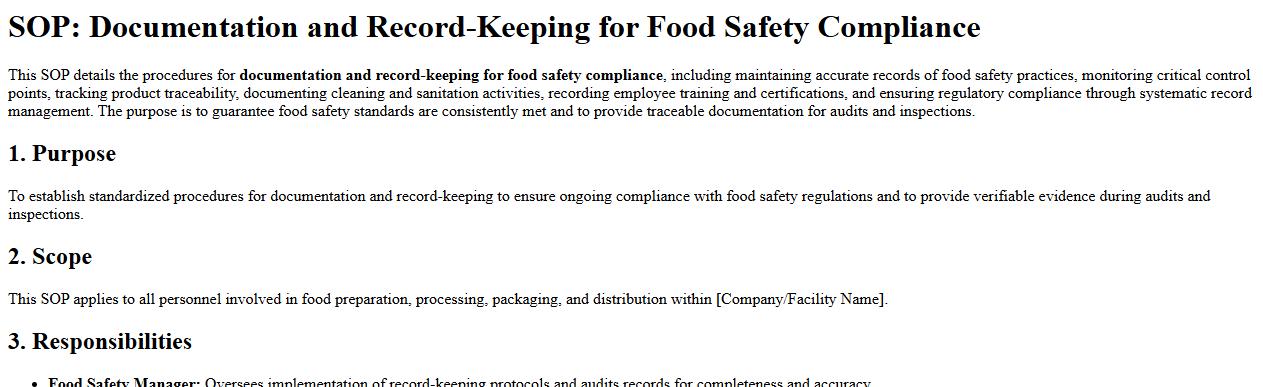
This SOP details the procedures for documentation and record-keeping for food safety compliance, including maintaining accurate records of food safety practices, monitoring critical control points, tracking product traceability, documenting cleaning and sanitation activities, recording employee training and certifications, and ensuring regulatory compliance through systematic record management. The purpose is to guarantee food safety standards are consistently met and to provide traceable documentation for audits and inspections.
Critical Control Points in Food Handling Procedures
The critical control points in the SOP for food handling include receiving, storage, preparation, cooking, and serving of food. These points are monitored closely to prevent contamination and ensure food safety. Regular checks and corrective actions are emphasized at each stage.
Personal Hygiene Practices for Food Handlers
The SOP mandates strict personal hygiene standards, including handwashing with soap and water before handling food. Food handlers must wear clean uniforms and hair restraints to reduce contamination risk. It also requires reporting illnesses promptly to avoid foodborne disease transmission.
Food Storage Standards and Temperature Requirements
The SOP specifies temperature controls such as storing refrigerated items below 5degC and frozen goods at -18degC or lower. It ensures segregation of raw and cooked foods to prevent cross-contamination. Regular temperature monitoring and documentation are compulsory.
Cleaning and Sanitizing Equipment and Surfaces
Cleaning protocols involve thorough washing, rinsing, and sanitizing of all equipment and food-contact surfaces. The SOP requires using approved detergents and sanitizers followed by regular inspections. Proper drying and storage of cleaned items are also highlighted to maintain hygiene.
Management of Allergenic Ingredients
The SOP includes procedures to prevent cross-contamination of allergenic ingredients by clearly labeling and segregating them. Dedicated utensils and preparation areas are used to reduce allergy risks. Staff training on allergen awareness and management is mandatory.