
A SOP Template for Food Waste Reduction provides a structured framework to identify, monitor, and minimize food waste in food service operations. This template outlines specific procedures for inventory management, portion control, and employee training to ensure consistent waste reduction practices. Implementing the SOP helps organizations enhance sustainability efforts, reduce costs, and comply with environmental regulations.
Food waste monitoring and data recording procedures.
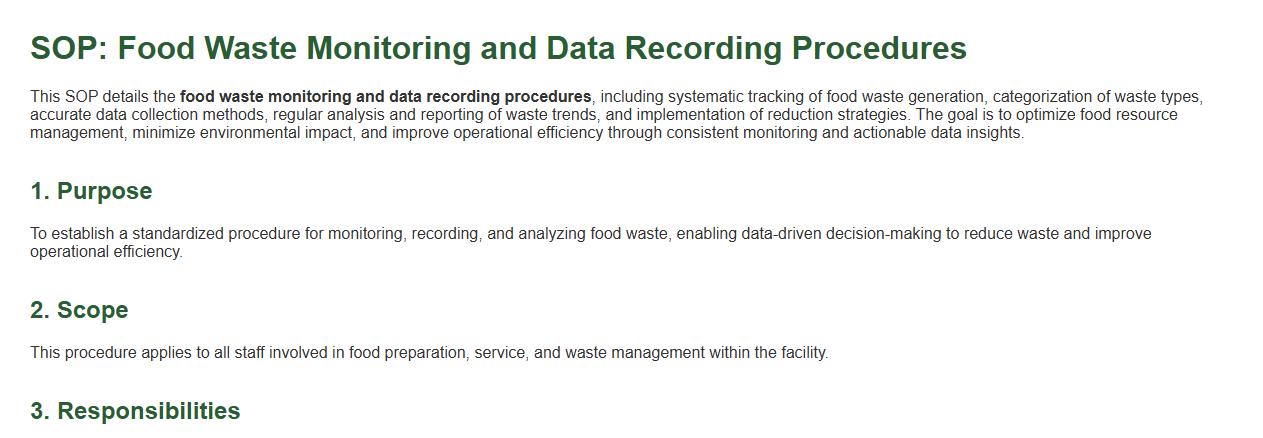
This SOP details the food waste monitoring and data recording procedures, including systematic tracking of food waste generation, categorization of waste types, accurate data collection methods, regular analysis and reporting of waste trends, and implementation of reduction strategies. The goal is to optimize food resource management, minimize environmental impact, and improve operational efficiency through consistent monitoring and actionable data insights.
Food storage, labeling, and inventory rotation guidelines.
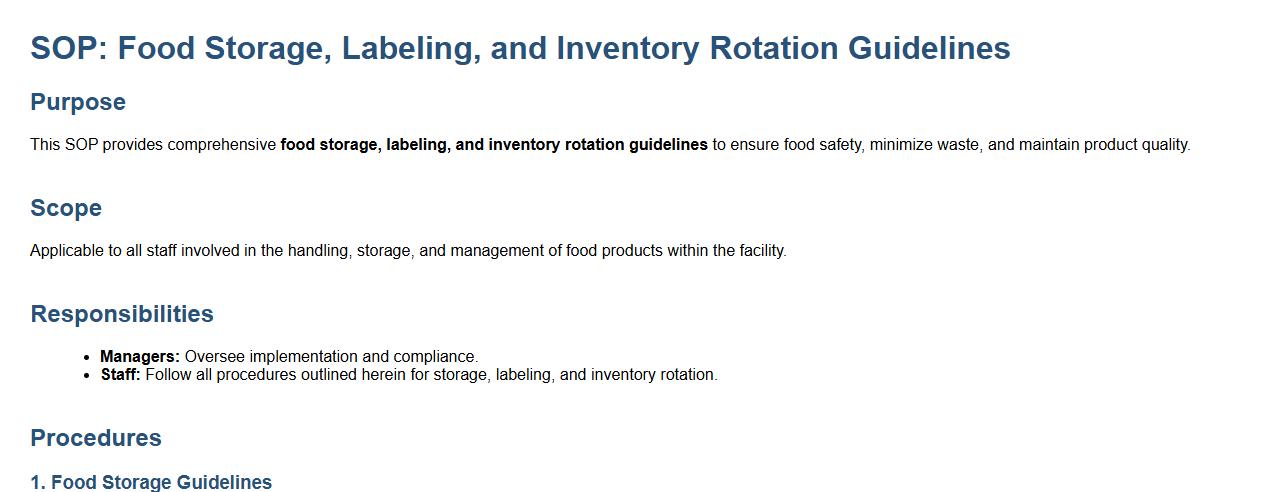
This SOP provides comprehensive food storage, labeling, and inventory rotation guidelines to ensure food safety, minimize waste, and maintain product quality. It covers proper storage conditions for various food types, standardized labeling practices including expiration dates and batch information, and systematic inventory rotation methods such as First-In, First-Out (FIFO). The goal is to optimize food shelf life, prevent contamination, and support efficient inventory management within food handling environments.
Portion control standards for meal preparation.
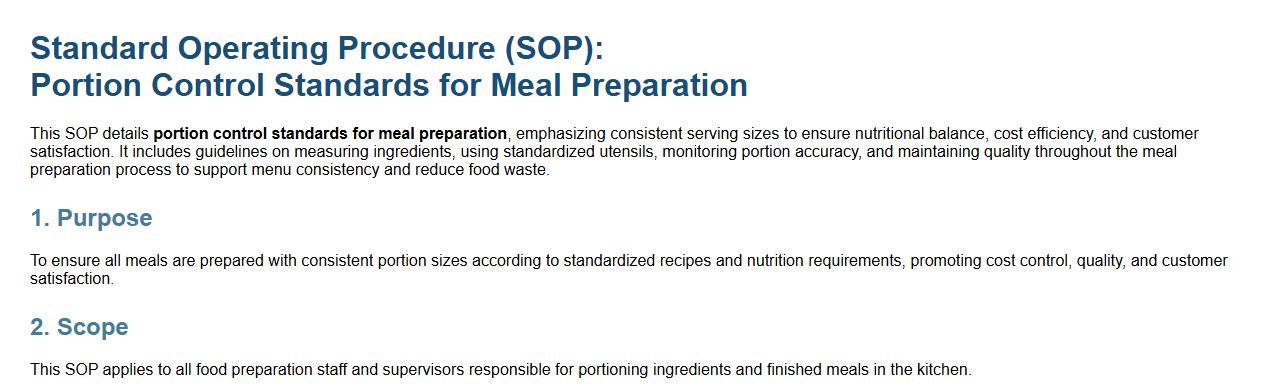
This SOP details portion control standards for meal preparation, emphasizing consistent serving sizes to ensure nutritional balance, cost efficiency, and customer satisfaction. It includes guidelines on measuring ingredients, using standardized utensils, monitoring portion accuracy, and maintaining quality throughout the meal preparation process to support menu consistency and reduce food waste.
Surplus food repurposing and donation protocols.
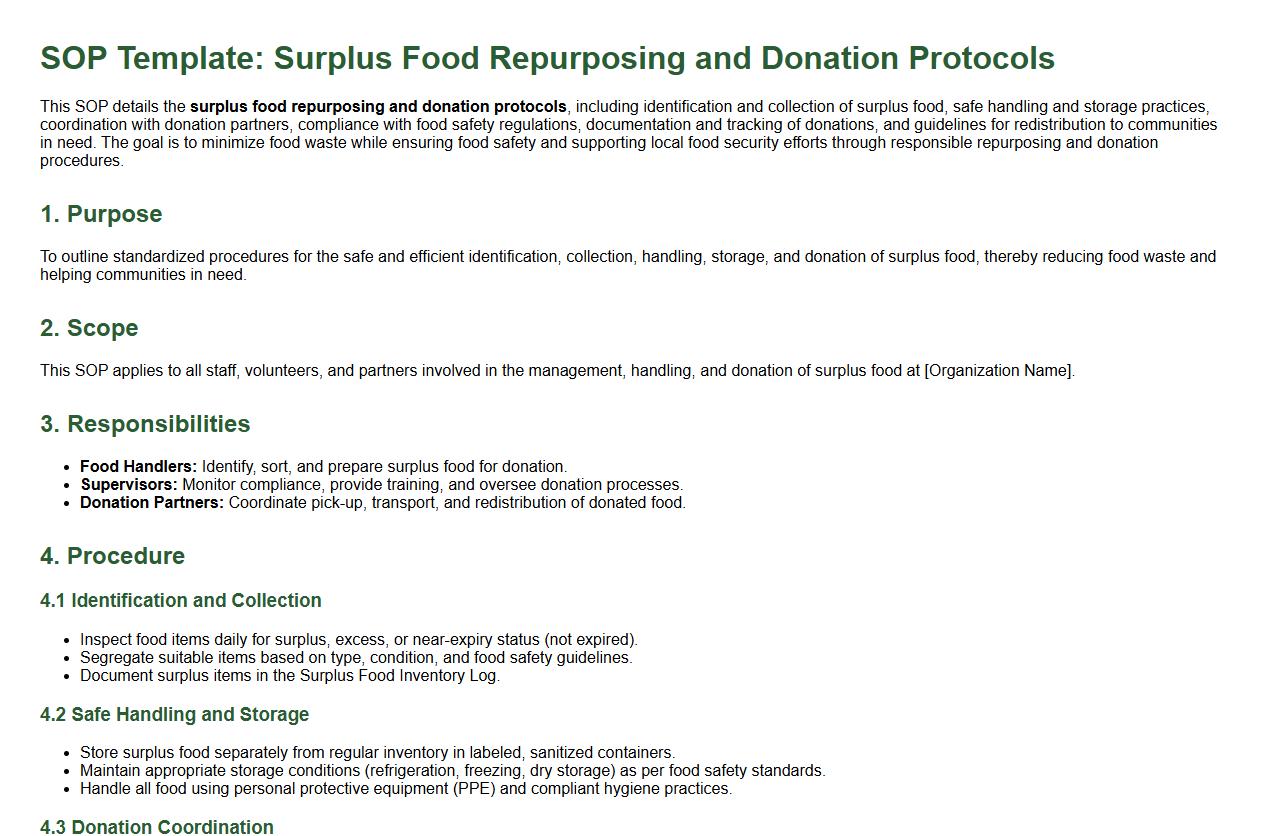
This SOP details the surplus food repurposing and donation protocols, including identification and collection of surplus food, safe handling and storage practices, coordination with donation partners, compliance with food safety regulations, documentation and tracking of donations, and guidelines for redistribution to communities in need. The goal is to minimize food waste while ensuring food safety and supporting local food security efforts through responsible repurposing and donation procedures.
Expired and spoiled food disposal procedures.
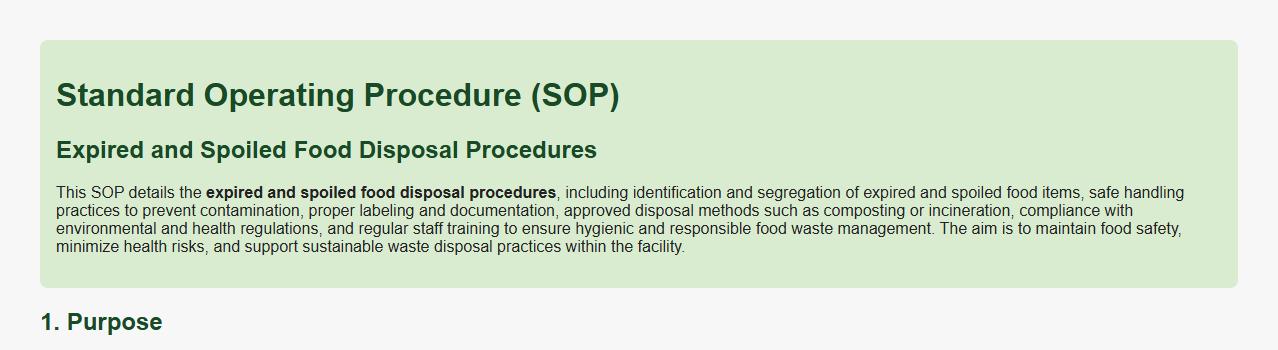
This SOP details the expired and spoiled food disposal procedures, including identification and segregation of expired and spoiled food items, safe handling practices to prevent contamination, proper labeling and documentation, approved disposal methods such as composting or incineration, compliance with environmental and health regulations, and regular staff training to ensure hygienic and responsible food waste management. The aim is to maintain food safety, minimize health risks, and support sustainable waste disposal practices within the facility.
Staff training and awareness for food waste reduction.
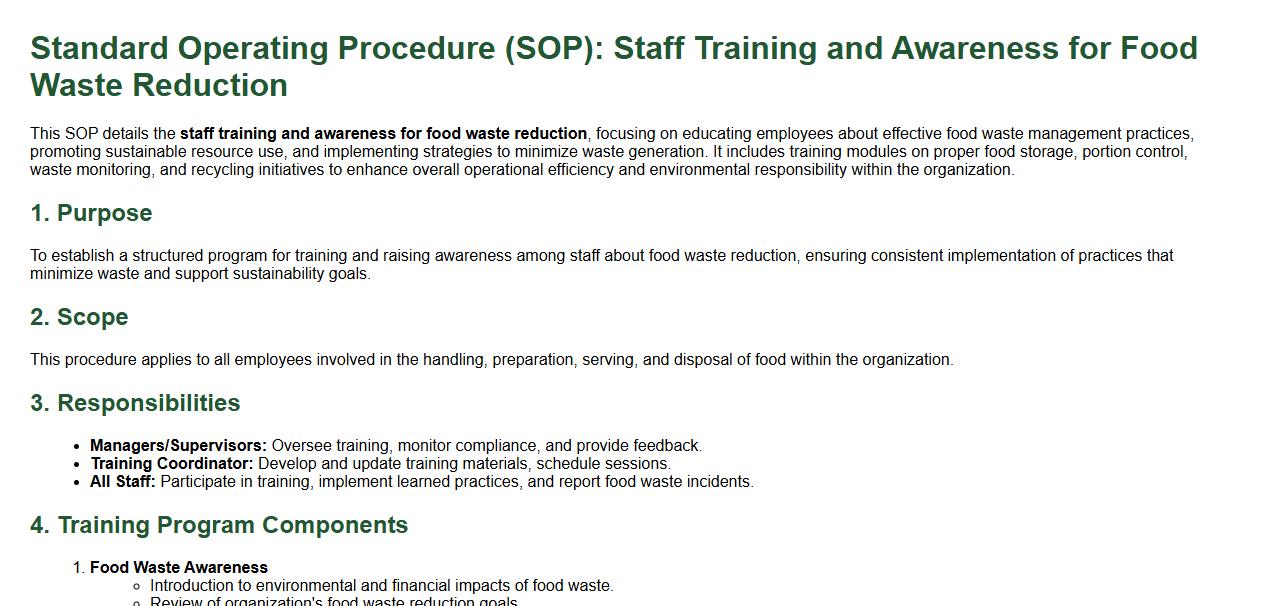
This SOP details the staff training and awareness for food waste reduction, focusing on educating employees about effective food waste management practices, promoting sustainable resource use, and implementing strategies to minimize waste generation. It includes training modules on proper food storage, portion control, waste monitoring, and recycling initiatives to enhance overall operational efficiency and environmental responsibility within the organization.
Supplier selection and sustainable sourcing practices.
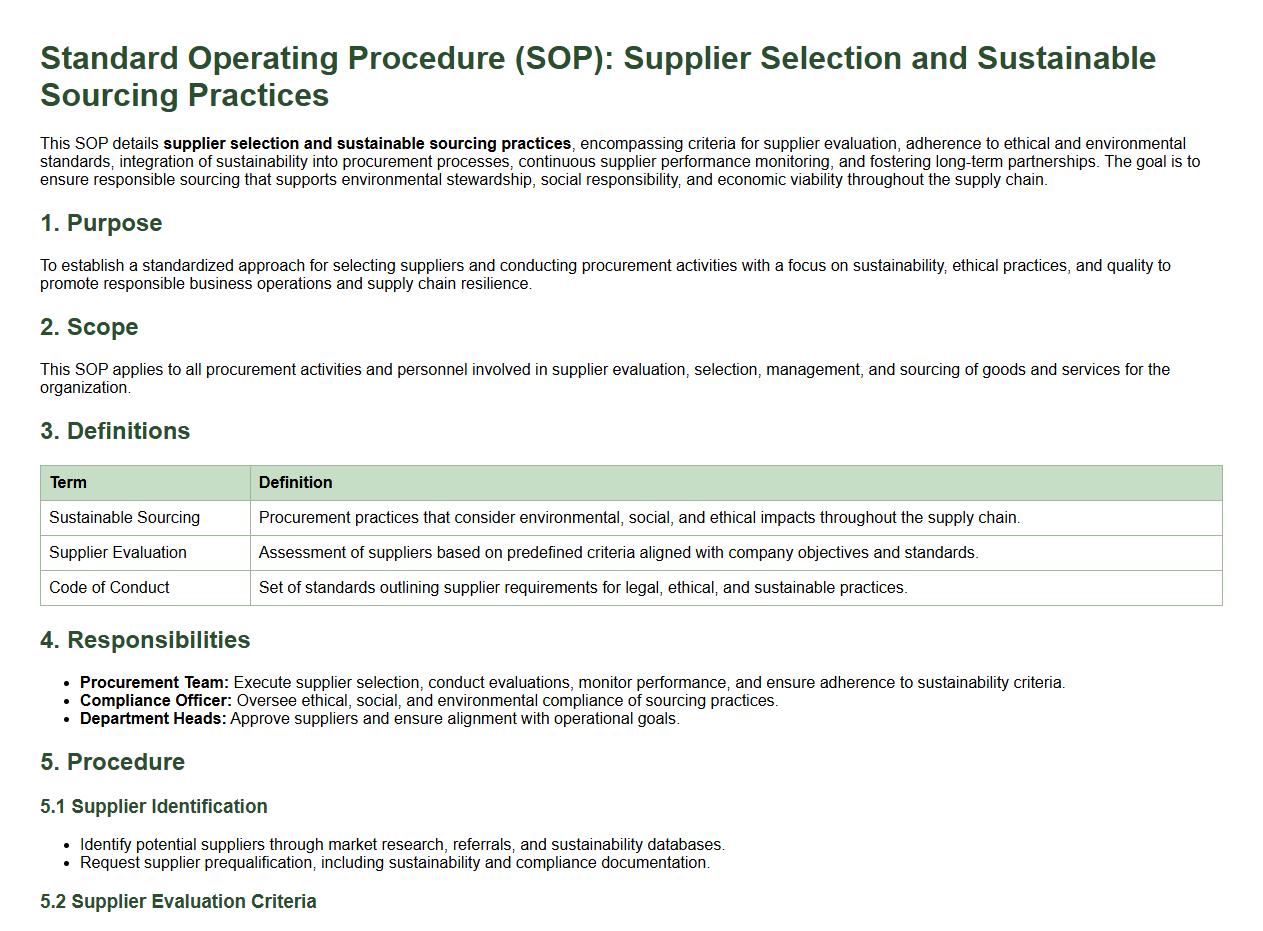
This SOP details supplier selection and sustainable sourcing practices, encompassing criteria for supplier evaluation, adherence to ethical and environmental standards, integration of sustainability into procurement processes, continuous supplier performance monitoring, and fostering long-term partnerships. The goal is to ensure responsible sourcing that supports environmental stewardship, social responsibility, and economic viability throughout the supply chain.
Customer education on menu flexibility and portion options.
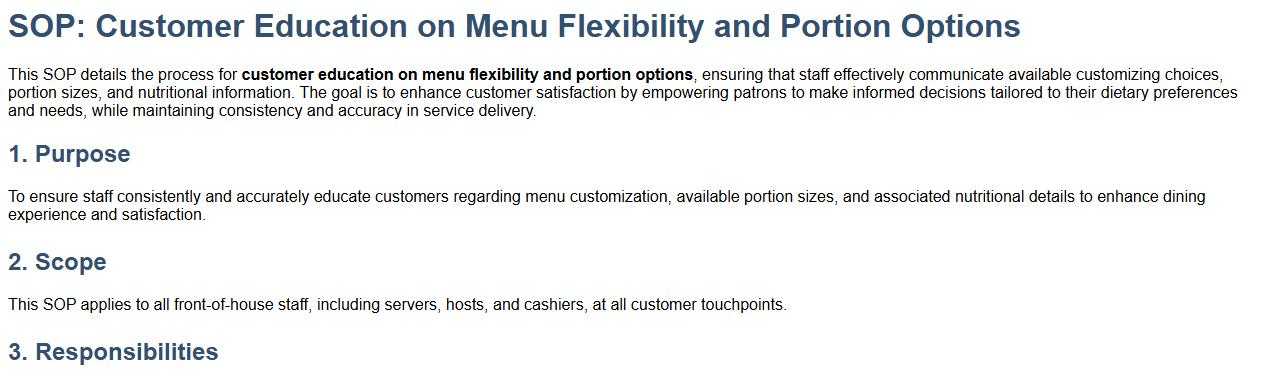
This SOP details the process for customer education on menu flexibility and portion options, ensuring that staff effectively communicate available customizing choices, portion sizes, and nutritional information. The goal is to enhance customer satisfaction by empowering patrons to make informed decisions tailored to their dietary preferences and needs, while maintaining consistency and accuracy in service delivery.
Regular food waste audits and performance reviews.
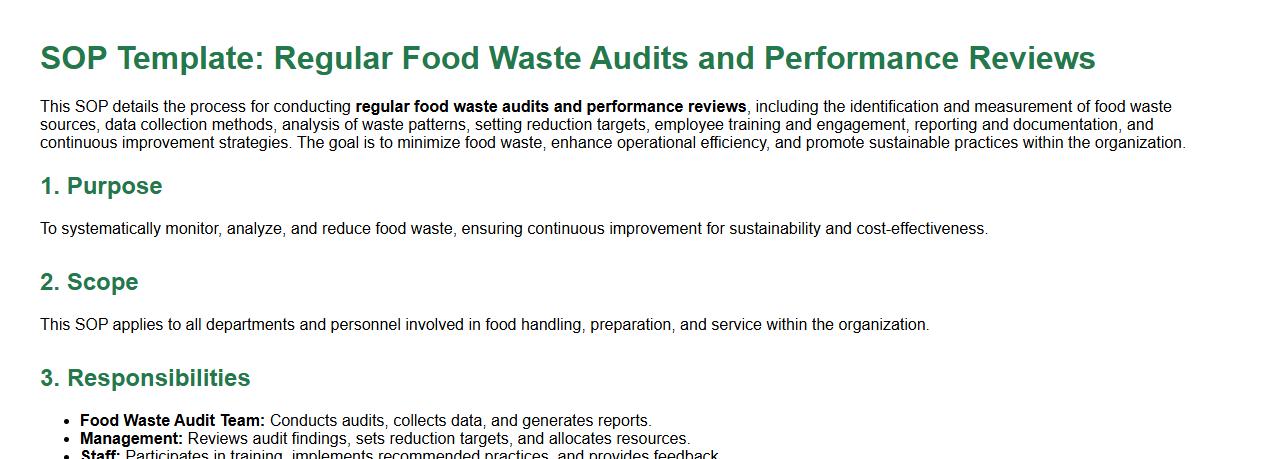
This SOP details the process for conducting regular food waste audits and performance reviews, including the identification and measurement of food waste sources, data collection methods, analysis of waste patterns, setting reduction targets, employee training and engagement, reporting and documentation, and continuous improvement strategies. The goal is to minimize food waste, enhance operational efficiency, and promote sustainable practices within the organization.
Continuous improvement and corrective action planning.
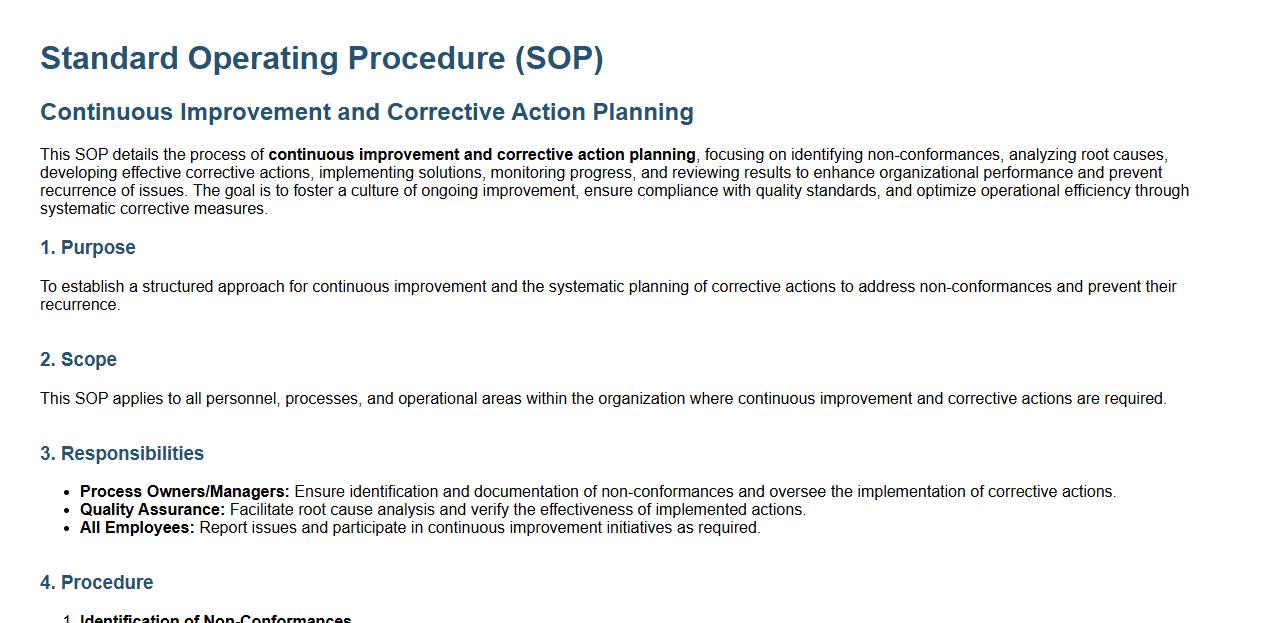
This SOP details the process of continuous improvement and corrective action planning, focusing on identifying non-conformances, analyzing root causes, developing effective corrective actions, implementing solutions, monitoring progress, and reviewing results to enhance organizational performance and prevent recurrence of issues. The goal is to foster a culture of ongoing improvement, ensure compliance with quality standards, and optimize operational efficiency through systematic corrective measures.
Key Procedures to Prevent Surplus Food Generation During Preparation and Service
The SOP emphasizes meticulous portion control and accurate forecasting to align food production with actual demand. It mandates the use of standardized recipes and batch cooking to minimize waste from over-preparation. Additionally, the SOP advocates for real-time communication between kitchen and service staff to adjust quantities dynamically.
Tracking and Measurement of Daily Food Waste Quantities
The SOP outlines a systematic process for daily recording of food waste via designated waste logs. It requires weighing all discarded food items using calibrated scales to ensure precise data capture. This information is then compiled into a centralized database for ongoing analysis and accountability.
Roles and Responsibilities for Food Waste Segregation and Disposal
The SOP assigns clear responsibilities to kitchen staff for the proper segregation of organic and non-organic food waste. Supervisors are tasked with monitoring compliance and ensuring that waste is disposed of according to environmental guidelines. It also involves training personnel on best practices to enhance effective waste management.
Reporting and Documentation Processes for Monitoring Compliance with Waste Reduction Targets
The SOP mandates regular submission of waste reduction reports to management outlining progress against targets. It prescribes use of standardized forms and digital tools to document waste audits, corrective actions, and improvement plans. These records support transparent tracking and facilitate continuous performance review.
Corrective and Preventive Actions When Food Waste Thresholds Are Exceeded
The SOP recommends immediate investigation into root causes when waste limits are breached, followed by targeted corrective measures. Preventive strategies include staff retraining, revising preparation procedures, and updating forecasting models. Continuous monitoring and feedback loops ensure that improvements are sustained over time.