
A SOP Template for Handling Food Allergies in Restaurants ensures standardized procedures to prevent cross-contamination and protect customers with allergies. This template outlines clear steps for staff training, ingredient management, and emergency response. Implementing such a template enhances food safety and customer trust in the establishment.
Identifying and documenting customer food allergies during reservation or order.
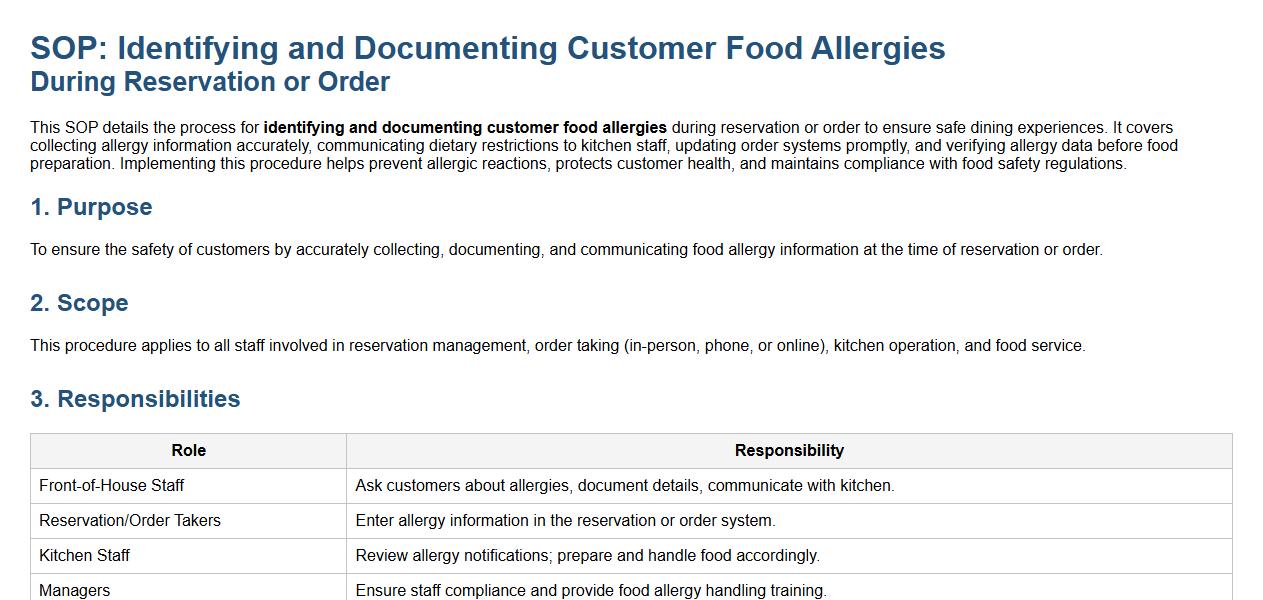
This SOP details the process for identifying and documenting customer food allergies during reservation or order to ensure safe dining experiences. It covers collecting allergy information accurately, communicating dietary restrictions to kitchen staff, updating order systems promptly, and verifying allergy data before food preparation. Implementing this procedure helps prevent allergic reactions, protects customer health, and maintains compliance with food safety regulations.
Communication of allergy information to kitchen and service staff.
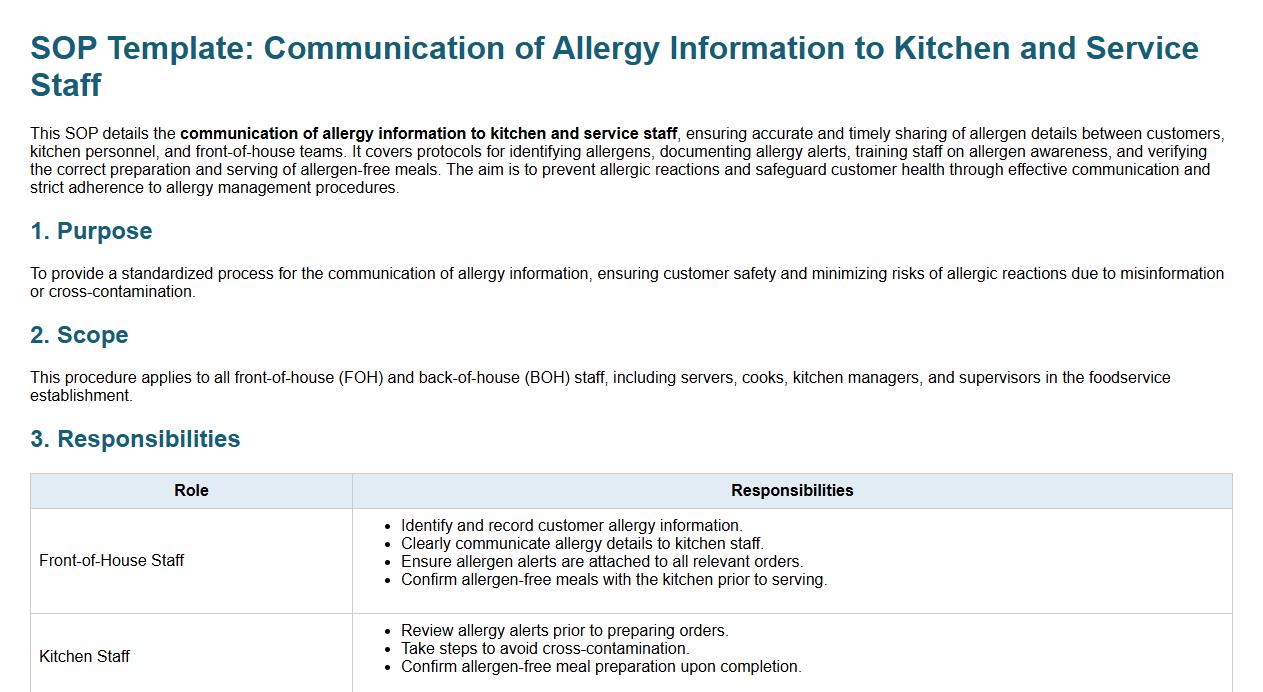
This SOP details the communication of allergy information to kitchen and service staff, ensuring accurate and timely sharing of allergen details between customers, kitchen personnel, and front-of-house teams. It covers protocols for identifying allergens, documenting allergy alerts, training staff on allergen awareness, and verifying the correct preparation and serving of allergen-free meals. The aim is to prevent allergic reactions and safeguard customer health through effective communication and strict adherence to allergy management procedures.
Cross-contamination prevention procedures in food prep and cooking areas.
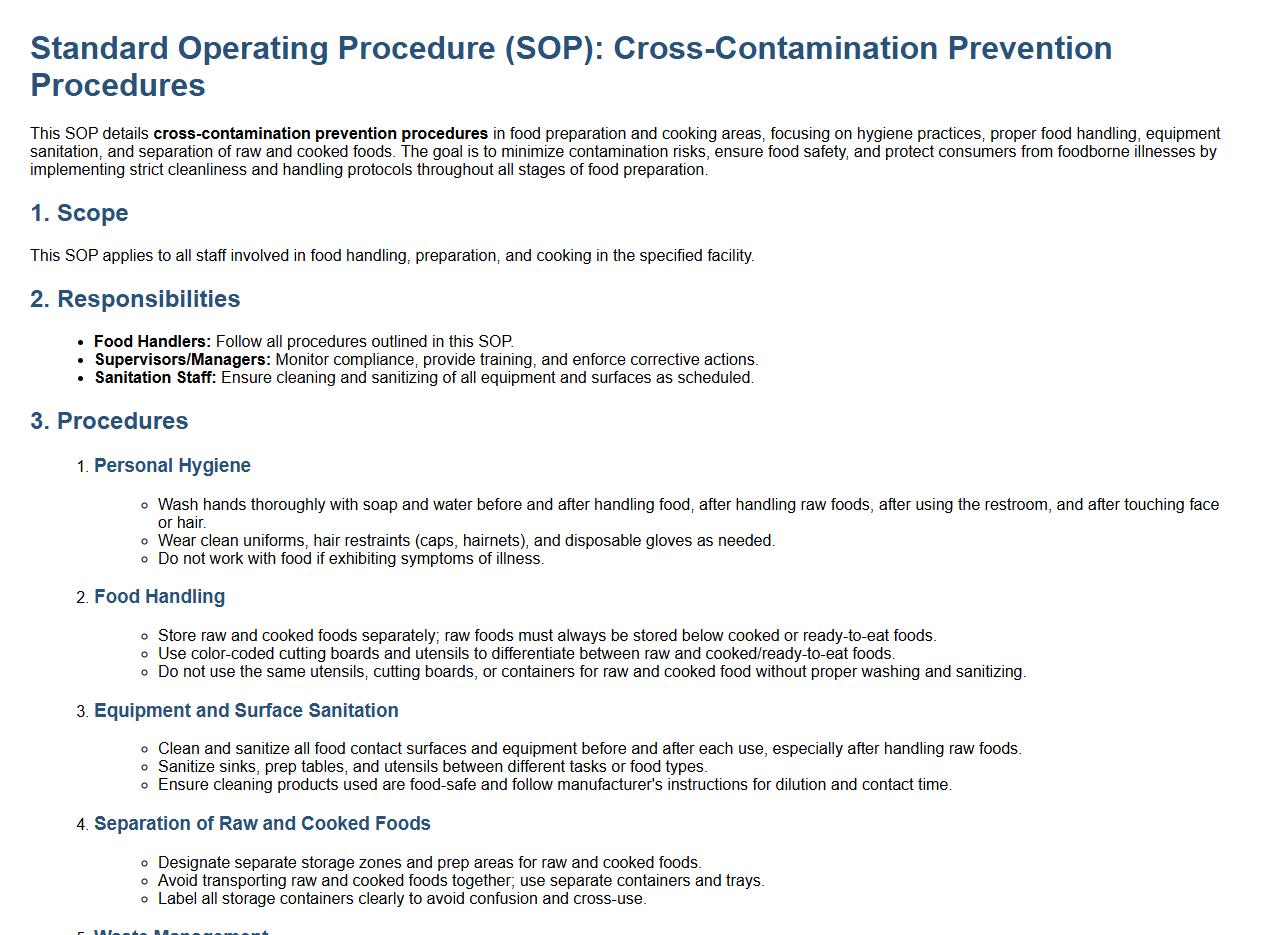
This SOP details cross-contamination prevention procedures in food preparation and cooking areas, focusing on hygiene practices, proper food handling, equipment sanitation, and separation of raw and cooked foods. The goal is to minimize contamination risks, ensure food safety, and protect consumers from foodborne illnesses by implementing strict cleanliness and handling protocols throughout all stages of food preparation.
Proper cleaning and sanitization of utensils, surfaces, and equipment.
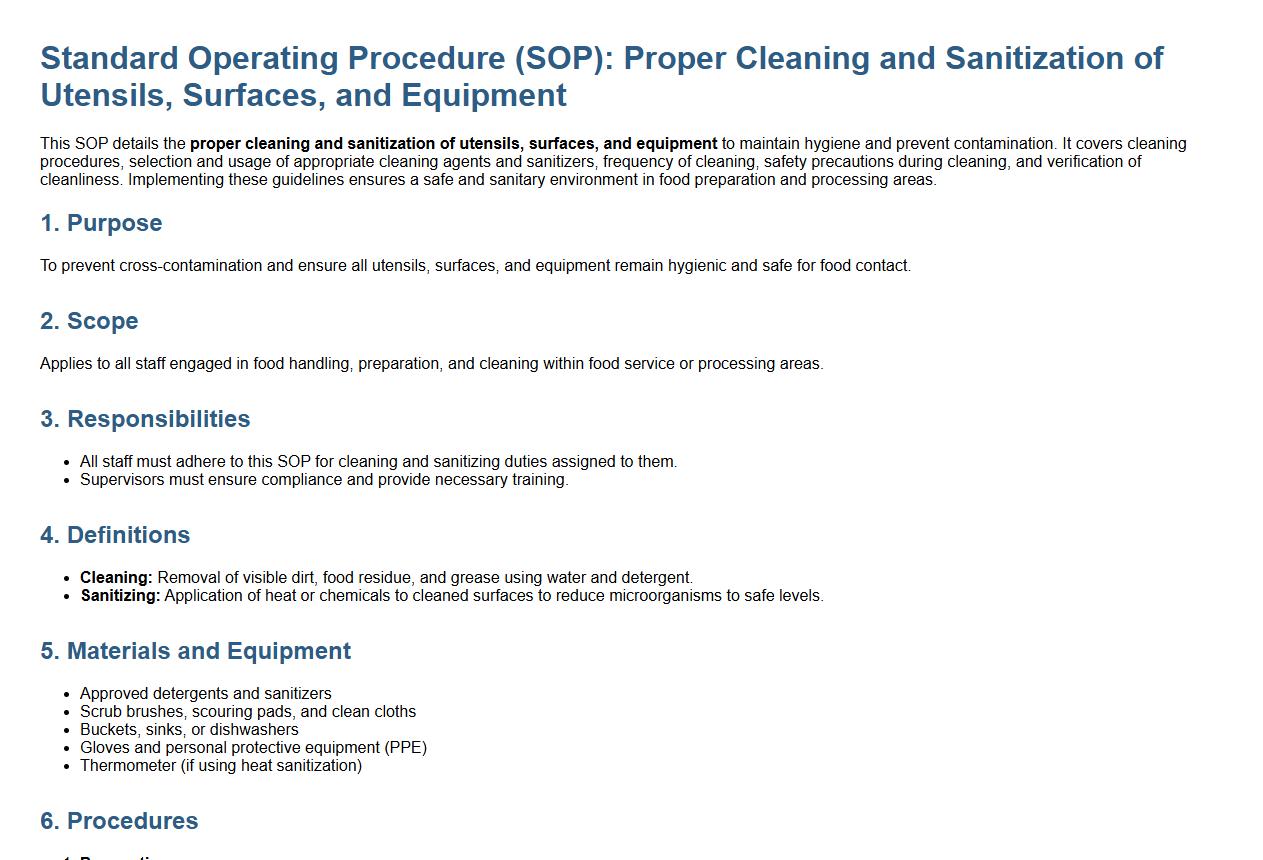
This SOP details the proper cleaning and sanitization of utensils, surfaces, and equipment to maintain hygiene and prevent contamination. It covers cleaning procedures, selection and usage of appropriate cleaning agents and sanitizers, frequency of cleaning, safety precautions during cleaning, and verification of cleanliness. Implementing these guidelines ensures a safe and sanitary environment in food preparation and processing areas.
Ingredient label checking and supplier verification protocols.
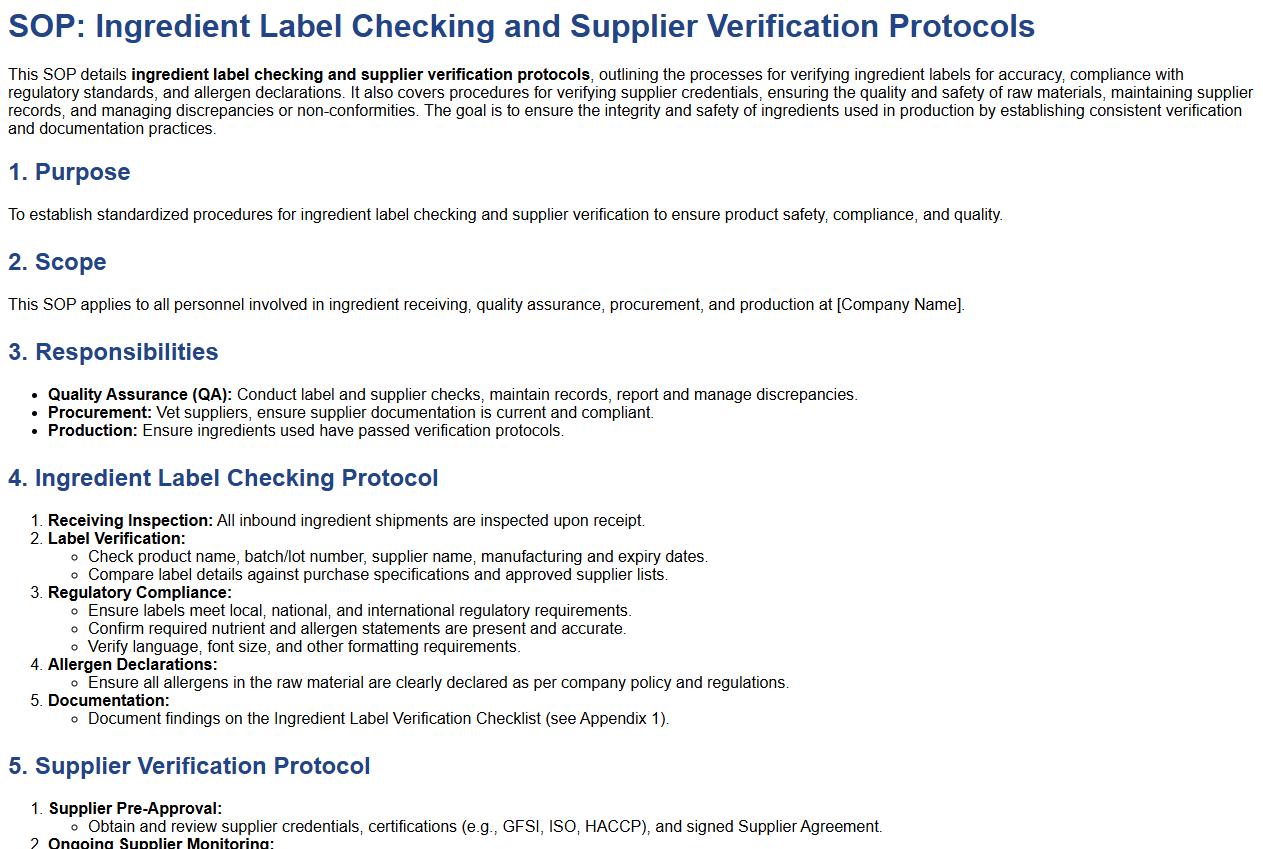
This SOP details ingredient label checking and supplier verification protocols, outlining the processes for verifying ingredient labels for accuracy, compliance with regulatory standards, and allergen declarations. It also covers procedures for verifying supplier credentials, ensuring the quality and safety of raw materials, maintaining supplier records, and managing discrepancies or non-conformities. The goal is to ensure the integrity and safety of ingredients used in production by establishing consistent verification and documentation practices.
Designation and storage of allergen-free ingredients and menu items.
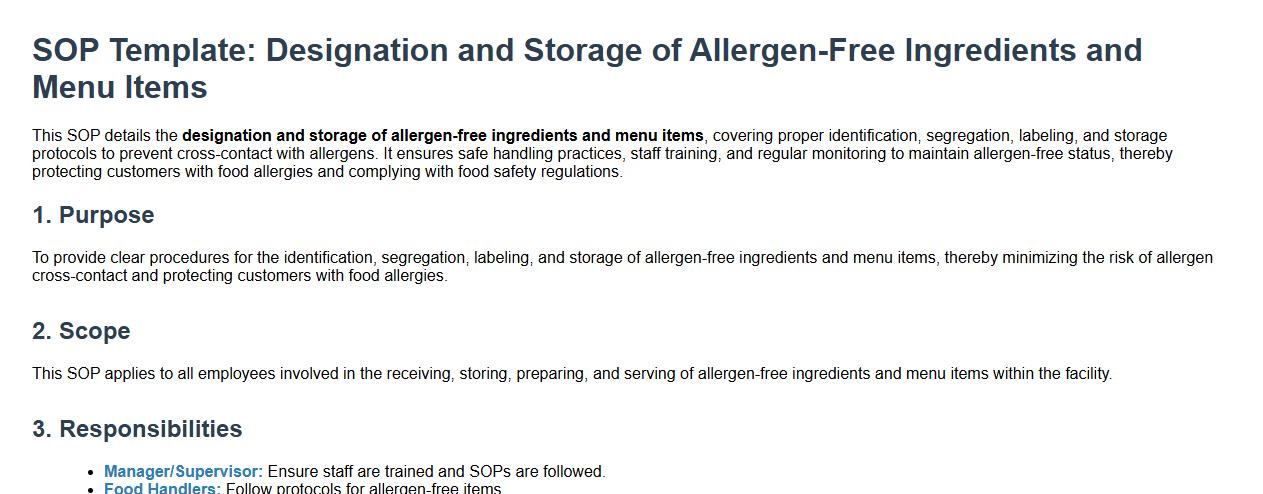
This SOP details the designation and storage of allergen-free ingredients and menu items, covering proper identification, segregation, labeling, and storage protocols to prevent cross-contact with allergens. It ensures safe handling practices, staff training, and regular monitoring to maintain allergen-free status, thereby protecting customers with food allergies and complying with food safety regulations.
Clear labeling of allergen-free dishes on menus and kitchen tickets.
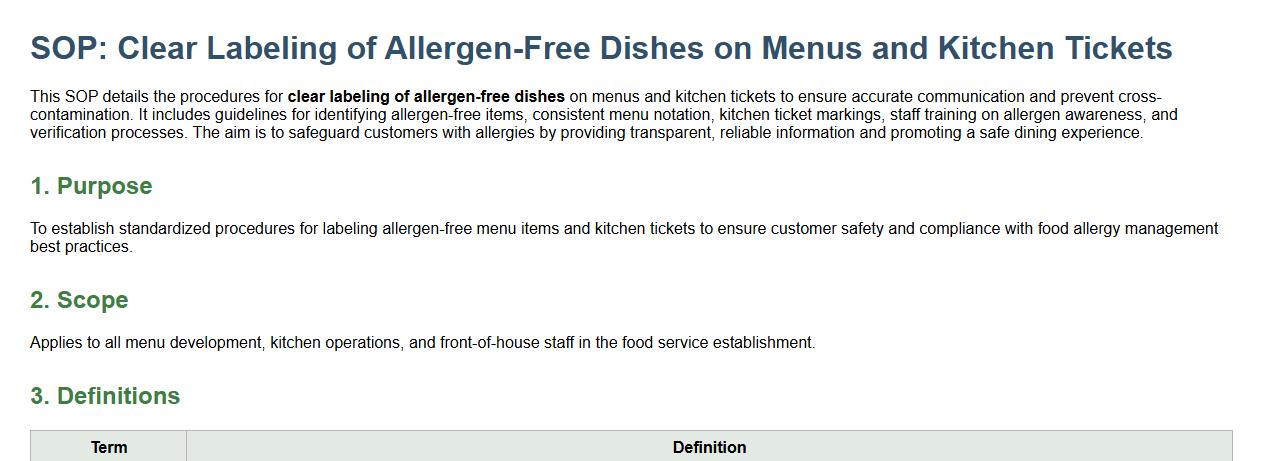
This SOP details the procedures for clear labeling of allergen-free dishes on menus and kitchen tickets to ensure accurate communication and prevent cross-contamination. It includes guidelines for identifying allergen-free items, consistent menu notation, kitchen ticket markings, staff training on allergen awareness, and verification processes. The aim is to safeguard customers with allergies by providing transparent, reliable information and promoting a safe dining experience.
Staff training on allergy awareness and emergency response.
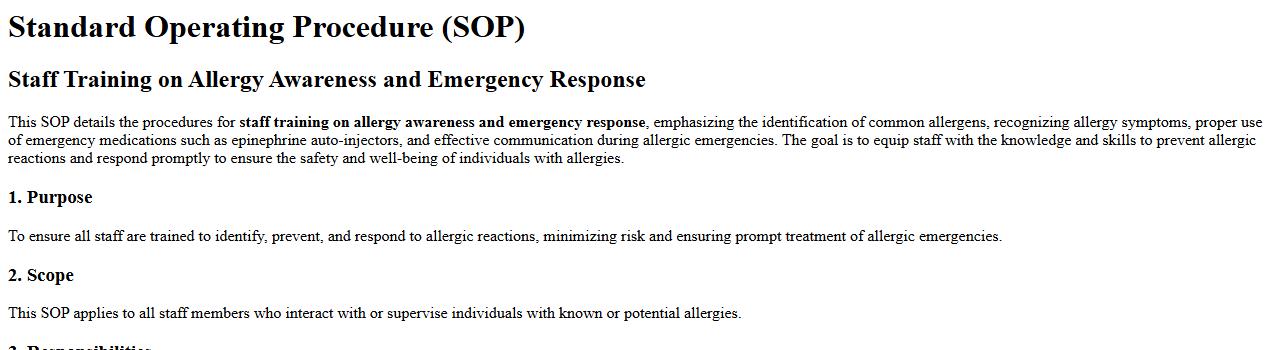
This SOP details the procedures for staff training on allergy awareness and emergency response, emphasizing the identification of common allergens, recognizing allergy symptoms, proper use of emergency medications such as epinephrine auto-injectors, and effective communication during allergic emergencies. The goal is to equip staff with the knowledge and skills to prevent allergic reactions and respond promptly to ensure the safety and well-being of individuals with allergies.
Procedures for responding to customer allergic reactions and administering first aid.
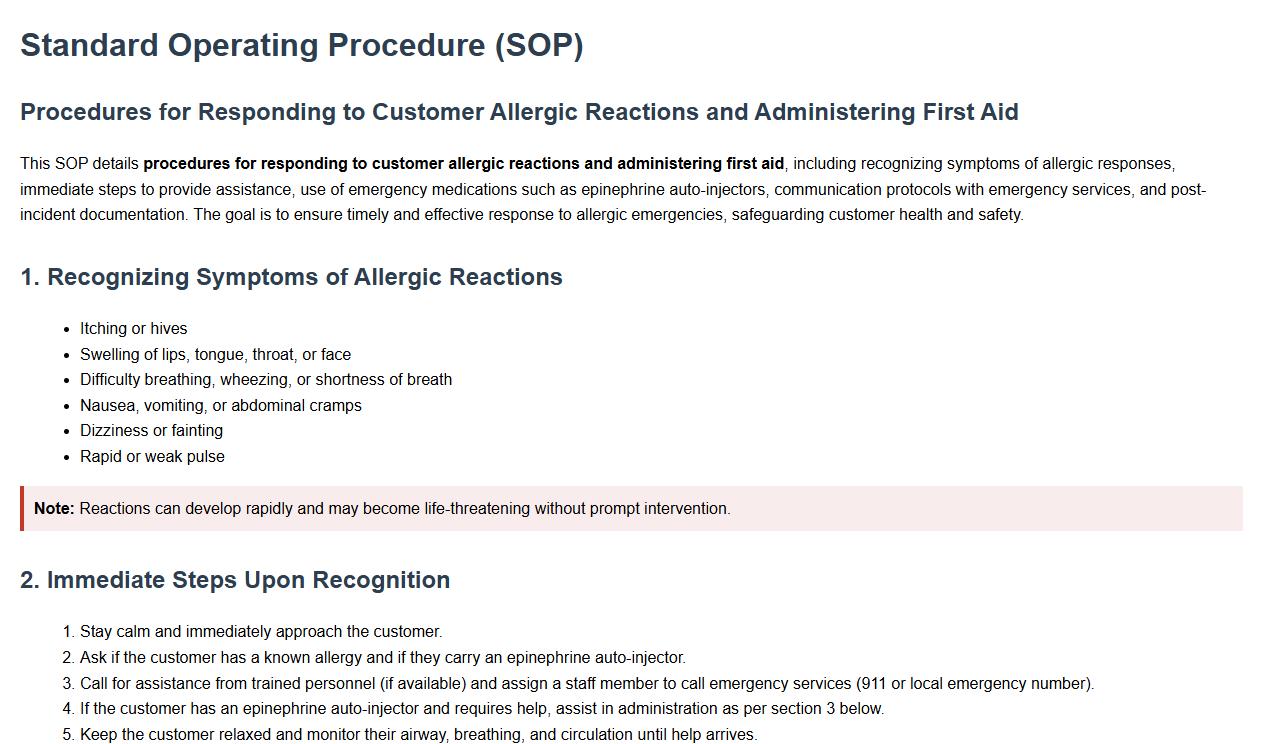
This SOP details procedures for responding to customer allergic reactions and administering first aid, including recognizing symptoms of allergic responses, immediate steps to provide assistance, use of emergency medications such as epinephrine auto-injectors, communication protocols with emergency services, and post-incident documentation. The goal is to ensure timely and effective response to allergic emergencies, safeguarding customer health and safety.
Documentation and incident reporting related to food allergy cases.
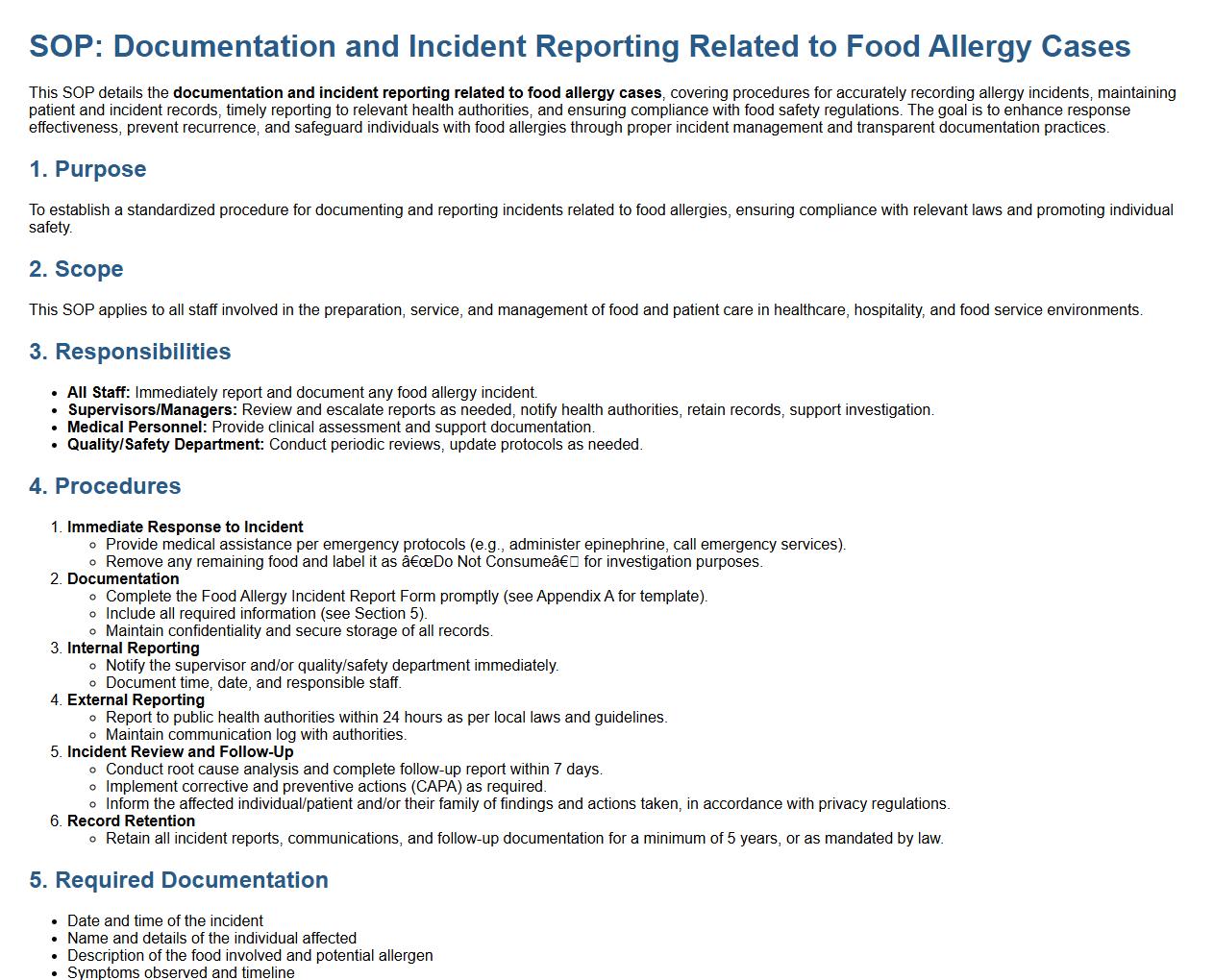
This SOP details the documentation and incident reporting related to food allergy cases, covering procedures for accurately recording allergy incidents, maintaining patient and incident records, timely reporting to relevant health authorities, and ensuring compliance with food safety regulations. The goal is to enhance response effectiveness, prevent recurrence, and safeguard individuals with food allergies through proper incident management and transparent documentation practices.
Steps Staff Must Follow When a Customer Notifies Them of a Food Allergy According to the SOP
Staff must immediately acknowledge the customer's allergy notification to ensure understanding. They should carefully confirm the specific allergen and any related severity or symptoms. Following this, staff must inform the kitchen team promptly to initiate safe food preparation processes.
Documentation Procedures Required for Recording Allergy-Related Customer Requests
All allergy-related requests must be logged accurately in the designated allergy communication form or system. Details should include the customer's name, allergen type, and any special instructions. This documentation ensures clear and reliable cross-team communication and legal compliance.
Cross-Contamination Prevention Measures Detailed in the SOP for Preparing Allergen-Free Meals
The SOP mandates strict use of separate utensils, cooking surfaces, and storage areas to prevent cross-contamination. Staff must wash hands thoroughly and wear clean gloves prior to handling allergen-free foods. Additionally, clear labeling of allergen-free ingredients and dishes is essential for safety.
Protocol for Communicating Food Allergy Information Between Front of House and Kitchen Staff
Front of house staff must use a standardized communication tool, such as allergy tickets or digital alerts, to relay allergy information. Immediate verbal confirmation of allergy details ensures understanding by kitchen staff. Both teams should follow a double-check system before meal preparation and delivery to the customer.
How Staff Should Respond in the Event of an Allergic Reaction According to the SOP
Staff are instructed to act quickly and calmly, immediately alerting the onsite first aid responder or emergency services. They must administer any prescribed medication like an epinephrine auto-injector if trained to do so. Additionally, the incident must be recorded and reported following the SOP for future prevention and legal documentation.