
A SOP Template for Handling Allergies in Restaurants ensures staff follow consistent procedures to identify and manage food allergies effectively. It outlines steps for communication, cross-contamination prevention, and emergency response to protect customers with allergies. Implementing this template enhances food safety and customer trust in dining experiences.
Identifying and documenting customer allergies during reservation/ordering.
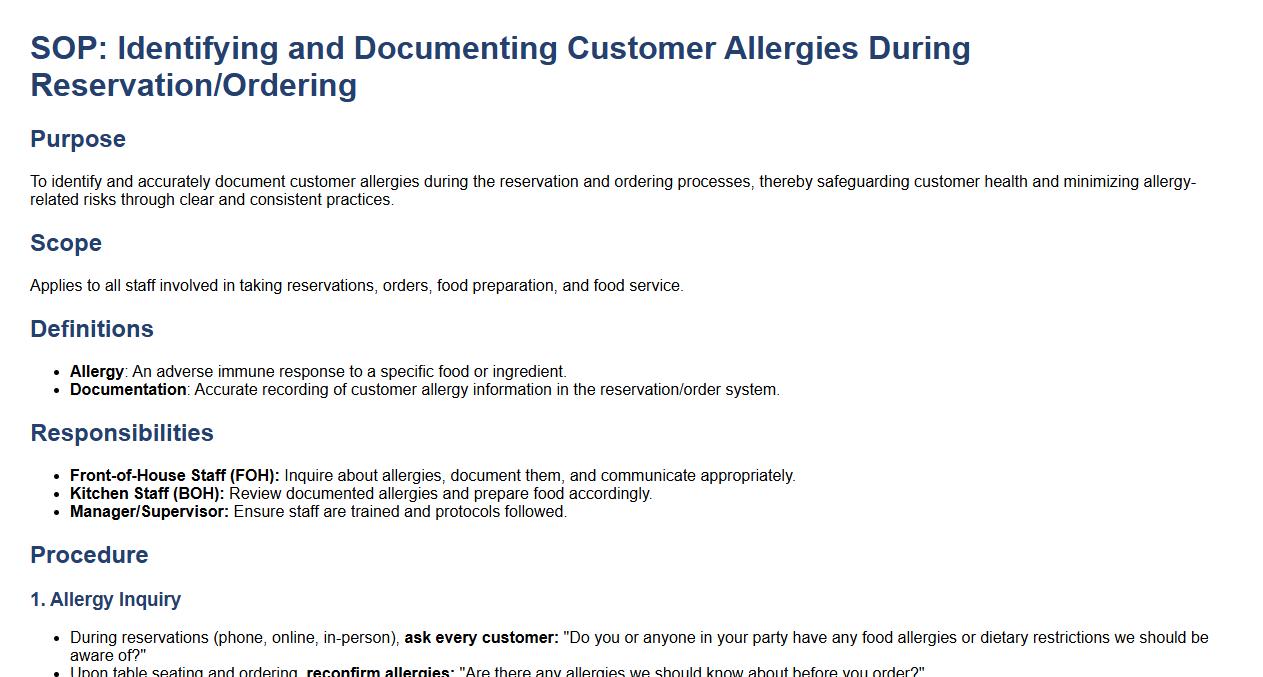
This SOP details the process for identifying and documenting customer allergies during reservation and ordering to ensure safe food service. It covers methods for allergy inquiry, accurate recording of allergy information, staff training requirements, communication protocols among kitchen and service staff, and verification procedures to prevent allergic reactions. The objective is to safeguard customer health by minimizing allergy-related risks through clear and consistent documentation practices.
Staff training on food allergies and cross-contact prevention.
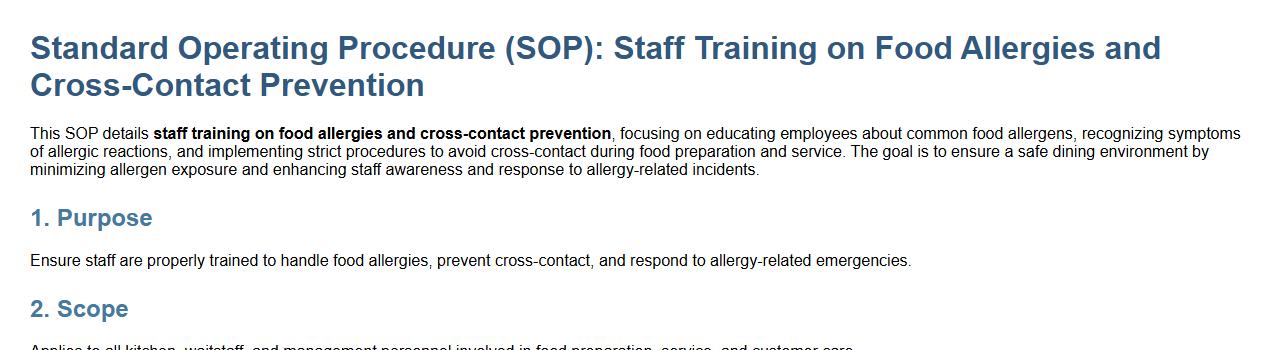
This SOP details staff training on food allergies and cross-contact prevention, focusing on educating employees about common food allergens, recognizing symptoms of allergic reactions, and implementing strict procedures to avoid cross-contact during food preparation and service. The goal is to ensure a safe dining environment by minimizing allergen exposure and enhancing staff awareness and response to allergy-related incidents.
Clear labeling of allergenic ingredients on menus.
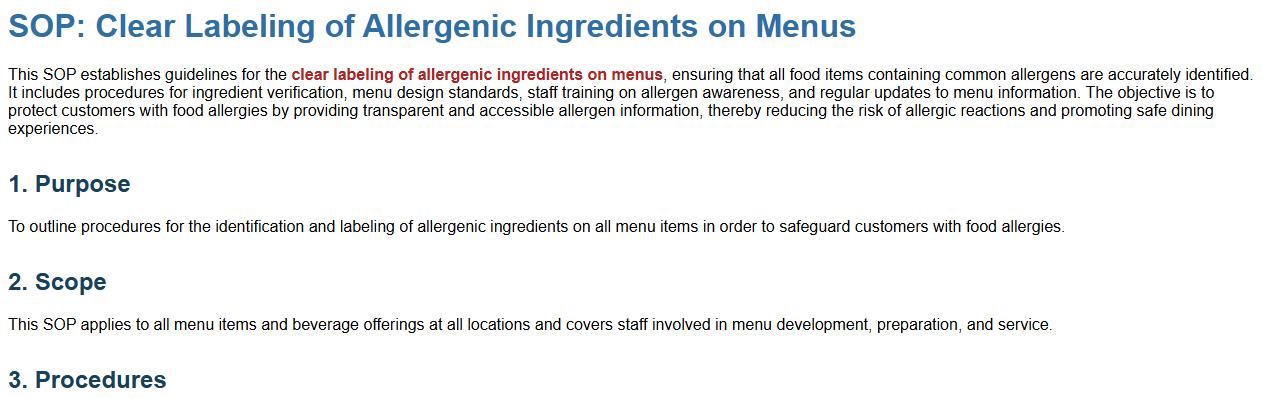
This SOP establishes guidelines for the clear labeling of allergenic ingredients on menus, ensuring that all food items containing common allergens are accurately identified. It includes procedures for ingredient verification, menu design standards, staff training on allergen awareness, and regular updates to menu information. The objective is to protect customers with food allergies by providing transparent and accessible allergen information, thereby reducing the risk of allergic reactions and promoting safe dining experiences.
Verification procedures for communicating allergies to kitchen staff.
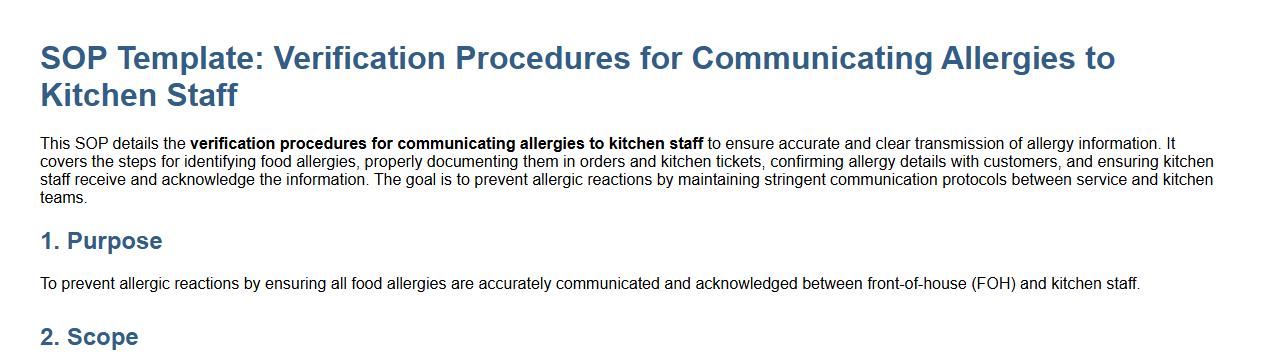
This SOP details the verification procedures for communicating allergies to kitchen staff to ensure accurate and clear transmission of allergy information. It covers the steps for identifying food allergies, properly documenting them in orders and kitchen tickets, confirming allergy details with customers, and ensuring kitchen staff receive and acknowledge the information. The goal is to prevent allergic reactions by maintaining stringent communication protocols between service and kitchen teams.
Designated allergen-free preparation areas and utensils.
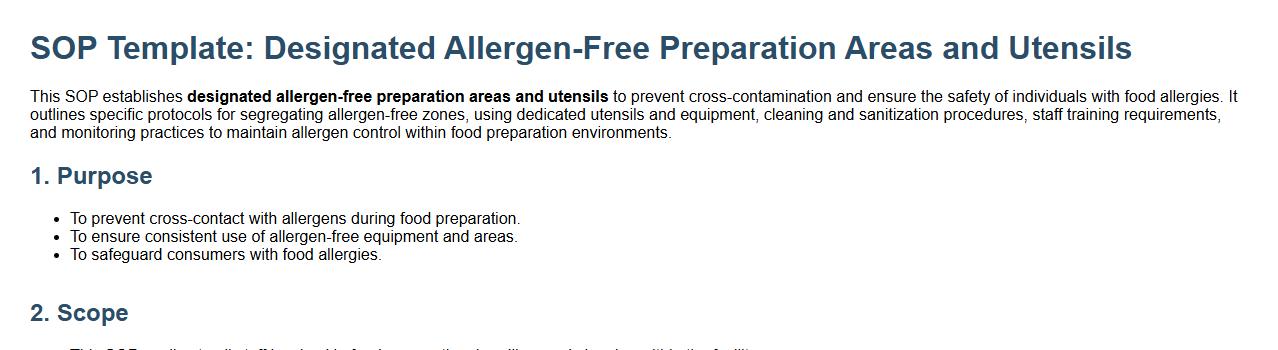
This SOP establishes designated allergen-free preparation areas and utensils to prevent cross-contamination and ensure the safety of individuals with food allergies. It outlines specific protocols for segregating allergen-free zones, using dedicated utensils and equipment, cleaning and sanitization procedures, staff training requirements, and monitoring practices to maintain allergen control within food preparation environments.
Guidelines for cleaning and sanitizing surfaces to prevent cross-contamination.
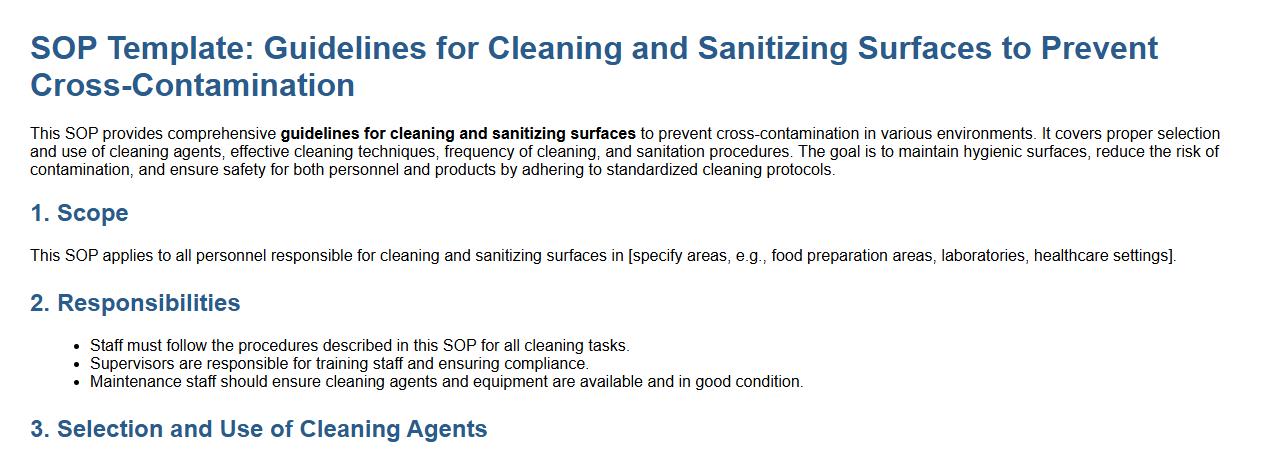
This SOP provides comprehensive guidelines for cleaning and sanitizing surfaces to prevent cross-contamination in various environments. It covers proper selection and use of cleaning agents, effective cleaning techniques, frequency of cleaning, and sanitation procedures. The goal is to maintain hygienic surfaces, reduce the risk of contamination, and ensure safety for both personnel and products by adhering to standardized cleaning protocols.
Strict separation and storage of allergen and non-allergen foods.
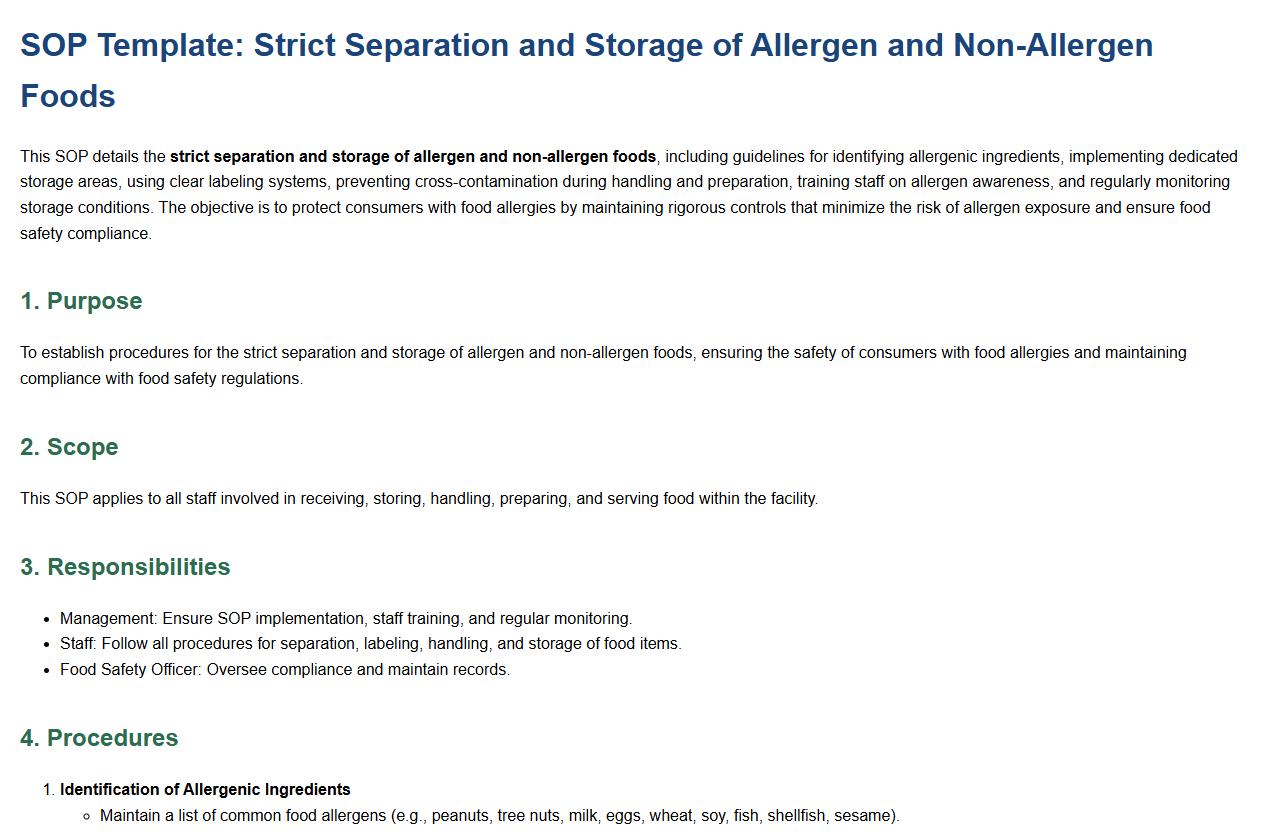
This SOP details the strict separation and storage of allergen and non-allergen foods, including guidelines for identifying allergenic ingredients, implementing dedicated storage areas, using clear labeling systems, preventing cross-contamination during handling and preparation, training staff on allergen awareness, and regularly monitoring storage conditions. The objective is to protect consumers with food allergies by maintaining rigorous controls that minimize the risk of allergen exposure and ensure food safety compliance.
Double-checking and confirming allergen-free orders before serving.
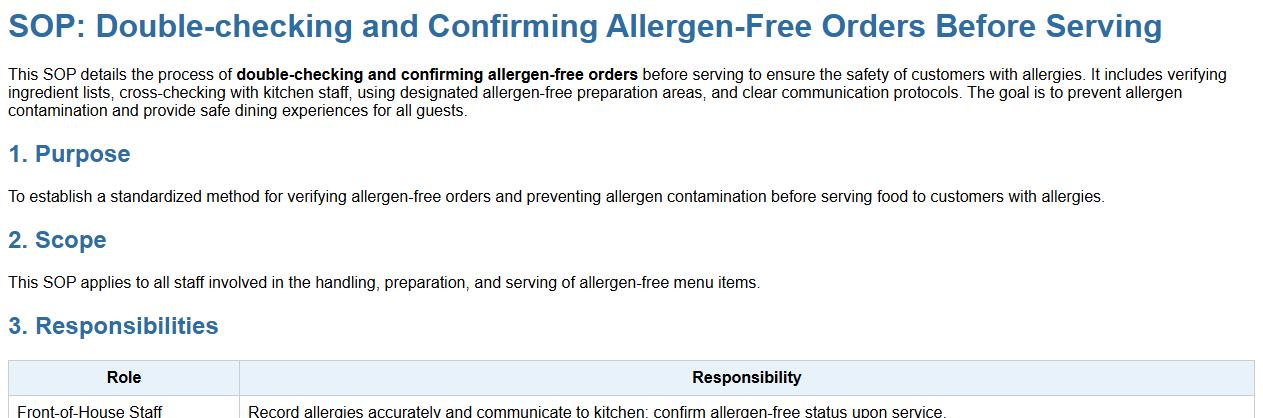
This SOP details the process of double-checking and confirming allergen-free orders before serving to ensure the safety of customers with allergies. It includes verifying ingredient lists, cross-checking with kitchen staff, using designated allergen-free preparation areas, and clear communication protocols. The goal is to prevent allergen contamination and provide safe dining experiences for all guests.
Emergency response protocol for allergic reactions (e.g., administering epinephrine, contacting emergency services).
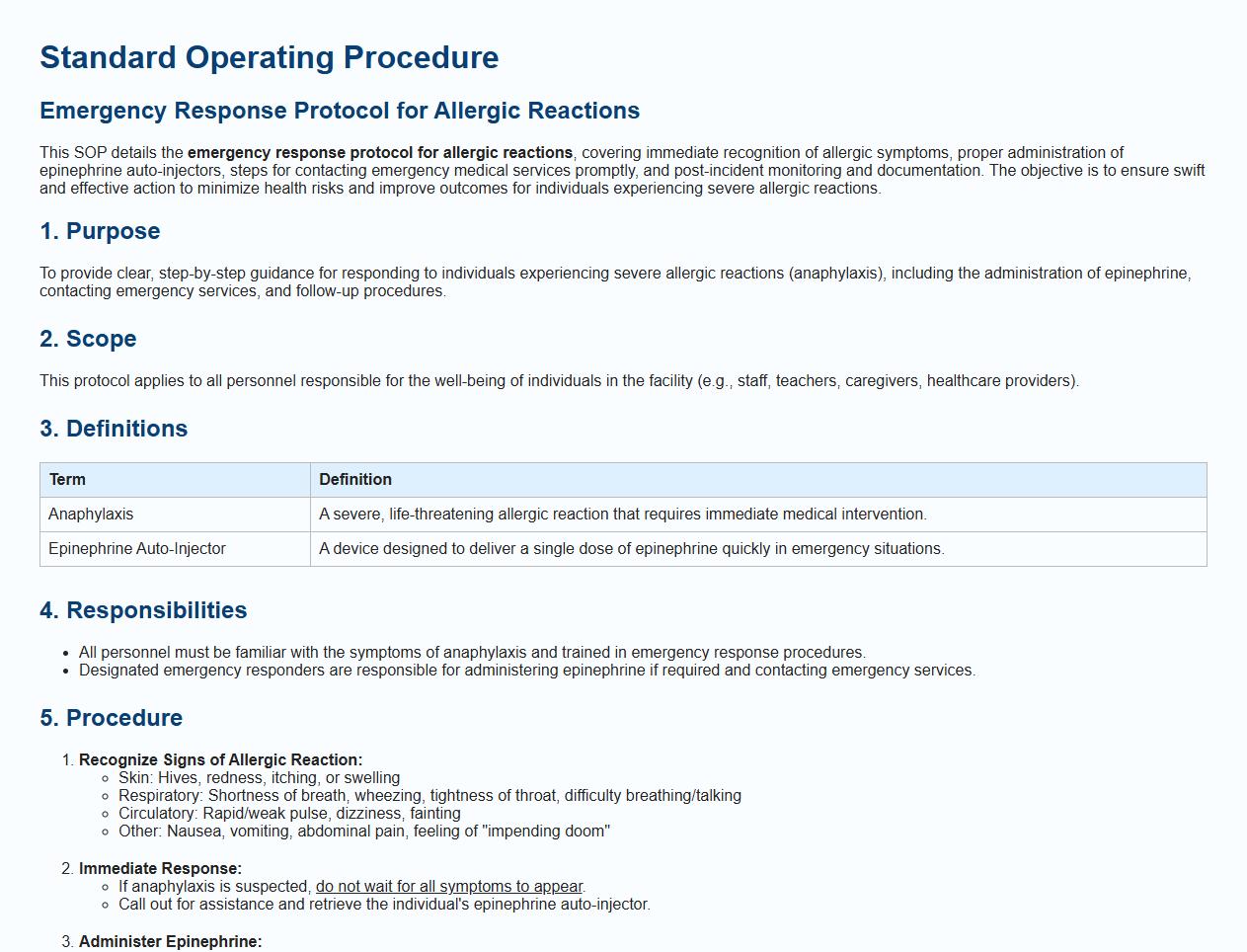
This SOP details the emergency response protocol for allergic reactions, covering immediate recognition of allergic symptoms, proper administration of epinephrine auto-injectors, steps for contacting emergency medical services promptly, and post-incident monitoring and documentation. The objective is to ensure swift and effective action to minimize health risks and improve outcomes for individuals experiencing severe allergic reactions.
Post-incident documentation and reporting procedures for allergy-related incidents.
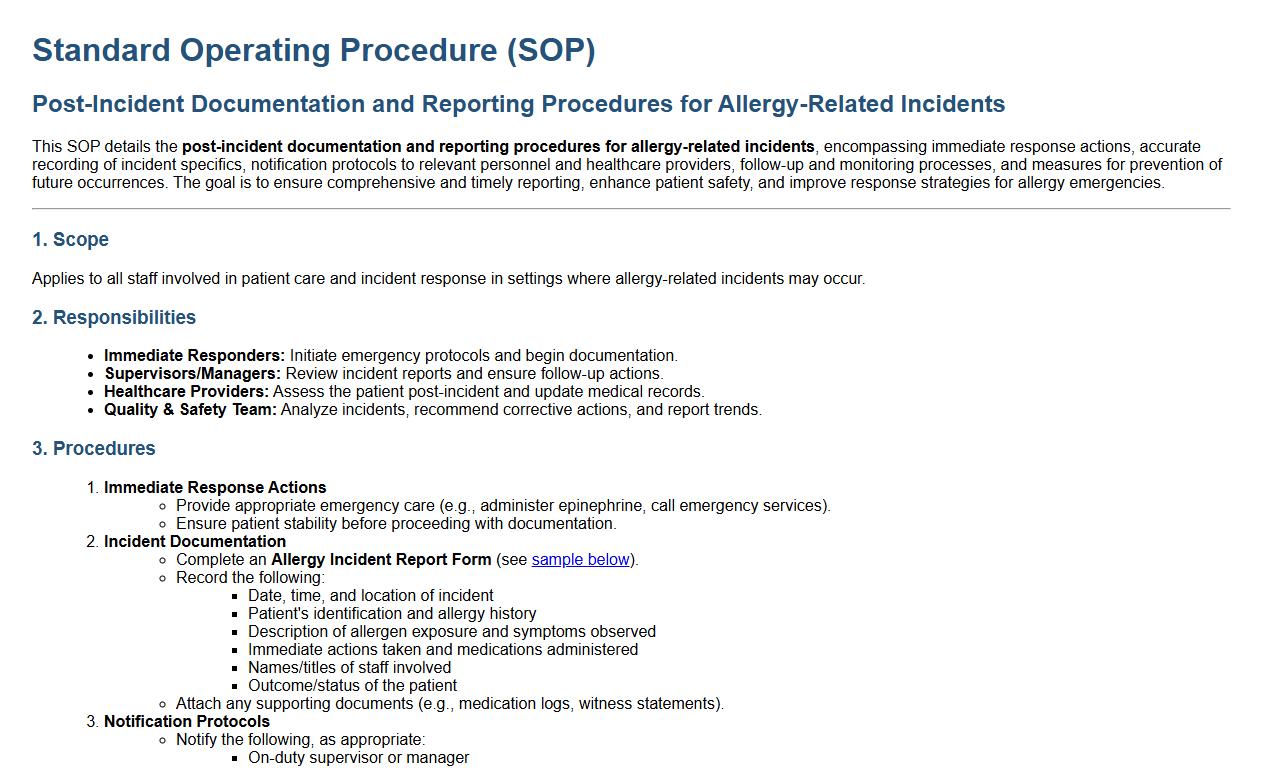
This SOP details the post-incident documentation and reporting procedures for allergy-related incidents, encompassing immediate response actions, accurate recording of incident specifics, notification protocols to relevant personnel and healthcare providers, follow-up and monitoring processes, and measures for prevention of future occurrences. The goal is to ensure comprehensive and timely reporting, enhance patient safety, and improve response strategies for allergy emergencies.
What specific procedures must staff follow when a customer declares a food allergy?
When a customer declares a food allergy, staff must first carefully listen and confirm the allergy details. They should immediately notify the kitchen staff to ensure the meal is prepared with allergen-free ingredients. Additionally, staff must document the allergy information and communicate any special requests clearly to avoid cross-contact.
How should cross-contamination be prevented during food preparation and service?
To prevent cross-contamination, separate utensils, cutting boards, and preparation surfaces must be used for allergen-free meals. All staff should practice thorough hand washing and wear gloves when handling allergen-sensitive foods. Proper cleaning procedures should be followed to sanitize equipment between different food preparations.
Who is responsible for communicating allergen information to customers and the kitchen?
It is the responsibility of both the front-of-house staff and kitchen team to communicate allergen information effectively. Front-of-house staff must accurately record customer allergies and relay them to the kitchen. Kitchen staff must then prepare meals strictly according to the allergen information provided to ensure safety.
What documentation is required when handling and reporting allergy incidents?
Restaurants must maintain thorough incident reports detailing the allergy reaction, customer information, and staff actions taken. These reports should be submitted to management and regulatory bodies if necessary. Documentation serves to improve safety protocols and helps prevent future allergy incidents.
How frequently must allergen awareness training be conducted for all restaurant staff?
All restaurant staff must undergo allergen awareness training at least annually to stay updated on best practices. New hires should receive training as part of their onboarding process. Regular refresher sessions help reinforce knowledge and improve compliance with allergen safety standards.