

A SOP Template for Feedback Collection and Analysis provides a structured framework to systematically gather, organize, and evaluate customer or employee feedback. This template ensures consistency in data collection methods, helping businesses identify trends and make informed decisions to improve products or services. Efficient use of this SOP streamlines the feedback loop, enhancing overall organizational performance.
Feedback collection scheduling and frequency guidelines.
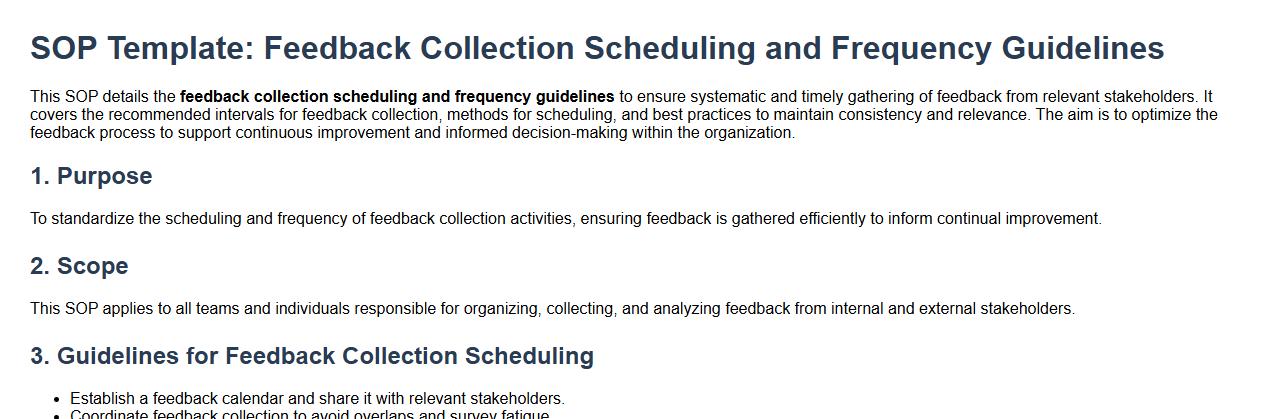
This SOP details the feedback collection scheduling and frequency guidelines to ensure systematic and timely gathering of feedback from relevant stakeholders. It covers the recommended intervals for feedback collection, methods for scheduling, and best practices to maintain consistency and relevance. The aim is to optimize the feedback process to support continuous improvement and informed decision-making within the organization.
Selection and training of feedback collectors or survey administrators.
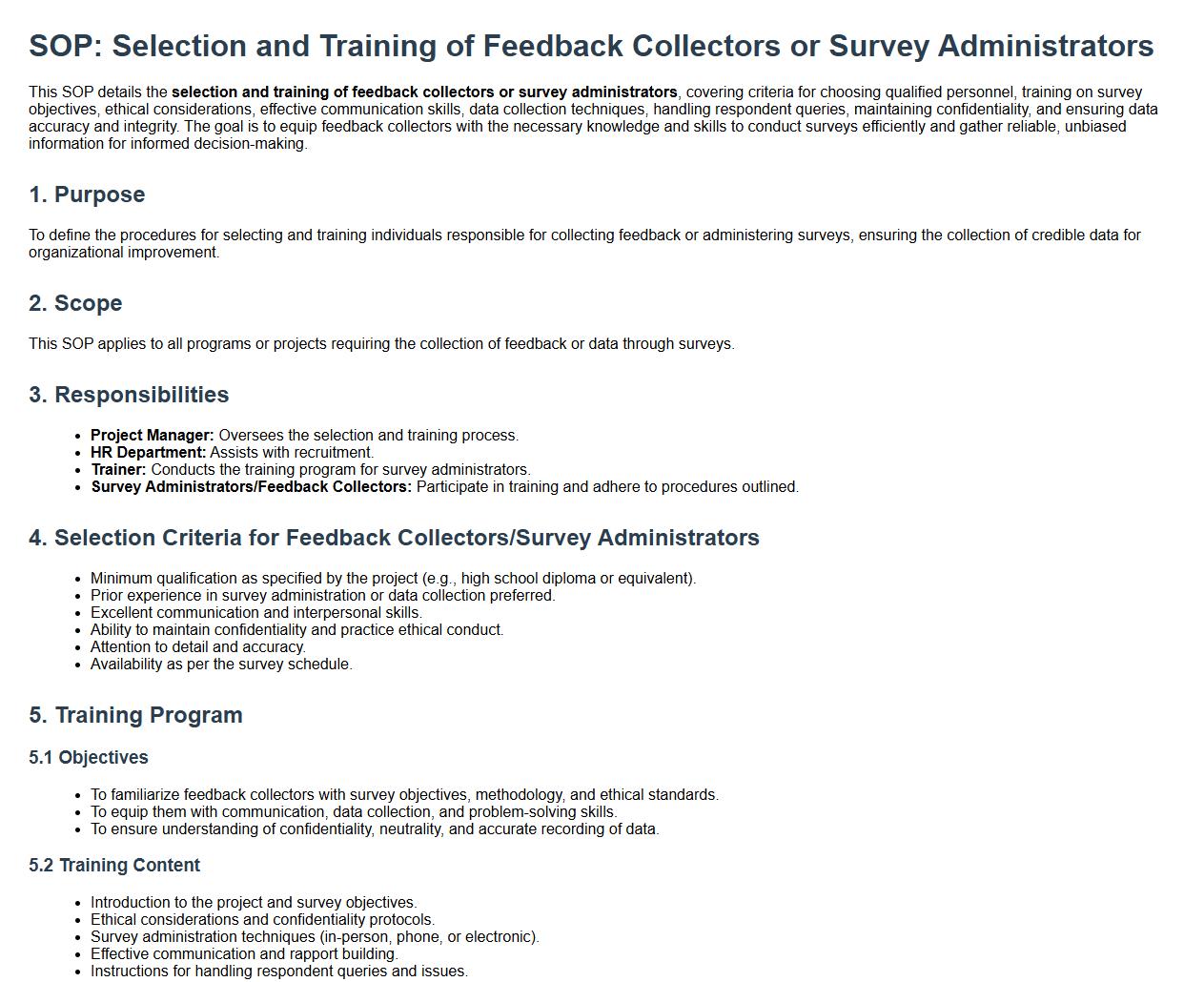
This SOP details the selection and training of feedback collectors or survey administrators, covering criteria for choosing qualified personnel, training on survey objectives, ethical considerations, effective communication skills, data collection techniques, handling respondent queries, maintaining confidentiality, and ensuring data accuracy and integrity. The goal is to equip feedback collectors with the necessary knowledge and skills to conduct surveys efficiently and gather reliable, unbiased information for informed decision-making.
Standardized feedback form/template creation procedures.
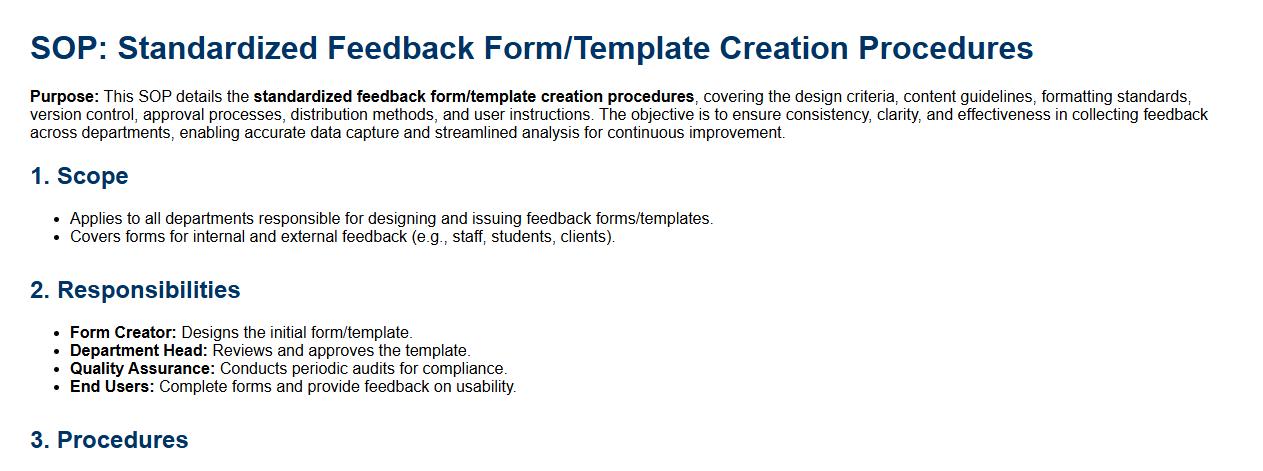
This SOP details the standardized feedback form/template creation procedures, covering the design criteria, content guidelines, formatting standards, version control, approval processes, distribution methods, and user instructions. The objective is to ensure consistency, clarity, and effectiveness in collecting feedback across departments, enabling accurate data capture and streamlined analysis for continuous improvement.
Multi-channel feedback collection process (e.g., in-person, online, phone).
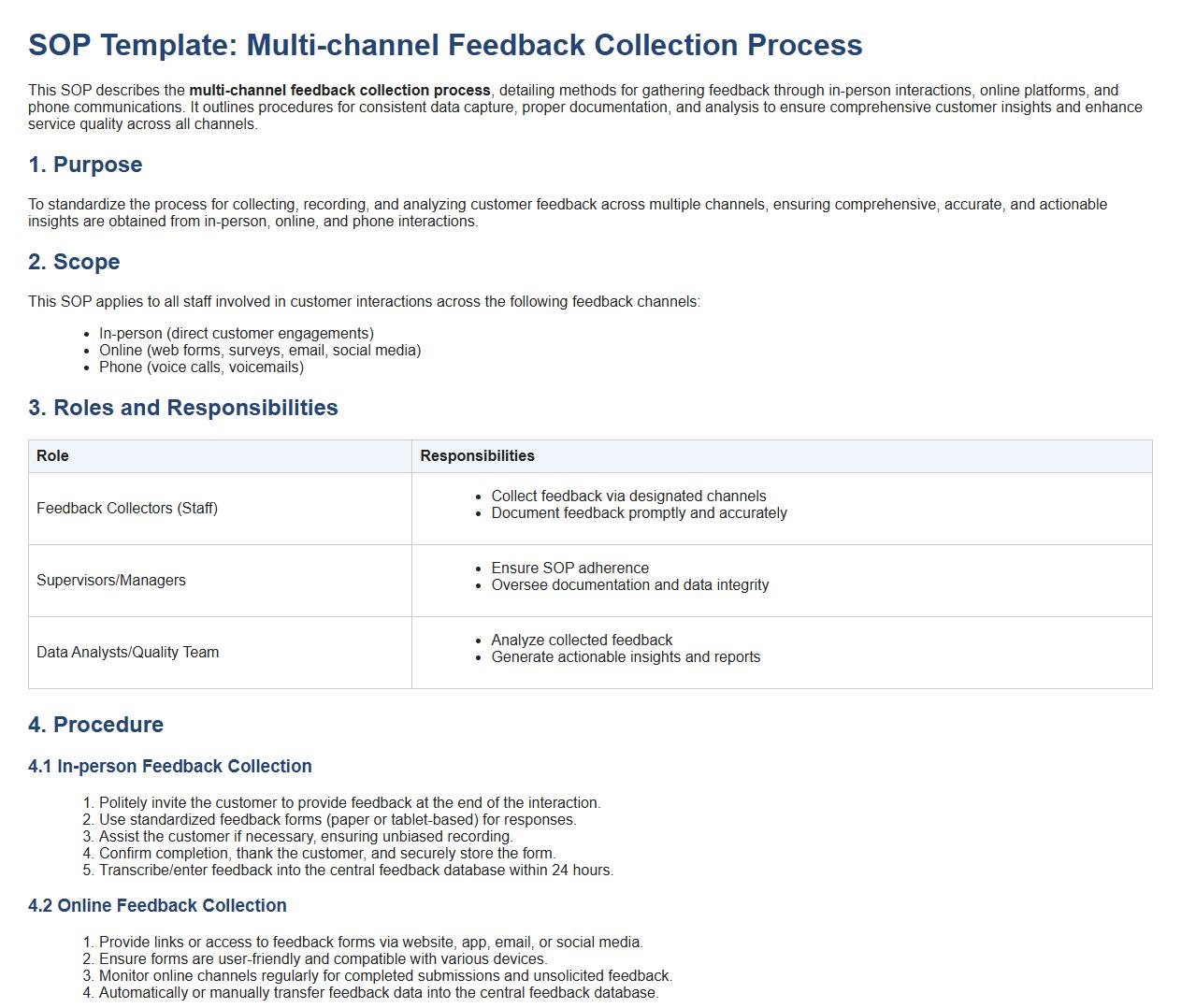
This SOP describes the multi-channel feedback collection process, detailing methods for gathering feedback through in-person interactions, online platforms, and phone communications. It outlines procedures for consistent data capture, proper documentation, and analysis to ensure comprehensive customer insights and enhance service quality across all channels.
Respondent consent and confidentiality protocols.
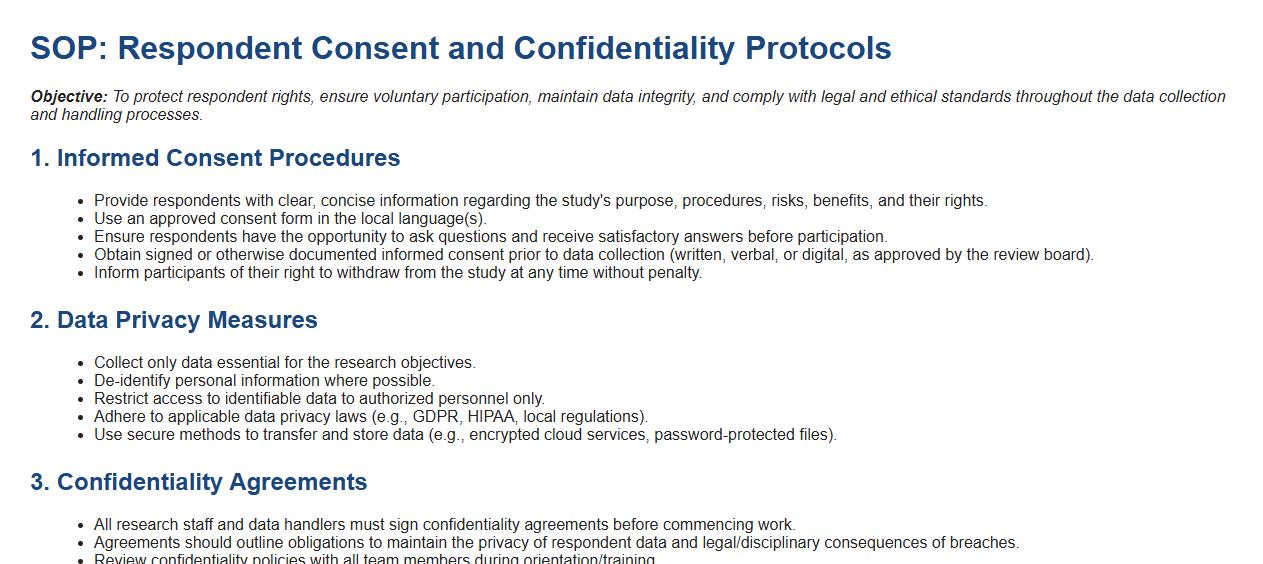
This SOP details respondent consent and confidentiality protocols, covering informed consent procedures, data privacy measures, confidentiality agreements, secure data storage practices, participant anonymity safeguards, and ethical considerations in research. The objective is to protect respondent rights, ensure voluntary participation, maintain data integrity, and comply with legal and ethical standards throughout the data collection and handling processes.
Data entry, validation, and error-checking methods.
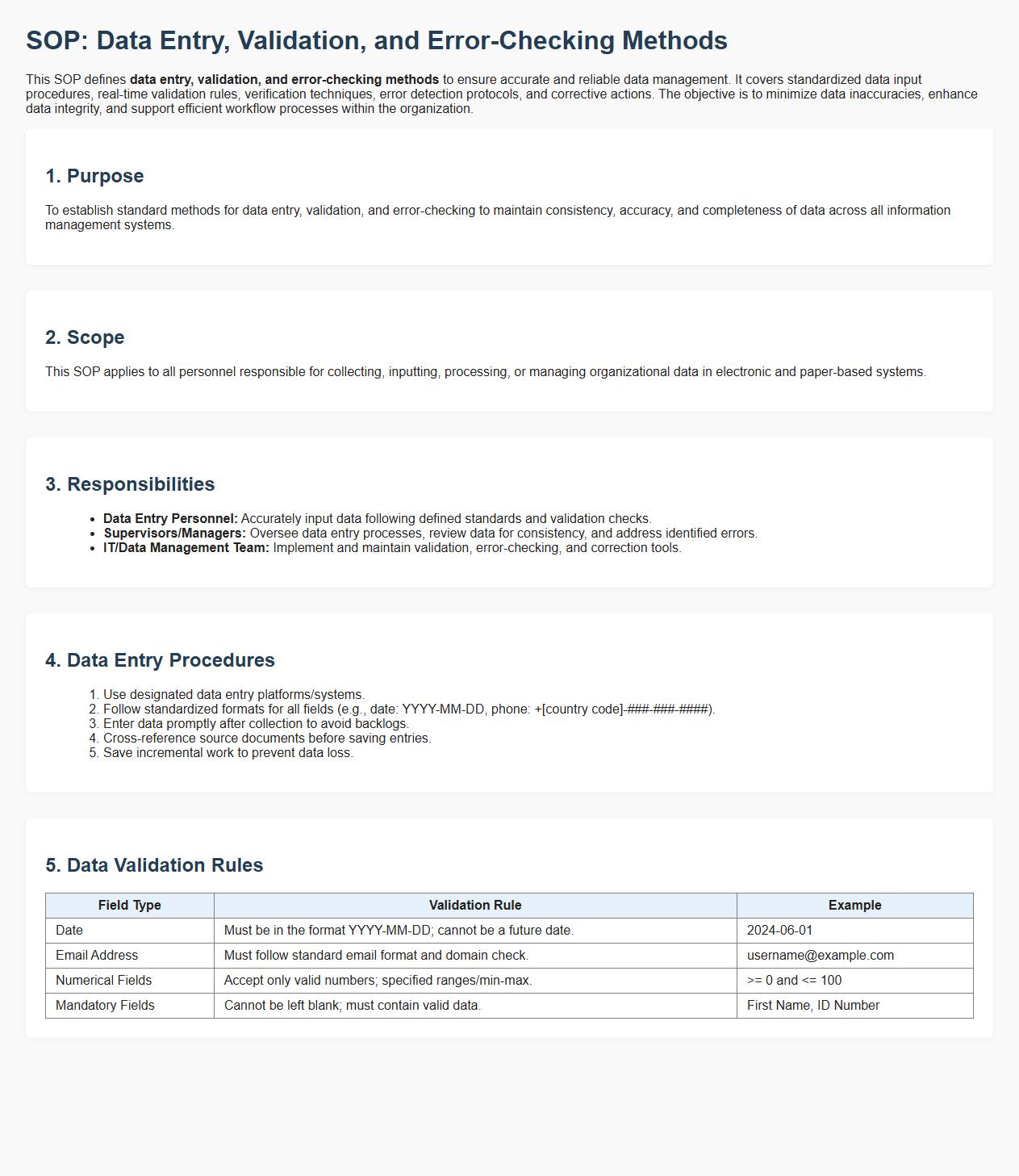
This SOP defines data entry, validation, and error-checking methods to ensure accurate and reliable data management. It covers standardized data input procedures, real-time validation rules, verification techniques, error detection protocols, and corrective actions. The objective is to minimize data inaccuracies, enhance data integrity, and support efficient workflow processes within the organization.
Feedback data storage, security, and access control.
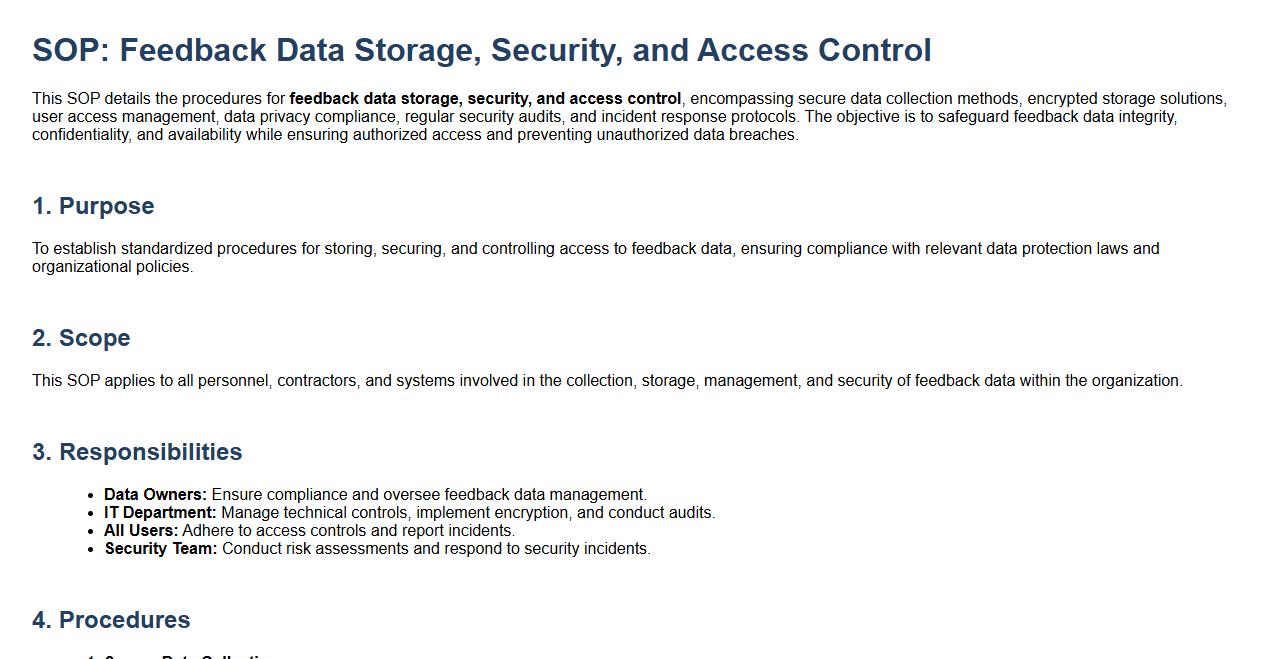
This SOP details the procedures for feedback data storage, security, and access control, encompassing secure data collection methods, encrypted storage solutions, user access management, data privacy compliance, regular security audits, and incident response protocols. The objective is to safeguard feedback data integrity, confidentiality, and availability while ensuring authorized access and preventing unauthorized data breaches.
Categorization and coding of qualitative and quantitative feedback.
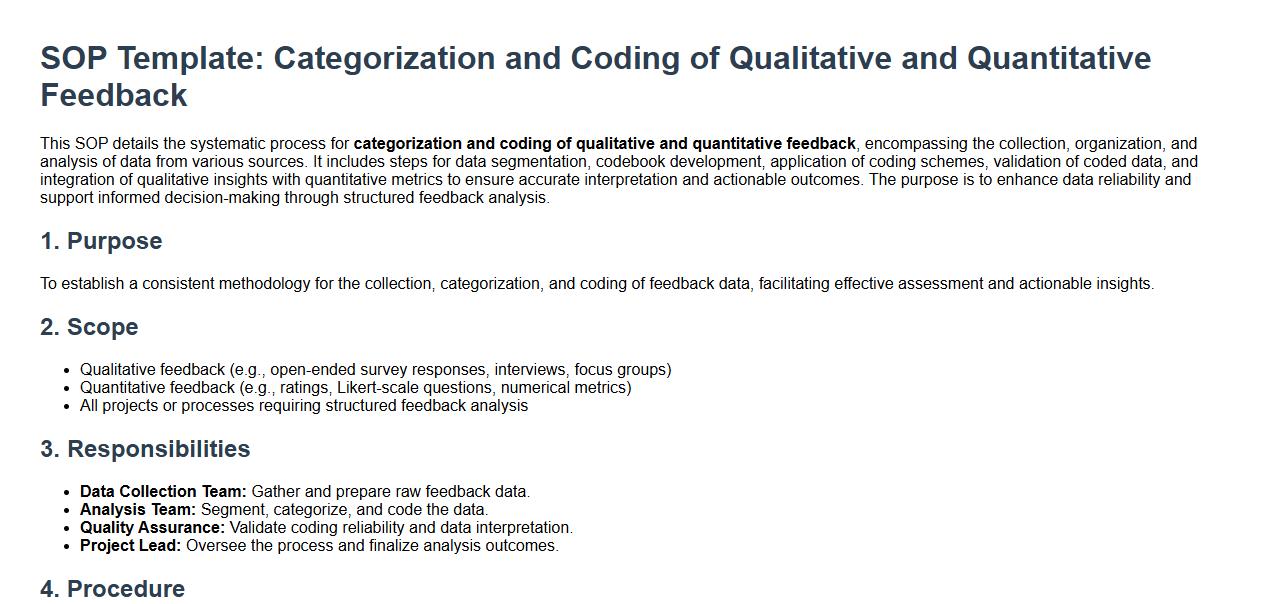
This SOP details the systematic process for categorization and coding of qualitative and quantitative feedback, encompassing the collection, organization, and analysis of data from various sources. It includes steps for data segmentation, codebook development, application of coding schemes, validation of coded data, and integration of qualitative insights with quantitative metrics to ensure accurate interpretation and actionable outcomes. The purpose is to enhance data reliability and support informed decision-making through structured feedback analysis.
Analysis and interpretation of feedback results procedures.
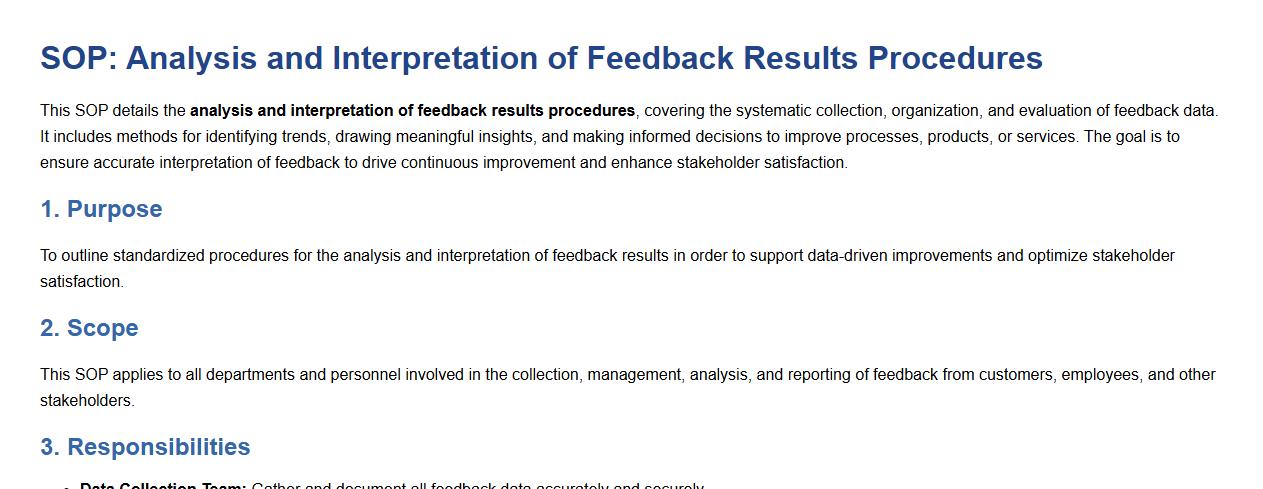
This SOP details the analysis and interpretation of feedback results procedures, covering the systematic collection, organization, and evaluation of feedback data. It includes methods for identifying trends, drawing meaningful insights, and making informed decisions to improve processes, products, or services. The goal is to ensure accurate interpretation of feedback to drive continuous improvement and enhance stakeholder satisfaction.
Reporting format, result dissemination, and follow-up action guidelines.
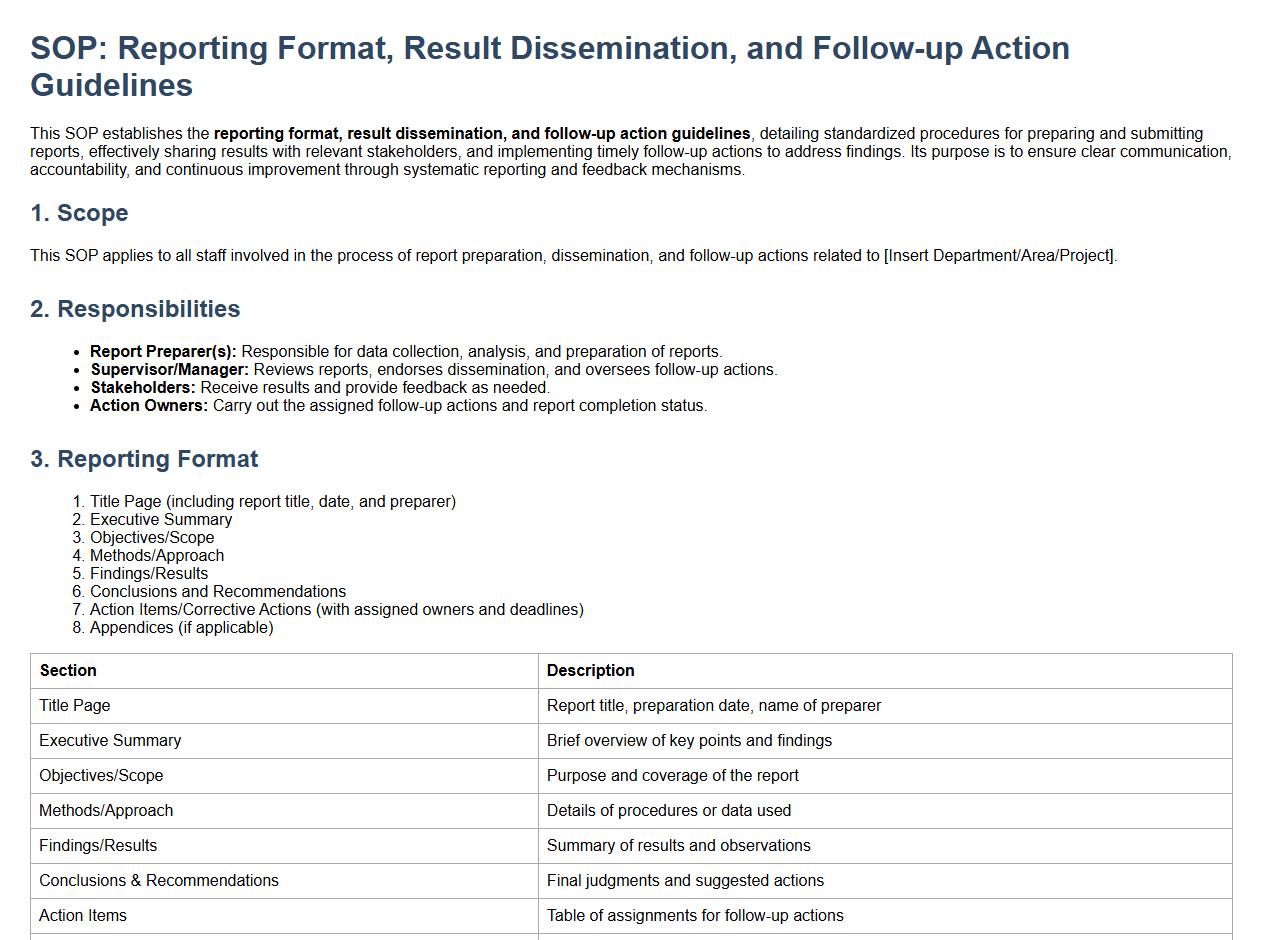
This SOP establishes the reporting format, result dissemination, and follow-up action guidelines, detailing standardized procedures for preparing and submitting reports, effectively sharing results with relevant stakeholders, and implementing timely follow-up actions to address findings. Its purpose is to ensure clear communication, accountability, and continuous improvement through systematic reporting and feedback mechanisms.
What criteria define which feedback is collected under this SOP?
The SOP specifies that feedback must be relevant to the service or product provided, ensuring it contributes to measurable improvements. Only feedback that is constructive and actionable is collected to maintain focus on practical outcomes. Additionally, feedback should come from authorized stakeholders to ensure authenticity and reliability.
What are the mandatory channels or platforms specified for feedback collection?
The SOP mandates the use of designated digital platforms such as company intranet forms and official email addresses for standardized feedback collection. Additionally, in-person feedback sessions during meetings or workshops are required to capture detailed insights. Social media or third-party platforms are only used when explicitly authorized.
What is the timeline outlined for reviewing and analyzing collected feedback?
Feedback must be reviewed within five business days of receipt to ensure timely action and responsiveness. The analysis process should be completed within two weeks to facilitate prompt decision-making. Regular timelines help maintain accountability and continuous improvement.
Who is responsible for documenting and reporting feedback analysis outcomes?
The SOP assigns a designated feedback coordinator the responsibility of documenting all feedback analyses comprehensively. These outcomes are then reported to senior management for strategic review and action planning. Clear accountability ensures transparency and effective communication throughout the process.
What follow-up actions are mandated in response to significant feedback trends?
Significant feedback trends trigger mandatory action plans to address identified issues promptly. The SOP requires regular monitoring of implemented changes to measure effectiveness and adjust strategies accordingly. Additionally, stakeholders must be informed of the improvements made based on their feedback to reinforce trust and engagement.