

A SOP Template for Professional Event Planning provides a clear, step-by-step guide to streamline event organization processes and ensure consistency. It outlines key tasks such as venue selection, vendor coordination, and timeline management to enhance efficiency and reduce errors. Using this template helps event planners maintain high standards and deliver successful events consistently.
Client consultation and requirements gathering.
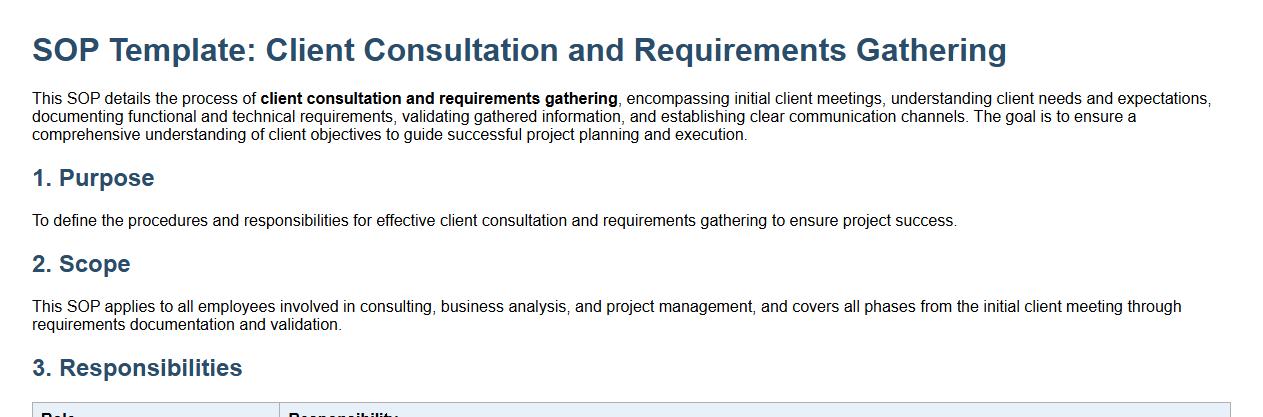
This SOP details the process of client consultation and requirements gathering, encompassing initial client meetings, understanding client needs and expectations, documenting functional and technical requirements, validating gathered information, and establishing clear communication channels. The goal is to ensure a comprehensive understanding of client objectives to guide successful project planning and execution.
Budget planning and cost management.
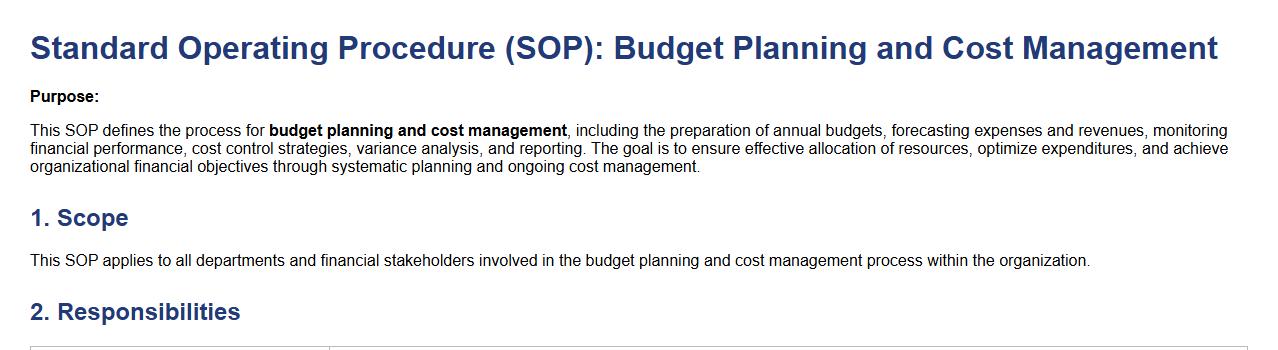
This SOP defines the process for budget planning and cost management, including the preparation of annual budgets, forecasting expenses and revenues, monitoring financial performance, cost control strategies, variance analysis, and reporting. The goal is to ensure effective allocation of resources, optimize expenditures, and achieve organizational financial objectives through systematic planning and ongoing cost management.
Venue selection and booking procedures.
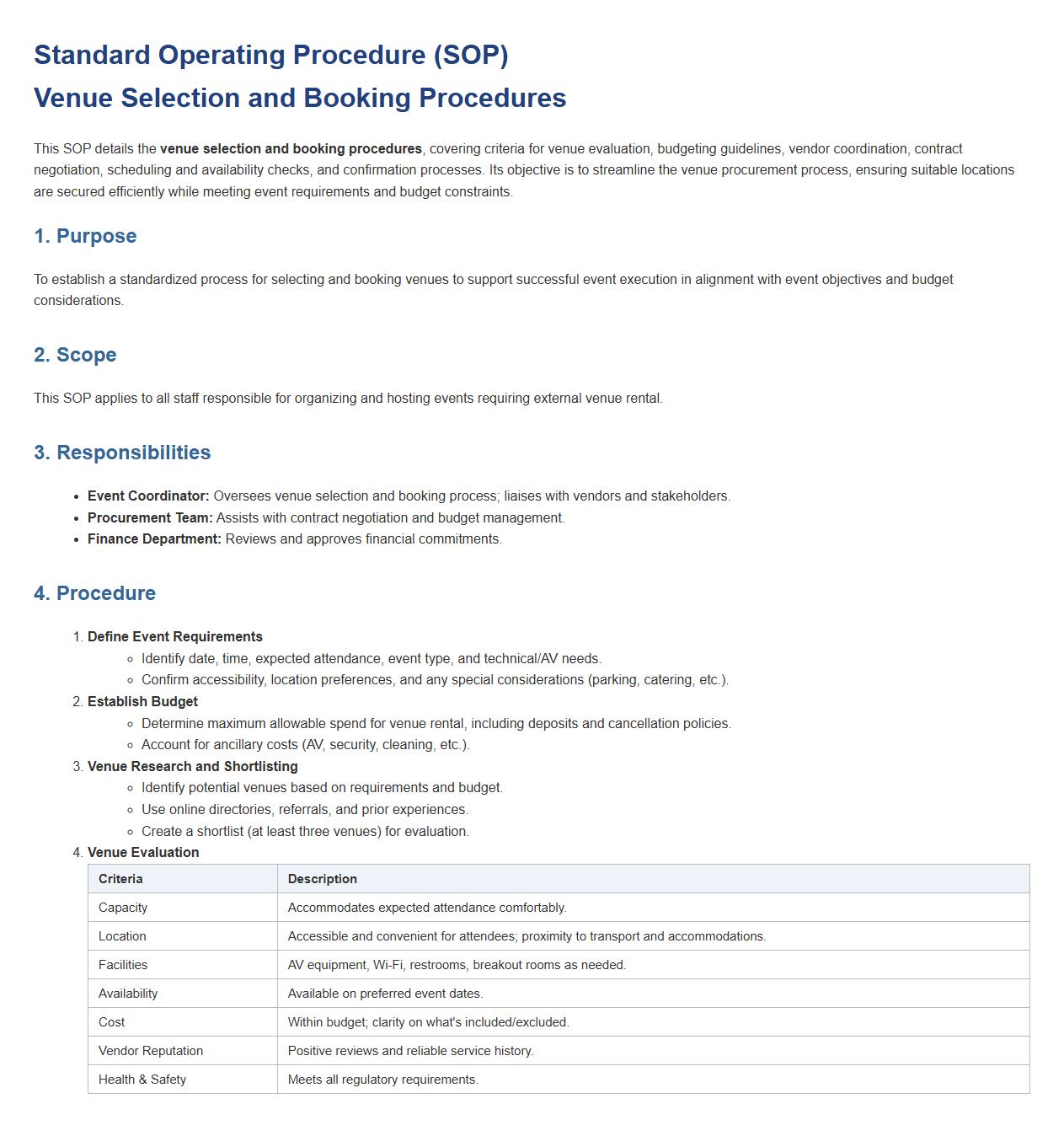
This SOP details the venue selection and booking procedures, covering criteria for venue evaluation, budgeting guidelines, vendor coordination, contract negotiation, scheduling and availability checks, and confirmation processes. Its objective is to streamline the venue procurement process, ensuring suitable locations are secured efficiently while meeting event requirements and budget constraints.
Vendor sourcing, negotiation, and contracting.
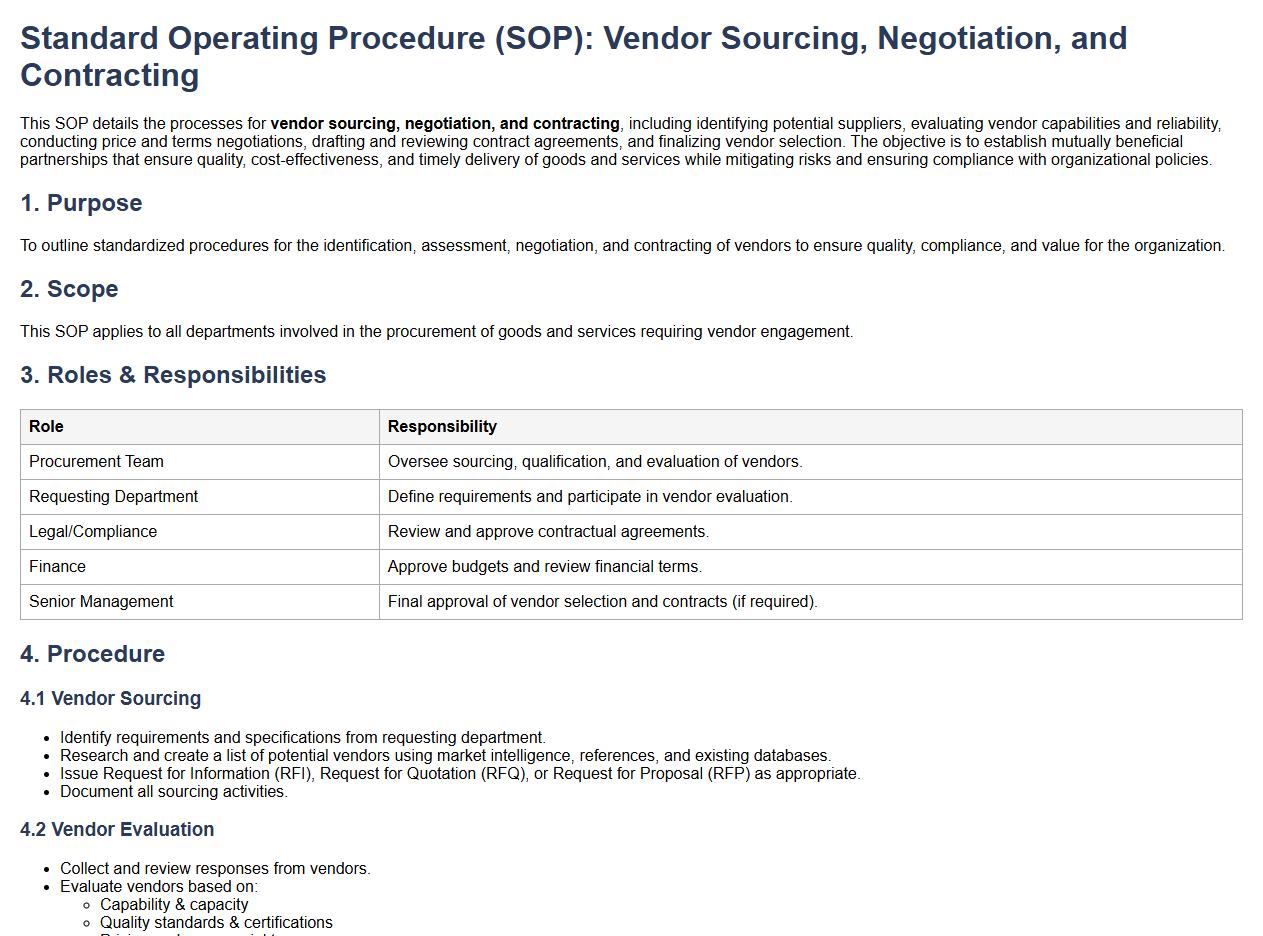
This SOP details the processes for vendor sourcing, negotiation, and contracting, including identifying potential suppliers, evaluating vendor capabilities and reliability, conducting price and terms negotiations, drafting and reviewing contract agreements, and finalizing vendor selection. The objective is to establish mutually beneficial partnerships that ensure quality, cost-effectiveness, and timely delivery of goods and services while mitigating risks and ensuring compliance with organizational policies.
Event timeline and task scheduling.
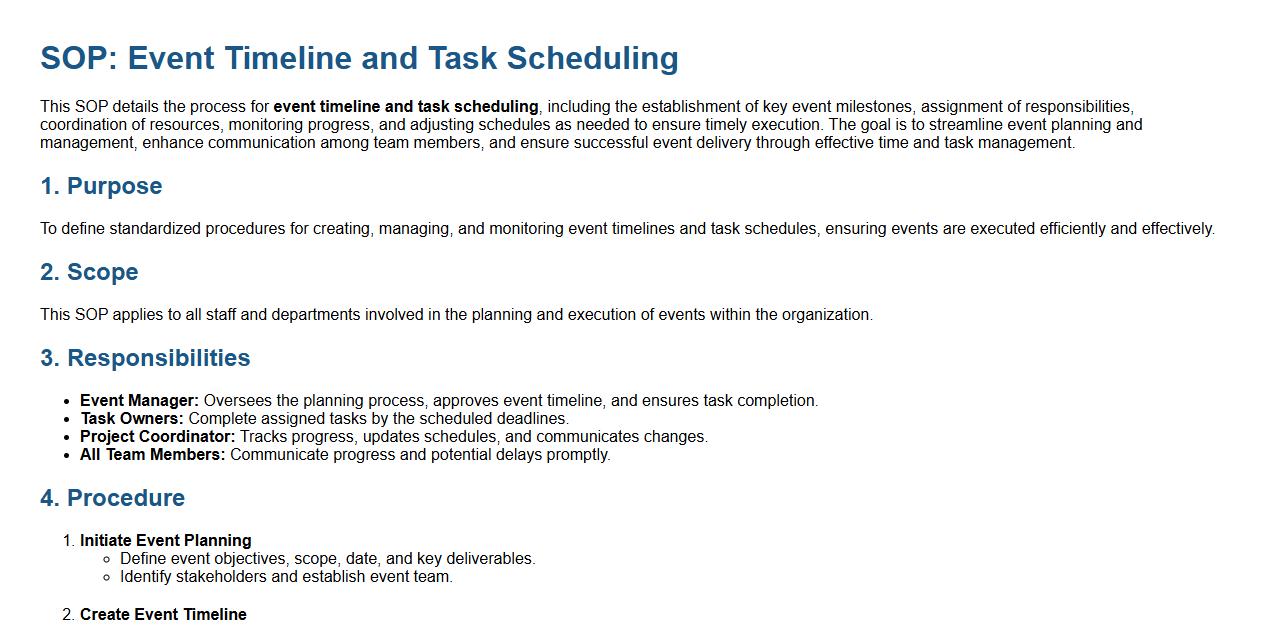
This SOP details the process for event timeline and task scheduling, including the establishment of key event milestones, assignment of responsibilities, coordination of resources, monitoring progress, and adjusting schedules as needed to ensure timely execution. The goal is to streamline event planning and management, enhance communication among team members, and ensure successful event delivery through effective time and task management.
Guest list management and RSVP tracking.
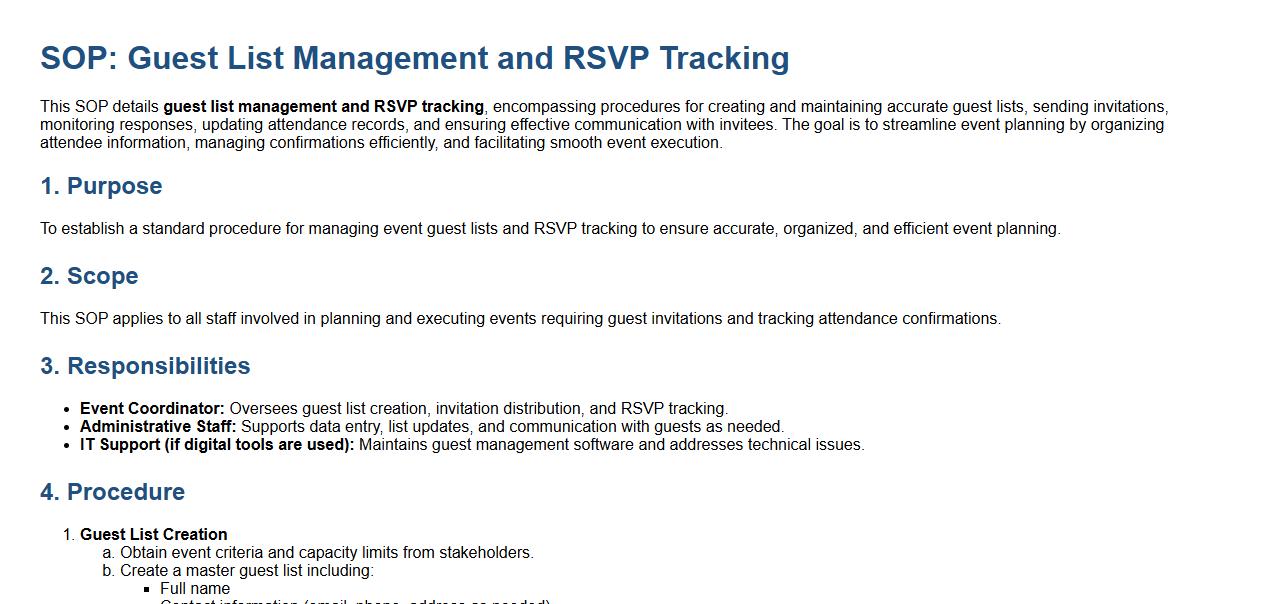
This SOP details guest list management and RSVP tracking, encompassing procedures for creating and maintaining accurate guest lists, sending invitations, monitoring responses, updating attendance records, and ensuring effective communication with invitees. The goal is to streamline event planning by organizing attendee information, managing confirmations efficiently, and facilitating smooth event execution.
Coordination of event logistics and on-site setup.
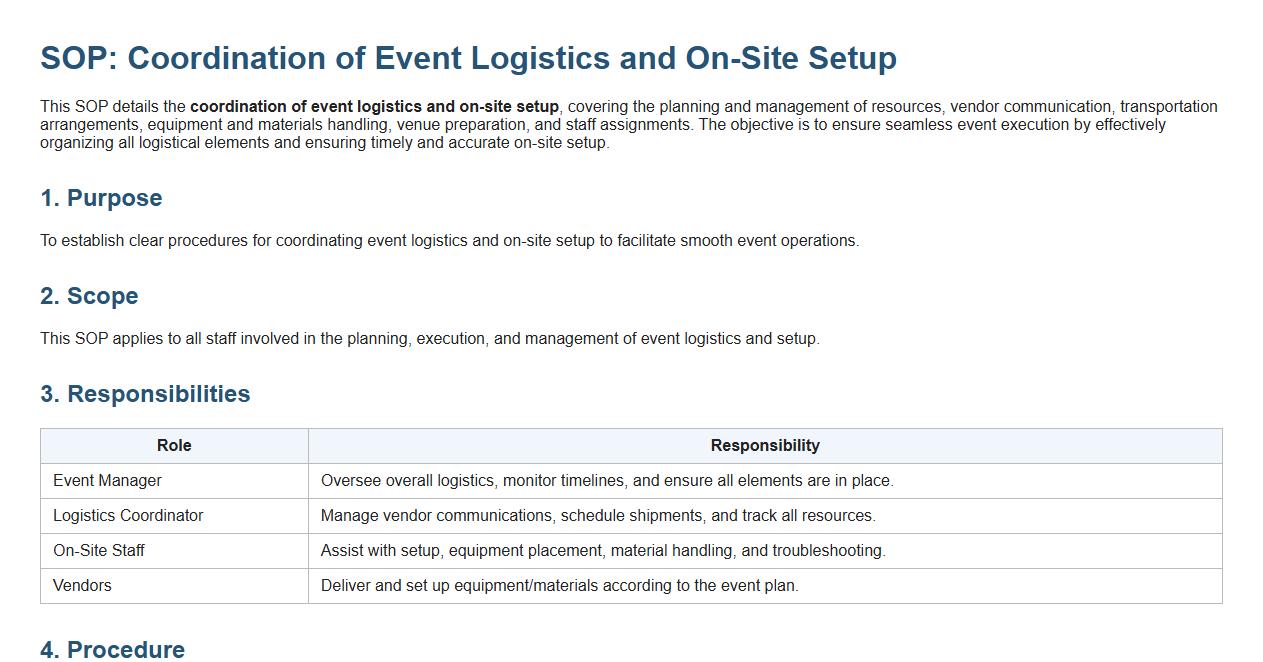
This SOP details the coordination of event logistics and on-site setup, covering the planning and management of resources, vendor communication, transportation arrangements, equipment and materials handling, venue preparation, and staff assignments. The objective is to ensure seamless event execution by effectively organizing all logistical elements and ensuring timely and accurate on-site setup.
Audio-visual and technical arrangements.
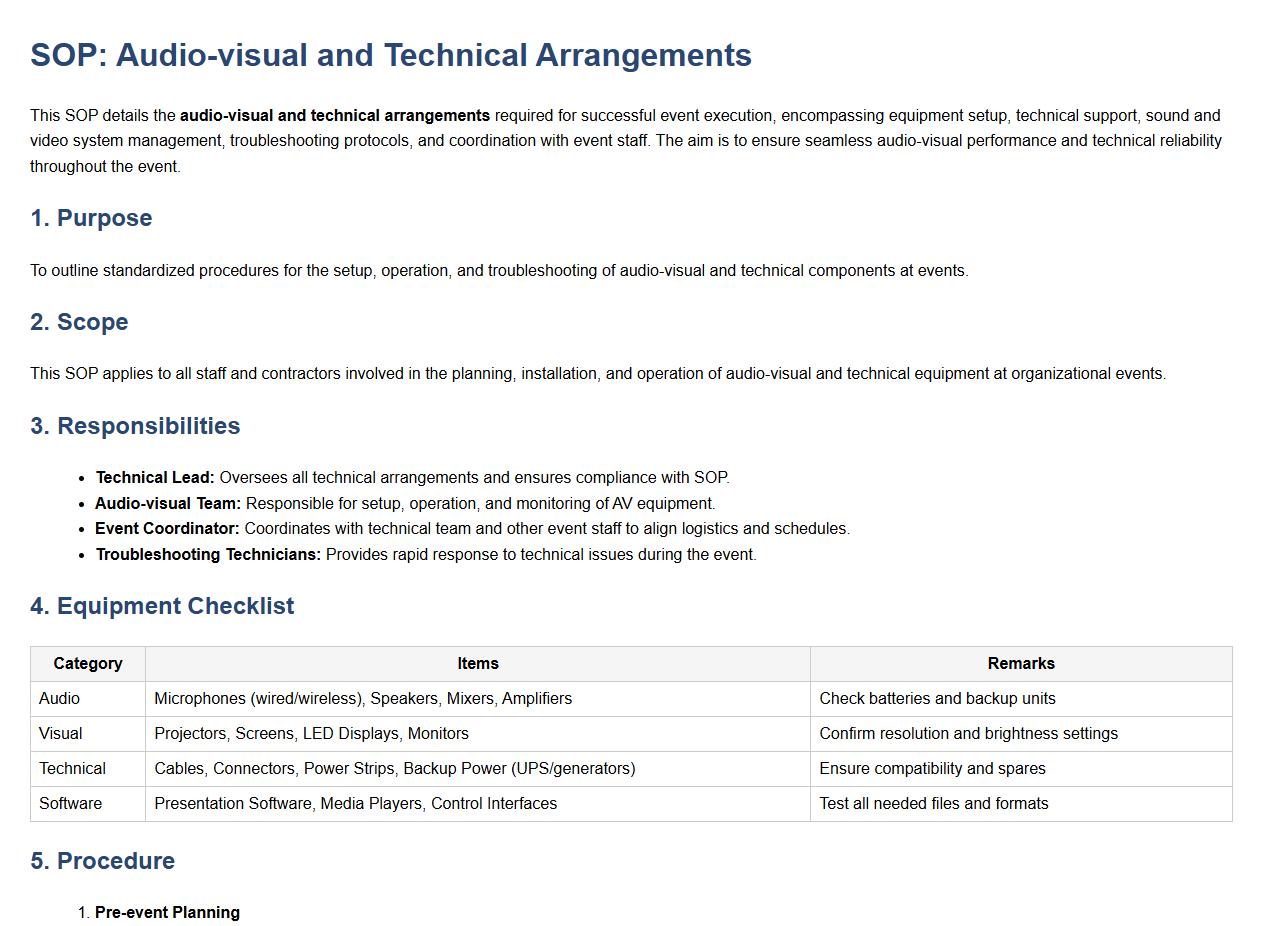
This SOP details the audio-visual and technical arrangements required for successful event execution, encompassing equipment setup, technical support, sound and video system management, troubleshooting protocols, and coordination with event staff. The aim is to ensure seamless audio-visual performance and technical reliability throughout the event.
Risk management and emergency protocols.
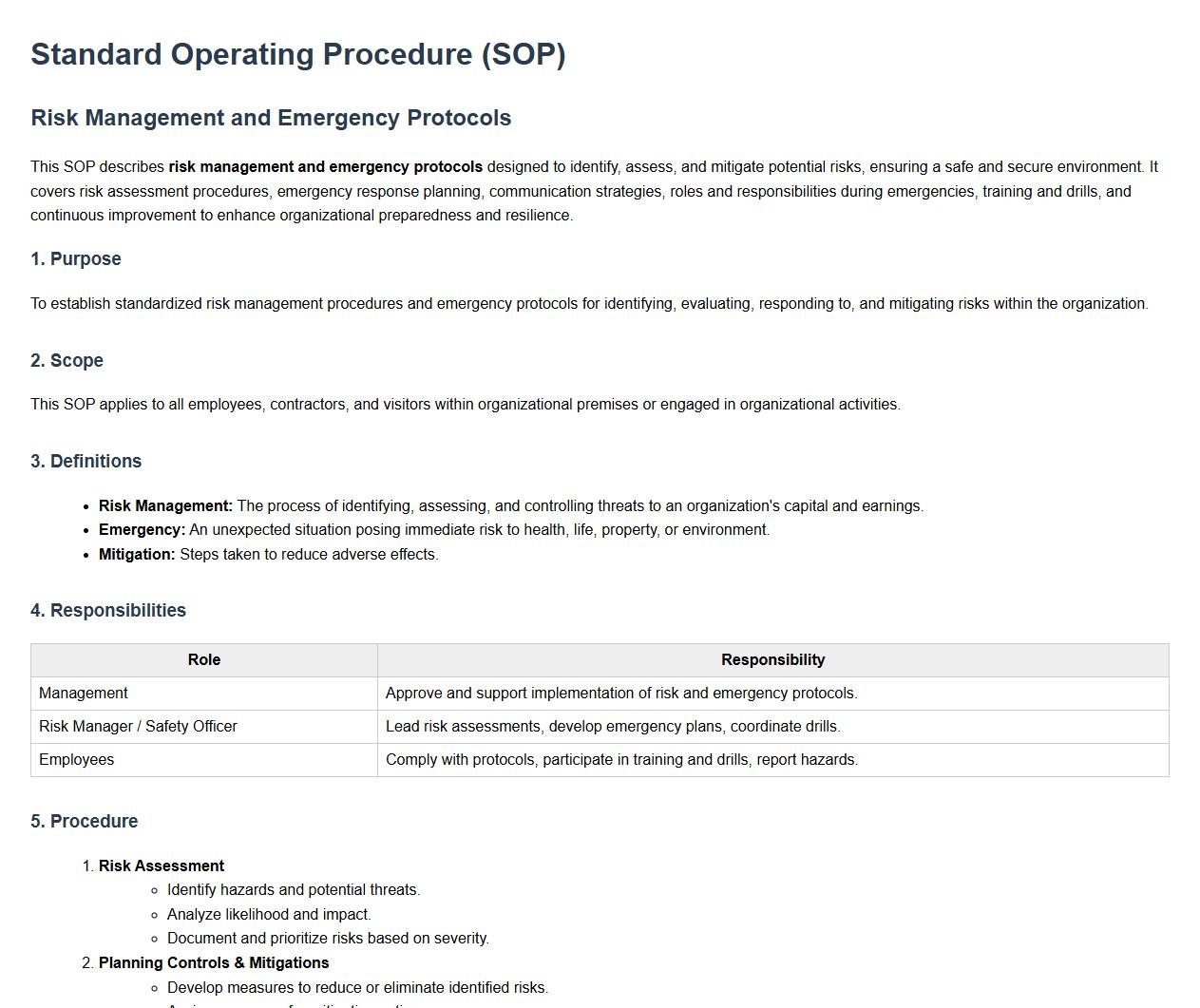
This SOP describes risk management and emergency protocols designed to identify, assess, and mitigate potential risks, ensuring a safe and secure environment. It covers risk assessment procedures, emergency response planning, communication strategies, roles and responsibilities during emergencies, training and drills, and continuous improvement to enhance organizational preparedness and resilience.
Post-event evaluation and reporting.
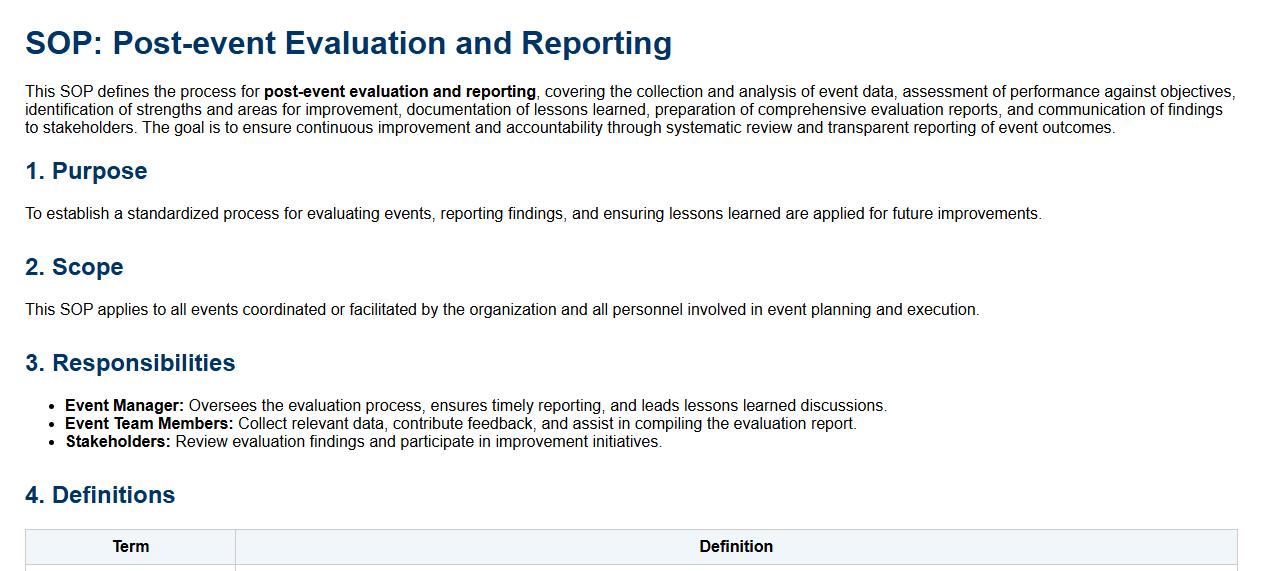
This SOP defines the process for post-event evaluation and reporting, covering the collection and analysis of event data, assessment of performance against objectives, identification of strengths and areas for improvement, documentation of lessons learned, preparation of comprehensive evaluation reports, and communication of findings to stakeholders. The goal is to ensure continuous improvement and accountability through systematic review and transparent reporting of event outcomes.
Key Objectives Outlined in the SOP for Professional Event Planning
The primary objective of the SOP is to ensure seamless coordination and execution of all events. It emphasizes the importance of consistent quality, client satisfaction, and adherence to timelines. Additionally, the SOP highlights the need for efficient resource management and budget control throughout the event planning process.
Stakeholders Identified for Each Stage of Event Planning
The SOP clearly defines the roles of all key stakeholders, including event managers, suppliers, and clients. Each stakeholder is assigned specific responsibilities aligned with different phases, such as planning, execution, and evaluation. This structured approach promotes accountability and smooth collaboration across the project team.
Standard Procedures for Venue Selection and Booking According to the SOP
The SOP mandates a detailed criteria-based assessment of potential venues focusing on accessibility, capacity, and technical facilities. It also requires formal approval from event managers before finalizing any bookings. Compliance with contractual terms and timely confirmation of venue availability are crucial steps outlined in the process.
Risk Management and Contingency Planning in the SOP
The SOP addresses risk management by identifying potential hazards early and implementing mitigation strategies. It enforces the creation of contingency plans to handle emergencies or unexpected changes during the event. This proactive approach ensures minimal disruption and maintains the event's overall success.
Documentation and Reporting Requirements for Post-Event Evaluation in the SOP
The SOP requires comprehensive post-event reports that include feedback, financial summaries, and performance metrics. These documents support continuous improvement by capturing lessons learned and highlighting best practices. Timely submission of these reports is vital for transparent communication with all stakeholders involved.