

A SOP Template for Incident Response in Professional Services provides a structured framework to efficiently manage and resolve incidents while minimizing disruption to client operations. It outlines clear roles, communication protocols, and step-by-step procedures to ensure timely identification, escalation, and remediation of issues. Using this template helps maintain service quality and compliance with industry standards.
Incident identification and initial reporting procedures.
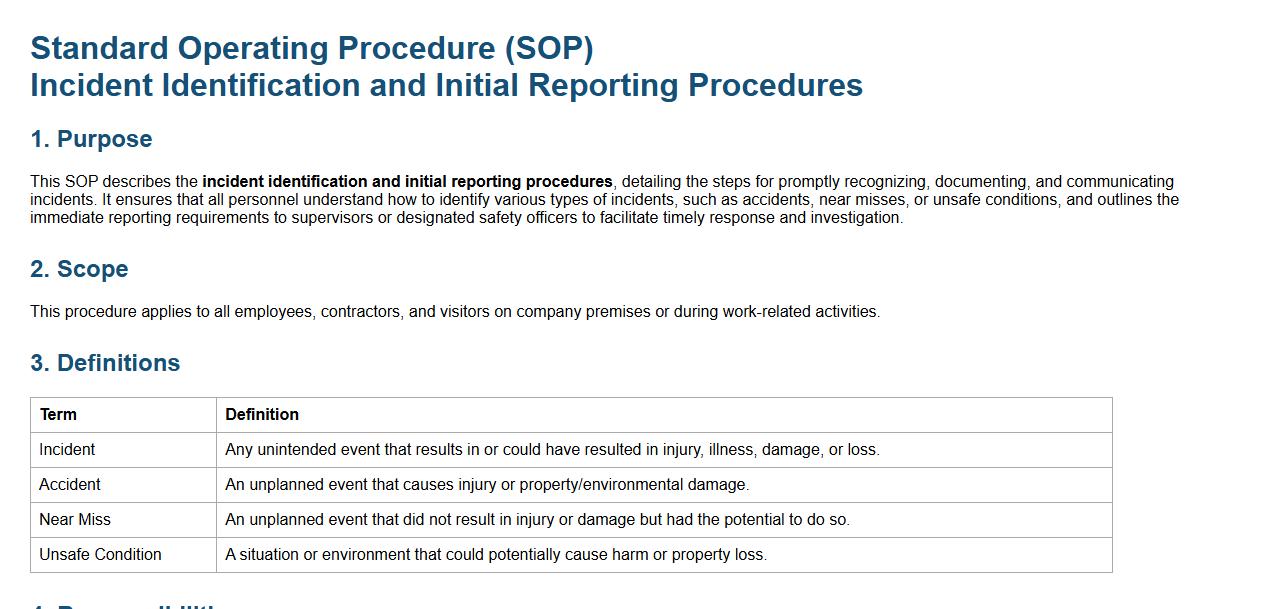
This SOP describes the incident identification and initial reporting procedures, detailing the steps for promptly recognizing, documenting, and communicating incidents. It ensures that all personnel understand how to identify various types of incidents, such as accidents, near misses, or unsafe conditions, and outlines the immediate reporting requirements to supervisors or designated safety officers to facilitate timely response and investigation.
Incident classification and prioritization criteria.
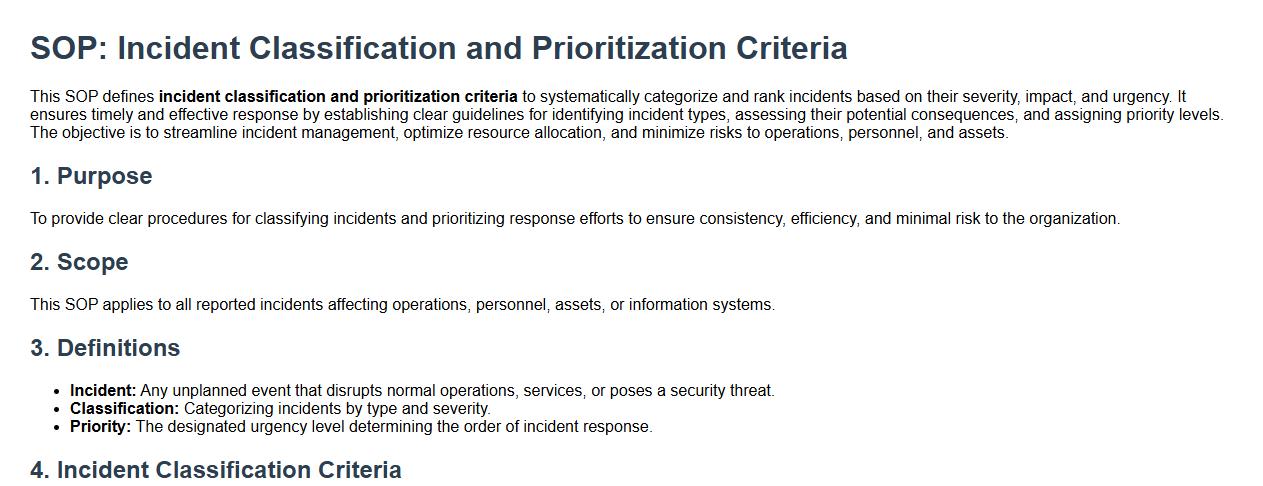
This SOP defines incident classification and prioritization criteria to systematically categorize and rank incidents based on their severity, impact, and urgency. It ensures timely and effective response by establishing clear guidelines for identifying incident types, assessing their potential consequences, and assigning priority levels. The objective is to streamline incident management, optimize resource allocation, and minimize risks to operations, personnel, and assets.
Immediate containment and mitigation steps.
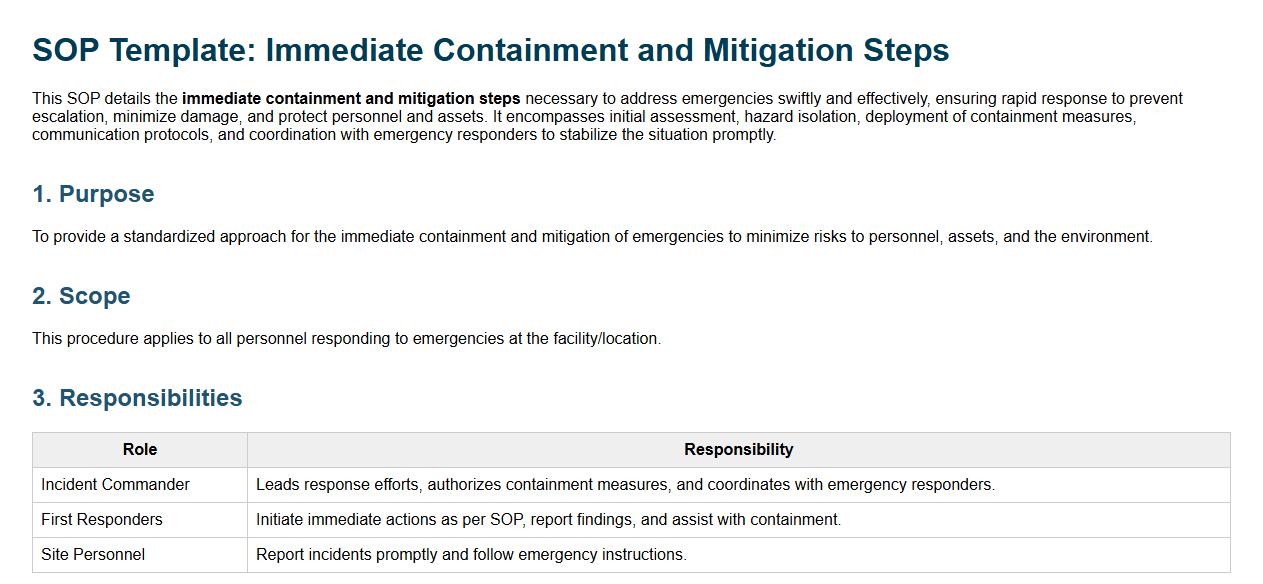
This SOP details the immediate containment and mitigation steps necessary to address emergencies swiftly and effectively, ensuring rapid response to prevent escalation, minimize damage, and protect personnel and assets. It encompasses initial assessment, hazard isolation, deployment of containment measures, communication protocols, and coordination with emergency responders to stabilize the situation promptly.
Communication and notification protocols (internal and external).
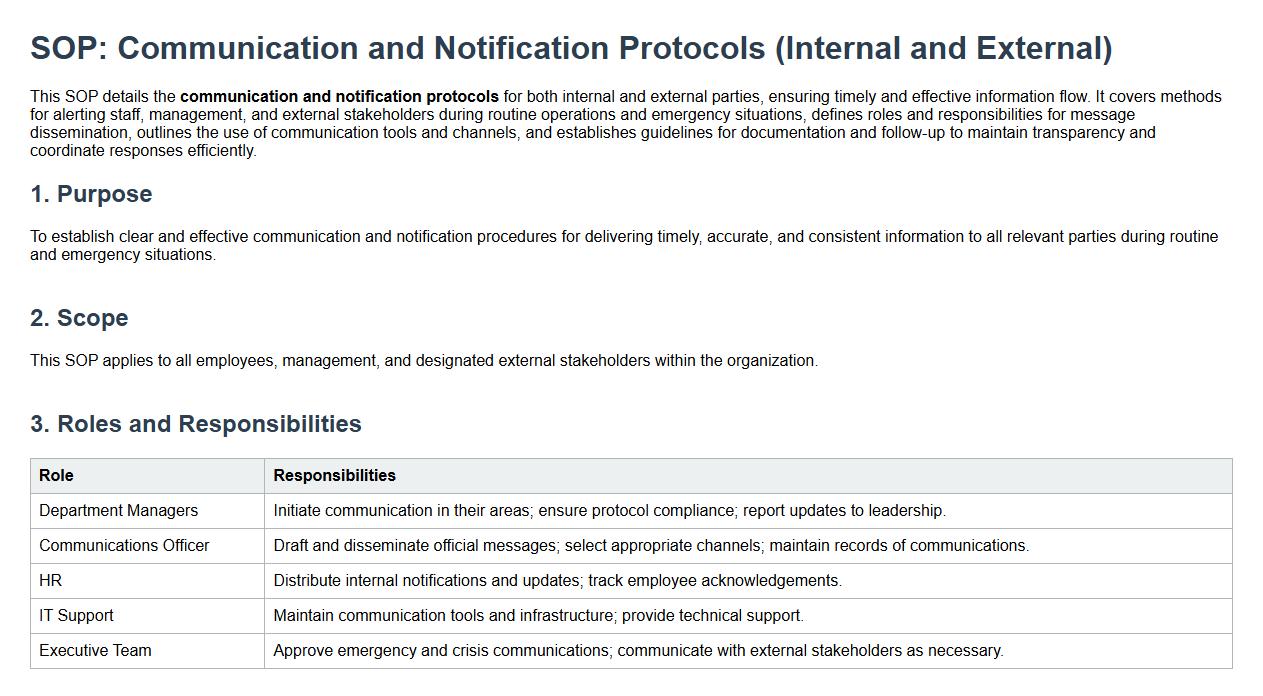
This SOP details the communication and notification protocols for both internal and external parties, ensuring timely and effective information flow. It covers methods for alerting staff, management, and external stakeholders during routine operations and emergency situations, defines roles and responsibilities for message dissemination, outlines the use of communication tools and channels, and establishes guidelines for documentation and follow-up to maintain transparency and coordinate responses efficiently.
Evidence collection and documentation standards.
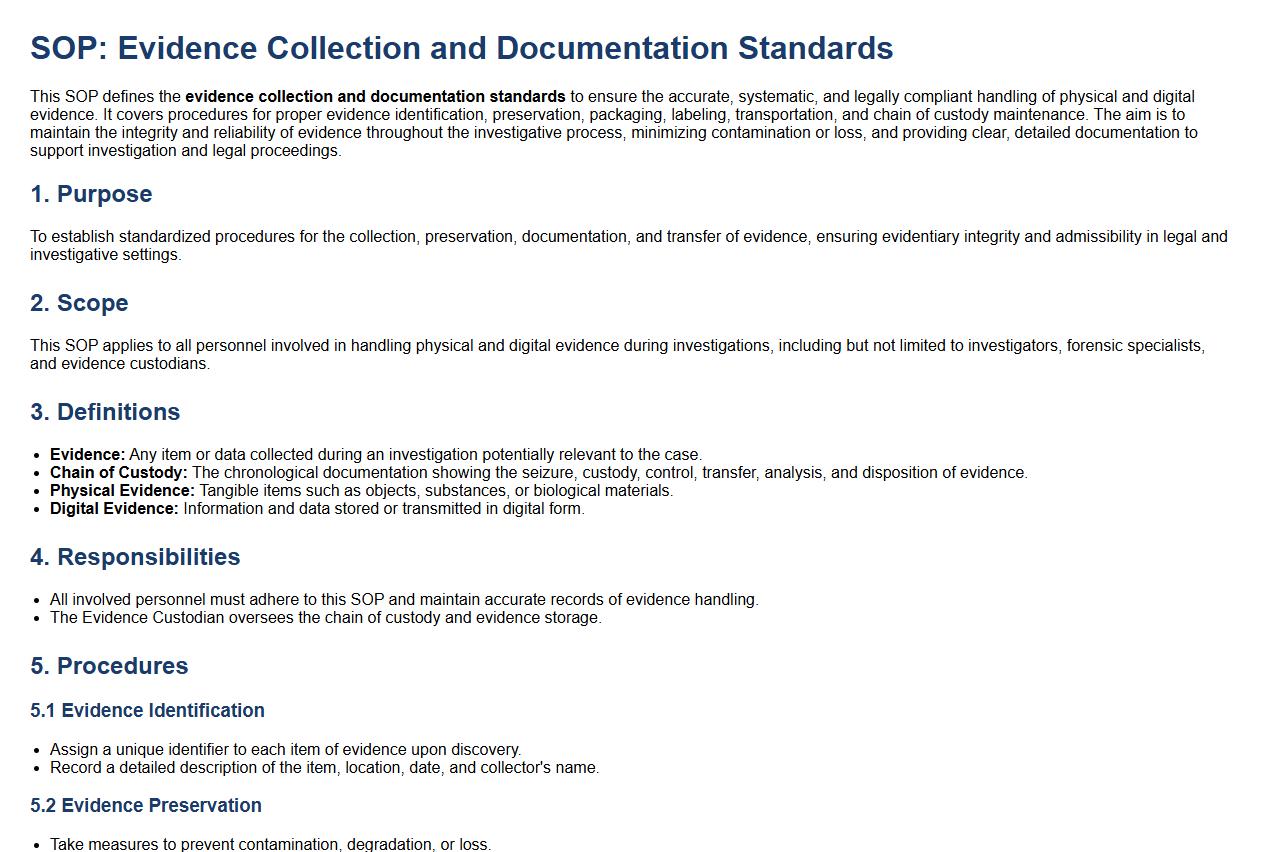
This SOP defines the evidence collection and documentation standards to ensure the accurate, systematic, and legally compliant handling of physical and digital evidence. It covers procedures for proper evidence identification, preservation, packaging, labeling, transportation, and chain of custody maintenance. The aim is to maintain the integrity and reliability of evidence throughout the investigative process, minimizing contamination or loss, and providing clear, detailed documentation to support investigation and legal proceedings.
Roles and responsibilities assignment during incidents.
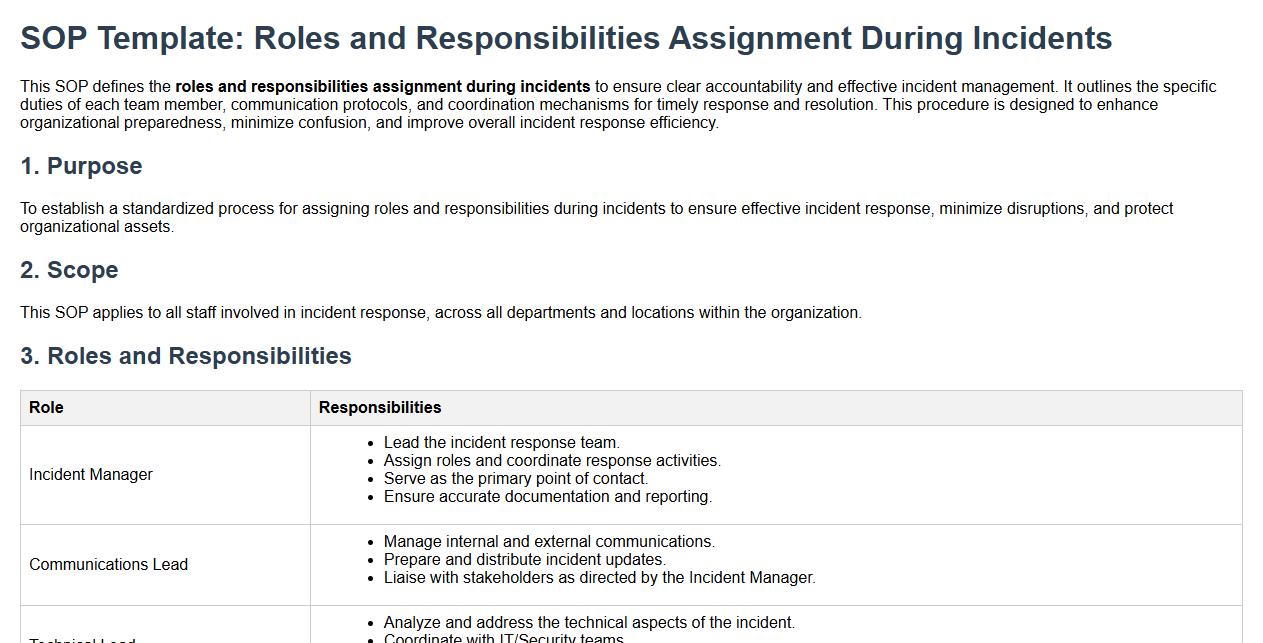
This SOP defines the roles and responsibilities assignment during incidents to ensure clear accountability and effective incident management. It outlines the specific duties of each team member, communication protocols, and coordination mechanisms for timely response and resolution. This procedure is designed to enhance organizational preparedness, minimize confusion, and improve overall incident response efficiency.
Incident investigation and root cause analysis methodology.
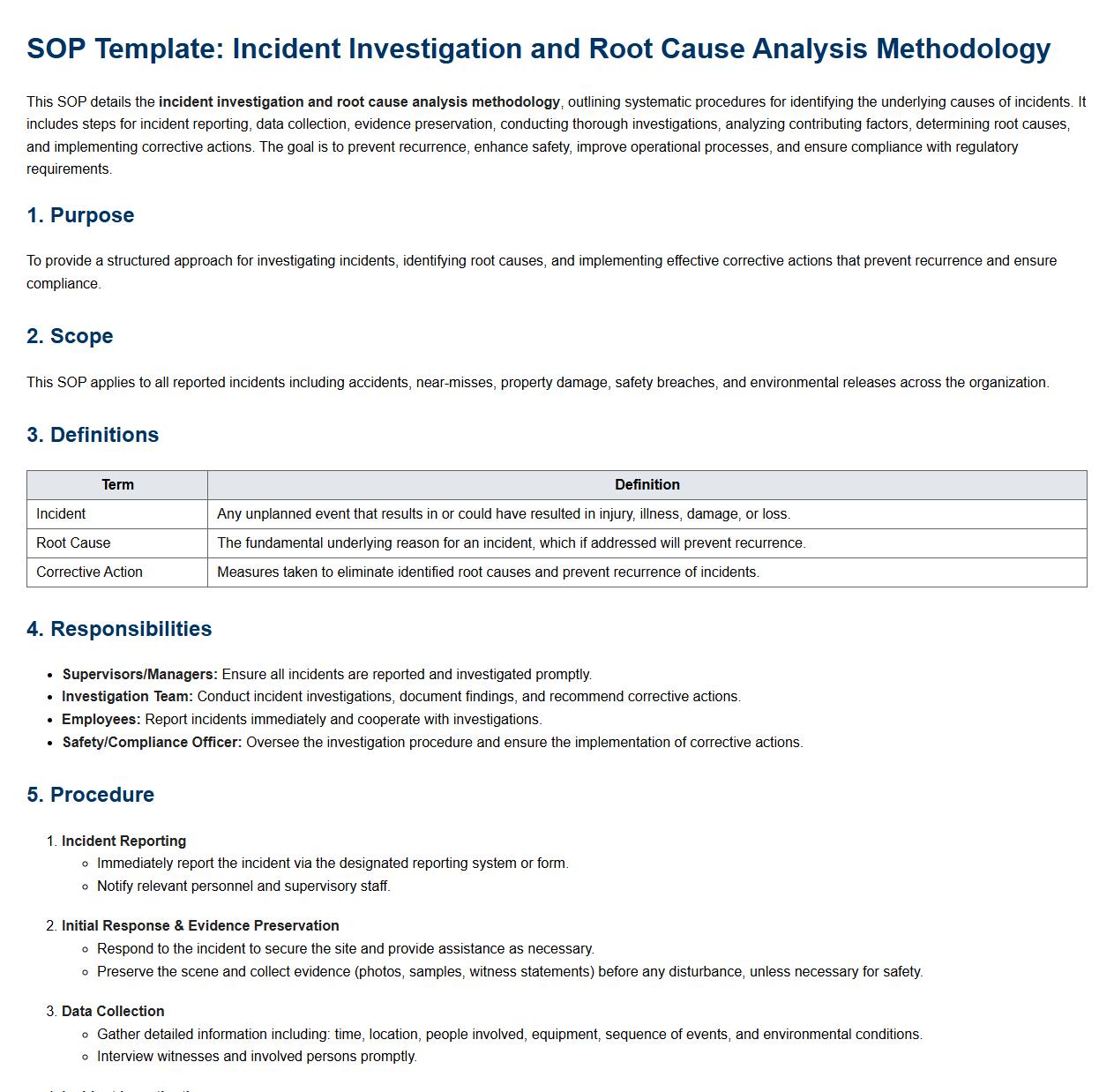
This SOP details the incident investigation and root cause analysis methodology, outlining systematic procedures for identifying the underlying causes of incidents. It includes steps for incident reporting, data collection, evidence preservation, conducting thorough investigations, analyzing contributing factors, determining root causes, and implementing corrective actions. The goal is to prevent recurrence, enhance safety, improve operational processes, and ensure compliance with regulatory requirements.
Remediation and recovery procedures.
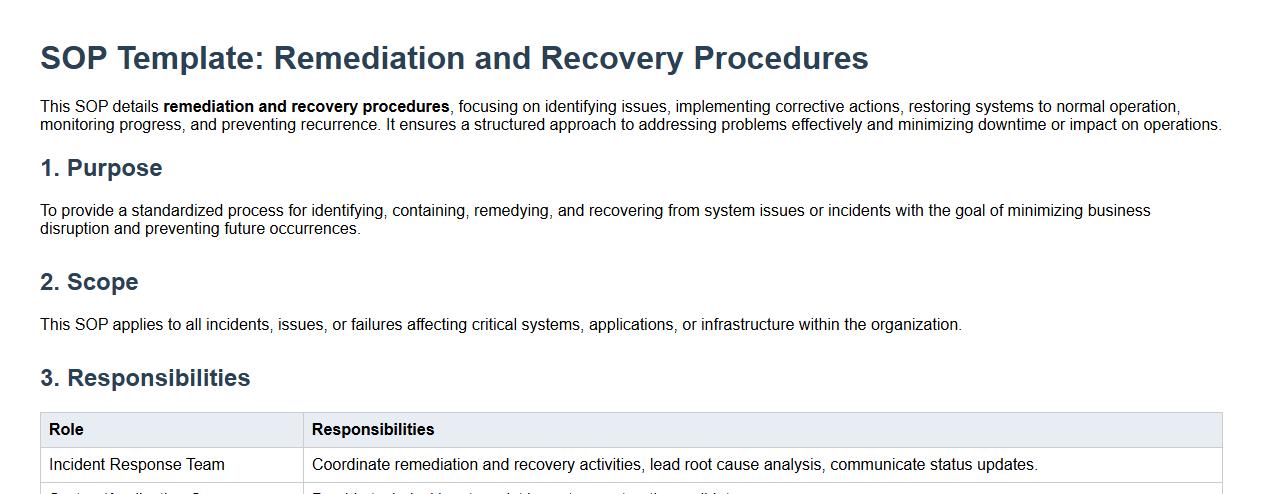
This SOP details remediation and recovery procedures, focusing on identifying issues, implementing corrective actions, restoring systems to normal operation, monitoring progress, and preventing recurrence. It ensures a structured approach to addressing problems effectively and minimizing downtime or impact on operations.
Post-incident review and lessons learned process.
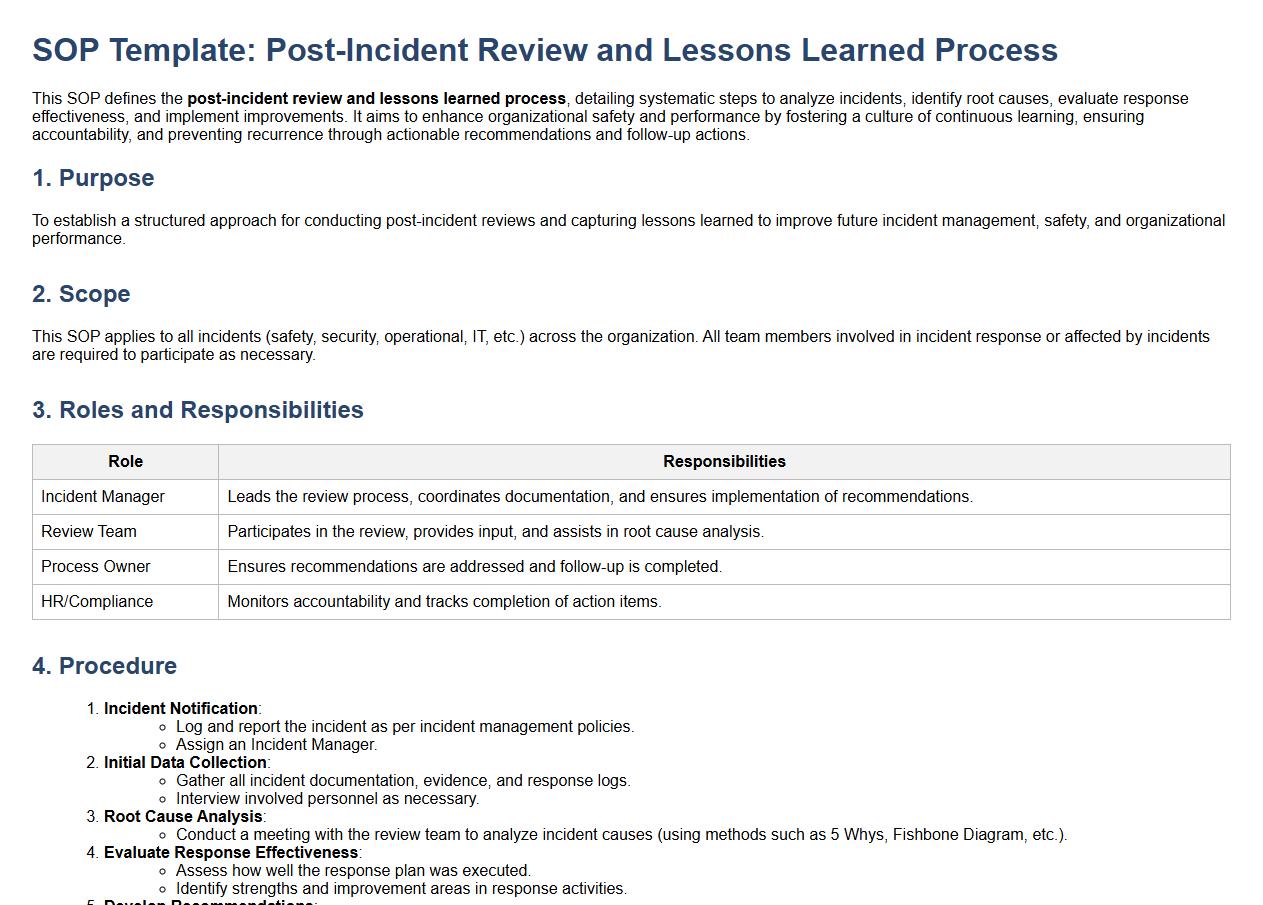
This SOP defines the post-incident review and lessons learned process, detailing systematic steps to analyze incidents, identify root causes, evaluate response effectiveness, and implement improvements. It aims to enhance organizational safety and performance by fostering a culture of continuous learning, ensuring accountability, and preventing recurrence through actionable recommendations and follow-up actions.
Incident closure and follow-up reporting requirements.
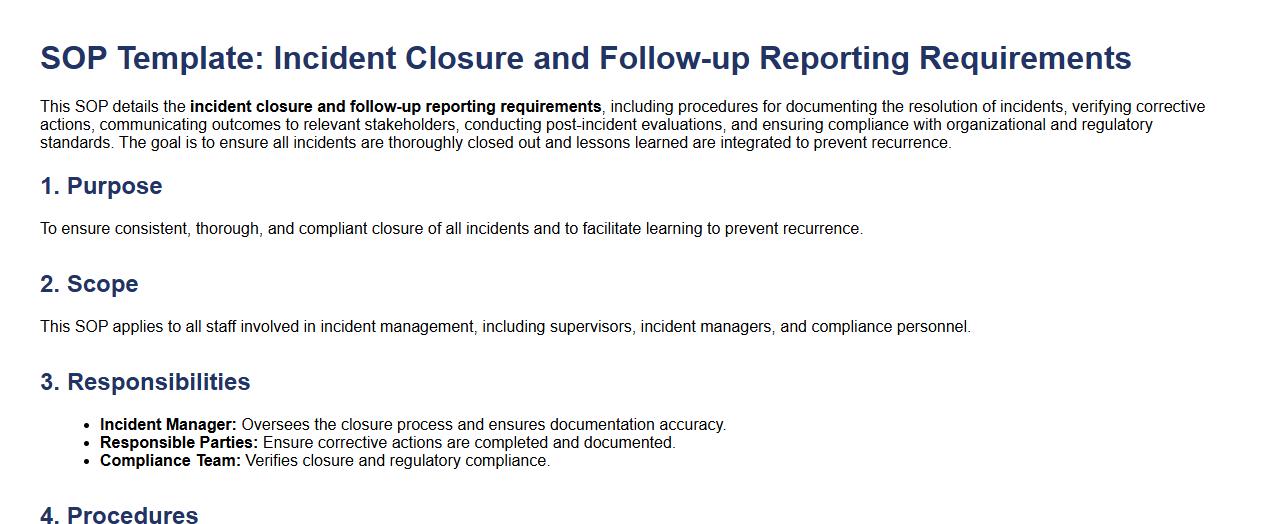
This SOP details the incident closure and follow-up reporting requirements, including procedures for documenting the resolution of incidents, verifying corrective actions, communicating outcomes to relevant stakeholders, conducting post-incident evaluations, and ensuring compliance with organizational and regulatory standards. The goal is to ensure all incidents are thoroughly closed out and lessons learned are integrated to prevent recurrence.
What are the primary objectives defined in the SOP for Incident Response in Professional Services?
The primary objectives of the SOP for Incident Response are to ensure timely identification, containment, and resolution of incidents. These objectives focus on minimizing the impact on services and protecting sensitive data throughout the incident lifecycle. Additionally, the SOP aims to establish a standardized approach that promotes efficiency and compliance.
Which roles and responsibilities are assigned to team members during an incident according to the SOP?
The SOP clearly delineates roles and responsibilities to facilitate coordinated incident management. Incident responders are tasked with detection and containment, while communication leads handle stakeholder notifications. The incident commander oversees the overall process, ensuring effective collaboration among all team members.
What are the key steps outlined in the incident detection and reporting process in the SOP?
The SOP highlights critical steps including initial detection, accurate logging, and prompt reporting of an incident. Detection involves identifying anomalies and unusual activities with automated tools or manual observation. Reporting mandates immediate notification to the designated incident response team to trigger investigation and mitigation.
How does the SOP specify the communication protocol for escalating incidents to stakeholders?
The SOP establishes a clear communication protocol for escalating incidents based on severity levels and impact assessment. It mandates timely updates through predefined channels such as emails, calls, or messaging systems. Furthermore, escalation paths specify who receives information to ensure all relevant stakeholders remain informed.
What documentation and post-incident review procedures are mandated by the SOP?
The SOP requires comprehensive documentation of all incident-related activities, from detection through resolution. Post-incident reviews are essential to analyze root causes and improve future response strategies. This process includes compiling lessons learned and updating response plans to enhance overall preparedness.