

A SOP Template for Professional IT Services streamlines the documentation of standard operating procedures, ensuring consistent and efficient delivery of IT tasks. It provides clear guidelines for troubleshooting, system maintenance, and client support to enhance service quality and reduce errors. Utilizing this template helps IT teams maintain compliance and improve communication across all projects.
Client Onboarding and Requirement Gathering.
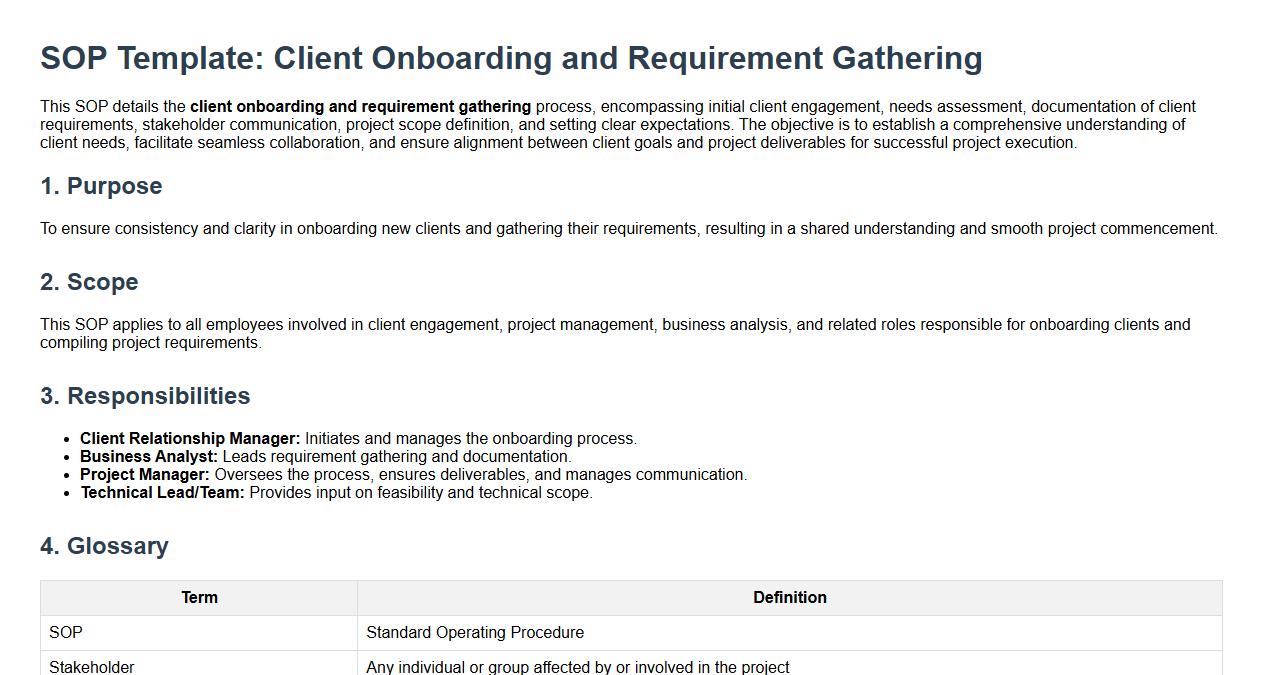
This SOP details the client onboarding and requirement gathering process, encompassing initial client engagement, needs assessment, documentation of client requirements, stakeholder communication, project scope definition, and setting clear expectations. The objective is to establish a comprehensive understanding of client needs, facilitate seamless collaboration, and ensure alignment between client goals and project deliverables for successful project execution.
Project Scoping and Proposal Development.
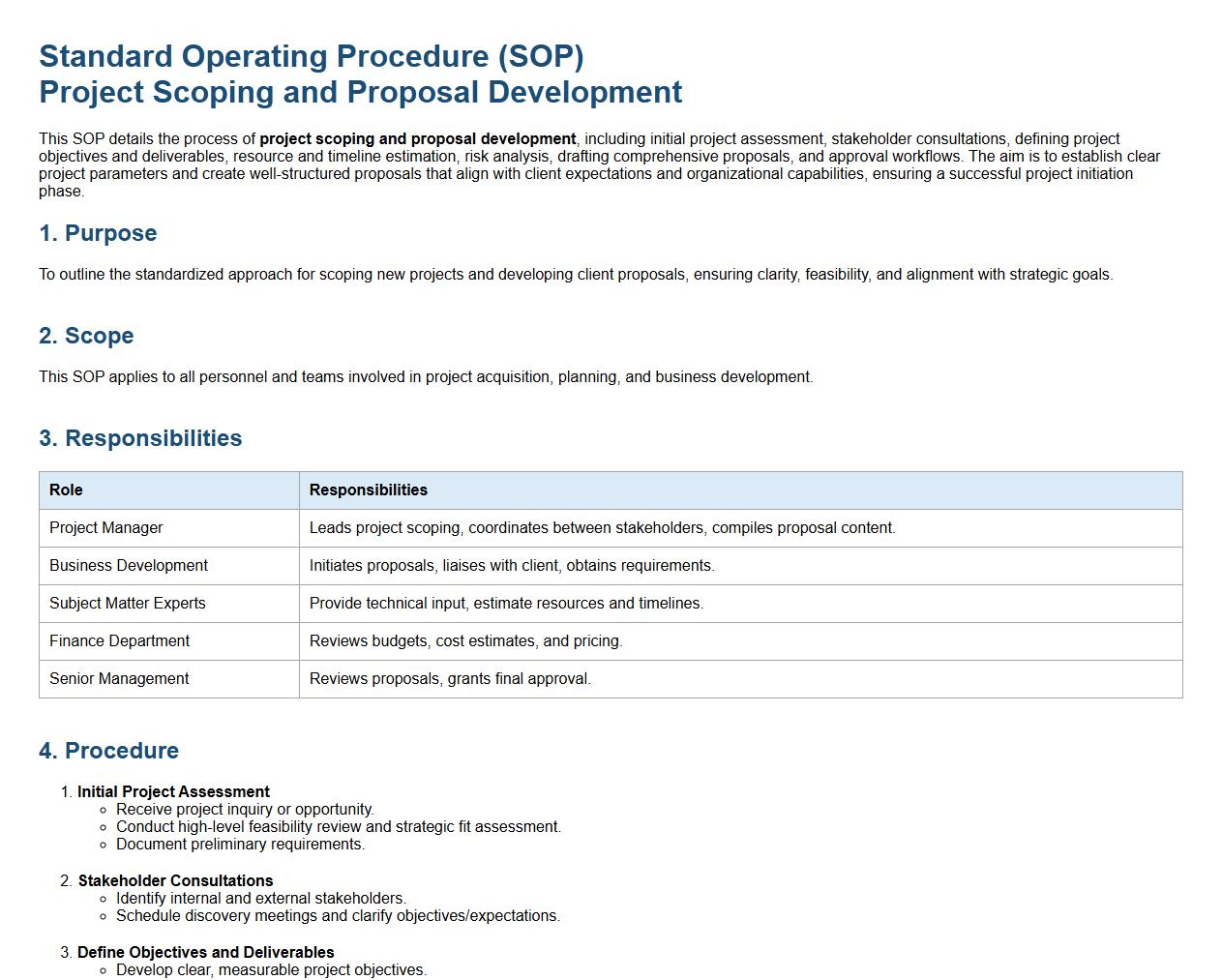
This SOP details the process of project scoping and proposal development, including initial project assessment, stakeholder consultations, defining project objectives and deliverables, resource and timeline estimation, risk analysis, drafting comprehensive proposals, and approval workflows. The aim is to establish clear project parameters and create well-structured proposals that align with client expectations and organizational capabilities, ensuring a successful project initiation phase.
Contract Approval and Documentation Management.
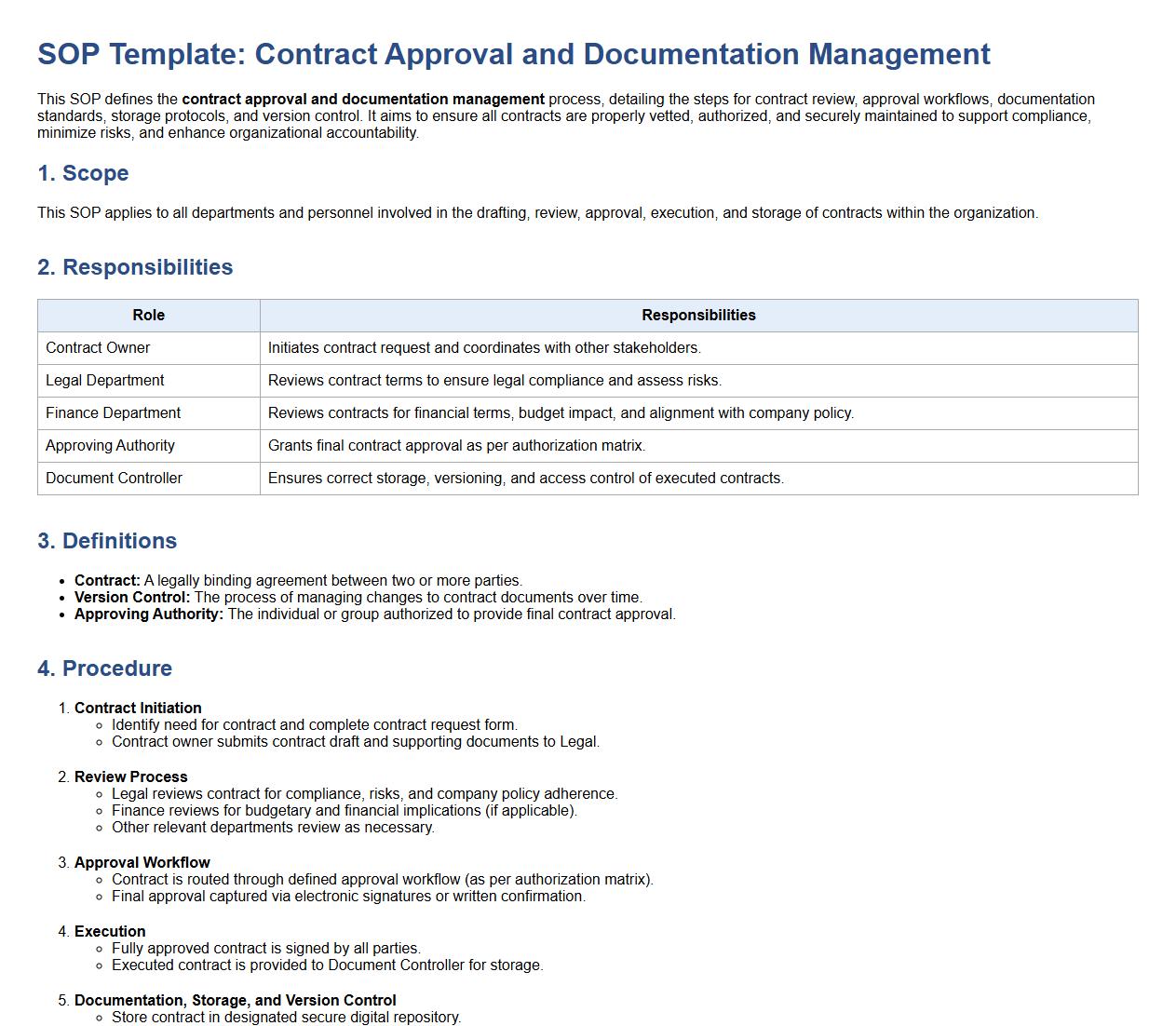
This SOP defines the contract approval and documentation management process, detailing the steps for contract review, approval workflows, documentation standards, storage protocols, and version control. It aims to ensure all contracts are properly vetted, authorized, and securely maintained to support compliance, minimize risks, and enhance organizational accountability.
Resource Allocation and Task Assignment.
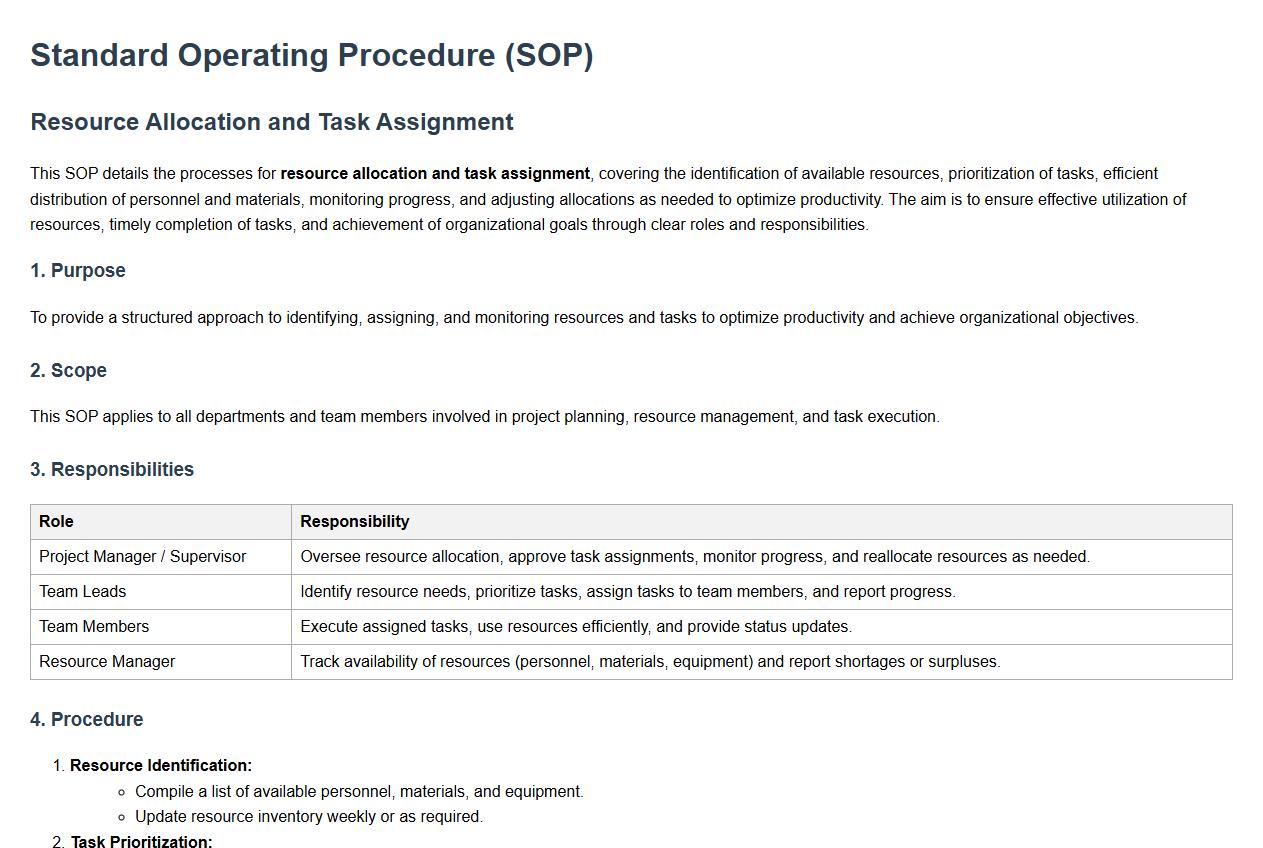
This SOP details the processes for resource allocation and task assignment, covering the identification of available resources, prioritization of tasks, efficient distribution of personnel and materials, monitoring progress, and adjusting allocations as needed to optimize productivity. The aim is to ensure effective utilization of resources, timely completion of tasks, and achievement of organizational goals through clear roles and responsibilities.
IT Service Delivery and Implementation Procedures.
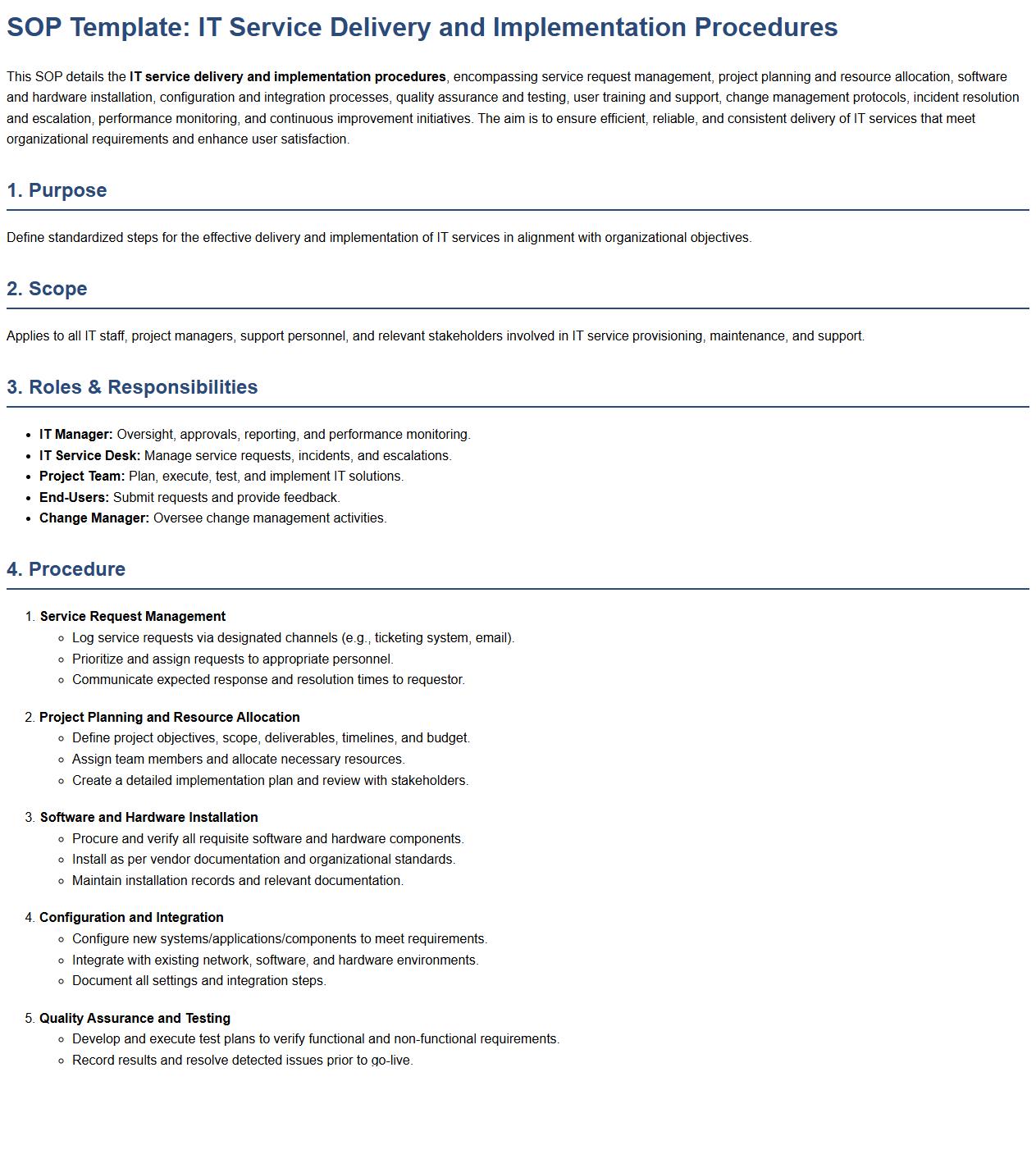
This SOP details the IT service delivery and implementation procedures, encompassing service request management, project planning and resource allocation, software and hardware installation, configuration and integration processes, quality assurance and testing, user training and support, change management protocols, incident resolution and escalation, performance monitoring, and continuous improvement initiatives. The aim is to ensure efficient, reliable, and consistent delivery of IT services that meet organizational requirements and enhance user satisfaction.
Change Management Process and Documentation.
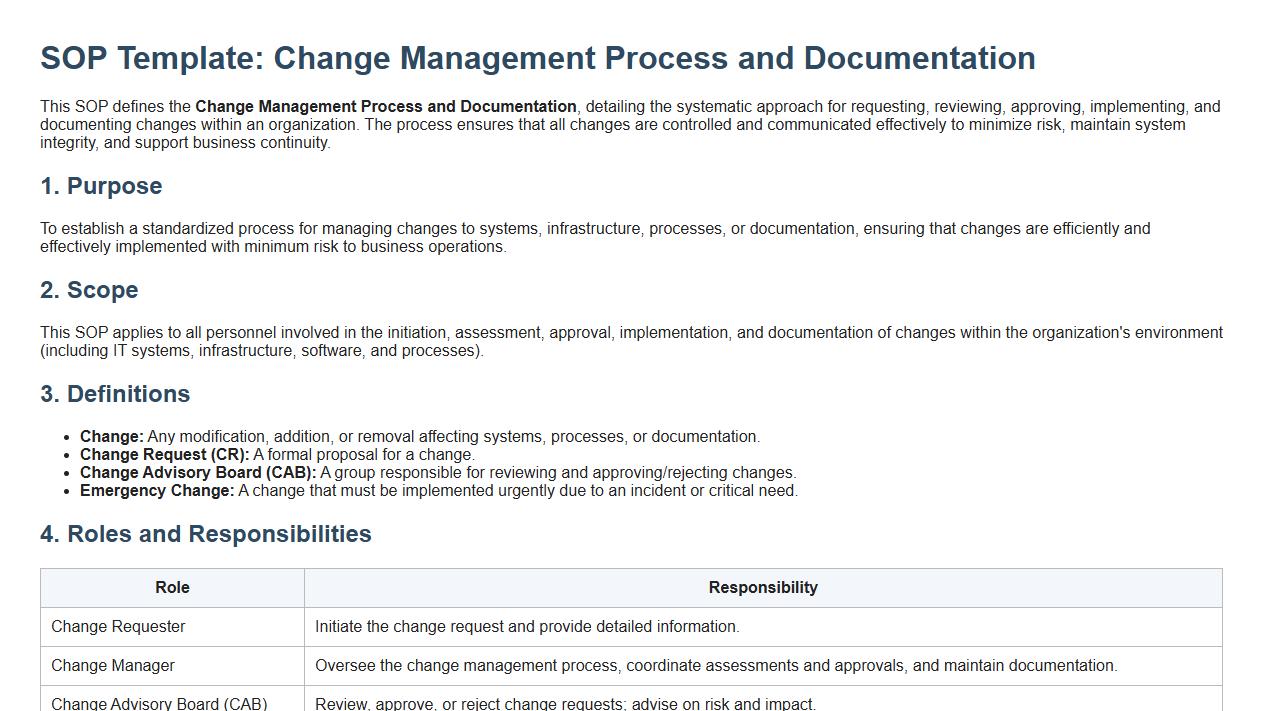
This SOP defines the Change Management Process and Documentation, detailing the systematic approach for requesting, reviewing, approving, implementing, and documenting changes within an organization. The process ensures that all changes are controlled and communicated effectively to minimize risk, maintain system integrity, and support business continuity.
Incident and Problem Management Workflow.
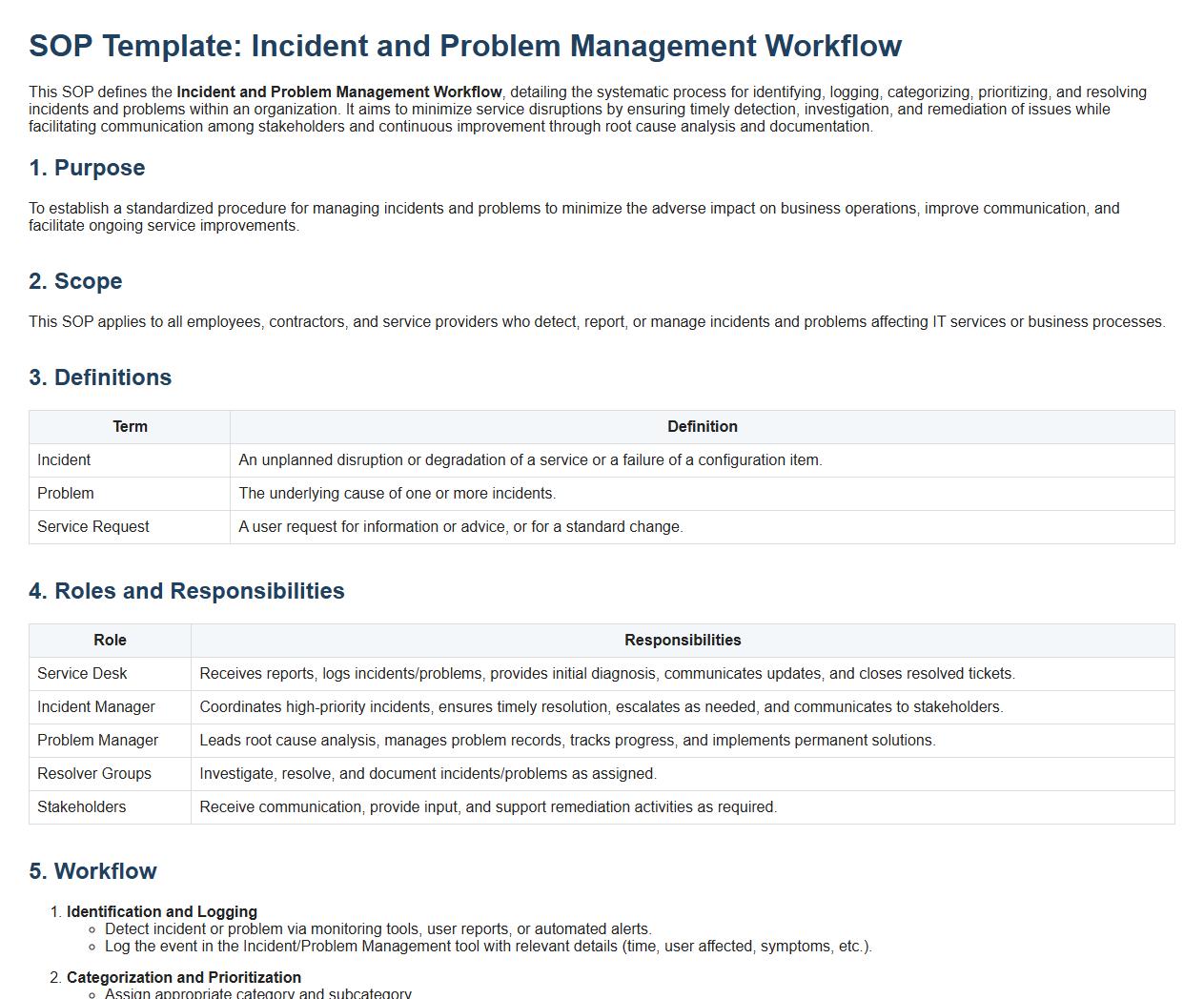
This SOP defines the Incident and Problem Management Workflow, detailing the systematic process for identifying, logging, categorizing, prioritizing, and resolving incidents and problems within an organization. It aims to minimize service disruptions by ensuring timely detection, investigation, and remediation of issues while facilitating communication among stakeholders and continuous improvement through root cause analysis and documentation.
Quality Assurance and Testing Standards.
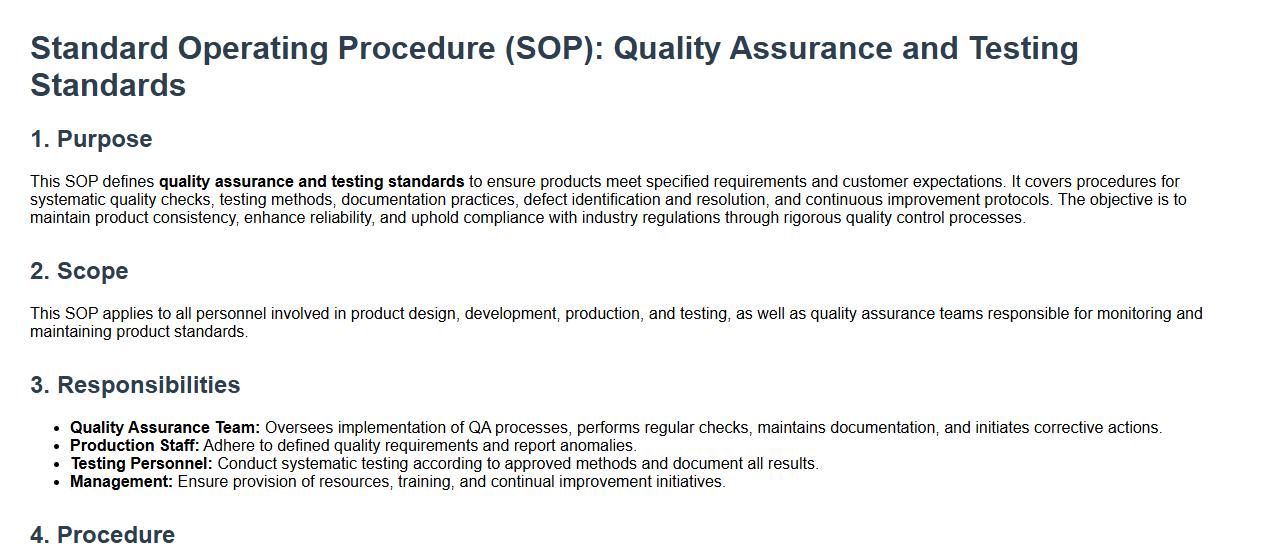
This SOP defines quality assurance and testing standards to ensure products meet specified requirements and customer expectations. It covers procedures for systematic quality checks, testing methods, documentation practices, defect identification and resolution, and continuous improvement protocols. The objective is to maintain product consistency, enhance reliability, and uphold compliance with industry regulations through rigorous quality control processes.
Client Communication and Progress Reporting.
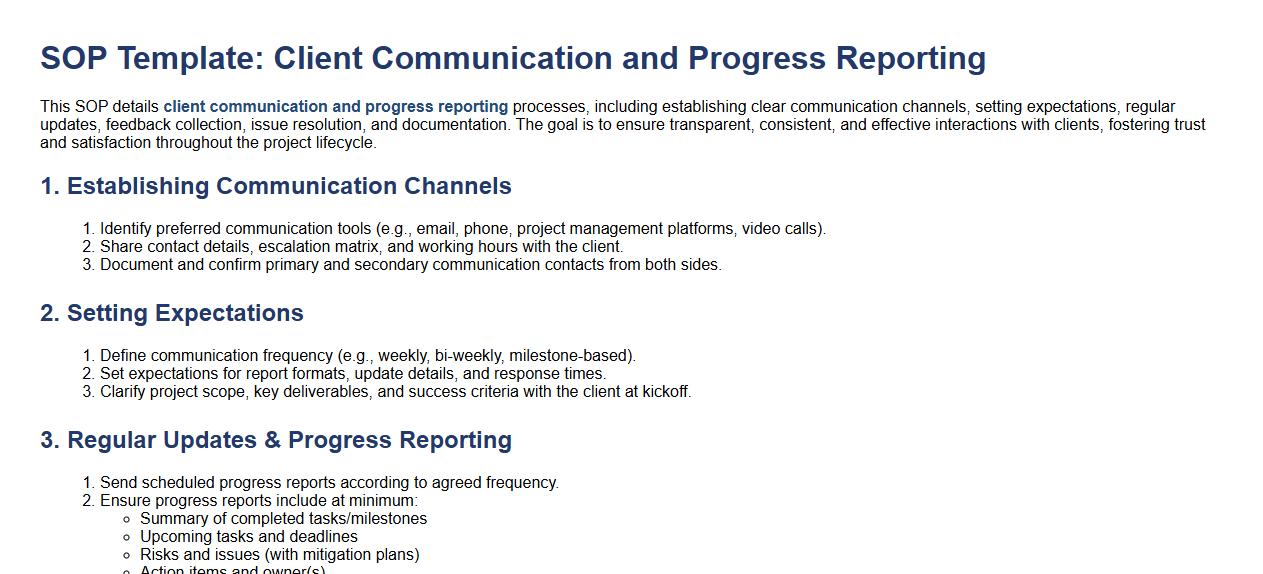
This SOP details client communication and progress reporting processes, including establishing clear communication channels, setting expectations, regular updates, feedback collection, issue resolution, and documentation. The goal is to ensure transparent, consistent, and effective interactions with clients, fostering trust and satisfaction throughout the project lifecycle.
Project Closure and Post-Implementation Review.
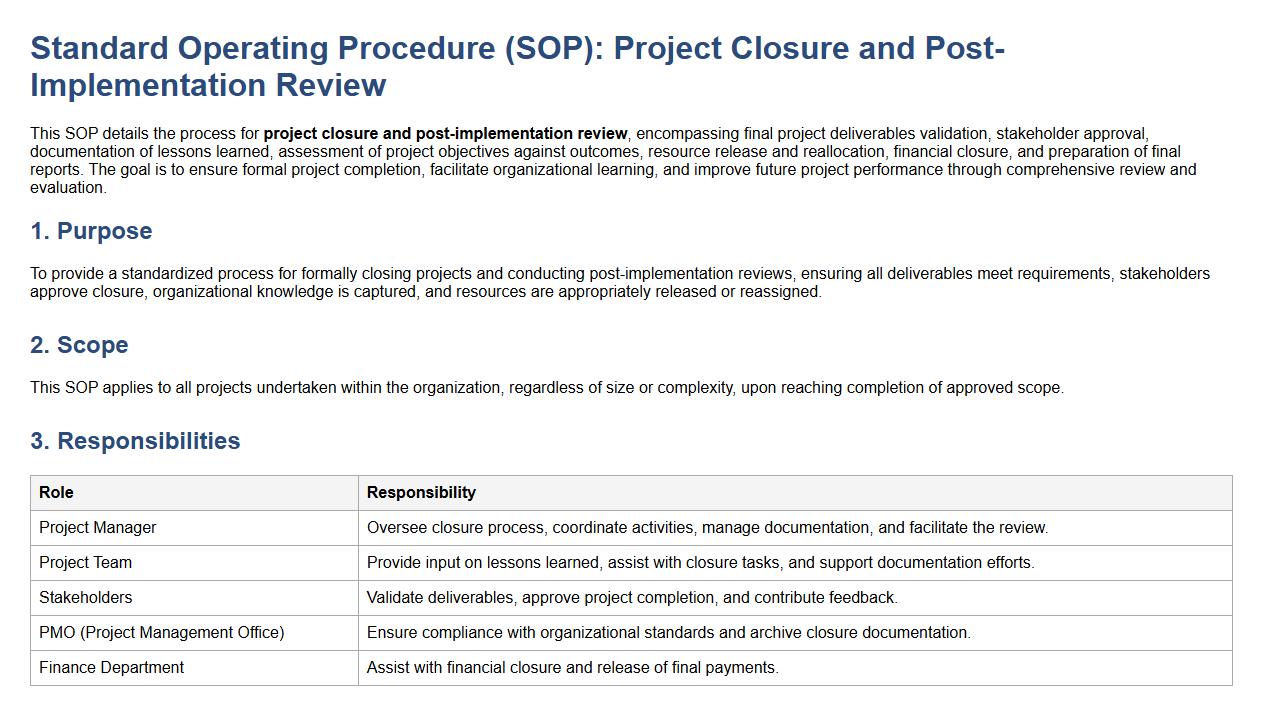
This SOP details the process for project closure and post-implementation review, encompassing final project deliverables validation, stakeholder approval, documentation of lessons learned, assessment of project objectives against outcomes, resource release and reallocation, financial closure, and preparation of final reports. The goal is to ensure formal project completion, facilitate organizational learning, and improve future project performance through comprehensive review and evaluation.
What is the main objective of the SOP for Professional IT Services?
The main objective of the SOP for Professional IT Services is to ensure consistent and efficient delivery of IT services. It aims to standardize processes to improve service quality and customer satisfaction. Additionally, it provides a clear framework for managing resources and workflows effectively.
Which roles and responsibilities are defined within the SOP?
The SOP clearly defines roles such as Service Manager, IT Support Staff, and Incident Coordinator. Each role has specific responsibilities to maintain accountability and streamline operations. This structure helps in ensuring that all tasks are executed by qualified personnel.
What standard procedures are outlined for incident management?
The SOP outlines a systematic approach to incident management including identification, logging, categorization, and resolution. It ensures timely communication and documentation throughout the incident lifecycle. This helps reduce downtime and minimizes business impact.
How does the SOP ensure compliance with industry regulations and security standards?
The SOP incorporates compliance checks aligned with relevant industry regulations and security standards. Regular audits and updates are mandated to keep practices current and effective. This proactive approach mitigates risks and ensures legal adherence.
What escalation process is specified when issues cannot be resolved at the first level?
The SOP specifies a clear escalation process that involves forwarding unresolved issues to higher-level support teams. It sets defined timelines and criteria for escalation to guarantee swift problem resolution. This hierarchy ensures critical issues receive appropriate attention without delay.