

A SOP Template for Professional Personal Training Services outlines standardized procedures to ensure consistent, high-quality client sessions and effective communication. It includes detailed guidelines on client assessments, personalized workout plans, and progress tracking to enhance training outcomes. Implementing this template helps trainers maintain professionalism and streamline operational efficiency.
Client onboarding and assessment procedures.
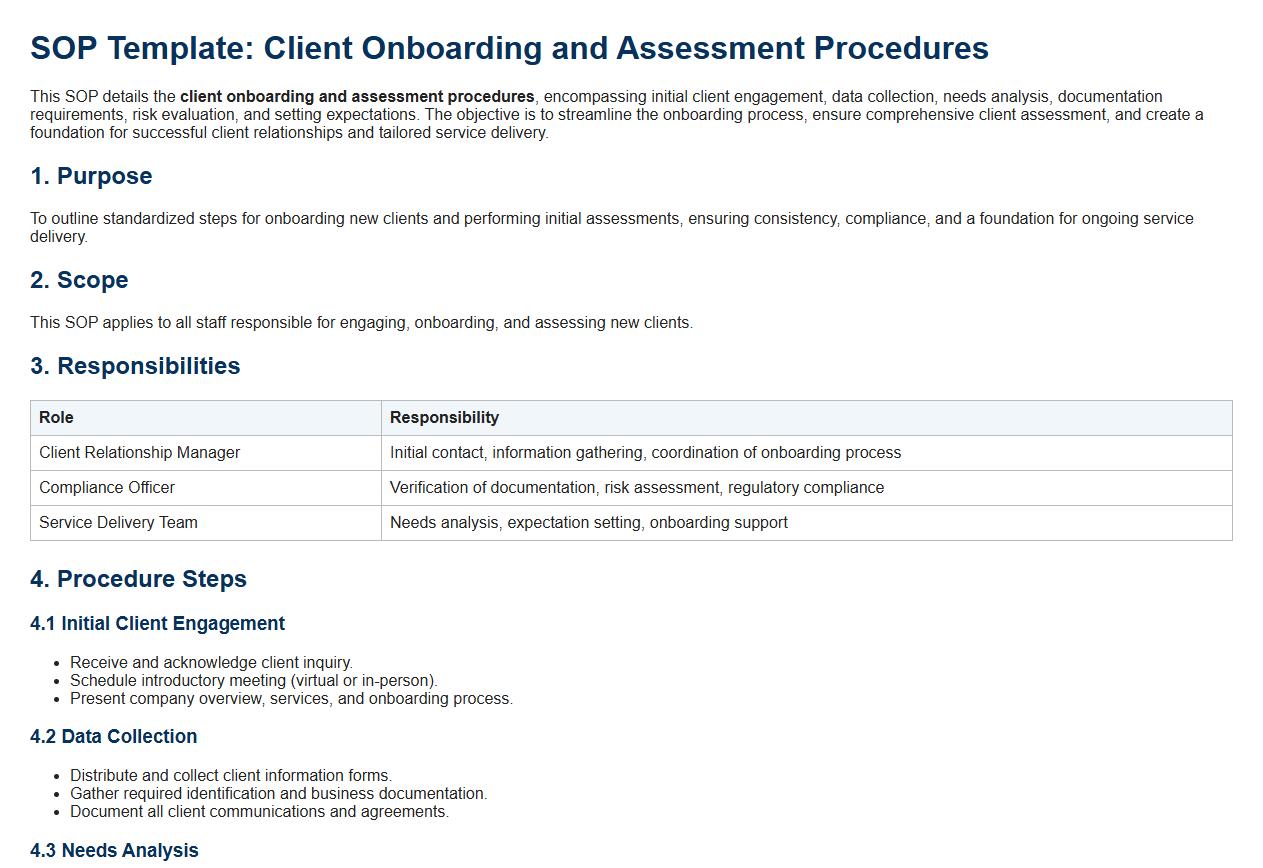
This SOP details the client onboarding and assessment procedures, encompassing initial client engagement, data collection, needs analysis, documentation requirements, risk evaluation, and setting expectations. The objective is to streamline the onboarding process, ensure comprehensive client assessment, and create a foundation for successful client relationships and tailored service delivery.
Development of individualized training programs.
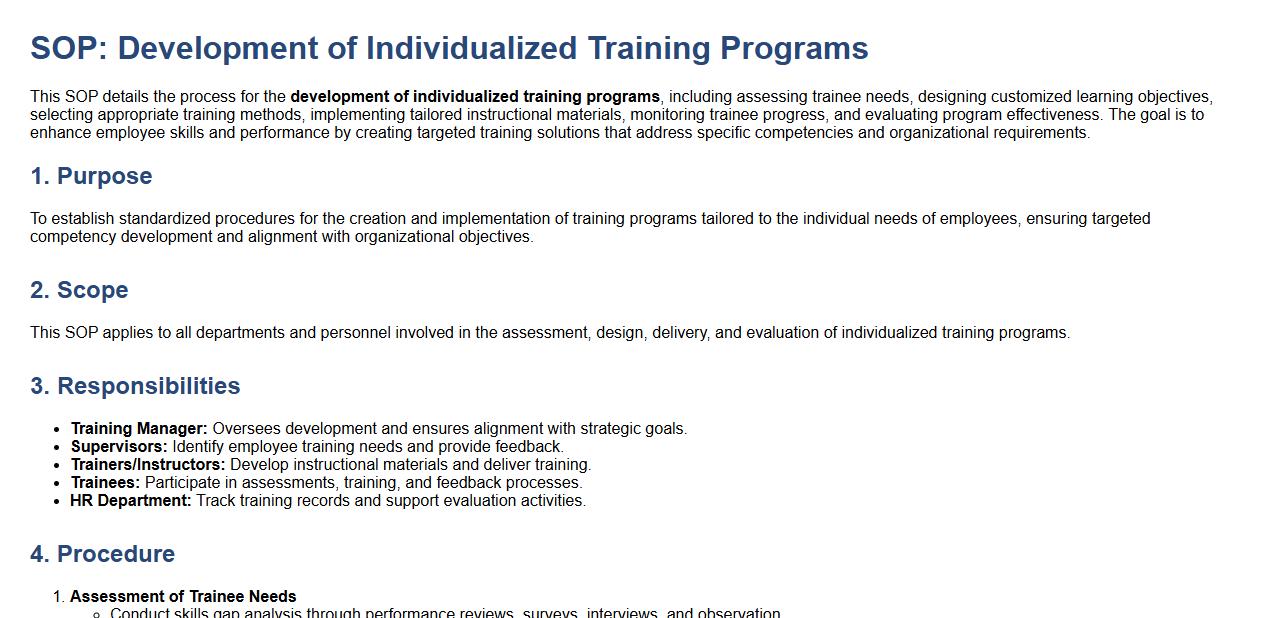
This SOP details the process for the development of individualized training programs, including assessing trainee needs, designing customized learning objectives, selecting appropriate training methods, implementing tailored instructional materials, monitoring trainee progress, and evaluating program effectiveness. The goal is to enhance employee skills and performance by creating targeted training solutions that address specific competencies and organizational requirements.
Pre-session equipment inspection and setup.
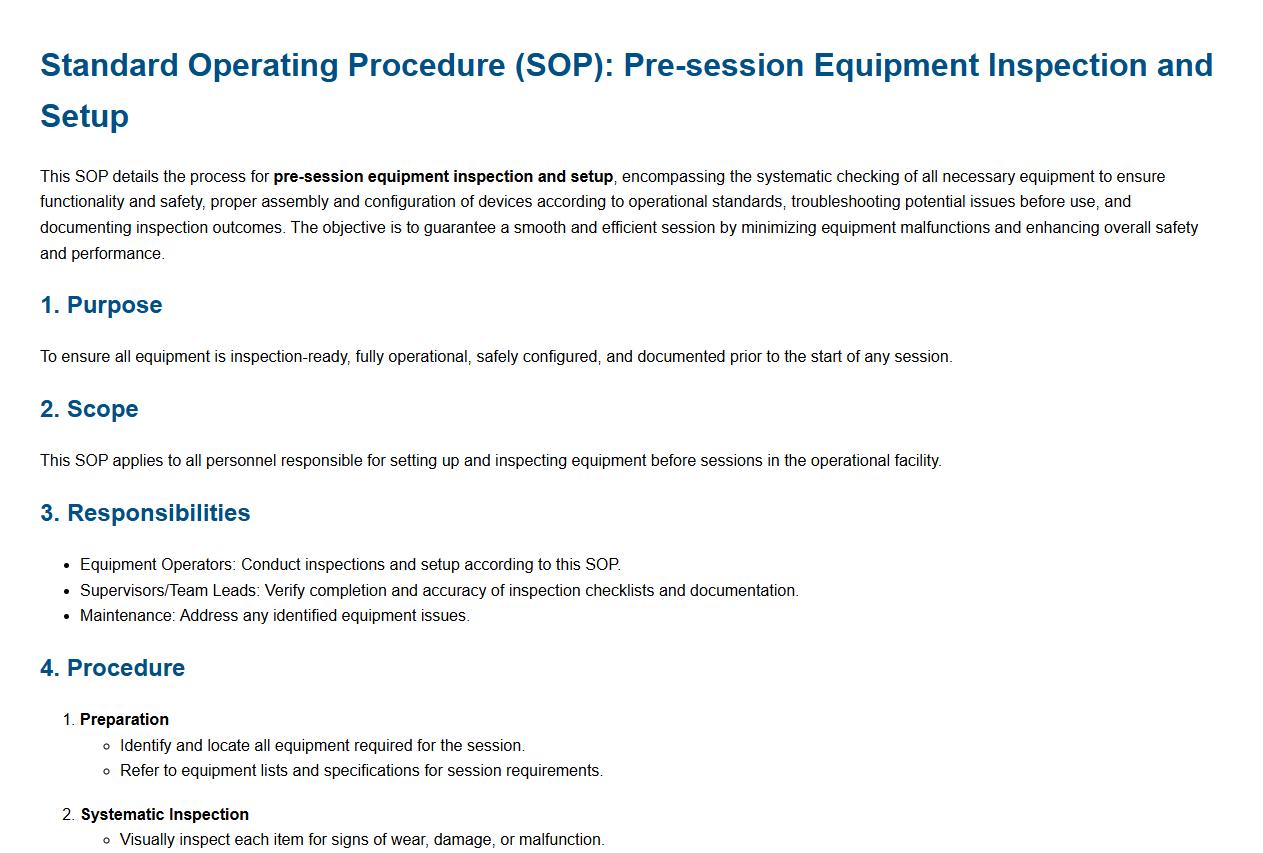
This SOP details the process for pre-session equipment inspection and setup, encompassing the systematic checking of all necessary equipment to ensure functionality and safety, proper assembly and configuration of devices according to operational standards, troubleshooting potential issues before use, and documenting inspection outcomes. The objective is to guarantee a smooth and efficient session by minimizing equipment malfunctions and enhancing overall safety and performance.
Standardized session warm-up and cool-down protocols.
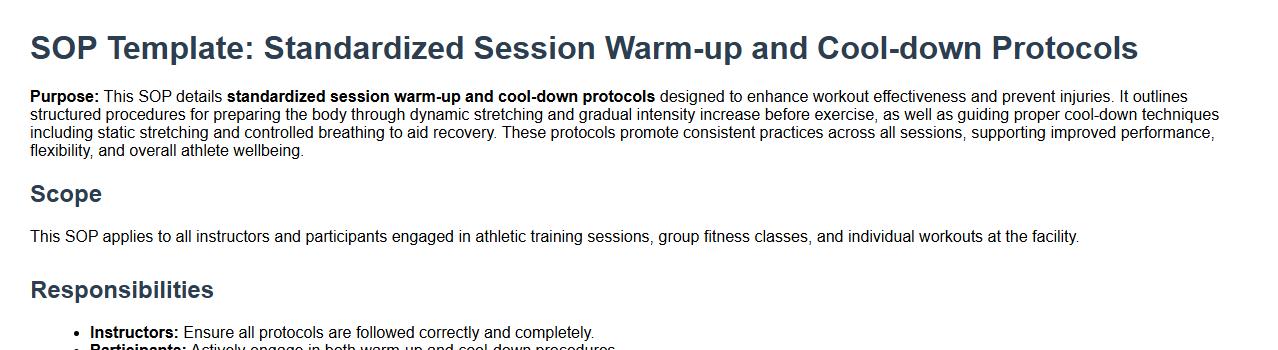
This SOP details standardized session warm-up and cool-down protocols designed to enhance workout effectiveness and prevent injuries. It outlines structured procedures for preparing the body through dynamic stretching and gradual intensity increase before exercise, as well as guiding proper cool-down techniques including static stretching and controlled breathing to aid recovery. These protocols promote consistent practices across all sessions, supporting improved performance, flexibility, and overall athlete wellbeing.
Client progress tracking and documentation.
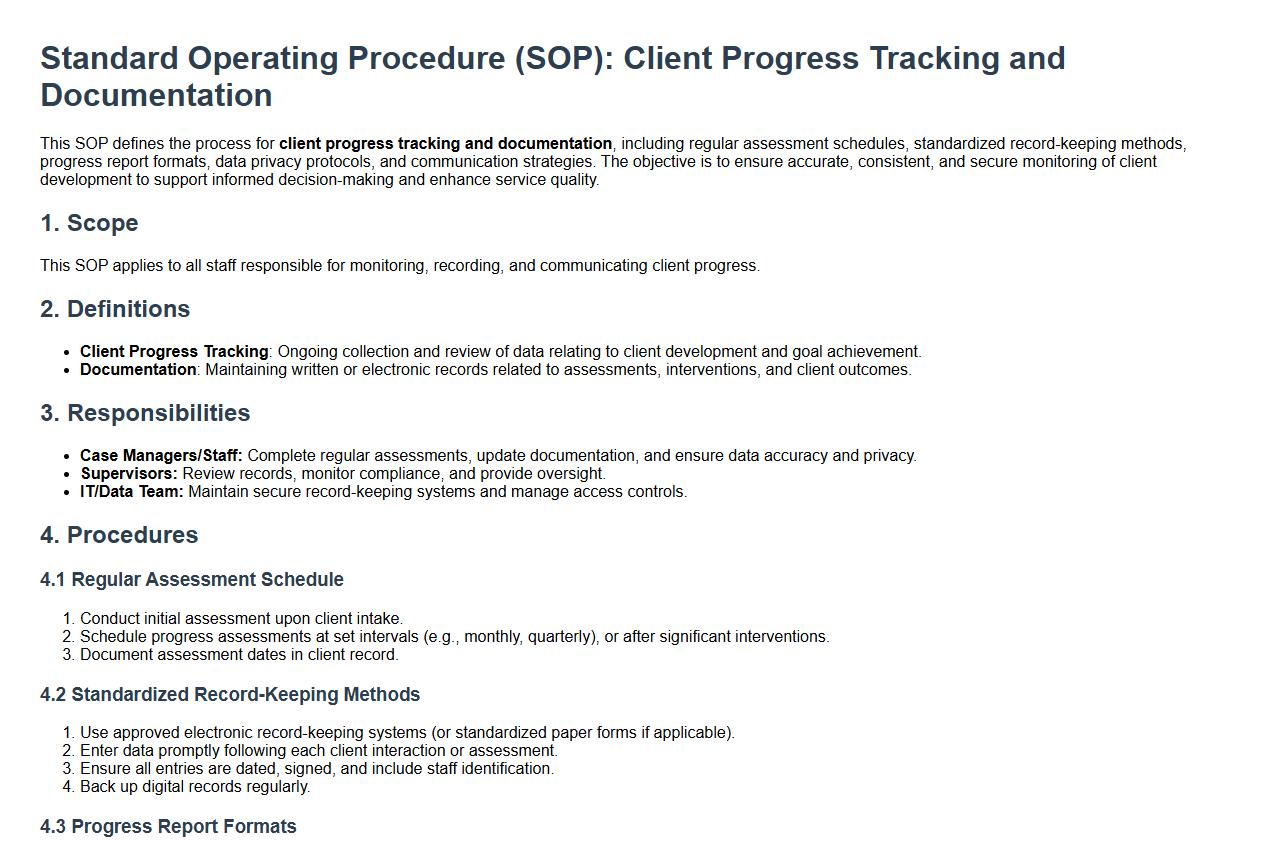
This SOP defines the process for client progress tracking and documentation, including regular assessment schedules, standardized record-keeping methods, progress report formats, data privacy protocols, and communication strategies. The objective is to ensure accurate, consistent, and secure monitoring of client development to support informed decision-making and enhance service quality.
Safety and emergency response procedures.
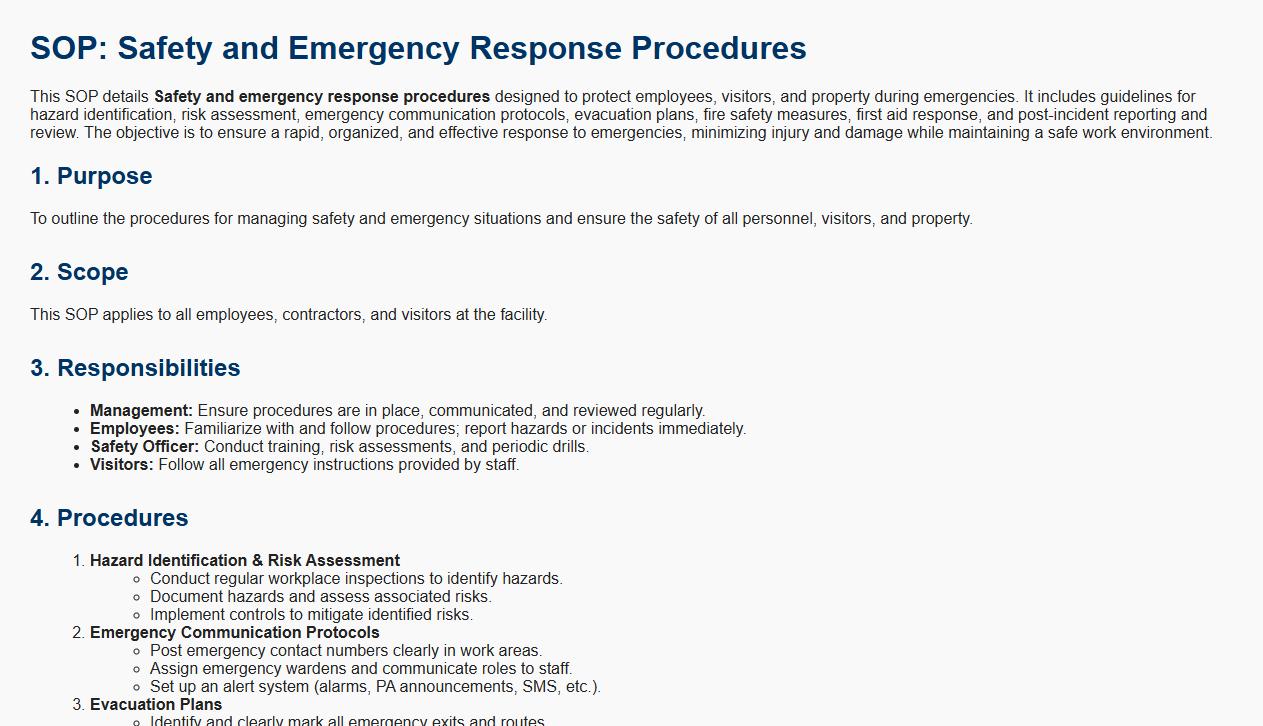
This SOP details Safety and emergency response procedures designed to protect employees, visitors, and property during emergencies. It includes guidelines for hazard identification, risk assessment, emergency communication protocols, evacuation plans, fire safety measures, first aid response, and post-incident reporting and review. The objective is to ensure a rapid, organized, and effective response to emergencies, minimizing injury and damage while maintaining a safe work environment.
Client confidentiality and data management.
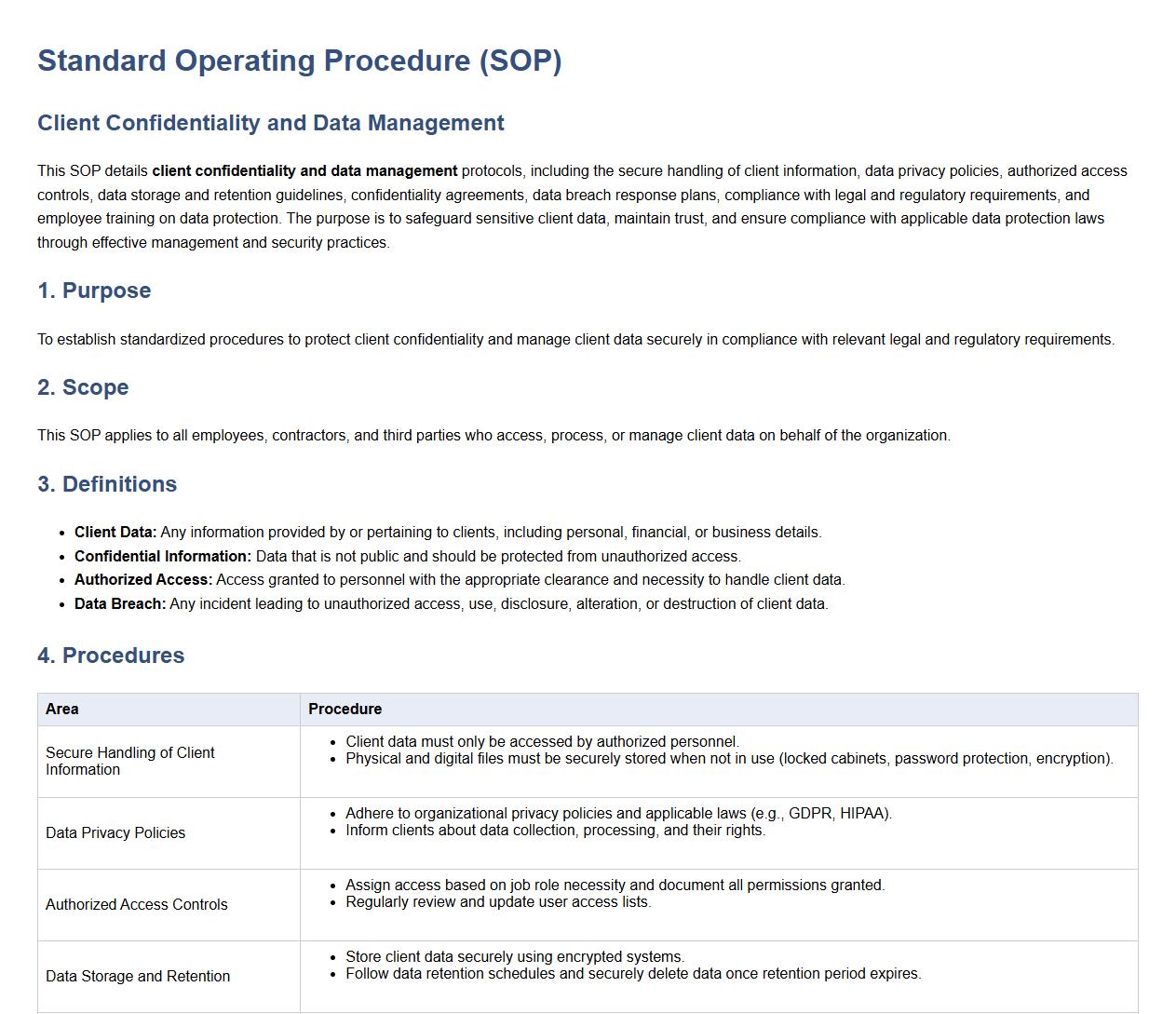
This SOP details client confidentiality and data management protocols, including the secure handling of client information, data privacy policies, authorized access controls, data storage and retention guidelines, confidentiality agreements, data breach response plans, compliance with legal and regulatory requirements, and employee training on data protection. The purpose is to safeguard sensitive client data, maintain trust, and ensure compliance with applicable data protection laws through effective management and security practices.
Sanitation and hygiene standards for training areas.
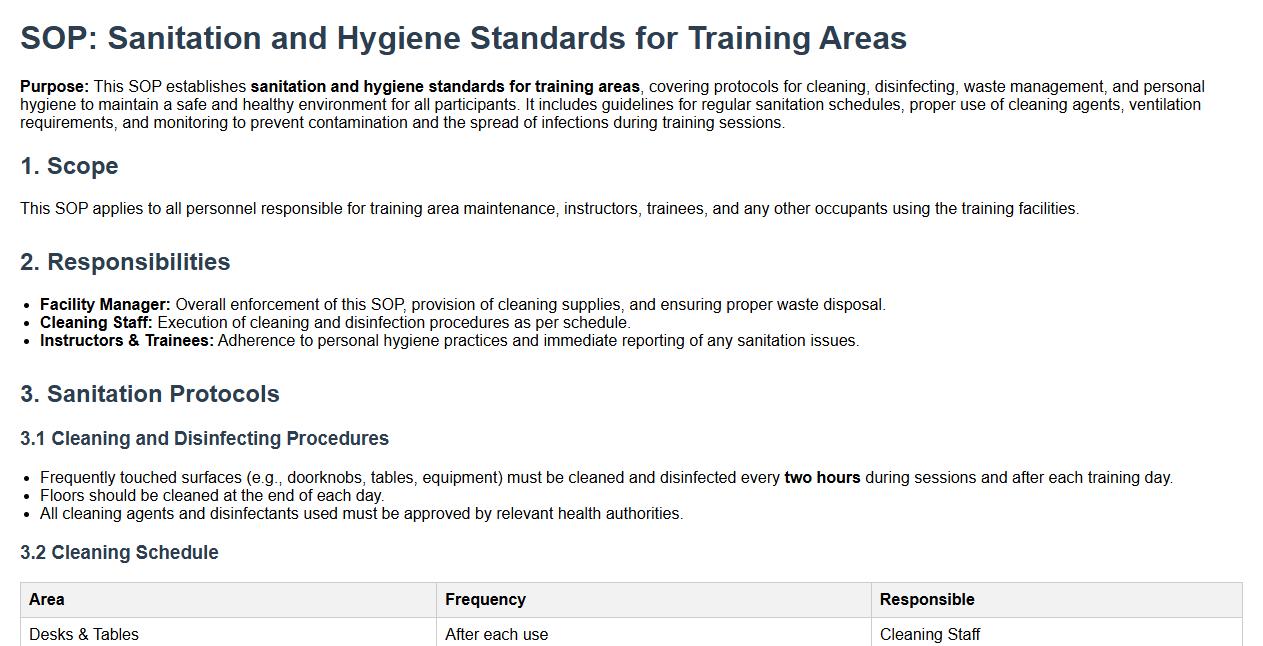
This SOP establishes sanitation and hygiene standards for training areas, covering protocols for cleaning, disinfecting, waste management, and personal hygiene to maintain a safe and healthy environment for all participants. It includes guidelines for regular sanitation schedules, proper use of cleaning agents, ventilation requirements, and monitoring to prevent contamination and the spread of infections during training sessions.
Session cancellation and rescheduling policies.
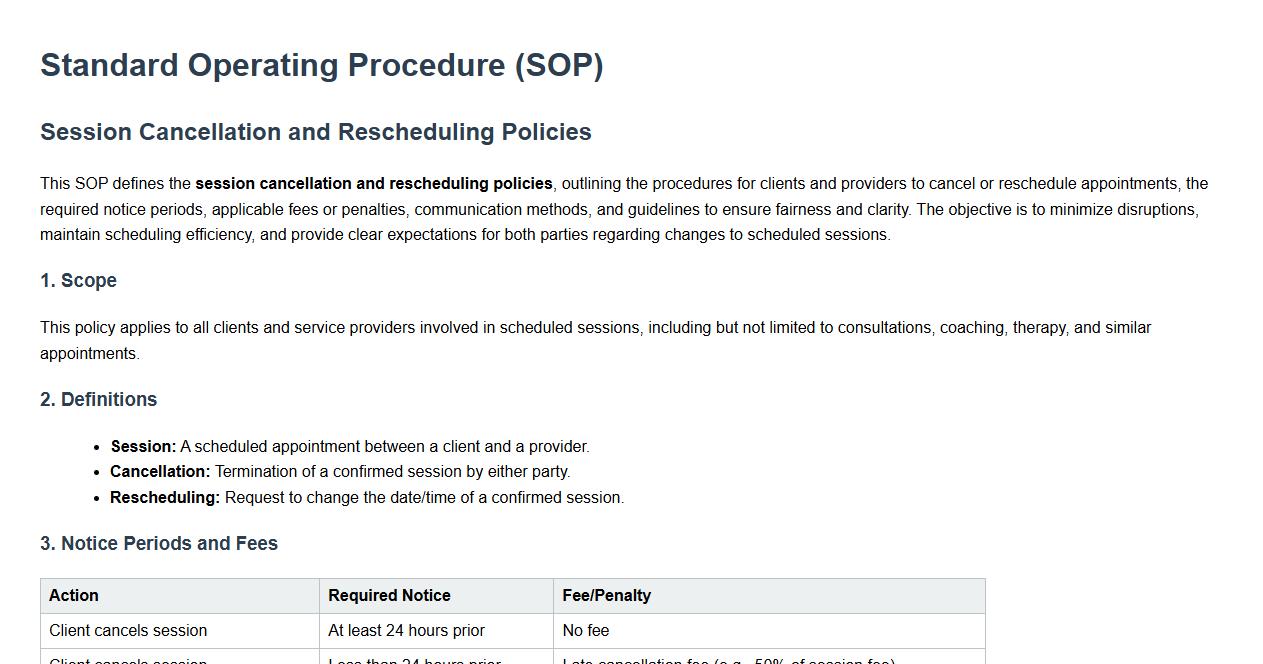
This SOP defines the session cancellation and rescheduling policies, outlining the procedures for clients and providers to cancel or reschedule appointments, the required notice periods, applicable fees or penalties, communication methods, and guidelines to ensure fairness and clarity. The objective is to minimize disruptions, maintain scheduling efficiency, and provide clear expectations for both parties regarding changes to scheduled sessions.
Ongoing professional development and certification maintenance.
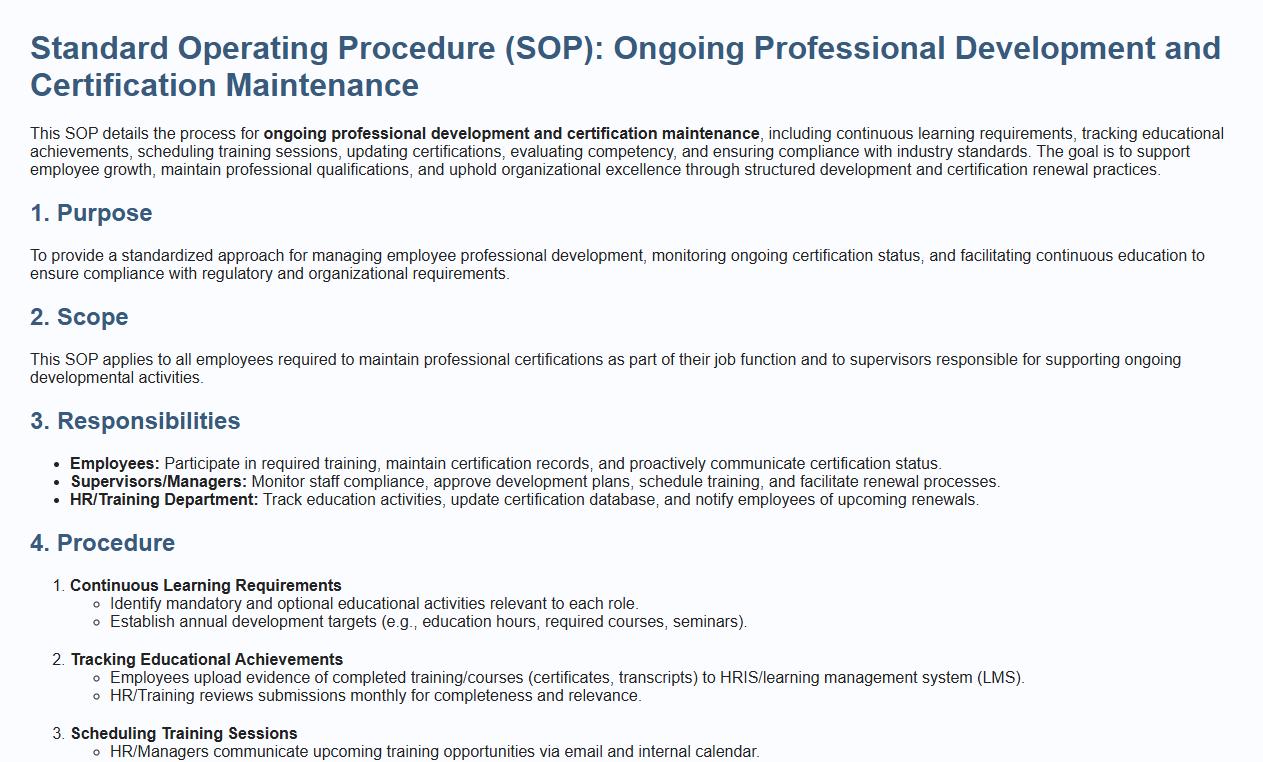
This SOP details the process for ongoing professional development and certification maintenance, including continuous learning requirements, tracking educational achievements, scheduling training sessions, updating certifications, evaluating competency, and ensuring compliance with industry standards. The goal is to support employee growth, maintain professional qualifications, and uphold organizational excellence through structured development and certification renewal practices.
Required Qualifications for Trainers
The Professional Personal Training SOP mandates that trainers possess a valid certification from a recognized fitness organization. Trainers must also have a minimum of two years of practical experience in personal training. Continuous professional development through workshops and courses is strongly emphasized to maintain competency.
Client Assessment and Onboarding Procedures
The SOP defines proper client assessment as a comprehensive process that includes medical history review, fitness level evaluation, and goal setting. Onboarding involves a detailed orientation session where trainers explain program expectations and safety protocols. This ensures a tailored and safe fitness plan for each client.
Injury Prevention and Emergency Response Protocols
According to the SOP, trainers must conduct thorough risk assessments before sessions to minimize injury risks. Emergency response protocols include immediate first aid, contacting emergency services, and documenting the incident. All trainers are required to be certified in CPR and first aid.
Documentation and Reporting Standards
The SOP specifies that trainers must maintain accurate session logs including exercises performed, client progress, and any incidents. Reporting requires timely submission of these records to management for quality control. Confidential digital storage is recommended to protect client data integrity.
Confidentiality and Ethical Guidelines
The SOP stresses the importance of maintaining strict confidentiality concerning all client information. Trainers are instructed to share client data only with authorized personnel and with client consent. Ethical guidelines also require honesty, professionalism, and respect in all client interactions.