
A SOP Template for Professional Pest Control Services provides a structured framework to ensure consistent and effective pest management procedures. This template outlines detailed steps for inspection, treatment, safety measures, and client communication, helping technicians maintain high standards. Implementing such a template enhances operational efficiency and compliance with industry regulations.
Initial site inspection and pest identification procedure.
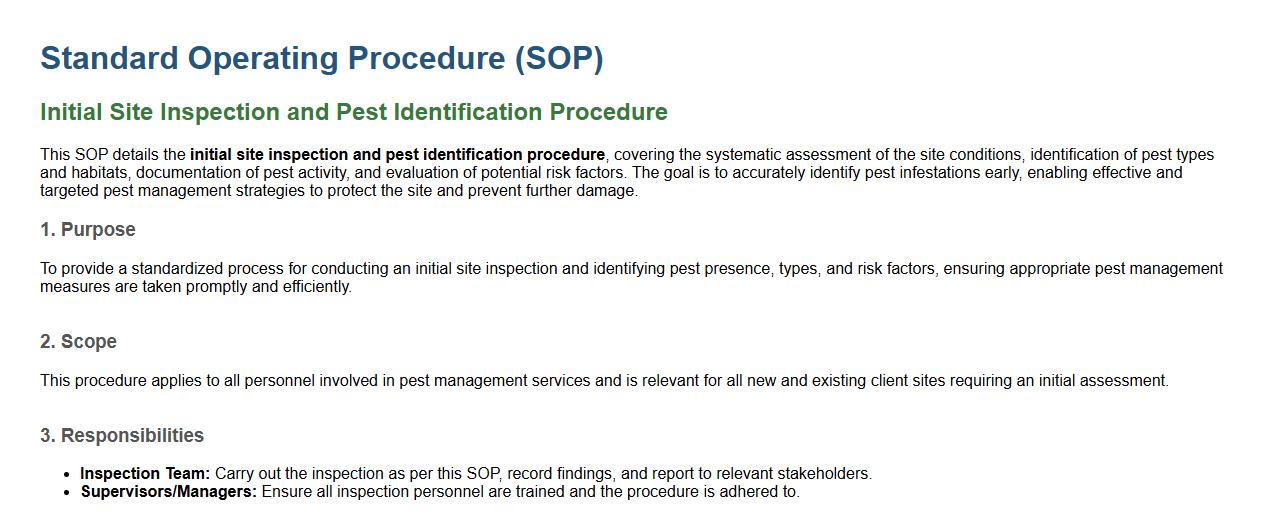
This SOP details the initial site inspection and pest identification procedure, covering the systematic assessment of the site conditions, identification of pest types and habitats, documentation of pest activity, and evaluation of potential risk factors. The goal is to accurately identify pest infestations early, enabling effective and targeted pest management strategies to protect the site and prevent further damage.
Client consultation and service agreement process.
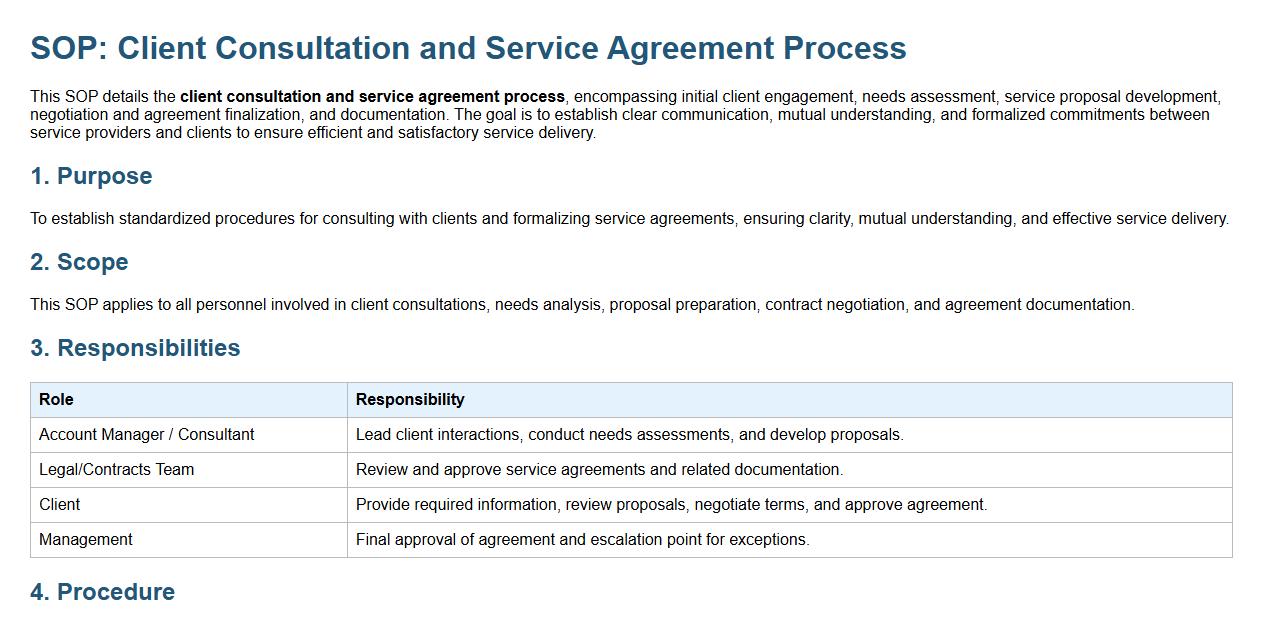
This SOP details the client consultation and service agreement process, encompassing initial client engagement, needs assessment, service proposal development, negotiation and agreement finalization, and documentation. The goal is to establish clear communication, mutual understanding, and formalized commitments between service providers and clients to ensure efficient and satisfactory service delivery.
Personal protective equipment (PPE) preparation and usage protocol.
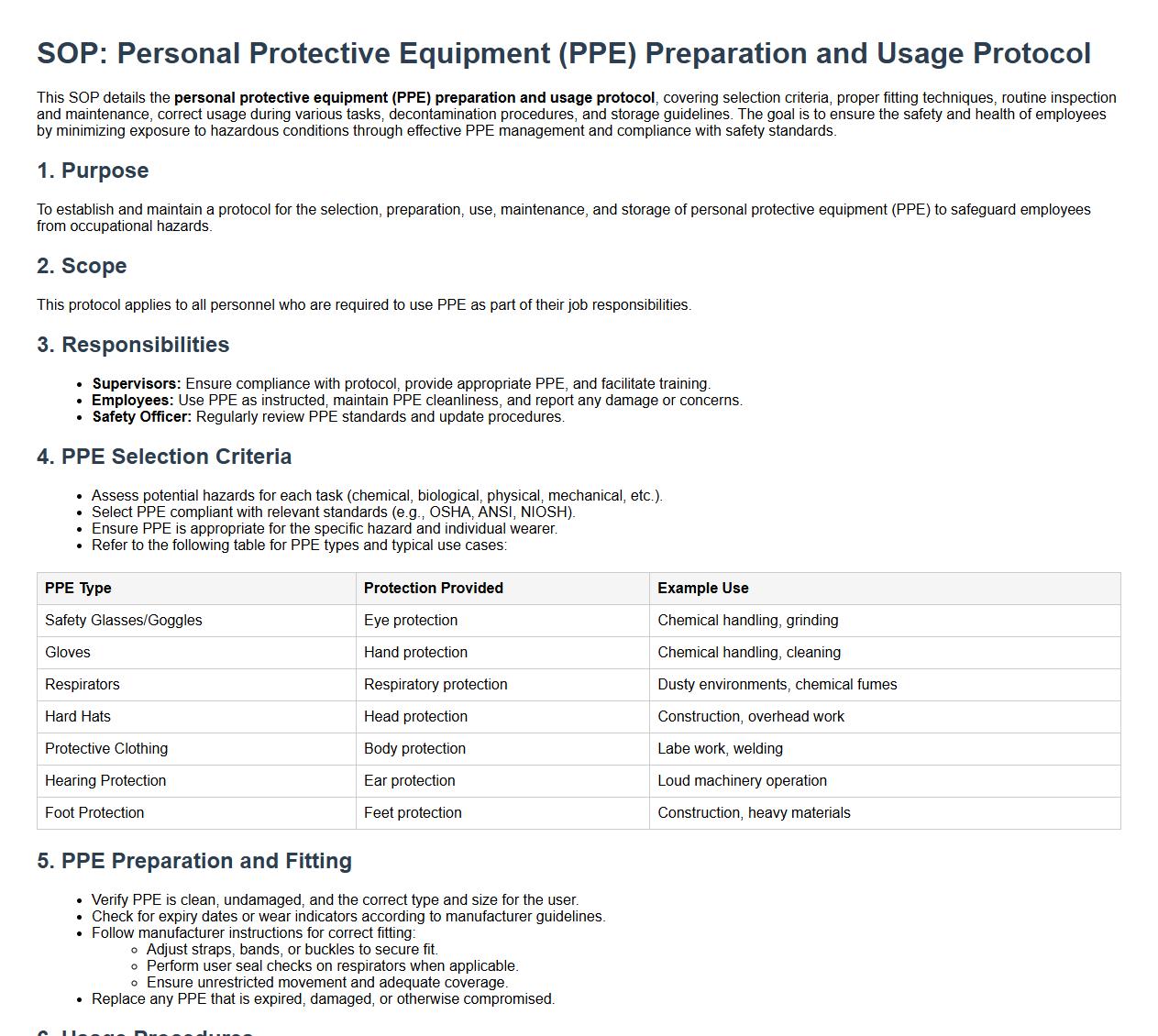
This SOP details the personal protective equipment (PPE) preparation and usage protocol, covering selection criteria, proper fitting techniques, routine inspection and maintenance, correct usage during various tasks, decontamination procedures, and storage guidelines. The goal is to ensure the safety and health of employees by minimizing exposure to hazardous conditions through effective PPE management and compliance with safety standards.
Safe handling, mixing, and application of pesticides.
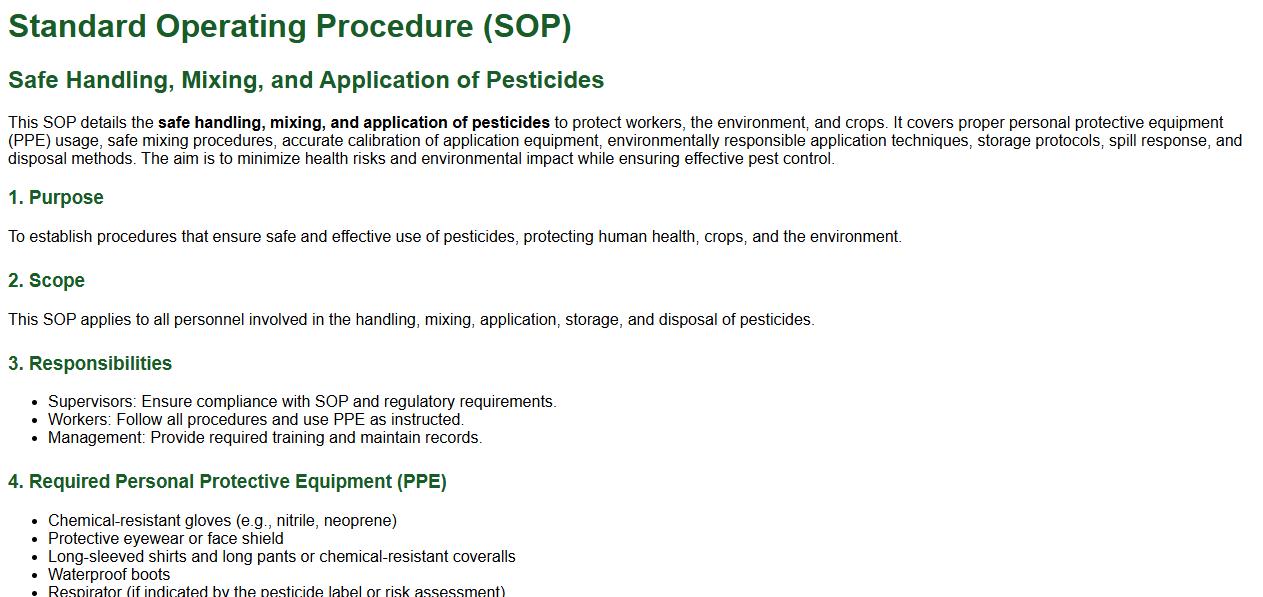
This SOP details the safe handling, mixing, and application of pesticides to protect workers, the environment, and crops. It covers proper personal protective equipment (PPE) usage, safe mixing procedures, accurate calibration of application equipment, environmentally responsible application techniques, storage protocols, spill response, and disposal methods. The aim is to minimize health risks and environmental impact while ensuring effective pest control.
Equipment calibration, maintenance, and cleaning steps.
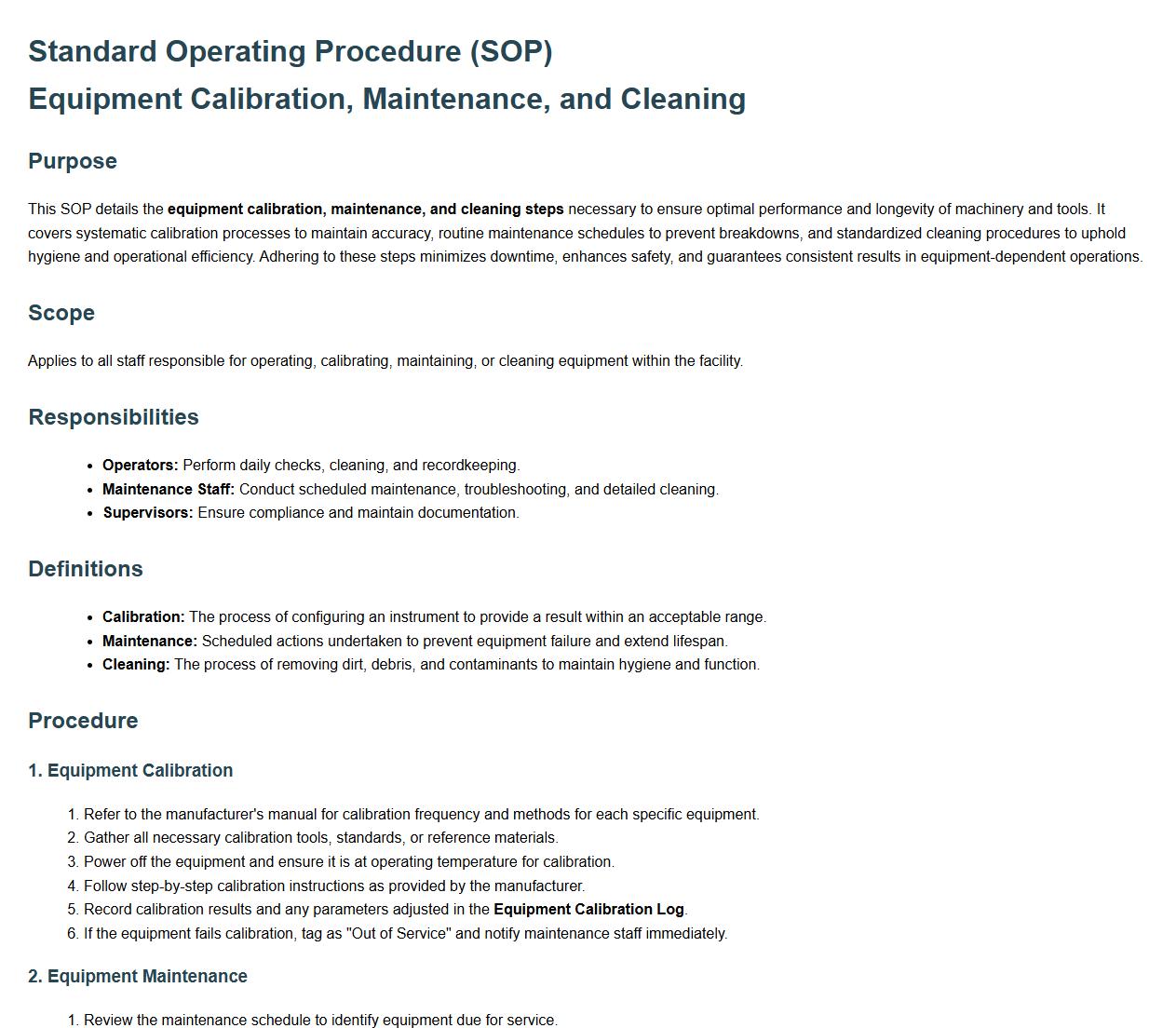
This SOP details the equipment calibration, maintenance, and cleaning steps necessary to ensure optimal performance and longevity of machinery and tools. It covers systematic calibration processes to maintain accuracy, routine maintenance schedules to prevent breakdowns, and standardized cleaning procedures to uphold hygiene and operational efficiency. Adhering to these steps minimizes downtime, enhances safety, and guarantees consistent results in equipment-dependent operations.
Integrated pest management (IPM) strategies implementation.
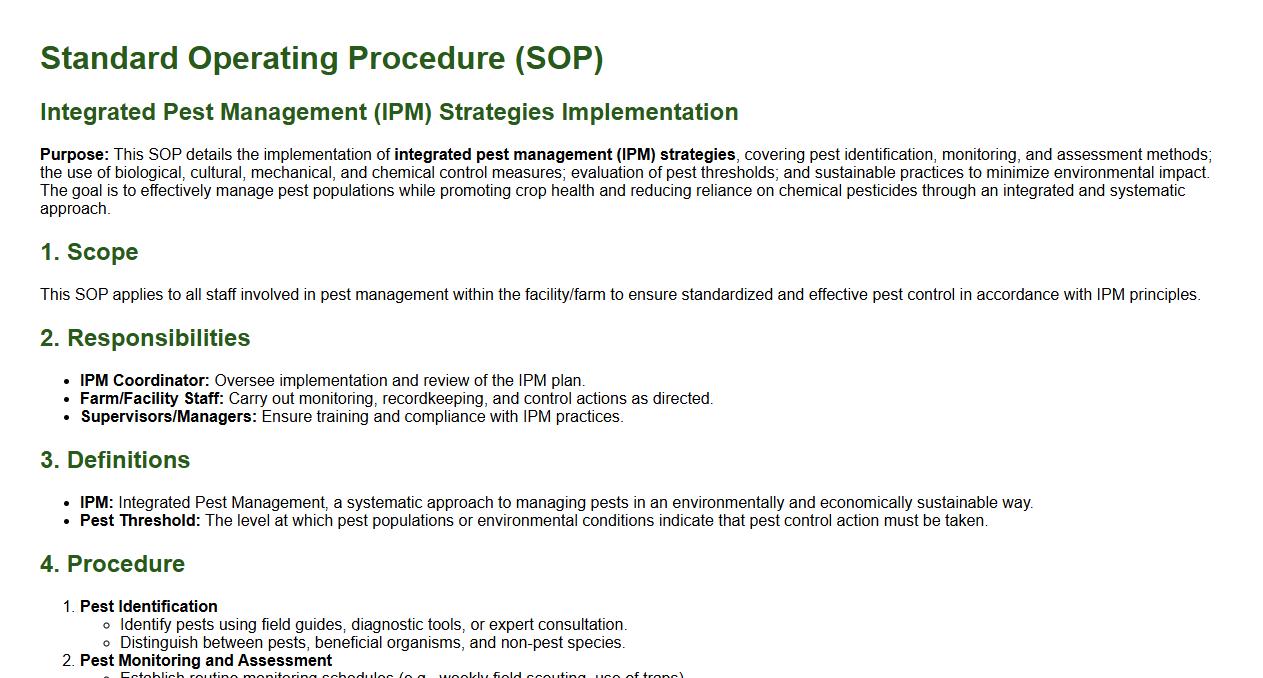
This SOP details the implementation of integrated pest management (IPM) strategies, covering pest identification, monitoring, and assessment methods; the use of biological, cultural, mechanical, and chemical control measures; evaluation of pest thresholds; and sustainable practices to minimize environmental impact. The goal is to effectively manage pest populations while promoting crop health and reducing reliance on chemical pesticides through an integrated and systematic approach.
Post-application site assessment and client communication.
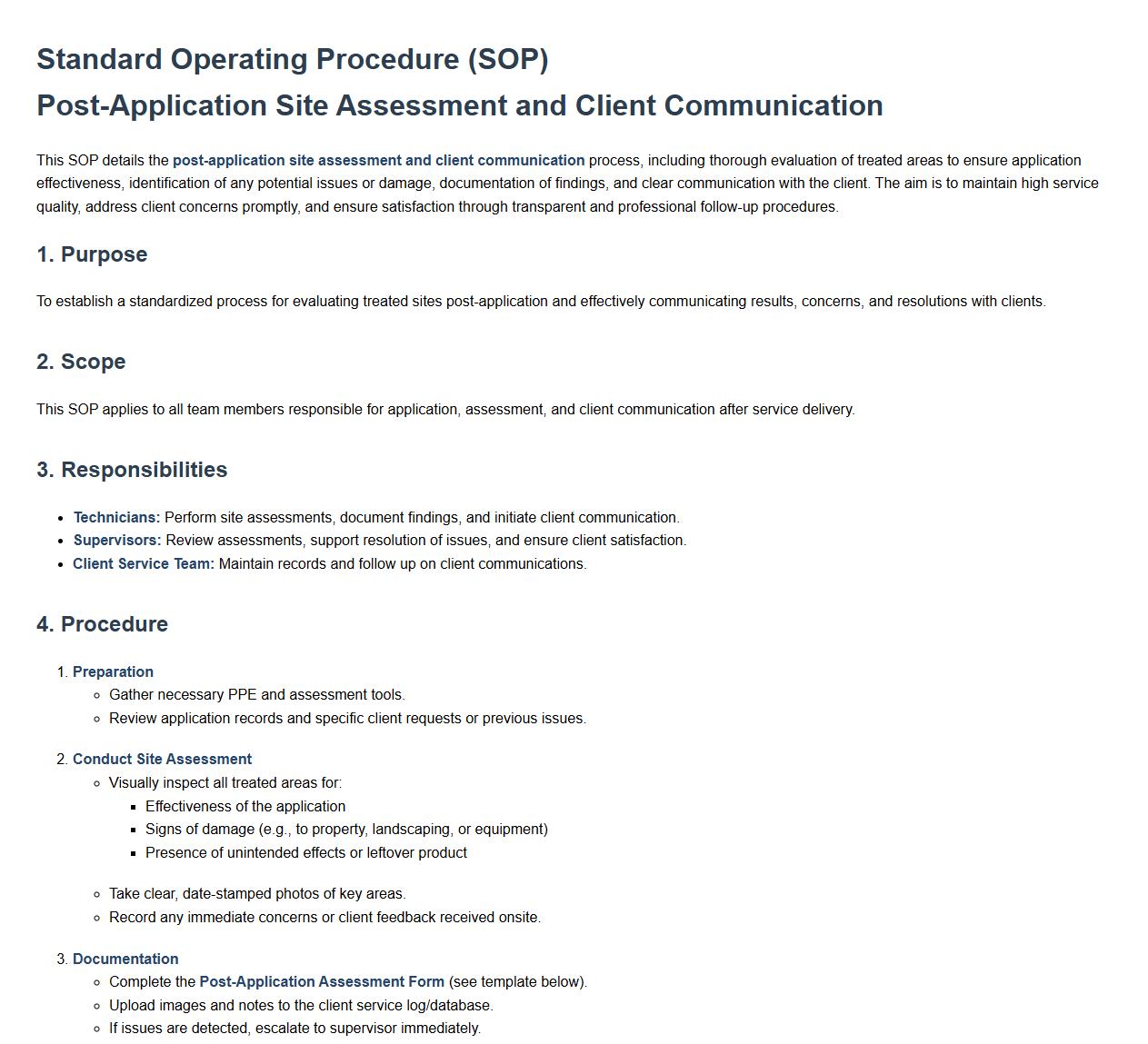
This SOP details the post-application site assessment and client communication process, including thorough evaluation of treated areas to ensure application effectiveness, identification of any potential issues or damage, documentation of findings, and clear communication with the client. The aim is to maintain high service quality, address client concerns promptly, and ensure satisfaction through transparent and professional follow-up procedures.
Waste disposal and environmental protection measures.
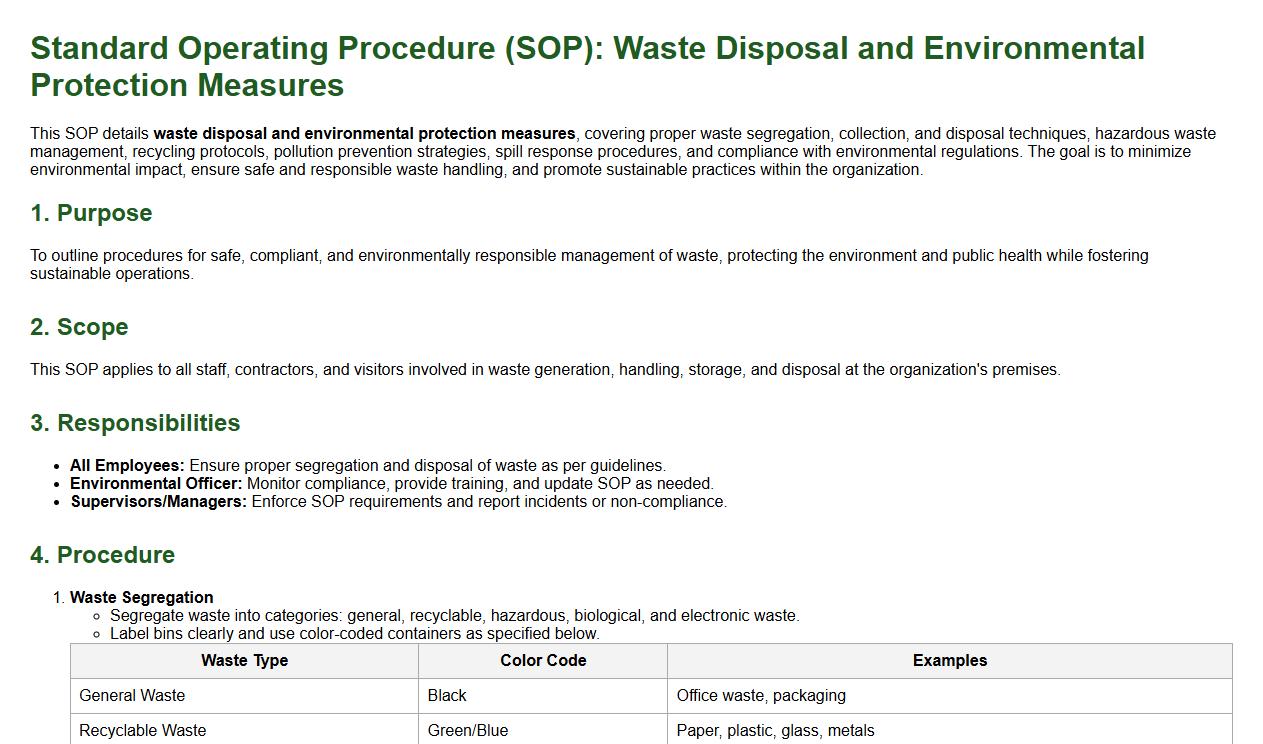
This SOP details waste disposal and environmental protection measures, covering proper waste segregation, collection, and disposal techniques, hazardous waste management, recycling protocols, pollution prevention strategies, spill response procedures, and compliance with environmental regulations. The goal is to minimize environmental impact, ensure safe and responsible waste handling, and promote sustainable practices within the organization.
Incident reporting and emergency response procedures.
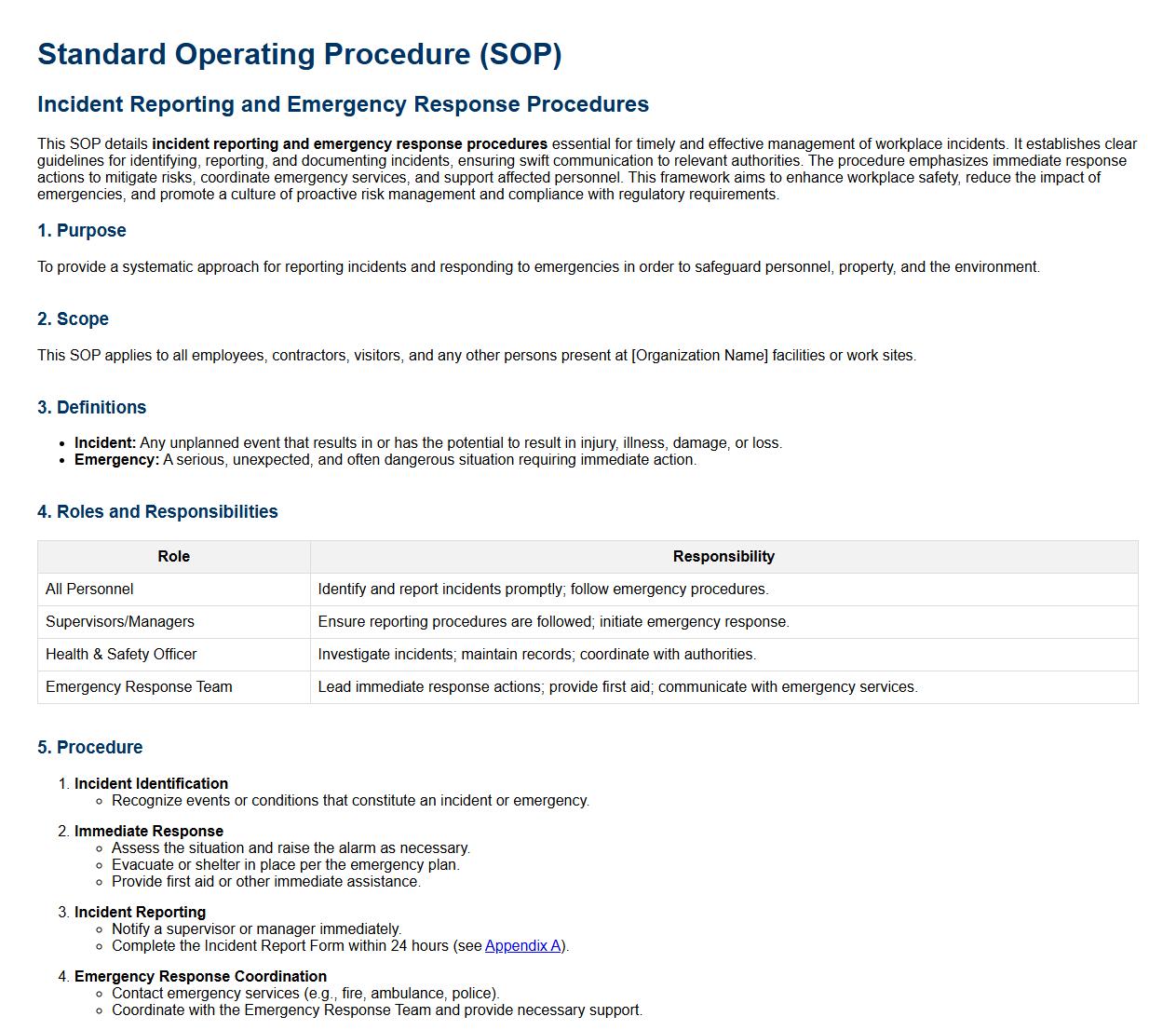
This SOP details incident reporting and emergency response procedures essential for timely and effective management of workplace incidents. It establishes clear guidelines for identifying, reporting, and documenting incidents, ensuring swift communication to relevant authorities. The procedure emphasizes immediate response actions to mitigate risks, coordinate emergency services, and support affected personnel. This framework aims to enhance workplace safety, reduce the impact of emergencies, and promote a culture of proactive risk management and compliance with regulatory requirements.
Documentation, record-keeping, and follow-up scheduling.
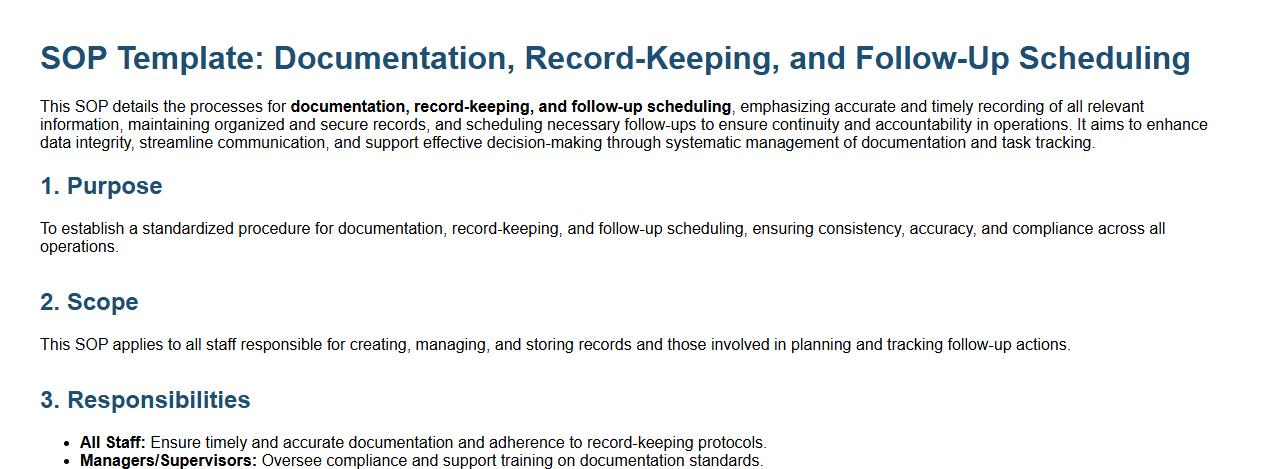
This SOP details the processes for documentation, record-keeping, and follow-up scheduling, emphasizing accurate and timely recording of all relevant information, maintaining organized and secure records, and scheduling necessary follow-ups to ensure continuity and accountability in operations. It aims to enhance data integrity, streamline communication, and support effective decision-making through systematic management of documentation and task tracking.
Key Safety Measures for Handling Pest Control Chemicals
The SOP emphasizes the importance of wearing personal protective equipment (PPE) such as gloves, masks, and goggles to minimize exposure. It mandates strict adherence to chemical labels and handling instructions to ensure safe application. Additionally, proper ventilation and storage in secure, designated areas are highlighted to prevent accidental contamination or spills.
Procedures for Documentation and Client Communication
Technicians must follow a systematic process for recording all treatment details, including chemical types, application rates, and dates, in a standardized logbook or digital system. Clear and timely communication with clients, including providing safety instructions and follow-up recommendations, is mandatory. The SOP also ensures that clients receive a written report summarizing the treatment carried out and any necessary precautions.
Equipment Maintenance and Calibration Protocols
The SOP specifies routine inspection and cleaning schedules for all pest control equipment to maintain functionality and safety. Calibration of spray equipment must be performed regularly to ensure the accurate delivery of chemical dosages as per manufacturer guidelines. Records of all maintenance and calibration activities are required to be maintained for accountability and regulatory compliance.
Waste Disposal and Environmental Protection Requirements
The SOP outlines procedures for the proper disposal of leftover chemicals and containers to prevent environmental contamination. It mandates the use of approved waste disposal methods that comply with local environmental regulations and minimize ecological impact. Emphasis is placed on reducing chemical use wherever possible and implementing integrated pest management strategies to protect the environment.
Response Steps for Chemical Exposure or Equipment Malfunction
In case of accidental chemical exposure, the SOP instructs immediate removal of contaminated clothing, thorough washing of the affected area, and seeking medical attention if necessary. Equipment malfunctions require prompt shutdown and reporting to supervisors to avoid hazards during operation. Detailed incident documentation and corrective actions are essential to prevent recurrence and ensure workplace safety.