

A SOP Template for Corporate Training Delivery provides a structured framework to ensure consistent and effective training sessions across the organization. It outlines clear procedures, roles, and timelines to streamline the preparation, execution, and evaluation of training programs. Utilizing this template enhances quality control and supports continuous improvement in employee development initiatives.
Training needs assessment and client consultation procedures.
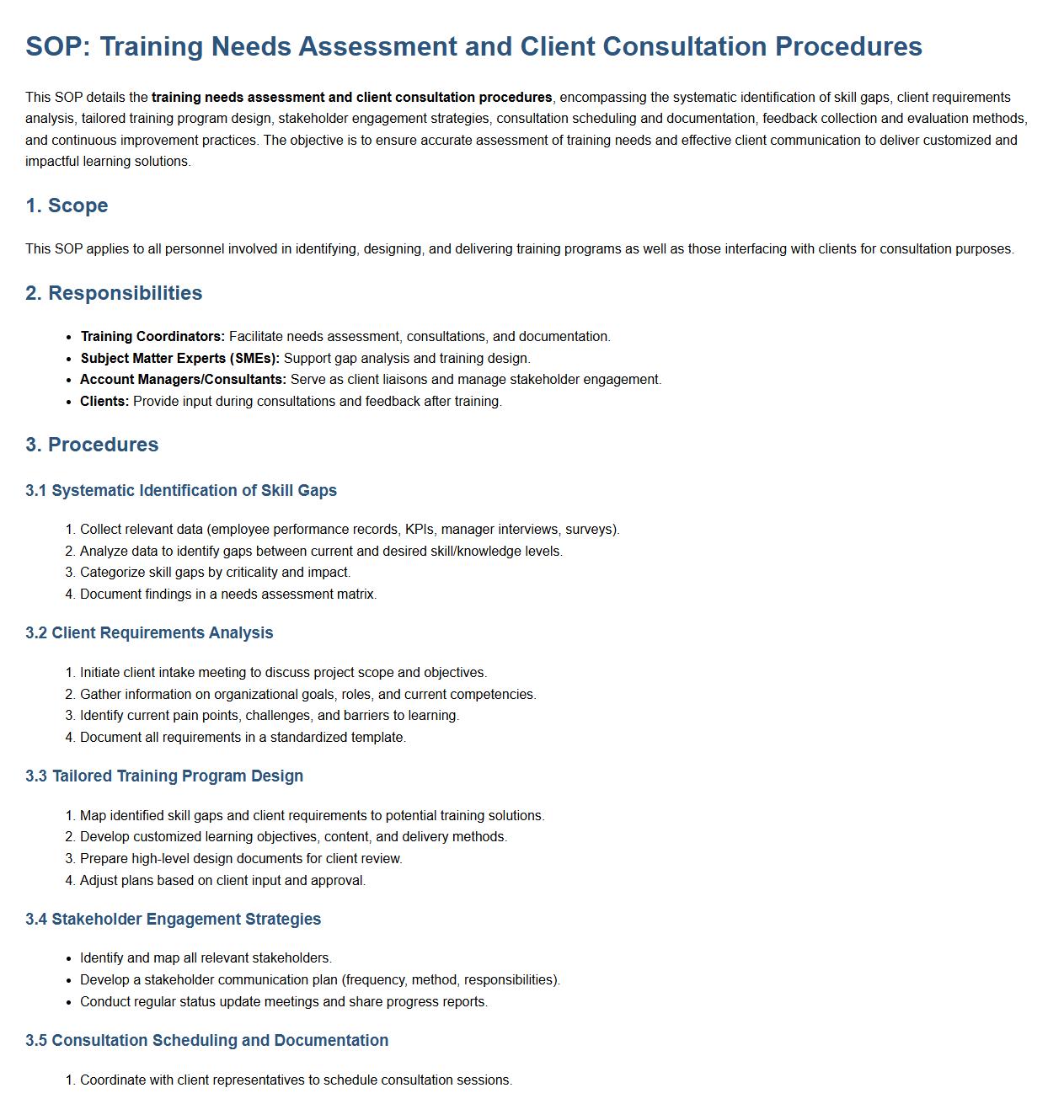
This SOP details the training needs assessment and client consultation procedures, encompassing the systematic identification of skill gaps, client requirements analysis, tailored training program design, stakeholder engagement strategies, consultation scheduling and documentation, feedback collection and evaluation methods, and continuous improvement practices. The objective is to ensure accurate assessment of training needs and effective client communication to deliver customized and impactful learning solutions.
Training program design and customization guidelines.
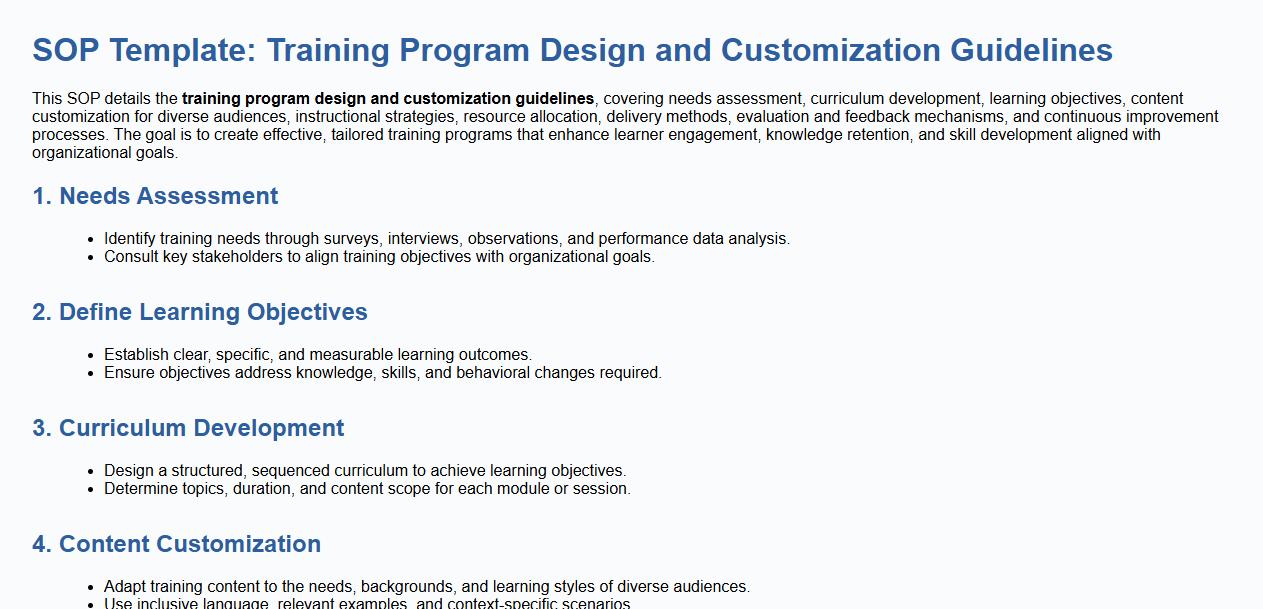
This SOP details the training program design and customization guidelines, covering needs assessment, curriculum development, learning objectives, content customization for diverse audiences, instructional strategies, resource allocation, delivery methods, evaluation and feedback mechanisms, and continuous improvement processes. The goal is to create effective, tailored training programs that enhance learner engagement, knowledge retention, and skill development aligned with organizational goals.
Course material development and approval process.
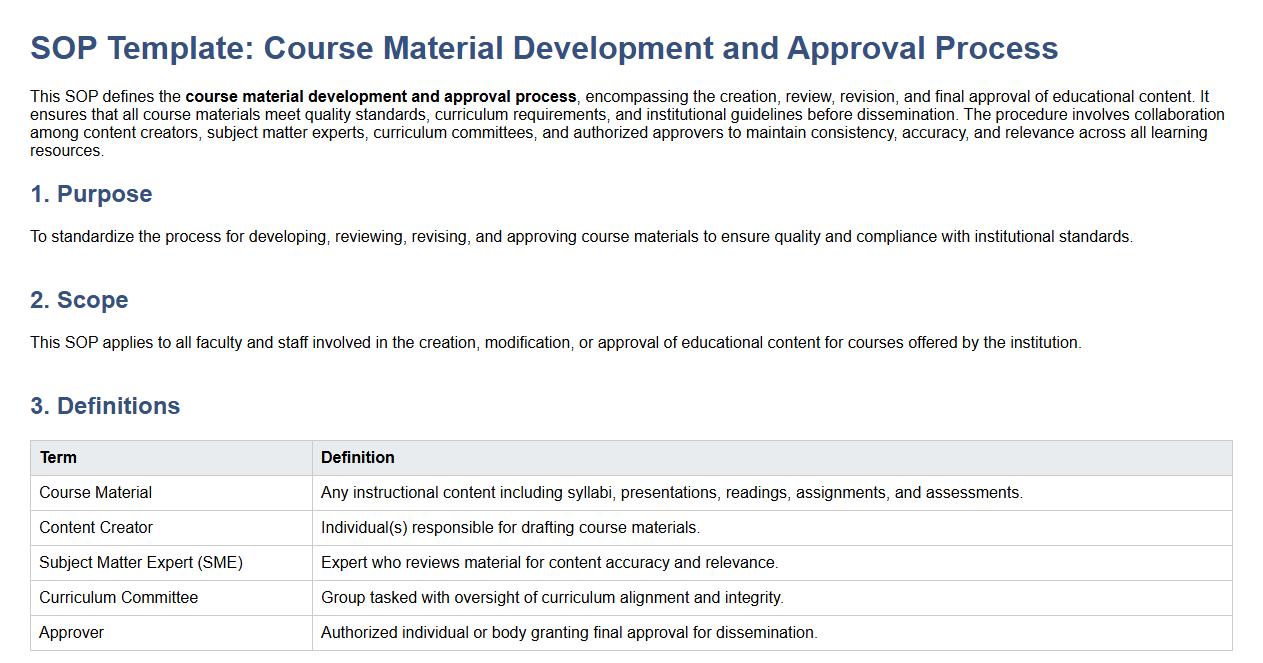
This SOP defines the course material development and approval process, encompassing the creation, review, revision, and final approval of educational content. It ensures that all course materials meet quality standards, curriculum requirements, and institutional guidelines before dissemination. The procedure involves collaboration among content creators, subject matter experts, curriculum committees, and authorized approvers to maintain consistency, accuracy, and relevance across all learning resources.
Trainer selection, briefing, and assignment protocols.
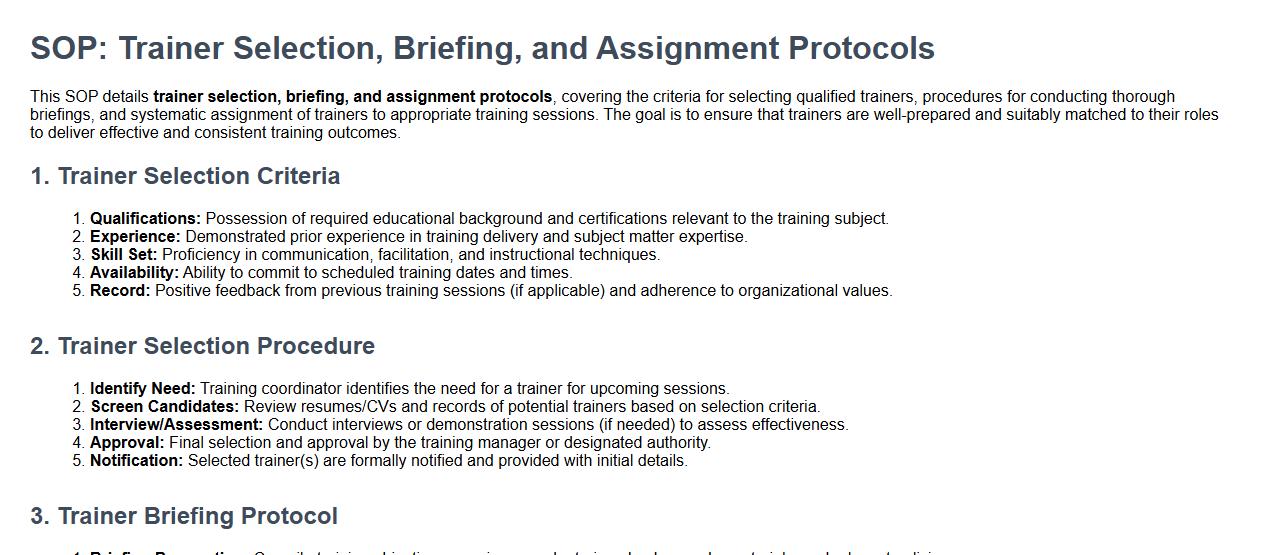
This SOP details trainer selection, briefing, and assignment protocols, covering the criteria for selecting qualified trainers, procedures for conducting thorough briefings, and systematic assignment of trainers to appropriate training sessions. The goal is to ensure that trainers are well-prepared and suitably matched to their roles to deliver effective and consistent training outcomes.
Pre-training logistics coordination and resource setup.
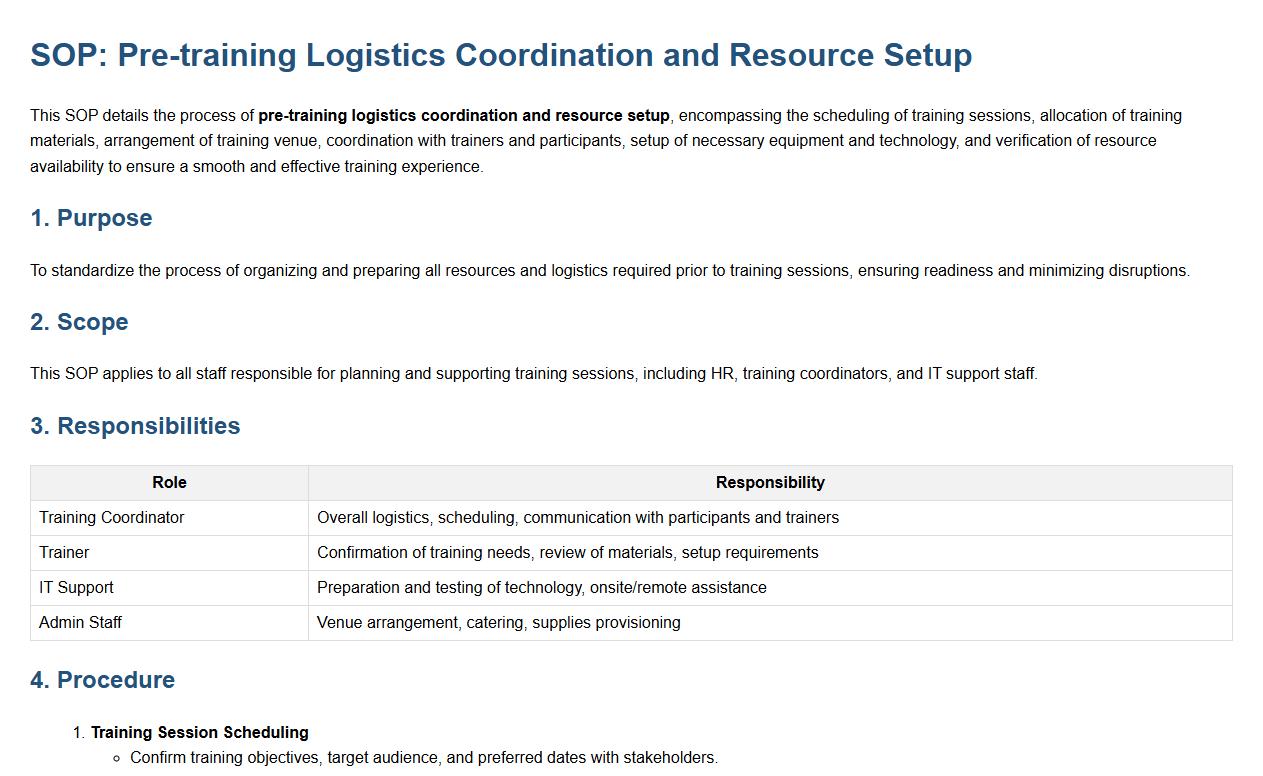
This SOP details the process of pre-training logistics coordination and resource setup, encompassing the scheduling of training sessions, allocation of training materials, arrangement of training venue, coordination with trainers and participants, setup of necessary equipment and technology, and verification of resource availability to ensure a smooth and effective training experience.
Participant registration, communication, and confirmation steps.
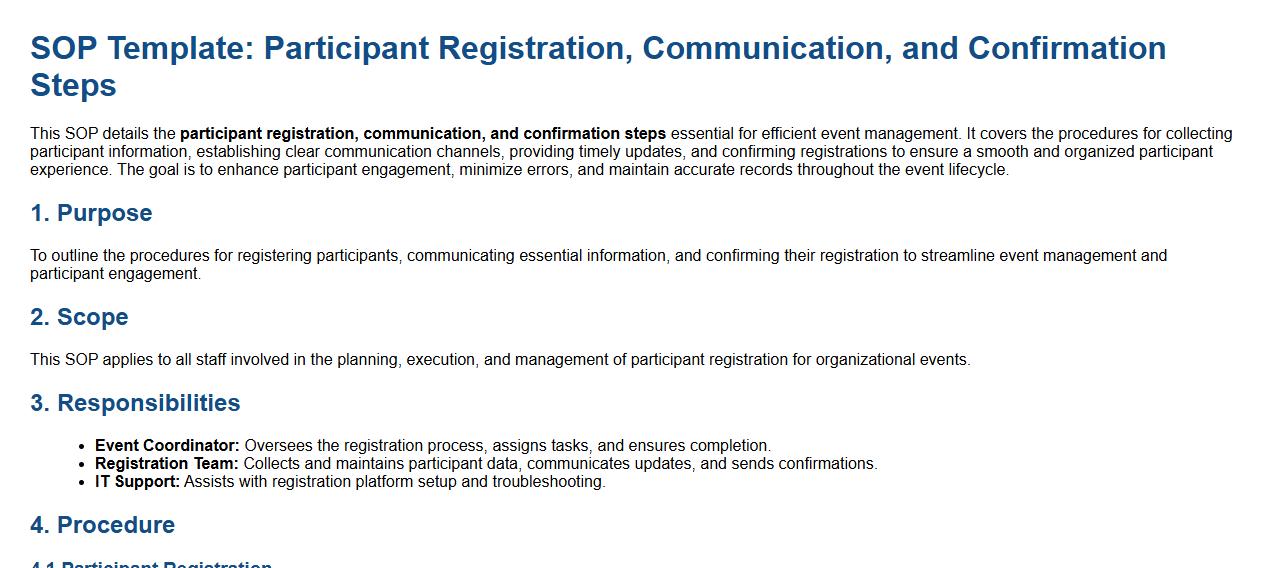
This SOP details the participant registration, communication, and confirmation steps essential for efficient event management. It covers the procedures for collecting participant information, establishing clear communication channels, providing timely updates, and confirming registrations to ensure a smooth and organized participant experience. The goal is to enhance participant engagement, minimize errors, and maintain accurate records throughout the event lifecycle.
Training session delivery standards and facilitation methods.
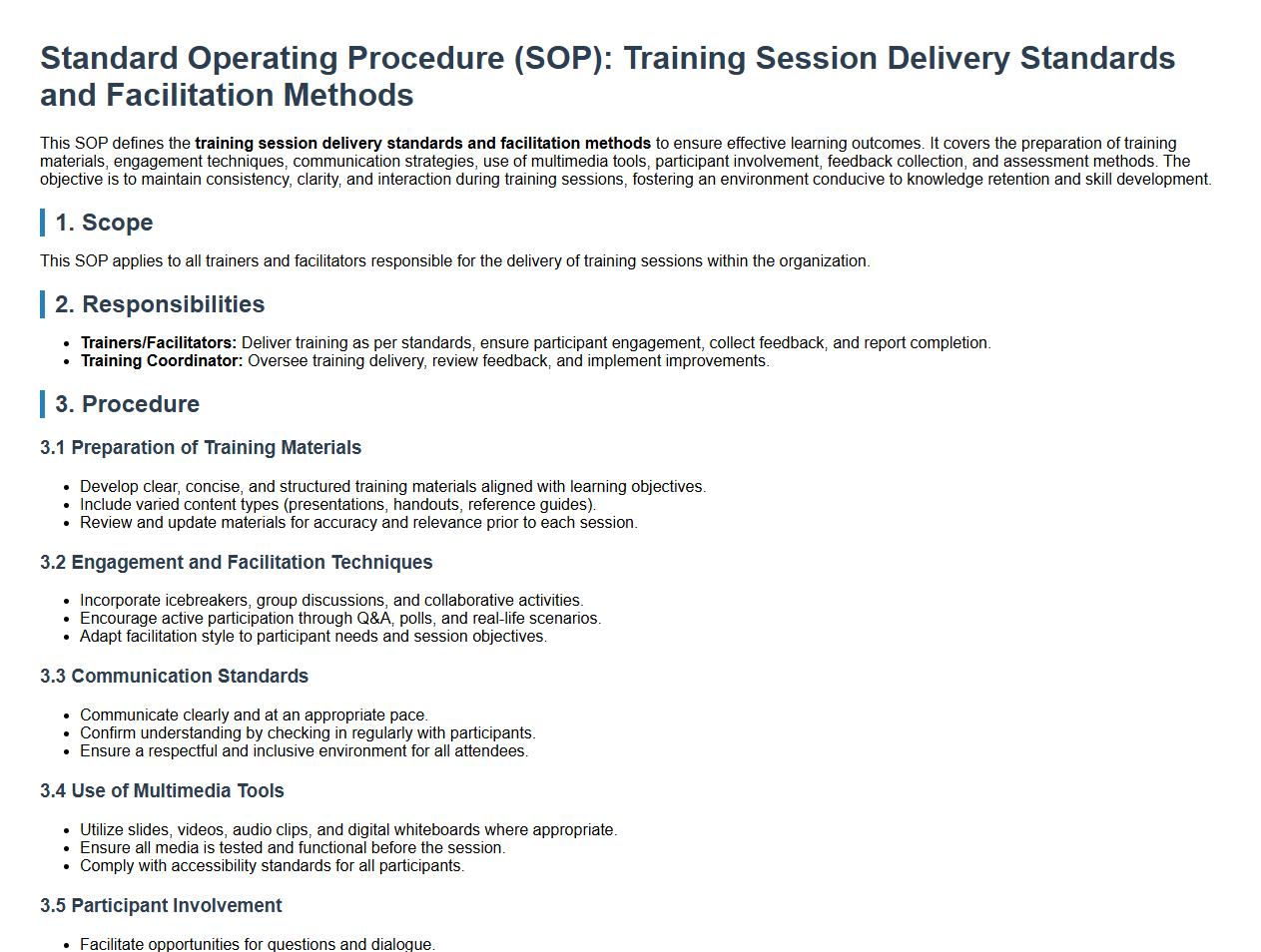
This SOP defines the training session delivery standards and facilitation methods to ensure effective learning outcomes. It covers the preparation of training materials, engagement techniques, communication strategies, use of multimedia tools, participant involvement, feedback collection, and assessment methods. The objective is to maintain consistency, clarity, and interaction during training sessions, fostering an environment conducive to knowledge retention and skill development.
Attendance tracking and engagement monitoring procedures.
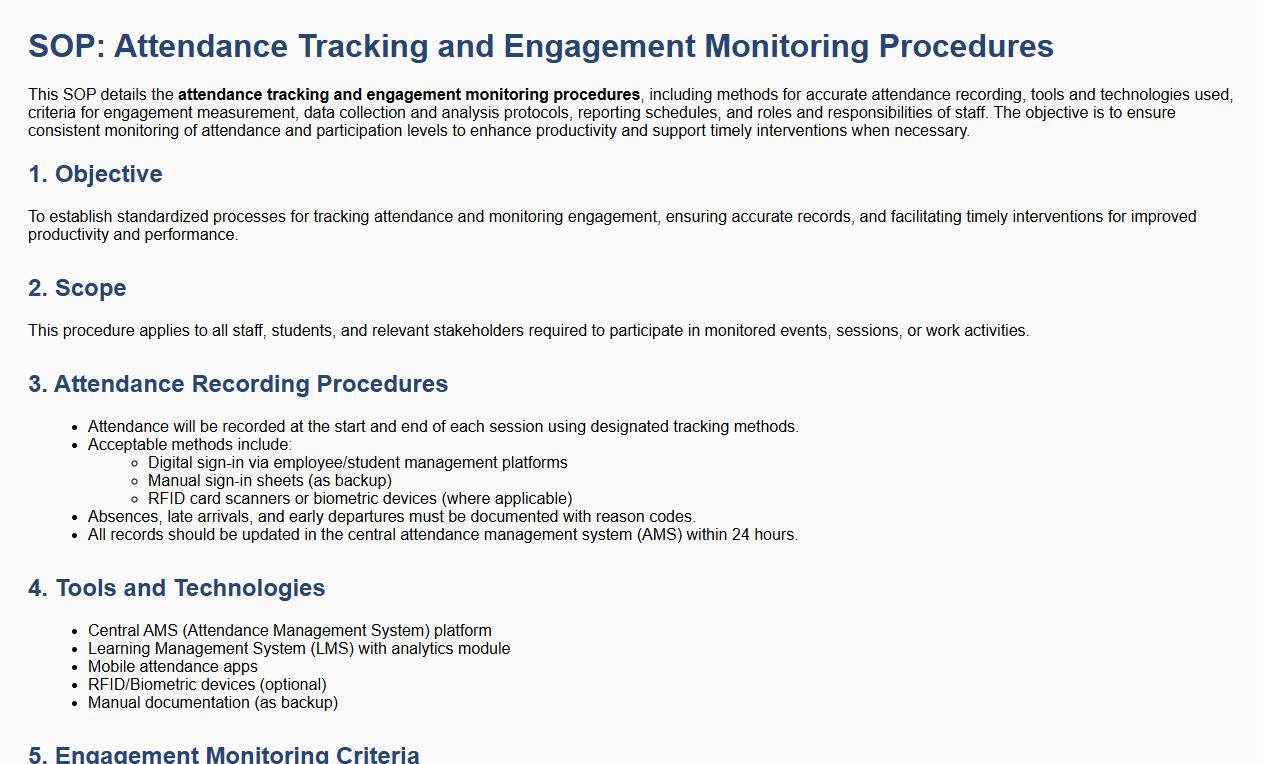
This SOP details the attendance tracking and engagement monitoring procedures, including methods for accurate attendance recording, tools and technologies used, criteria for engagement measurement, data collection and analysis protocols, reporting schedules, and roles and responsibilities of staff. The objective is to ensure consistent monitoring of attendance and participation levels to enhance productivity and support timely interventions when necessary.
Post-training feedback collection and analysis process.
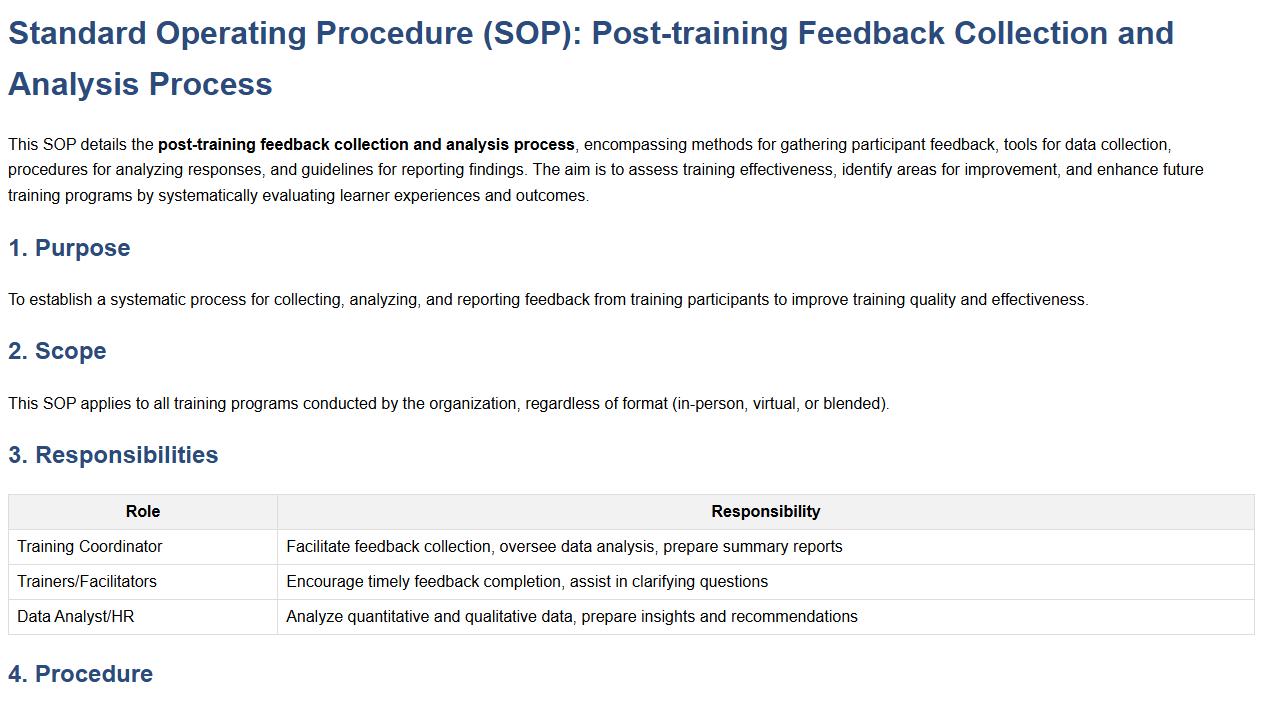
This SOP details the post-training feedback collection and analysis process, encompassing methods for gathering participant feedback, tools for data collection, procedures for analyzing responses, and guidelines for reporting findings. The aim is to assess training effectiveness, identify areas for improvement, and enhance future training programs by systematically evaluating learner experiences and outcomes.
Training evaluation, reporting, and follow-up actions.
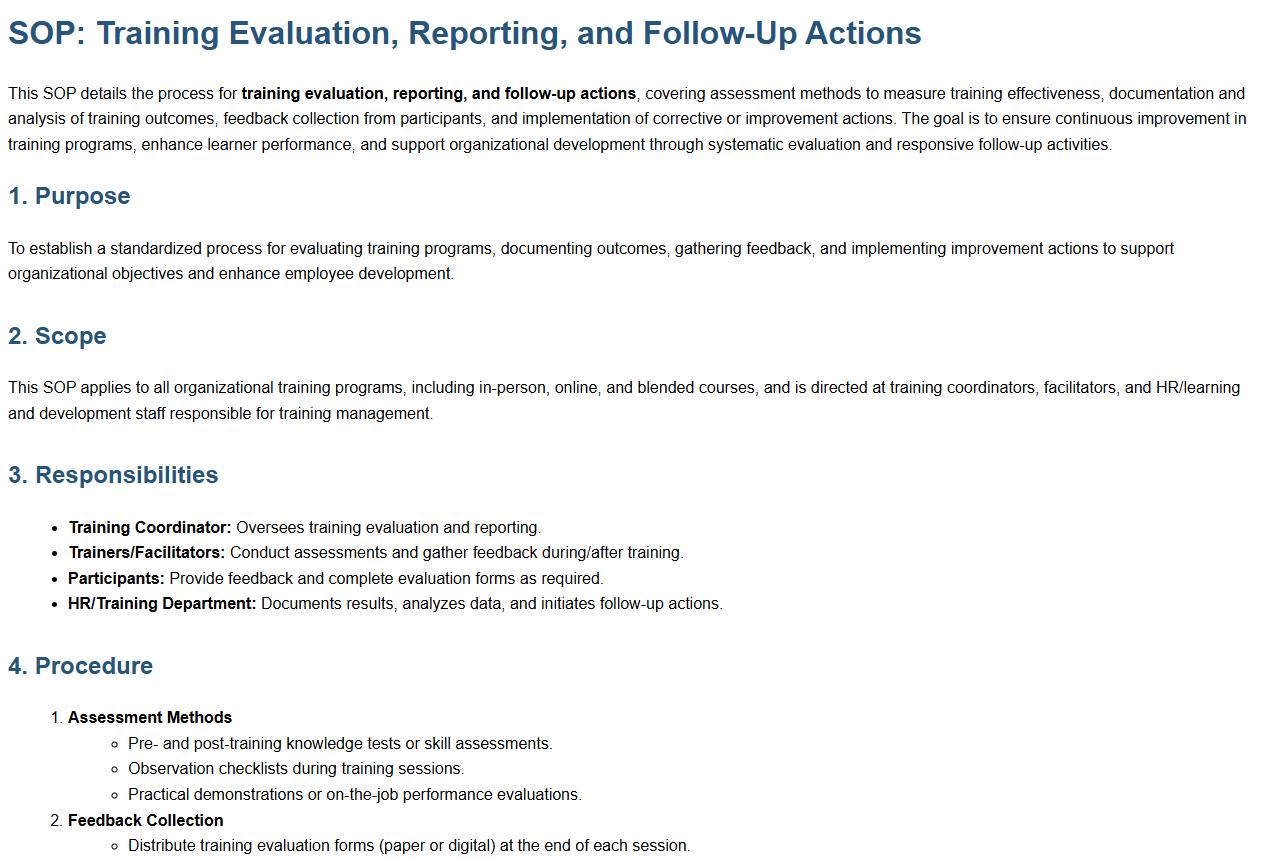
This SOP details the process for training evaluation, reporting, and follow-up actions, covering assessment methods to measure training effectiveness, documentation and analysis of training outcomes, feedback collection from participants, and implementation of corrective or improvement actions. The goal is to ensure continuous improvement in training programs, enhance learner performance, and support organizational development through systematic evaluation and responsive follow-up activities.
What are the key compliance requirements outlined in the SOP for Corporate Training Delivery?
The SOP for Corporate Training Delivery emphasizes adherence to regulatory standards and internal company policies to ensure effective training programs. It mandates compliance with data protection laws when handling trainee information and requires trainers to possess relevant certifications. Additionally, the SOP outlines quality assurance measures to maintain consistent training delivery standards.
How does the SOP define roles and responsibilities for trainers and coordinators?
The SOP clearly delineates the distinct roles and responsibilities of trainers and coordinators to optimize training delivery. Trainers are responsible for content delivery, engagement, and assessment, while coordinators manage logistics, scheduling, and communication. This structured allocation ensures accountability and smooth operation of training programs.
What are the standard procedures for training session scheduling and attendance tracking?
The SOP establishes a systematic approach for scheduling training sessions, including advance notification and resource allocation. It requires accurate recording of trainee attendance through digital or manual registers to maintain accountability. These procedures help in monitoring participation and evaluating training effectiveness.
How does the SOP ensure consistency in training material preparation and distribution?
The SOP mandates standardized templates and approved content for training material preparation to guarantee uniform quality across sessions. Materials must undergo review and approval by subject matter experts before distribution. This process ensures all trainees receive accurate, updated, and consistent information.
What evaluation and feedback mechanisms are mandated by the SOP for post-training assessment?
The SOP prescribes the use of structured evaluation tools such as surveys and quizzes to gather post-training feedback and assess learning outcomes. It requires trainers to analyze feedback and implement improvements to future sessions. This continuous feedback loop enhances training effectiveness and learner satisfaction.