

A SOP Template for Professional Translation Services provides a standardized framework to ensure consistency and quality in translation workflows. It outlines clear procedures for project initiation, translation accuracy checks, and client communication, enhancing efficiency and reliability. This template helps translation teams maintain industry standards and meet client expectations effectively.
Client inquiry and project intake procedures.
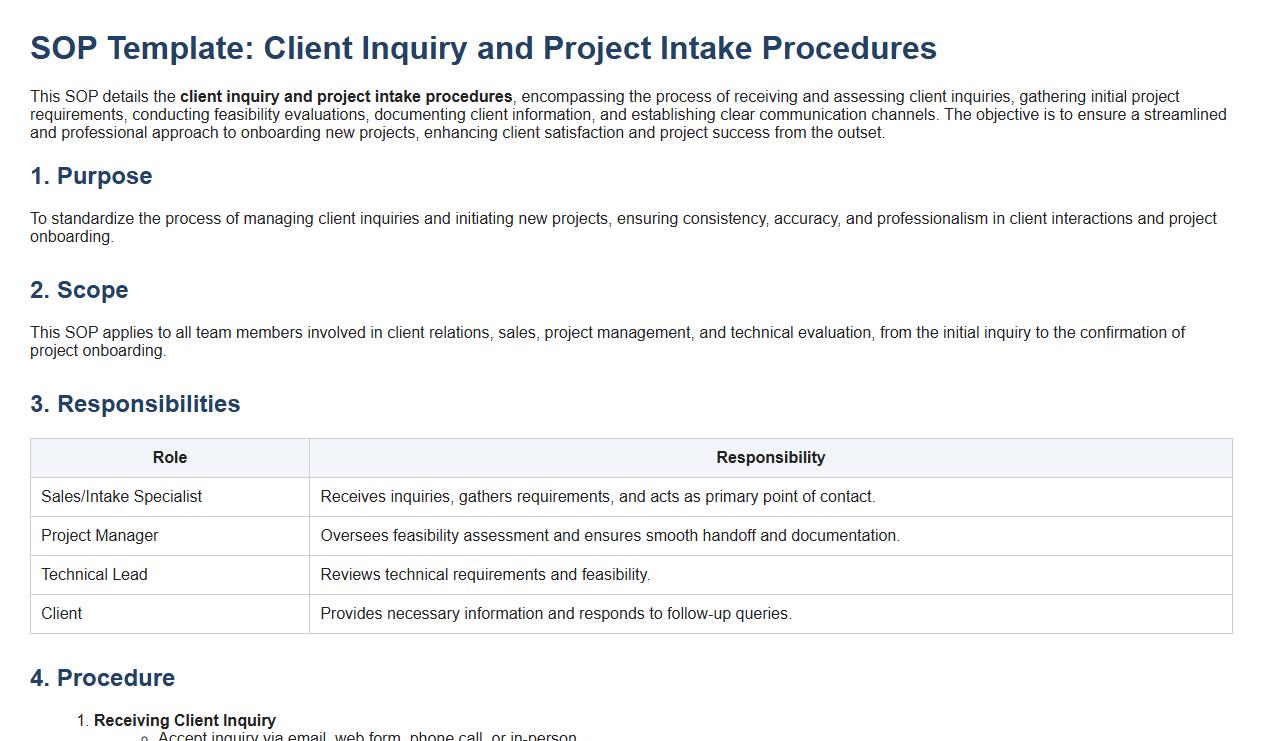
This SOP details the client inquiry and project intake procedures, encompassing the process of receiving and assessing client inquiries, gathering initial project requirements, conducting feasibility evaluations, documenting client information, and establishing clear communication channels. The objective is to ensure a streamlined and professional approach to onboarding new projects, enhancing client satisfaction and project success from the outset.
Quotation and contract confirmation process.
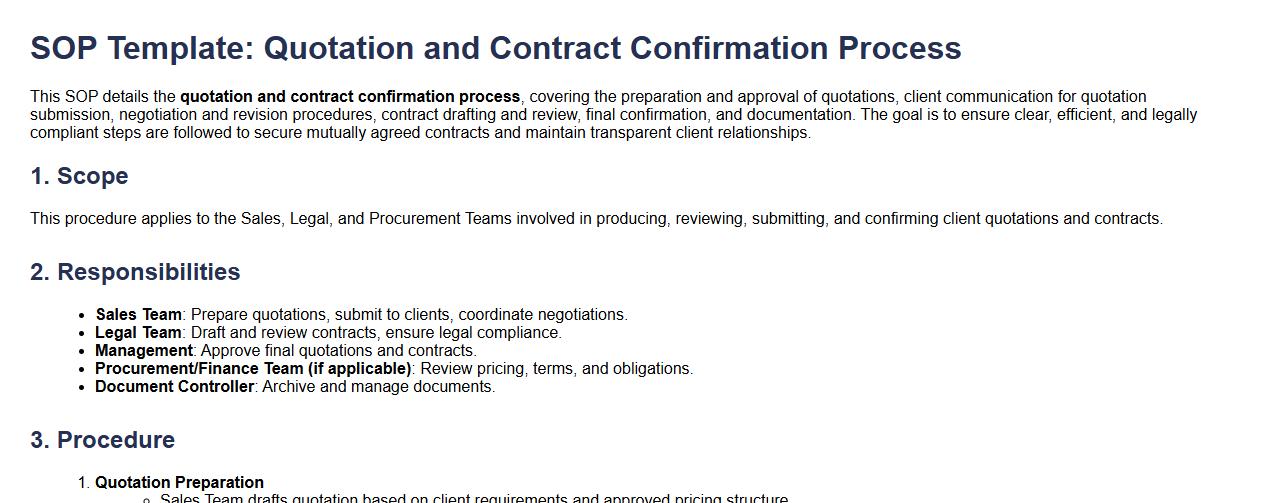
This SOP details the quotation and contract confirmation process, covering the preparation and approval of quotations, client communication for quotation submission, negotiation and revision procedures, contract drafting and review, final confirmation, and documentation. The goal is to ensure clear, efficient, and legally compliant steps are followed to secure mutually agreed contracts and maintain transparent client relationships.
Source file assessment and preparation guidelines.
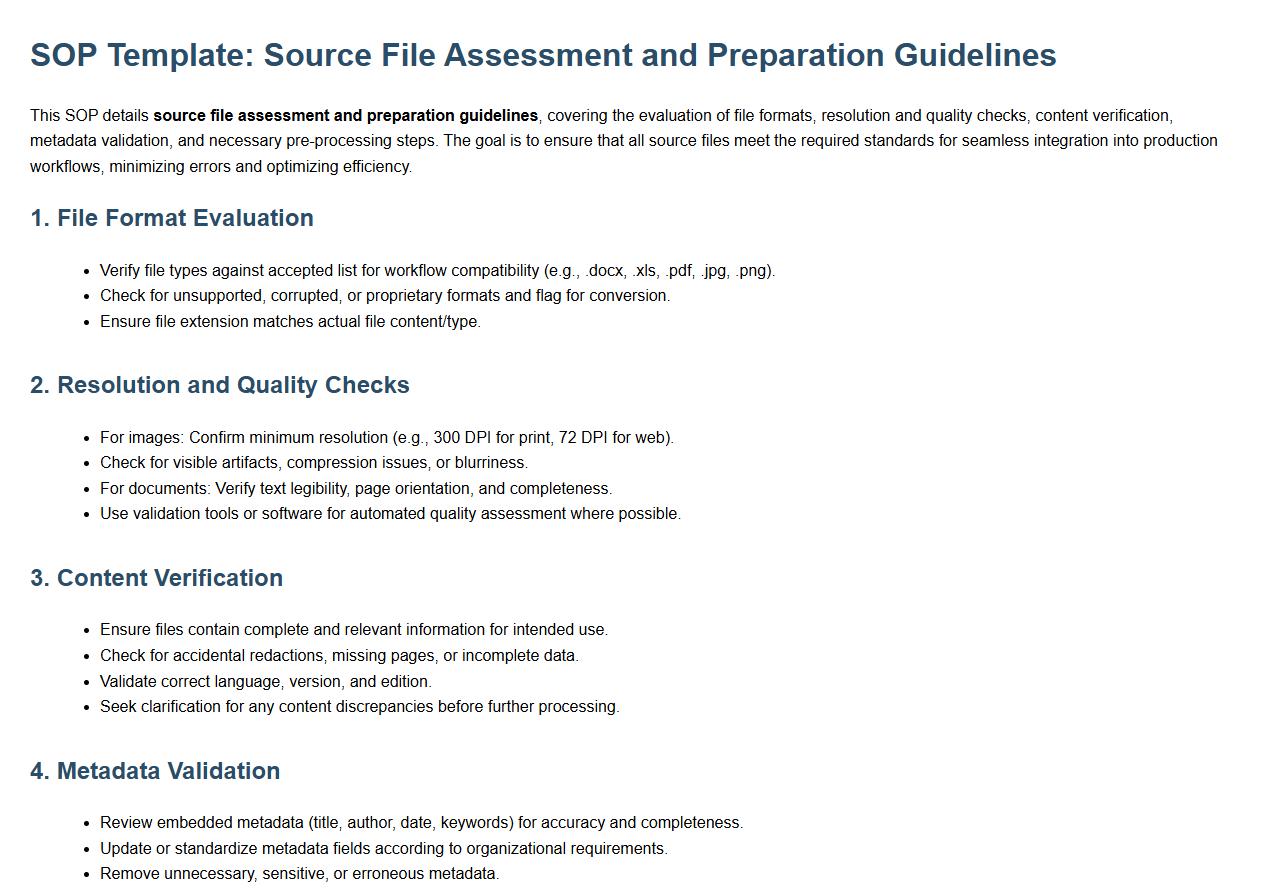
This SOP details source file assessment and preparation guidelines, covering the evaluation of file formats, resolution and quality checks, content verification, metadata validation, and necessary pre-processing steps. The goal is to ensure that all source files meet the required standards for seamless integration into production workflows, minimizing errors and optimizing efficiency.
Linguist assignment and qualification verification.
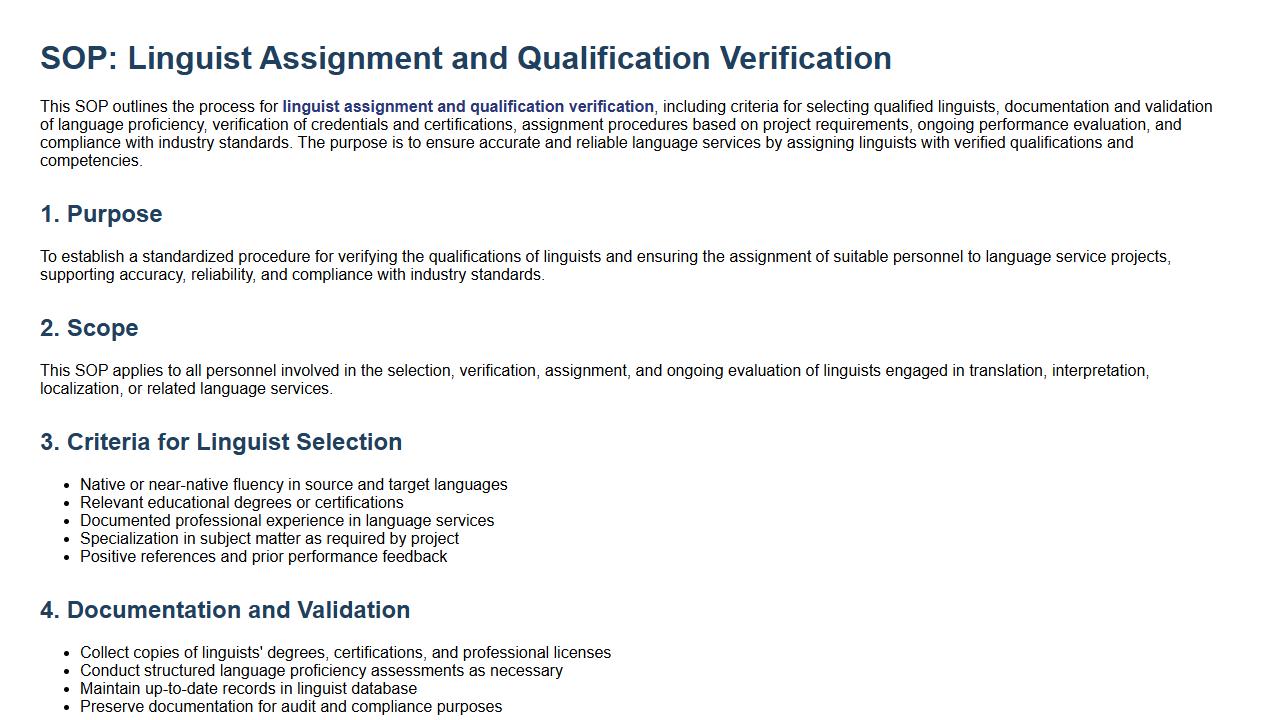
This SOP outlines the process for linguist assignment and qualification verification, including criteria for selecting qualified linguists, documentation and validation of language proficiency, verification of credentials and certifications, assignment procedures based on project requirements, ongoing performance evaluation, and compliance with industry standards. The purpose is to ensure accurate and reliable language services by assigning linguists with verified qualifications and competencies.
Terminology management and glossary utilization protocols.
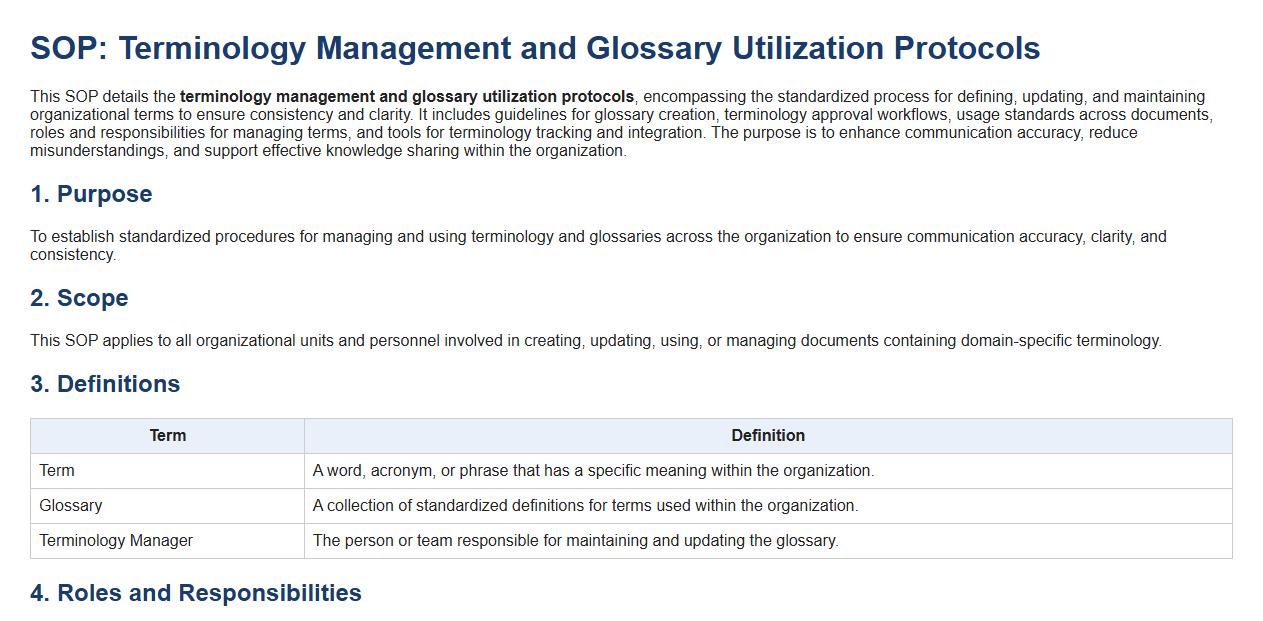
This SOP details the terminology management and glossary utilization protocols, encompassing the standardized process for defining, updating, and maintaining organizational terms to ensure consistency and clarity. It includes guidelines for glossary creation, terminology approval workflows, usage standards across documents, roles and responsibilities for managing terms, and tools for terminology tracking and integration. The purpose is to enhance communication accuracy, reduce misunderstandings, and support effective knowledge sharing within the organization.
Translation workflow and CAT tool usage instructions.
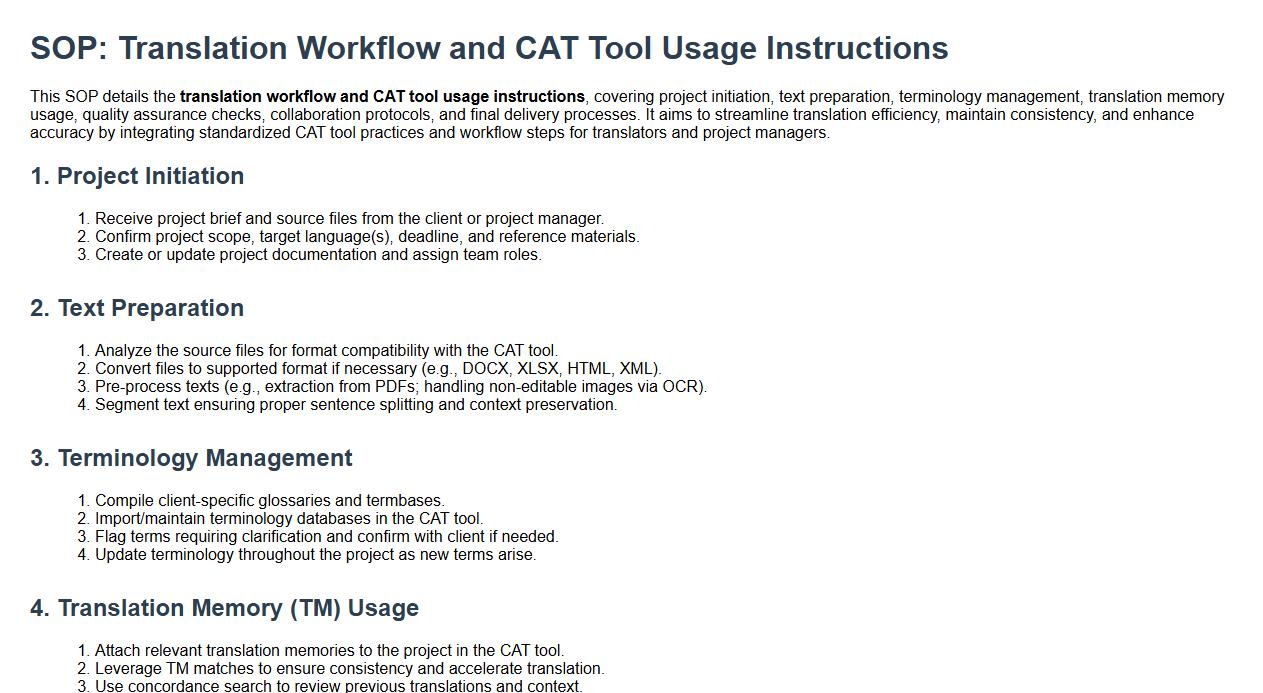
This SOP details the translation workflow and CAT tool usage instructions, covering project initiation, text preparation, terminology management, translation memory usage, quality assurance checks, collaboration protocols, and final delivery processes. It aims to streamline translation efficiency, maintain consistency, and enhance accuracy by integrating standardized CAT tool practices and workflow steps for translators and project managers.
Quality assurance and review process.
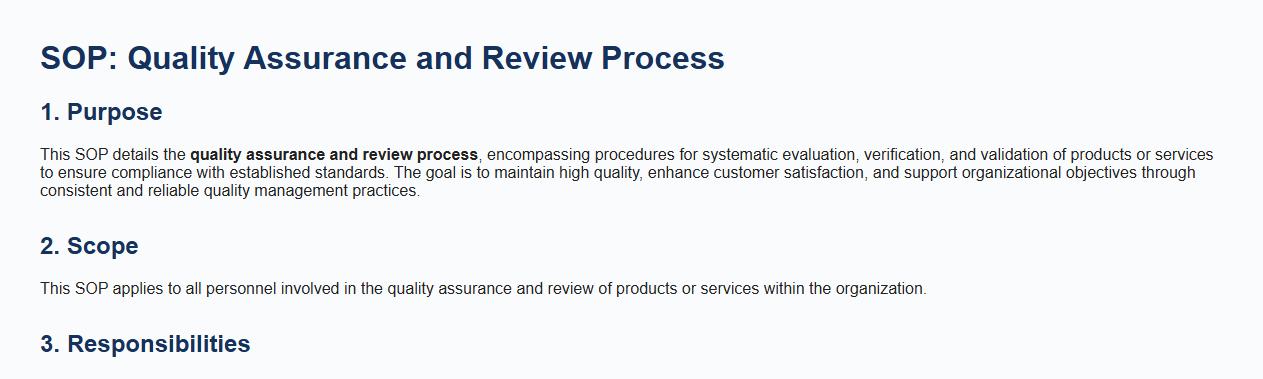
This SOP details the quality assurance and review process, encompassing procedures for systematic evaluation, verification, and validation of products or services to ensure compliance with established standards. It includes steps for planning quality checks, conducting inspections and audits, documenting findings, implementing corrective actions, and continuous improvement initiatives. The goal is to maintain high quality, enhance customer satisfaction, and support organizational objectives through consistent and reliable quality management practices.
Client review and feedback handling.
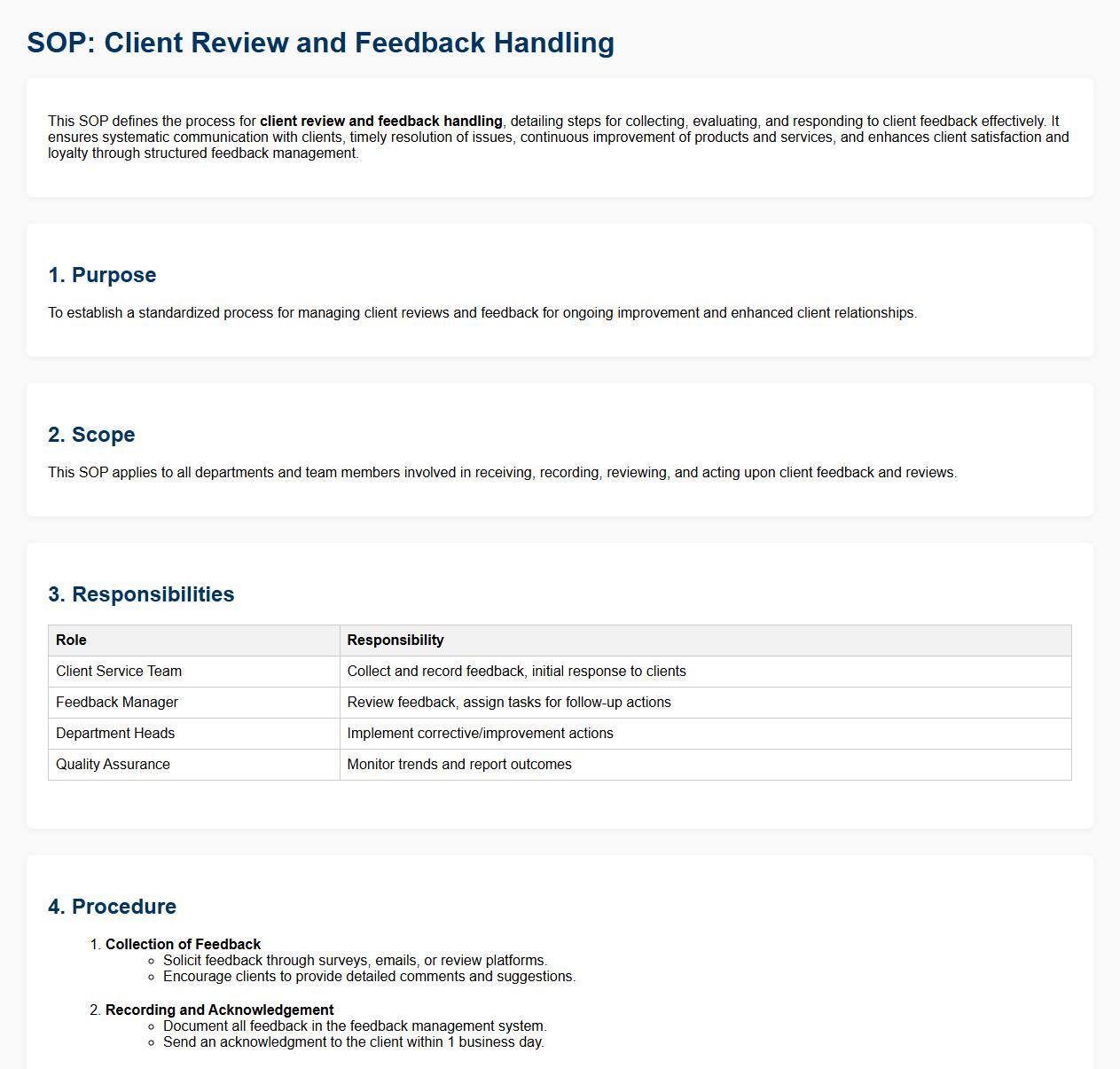
This SOP defines the process for client review and feedback handling, detailing steps for collecting, evaluating, and responding to client feedback effectively. It ensures systematic communication with clients, timely resolution of issues, continuous improvement of products and services, and enhances client satisfaction and loyalty through structured feedback management.
Final delivery formatting and submission standards.
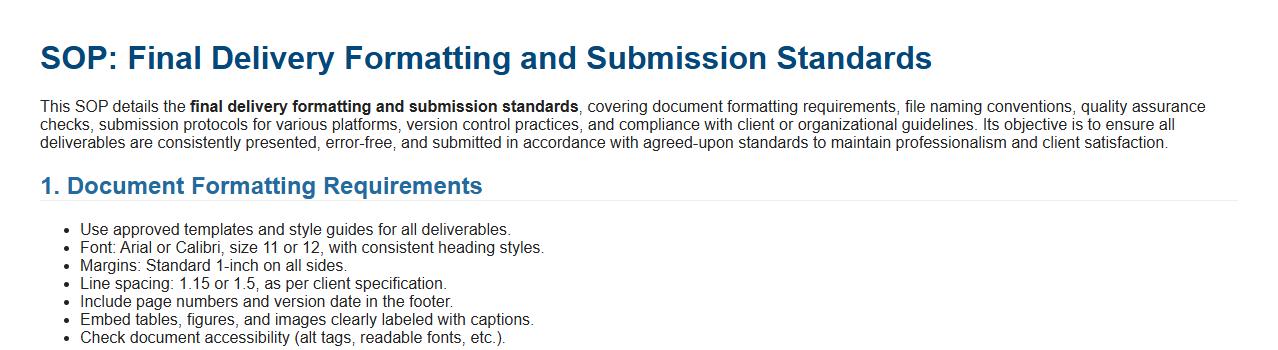
This SOP details the final delivery formatting and submission standards, covering document formatting requirements, file naming conventions, quality assurance checks, submission protocols for various platforms, version control practices, and compliance with client or organizational guidelines. Its objective is to ensure all deliverables are consistently presented, error-free, and submitted in accordance with agreed-upon standards to maintain professionalism and client satisfaction.
Project archiving and data confidentiality measures.
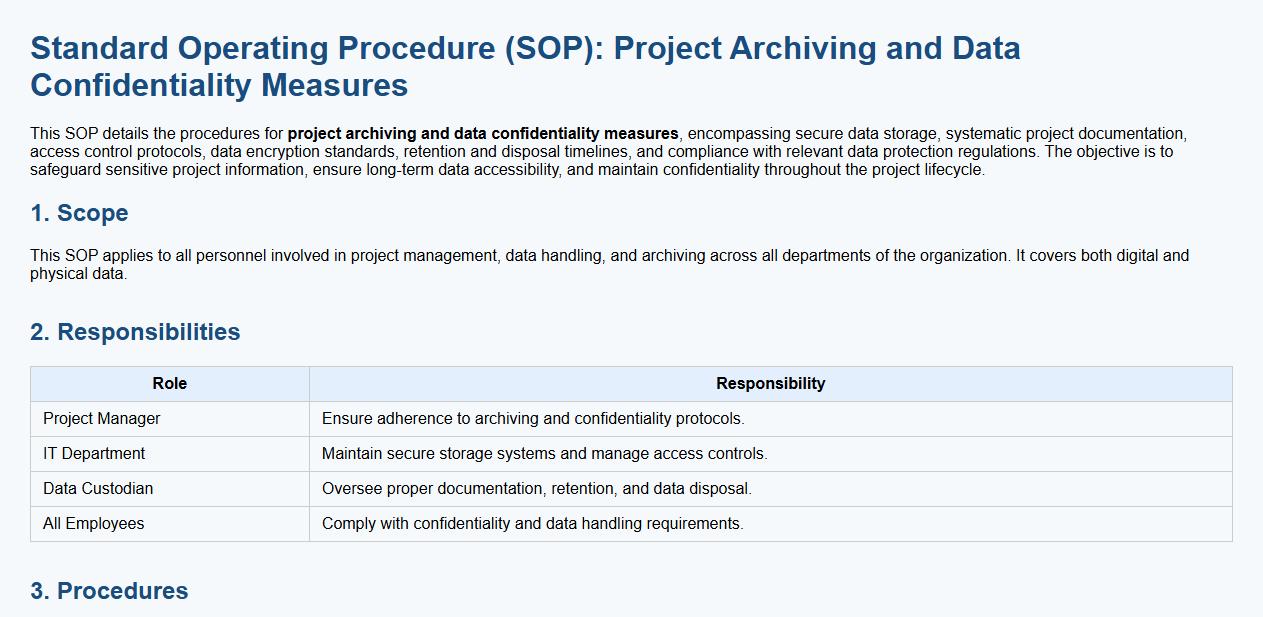
This SOP details the procedures for project archiving and data confidentiality measures, encompassing secure data storage, systematic project documentation, access control protocols, data encryption standards, retention and disposal timelines, and compliance with relevant data protection regulations. The objective is to safeguard sensitive project information, ensure long-term data accessibility, and maintain confidentiality throughout the project lifecycle.
Criteria Defining the Qualifications and Selection of Professional Translators in the SOP
The SOP emphasizes the essential qualifications required for professional translators, including relevant language certifications and industry-specific expertise. It mandates a rigorous selection process involving skill assessments and verification of credentials. Only translators meeting these stringent criteria are approved to ensure quality and reliability.
Process for Quality Assurance and Translation Review Outlined in the SOP
The SOP outlines a comprehensive quality assurance system that includes multiple review stages to ensure accuracy. Each translation undergoes a thorough peer review by qualified linguists to detect errors and inconsistencies. Final approval requires adherence to established standards before delivery to the client.
Steps Specified in the SOP for Handling Confidential or Sensitive Documents
The SOP implements strict protocols for managing confidential and sensitive documents, requiring non-disclosure agreements. It outlines secure transmission and storage methods to protect data privacy and prevent unauthorized access. Compliance with these security measures is mandatory for all translators involved.
Protocol Addressing Deadline Management and Delivery Timelines for Translations
The SOP stresses the importance of deadline adherence and sets clear timelines for translation milestones. It requires project managers to monitor progress continuously and communicate promptly about potential delays. Delivery schedules are optimized to balance quality control and client expectations effectively.
Escalation Procedures Detailed in the SOP for Handling Translation Disputes or Errors
The SOP defines a structured escalation process starting with immediate reporting of errors to the project lead. If unresolved, issues escalate to higher management for corrective action and resolution. This system ensures swift handling of translation disputes to maintain service integrity and client satisfaction.