

A SOP Template for Transportation Dispatch Services provides a clear, standardized process for managing and coordinating transportation operations efficiently. It outlines key procedures such as order intake, vehicle assignment, route planning, and communication protocols to ensure timely deliveries. Using this template enhances consistency, reduces errors, and improves overall dispatch performance in the transportation industry.
Driver scheduling and route assignment procedures.
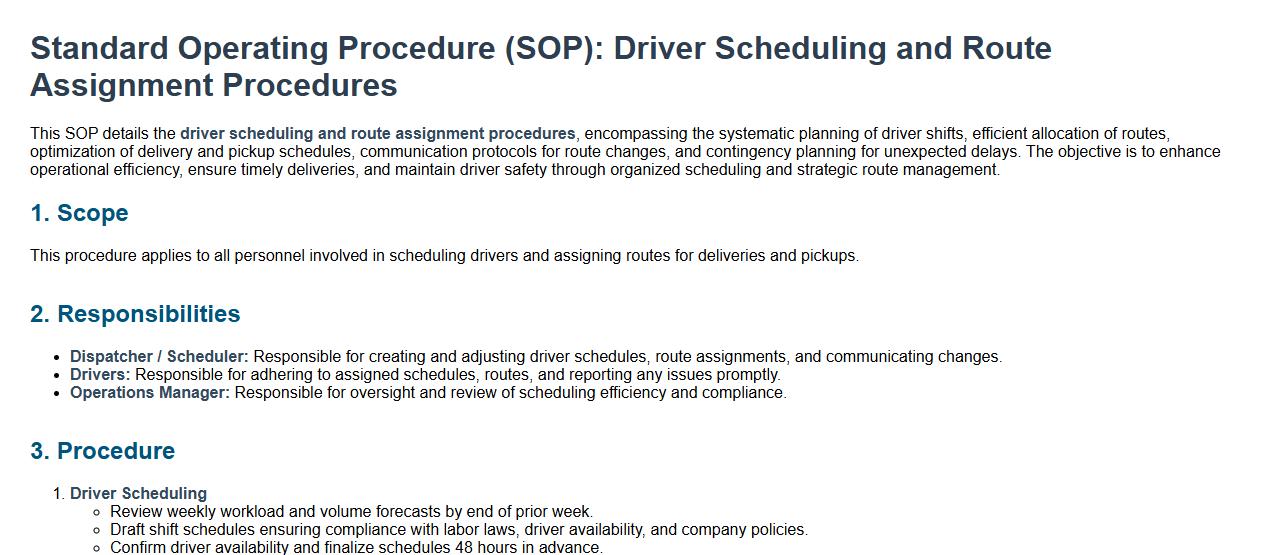
This SOP details the driver scheduling and route assignment procedures, encompassing the systematic planning of driver shifts, efficient allocation of routes, optimization of delivery and pickup schedules, communication protocols for route changes, and contingency planning for unexpected delays. The objective is to enhance operational efficiency, ensure timely deliveries, and maintain driver safety through organized scheduling and strategic route management.
Vehicle inspection, maintenance, and cleanliness protocols.
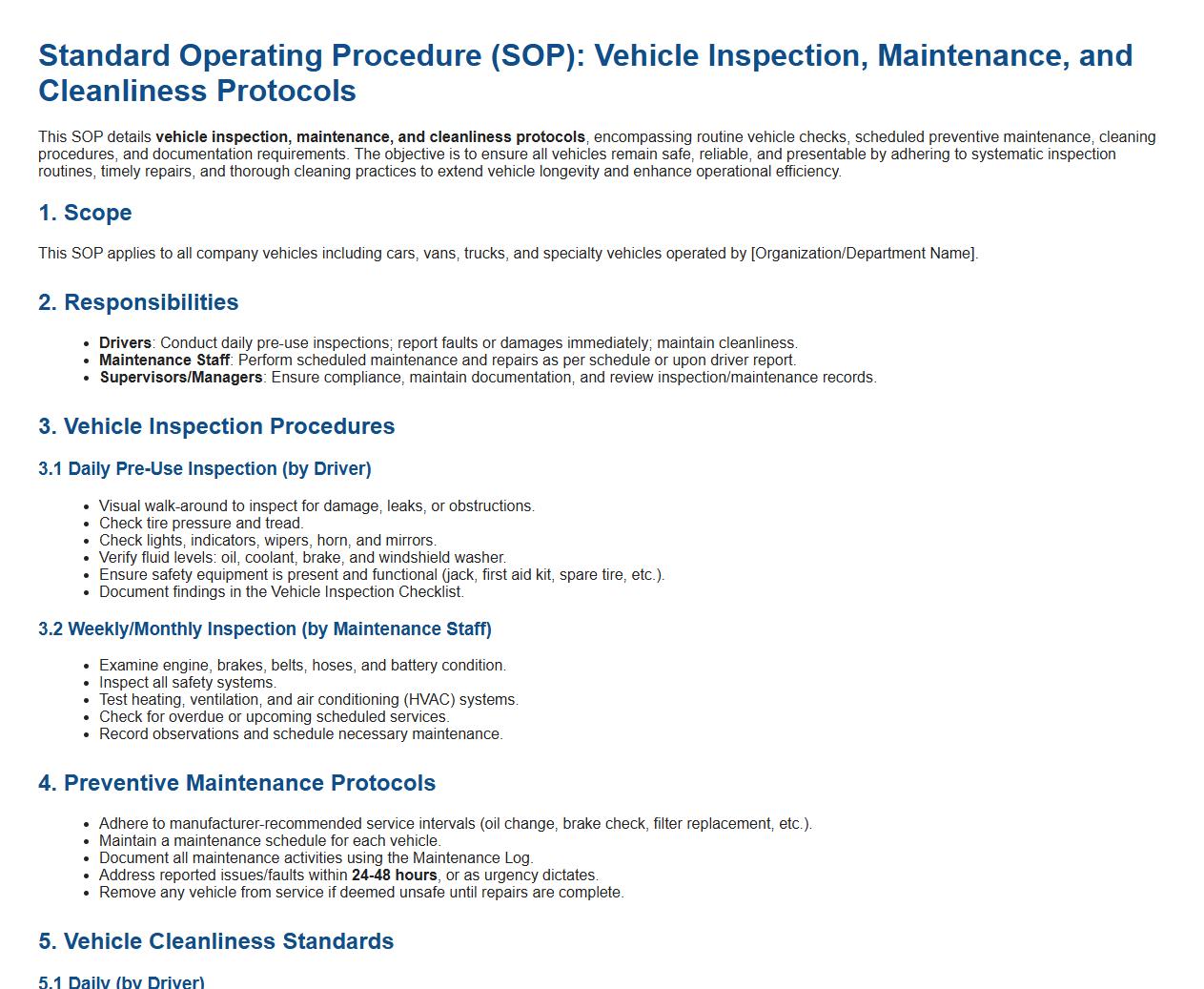
This SOP details vehicle inspection, maintenance, and cleanliness protocols, encompassing routine vehicle checks, scheduled preventive maintenance, cleaning procedures, and documentation requirements. The objective is to ensure all vehicles remain safe, reliable, and presentable by adhering to systematic inspection routines, timely repairs, and thorough cleaning practices to extend vehicle longevity and enhance operational efficiency.
Cargo loading, securing, and documentation guidelines.
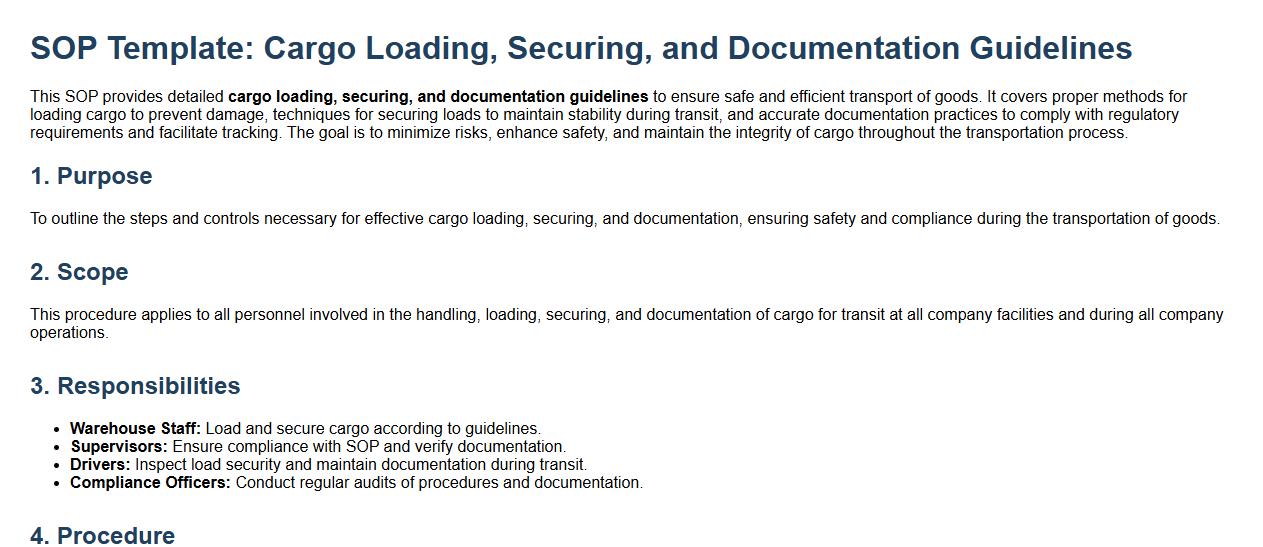
This SOP provides detailed cargo loading, securing, and documentation guidelines to ensure safe and efficient transport of goods. It covers proper methods for loading cargo to prevent damage, techniques for securing loads to maintain stability during transit, and accurate documentation practices to comply with regulatory requirements and facilitate tracking. The goal is to minimize risks, enhance safety, and maintain the integrity of cargo throughout the transportation process.
Driver check-in, check-out, and daily log reporting process.
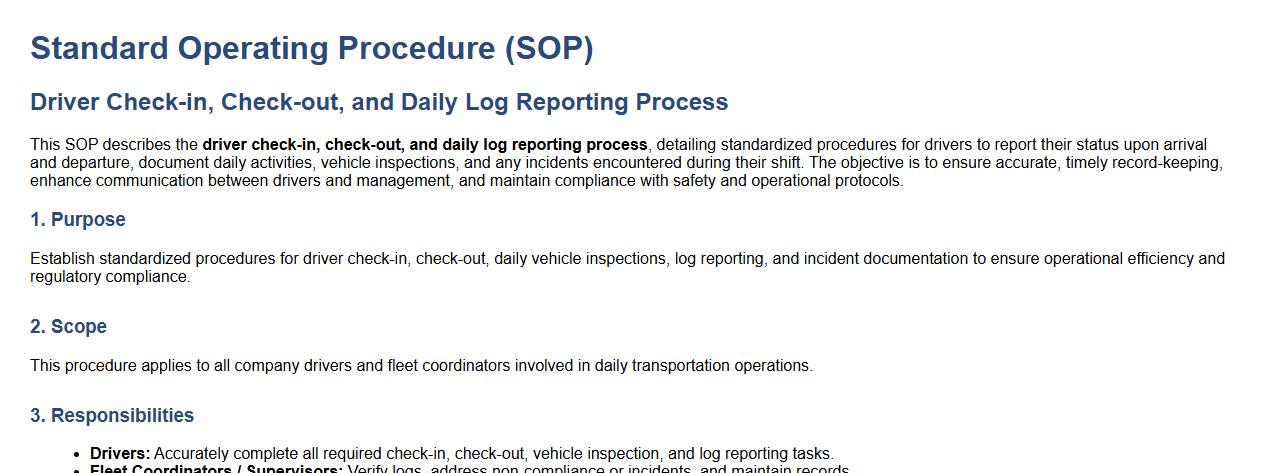
This SOP describes the driver check-in, check-out, and daily log reporting process, detailing standardized procedures for drivers to report their status upon arrival and departure, document daily activities, vehicle inspections, and any incidents encountered during their shift. The objective is to ensure accurate, timely record-keeping, enhance communication between drivers and management, and maintain compliance with safety and operational protocols.
Dispatch communication and emergency response procedures.
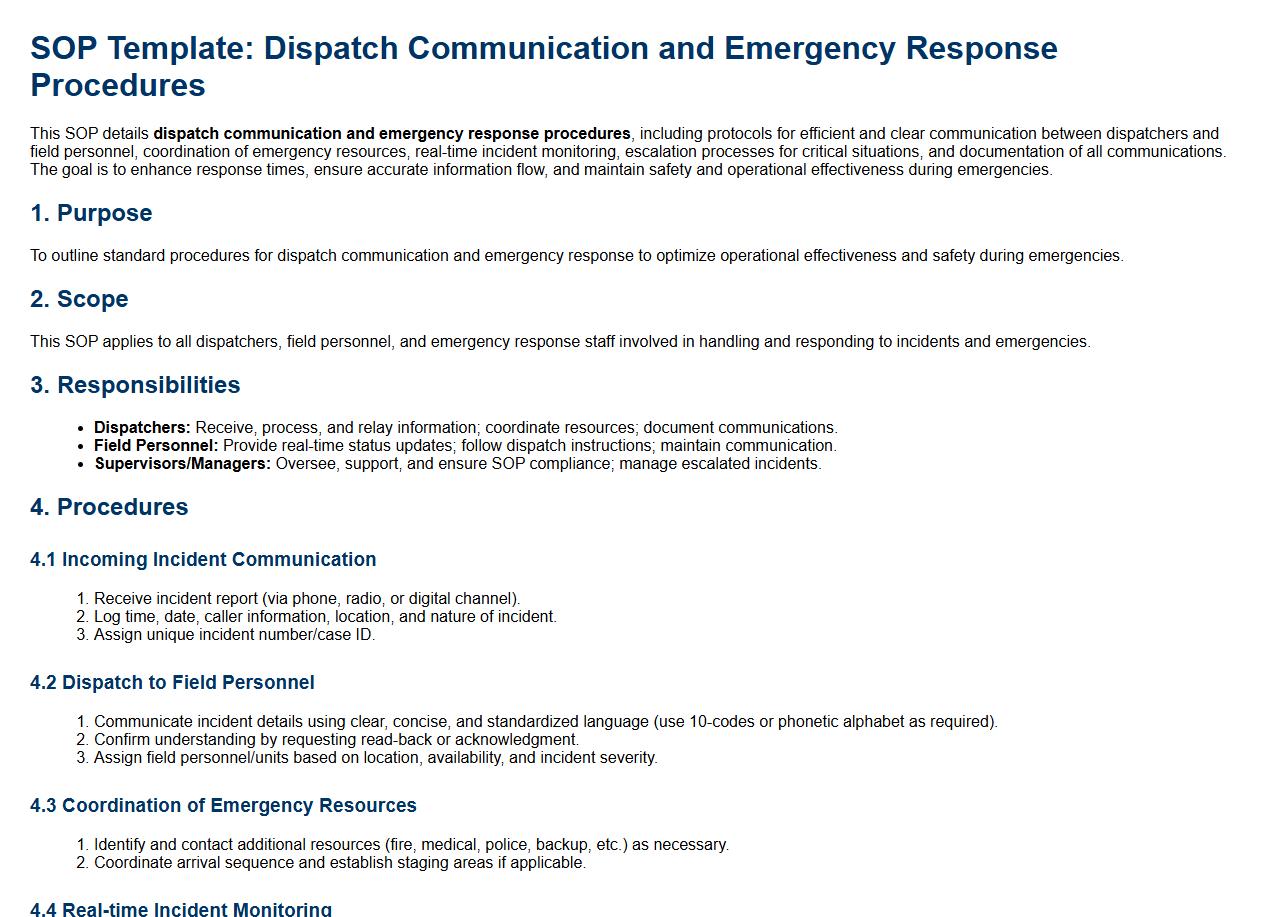
This SOP details dispatch communication and emergency response procedures, including protocols for efficient and clear communication between dispatchers and field personnel, coordination of emergency resources, real-time incident monitoring, escalation processes for critical situations, and documentation of all communications. The goal is to enhance response times, ensure accurate information flow, and maintain safety and operational effectiveness during emergencies.
Accident, incident, and delay reporting steps.
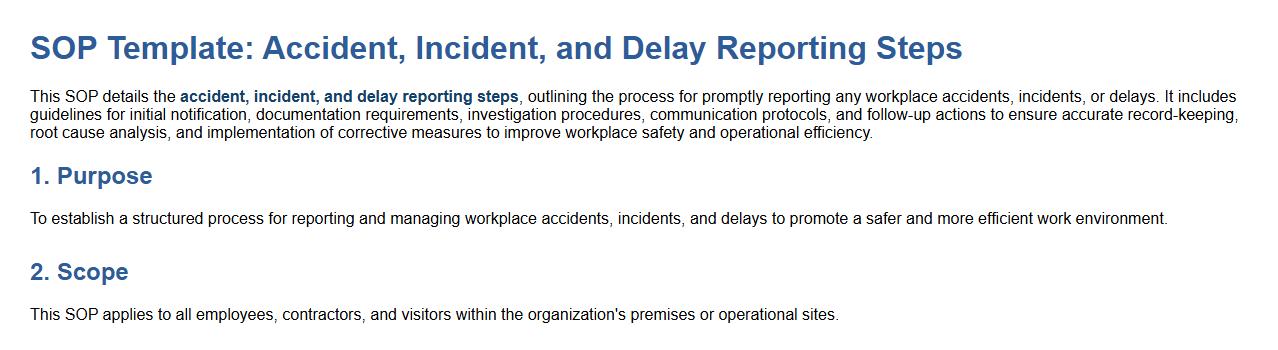
This SOP details the accident, incident, and delay reporting steps, outlining the process for promptly reporting any workplace accidents, incidents, or delays. It includes guidelines for initial notification, documentation requirements, investigation procedures, communication protocols, and follow-up actions to ensure accurate record-keeping, root cause analysis, and implementation of corrective measures to improve workplace safety and operational efficiency.
Customer service, delivery confirmation, and proof of delivery collection.
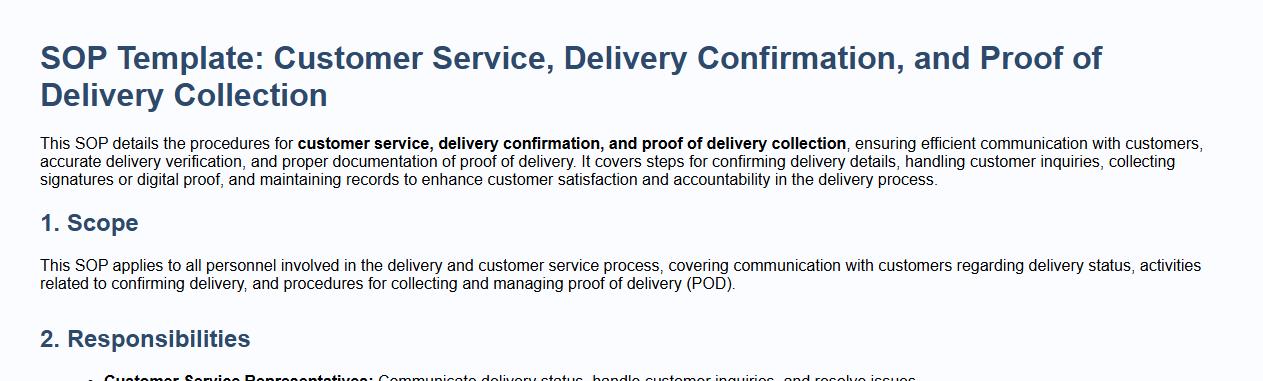
This SOP details the procedures for customer service, delivery confirmation, and proof of delivery collection, ensuring efficient communication with customers, accurate delivery verification, and proper documentation of proof of delivery. It covers steps for confirming delivery details, handling customer inquiries, collecting signatures or digital proof, and maintaining records to enhance customer satisfaction and accountability in the delivery process.
Fuel management and vehicle refueling SOP.
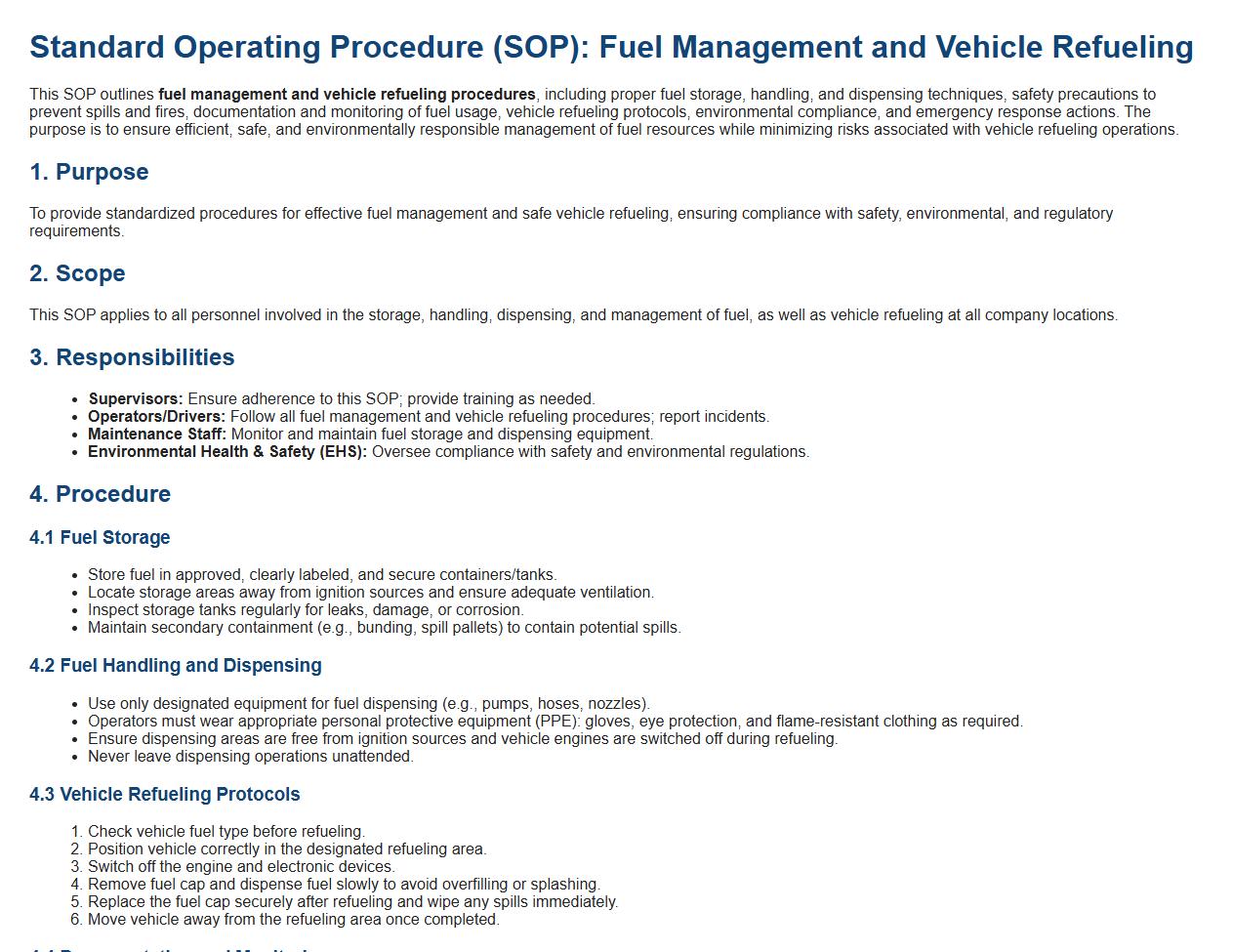
This SOP outlines fuel management and vehicle refueling procedures, including proper fuel storage, handling, and dispensing techniques, safety precautions to prevent spills and fires, documentation and monitoring of fuel usage, vehicle refueling protocols, environmental compliance, and emergency response actions. The purpose is to ensure efficient, safe, and environmentally responsible management of fuel resources while minimizing risks associated with vehicle refueling operations.
Compliance with legal, regulatory, and safety standards.
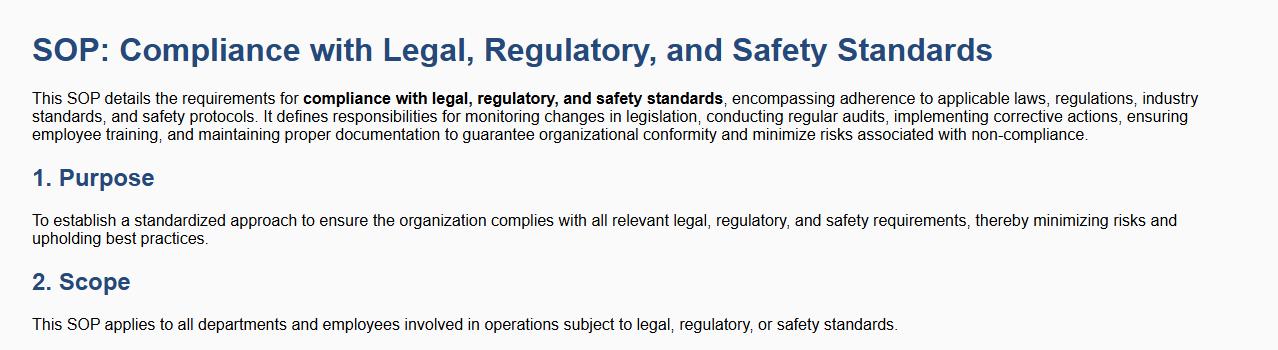
This SOP details the requirements for compliance with legal, regulatory, and safety standards, encompassing adherence to applicable laws, regulations, industry standards, and safety protocols. It defines responsibilities for monitoring changes in legislation, conducting regular audits, implementing corrective actions, ensuring employee training, and maintaining proper documentation to guarantee organizational conformity and minimize risks associated with non-compliance.
Record-keeping, audit trails, and document retention policies.
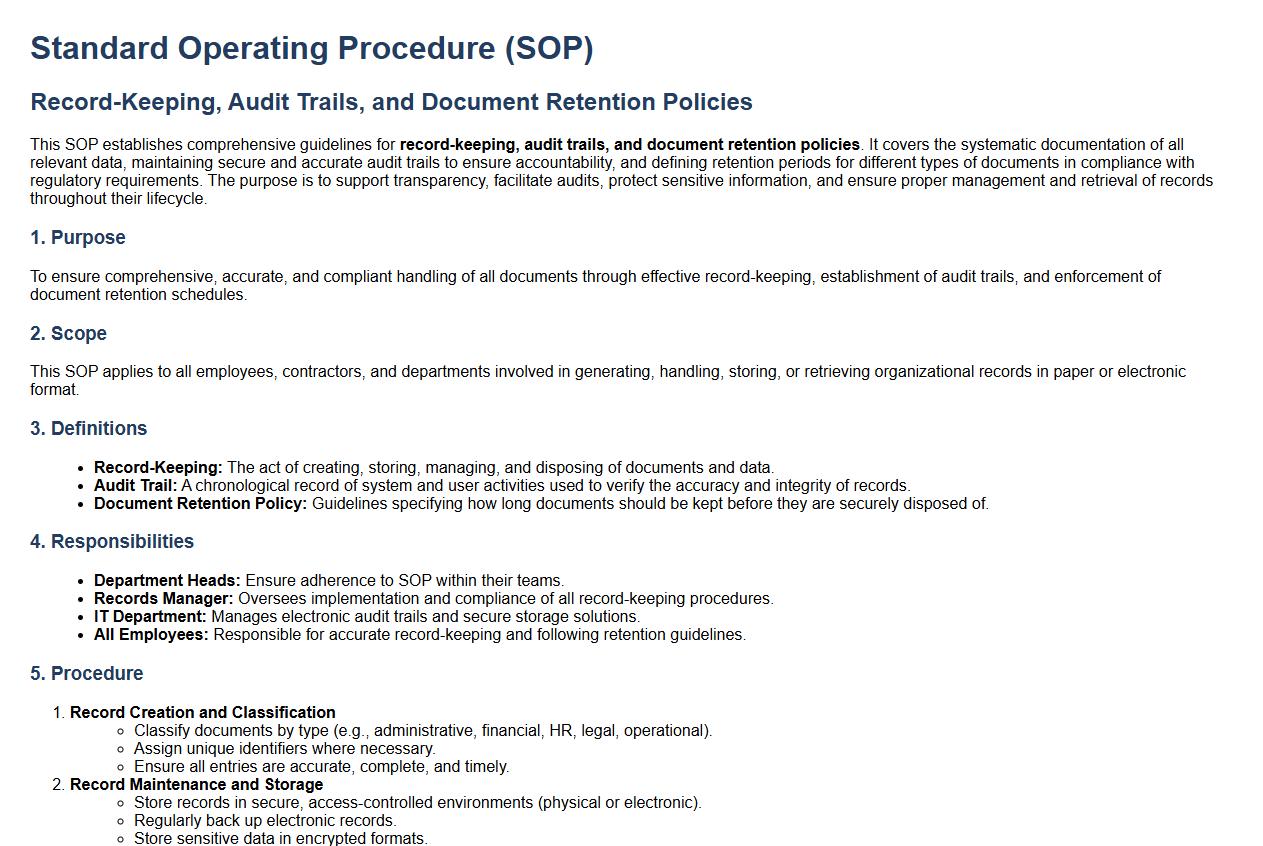
This SOP establishes comprehensive guidelines for record-keeping, audit trails, and document retention policies. It covers the systematic documentation of all relevant data, maintaining secure and accurate audit trails to ensure accountability, and defining retention periods for different types of documents in compliance with regulatory requirements. The purpose is to support transparency, facilitate audits, protect sensitive information, and ensure proper management and retrieval of records throughout their lifecycle.
What are the key objectives outlined in the SOP for Transportation Dispatch Services?
The SOP for Transportation Dispatch Services aims to ensure efficient coordination of vehicle movements and timely deliveries. It focuses on optimizing resource use to minimize delays and maximize route effectiveness. Another key objective is maintaining high standards of service quality and customer satisfaction.
Which stakeholders are responsible for ensuring compliance with the dispatch procedures in the SOP?
Transportation managers and dispatch supervisors are primary stakeholders responsible for SOP compliance. Drivers and support staff also play crucial roles in adhering to established protocols. Additionally, quality assurance teams monitor and audit compliance regularly.
What safety and communication protocols must be followed during the transportation dispatch process according to the SOP?
The SOP mandates strict adherence to vehicle safety checks before and after every trip. Clear and constant communication between dispatchers and drivers is essential to manage schedules and report issues. Emergency contact procedures and use of communication devices must be standardized and verified.
How does the SOP define the process for handling emergencies or unexpected incidents during transportation?
The SOP requires immediate reporting of emergencies to the dispatch center and relevant authorities. It outlines predefined steps for drivers to follow ensuring passenger and cargo safety. The protocol includes backup plans and alternative routing to maintain service continuity.
What documentation and reporting requirements are mandated by the SOP for each dispatch operation?
Each dispatch operation must include detailed logs of vehicle assignments, routes, and times for traceability. The SOP emphasizes maintaining incident reports and communication records related to each trip. Regular reporting to management ensures transparency and facilitates continuous improvement.