

A SOP Template for Event Planning Services provides a structured framework to streamline all stages of event organization, ensuring consistency and efficiency. It outlines clear procedures for tasks such as vendor coordination, client communication, and timeline management. This template helps event planners maintain high-quality service while meeting client expectations and deadlines.
Client consultation and requirements gathering.
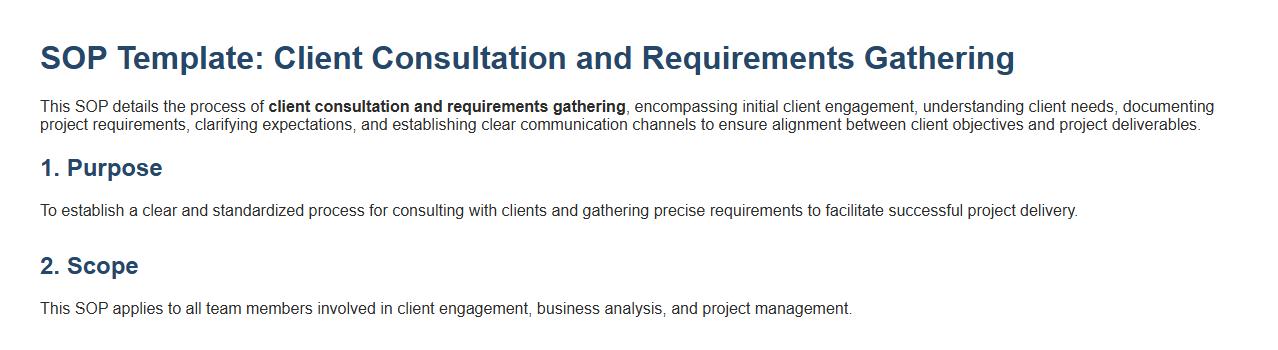
This SOP details the process of client consultation and requirements gathering, encompassing initial client engagement, understanding client needs, documenting project requirements, clarifying expectations, and establishing clear communication channels to ensure alignment between client objectives and project deliverables.
Venue scouting, booking, and site inspections.
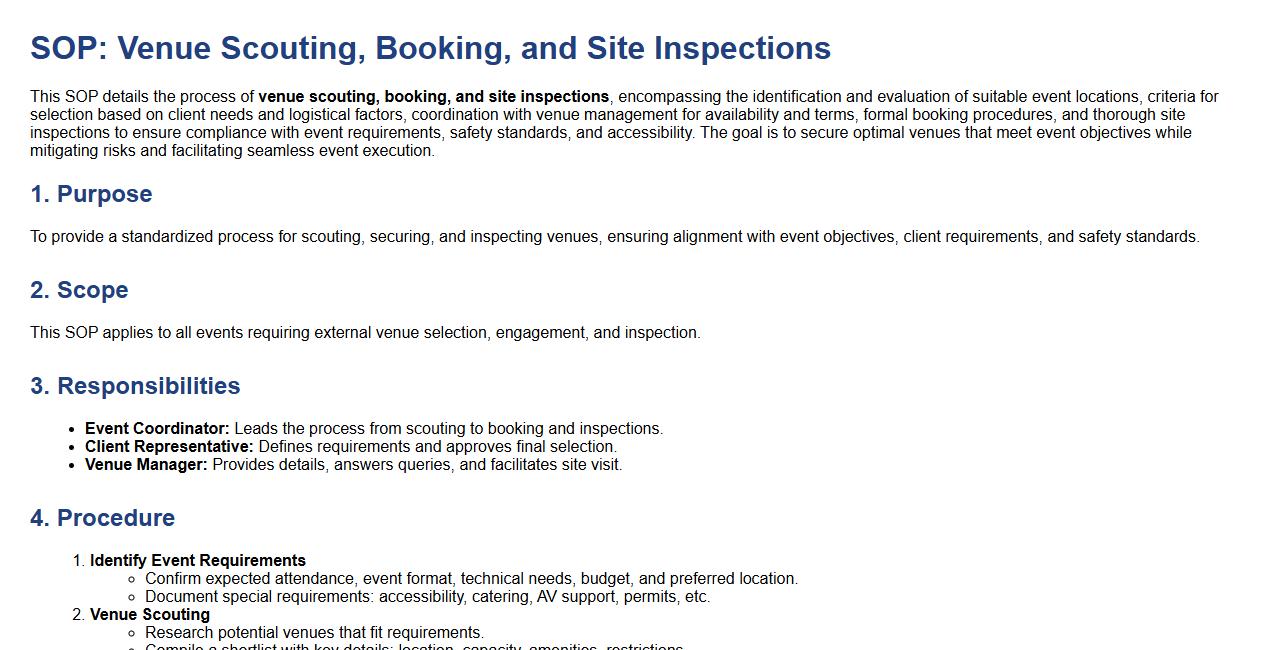
This SOP details the process of venue scouting, booking, and site inspections, encompassing the identification and evaluation of suitable event locations, criteria for selection based on client needs and logistical factors, coordination with venue management for availability and terms, formal booking procedures, and thorough site inspections to ensure compliance with event requirements, safety standards, and accessibility. The goal is to secure optimal venues that meet event objectives while mitigating risks and facilitating seamless event execution.
Vendor selection, contract negotiation, and management.
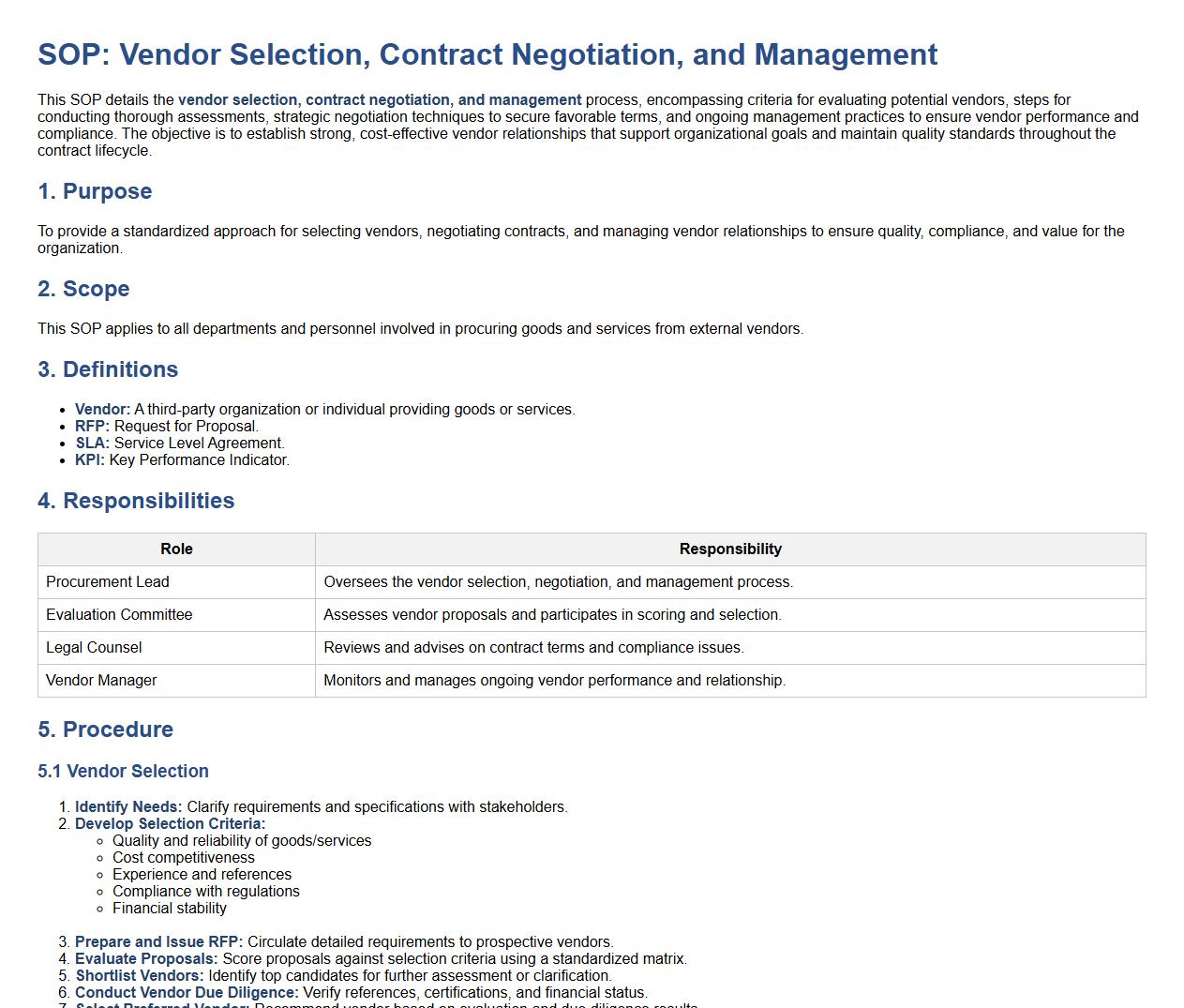
This SOP details the vendor selection, contract negotiation, and management process, encompassing criteria for evaluating potential vendors, steps for conducting thorough assessments, strategic negotiation techniques to secure favorable terms, and ongoing management practices to ensure vendor performance and compliance. The objective is to establish strong, cost-effective vendor relationships that support organizational goals and maintain quality standards throughout the contract lifecycle.
Event budget planning and cost tracking.
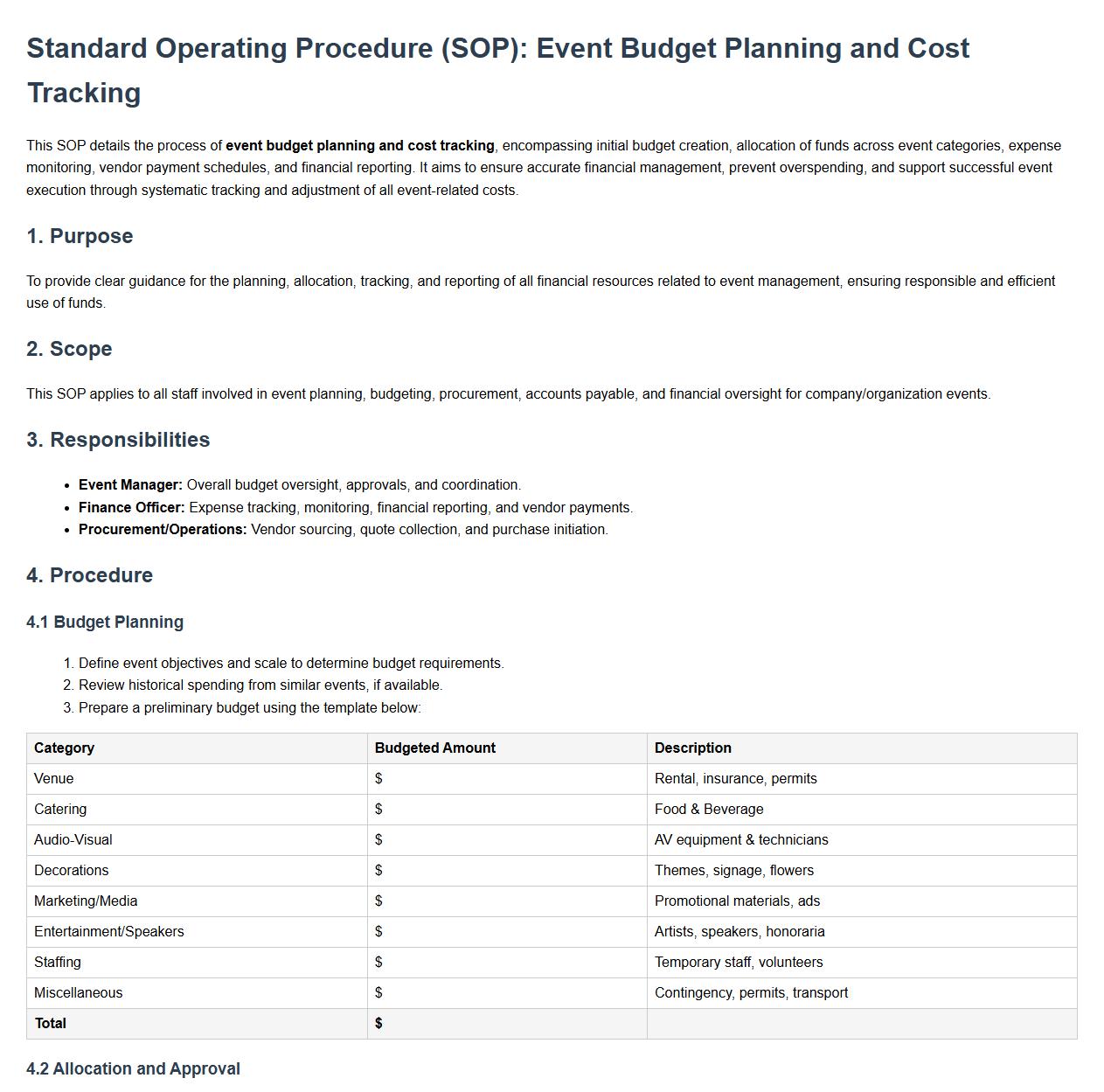
This SOP details the process of event budget planning and cost tracking, encompassing initial budget creation, allocation of funds across event categories, expense monitoring, vendor payment schedules, and financial reporting. It aims to ensure accurate financial management, prevent overspending, and support successful event execution through systematic tracking and adjustment of all event-related costs.
Event timeline and milestone scheduling.
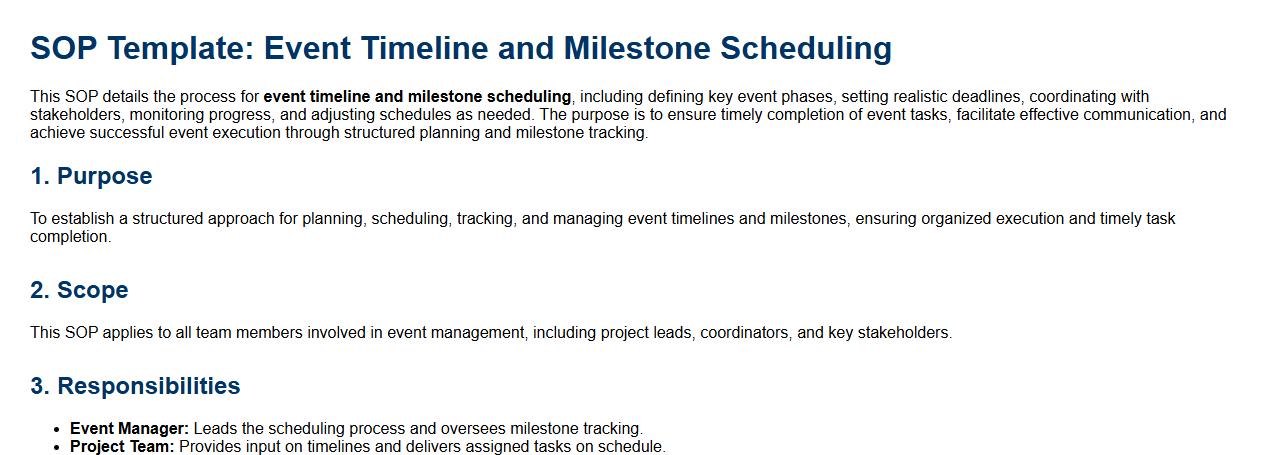
This SOP details the process for event timeline and milestone scheduling, including defining key event phases, setting realistic deadlines, coordinating with stakeholders, monitoring progress, and adjusting schedules as needed. The purpose is to ensure timely completion of event tasks, facilitate effective communication, and achieve successful event execution through structured planning and milestone tracking.
Logistics coordination—transport, setup, and teardown.
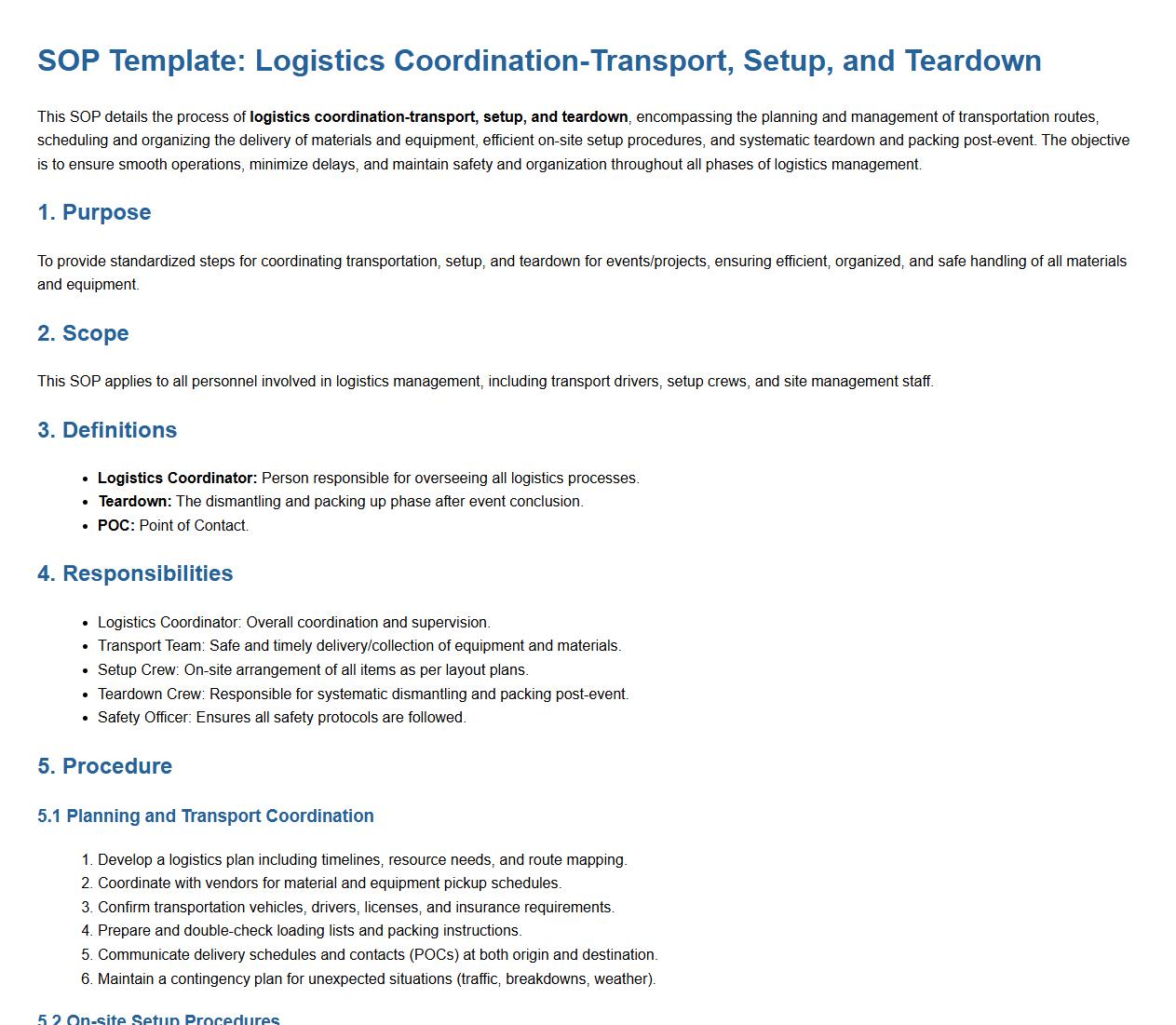
This SOP details the process of logistics coordination-transport, setup, and teardown, encompassing the planning and management of transportation routes, scheduling and organizing the delivery of materials and equipment, efficient on-site setup procedures, and systematic teardown and packing post-event. The objective is to ensure smooth operations, minimize delays, and maintain safety and organization throughout all phases of logistics management.
Permits, insurance, and compliance management.
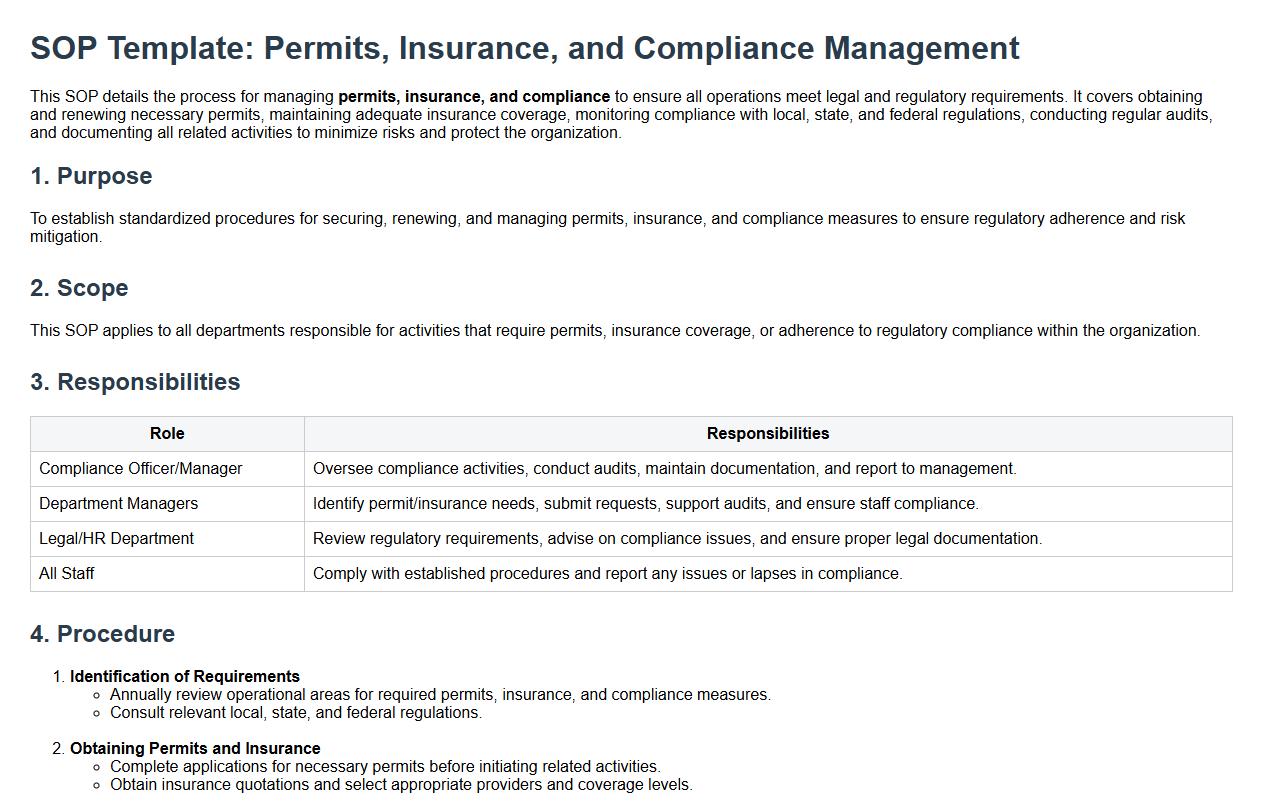
This SOP details the process for managing permits, insurance, and compliance to ensure all operations meet legal and regulatory requirements. It covers obtaining and renewing necessary permits, maintaining adequate insurance coverage, monitoring compliance with local, state, and federal regulations, conducting regular audits, and documenting all related activities to minimize risks and protect the organization.
Guest list management, invitations, and RSVPs.
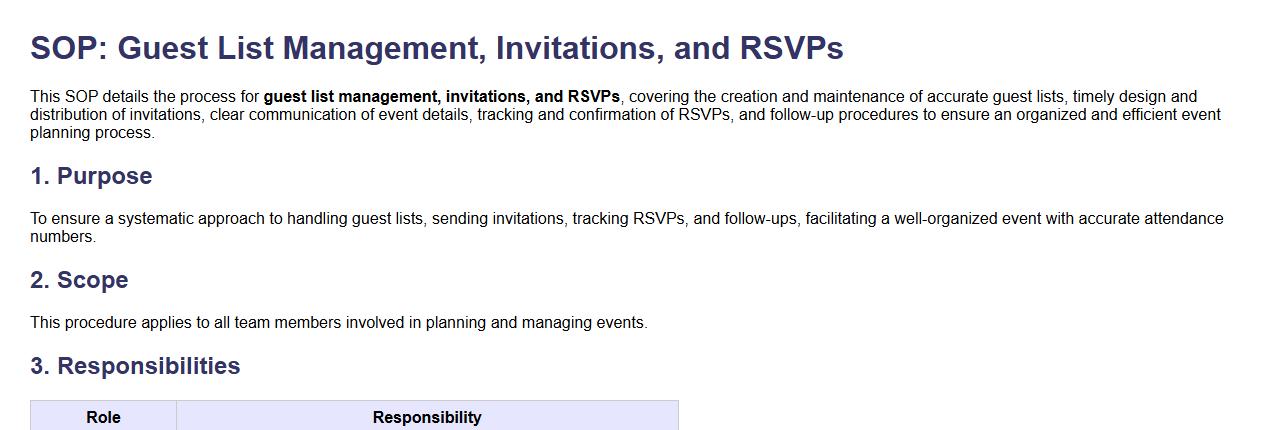
This SOP details the process for guest list management, invitations, and RSVPs, covering the creation and maintenance of accurate guest lists, timely design and distribution of invitations, clear communication of event details, tracking and confirmation of RSVPs, and follow-up procedures to ensure an organized and efficient event planning process.
On-site staff coordination and task delegation.
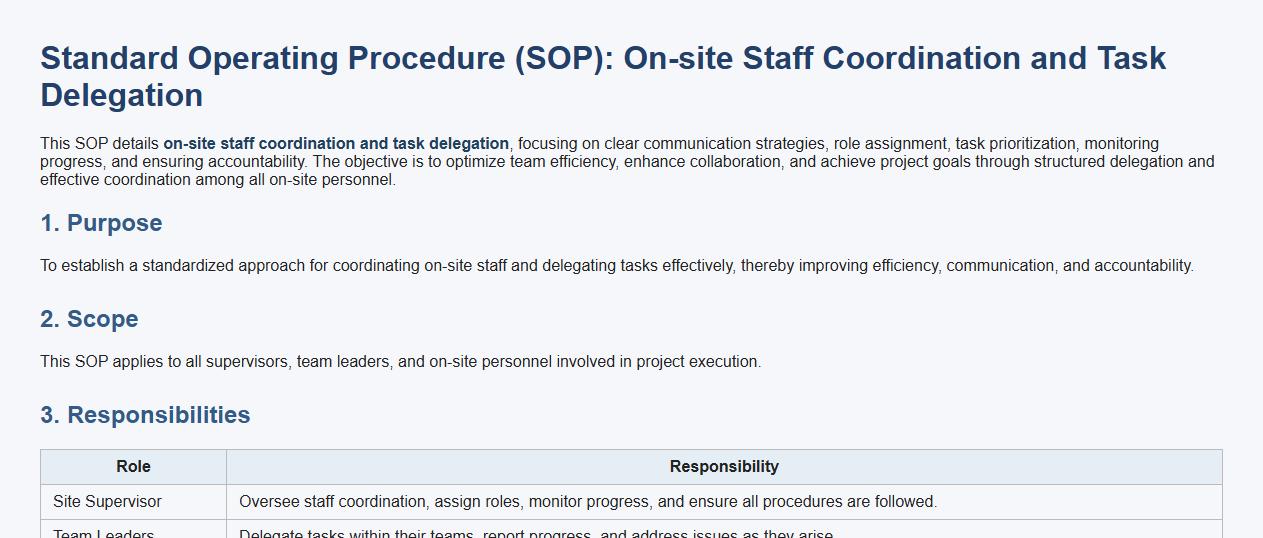
This SOP details on-site staff coordination and task delegation, focusing on clear communication strategies, role assignment, task prioritization, monitoring progress, and ensuring accountability. The objective is to optimize team efficiency, enhance collaboration, and achieve project goals through structured delegation and effective coordination among all on-site personnel.
Post-event evaluation and feedback collection.
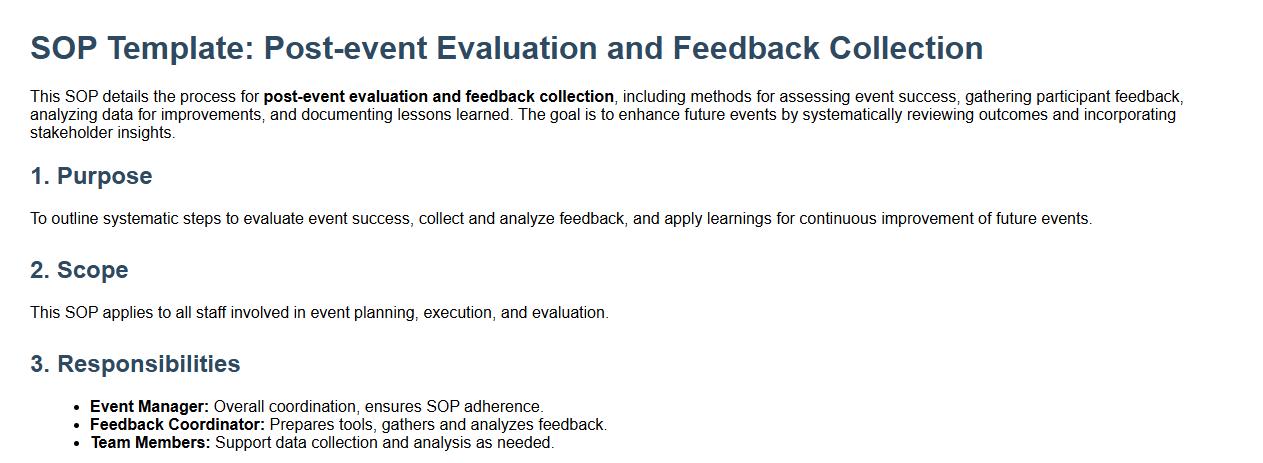
This SOP details the process for post-event evaluation and feedback collection, including methods for assessing event success, gathering participant feedback, analyzing data for improvements, and documenting lessons learned. The goal is to enhance future events by systematically reviewing outcomes and incorporating stakeholder insights.
What are the key objectives outlined in the SOP for Event Planning Services?
The key objectives include ensuring seamless event execution, maintaining client satisfaction, and adhering to budget constraints. The SOP emphasizes delivering high-quality service by standardizing processes and minimizing risks. It also aims to foster effective collaboration among team members and stakeholders throughout the event lifecycle.
Which roles and responsibilities are specified for team members in the event planning process?
The SOP assigns clear roles and responsibilities to each team member, including the event manager, coordinator, and logistics personnel. The event manager oversees overall planning and execution, while coordinators handle specific aspects like vendor liaison and client communication. This structure ensures accountability and smooth task management from start to finish.
What standard procedures must be followed for vendor selection and management?
The SOP mandates a comprehensive vendor selection process, involving proposal evaluation, reference checks, and contract negotiation. It requires the team to assess vendors based on quality, reliability, and cost-effectiveness. Ongoing vendor management includes regular performance reviews and adherence to agreed service terms to guarantee successful event delivery.
How does the SOP address client communication and approval workflows?
Client communication is structured with scheduled updates, progress reports, and formal approval stages integrated into the SOP. It ensures client approval at key milestones such as budget finalization, event design, and vendor selection. This process fosters transparency and aligns event execution with client expectations.
What are the required documentation and reporting protocols before, during, and after an event?
The SOP requires detailed documentation including event plans, budgets, vendor contracts, and client approvals before the event. During the event, real-time reporting and issue tracking are essential for smooth coordination. Post-event, comprehensive reports evaluating performance, client feedback, and financial reconciliation must be submitted for continuous improvement.