

A SOP Template for Help Desk Ticket Handling streamlines the process of managing customer support requests efficiently. It outlines clear steps for ticket creation, prioritization, assignment, and resolution to ensure consistent and timely responses. Implementing this template improves overall service quality and enhances customer satisfaction.
User issue intake and ticket logging procedures.
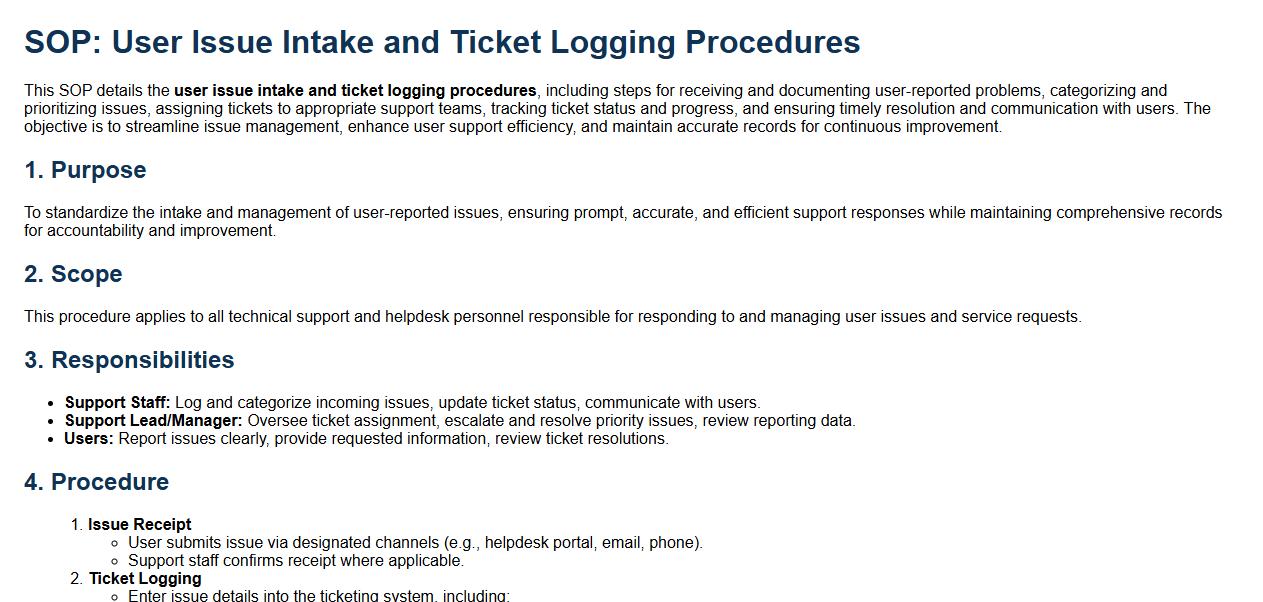
This SOP details the user issue intake and ticket logging procedures, including steps for receiving and documenting user-reported problems, categorizing and prioritizing issues, assigning tickets to appropriate support teams, tracking ticket status and progress, and ensuring timely resolution and communication with users. The objective is to streamline issue management, enhance user support efficiency, and maintain accurate records for continuous improvement.
Initial ticket categorization and prioritization.
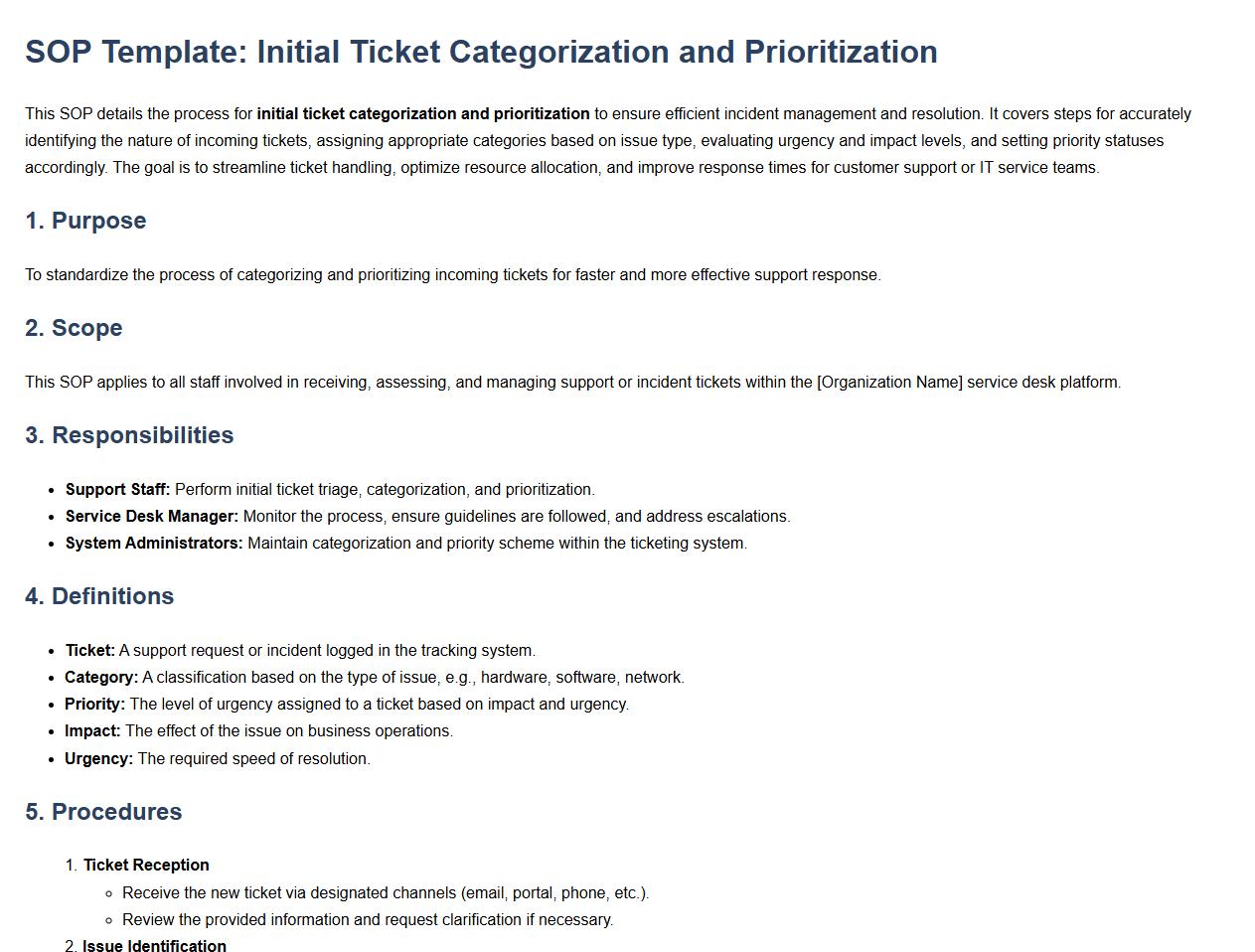
This SOP details the process for initial ticket categorization and prioritization to ensure efficient incident management and resolution. It covers steps for accurately identifying the nature of incoming tickets, assigning appropriate categories based on issue type, evaluating urgency and impact levels, and setting priority statuses accordingly. The goal is to streamline ticket handling, optimize resource allocation, and improve response times for customer support or IT service teams.
Ticket assignment to appropriate support personnel.
This SOP details the process for ticket assignment to appropriate support personnel, ensuring efficient and accurate distribution of support requests. It covers criteria for prioritizing and categorizing tickets, guidelines for matching ticket issues with the expertise of support staff, steps for updating ticket statuses, and protocols for escalations and follow-ups. The goal is to optimize support resolution times and enhance customer satisfaction by systematically directing tickets to the most qualified personnel.
Standard communication protocols with users.
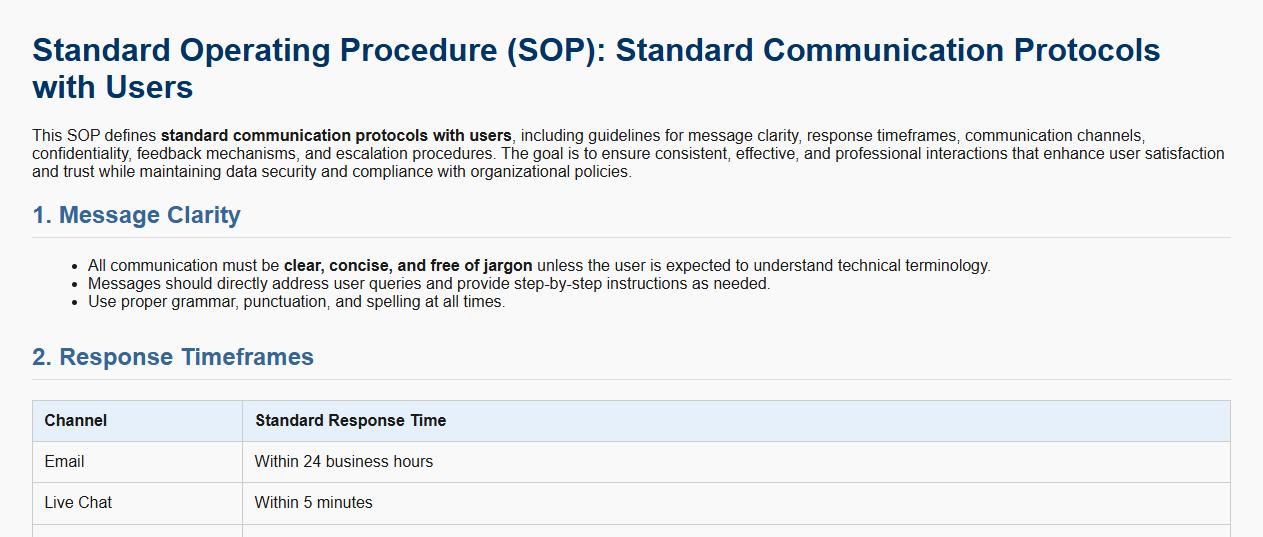
This SOP defines standard communication protocols with users, including guidelines for message clarity, response timeframes, communication channels, confidentiality, feedback mechanisms, and escalation procedures. The goal is to ensure consistent, effective, and professional interactions that enhance user satisfaction and trust while maintaining data security and compliance with organizational policies.
Incident troubleshooting and resolution steps.
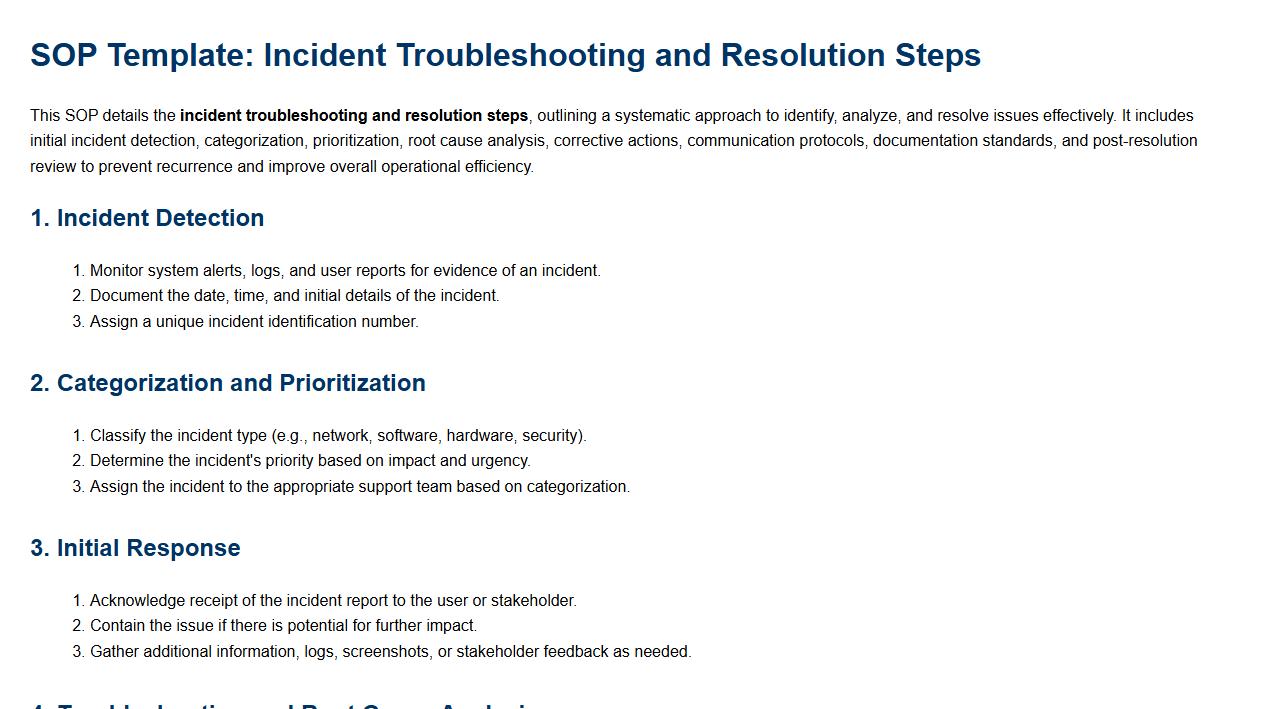
This SOP details the incident troubleshooting and resolution steps, outlining a systematic approach to identify, analyze, and resolve issues effectively. It includes initial incident detection, categorization, prioritization, root cause analysis, corrective actions, communication protocols, documentation standards, and post-resolution review to prevent recurrence and improve overall operational efficiency.
Escalation procedures for complex or unresolved issues.
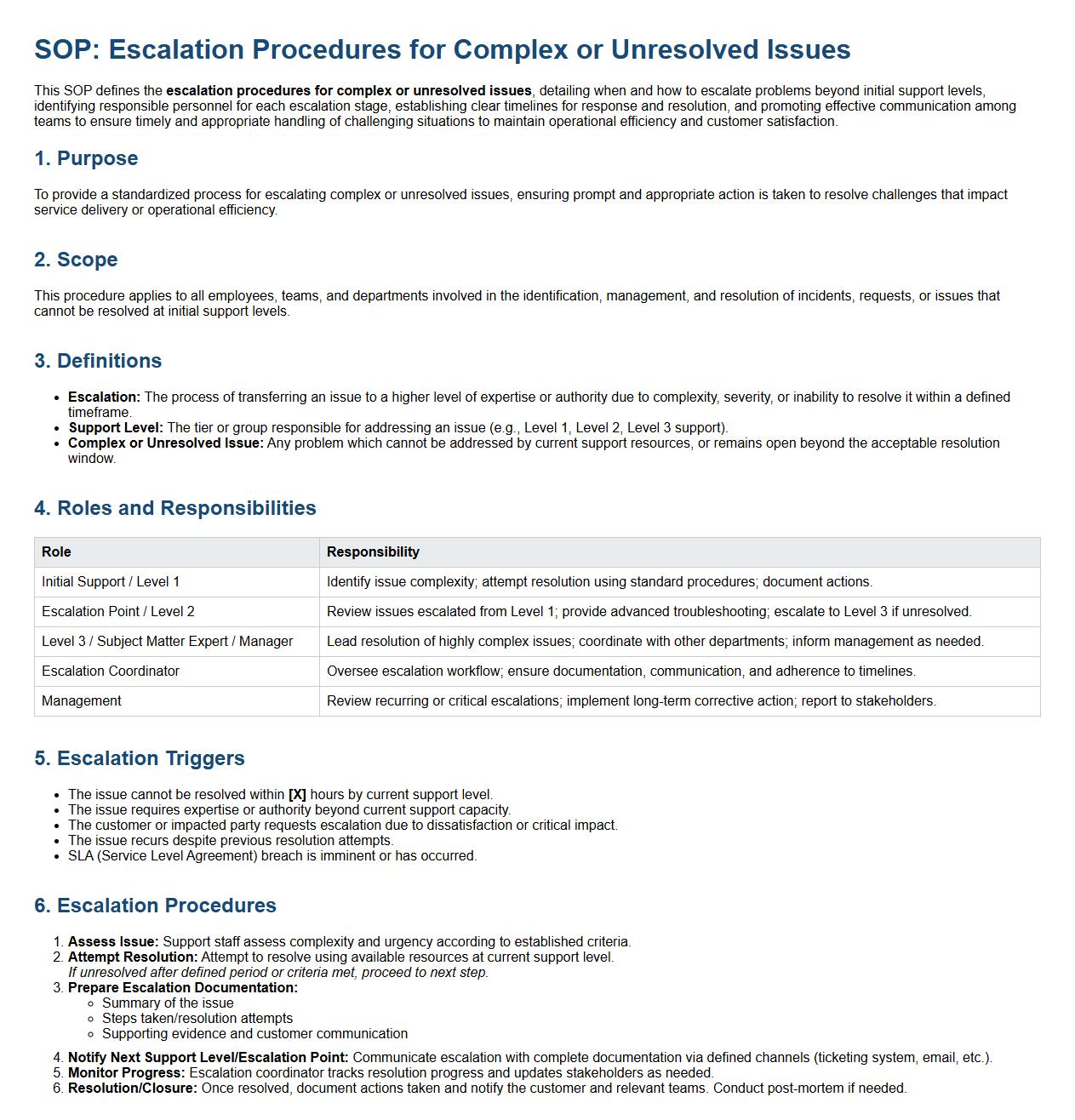
This SOP defines the escalation procedures for complex or unresolved issues, detailing when and how to escalate problems beyond initial support levels, identifying responsible personnel for each escalation stage, establishing clear timelines for response and resolution, and promoting effective communication among teams to ensure timely and appropriate handling of challenging situations to maintain operational efficiency and customer satisfaction.
Documentation guidelines for ticket updates and solutions.
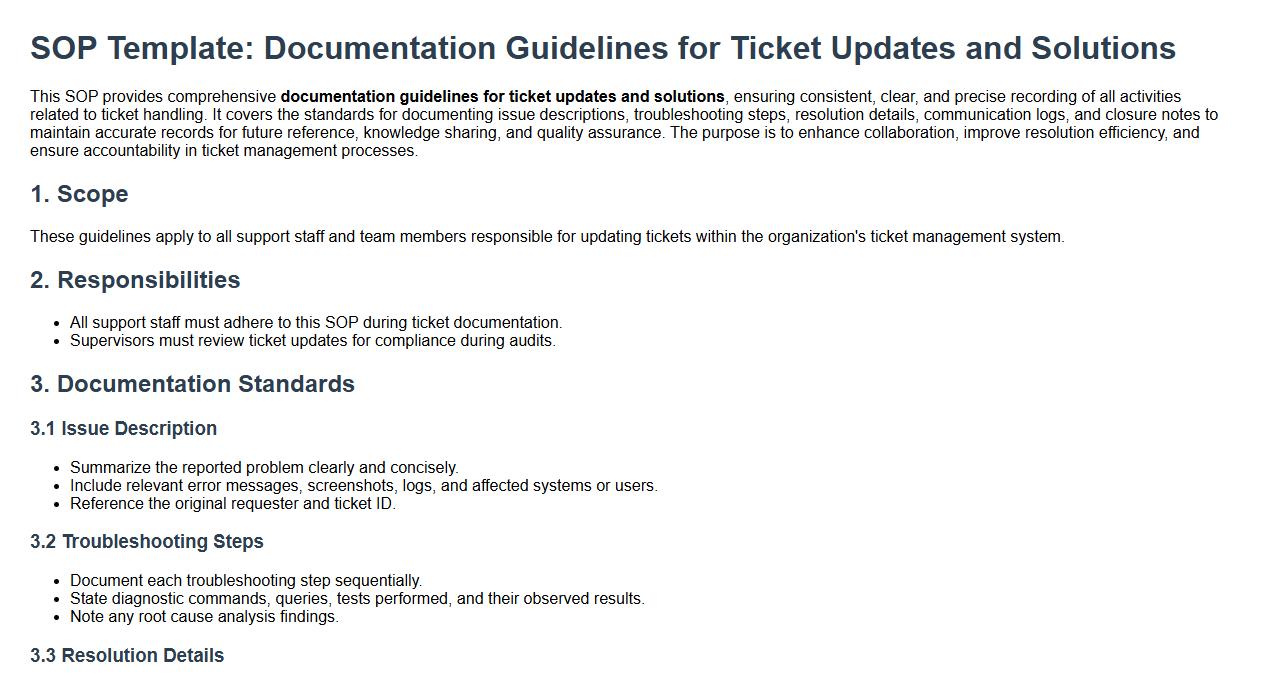
This SOP provides comprehensive documentation guidelines for ticket updates and solutions, ensuring consistent, clear, and precise recording of all activities related to ticket handling. It covers the standards for documenting issue descriptions, troubleshooting steps, resolution details, communication logs, and closure notes to maintain accurate records for future reference, knowledge sharing, and quality assurance. The purpose is to enhance collaboration, improve resolution efficiency, and ensure accountability in ticket management processes.
Ticket closure verification and user feedback collection.
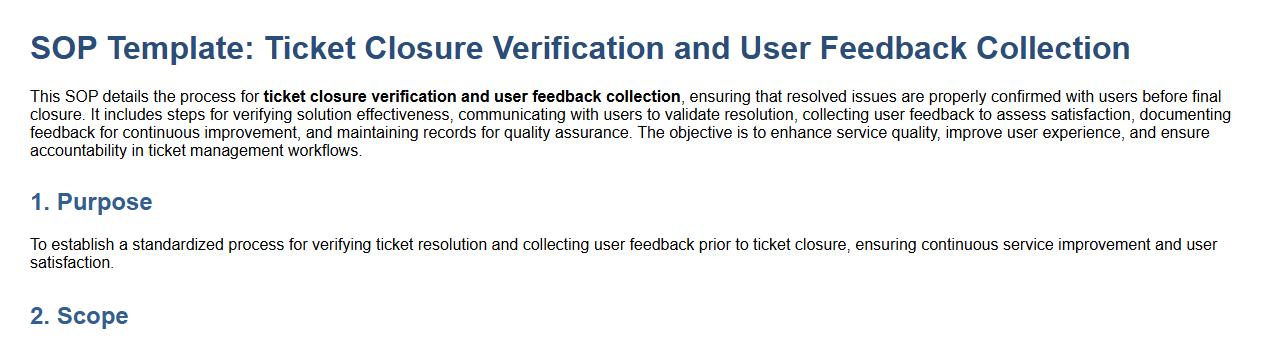
This SOP details the process for ticket closure verification and user feedback collection, ensuring that resolved issues are properly confirmed with users before final closure. It includes steps for verifying solution effectiveness, communicating with users to validate resolution, collecting user feedback to assess satisfaction, documenting feedback for continuous improvement, and maintaining records for quality assurance. The objective is to enhance service quality, improve user experience, and ensure accountability in ticket management workflows.
Post-resolution follow-up and satisfaction tracking.
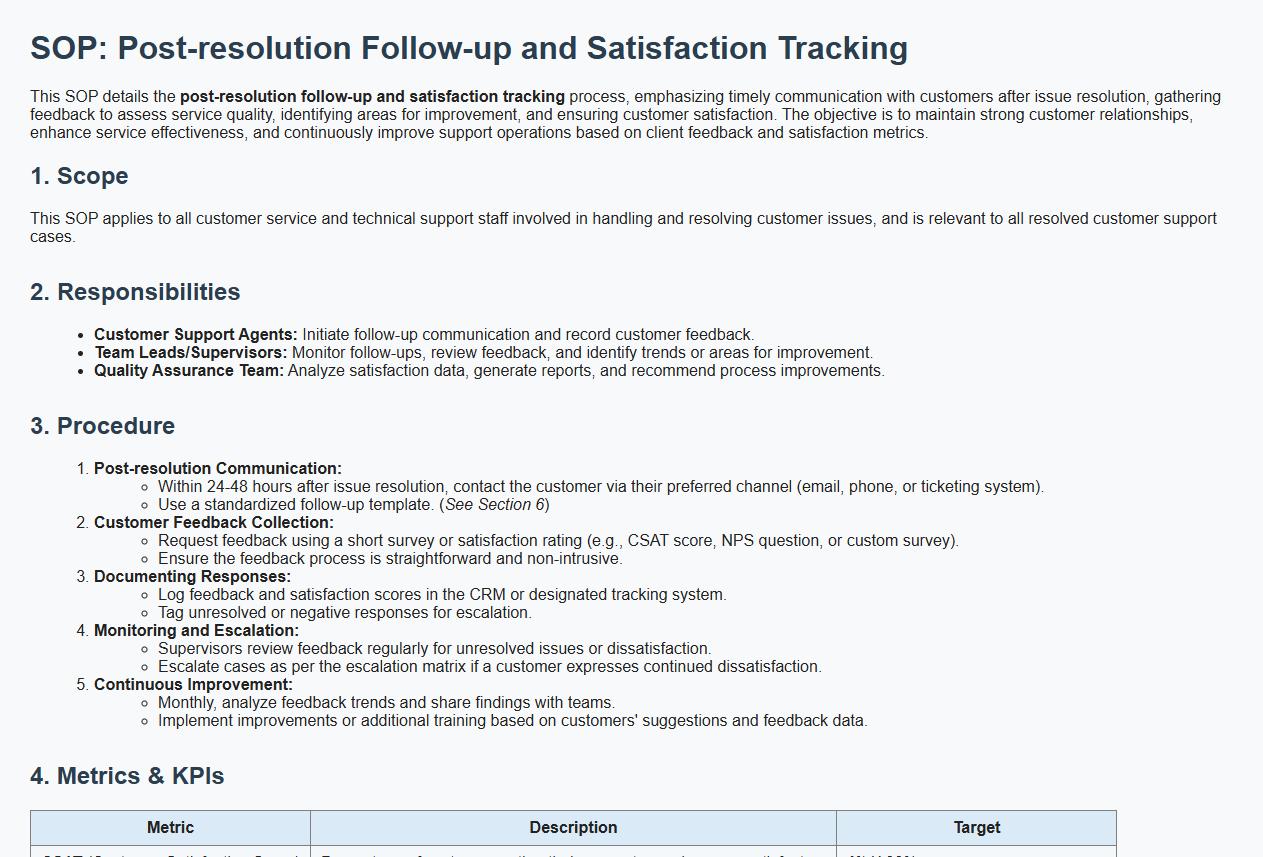
This SOP details the post-resolution follow-up and satisfaction tracking process, emphasizing timely communication with customers after issue resolution, gathering feedback to assess service quality, identifying areas for improvement, and ensuring customer satisfaction. The objective is to maintain strong customer relationships, enhance service effectiveness, and continuously improve support operations based on client feedback and satisfaction metrics.
Reporting and analysis of ticket trends and help desk performance.
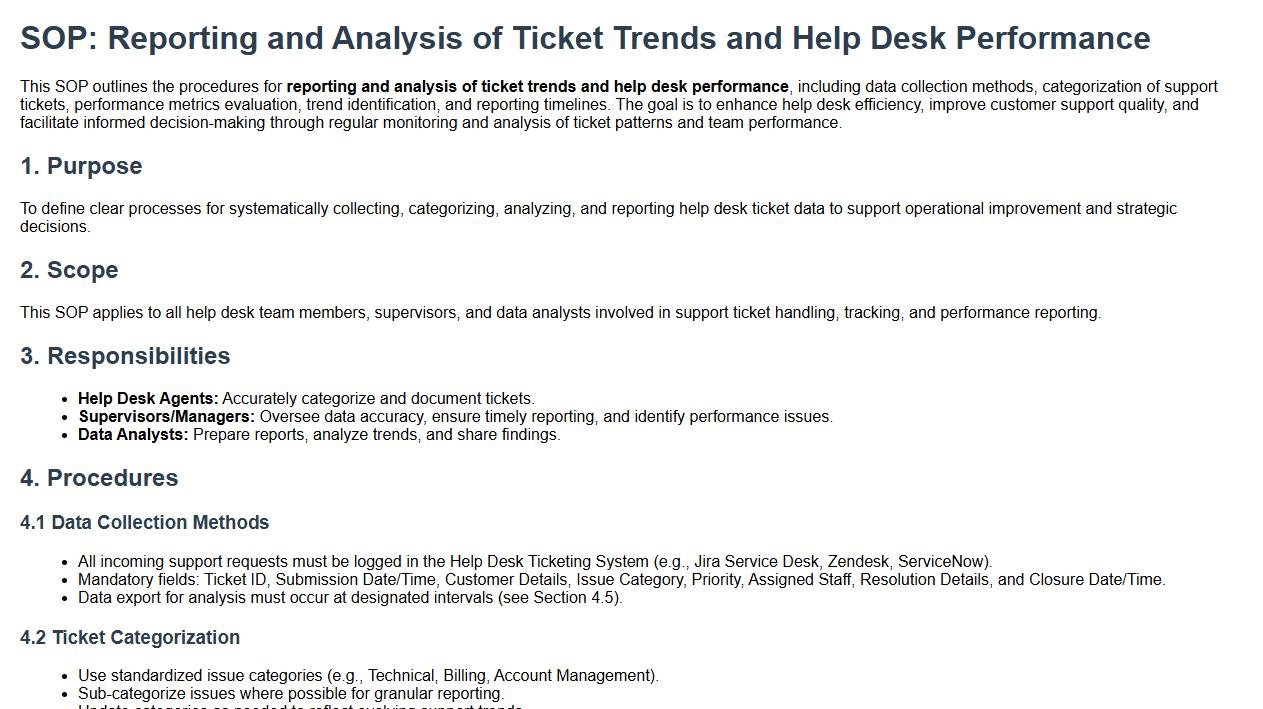
This SOP outlines the procedures for reporting and analysis of ticket trends and help desk performance, including data collection methods, categorization of support tickets, performance metrics evaluation, trend identification, and reporting timelines. The goal is to enhance help desk efficiency, improve customer support quality, and facilitate informed decision-making through regular monitoring and analysis of ticket patterns and team performance.
What are the key steps involved in creating a new help desk ticket according to the SOP?
The first step in creating a new help desk ticket is to log the initial request with all relevant contact details. Next, the technician must categorize the issue accurately to ensure proper routing. Finally, the ticket is assigned a unique identifier and forwarded to the appropriate support team for action.
What information must be included in each help desk ticket as per the SOP guidelines?
Each help desk ticket must contain the user's contact information, description of the issue, and timestamp of the report. Additionally, the ticket should include the category and priority level of the issue. Detailed notes about any initial troubleshooting attempts are also required for efficient processing.
What are the priority levels defined in the SOP for help desk ticket triage and escalation?
The SOP defines three priority levels: Low, Medium, and High, based on the impact and urgency of the request. High priority tickets require immediate attention due to critical business disruption. Medium and Low priority tickets are addressed according to the established response time guidelines.
What is the standard protocol for ticket resolution and closure, according to the SOP?
Once a resolution is identified, the technician must validate the fix with the user to confirm the issue is resolved. After user confirmation, the ticket status is updated to 'Closed' in the system. Closure must include detailed resolution notes for future reference.
What documentation and follow-up actions are required after a ticket is closed, as stated in the SOP?
Post-closure, the SOP mandates that all troubleshooting steps and final resolution details be documented comprehensively. A follow-up email or survey may be sent to gather user feedback on the support experience. This information helps improve service quality and assists in identifying recurring issues.