
A SOP Template for Retail Floor Maintenance ensures consistent cleaning and upkeep of retail floors, promoting safety and enhancing store appearance. It outlines step-by-step procedures, including daily sweeping, mopping, and periodic deep cleaning tasks. This template helps staff maintain hygiene standards and prevent accidents through proper floor care protocols.
Store opening and closing procedures.
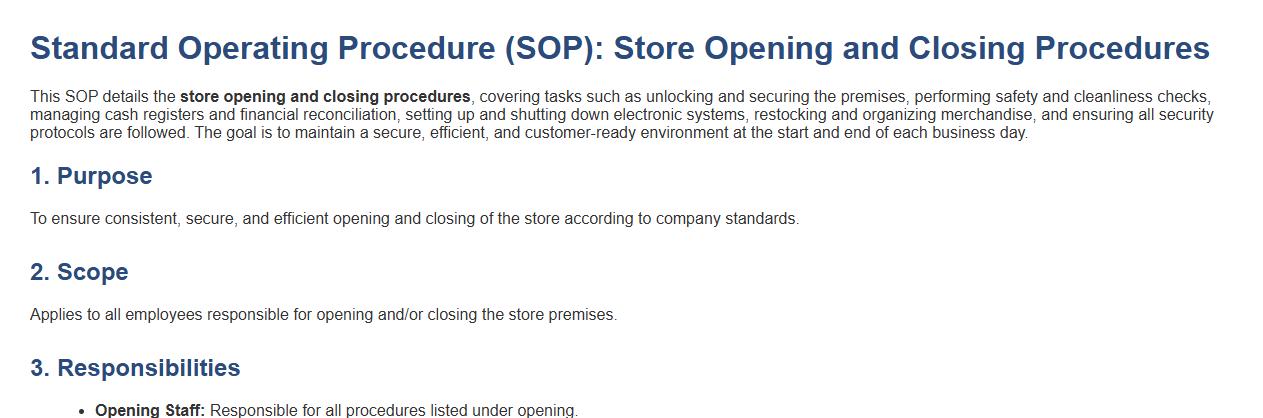
This SOP details the store opening and closing procedures, covering tasks such as unlocking and securing the premises, performing safety and cleanliness checks, managing cash registers and financial reconciliation, setting up and shutting down electronic systems, restocking and organizing merchandise, and ensuring all security protocols are followed. The goal is to maintain a secure, efficient, and customer-ready environment at the start and end of each business day.
Daily cleaning schedules for sales floor and restrooms.
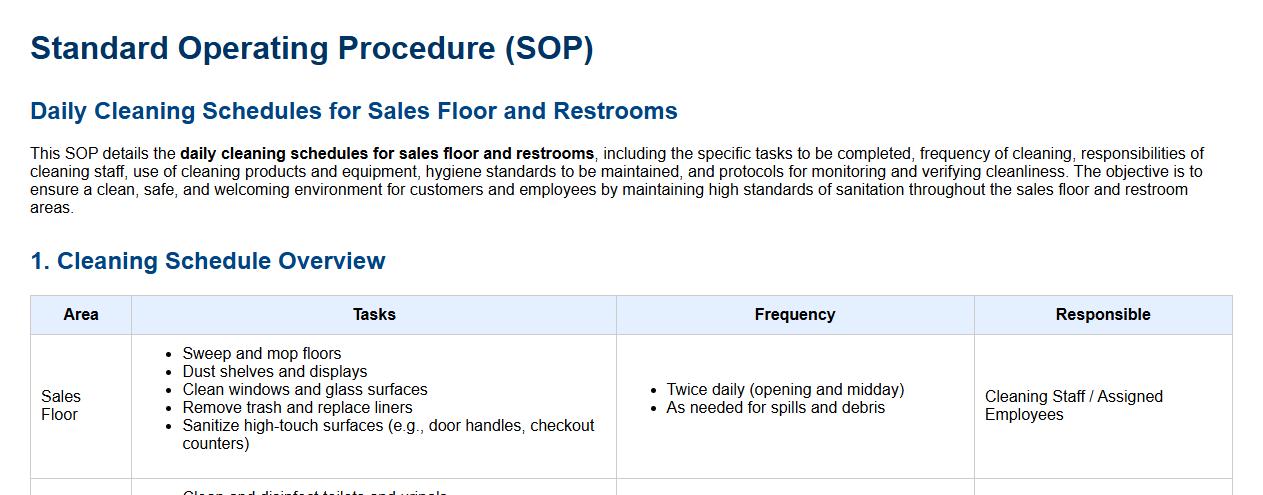
This SOP details the daily cleaning schedules for sales floor and restrooms, including the specific tasks to be completed, frequency of cleaning, responsibilities of cleaning staff, use of cleaning products and equipment, hygiene standards to be maintained, and protocols for monitoring and verifying cleanliness. The objective is to ensure a clean, safe, and welcoming environment for customers and employees by maintaining high standards of sanitation throughout the sales floor and restroom areas.
Routine floor sweeping, mopping, and vacuuming protocols.
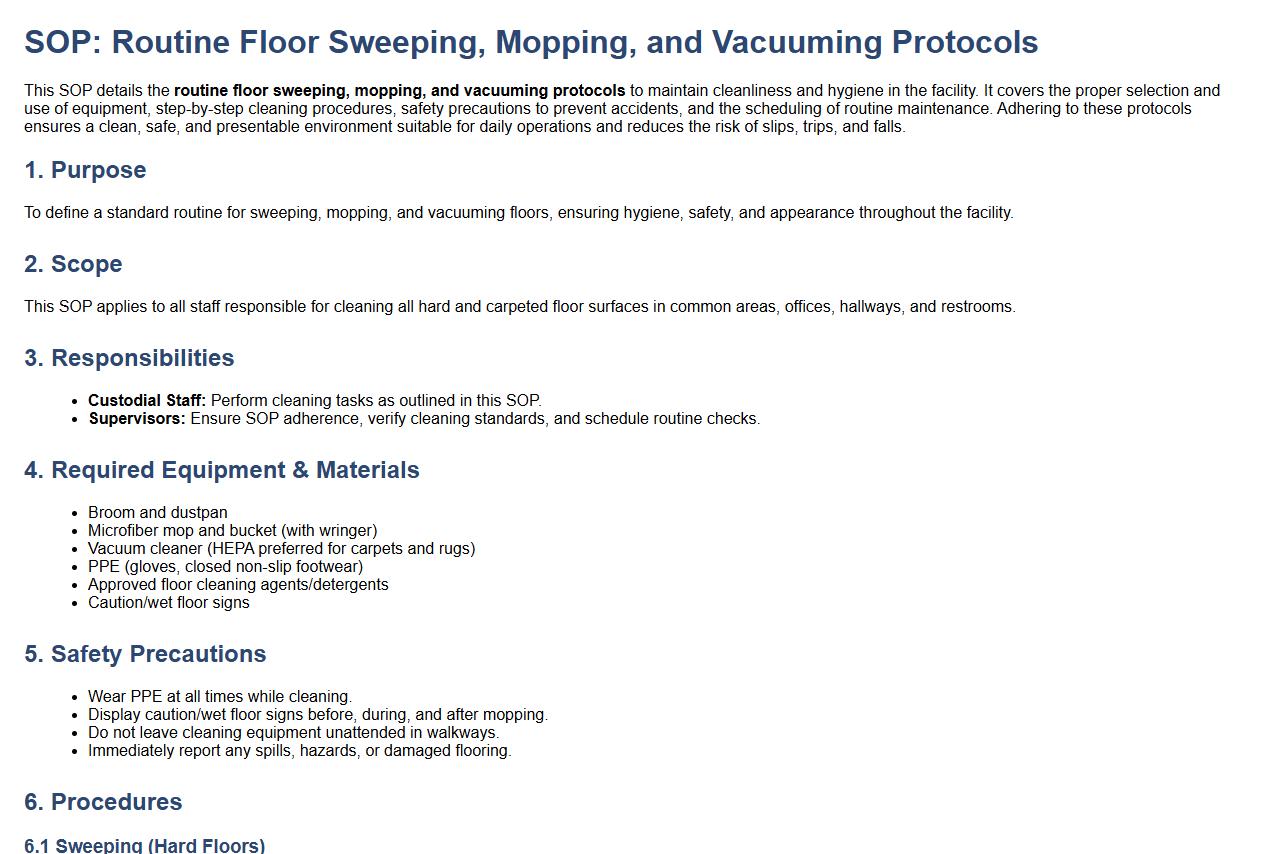
This SOP details the routine floor sweeping, mopping, and vacuuming protocols to maintain cleanliness and hygiene in the facility. It covers the proper selection and use of equipment, step-by-step cleaning procedures, safety precautions to prevent accidents, and the scheduling of routine maintenance. Adhering to these protocols ensures a clean, safe, and presentable environment suitable for daily operations and reduces the risk of slips, trips, and falls.
Spill response and hazard containment guidelines.
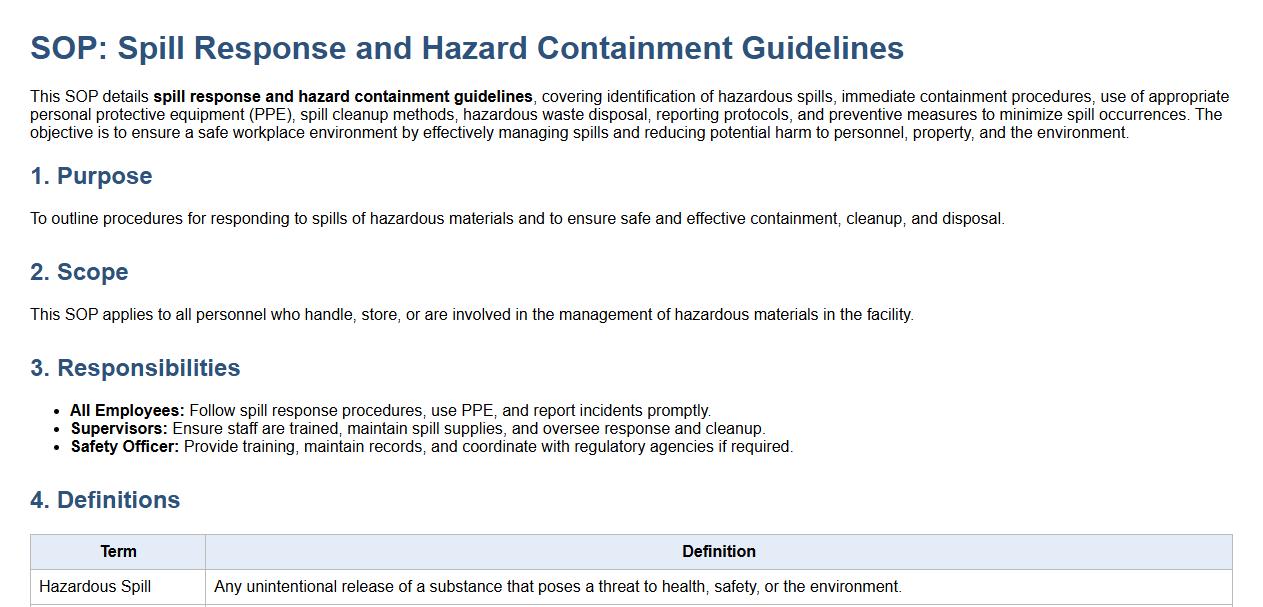
This SOP details spill response and hazard containment guidelines, covering identification of hazardous spills, immediate containment procedures, use of appropriate personal protective equipment (PPE), spill cleanup methods, hazardous waste disposal, reporting protocols, and preventive measures to minimize spill occurrences. The objective is to ensure a safe workplace environment by effectively managing spills and reducing potential harm to personnel, property, and the environment.
Restocking and merchandise display maintenance.
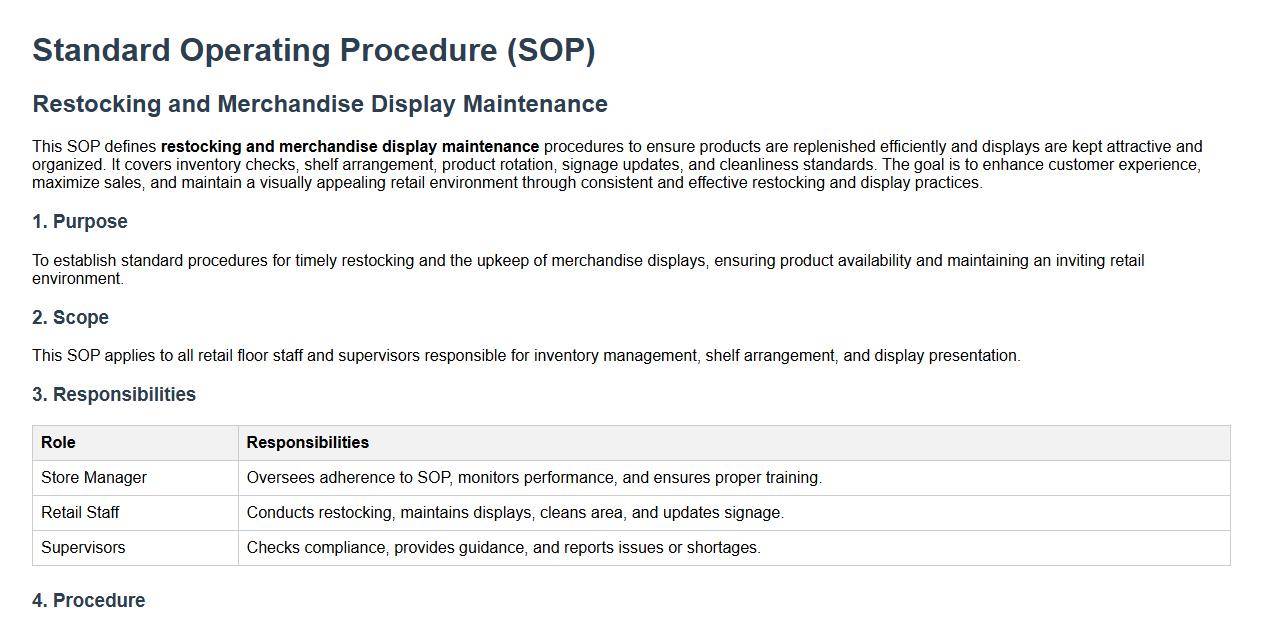
This SOP defines restocking and merchandise display maintenance procedures to ensure products are replenished efficiently and displays are kept attractive and organized. It covers inventory checks, shelf arrangement, product rotation, signage updates, and cleanliness standards. The goal is to enhance customer experience, maximize sales, and maintain a visually appealing retail environment through consistent and effective restocking and display practices.
Equipment handling, storage, and maintenance procedures.
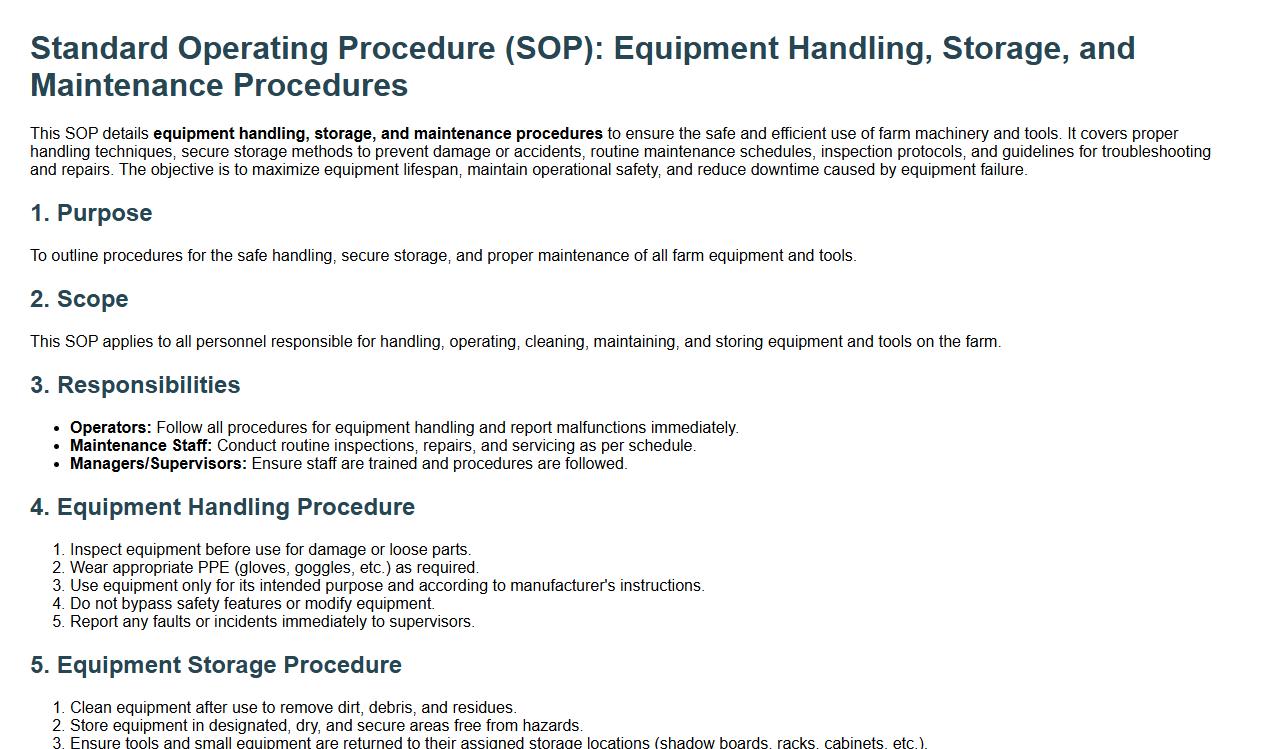
This SOP details equipment handling, storage, and maintenance procedures to ensure the safe and efficient use of farm machinery and tools. It covers proper handling techniques, secure storage methods to prevent damage or accidents, routine maintenance schedules, inspection protocols, and guidelines for troubleshooting and repairs. The objective is to maximize equipment lifespan, maintain operational safety, and reduce downtime caused by equipment failure.
Waste disposal, recycling, and compactor operation steps.
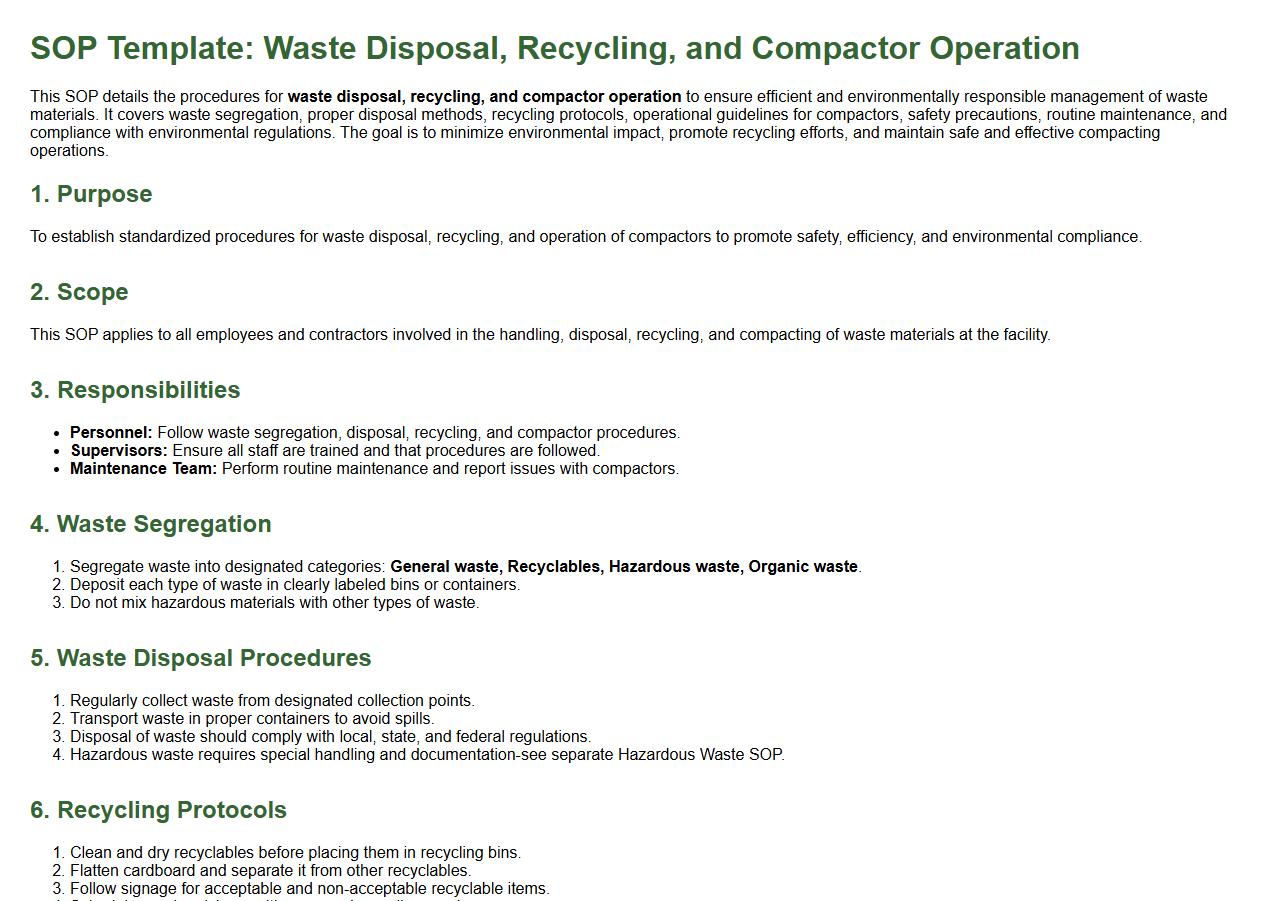
This SOP details the procedures for waste disposal, recycling, and compactor operation to ensure efficient and environmentally responsible management of waste materials. It covers waste segregation, proper disposal methods, recycling protocols, operational guidelines for compactors, safety precautions, routine maintenance, and compliance with environmental regulations. The goal is to minimize environmental impact, promote recycling efforts, and maintain safe and effective compacting operations.
Inspection and reporting of facility damages or repairs needed.
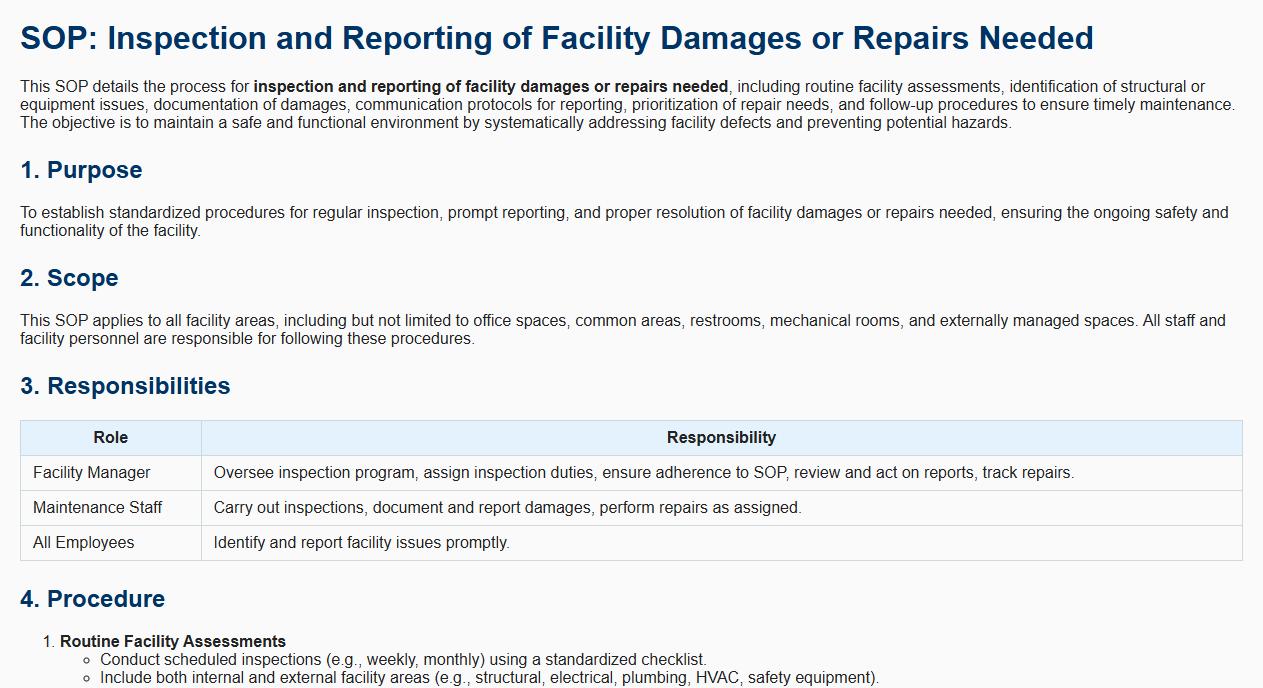
This SOP details the process for inspection and reporting of facility damages or repairs needed, including routine facility assessments, identification of structural or equipment issues, documentation of damages, communication protocols for reporting, prioritization of repair needs, and follow-up procedures to ensure timely maintenance. The objective is to maintain a safe and functional environment by systematically addressing facility defects and preventing potential hazards.
Handling and maintenance of cleaning chemicals and supplies.
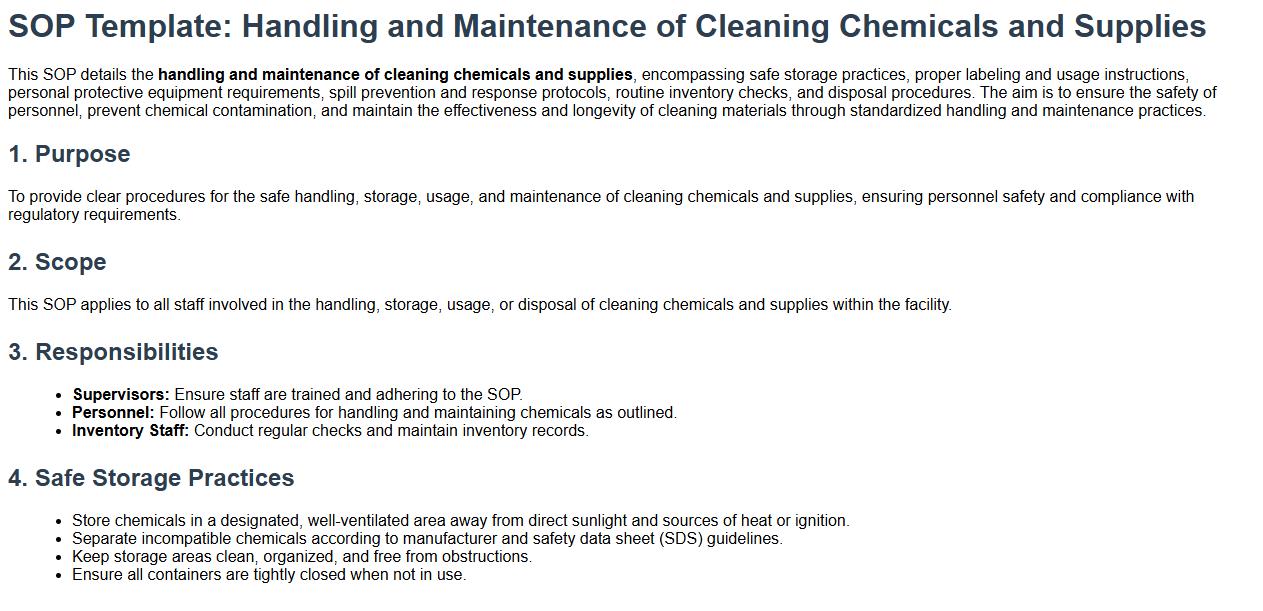
This SOP details the handling and maintenance of cleaning chemicals and supplies, encompassing safe storage practices, proper labeling and usage instructions, personal protective equipment requirements, spill prevention and response protocols, routine inventory checks, and disposal procedures. The aim is to ensure the safety of personnel, prevent chemical contamination, and maintain the effectiveness and longevity of cleaning materials through standardized handling and maintenance practices.
Safety protocols and emergency response procedures.
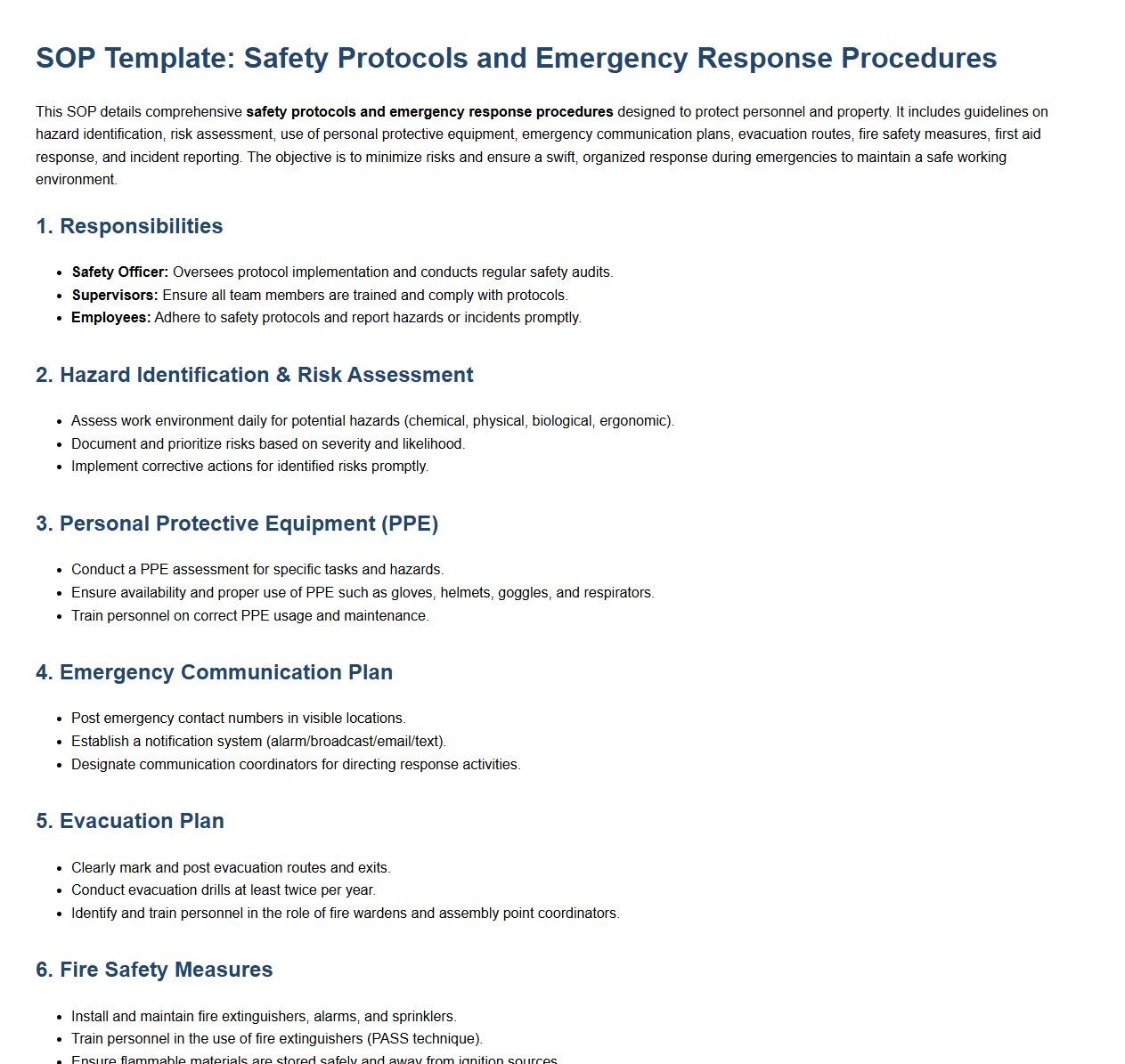
This SOP details comprehensive safety protocols and emergency response procedures designed to protect personnel and property. It includes guidelines on hazard identification, risk assessment, use of personal protective equipment, emergency communication plans, evacuation routes, fire safety measures, first aid response, and incident reporting. The objective is to minimize risks and ensure a swift, organized response during emergencies to maintain a safe working environment.
Key Daily Cleaning Procedures for Maintaining the Retail Floor
The SOP mandates daily sweeping and mopping of the retail floor to ensure a clean and safe environment for customers. All debris and dust must be promptly removed to maintain hygiene and appearance standards. Regularly scheduled cleaning times help maintain consistency and operational efficiency on the retail floor.
Safety Protocols During Floor Maintenance
Employees must wear appropriate personal protective equipment (PPE) such as gloves and non-slip shoes during floor maintenance activities. The SOP requires clear signage to warn customers and staff about wet floors to prevent accidents. Adherence to these safety protocols minimizes the risk of slips and falls on the retail floor.
Proper Handling and Storage of Cleaning Equipment and Chemicals
The SOP details strict guidelines for the safe storage of cleaning chemicals in labeled, ventilated areas away from food products. Cleaning equipment must be properly cleaned and maintained after use to ensure longevity and hygiene. Employees are trained to handle chemicals according to safety data sheets to prevent exposure and contamination.
Inspection and Documentation Practices for Floor Cleanliness
Regular floor inspections are required to verify cleanliness and identify areas needing additional maintenance. Employees must complete and submit cleaning logs or checklists daily to document compliance with cleaning schedules. These records support accountability and help in continuous improvement of floor maintenance standards.
Reporting and Managing Incidents like Spills or Floor Damages
The SOP instructs employees to immediately report spills or floor damages to the designated supervisor or safety officer. Prompt action includes placing warning signs and initiating cleanup to prevent customer injuries. Detailed documentation of the incident ensures proper follow-up and corrective measures are taken.