

A SOP Template for Retail Complaint Handling provides a structured framework to efficiently address customer grievances in retail settings. It outlines clear steps for receiving, documenting, and resolving complaints to ensure consistent service quality and customer satisfaction. Using this template helps streamline communication between staff and management, reducing response time and enhancing problem resolution.
Complaint reception and documentation procedure.

This SOP details the complaint reception and documentation procedure, covering the systematic process of receiving, recording, and managing complaints to ensure timely resolution. It includes guidelines for acknowledging complaints, verifying relevant information, maintaining accurate records, protecting confidentiality, and escalating issues when necessary. The objective is to enhance customer satisfaction and improve organizational responsiveness through effective complaint handling and documentation.
Verification and logging of customer information.

This SOP details the process for verification and logging of customer information, ensuring accurate collection, validation, and secure recording of customer data. It covers identity verification methods, data entry standards, confidentiality protocols, and systematic logging procedures to maintain data integrity and comply with privacy regulations. The goal is to optimize customer data management and support seamless service delivery while safeguarding sensitive information.
Initial acknowledgment and response timeline standards.
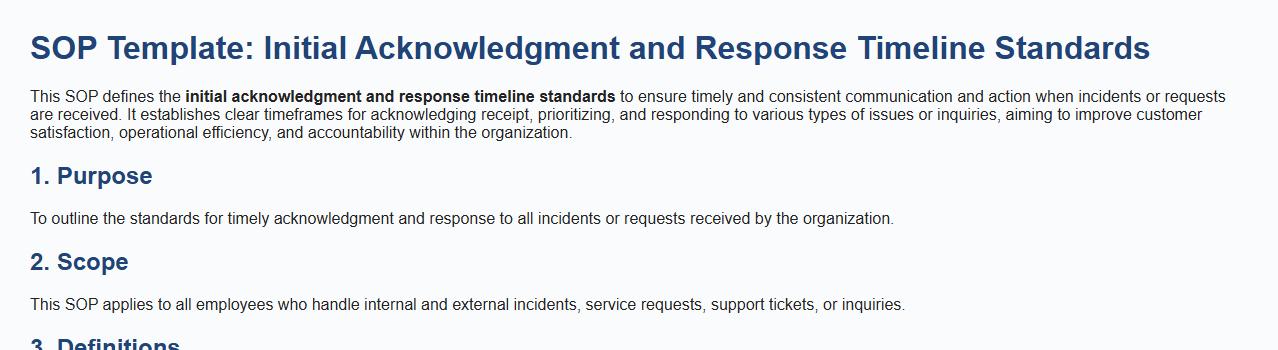
This SOP defines the initial acknowledgment and response timeline standards to ensure timely and consistent communication and action when incidents or requests are received. It establishes clear timeframes for acknowledging receipt, prioritizing, and responding to various types of issues or inquiries, aiming to improve customer satisfaction, operational efficiency, and accountability within the organization.
Customer communication protocols and tone guidelines.

This SOP defines customer communication protocols and tone guidelines, covering standardized messaging practices, appropriate language usage, response time expectations, handling inquiries and complaints, and maintaining a consistent and professional tone across all communication channels. The objective is to enhance customer satisfaction, build trust, and ensure clear, respectful, and effective interactions with clients.
Complaint categorization and escalation pathways.
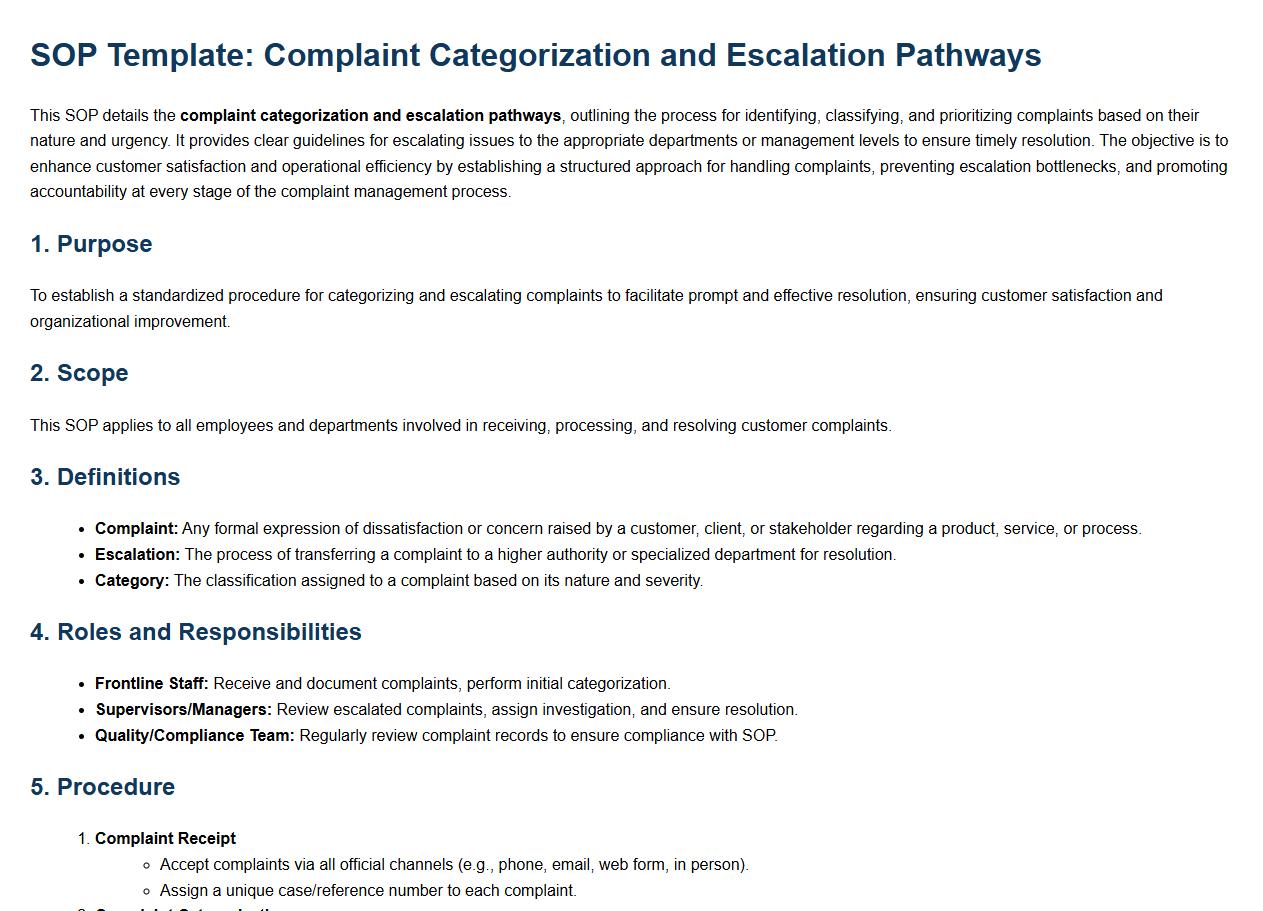
This SOP details the complaint categorization and escalation pathways, outlining the process for identifying, classifying, and prioritizing complaints based on their nature and urgency. It provides clear guidelines for escalating issues to the appropriate departments or management levels to ensure timely resolution. The objective is to enhance customer satisfaction and operational efficiency by establishing a structured approach for handling complaints, preventing escalation bottlenecks, and promoting accountability at every stage of the complaint management process.
Investigation and evidence-gathering steps.
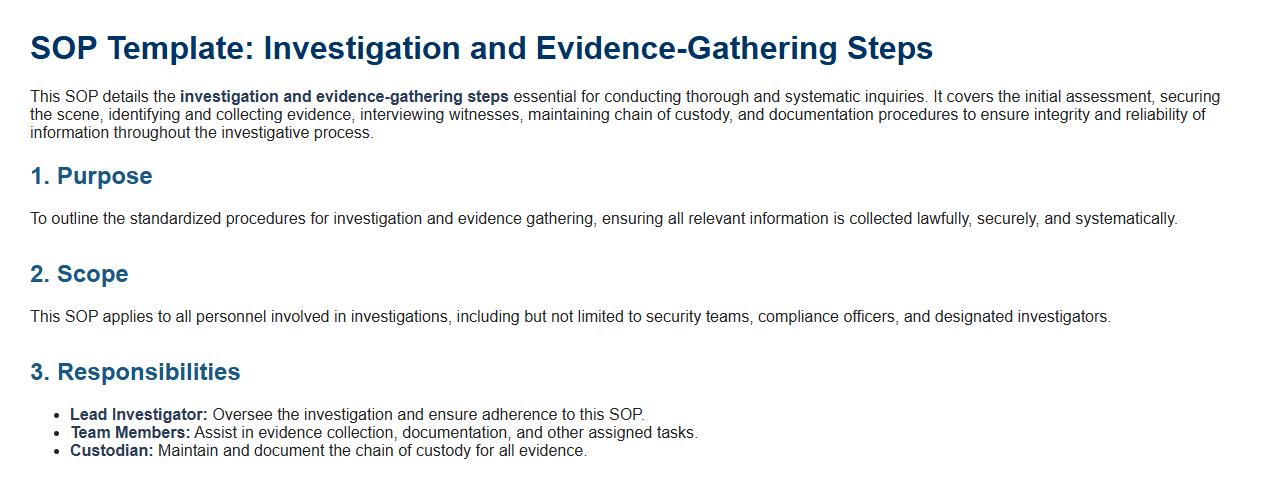
This SOP details the investigation and evidence-gathering steps essential for conducting thorough and systematic inquiries. It covers the initial assessment, securing the scene, identifying and collecting evidence, interviewing witnesses, maintaining chain of custody, and documentation procedures to ensure integrity and reliability of information throughout the investigative process.
Resolution decision-making process and approval authority.
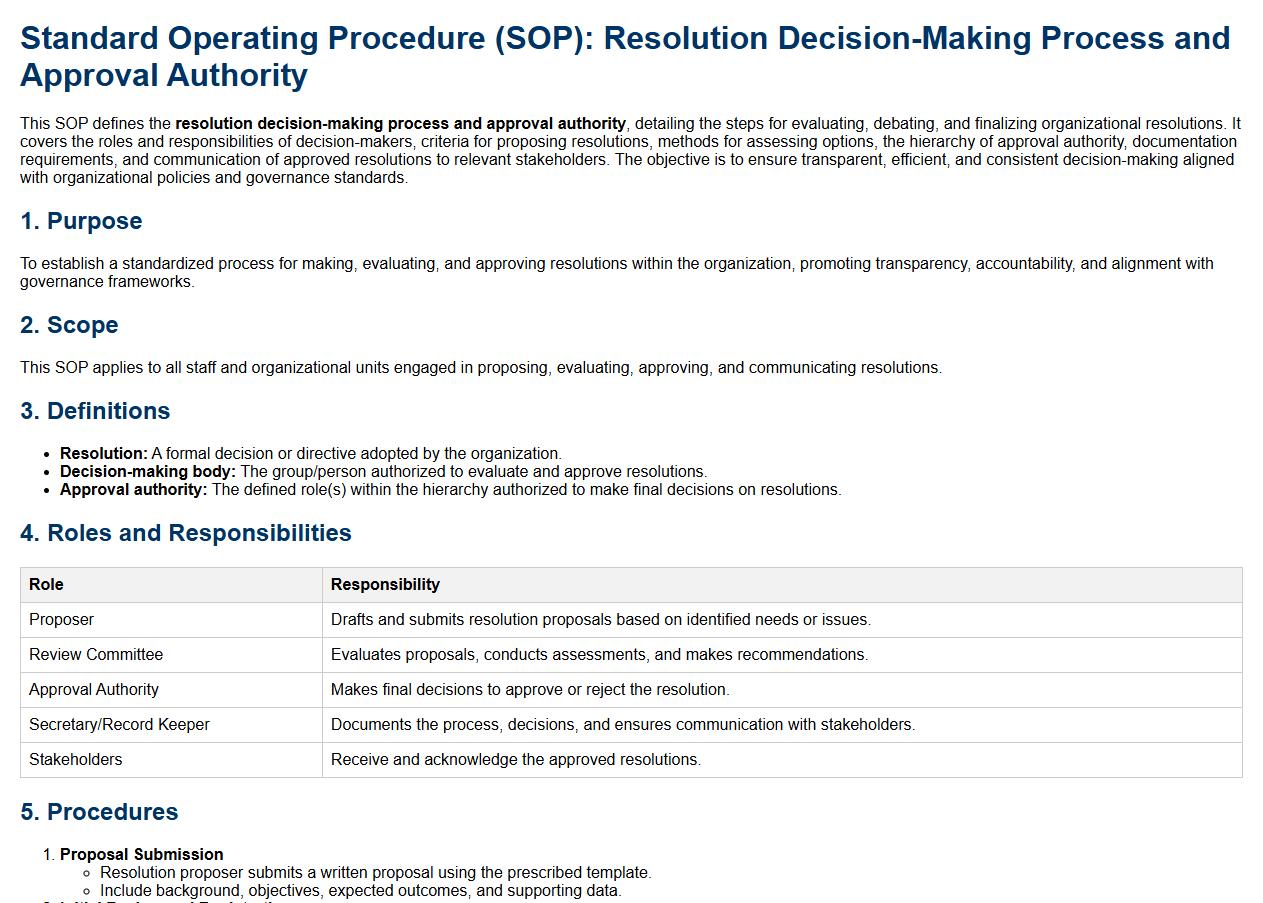
This SOP defines the resolution decision-making process and approval authority, detailing the steps for evaluating, debating, and finalizing organizational resolutions. It covers the roles and responsibilities of decision-makers, criteria for proposing resolutions, methods for assessing options, the hierarchy of approval authority, documentation requirements, and communication of approved resolutions to relevant stakeholders. The objective is to ensure transparent, efficient, and consistent decision-making aligned with organizational policies and governance standards.
Compensation and goodwill gesture criteria.
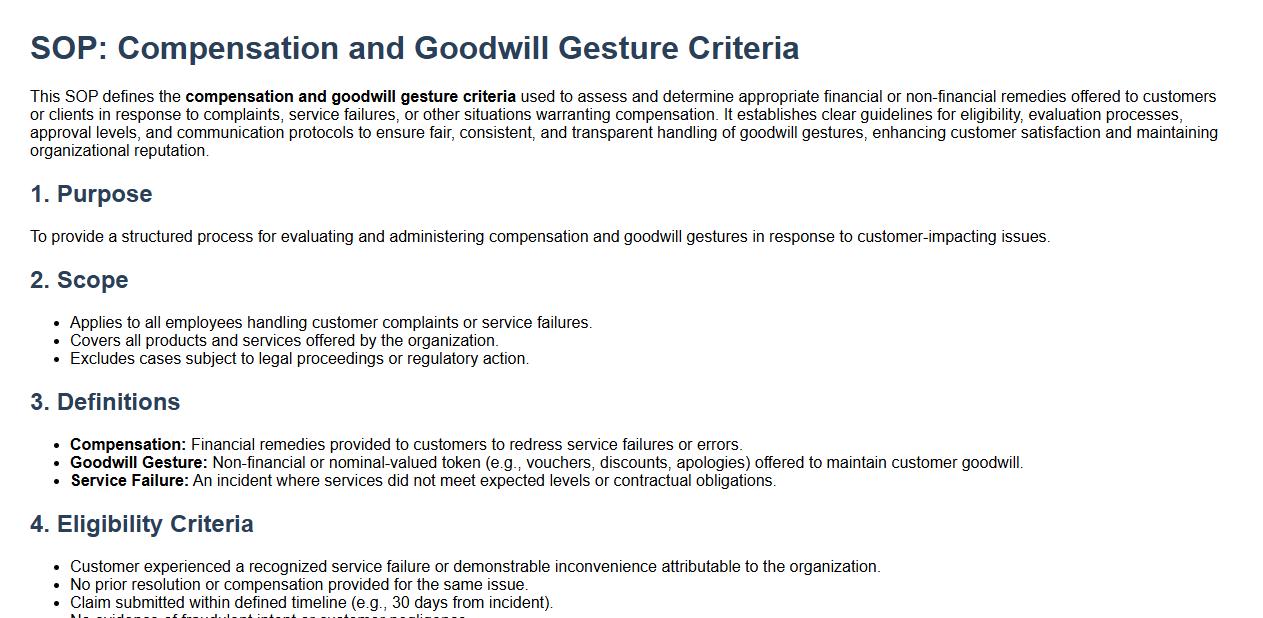
This SOP defines the compensation and goodwill gesture criteria used to assess and determine appropriate financial or non-financial remedies offered to customers or clients in response to complaints, service failures, or other situations warranting compensation. It establishes clear guidelines for eligibility, evaluation processes, approval levels, and communication protocols to ensure fair, consistent, and transparent handling of goodwill gestures, enhancing customer satisfaction and maintaining organizational reputation.
Final communication and complaint closure steps.
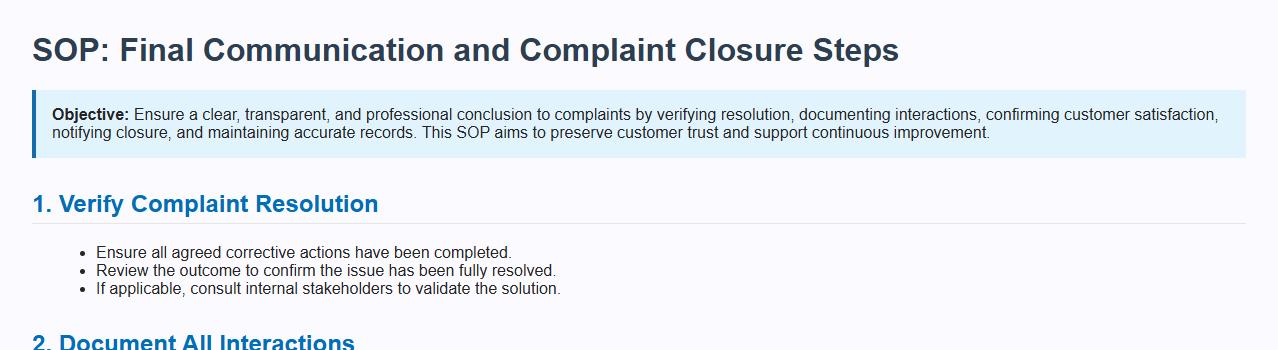
This SOP details the final communication and complaint closure steps, including verifying complaint resolution, documenting all interactions, confirming customer satisfaction, providing closure notifications, and ensuring proper record-keeping. The objective is to ensure a clear, transparent, and professional conclusion to complaints, maintaining customer trust and continuous improvement.
Complaint analysis, reporting, and continuous improvement review.
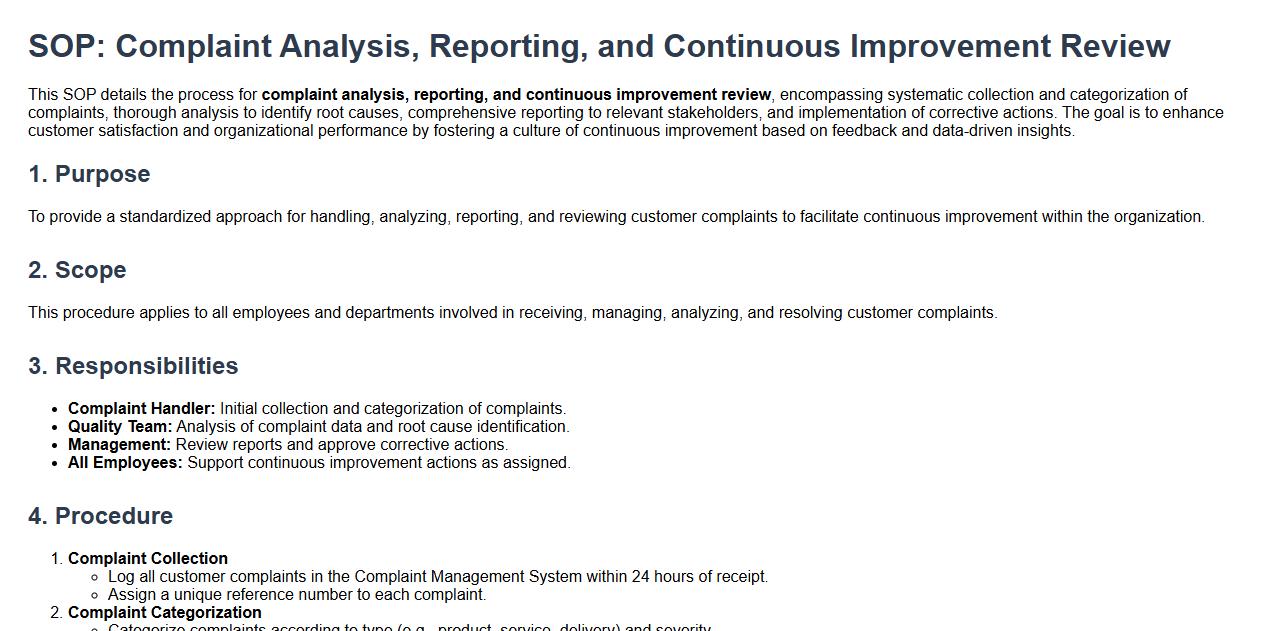
This SOP details the process for complaint analysis, reporting, and continuous improvement review, encompassing systematic collection and categorization of complaints, thorough analysis to identify root causes, comprehensive reporting to relevant stakeholders, and implementation of corrective actions. The goal is to enhance customer satisfaction and organizational performance by fostering a culture of continuous improvement based on feedback and data-driven insights.
Key Steps in Receiving and Logging Retail Customer Complaints
The SOP outlines that the first step in handling retail customer complaints is receiving the complaint through designated channels such as in-store, phone, or online. The complaint must then be logged accurately into the complaint management system with all relevant details documented. This ensures proper tracking and facilitates an organized approach to resolving customer issues promptly.
Team Members Responsible for Each Stage of Complaint Resolution
According to the SOP, frontline staff are responsible for initially acknowledging and logging the complaint. Customer service managers take charge of investigating and resolving the issues. Escalation teams or higher management intervene if the complaint requires further review or advanced resolution.
Acceptable Response and Resolution Timeframes for Retail Complaints
The SOP clearly defines response timeframes based on complaint severity and type, ensuring urgent issues receive prompt attention within 24 hours. Less critical complaints have a slightly extended window but must be addressed within a standard resolution timeframe of three to five business days. These guidelines guarantee timely handling and enhance customer satisfaction.
Documentation and Escalation Procedures for Unresolved or Recurring Complaints
When complaints remain unresolved or recur, the SOP mandates thorough documentation of all communication and attempts at resolution. It requires escalation to higher management or specialized teams for further action. This structured process helps identify systemic problems and drives continuous improvement in service quality.
Ensuring Follow-Up and Customer Feedback Collection Post-Resolution
The SOP emphasizes the importance of following up with customers after resolving their complaints to confirm satisfaction. It mandates collecting customer feedback through surveys or direct communication to evaluate the effectiveness of the resolution. This step fosters trust and supports ongoing enhancement of the complaint handling process.