

A SOP Template for Visual Merchandising in Retail provides a structured guide to consistently implement effective product displays and store layouts. This template ensures that visual elements align with brand standards, enhancing customer experience and driving sales. Clear instructions within the SOP help retail teams maintain high-quality presentation across all locations.
Store layout planning and zoning guidelines.
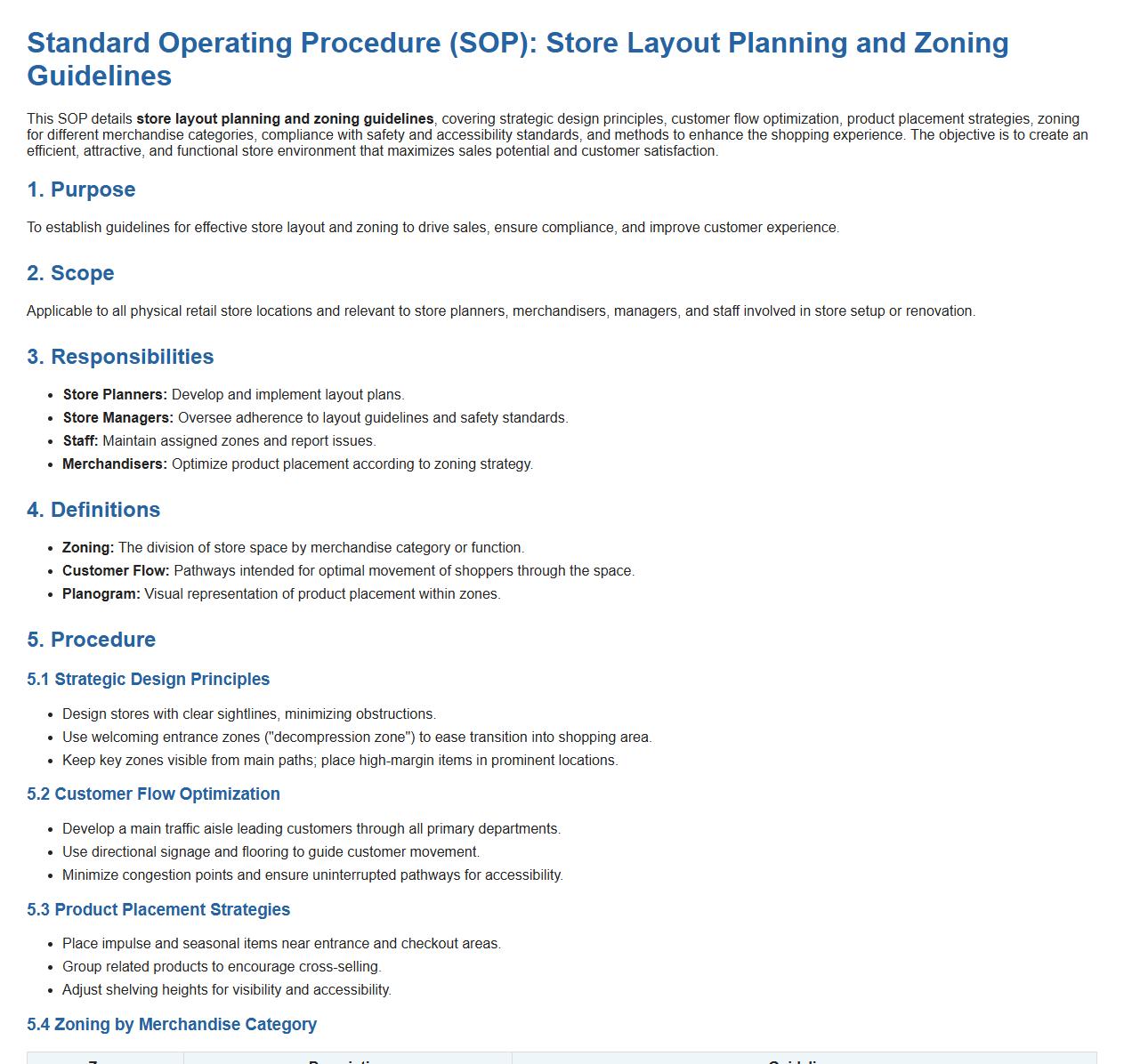
This SOP details store layout planning and zoning guidelines, covering strategic design principles, customer flow optimization, product placement strategies, zoning for different merchandise categories, compliance with safety and accessibility standards, and methods to enhance the shopping experience. The objective is to create an efficient, attractive, and functional store environment that maximizes sales potential and customer satisfaction.
Window display setup and rotation schedule.
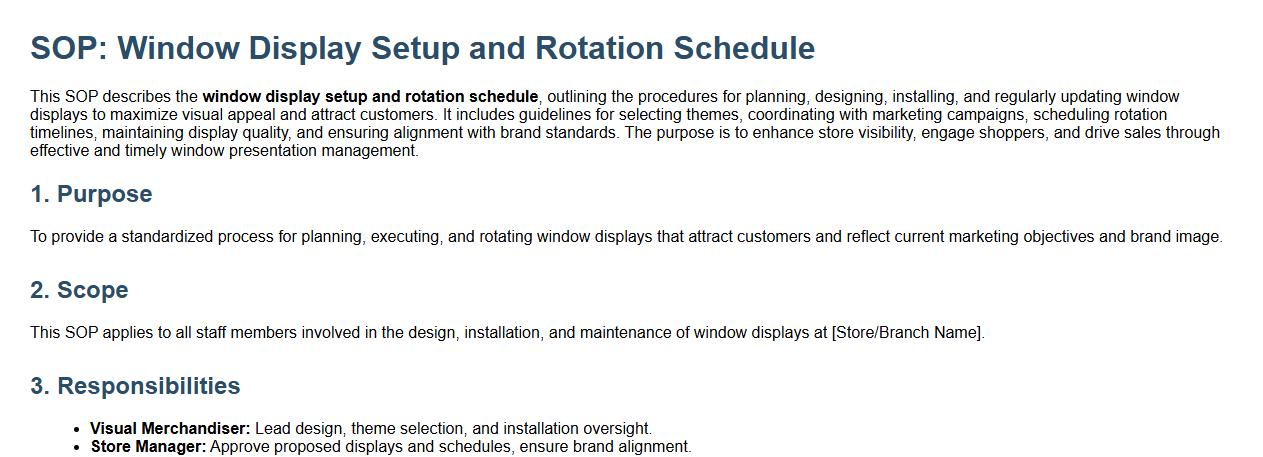
This SOP describes the window display setup and rotation schedule, outlining the procedures for planning, designing, installing, and regularly updating window displays to maximize visual appeal and attract customers. It includes guidelines for selecting themes, coordinating with marketing campaigns, scheduling rotation timelines, maintaining display quality, and ensuring alignment with brand standards. The purpose is to enhance store visibility, engage shoppers, and drive sales through effective and timely window presentation management.
Product placement and shelf arrangement standards.
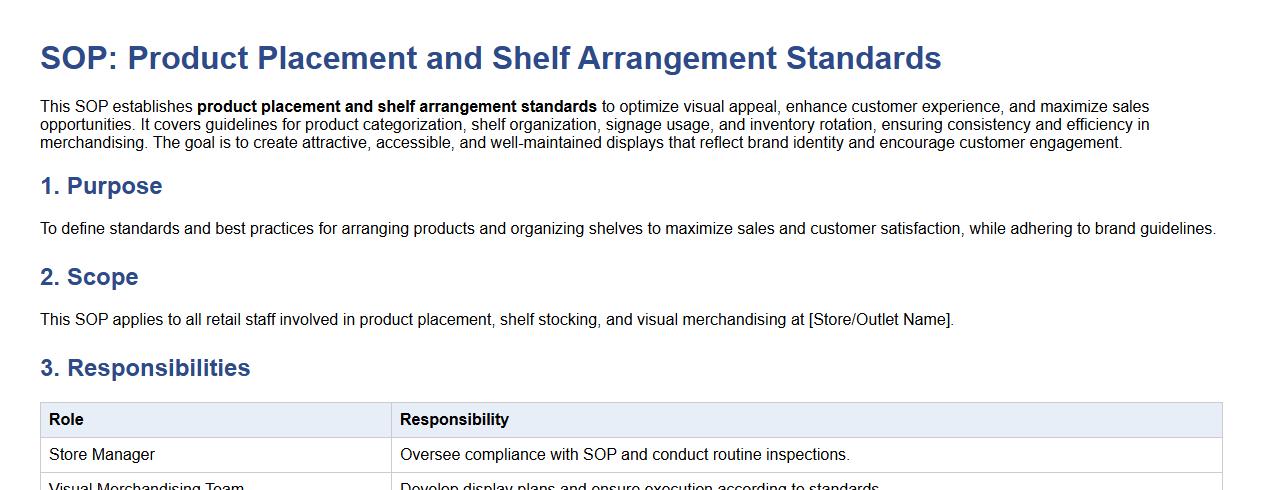
This SOP establishes product placement and shelf arrangement standards to optimize visual appeal, enhance customer experience, and maximize sales opportunities. It covers guidelines for product categorization, shelf organization, signage usage, and inventory rotation, ensuring consistency and efficiency in merchandising. The goal is to create attractive, accessible, and well-maintained displays that reflect brand identity and encourage customer engagement.
In-store signage and point-of-sale material protocols.
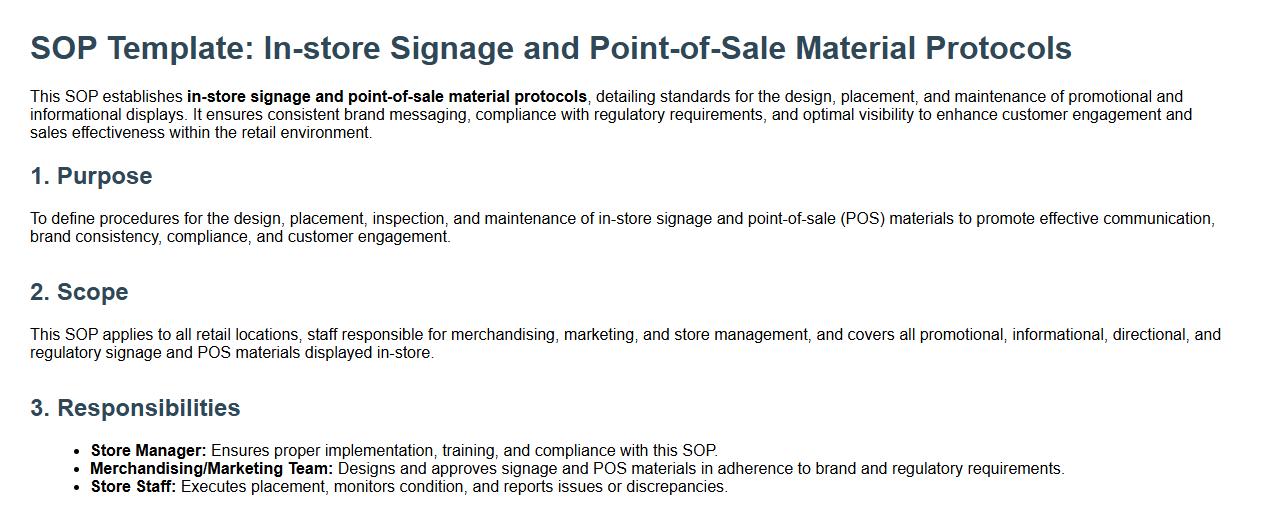
This SOP establishes in-store signage and point-of-sale material protocols, detailing standards for the design, placement, and maintenance of promotional and informational displays. It ensures consistent brand messaging, compliance with regulatory requirements, and optimal visibility to enhance customer engagement and sales effectiveness within the retail environment.
Fixture and mannequin dressing procedures.
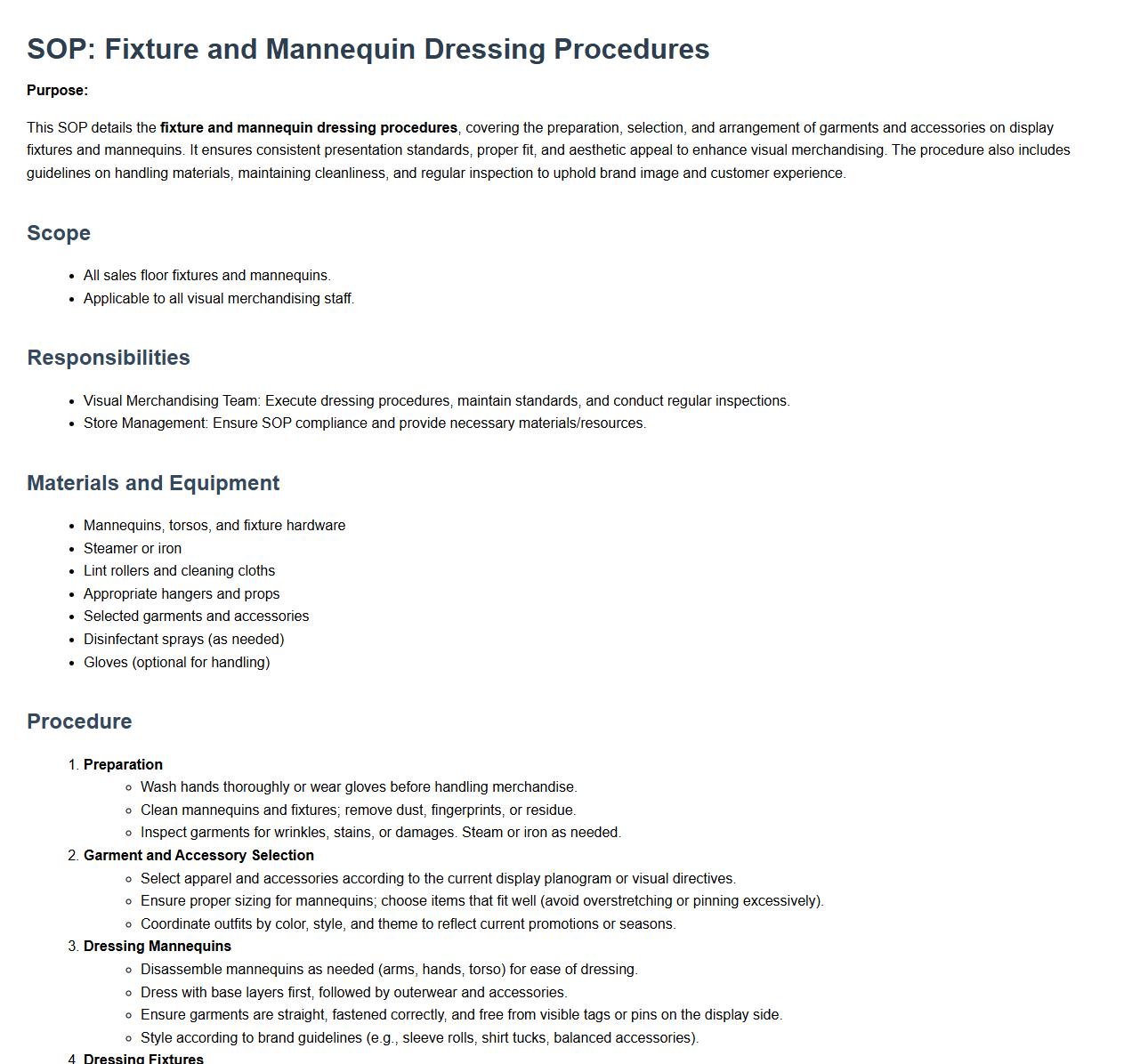
This SOP details the fixture and mannequin dressing procedures, covering the preparation, selection, and arrangement of garments and accessories on display fixtures and mannequins. It ensures consistent presentation standards, proper fit, and aesthetic appeal to enhance visual merchandising. The procedure also includes guidelines on handling materials, maintaining cleanliness, and regular inspection to uphold brand image and customer experience.
Lighting adjustment and maintenance instructions.
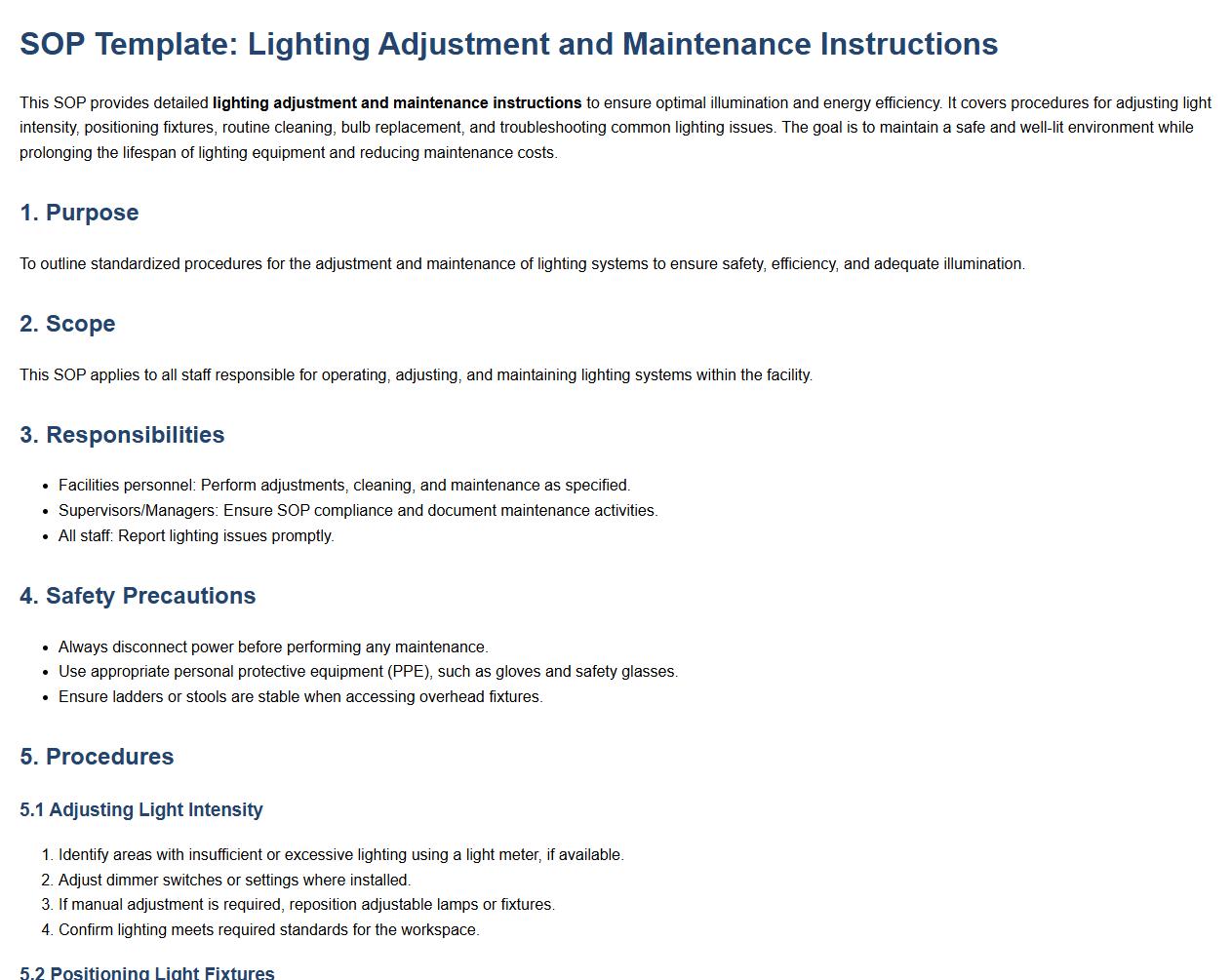
This SOP provides detailed lighting adjustment and maintenance instructions to ensure optimal illumination and energy efficiency. It covers procedures for adjusting light intensity, positioning fixtures, routine cleaning, bulb replacement, and troubleshooting common lighting issues. The goal is to maintain a safe and well-lit environment while prolonging the lifespan of lighting equipment and reducing maintenance costs.
Daily visual merchandising inspection checklist.
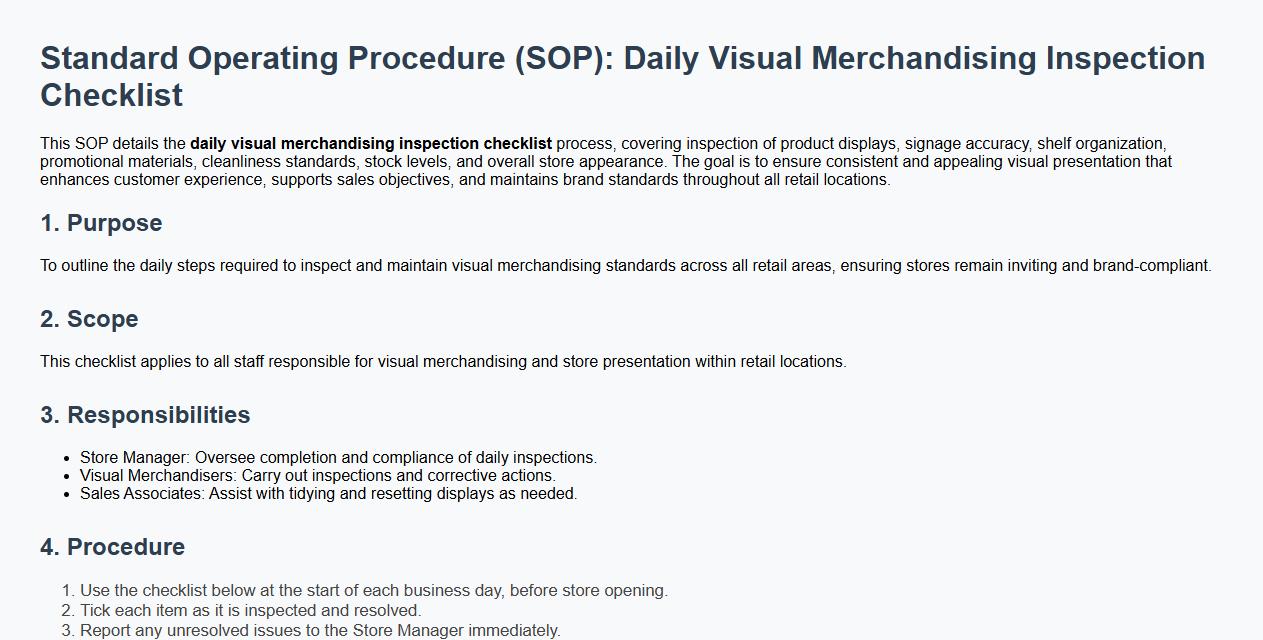
This SOP details the daily visual merchandising inspection checklist process, covering inspection of product displays, signage accuracy, shelf organization, promotional materials, cleanliness standards, stock levels, and overall store appearance. The goal is to ensure consistent and appealing visual presentation that enhances customer experience, supports sales objectives, and maintains brand standards throughout all retail locations.
Markdown and promotional display setup process.
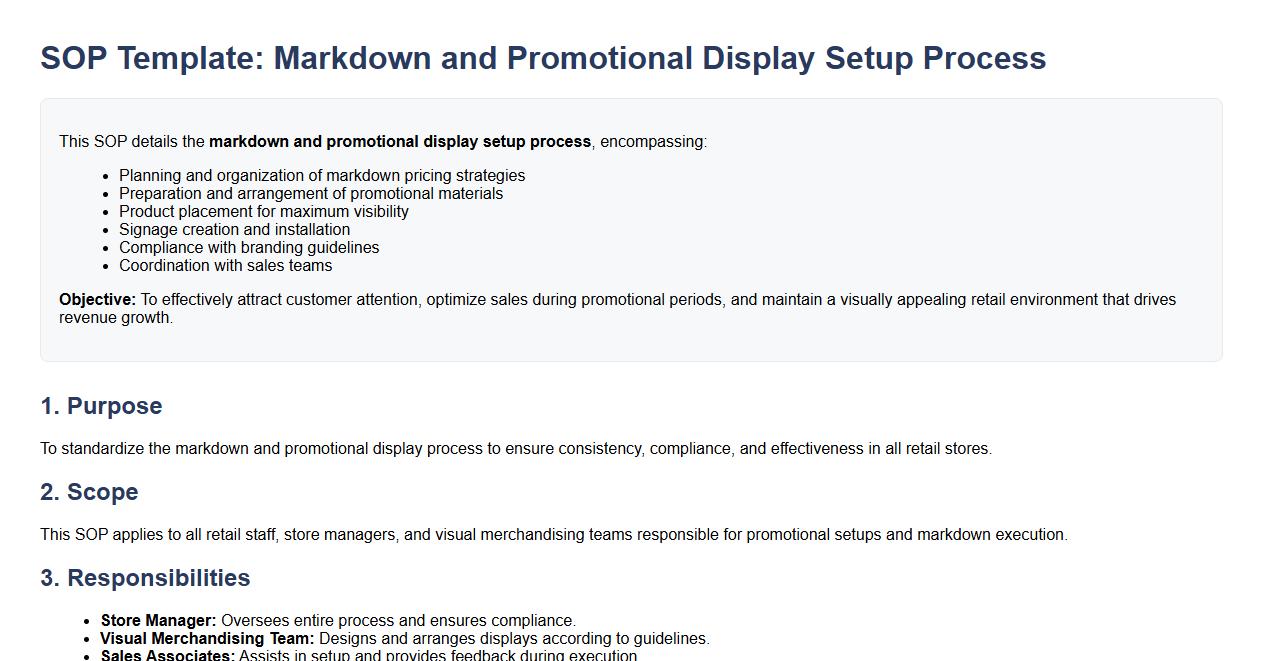
This SOP details the markdown and promotional display setup process, encompassing the planning and organization of markdown pricing strategies, the preparation and arrangement of promotional materials, product placement for maximum visibility, signage creation and installation, compliance with branding guidelines, and coordination with sales teams. The objective is to effectively attract customer attention, optimize sales during promotional periods, and maintain a visually appealing retail environment that drives revenue growth.
Merchandise replenishment and stock rotation.
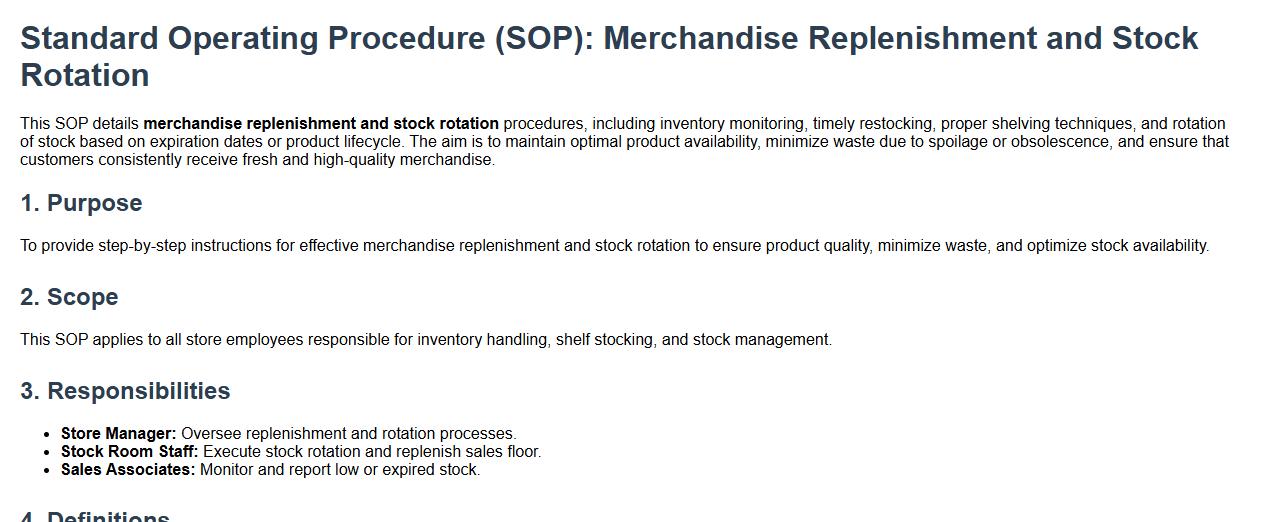
This SOP details merchandise replenishment and stock rotation procedures, including inventory monitoring, timely restocking, proper shelving techniques, and rotation of stock based on expiration dates or product lifecycle. The aim is to maintain optimal product availability, minimize waste due to spoilage or obsolescence, and ensure that customers consistently receive fresh and high-quality merchandise.
Store closing and next-day preparation checklist.
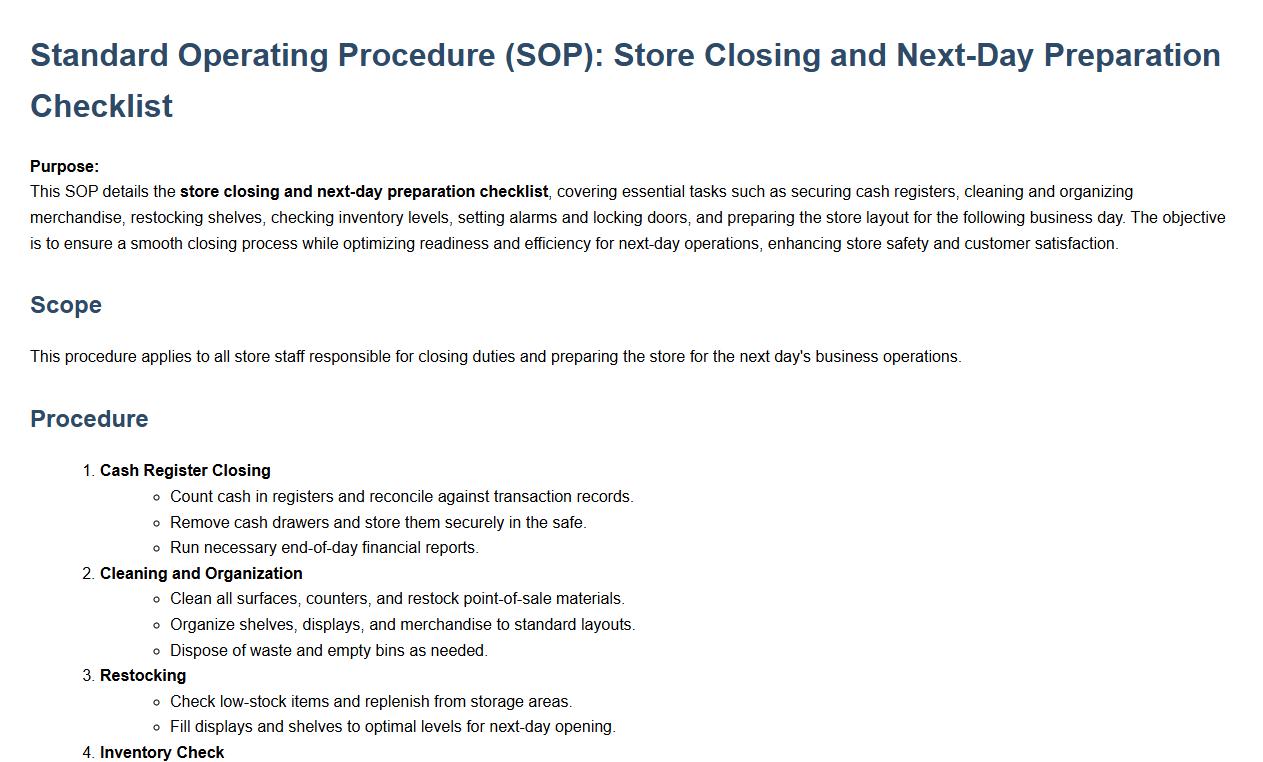
This SOP details the store closing and next-day preparation checklist, covering essential tasks such as securing cash registers, cleaning and organizing merchandise, restocking shelves, checking inventory levels, setting alarms and locking doors, and preparing the store layout for the following business day. The objective is to ensure a smooth closing process while optimizing readiness and efficiency for next-day operations, enhancing store safety and customer satisfaction.
What are the primary objectives outlined in the SOP for Visual Merchandising in Retail?
The primary objectives of the SOP for Visual Merchandising focus on enhancing product visibility and driving customer engagement. This SOP aims to create a consistent brand image across all retail locations. Additionally, it seeks to boost sales through strategic and aesthetically pleasing product displays.
Which team roles and responsibilities are defined within the SOP for executing visual merchandising displays?
The SOP clearly defines roles such as Visual Merchandiser, Store Manager, and Sales Associates, each with specific duties. Visual Merchandisers are responsible for designing and setting up displays, while Store Managers oversee compliance. Sales Associates assist in maintaining and updating merchandise as per the SOP.
What standardized procedures for product placement and display maintenance are mandated by the SOP?
The SOP mandates standardized procedures like product arrangement based on sales data and seasonal themes. It requires regular maintenance checks to ensure displays remain attractive and organized. Proper lighting and signage placement are also key elements detailed in the guidelines.
How does the SOP specify the measurement and evaluation of visual merchandising effectiveness?
The SOP specifies the use of key performance indicators (KPIs) such as sales uplift and customer feedback to measure effectiveness. It includes regular audits and visual inspections by a designated team. Performance data is analyzed to optimize future merchandising strategies.
What safety and compliance guidelines are incorporated into the SOP for in-store visual merchandising activities?
The SOP incorporates safety protocols to ensure secure installation and maintenance of displays, preventing hazards. Compliance with fire codes and accessibility standards is strictly enforced. Employees receive training to adhere to all health and safety regulations during visual merchandising tasks.