

A SOP Template for Retail Loss Prevention outlines standardized procedures to identify, prevent, and address theft, fraud, and inventory shrinkage in retail environments. It ensures consistent implementation of loss prevention strategies, staff training, and reporting protocols to safeguard assets effectively. Utilizing this template helps streamline operations and maintain a secure retail setting.
Shoplifting prevention and detection procedures.
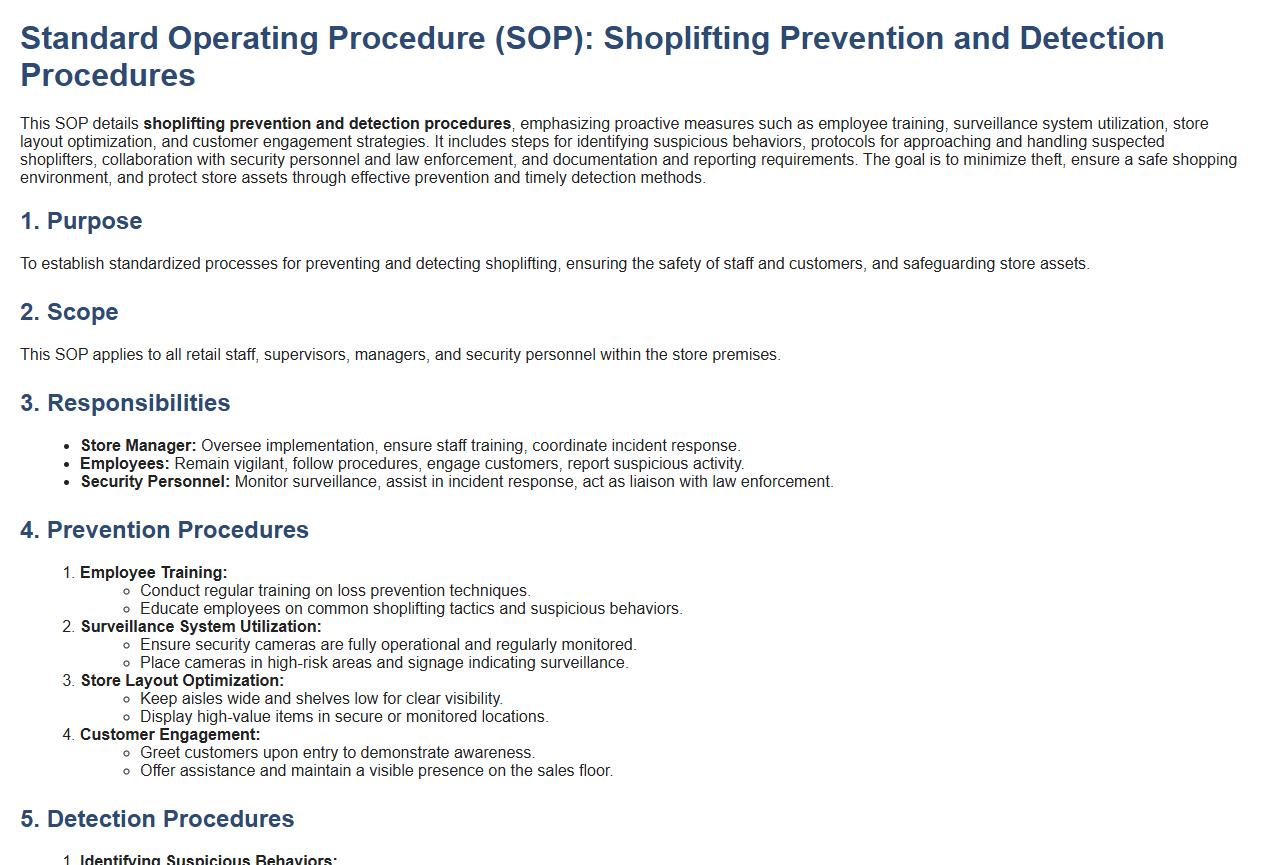
This SOP details shoplifting prevention and detection procedures, emphasizing proactive measures such as employee training, surveillance system utilization, store layout optimization, and customer engagement strategies. It includes steps for identifying suspicious behaviors, protocols for approaching and handling suspected shoplifters, collaboration with security personnel and law enforcement, and documentation and reporting requirements. The goal is to minimize theft, ensure a safe shopping environment, and protect store assets through effective prevention and timely detection methods.
Employee bag and locker checks protocol.
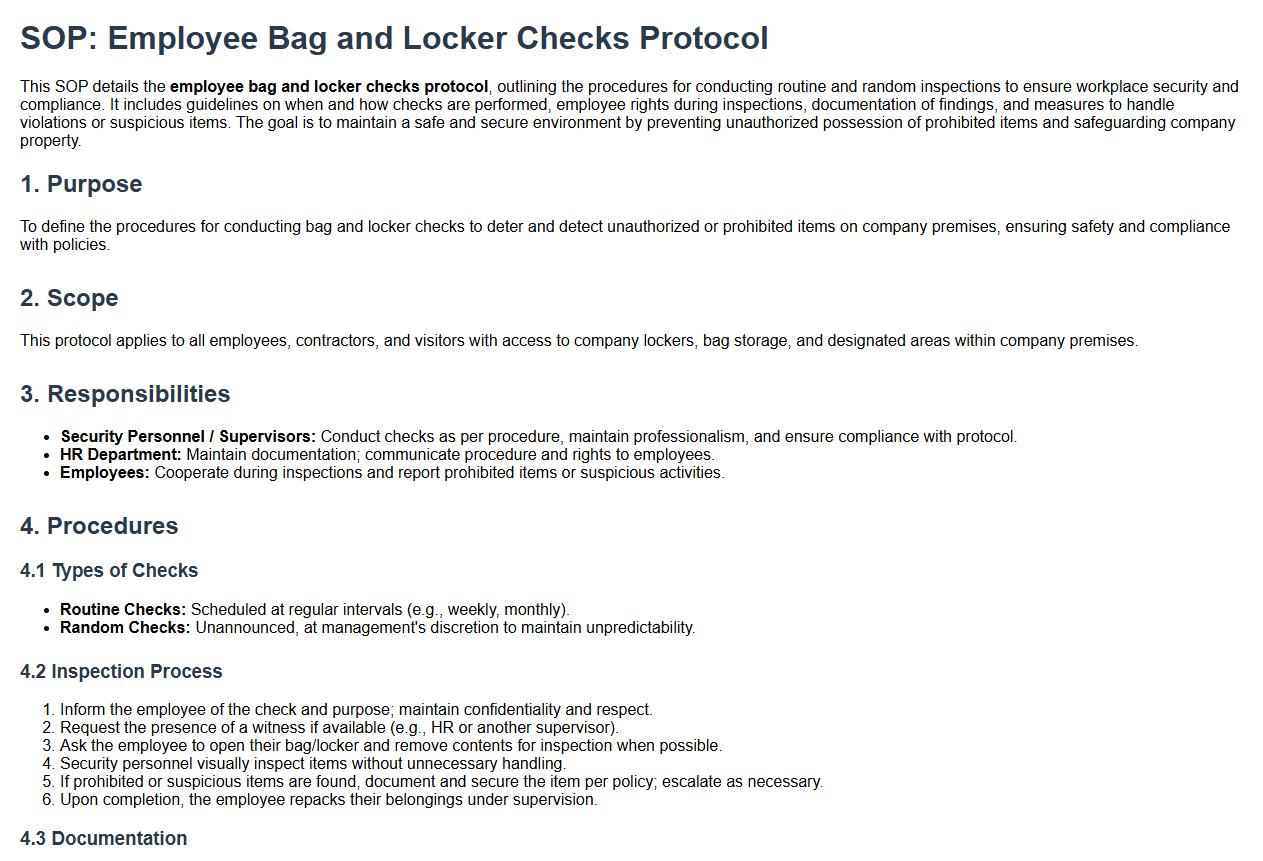
This SOP details the employee bag and locker checks protocol, outlining the procedures for conducting routine and random inspections to ensure workplace security and compliance. It includes guidelines on when and how checks are performed, employee rights during inspections, documentation of findings, and measures to handle violations or suspicious items. The goal is to maintain a safe and secure environment by preventing unauthorized possession of prohibited items and safeguarding company property.
Cash handling and register discrepancy processes.
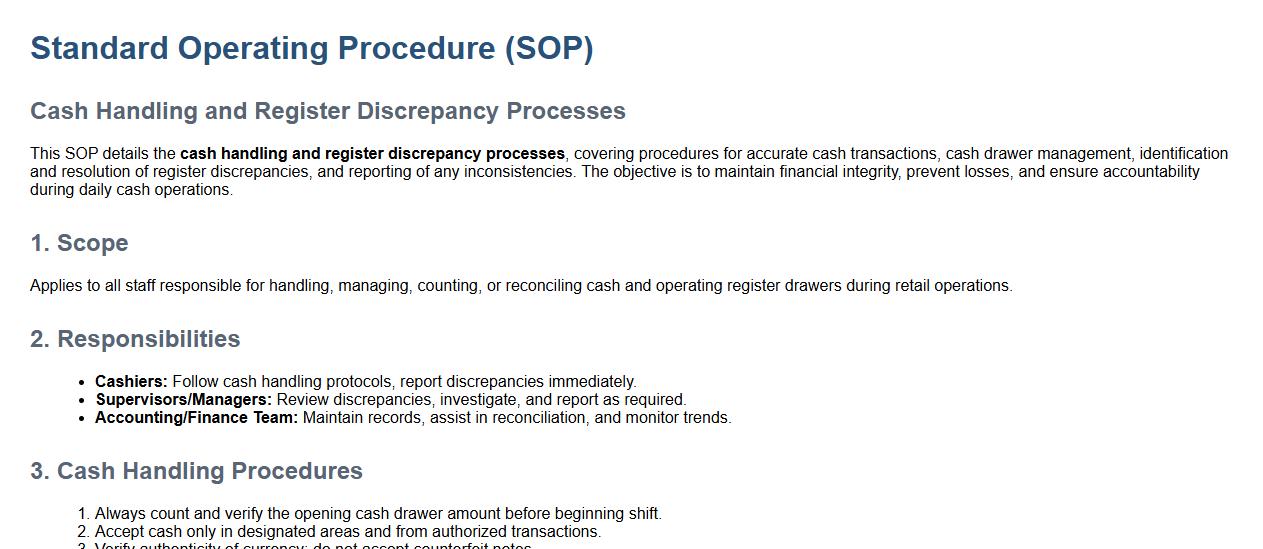
This SOP details the cash handling and register discrepancy processes, covering procedures for accurate cash transactions, cash drawer management, identification and resolution of register discrepancies, and reporting of any inconsistencies. The objective is to maintain financial integrity, prevent losses, and ensure accountability during daily cash operations.
Customer and employee incident reporting guidelines.
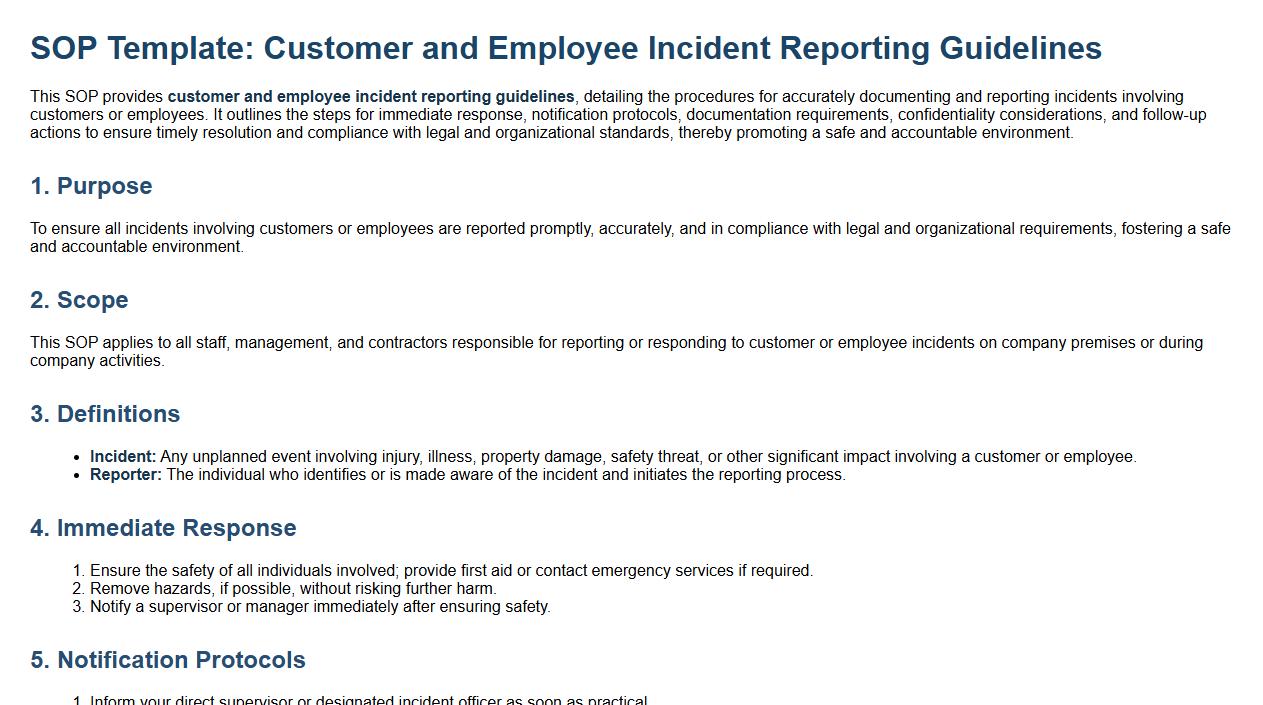
This SOP provides customer and employee incident reporting guidelines, detailing the procedures for accurately documenting and reporting incidents involving customers or employees. It outlines the steps for immediate response, notification protocols, documentation requirements, confidentiality considerations, and follow-up actions to ensure timely resolution and compliance with legal and organizational standards, thereby promoting a safe and accountable environment.
Security equipment usage (CCTV, alarms) instructions.
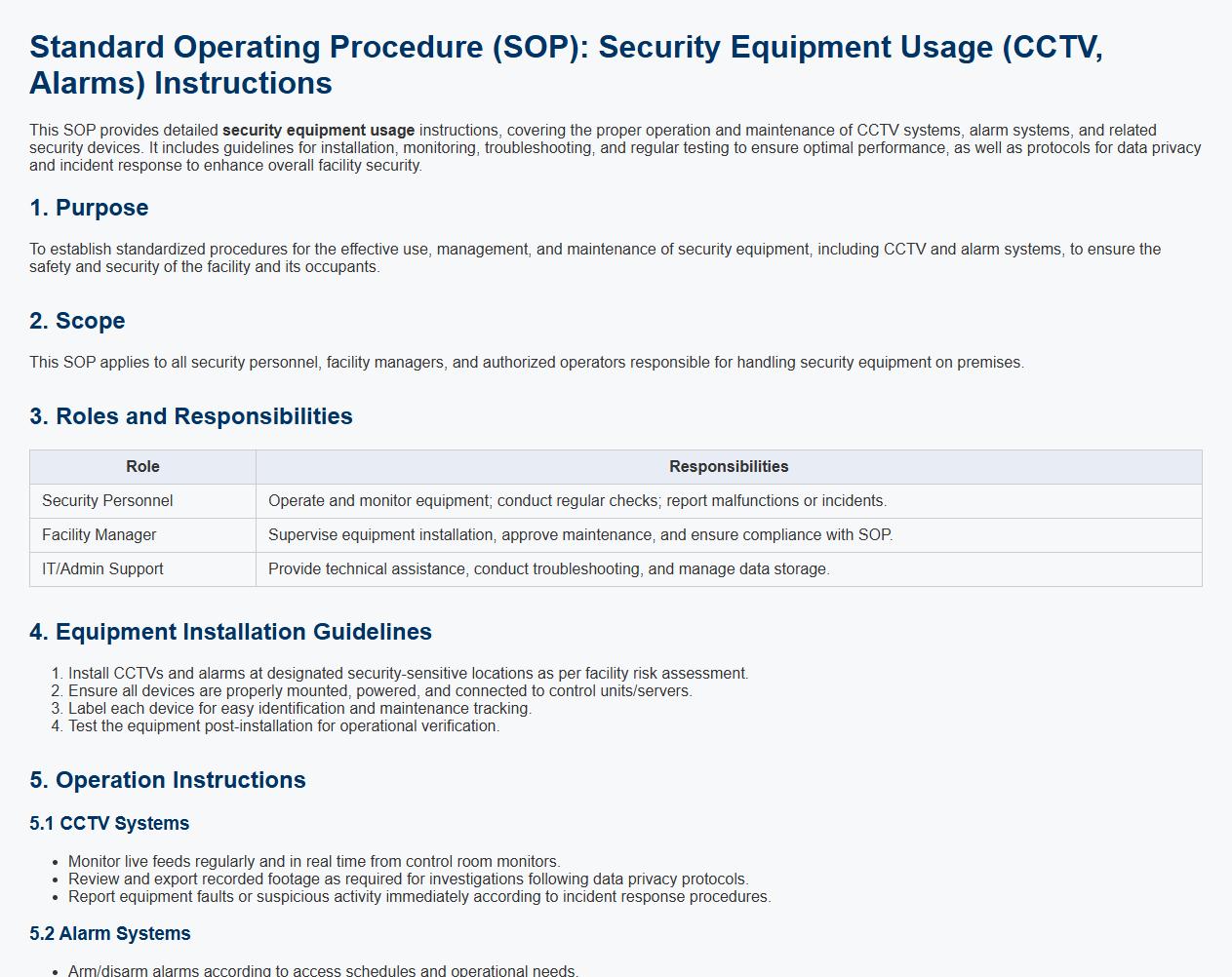
This SOP provides detailed security equipment usage instructions, covering the proper operation and maintenance of CCTV systems, alarm systems, and related security devices. It includes guidelines for installation, monitoring, troubleshooting, and regular testing to ensure optimal performance, as well as protocols for data privacy and incident response to enhance overall facility security.
Inventory shrinkage monitoring and reconciliation steps.
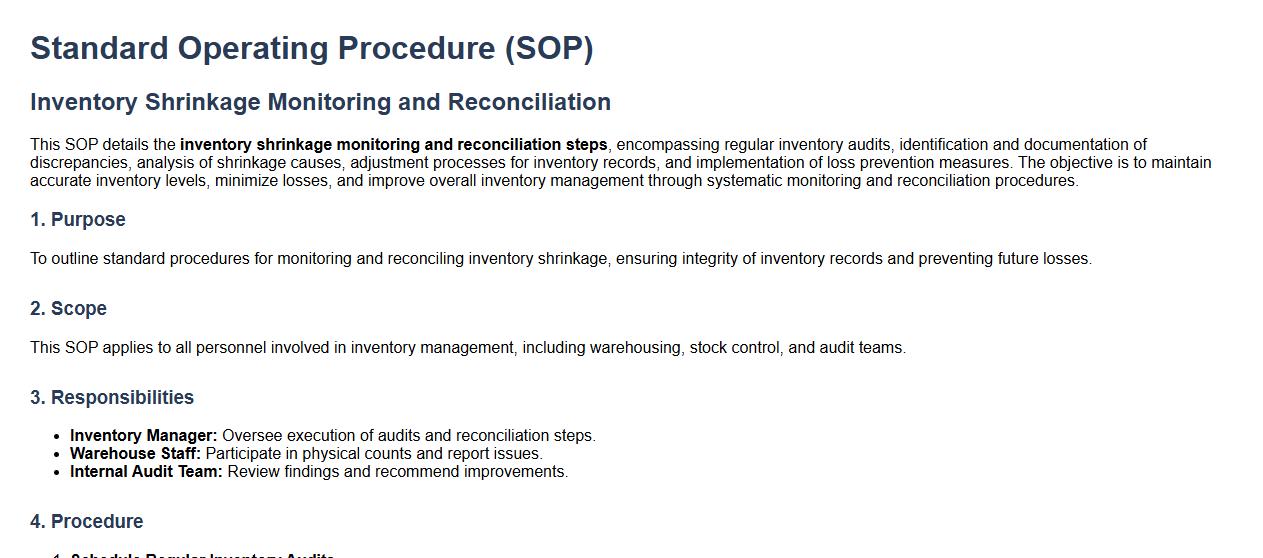
This SOP details the inventory shrinkage monitoring and reconciliation steps, encompassing regular inventory audits, identification and documentation of discrepancies, analysis of shrinkage causes, adjustment processes for inventory records, and implementation of loss prevention measures. The objective is to maintain accurate inventory levels, minimize losses, and improve overall inventory management through systematic monitoring and reconciliation procedures.
Returns and refunds authorization and verification.
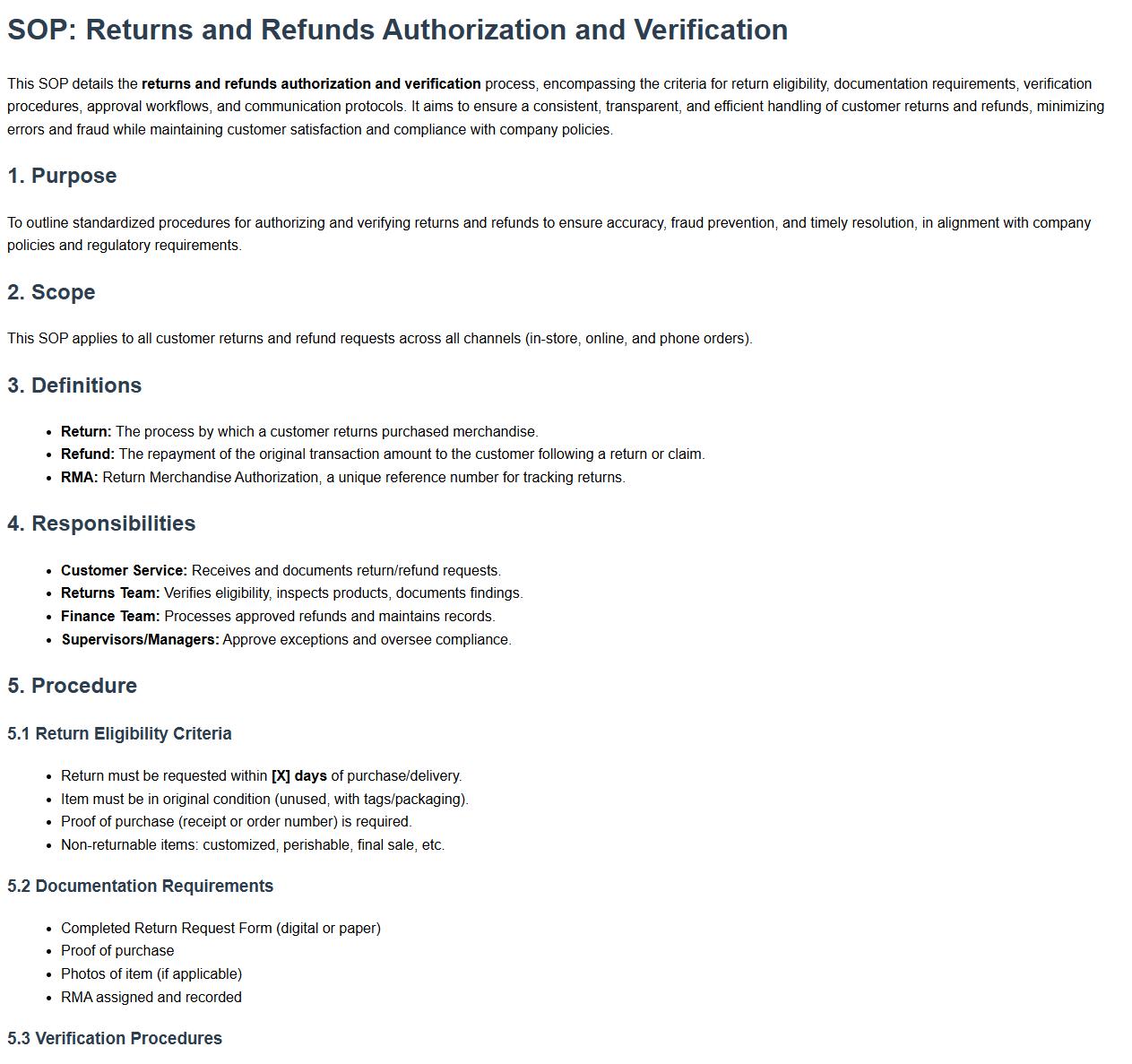
This SOP details the returns and refunds authorization and verification process, encompassing the criteria for return eligibility, documentation requirements, verification procedures, approval workflows, and communication protocols. It aims to ensure a consistent, transparent, and efficient handling of customer returns and refunds, minimizing errors and fraud while maintaining customer satisfaction and compliance with company policies.
Access control for restricted and sensitive areas.
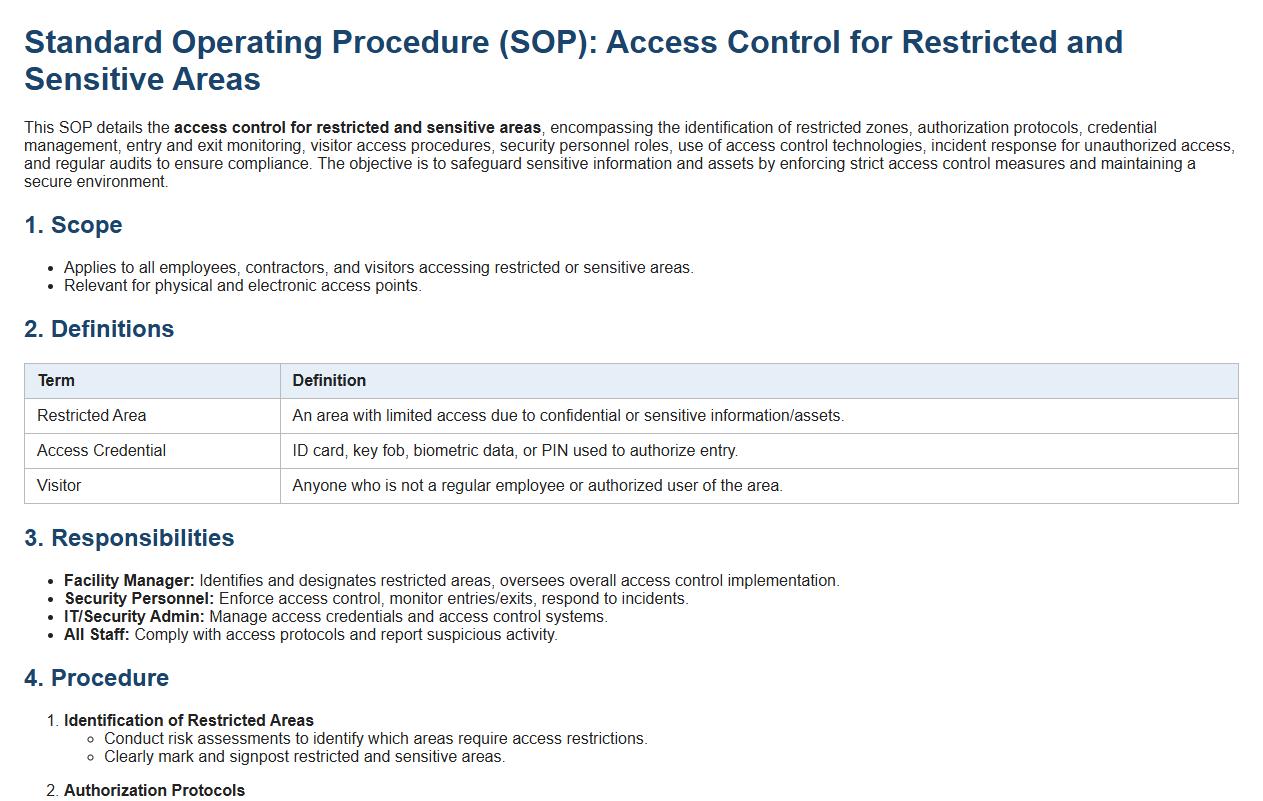
This SOP details the access control for restricted and sensitive areas, encompassing the identification of restricted zones, authorization protocols, credential management, entry and exit monitoring, visitor access procedures, security personnel roles, use of access control technologies, incident response for unauthorized access, and regular audits to ensure compliance. The objective is to safeguard sensitive information and assets by enforcing strict access control measures and maintaining a secure environment.
Emergency response to theft or suspicious activity.
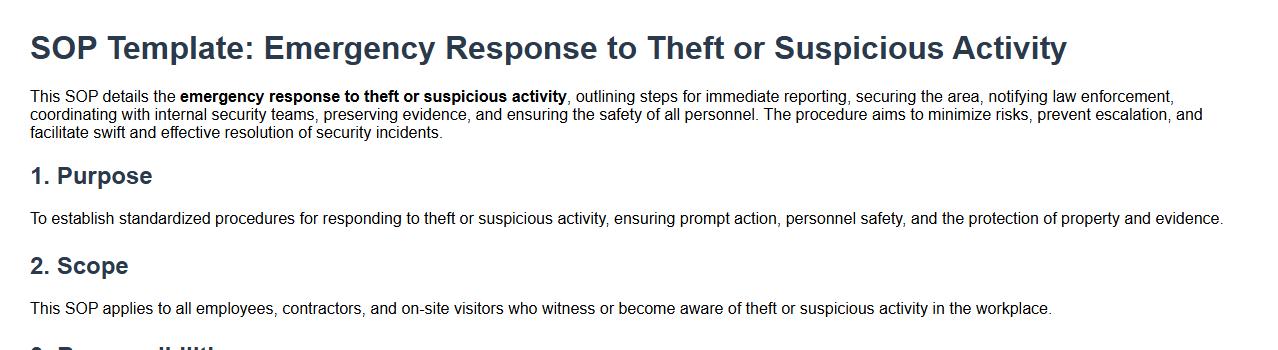
This SOP details the emergency response to theft or suspicious activity, outlining steps for immediate reporting, securing the area, notifying law enforcement, coordinating with internal security teams, preserving evidence, and ensuring the safety of all personnel. The procedure aims to minimize risks, prevent escalation, and facilitate swift and effective resolution of security incidents.
Regular loss prevention training and awareness sessions.
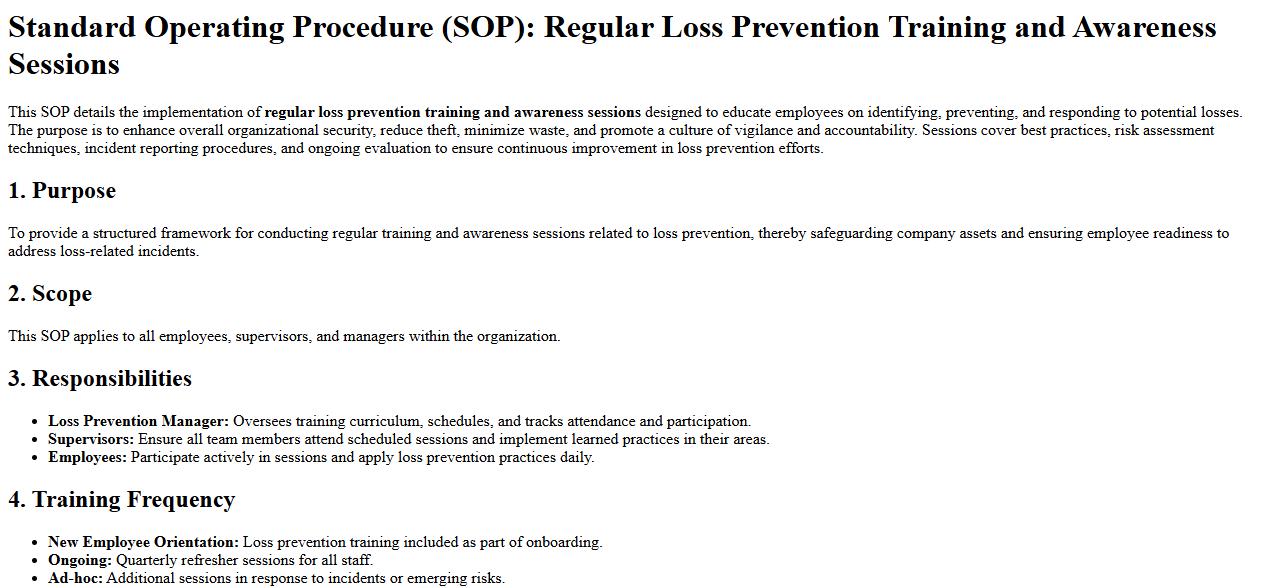
This SOP details the implementation of regular loss prevention training and awareness sessions designed to educate employees on identifying, preventing, and responding to potential losses. The purpose is to enhance overall organizational security, reduce theft, minimize waste, and promote a culture of vigilance and accountability. Sessions cover best practices, risk assessment techniques, incident reporting procedures, and ongoing evaluation to ensure continuous improvement in loss prevention efforts.
What are the primary objectives outlined in the SOP for Retail Loss Prevention?
The primary objectives of the SOP for Retail Loss Prevention focus on minimizing financial losses due to theft, fraud, and operational errors. It aims to establish clear guidelines for detecting, preventing, and responding to incidents effectively. The SOP also emphasizes maintaining a safe and secure environment for both customers and employees.
Which key responsibilities are assigned to store personnel in the SOP?
Store personnel are assigned critical responsibilities such as monitoring suspicious activities and adhering to loss prevention protocols. They must actively participate in staff training and report any irregularities promptly. Ensuring compliance with internal security measures is also a fundamental duty highlighted in the SOP.
What types of incidents require immediate reporting according to the SOP?
The SOP mandates immediate reporting of incidents like shoplifting, employee theft, vandalism, and any suspicious behavior that could indicate fraud. It also includes reporting emergencies such as safety hazards or violent encounters. Prompt communication ensures swift action to mitigate losses and maintain store security.
What procedural steps are mandated for handling suspected theft in the SOP?
The SOP outlines specific procedural steps such as discreetly monitoring the suspect, notifying the appropriate loss prevention team, and preserving evidence. It forbids direct confrontation unless safety is at risk and mandates following legal and company guidelines. Documentation of the incident must be completed thoroughly after the event.
What documentation and record-keeping practices are emphasized in the SOP?
The SOP emphasizes meticulous documentation of all loss prevention activities, including incident reports, surveillance logs, and inventory audits. Maintaining accurate records aids in investigating incidents and supports legal proceedings if necessary. Regular audits and updates to documentation ensure ongoing compliance and effectiveness of loss prevention efforts.