
The SOP Template for Confidential Document Handling provides a structured framework to ensure sensitive information is managed securely. It outlines clear procedures for access control, storage, and disposal to prevent unauthorized disclosure. Following this template helps maintain compliance with data protection regulations and safeguards organizational confidentiality.
Document classification and labeling procedures.
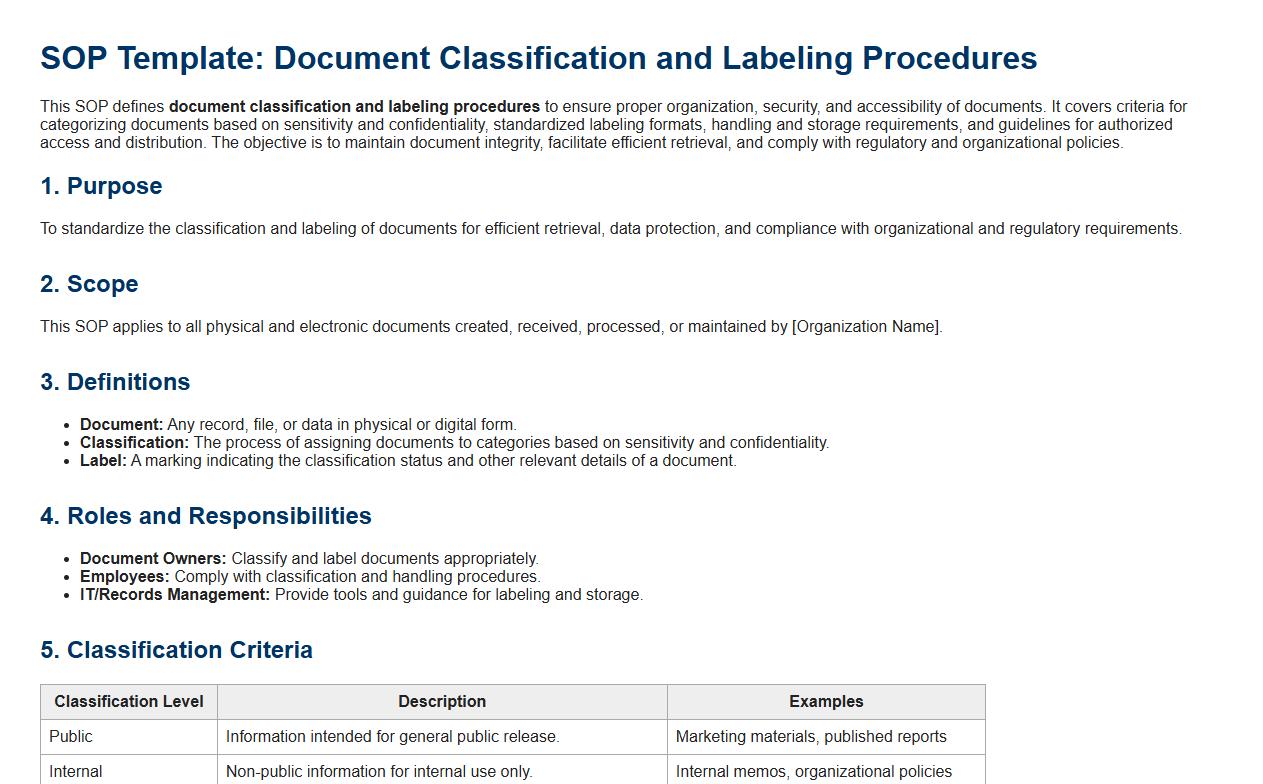
This SOP defines document classification and labeling procedures to ensure proper organization, security, and accessibility of documents. It covers criteria for categorizing documents based on sensitivity and confidentiality, standardized labeling formats, handling and storage requirements, and guidelines for authorized access and distribution. The objective is to maintain document integrity, facilitate efficient retrieval, and comply with regulatory and organizational policies.
Access control and authorization protocols.
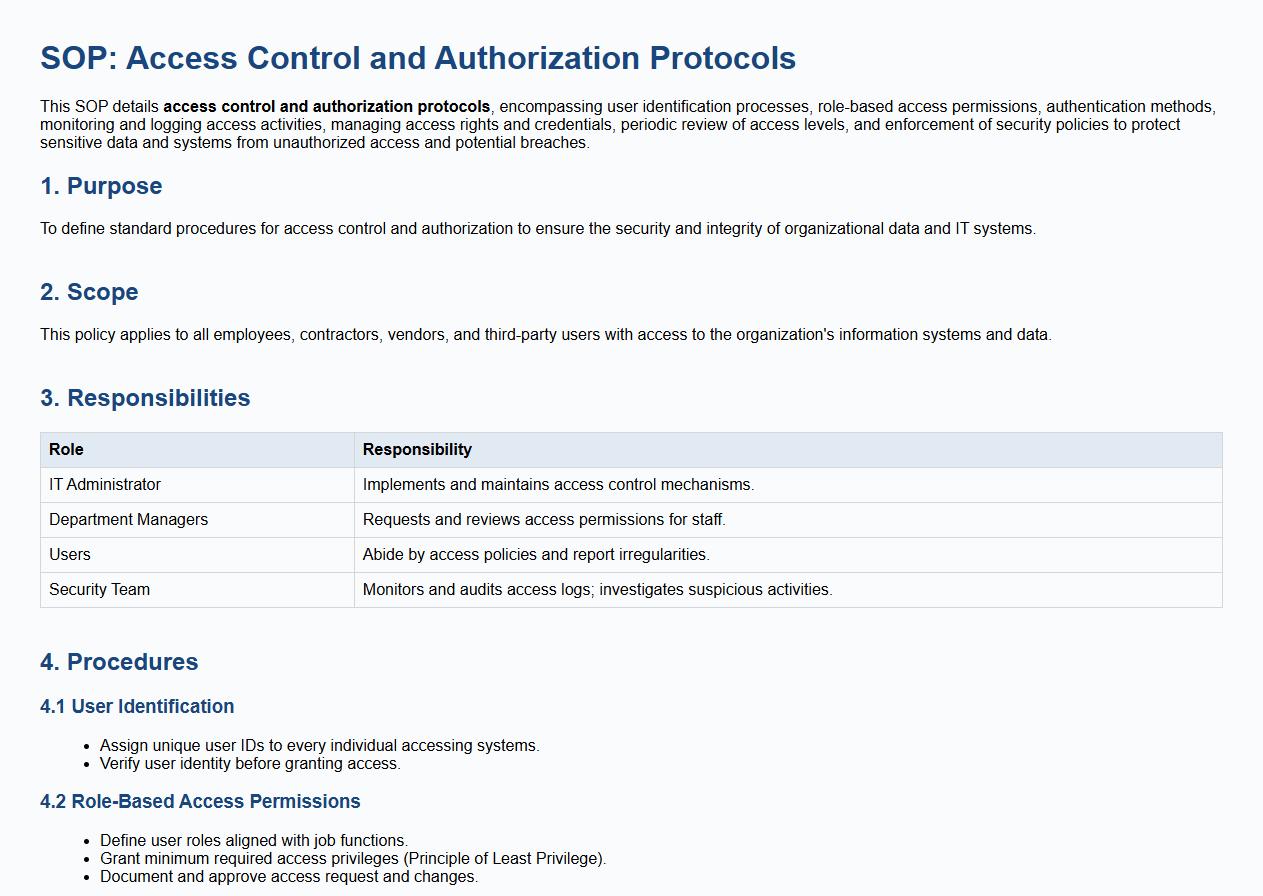
This SOP details access control and authorization protocols, encompassing user identification processes, role-based access permissions, authentication methods, monitoring and logging access activities, managing access rights and credentials, periodic review of access levels, and enforcement of security policies to protect sensitive data and systems from unauthorized access and potential breaches.
Secure storage and filing requirements.
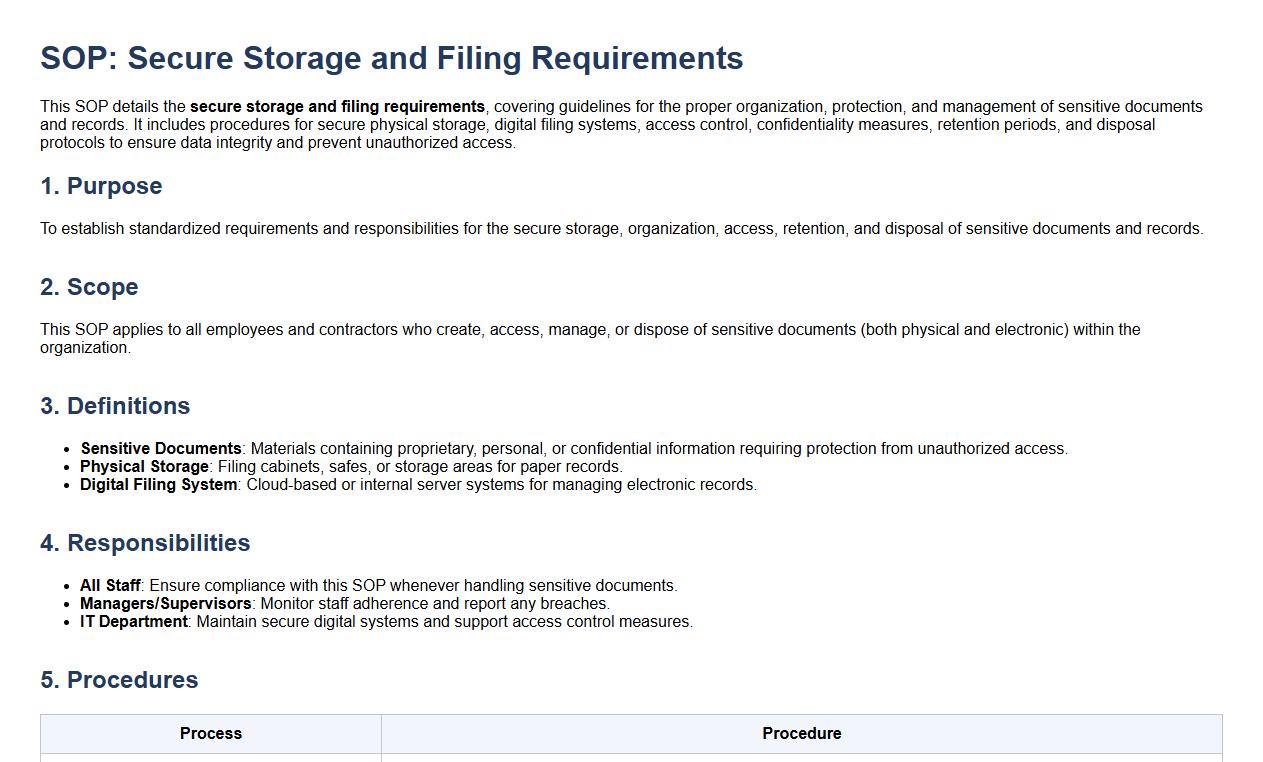
This SOP details the secure storage and filing requirements, covering guidelines for the proper organization, protection, and management of sensitive documents and records. It includes procedures for secure physical storage, digital filing systems, access control, confidentiality measures, retention periods, and disposal protocols to ensure data integrity and prevent unauthorized access.
Guidelines for document transmission and sharing.
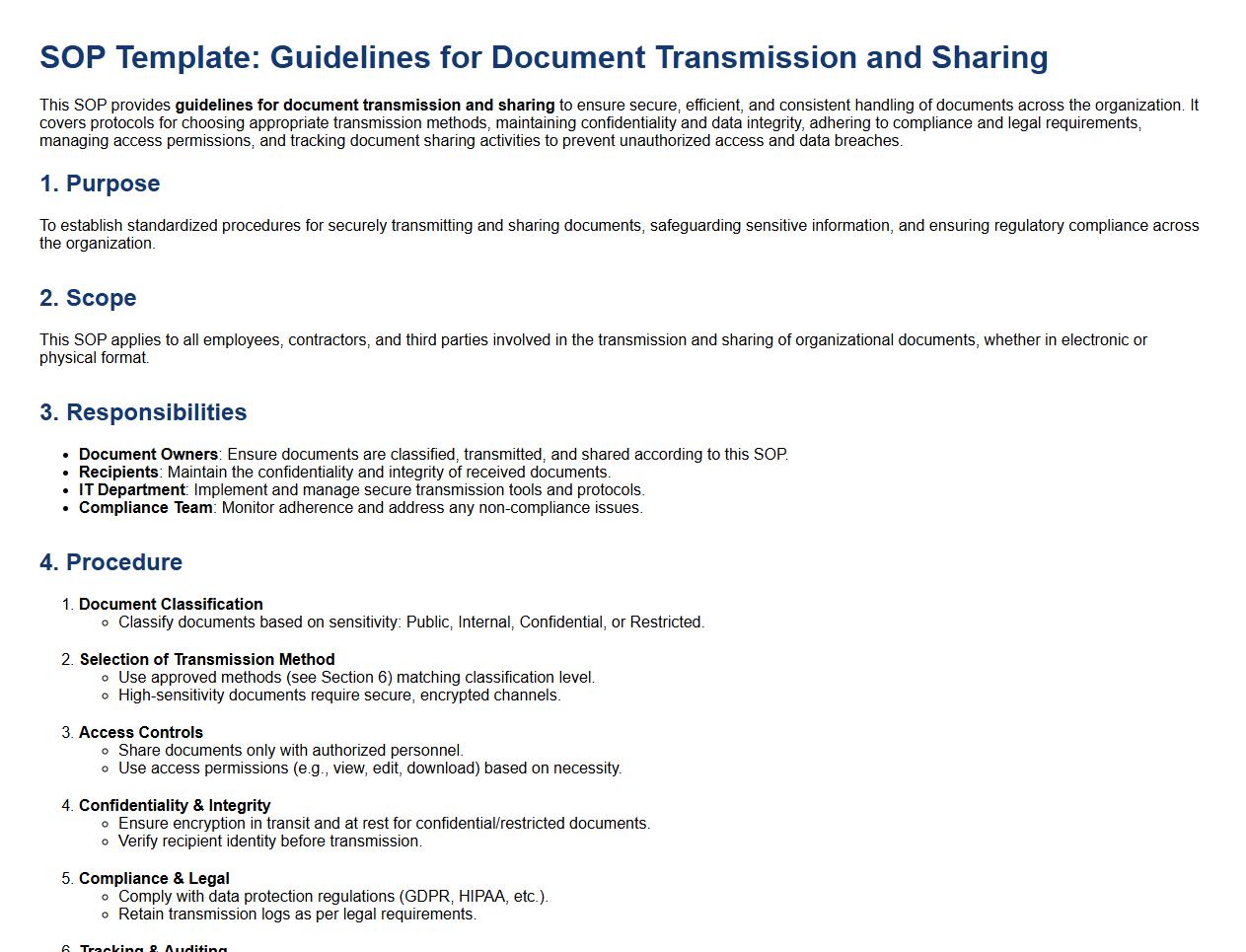
This SOP provides guidelines for document transmission and sharing to ensure secure, efficient, and consistent handling of documents across the organization. It covers protocols for choosing appropriate transmission methods, maintaining confidentiality and data integrity, adhering to compliance and legal requirements, managing access permissions, and tracking document sharing activities to prevent unauthorized access and data breaches.
Encryption and password protection measures.
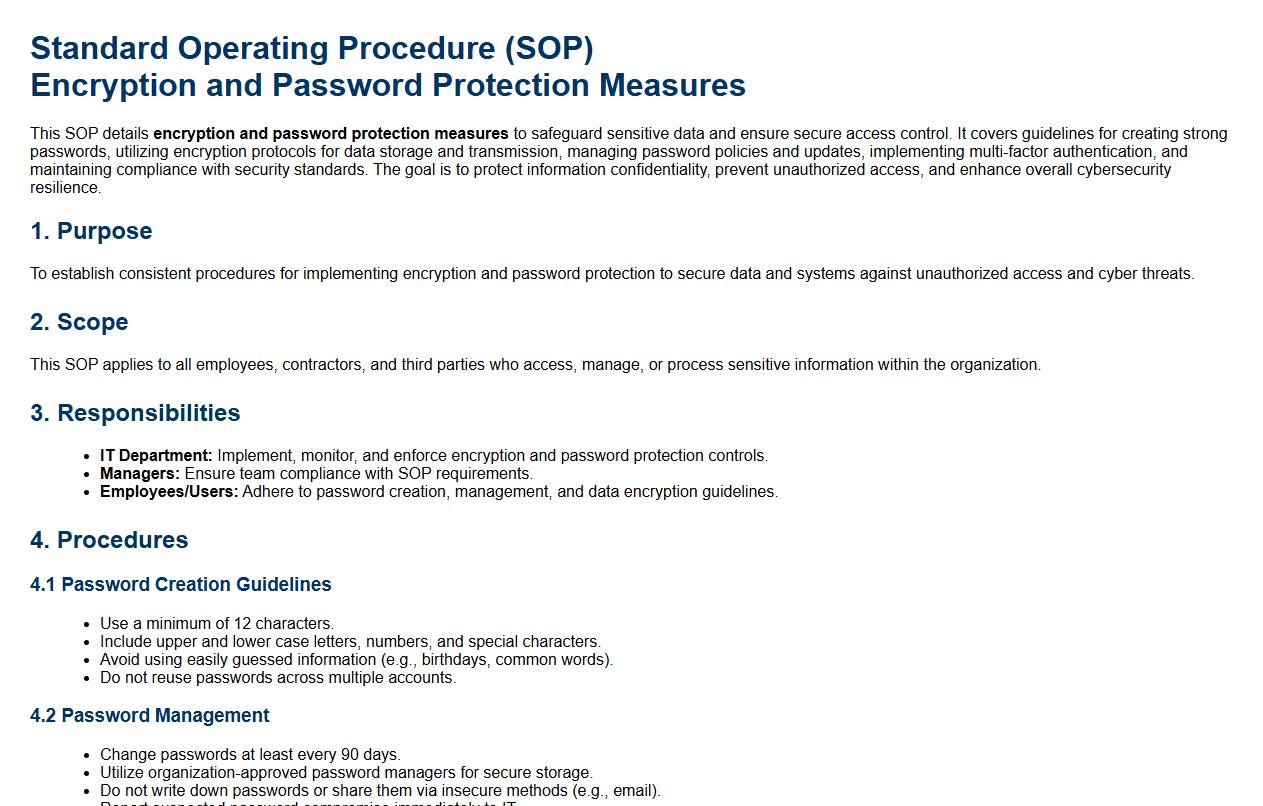
This SOP details encryption and password protection measures to safeguard sensitive data and ensure secure access control. It covers guidelines for creating strong passwords, utilizing encryption protocols for data storage and transmission, managing password policies and updates, implementing multi-factor authentication, and maintaining compliance with security standards. The goal is to protect information confidentiality, prevent unauthorized access, and enhance overall cybersecurity resilience.
Procedures for document retrieval and usage tracking.
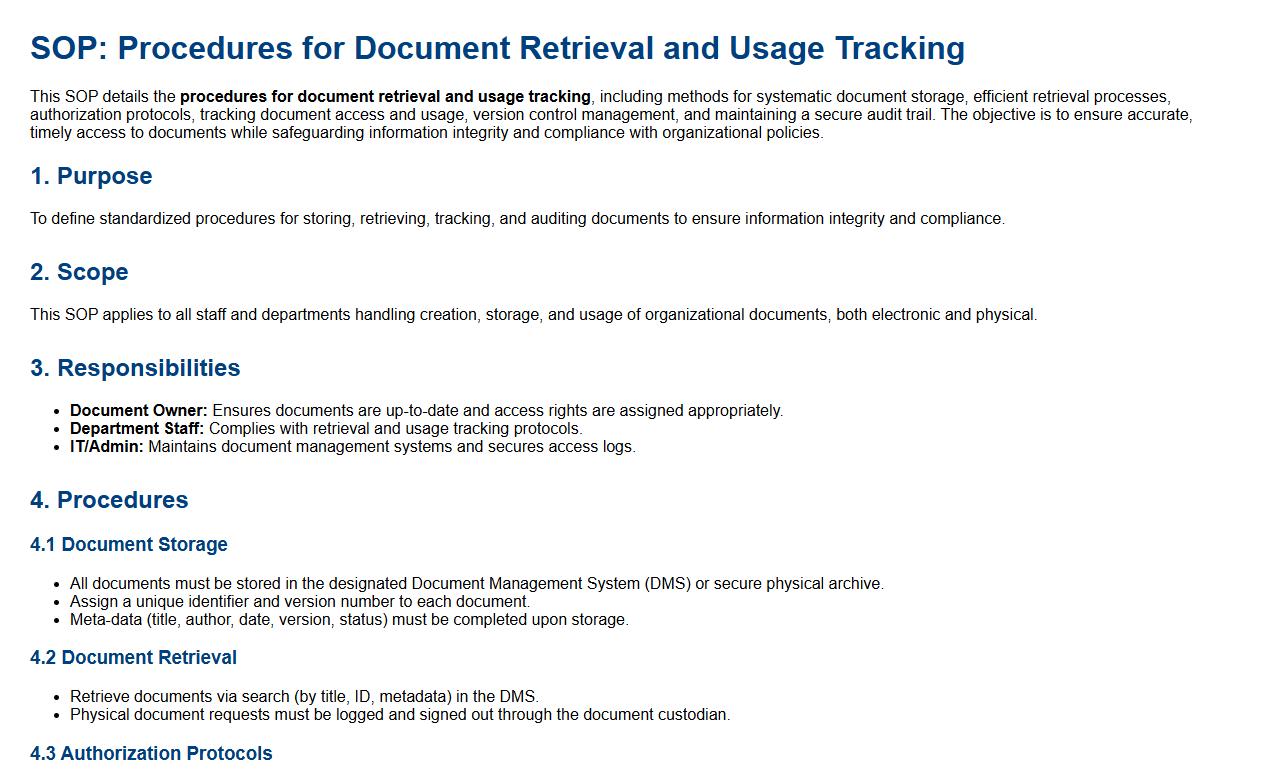
This SOP details the procedures for document retrieval and usage tracking, including methods for systematic document storage, efficient retrieval processes, authorization protocols, tracking document access and usage, version control management, and maintaining a secure audit trail. The objective is to ensure accurate, timely access to documents while safeguarding information integrity and compliance with organizational policies.
Document copying, scanning, and printing restrictions.
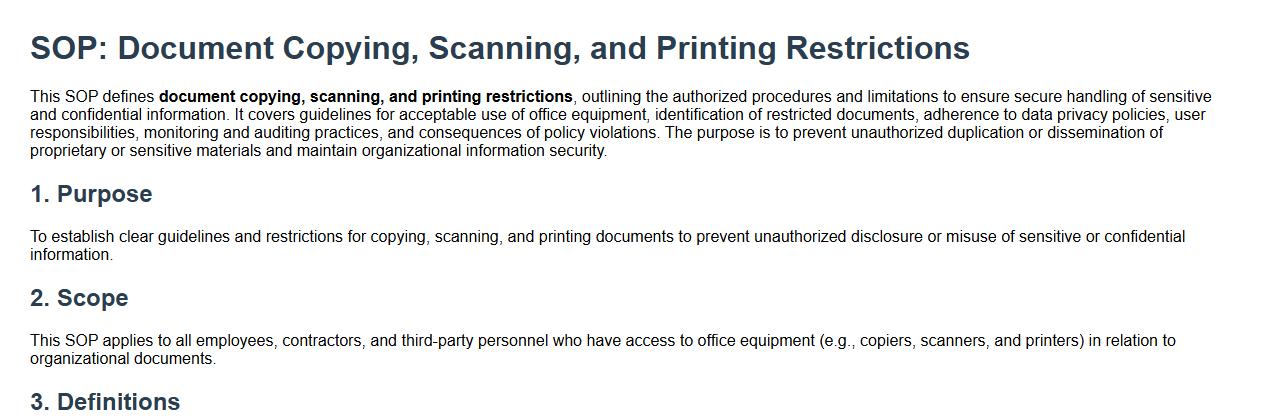
This SOP defines document copying, scanning, and printing restrictions, outlining the authorized procedures and limitations to ensure secure handling of sensitive and confidential information. It covers guidelines for acceptable use of office equipment, identification of restricted documents, adherence to data privacy policies, user responsibilities, monitoring and auditing practices, and consequences of policy violations. The purpose is to prevent unauthorized duplication or dissemination of proprietary or sensitive materials and maintain organizational information security.
Confidential document disposal and destruction process.
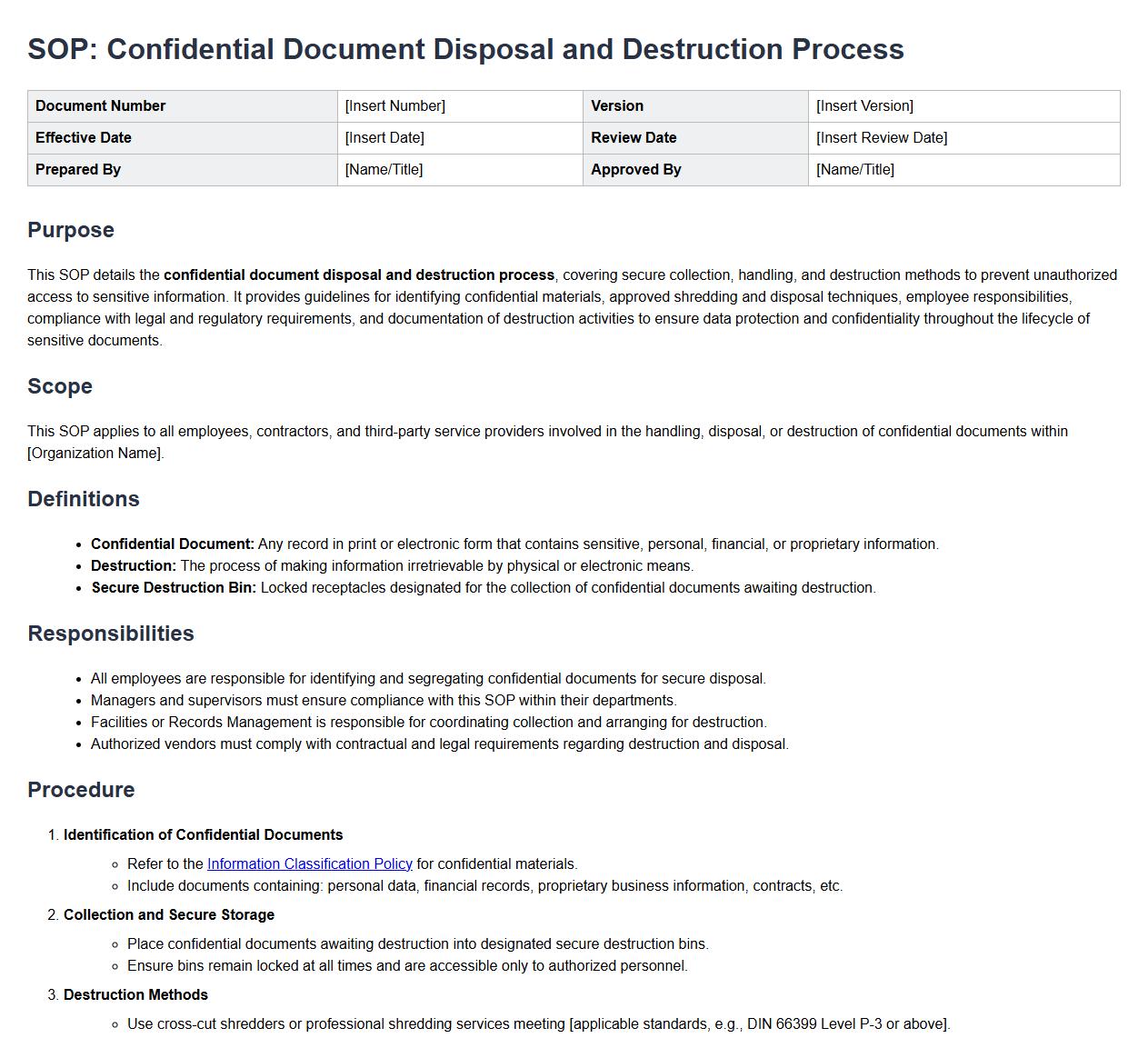
This SOP details the confidential document disposal and destruction process, covering secure collection, handling, and destruction methods to prevent unauthorized access to sensitive information. It includes guidelines for identifying confidential materials, approved shredding and disposal techniques, employee responsibilities, compliance with legal and regulatory requirements, and documentation of destruction activities to ensure data protection and confidentiality throughout the lifecycle of sensitive documents.
Incident reporting for breaches or unauthorized access.
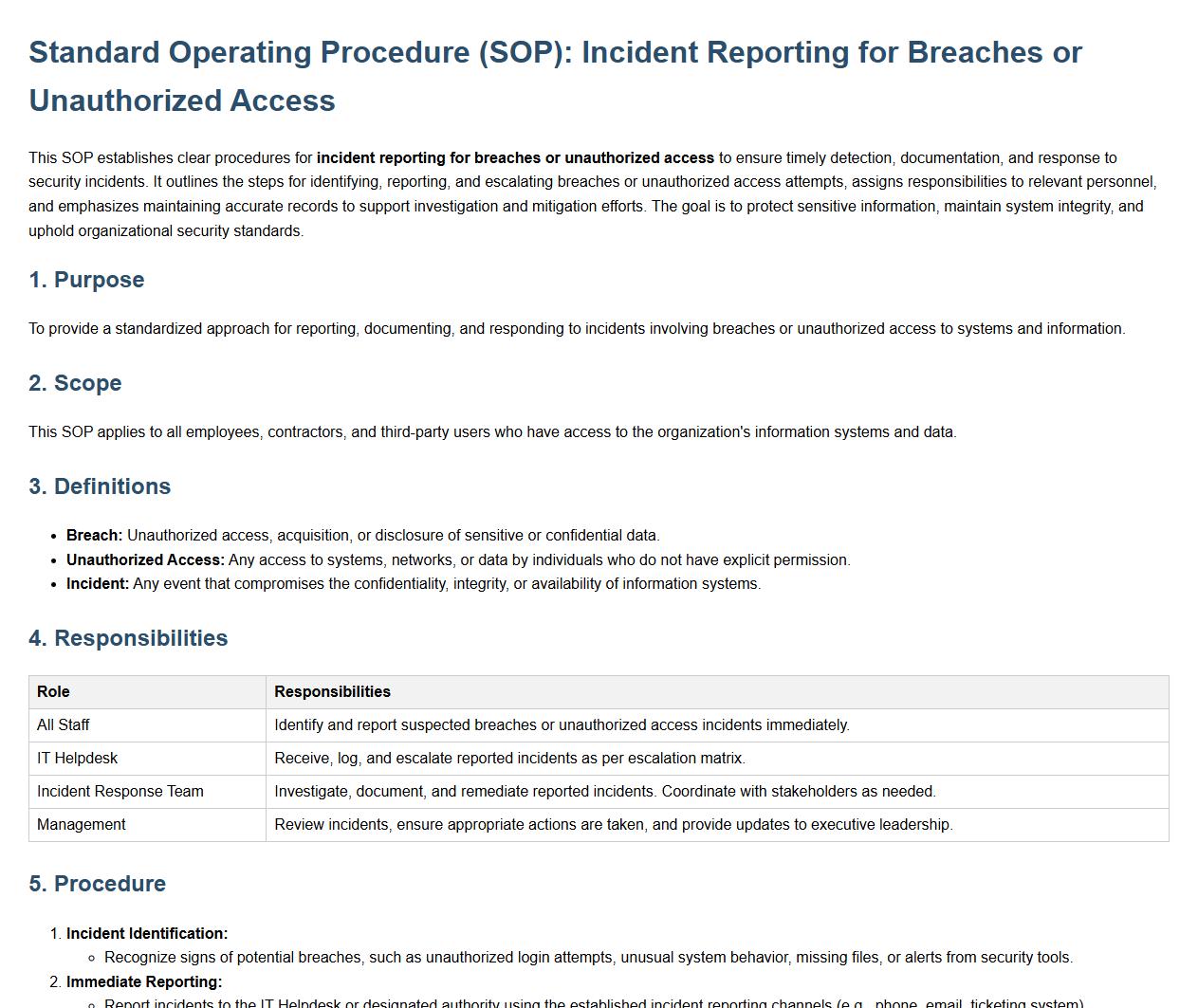
This SOP establishes clear procedures for incident reporting for breaches or unauthorized access to ensure timely detection, documentation, and response to security incidents. It outlines the steps for identifying, reporting, and escalating breaches or unauthorized access attempts, assigns responsibilities to relevant personnel, and emphasizes maintaining accurate records to support investigation and mitigation efforts. The goal is to protect sensitive information, maintain system integrity, and uphold organizational security standards.
Regular staff training and compliance monitoring.
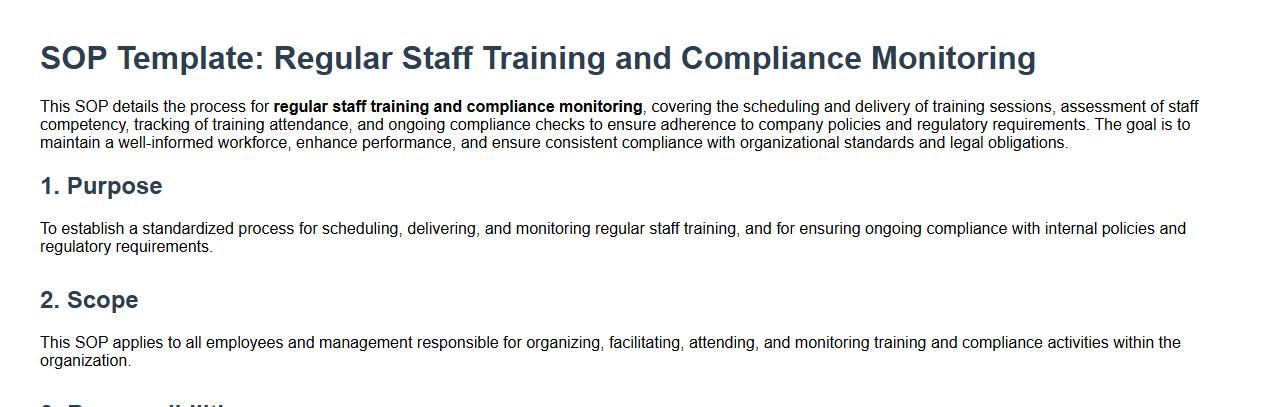
This SOP details the process for regular staff training and compliance monitoring, covering the scheduling and delivery of training sessions, assessment of staff competency, tracking of training attendance, and ongoing compliance checks to ensure adherence to company policies and regulatory requirements. The goal is to maintain a well-informed workforce, enhance performance, and ensure consistent compliance with organizational standards and legal obligations.
What are the primary steps described in the SOP for identifying and labeling confidential documents?
The SOP emphasizes the importance of accurate identification of confidential documents at the point of creation. Each document must be clearly labeled with appropriate classification tags to prevent accidental disclosure. Consistent labeling ensures that confidentiality levels are maintained throughout the document's lifecycle.
According to the SOP, who is authorized to access, share, or handle confidential documents?
Access to confidential documents is strictly limited to authorized personnel who require the information to perform their duties. Sharing confidential documents is permitted only under controlled conditions with individuals who have been explicitly granted access rights. Handling procedures mandate that all authorized users follow the SOP guidelines to prevent unauthorized disclosure.
What security measures must be implemented during storage and transmission of confidential documents as per the SOP?
The SOP mandates the use of encryption and secure access controls for both storage and transmission of confidential documents. Physical storage must be secured in locked, monitored environments to prevent unauthorized access. During transmission, secure channels such as encrypted emails or dedicated secure networks are required to maintain confidentiality.
How does the SOP define the process for documenting and reporting breaches of document confidentiality?
The SOP requires immediate documentation of any suspected or confirmed breaches involving confidential documents. All incidents must be reported to the designated security or compliance officer promptly to initiate an investigation. The process includes a formal record of the breach, impact assessment, and corrective actions to prevent future occurrences.
What procedures are outlined in the SOP for the proper disposal or destruction of confidential documents?
The SOP specifies that confidential documents must be destroyed using approved methods such as shredding, pulping, or incineration to ensure complete irrecoverability. Disposal procedures require verification by authorized personnel to confirm that all sensitive materials have been properly handled. This process safeguards against unauthorized retrieval or reconstruction of confidential information.