

A SOP Template for Interoffice Communication ensures consistent and clear messaging across all departments, enhancing operational efficiency. This template outlines standardized procedures for email, memos, and other internal communications, reducing misunderstandings and improving collaboration. Using this SOP Template for Interoffice Communication helps maintain professionalism and streamlines information flow within the organization.
Standardized email formatting and subject line protocols.
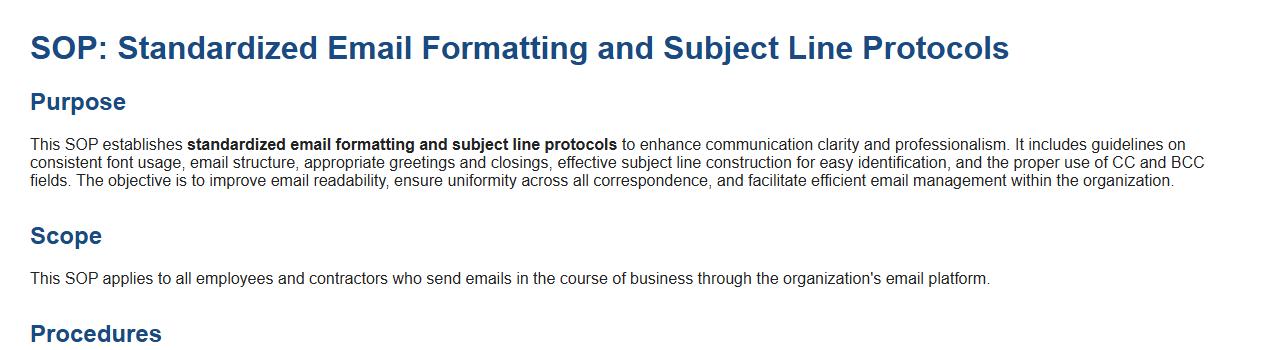
This SOP establishes standardized email formatting and subject line protocols to enhance communication clarity and professionalism. It includes guidelines on consistent font usage, email structure, appropriate greetings and closings, effective subject line construction for easy identification, and the proper use of CC and BCC fields. The objective is to improve email readability, ensure uniformity across all correspondence, and facilitate efficient email management within the organization.
Internal memo distribution procedures.
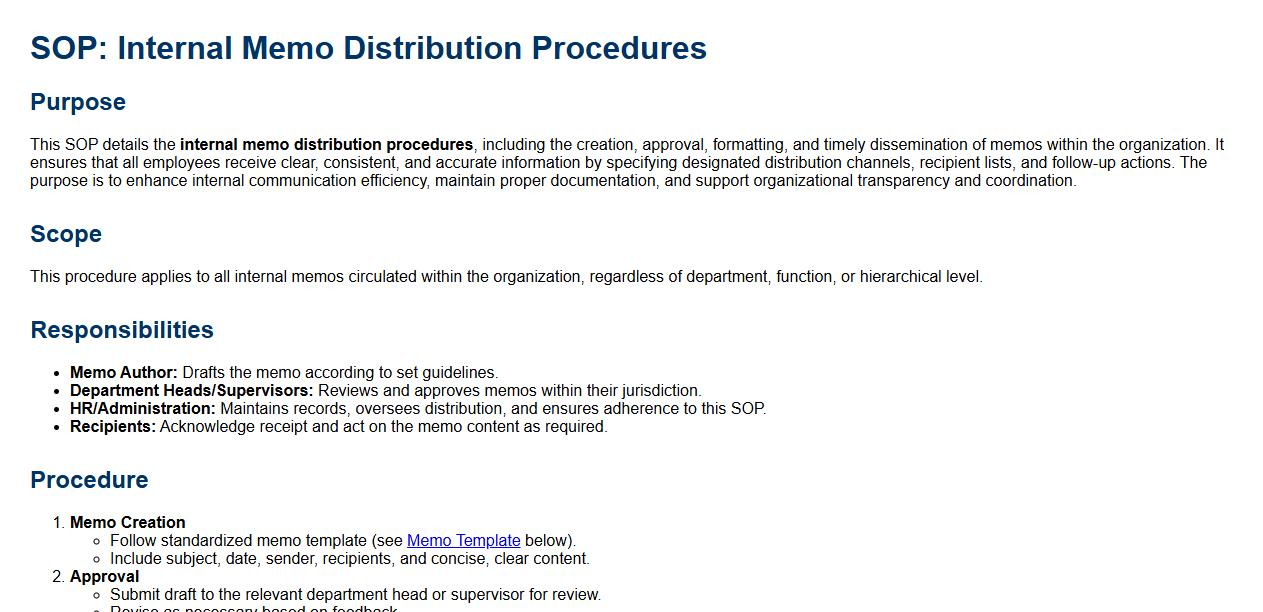
This SOP details the internal memo distribution procedures, including the creation, approval, formatting, and timely dissemination of memos within the organization. It ensures that all employees receive clear, consistent, and accurate information by specifying designated distribution channels, recipient lists, and follow-up actions. The purpose is to enhance internal communication efficiency, maintain proper documentation, and support organizational transparency and coordination.
Meeting scheduling and calendar coordination guidelines.
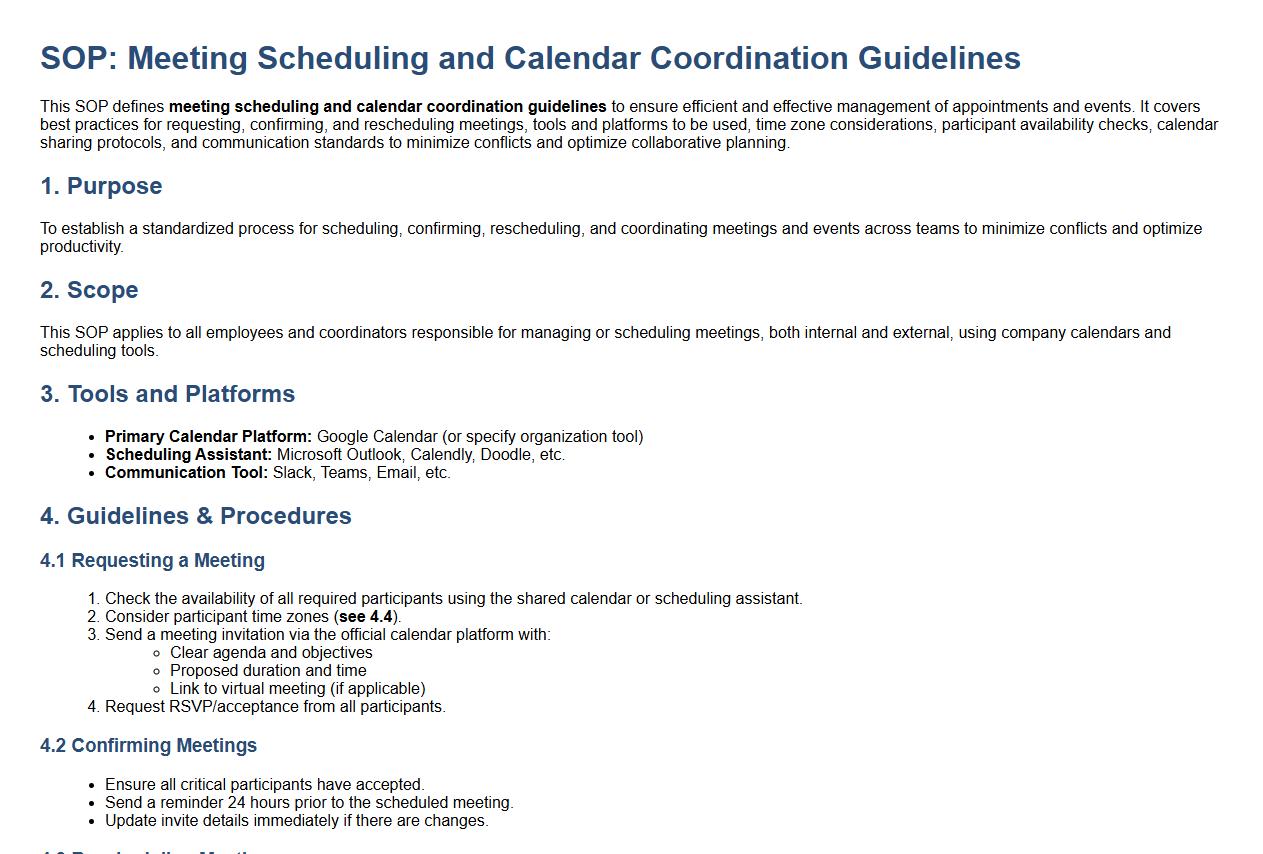
This SOP defines meeting scheduling and calendar coordination guidelines to ensure efficient and effective management of appointments and events. It covers best practices for requesting, confirming, and rescheduling meetings, tools and platforms to be used, time zone considerations, participant availability checks, calendar sharing protocols, and communication standards to minimize conflicts and optimize collaborative planning.
Document version control and sharing protocols.
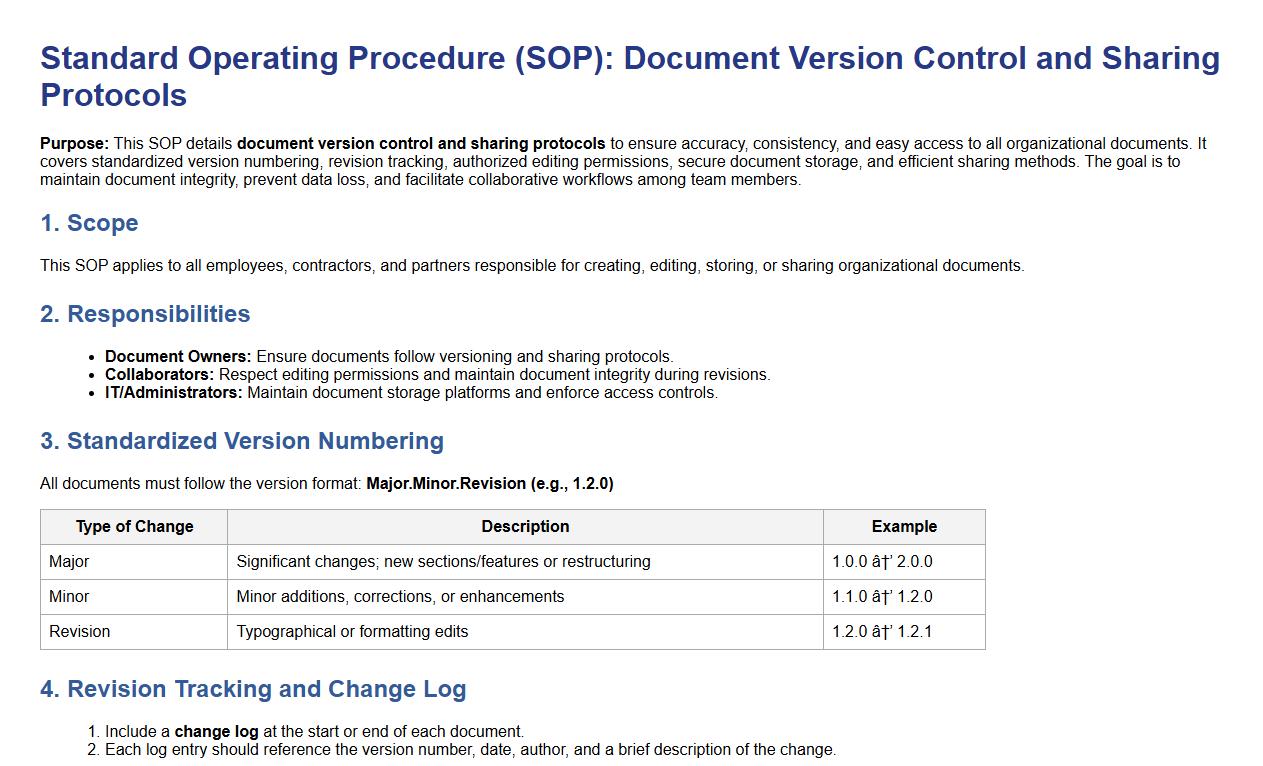
This SOP details document version control and sharing protocols to ensure accuracy, consistency, and easy access to all organizational documents. It covers standardized version numbering, revision tracking, authorized editing permissions, secure document storage, and efficient sharing methods. The goal is to maintain document integrity, prevent data loss, and facilitate collaborative workflows among team members.
Confidential information handling and privacy procedures.
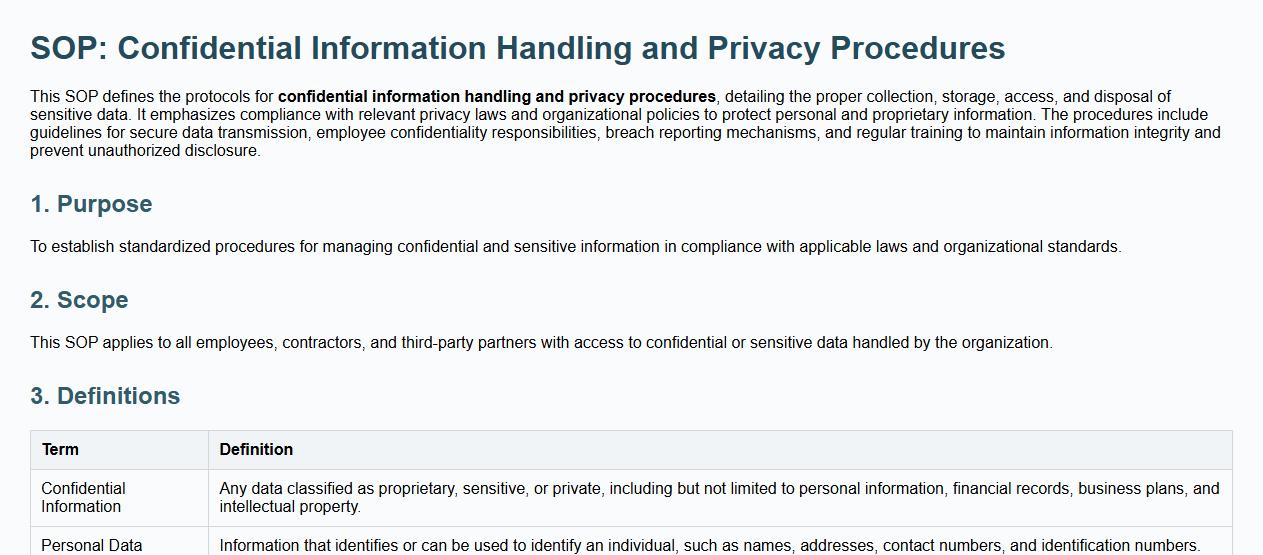
This SOP defines the protocols for confidential information handling and privacy procedures, detailing the proper collection, storage, access, and disposal of sensitive data. It emphasizes compliance with relevant privacy laws and organizational policies to protect personal and proprietary information. The procedures include guidelines for secure data transmission, employee confidentiality responsibilities, breach reporting mechanisms, and regular training to maintain information integrity and prevent unauthorized disclosure.
Escalation paths for urgent communication.
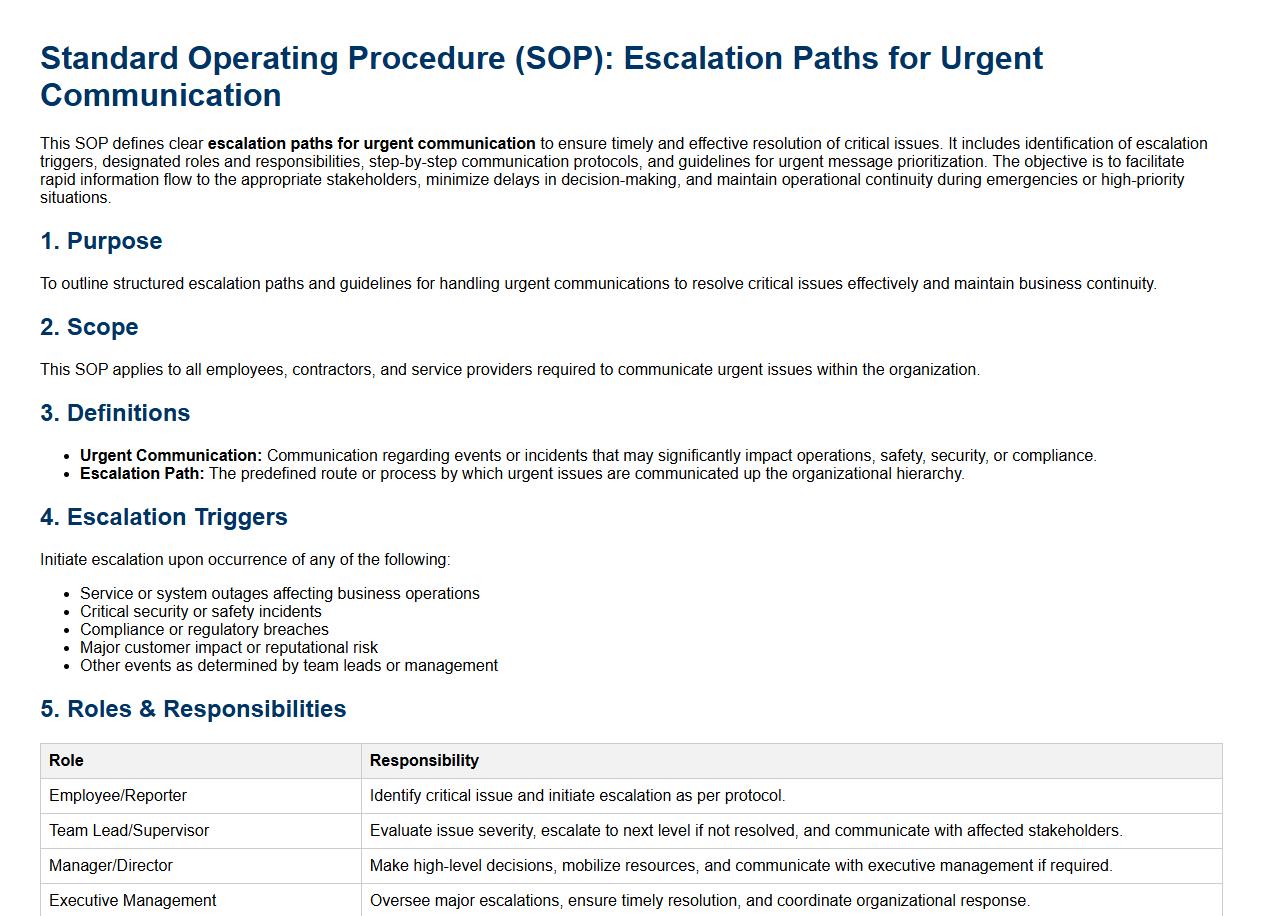
This SOP defines clear escalation paths for urgent communication to ensure timely and effective resolution of critical issues. It includes identification of escalation triggers, designated roles and responsibilities, step-by-step communication protocols, and guidelines for urgent message prioritization. The objective is to facilitate rapid information flow to the appropriate stakeholders, minimize delays in decision-making, and maintain operational continuity during emergencies or high-priority situations.
Standard response timeframes for internal inquiries.
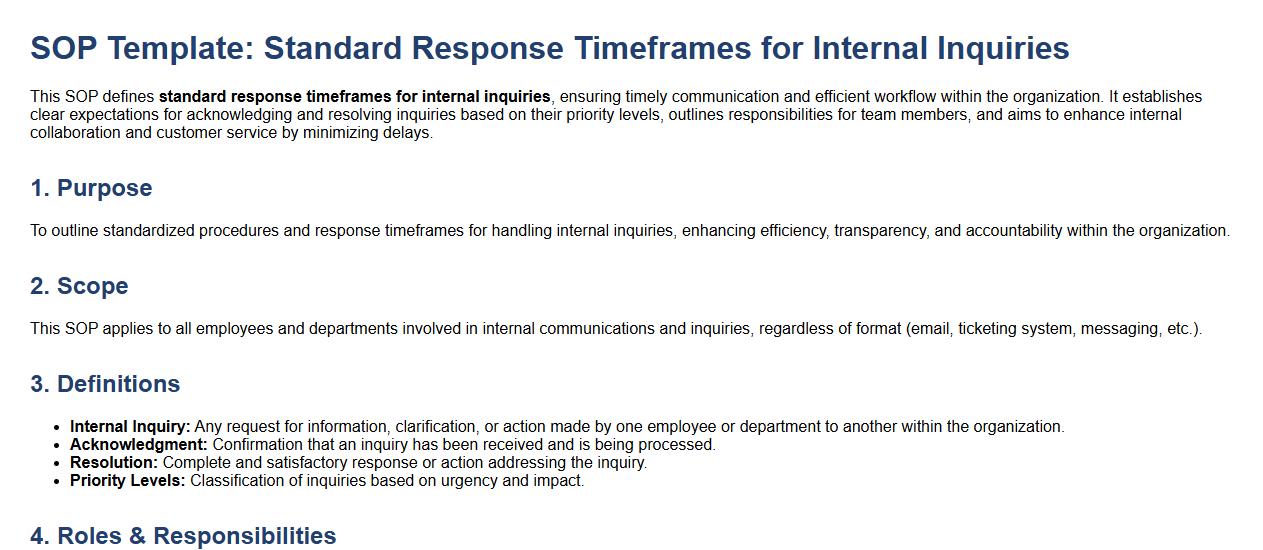
This SOP defines standard response timeframes for internal inquiries, ensuring timely communication and efficient workflow within the organization. It establishes clear expectations for acknowledging and resolving inquiries based on their priority levels, outlines responsibilities for team members, and aims to enhance internal collaboration and customer service by minimizing delays.
Use of instant messaging and collaboration tools policies.
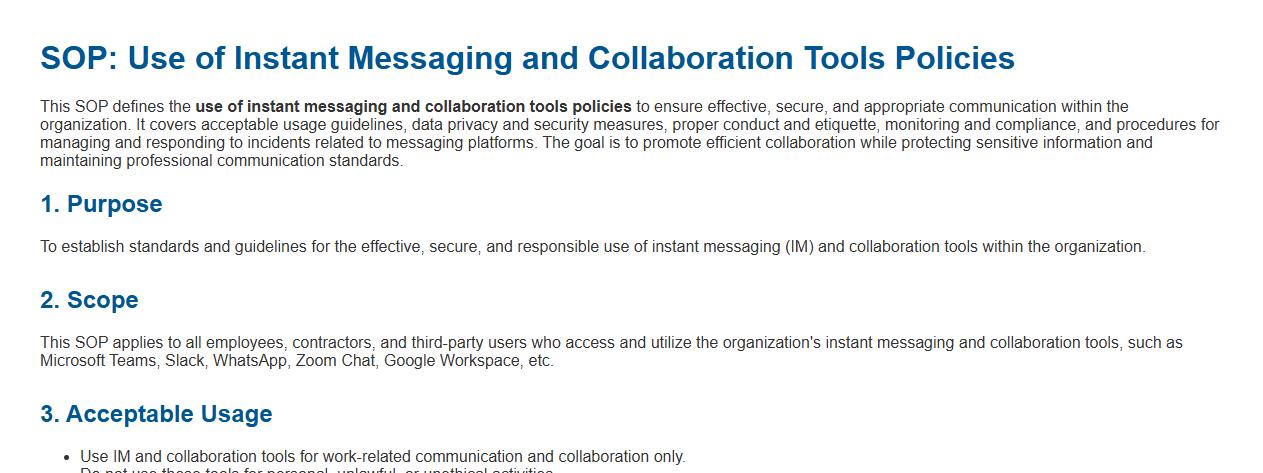
This SOP defines the use of instant messaging and collaboration tools policies to ensure effective, secure, and appropriate communication within the organization. It covers acceptable usage guidelines, data privacy and security measures, proper conduct and etiquette, monitoring and compliance, and procedures for managing and responding to incidents related to messaging platforms. The goal is to promote efficient collaboration while protecting sensitive information and maintaining professional communication standards.
Archiving and retention of internal communications.
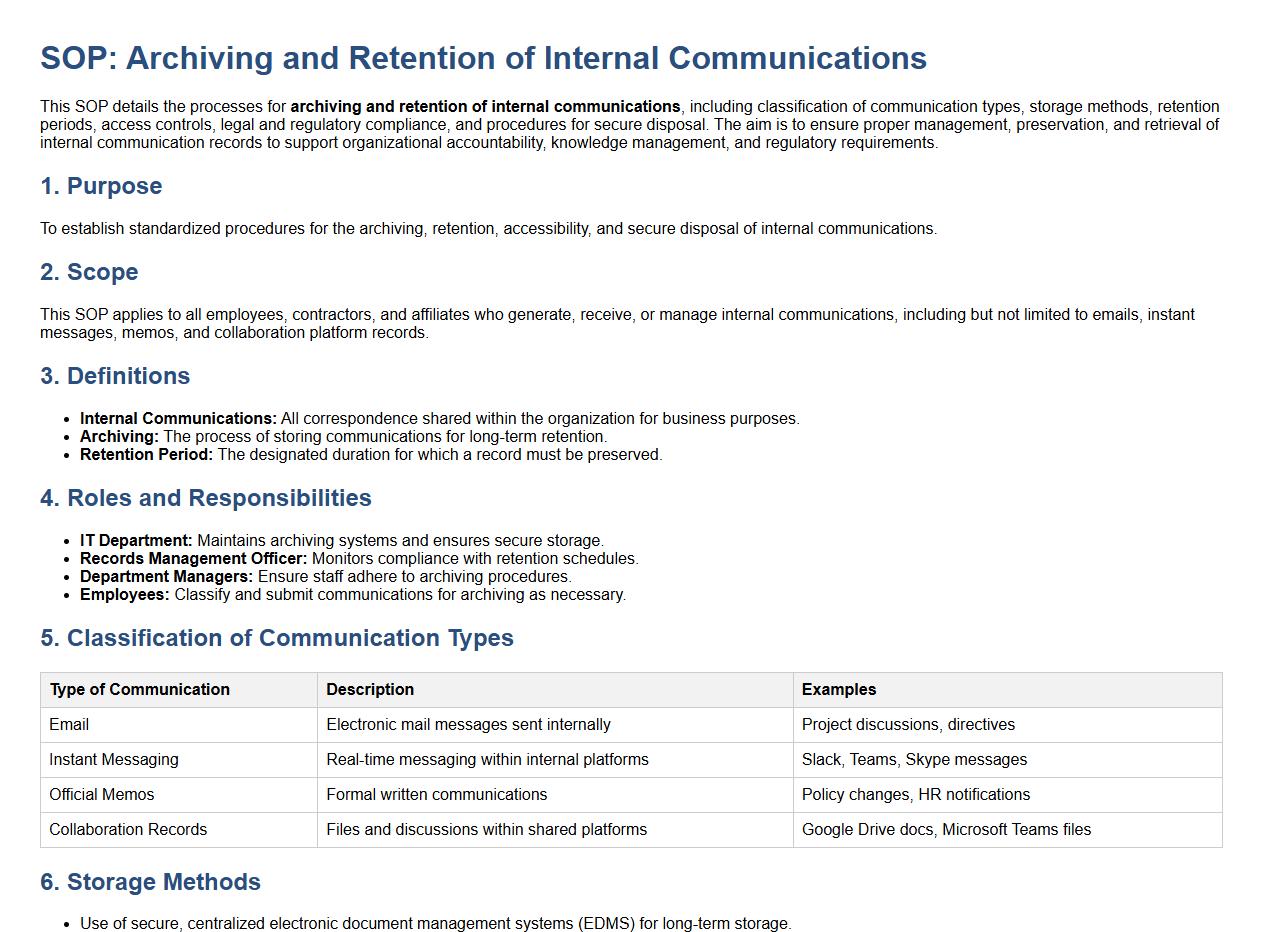
This SOP details the processes for archiving and retention of internal communications, including classification of communication types, storage methods, retention periods, access controls, legal and regulatory compliance, and procedures for secure disposal. The aim is to ensure proper management, preservation, and retrieval of internal communication records to support organizational accountability, knowledge management, and regulatory requirements.
Language, tone, and professionalism standards.
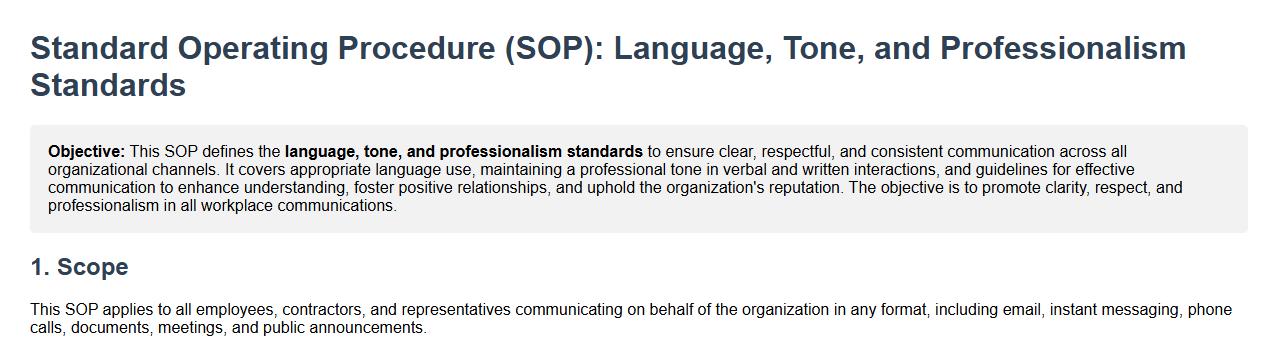
This SOP defines the language, tone, and professionalism standards to ensure clear, respectful, and consistent communication across all organizational channels. It covers appropriate language use, maintaining a professional tone in verbal and written interactions, and guidelines for effective communication to enhance understanding, foster positive relationships, and uphold the organization's reputation. The objective is to promote clarity, respect, and professionalism in all workplace communications.
What information must be included in each interoffice communication as per the SOP?
Each interoffice communication must include the sender's name, the recipient's name, and the date of the message. Additionally, a clear and concise subject line outlining the purpose of the communication is required. The body of the message should provide essential details without ambiguity, ensuring effective and efficient information exchange.
Which communication channels are approved for official interoffice correspondence according to the SOP?
The SOP specifies that email and the official internal messaging system are the only approved channels for interoffice communication. Use of personal messaging apps or unapproved platforms is strictly prohibited to maintain security and record integrity. These approved channels ensure all communications are documented and accessible for future reference.
Who is responsible for maintaining records of interoffice communications under the SOP guidelines?
The responsibility for maintaining records of interoffice communications lies with the administrative department or designated records management team. They must ensure that all communications are properly archived and retrievable as per SOP protocols. This centralized approach guarantees accountability and compliance with organizational standards.
What is the standard response time for acknowledging receipt of interoffice messages in the SOP?
The SOP mandates a standard response time of 24 hours to acknowledge receipt of any interoffice message. This timely acknowledgement confirms that the communication has been received and is being acted upon. Quick responses foster smooth workflow and prevent operational delays within the organization.
What confidentiality protocols must be followed when handling sensitive information in interoffice communications as described in the SOP?
Handling sensitive information requires strict adherence to confidentiality protocols outlined in the SOP, including limiting access only to authorized personnel. Encryption and secure platforms must be used for transmission to prevent data breaches. Additionally, sensitive communications should be clearly marked and stored in restricted access folders to safeguard organizational data integrity.