
A SOP Template for Classroom Management provides a clear, structured framework to maintain consistent and effective classroom discipline. It outlines step-by-step procedures for handling daily routines, student behavior, and conflict resolution, ensuring a productive learning environment. Using this template helps educators standardize practices and improve overall classroom efficiency.
Classroom entry and exit procedures.
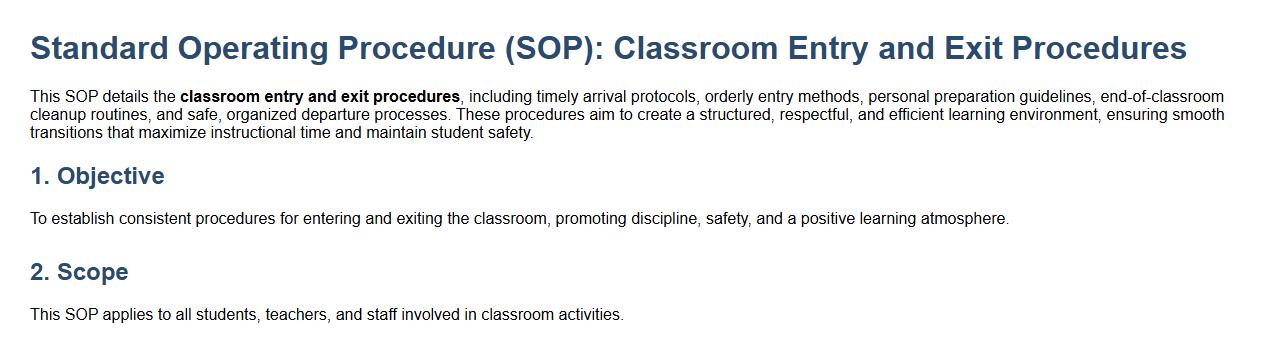
This SOP details the classroom entry and exit procedures, including timely arrival protocols, orderly entry methods, personal preparation guidelines, end-of-classroom cleanup routines, and safe, organized departure processes. These procedures aim to create a structured, respectful, and efficient learning environment, ensuring smooth transitions that maximize instructional time and maintain student safety.
Attendance and roll-call guidelines.
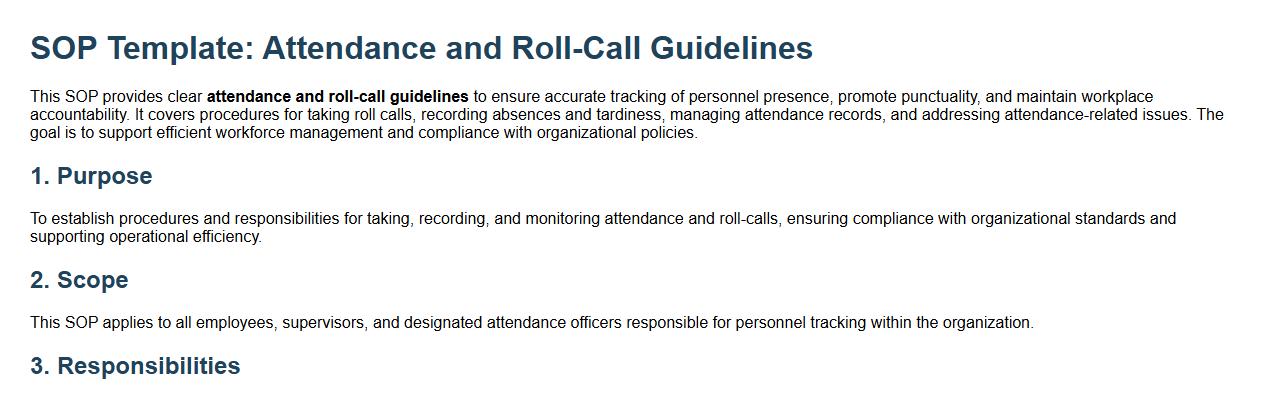
This SOP provides clear attendance and roll-call guidelines to ensure accurate tracking of personnel presence, promote punctuality, and maintain workplace accountability. It covers procedures for taking roll calls, recording absences and tardiness, managing attendance records, and addressing attendance-related issues. The goal is to support efficient workforce management and compliance with organizational policies.
Classroom seating arrangement protocols.
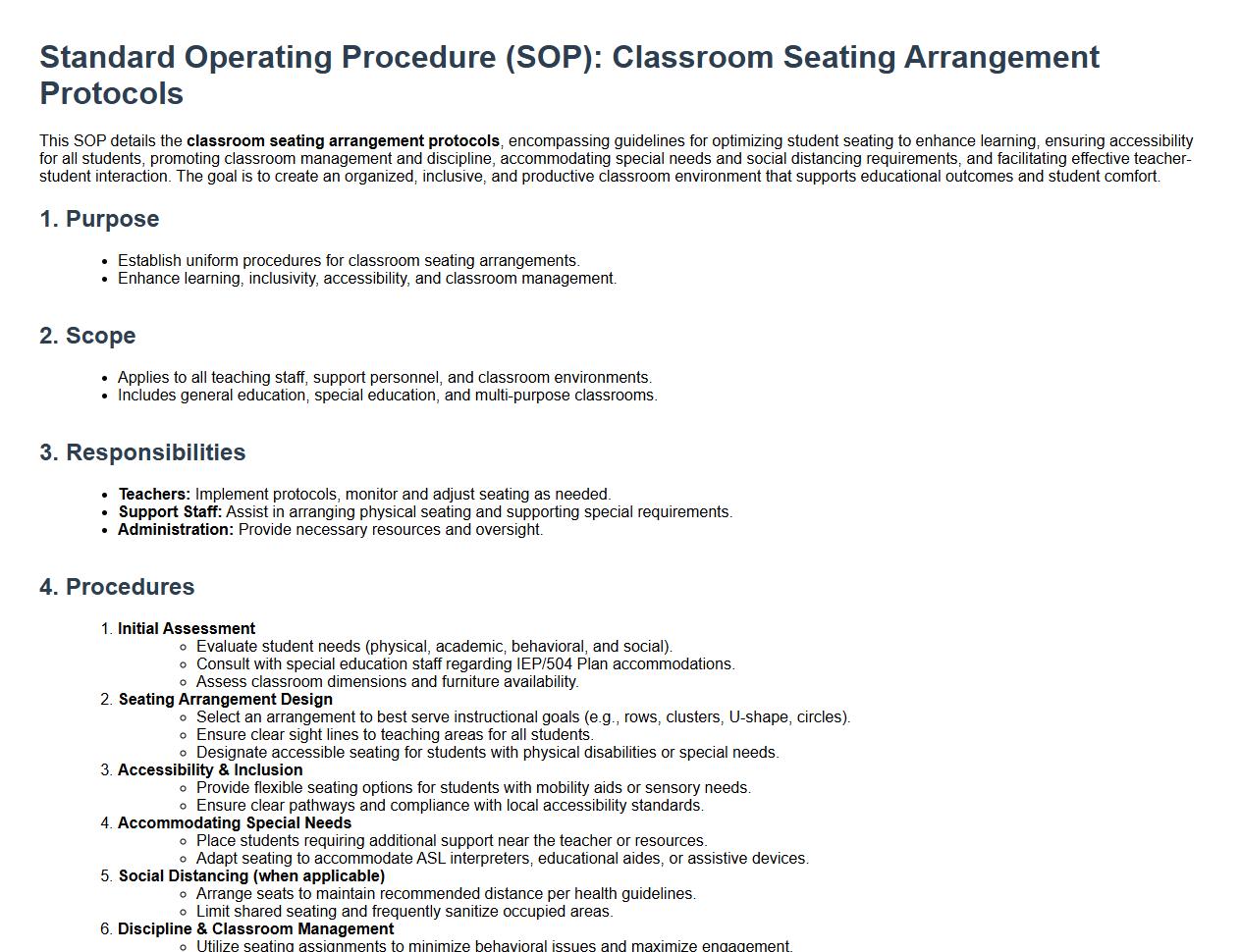
This SOP details the classroom seating arrangement protocols, encompassing guidelines for optimizing student seating to enhance learning, ensuring accessibility for all students, promoting classroom management and discipline, accommodating special needs and social distancing requirements, and facilitating effective teacher-student interaction. The goal is to create an organized, inclusive, and productive classroom environment that supports educational outcomes and student comfort.
Rules for handling classroom materials and resources.
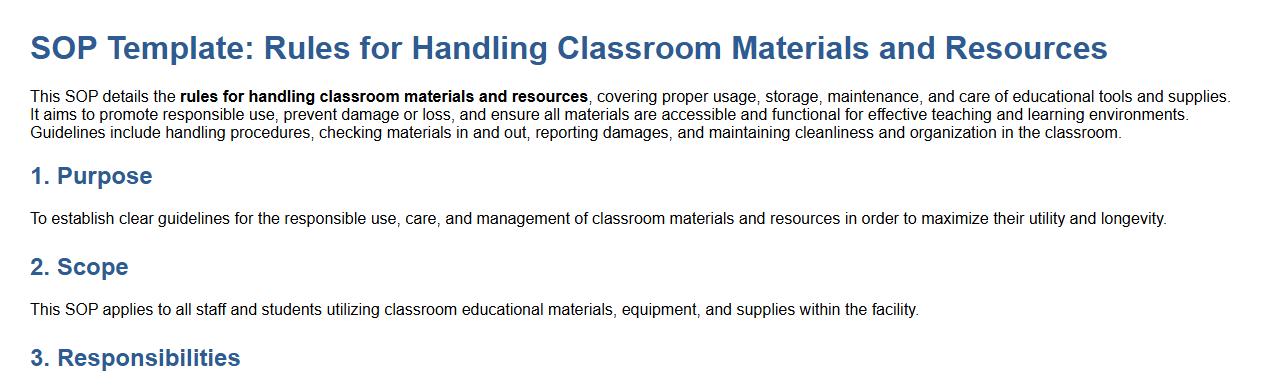
This SOP details the rules for handling classroom materials and resources, covering proper usage, storage, maintenance, and care of educational tools and supplies. It aims to promote responsible use, prevent damage or loss, and ensure all materials are accessible and functional for effective teaching and learning environments. Guidelines include handling procedures, checking materials in and out, reporting damages, and maintaining cleanliness and organization in the classroom.
Student behavior management and discipline procedures.
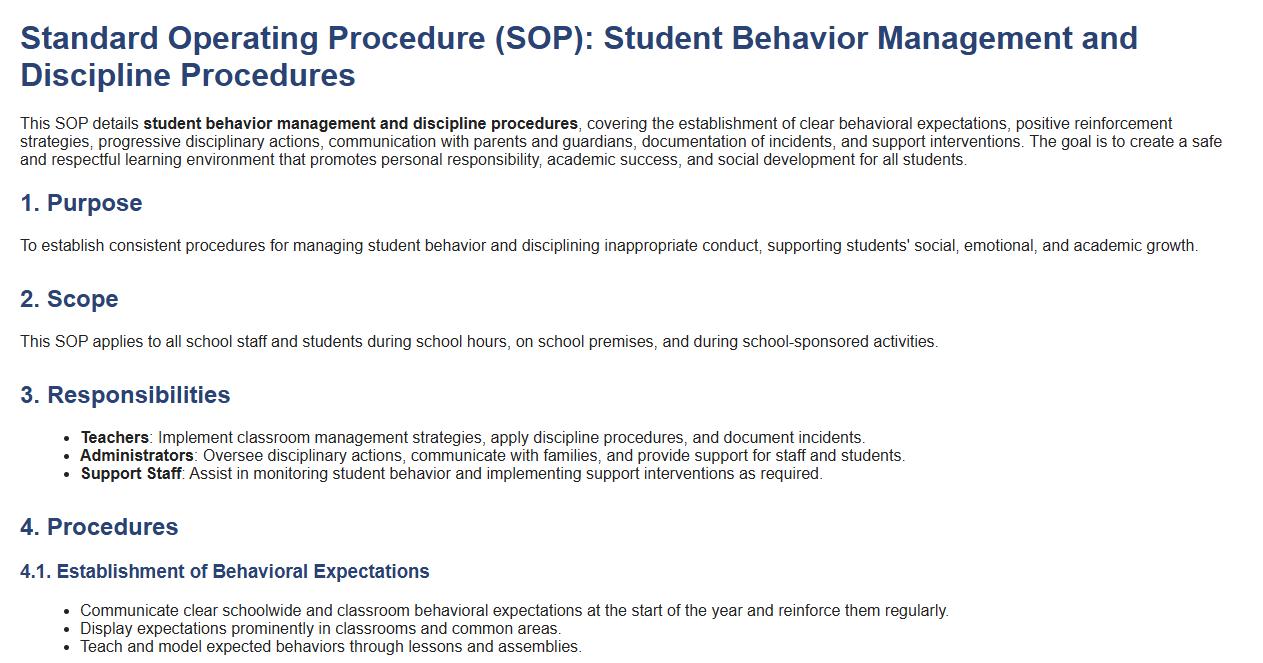
This SOP details student behavior management and discipline procedures, covering the establishment of clear behavioral expectations, positive reinforcement strategies, progressive disciplinary actions, communication with parents and guardians, documentation of incidents, and support interventions. The goal is to create a safe and respectful learning environment that promotes personal responsibility, academic success, and social development for all students.
Instruction delivery and lesson transition methods.
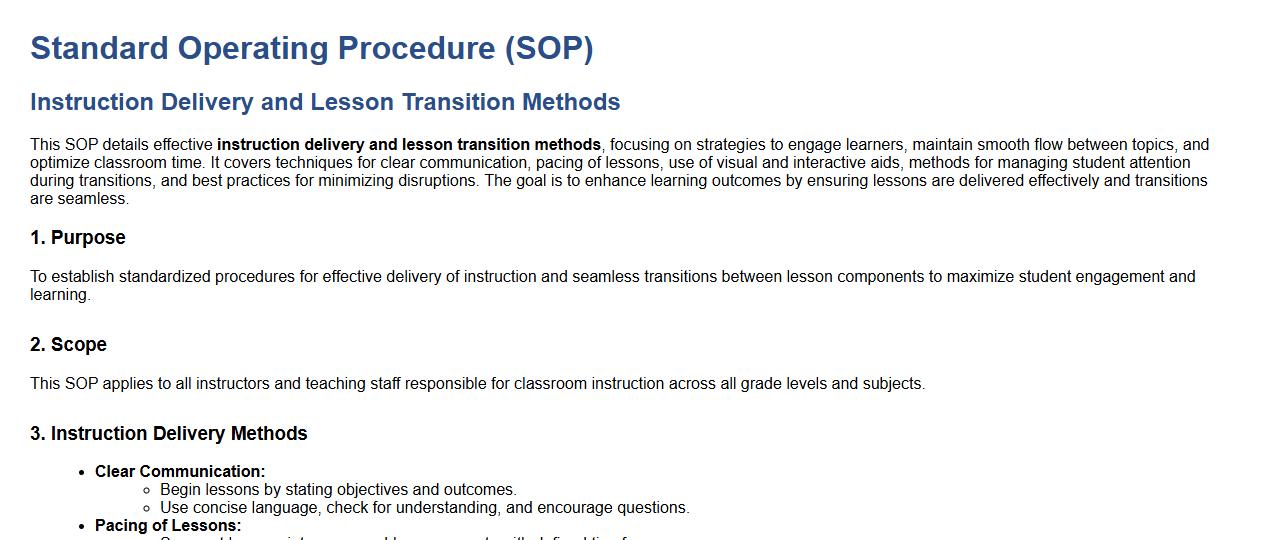
This SOP details effective instruction delivery and lesson transition methods, focusing on strategies to engage learners, maintain smooth flow between topics, and optimize classroom time. It covers techniques for clear communication, pacing of lessons, use of visual and interactive aids, methods for managing student attention during transitions, and best practices for minimizing disruptions. The goal is to enhance learning outcomes by ensuring lessons are delivered effectively and transitions are seamless.
Homework assignment, collection, and feedback process.
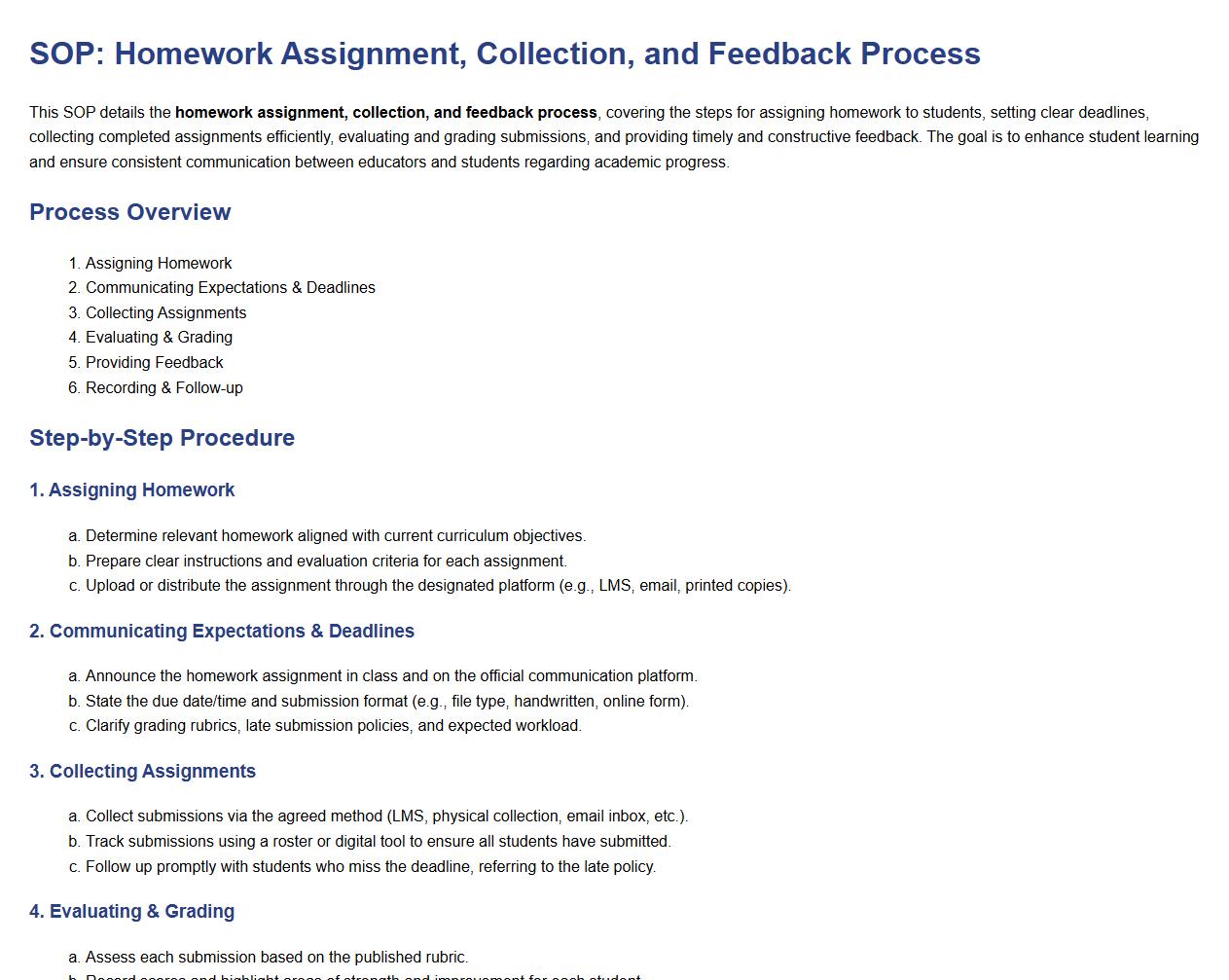
This SOP details the homework assignment, collection, and feedback process, covering the steps for assigning homework to students, setting clear deadlines, collecting completed assignments efficiently, evaluating and grading submissions, and providing timely and constructive feedback. The goal is to enhance student learning and ensure consistent communication between educators and students regarding academic progress.
Use of technology and electronic devices policy.
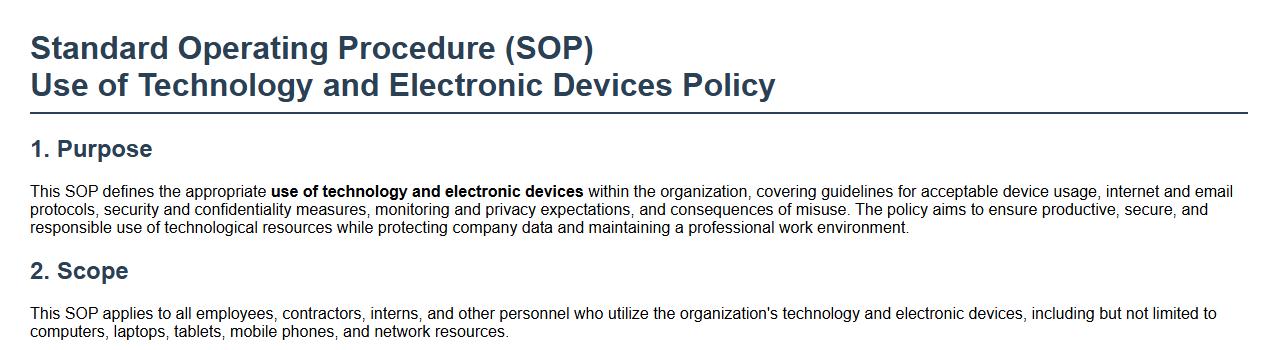
This SOP defines the appropriate use of technology and electronic devices within the organization, covering guidelines for acceptable device usage, internet and email protocols, security and confidentiality measures, monitoring and privacy expectations, and consequences of misuse. The policy aims to ensure productive, secure, and responsible use of technological resources while protecting company data and maintaining a professional work environment.
Emergency and evacuation procedures for the classroom.
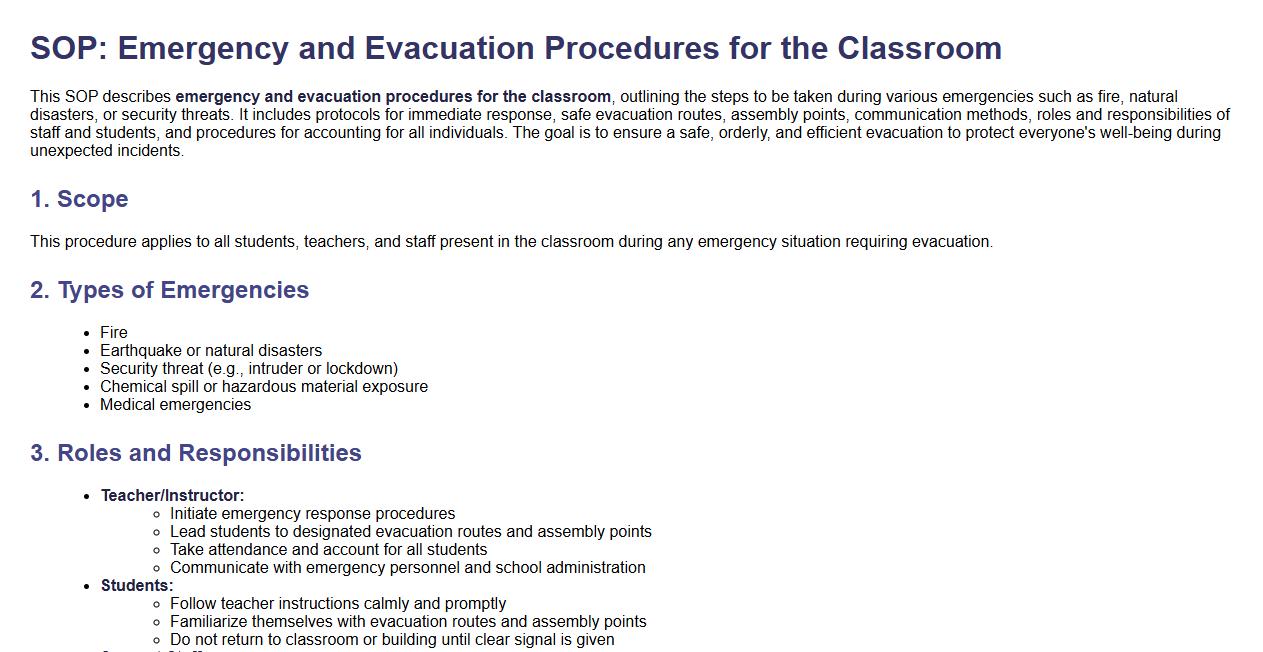
This SOP describes emergency and evacuation procedures for the classroom, outlining the steps to be taken during various emergencies such as fire, natural disasters, or security threats. It includes protocols for immediate response, safe evacuation routes, assembly points, communication methods, roles and responsibilities of staff and students, and procedures for accounting for all individuals. The goal is to ensure a safe, orderly, and efficient evacuation to protect everyone's well-being during unexpected incidents.
Communication and reporting with parents and guardians.
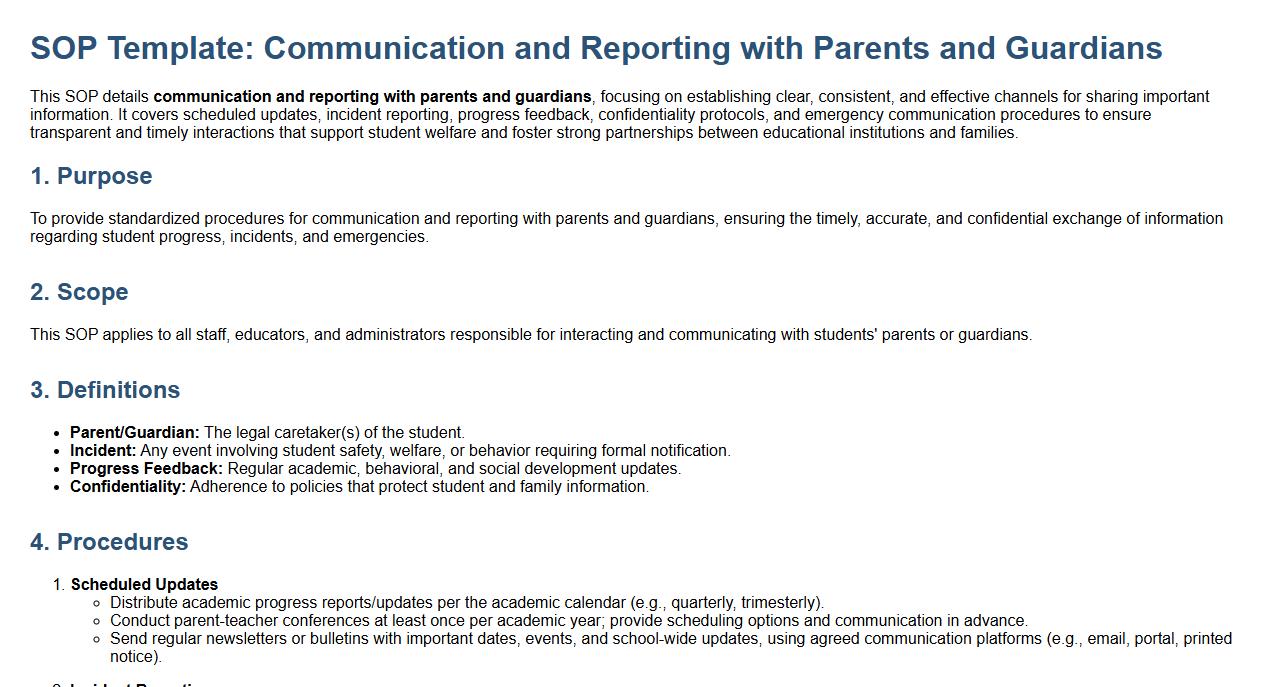
This SOP details communication and reporting with parents and guardians, focusing on establishing clear, consistent, and effective channels for sharing important information. It covers scheduled updates, incident reporting, progress feedback, confidentiality protocols, and emergency communication procedures to ensure transparent and timely interactions that support student welfare and foster strong partnerships between educational institutions and families.
Essential Steps for Handling Student Disruptions
The SOP emphasizes immediate intervention to address student disruptions during class, ensuring minimal impact on the learning environment. Teachers are instructed to use calm, respectful communication to de-escalate situations effectively. The process includes clear warnings followed by appropriate consequences if disruptions persist.
Procedures for Reporting and Documenting Incidents
The SOP mandates detailed reporting and documentation of all classroom incidents to maintain accountability and support informed decision-making. Teachers must fill out incident reports promptly and submit them to school administration. This process helps track patterns and informs necessary disciplinary or supportive actions.
Teacher Responsibilities in Maintaining a Positive Learning Environment
The SOP defines teacher responsibilities as fostering a respectful and inclusive atmosphere conducive to learning. Facilitating student engagement and promptly addressing disruptive behavior are core duties. Teachers are encouraged to model positive behavior and support students' social-emotional development.
Guidelines for Managing Classroom Transitions and Activities
The SOP outlines clear guidelines to ensure smooth transitions that minimize downtime and maintain student focus. Teachers should prepare students in advance and use consistent signals to guide transitions. Structured activities and clear instructions are emphasized to optimize instructional time.
Protocols for Responding to Emergencies within the Classroom
The SOP establishes strict emergency response protocols to ensure student safety during crises. Teachers are trained to follow evacuation plans, communicate effectively with emergency responders, and account for all students. Regular drills and clear instructions are key components of the emergency preparedness strategy.