

A SOP Template for Blended Learning Implementation provides a clear, step-by-step framework to seamlessly combine traditional face-to-face instruction with online learning activities. This template ensures consistent processes for curriculum design, technology integration, and student engagement across educational settings. Using this SOP helps institutions maintain quality standards and optimize the effectiveness of blended learning programs.
Policy and objectives for blended learning implementation.
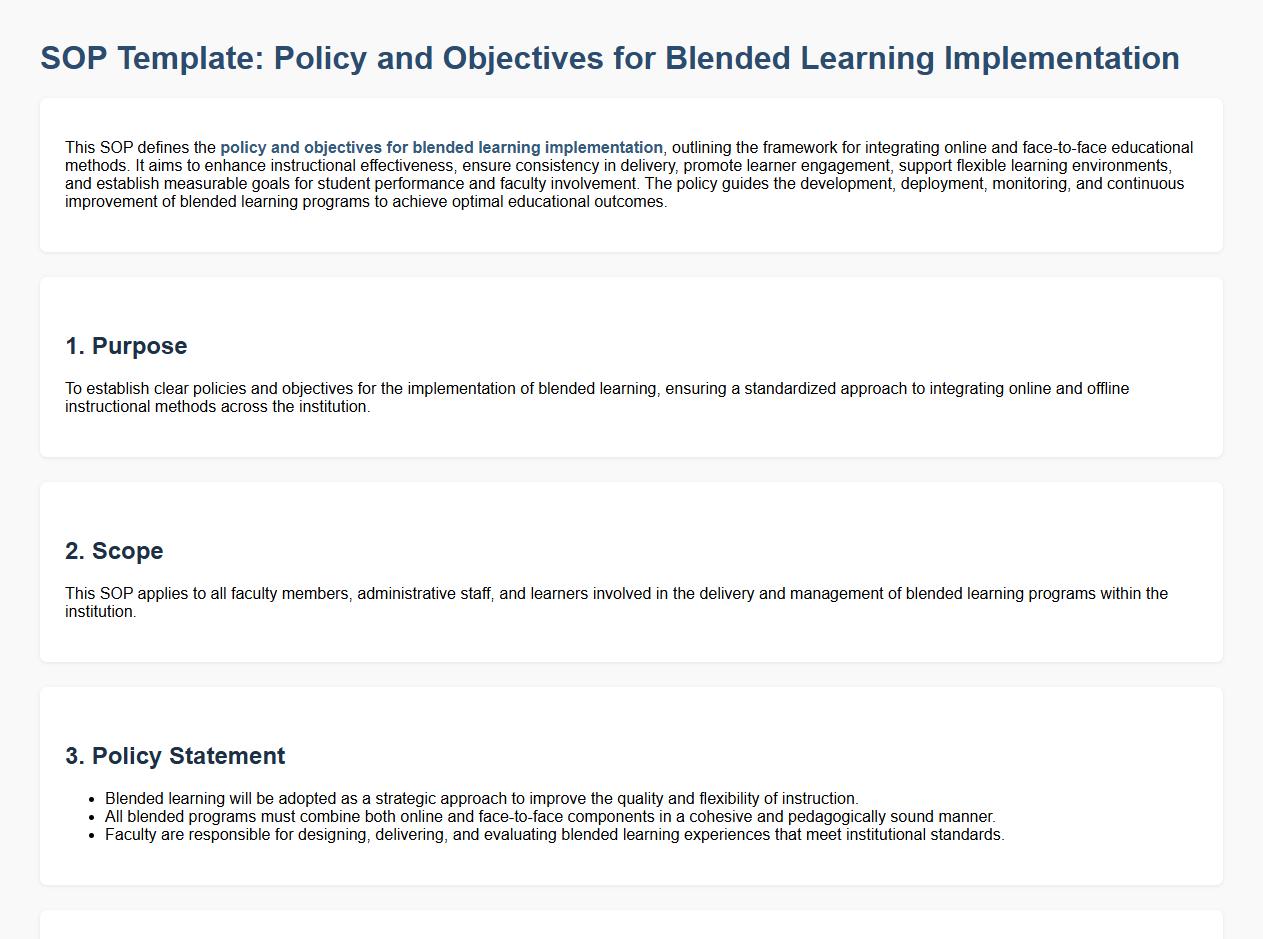
This SOP defines the policy and objectives for blended learning implementation, outlining the framework for integrating online and face-to-face educational methods. It aims to enhance instructional effectiveness, ensure consistency in delivery, promote learner engagement, support flexible learning environments, and establish measurable goals for student performance and faculty involvement. The policy guides the development, deployment, monitoring, and continuous improvement of blended learning programs to achieve optimal educational outcomes.
Roles and responsibilities of faculty and staff.
This SOP defines the roles and responsibilities of faculty and staff within the educational institution, detailing the expectations for teaching, research, student support, administrative duties, professional development, and collaboration to ensure effective operation and a positive learning environment. It aims to clarify each position's duties to promote accountability, efficiency, and a cohesive organizational culture.
Curriculum design and instructional material development.
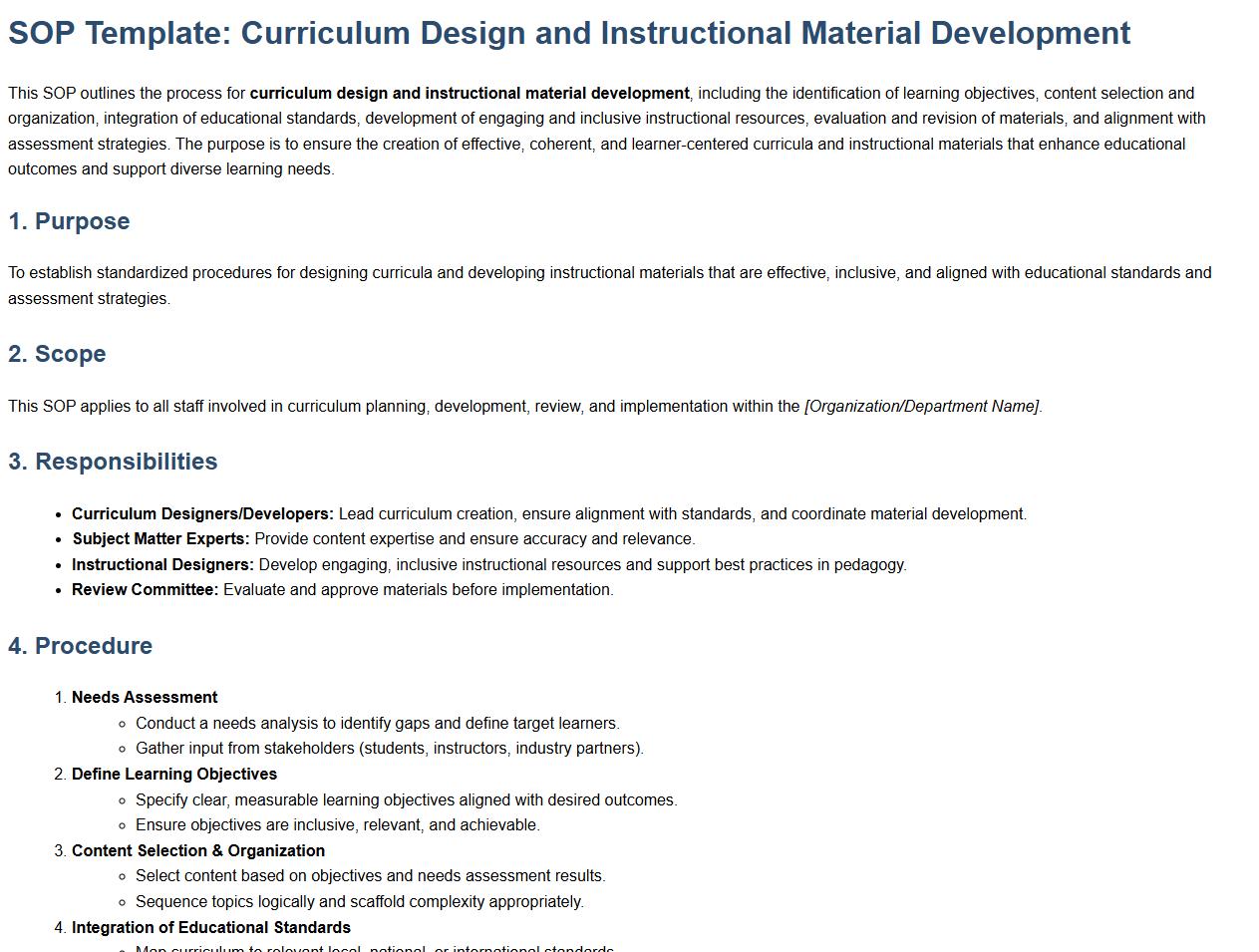
This SOP outlines the process for curriculum design and instructional material development, including the identification of learning objectives, content selection and organization, integration of educational standards, development of engaging and inclusive instructional resources, evaluation and revision of materials, and alignment with assessment strategies. The purpose is to ensure the creation of effective, coherent, and learner-centered curricula and instructional materials that enhance educational outcomes and support diverse learning needs.
Student enrollment and orientation procedures.
This SOP details the student enrollment and orientation procedures, covering application submission, document verification, enrollment confirmation, scheduling orientation sessions, campus tours, introduction to academic policies, student support services, and integration activities. The goal is to facilitate a smooth and efficient enrollment process while ensuring new students are well-informed, prepared, and supported as they begin their academic journey.
Technology platform setup and user access protocols.
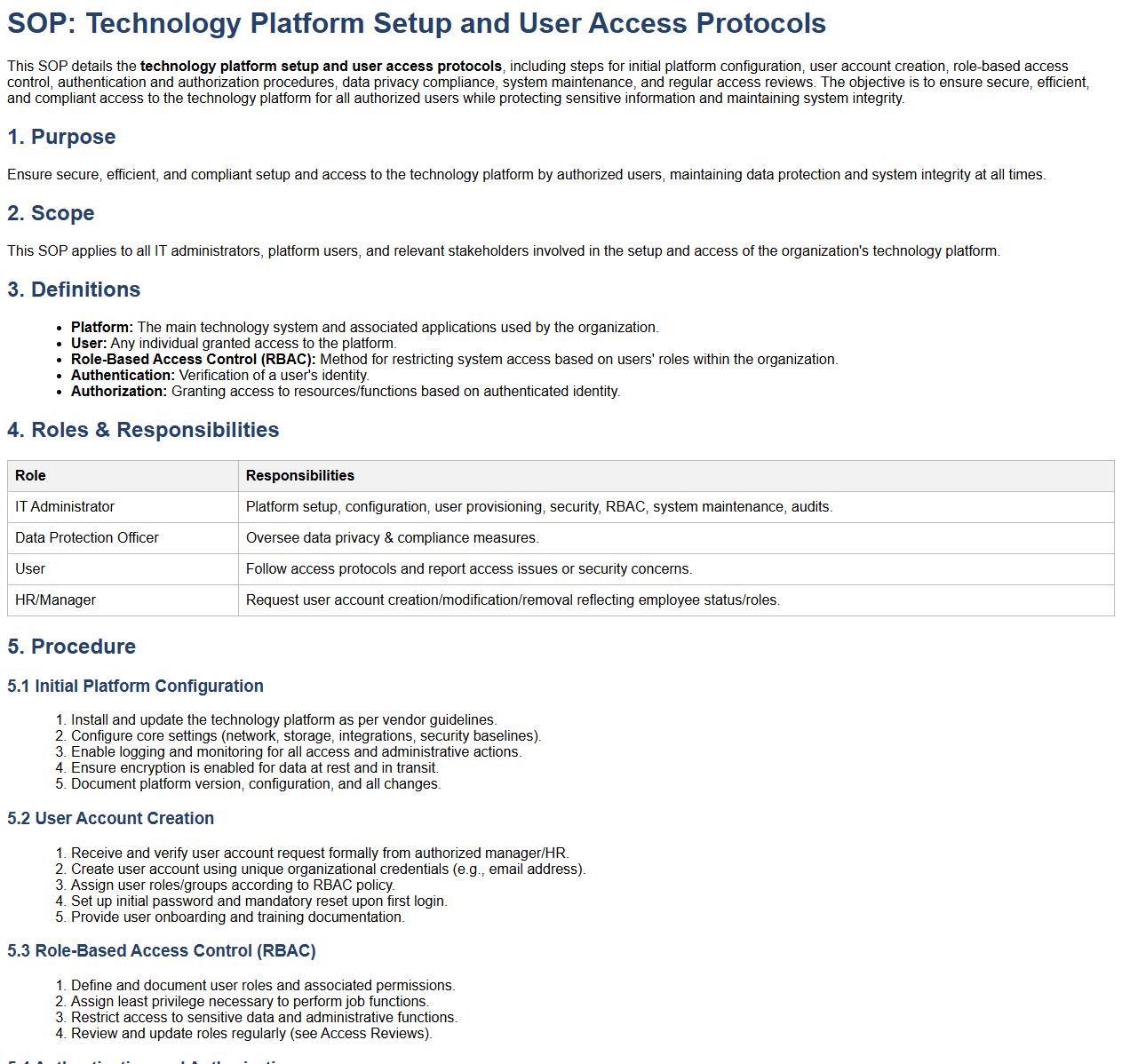
This SOP details the technology platform setup and user access protocols, including steps for initial platform configuration, user account creation, role-based access control, authentication and authorization procedures, data privacy compliance, system maintenance, and regular access reviews. The objective is to ensure secure, efficient, and compliant access to the technology platform for all authorized users while protecting sensitive information and maintaining system integrity.
Classroom and online session scheduling guidelines.
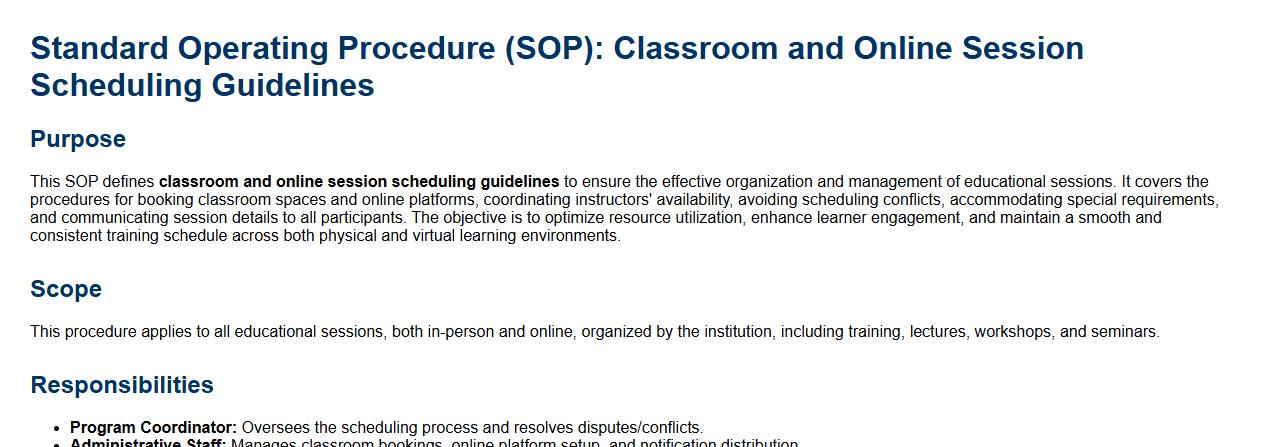
This SOP defines classroom and online session scheduling guidelines to ensure the effective organization and management of educational sessions. It covers the procedures for booking classroom spaces and online platforms, coordinating instructors' availability, avoiding scheduling conflicts, accommodating special requirements, and communicating session details to all participants. The objective is to optimize resource utilization, enhance learner engagement, and maintain a smooth and consistent training schedule across both physical and virtual learning environments.
Assessment and grading procedures for blended courses.
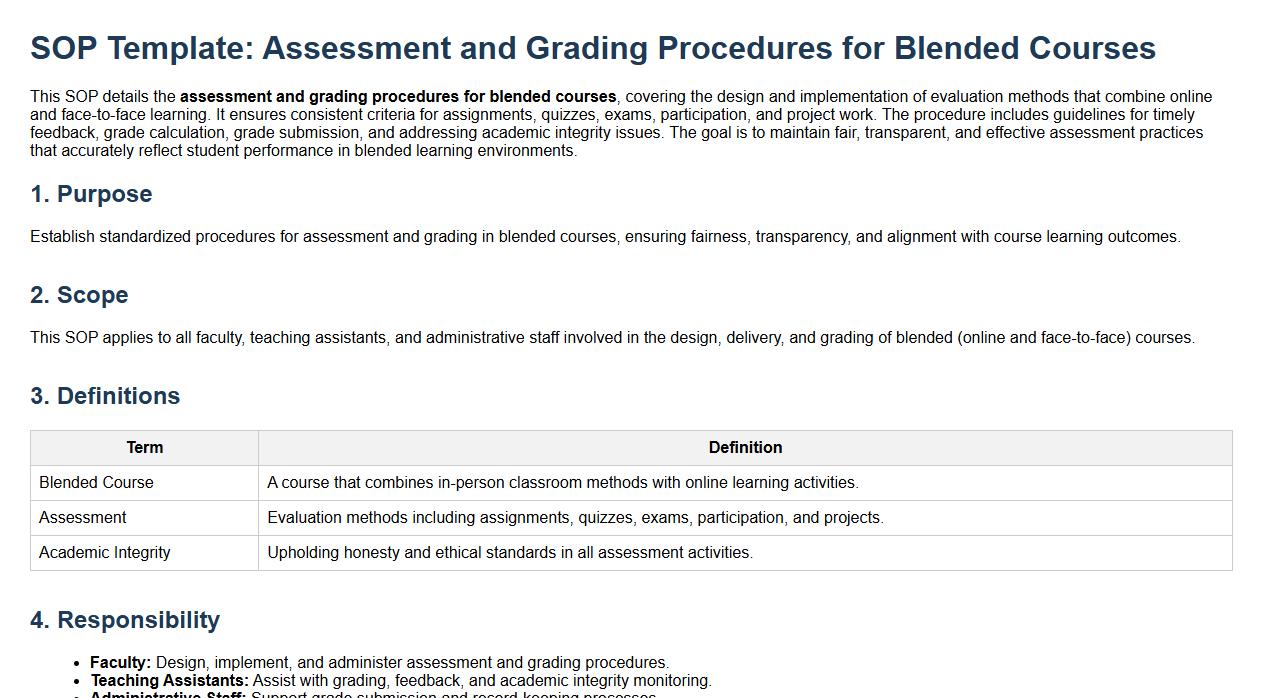
This SOP details the assessment and grading procedures for blended courses, covering the design and implementation of evaluation methods that combine online and face-to-face learning. It ensures consistent criteria for assignments, quizzes, exams, participation, and project work. The procedure includes guidelines for timely feedback, grade calculation, grade submission, and addressing academic integrity issues. The goal is to maintain fair, transparent, and effective assessment practices that accurately reflect student performance in blended learning environments.
Communication norms and student support mechanisms.
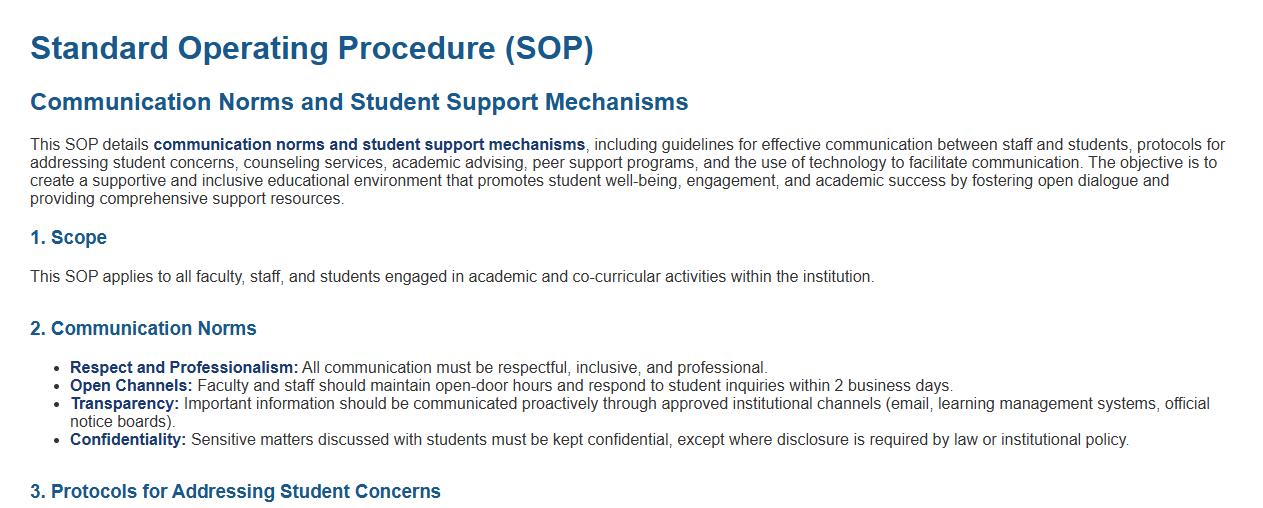
This SOP details communication norms and student support mechanisms, including guidelines for effective communication between staff and students, protocols for addressing student concerns, counseling services, academic advising, peer support programs, and the use of technology to facilitate communication. The objective is to create a supportive and inclusive educational environment that promotes student well-being, engagement, and academic success by fostering open dialogue and providing comprehensive support resources.
Data security, privacy, and copyright compliance.
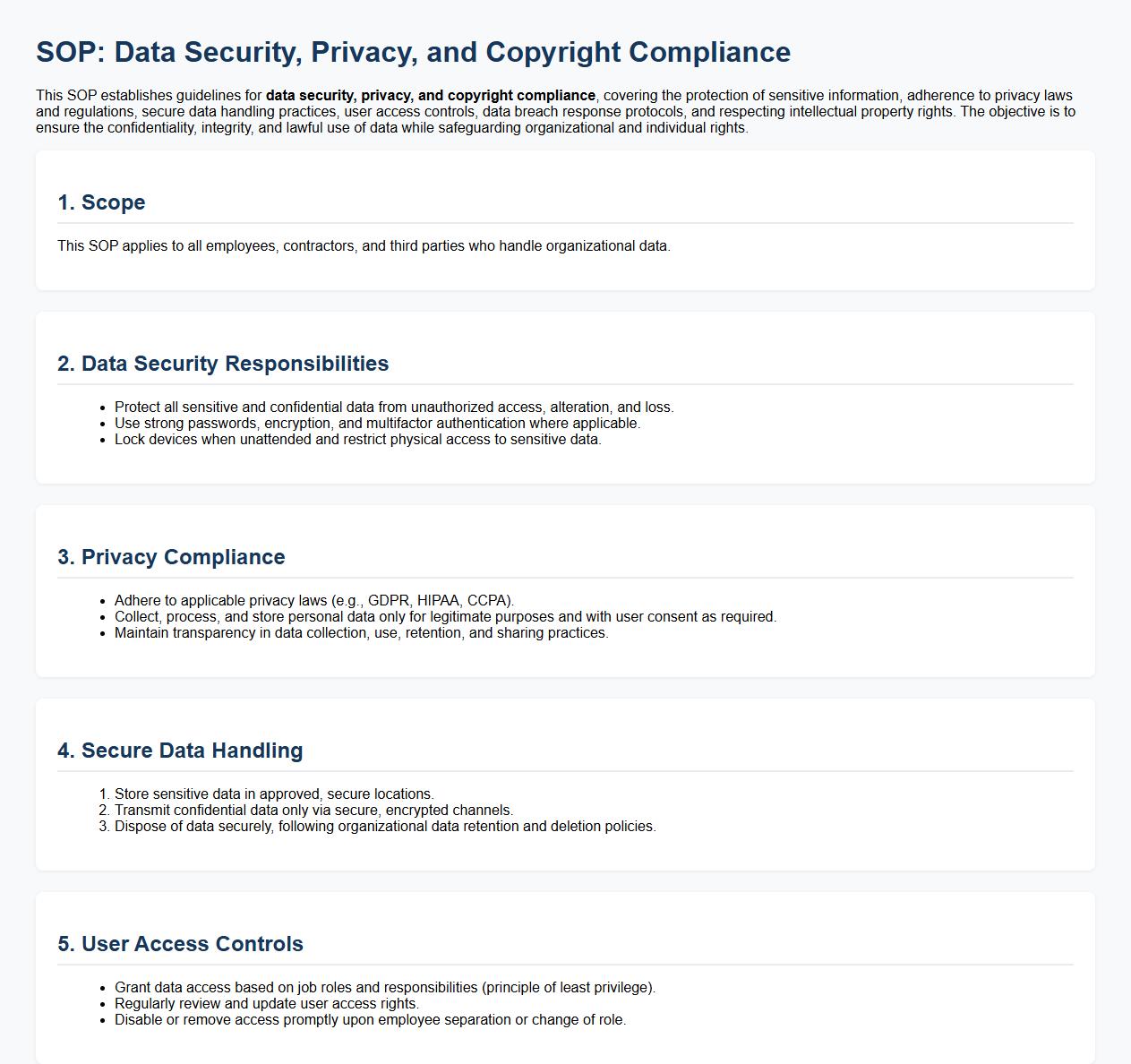
This SOP establishes guidelines for data security, privacy, and copyright compliance, covering the protection of sensitive information, adherence to privacy laws and regulations, secure data handling practices, user access controls, data breach response protocols, and respecting intellectual property rights. The objective is to ensure the confidentiality, integrity, and lawful use of data while safeguarding organizational and individual rights.
Continuous monitoring, feedback collection, and program review processes.
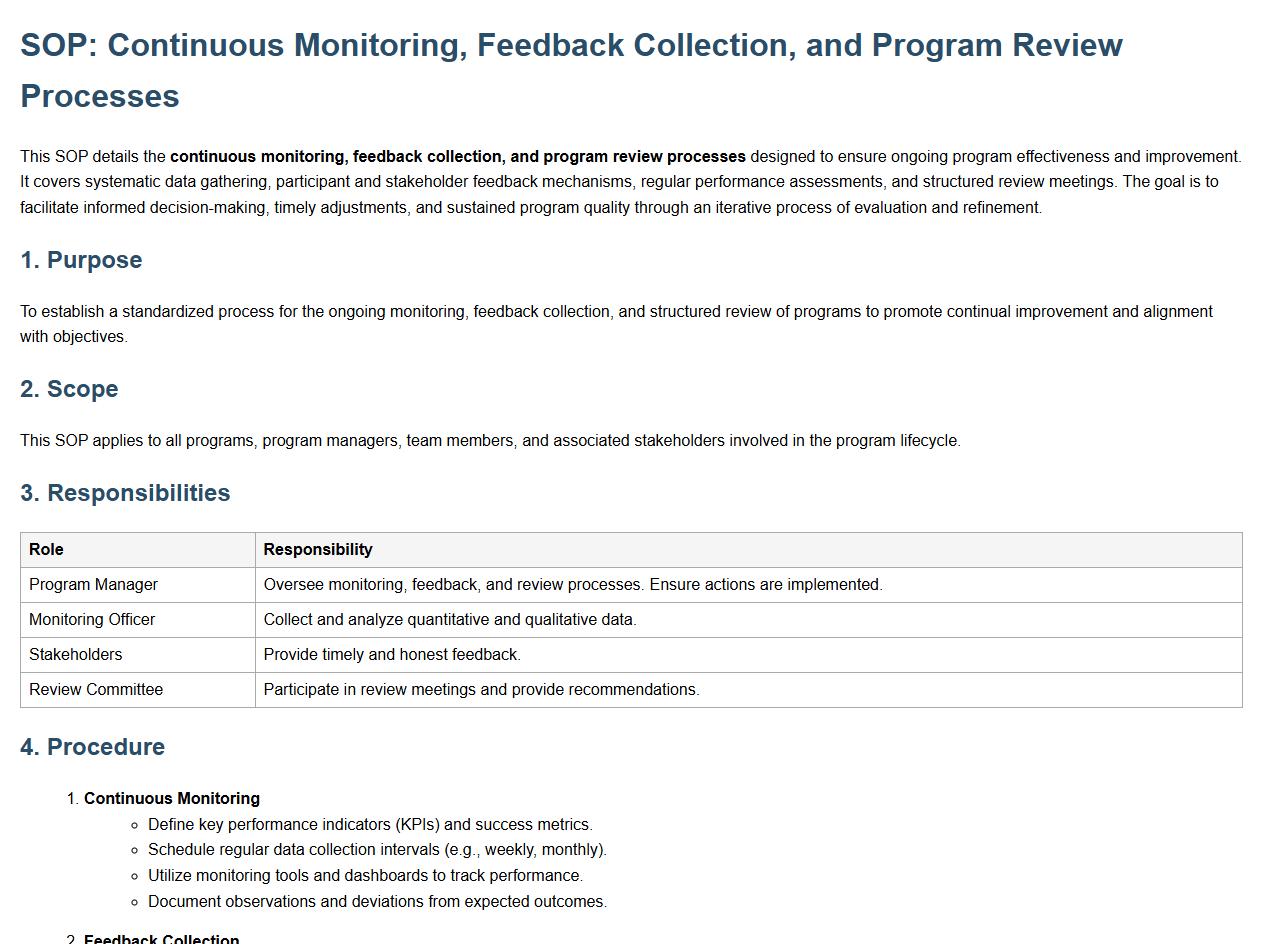
This SOP details the continuous monitoring, feedback collection, and program review processes designed to ensure ongoing program effectiveness and improvement. It covers systematic data gathering, participant and stakeholder feedback mechanisms, regular performance assessments, and structured review meetings. The goal is to facilitate informed decision-making, timely adjustments, and sustained program quality through an iterative process of evaluation and refinement.
What are the primary objectives defined in the SOP for Blended Learning Implementation?
The primary objectives in the SOP focus on enhancing the quality of education by seamlessly combining online and face-to-face learning. It aims to increase student engagement, flexibility, and accessibility while maintaining academic rigor. Additionally, the SOP strives to support instructors in effectively delivering blended courses through clear guidelines and best practices.
Which roles and responsibilities are outlined for staff and instructors in the SOP document?
The SOP clearly defines the roles and responsibilities of staff and instructors to ensure smooth implementation. Instructors are responsible for designing course content, facilitating both online and in-person sessions, and providing timely feedback. Staff members support technical aspects, manage learning platforms, and assist in monitoring student progress and engagement.
How does the SOP specify the integration of online and face-to-face learning activities?
The SOP mandates a balanced integration where online activities complement and enhance face-to-face instruction. It encourages the use of interactive online modules to prepare students for in-class discussions and practical sessions. This blend ensures continuous learning and reinforces key concepts through multiple formats.
What assessment and feedback mechanisms are standardized in the SOP for blended courses?
The SOP standardizes the use of formative and summative assessments to evaluate student learning effectively in blended courses. Continuous feedback through quizzes, assignments, and peer reviews is emphasized to support student improvement. This structured approach aims to maintain academic integrity and foster a responsive learning environment.
What technological tools and platforms are mandated or recommended in the SOP for blended learning delivery?
The SOP mandates the use of learning management systems (LMS) such as Moodle or Blackboard for course delivery and content management. It also recommends video conferencing tools like Zoom or Microsoft Teams to facilitate synchronous sessions. Additionally, collaboration platforms and digital assessment tools are encouraged to enhance interactivity and engagement.