
A SOP Template for Parent Communication provides a clear, structured framework to ensure consistent, effective interaction between educators and parents. This template outlines best practices for delivering important information, addressing concerns, and fostering a positive school-home partnership. Using a standardized approach enhances clarity, professionalism, and trust in all parent communications.
Initial parent contact guidelines and protocols.
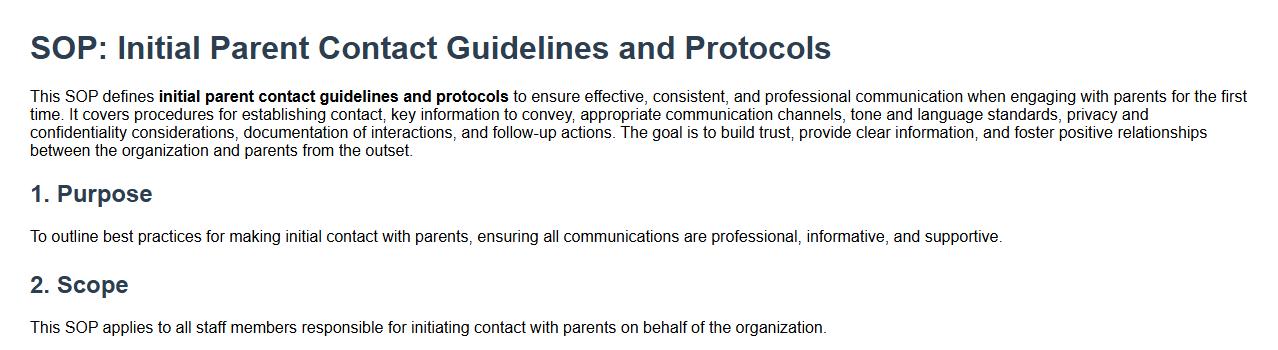
This SOP defines initial parent contact guidelines and protocols to ensure effective, consistent, and professional communication when engaging with parents for the first time. It covers procedures for establishing contact, key information to convey, appropriate communication channels, tone and language standards, privacy and confidentiality considerations, documentation of interactions, and follow-up actions. The goal is to build trust, provide clear information, and foster positive relationships between the organization and parents from the outset.
Procedures for scheduling and confirming meetings.
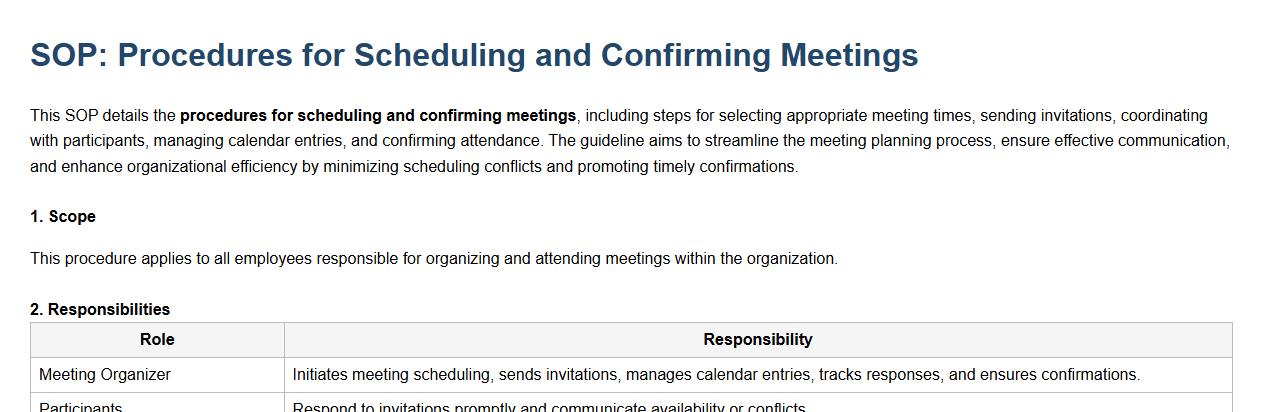
This SOP details the procedures for scheduling and confirming meetings, including steps for selecting appropriate meeting times, sending invitations, coordinating with participants, managing calendar entries, and confirming attendance. The guideline aims to streamline the meeting planning process, ensure effective communication, and enhance organizational efficiency by minimizing scheduling conflicts and promoting timely confirmations.
Standard email and written communication templates.
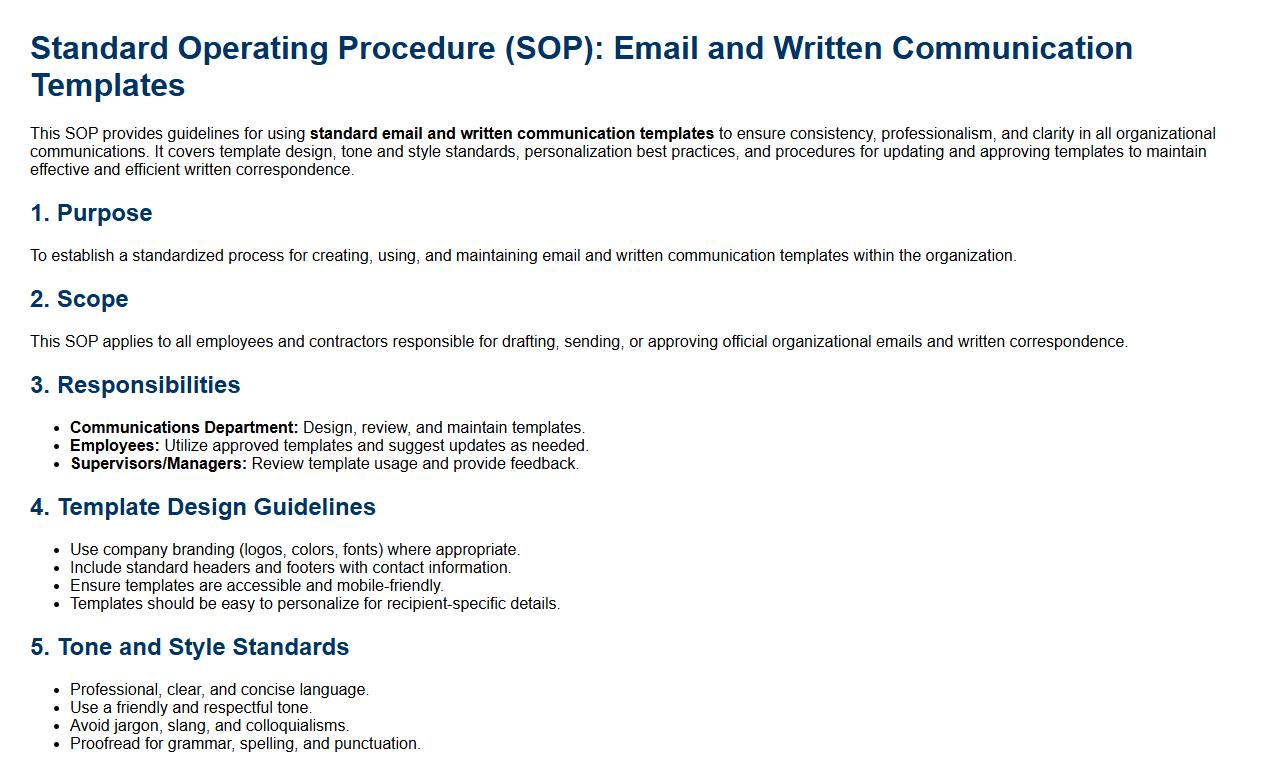
This SOP provides guidelines for using standard email and written communication templates to ensure consistency, professionalism, and clarity in all organizational communications. It covers template design, tone and style standards, personalization best practices, and procedures for updating and approving templates to maintain effective and efficient written correspondence.
Phone call etiquette and documentation procedures.
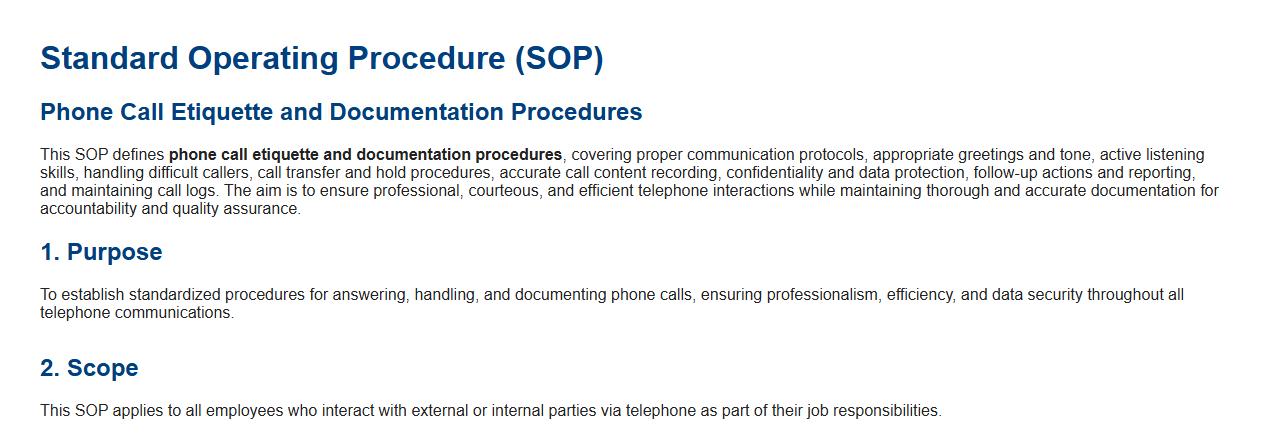
This SOP defines phone call etiquette and documentation procedures, covering proper communication protocols, appropriate greetings and tone, active listening skills, handling difficult callers, call transfer and hold procedures, accurate call content recording, confidentiality and data protection, follow-up actions and reporting, and maintaining call logs. The aim is to ensure professional, courteous, and efficient telephone interactions while maintaining thorough and accurate documentation for accountability and quality assurance.
Protocols for addressing parent concerns or complaints.
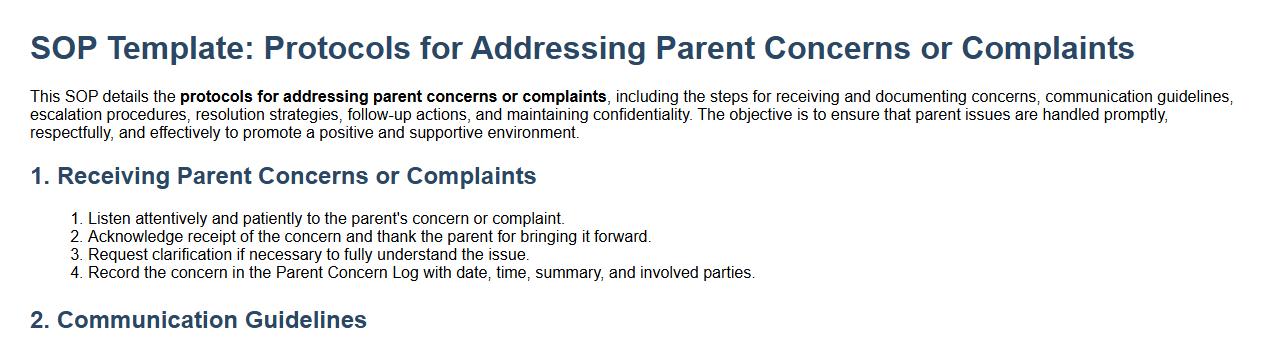
This SOP details the protocols for addressing parent concerns or complaints, including the steps for receiving and documenting concerns, communication guidelines, escalation procedures, resolution strategies, follow-up actions, and maintaining confidentiality. The objective is to ensure that parent issues are handled promptly, respectfully, and effectively to promote a positive and supportive environment.
Guidelines for sharing student progress and reports.
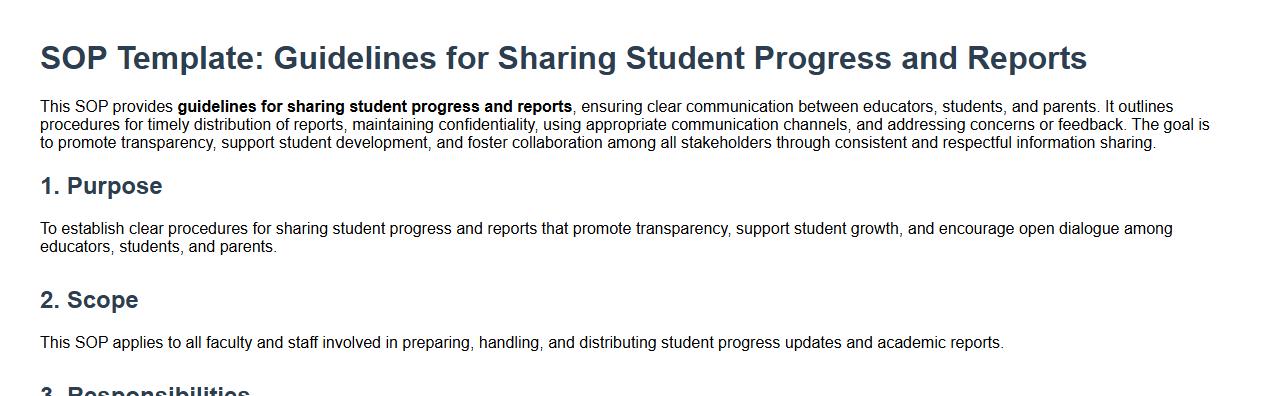
This SOP provides guidelines for sharing student progress and reports, ensuring clear communication between educators, students, and parents. It outlines procedures for timely distribution of reports, maintaining confidentiality, using appropriate communication channels, and addressing concerns or feedback. The goal is to promote transparency, support student development, and foster collaboration among all stakeholders through consistent and respectful information sharing.
Confidentiality and data protection measures.
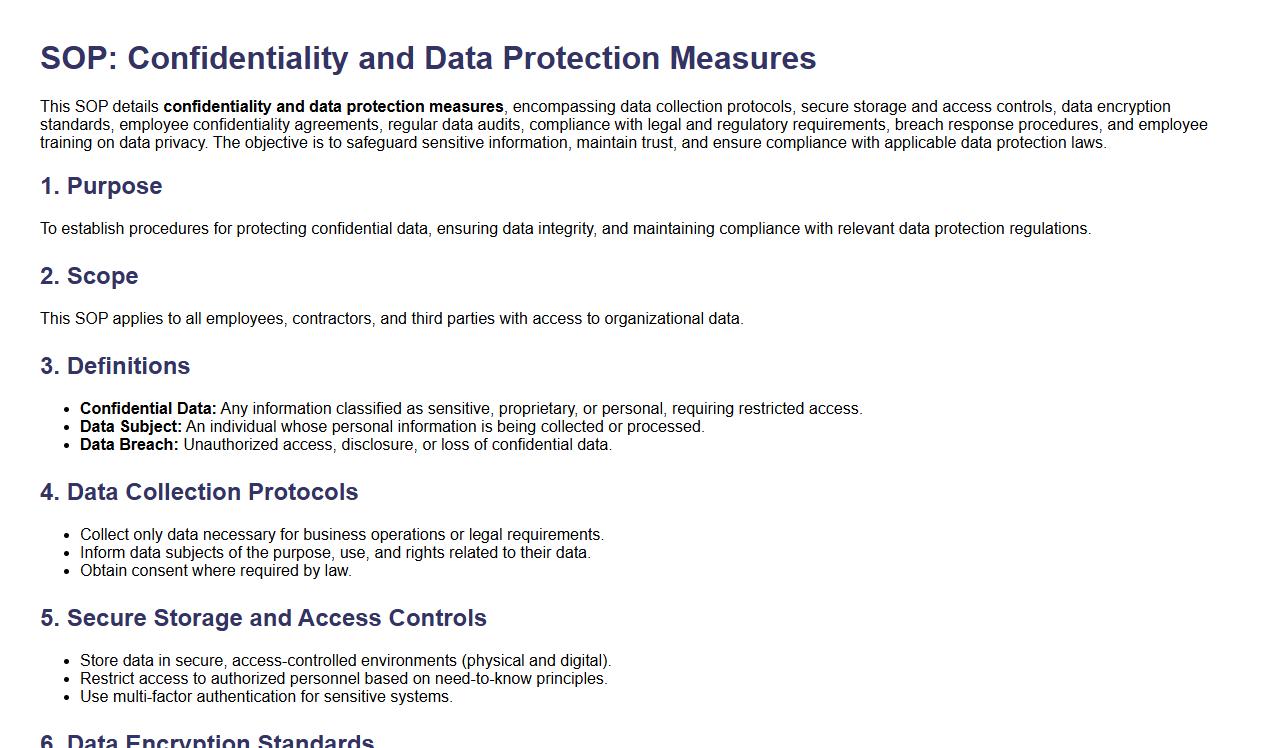
This SOP details confidentiality and data protection measures, encompassing data collection protocols, secure storage and access controls, data encryption standards, employee confidentiality agreements, regular data audits, compliance with legal and regulatory requirements, breach response procedures, and employee training on data privacy. The objective is to safeguard sensitive information, maintain trust, and ensure compliance with applicable data protection laws.
Translation and interpretation service procedures.
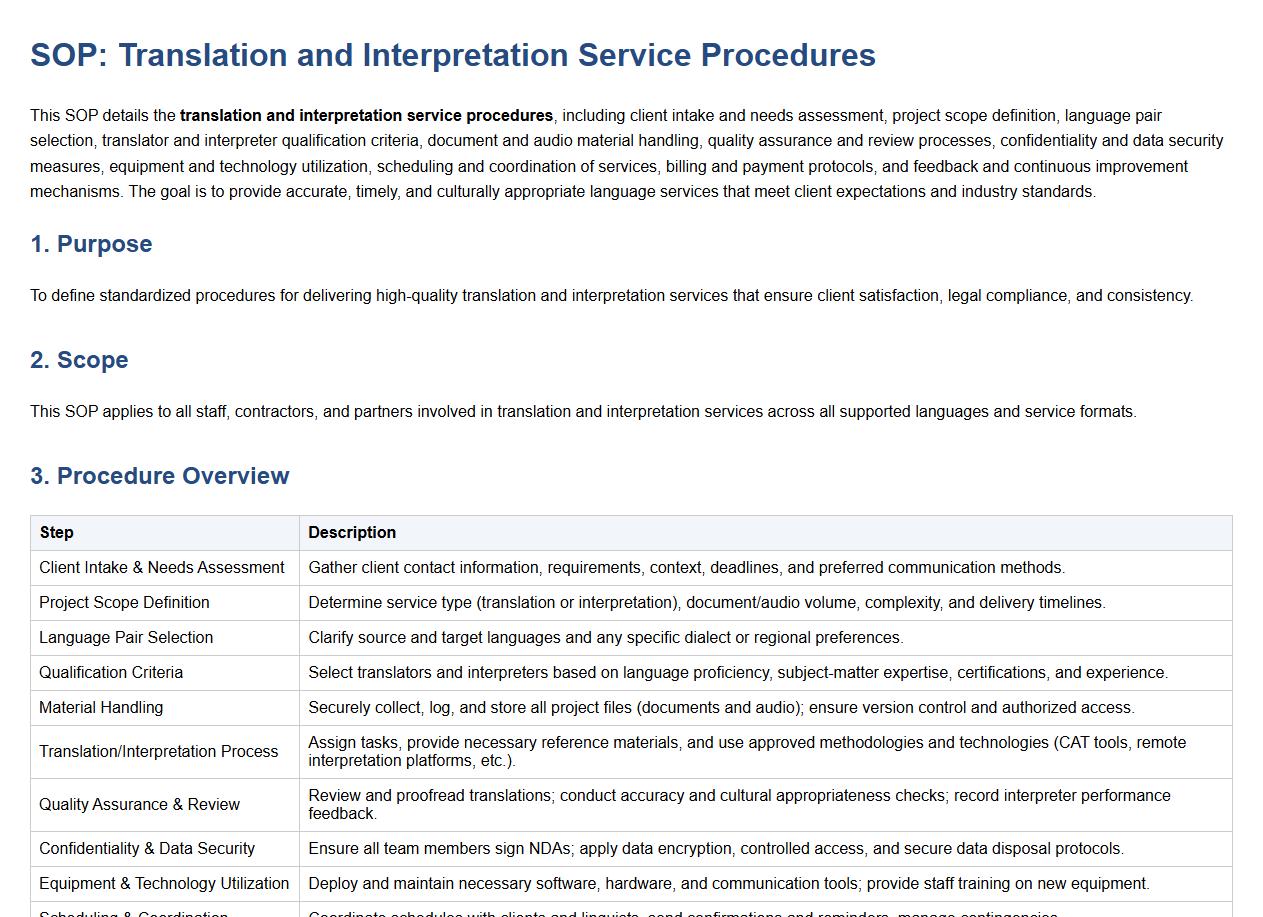
This SOP details the translation and interpretation service procedures, including client intake and needs assessment, project scope definition, language pair selection, translator and interpreter qualification criteria, document and audio material handling, quality assurance and review processes, confidentiality and data security measures, equipment and technology utilization, scheduling and coordination of services, billing and payment protocols, and feedback and continuous improvement mechanisms. The goal is to provide accurate, timely, and culturally appropriate language services that meet client expectations and industry standards.
Follow-up and feedback documentation processes.
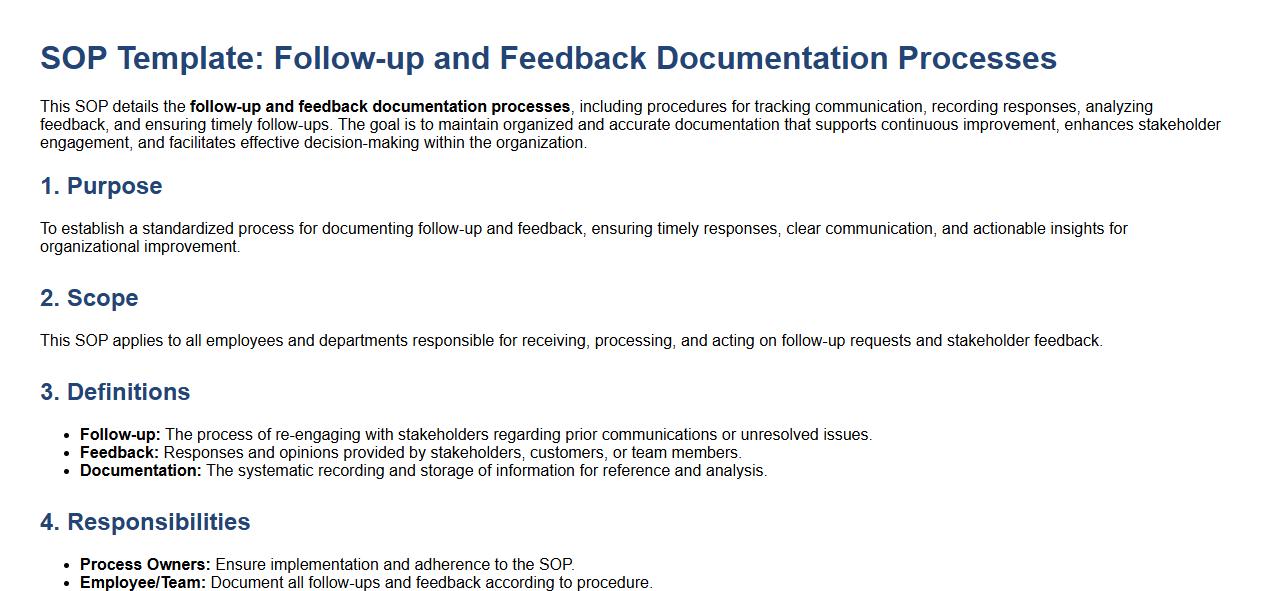
This SOP details the follow-up and feedback documentation processes, including procedures for tracking communication, recording responses, analyzing feedback, and ensuring timely follow-ups. The goal is to maintain organized and accurate documentation that supports continuous improvement, enhances stakeholder engagement, and facilitates effective decision-making within the organization.
Emergency and urgent communication protocols.
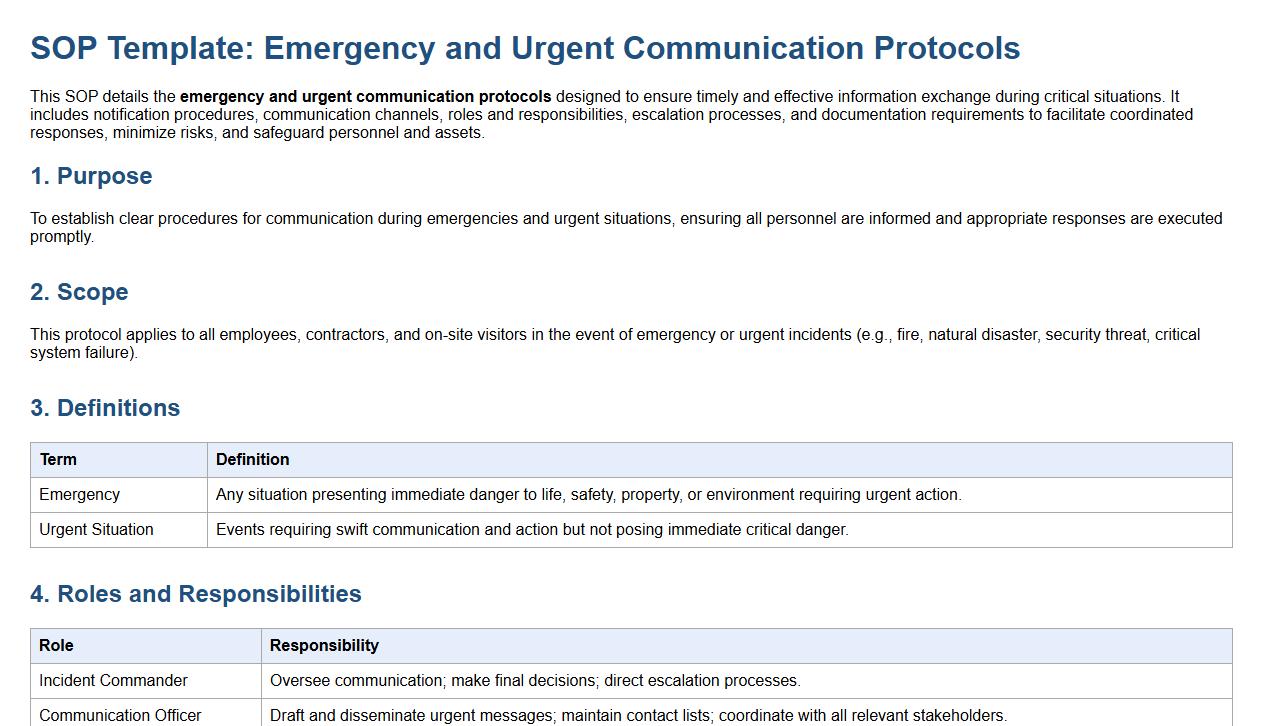
This SOP details the emergency and urgent communication protocols designed to ensure timely and effective information exchange during critical situations. It includes notification procedures, communication channels, roles and responsibilities, escalation processes, and documentation requirements to facilitate coordinated responses, minimize risks, and safeguard personnel and assets.
What is the primary objective of the SOP for Parent Communication?
The primary objective of the SOP for Parent Communication is to establish a consistent and effective framework for engaging parents. It aims to ensure that all interactions are clear, respectful, and supportive of the child's well-being. This standardization helps maintain transparency and trust between the institution and parents.
Which communication channels are authorized for parent contact according to the SOP?
The SOP authorizes specific communication channels such as emails, phone calls, and official messaging platforms. These channels are chosen to protect privacy and promote prompt responses. Unauthorized methods like personal social media are generally prohibited to maintain professionalism.
What are the required steps before initiating communication with a parent?
Before contacting a parent, the SOP requires verifying the accuracy of the child's records and the purpose of communication. Staff must also receive approval from their supervisor or relevant authority. Preparing clear, factual information ensures that the communication is professional and goal-oriented.
How should confidential or sensitive information be handled when communicating with parents?
Confidential or sensitive information must be handled with the utmost discretion and security. The SOP mandates secure delivery methods and limits information disclosure to authorized individuals only. Staff are trained to follow privacy laws and avoid sharing information that could compromise confidentiality.
What documentation or record-keeping protocols are specified after parent communication?
After parent communication, the SOP requires staff to document the interaction details in an official record system. This includes the date, time, content discussed, and any follow-up actions. Proper documentation ensures accountability and helps track ongoing communication history.