
A SOP Template for Safety and Security in Schools provides a structured framework to ensure consistent implementation of safety protocols and emergency procedures. It outlines clear roles, responsibilities, and step-by-step actions to effectively manage potential risks, protect students and staff, and maintain a secure learning environment. Regular updates and training based on the template enhance preparedness and compliance with safety regulations.
Emergency evacuation procedures and routes.
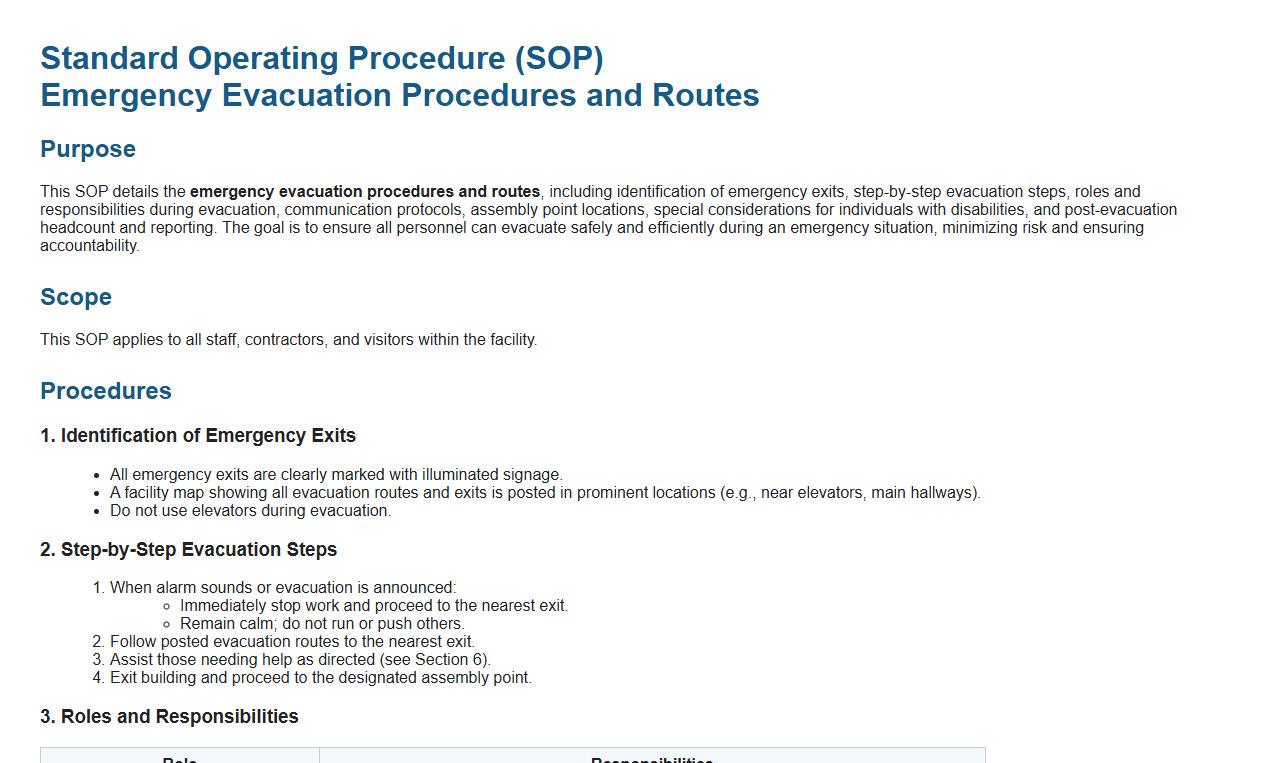
This SOP details the emergency evacuation procedures and routes, including identification of emergency exits, step-by-step evacuation steps, roles and responsibilities during evacuation, communication protocols, assembly point locations, special considerations for individuals with disabilities, and post-evacuation headcount and reporting. The goal is to ensure all personnel can evacuate safely and efficiently during an emergency situation, minimizing risk and ensuring accountability.
Visitor entry, identification, and registration protocols.
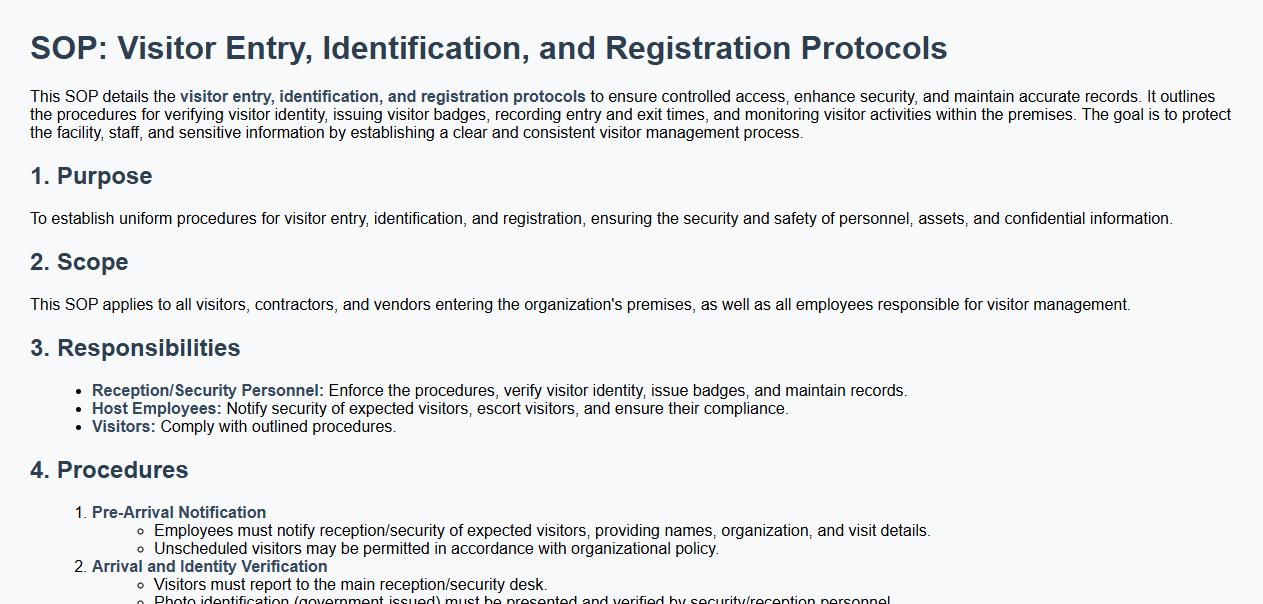
This SOP details the visitor entry, identification, and registration protocols to ensure controlled access, enhance security, and maintain accurate records. It outlines the procedures for verifying visitor identity, issuing visitor badges, recording entry and exit times, and monitoring visitor activities within the premises. The goal is to protect the facility, staff, and sensitive information by establishing a clear and consistent visitor management process.
Daily campus access control and gate management.
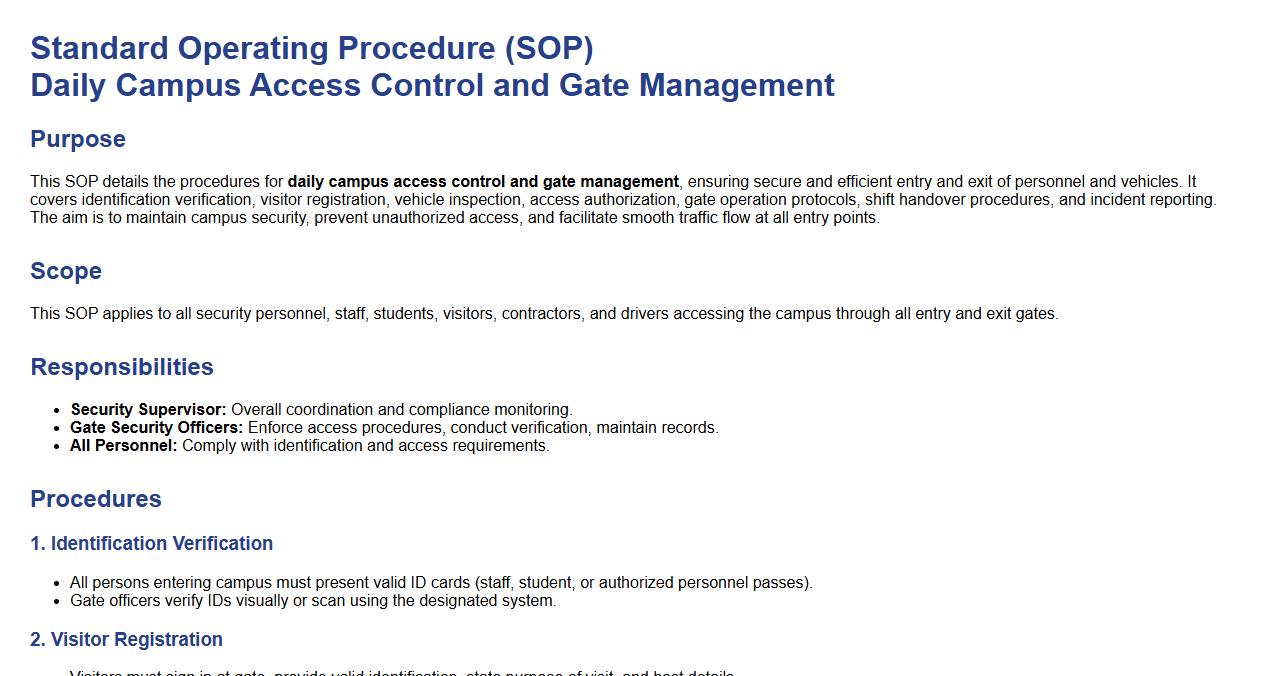
This SOP details the procedures for daily campus access control and gate management, ensuring secure and efficient entry and exit of personnel and vehicles. It covers identification verification, visitor registration, vehicle inspection, access authorization, gate operation protocols, shift handover procedures, and incident reporting. The aim is to maintain campus security, prevent unauthorized access, and facilitate smooth traffic flow at all entry points.
Student drop-off, pick-up, and dismissal arrangements.
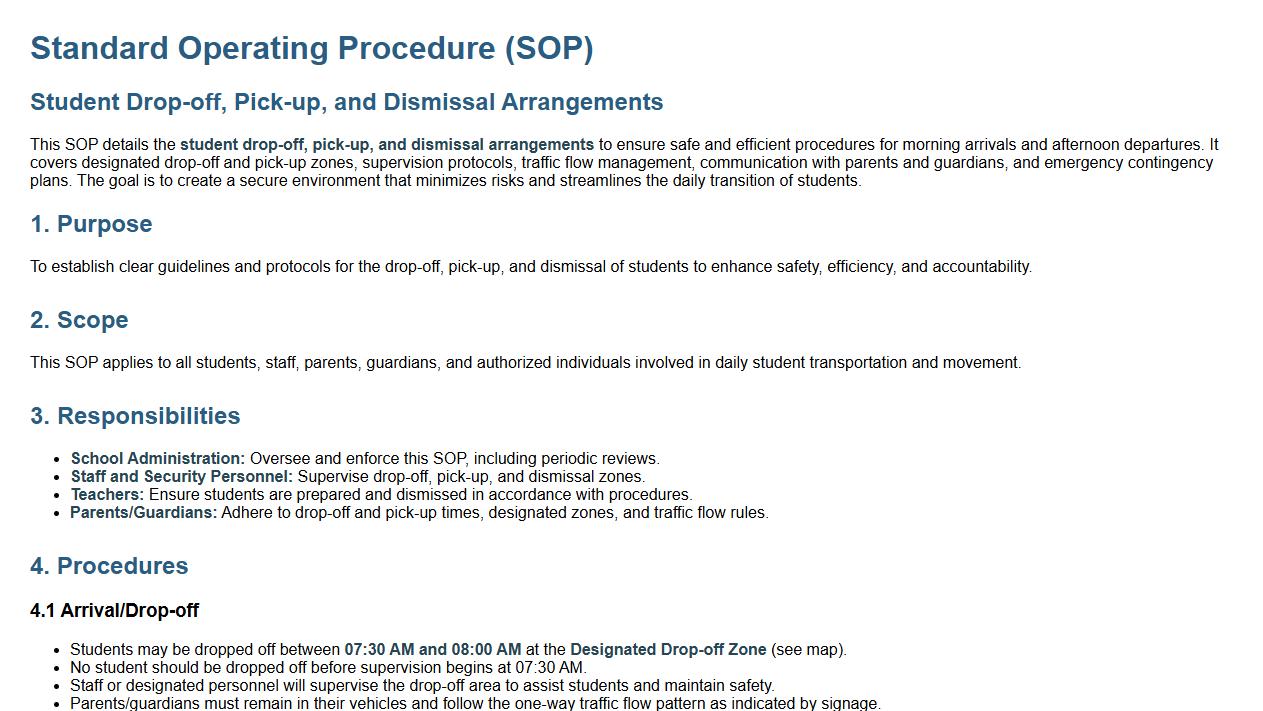
This SOP details the student drop-off, pick-up, and dismissal arrangements to ensure safe and efficient procedures for morning arrivals and afternoon departures. It covers designated drop-off and pick-up zones, supervision protocols, traffic flow management, communication with parents and guardians, and emergency contingency plans. The goal is to create a secure environment that minimizes risks and streamlines the daily transition of students.
Staff training on emergency response and first aid.
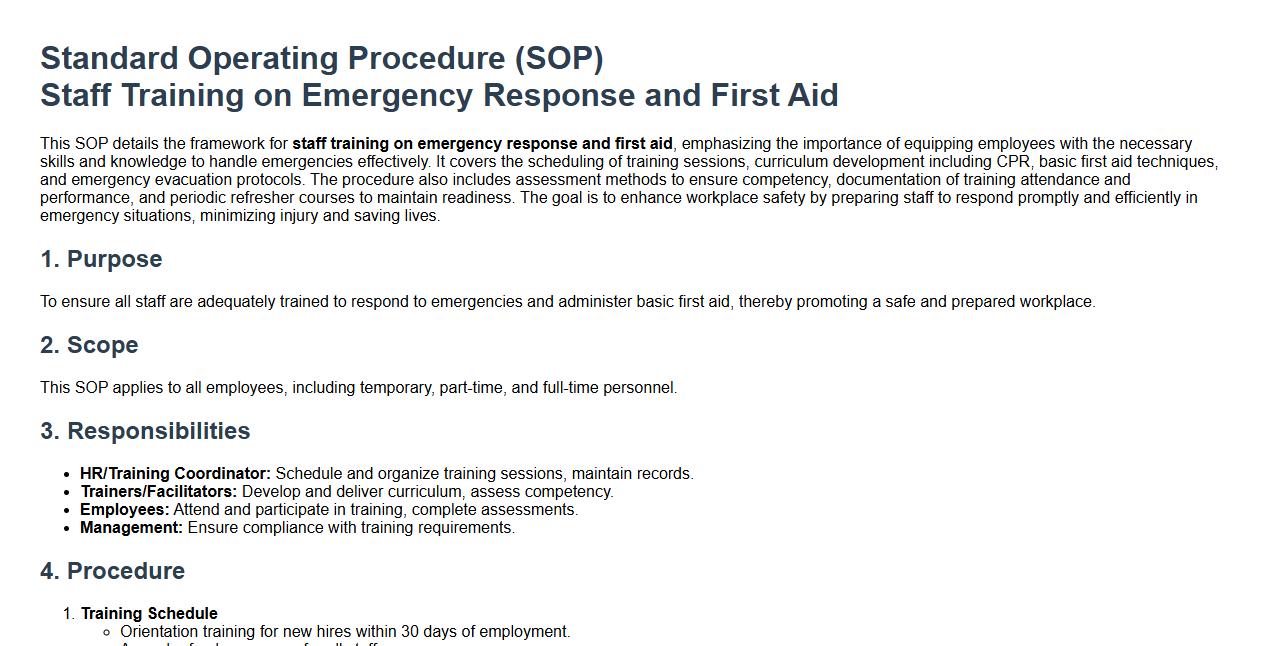
This SOP details the framework for staff training on emergency response and first aid, emphasizing the importance of equipping employees with the necessary skills and knowledge to handle emergencies effectively. It covers the scheduling of training sessions, curriculum development including CPR, basic first aid techniques, and emergency evacuation protocols. The procedure also includes assessment methods to ensure competency, documentation of training attendance and performance, and periodic refresher courses to maintain readiness. The goal is to enhance workplace safety by preparing staff to respond promptly and efficiently in emergency situations, minimizing injury and saving lives.
Lockdown procedures for intruder or threat situations.
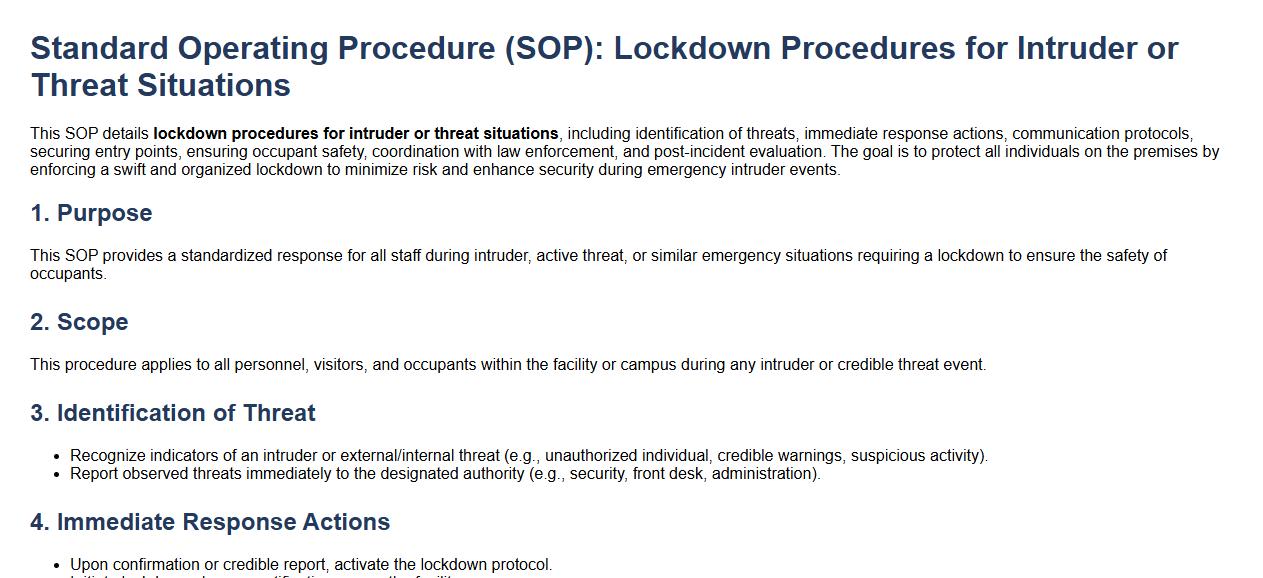
This SOP details lockdown procedures for intruder or threat situations, including identification of threats, immediate response actions, communication protocols, securing entry points, ensuring occupant safety, coordination with law enforcement, and post-incident evaluation. The goal is to protect all individuals on the premises by enforcing a swift and organized lockdown to minimize risk and enhance security during emergency intruder events.
Incident reporting and documentation requirements.
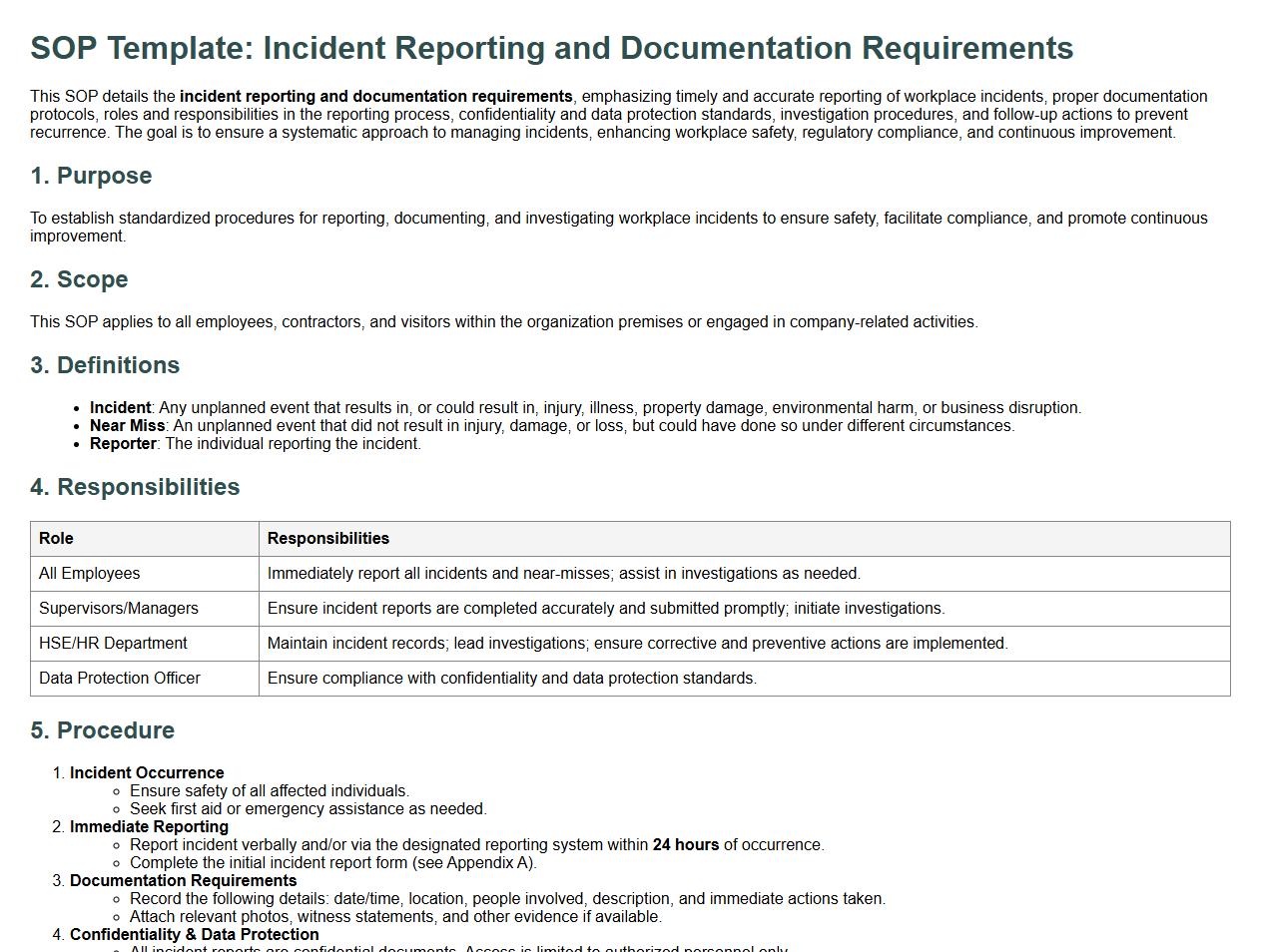
This SOP details the incident reporting and documentation requirements, emphasizing timely and accurate reporting of workplace incidents, proper documentation protocols, roles and responsibilities in the reporting process, confidentiality and data protection standards, investigation procedures, and follow-up actions to prevent recurrence. The goal is to ensure a systematic approach to managing incidents, enhancing workplace safety, regulatory compliance, and continuous improvement.
Fire safety equipment inspection and maintenance schedules.
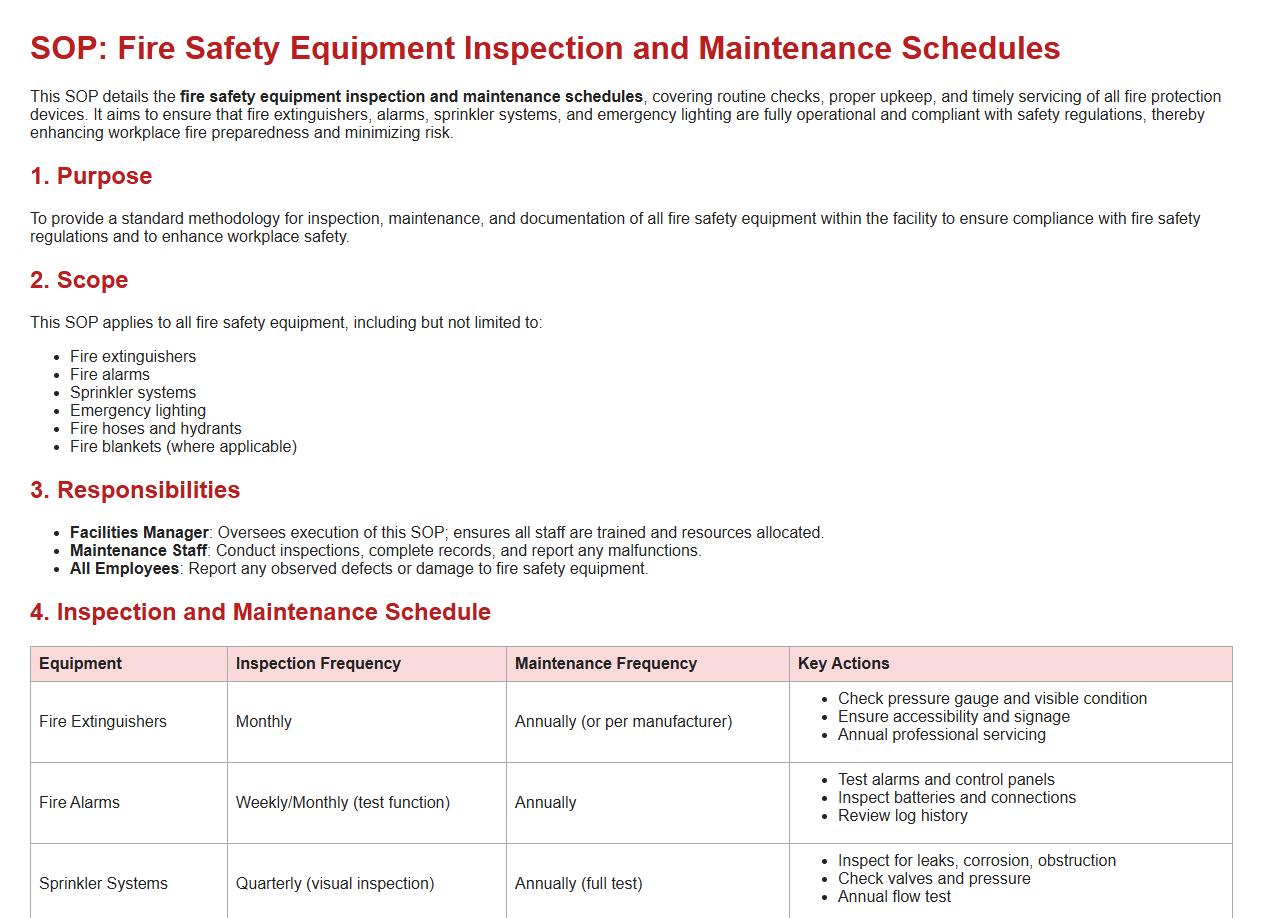
This SOP details the fire safety equipment inspection and maintenance schedules, covering routine checks, proper upkeep, and timely servicing of all fire protection devices. It aims to ensure that fire extinguishers, alarms, sprinkler systems, and emergency lighting are fully operational and compliant with safety regulations, thereby enhancing workplace fire preparedness and minimizing risk.
School perimeter and building surveillance checks.
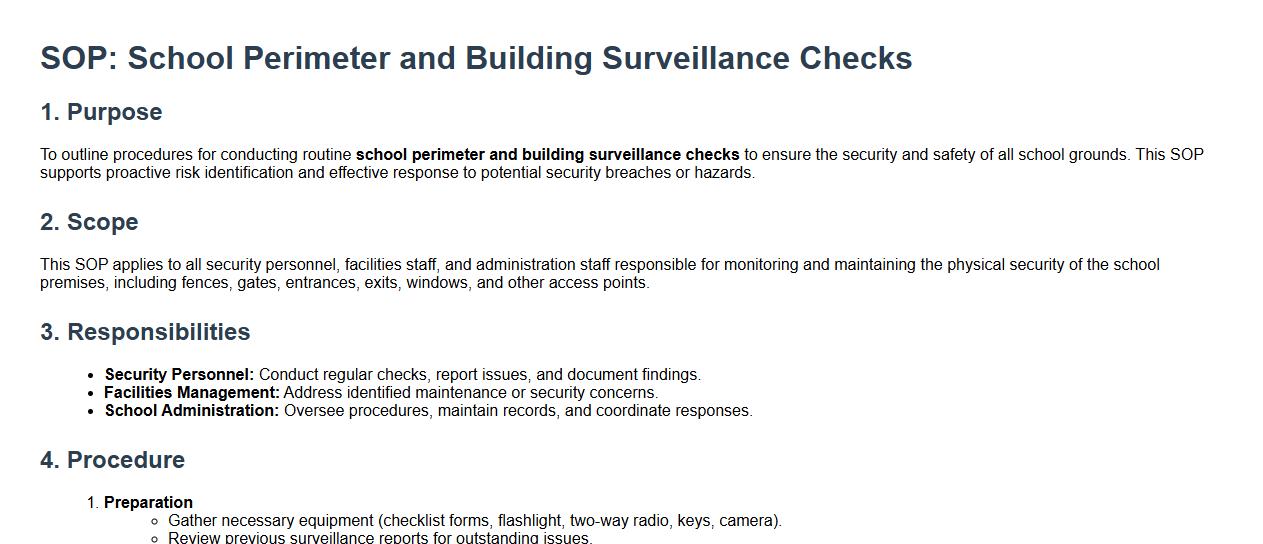
This SOP details the procedures for school perimeter and building surveillance checks, emphasizing routine inspections to ensure the security and safety of school grounds. It covers systematic monitoring of fences, gates, entrances, windows, and other access points, identification of potential security breaches or hazards, and timely reporting of suspicious activities. The objective is to maintain a secure environment for students, staff, and visitors by preventing unauthorized access and promptly addressing any security concerns.
Communication protocol with local authorities and parents during emergencies.
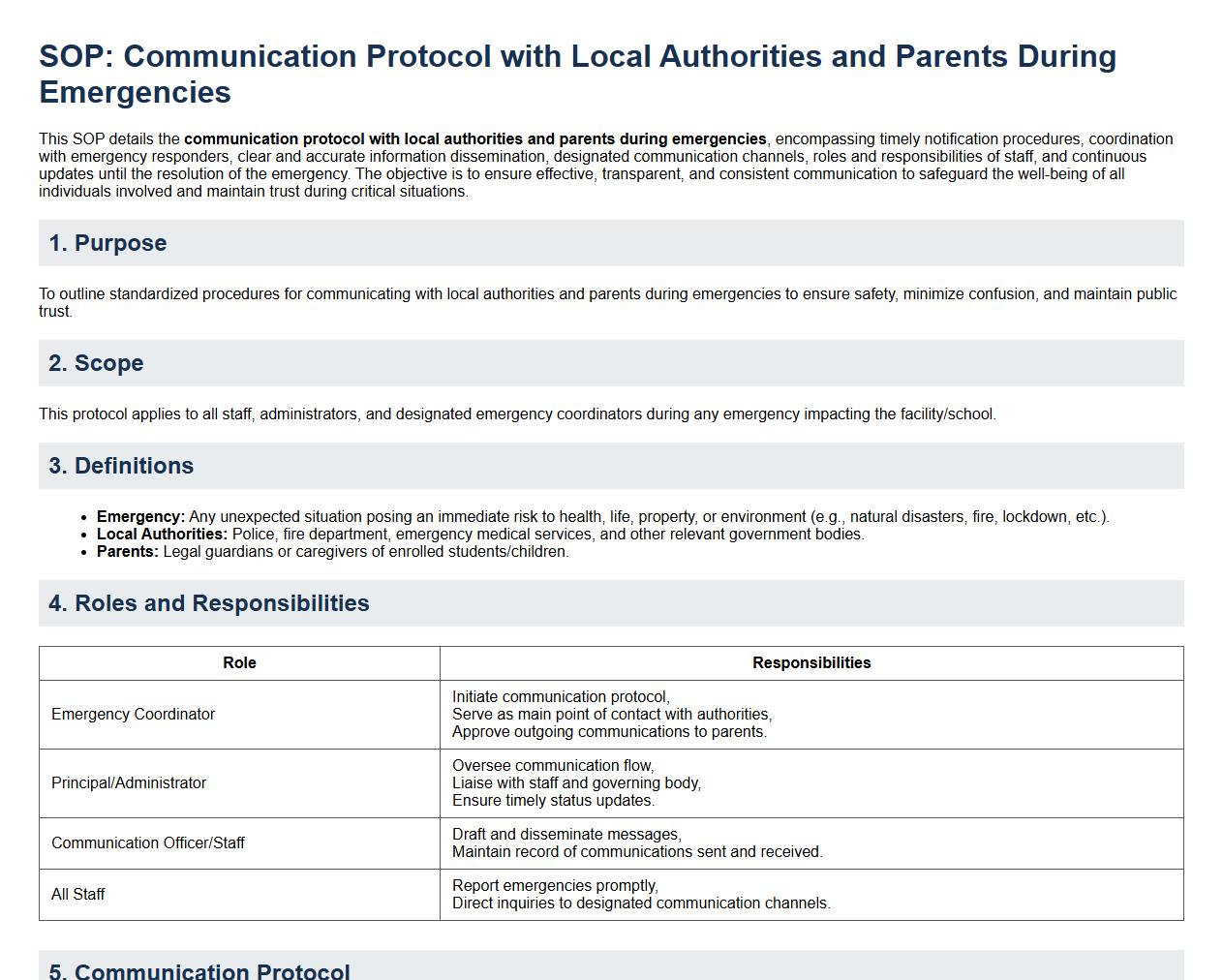
This SOP details the communication protocol with local authorities and parents during emergencies, encompassing timely notification procedures, coordination with emergency responders, clear and accurate information dissemination, designated communication channels, roles and responsibilities of staff, and continuous updates until the resolution of the emergency. The objective is to ensure effective, transparent, and consistent communication to safeguard the well-being of all individuals involved and maintain trust during critical situations.
What are the primary objectives outlined in the SOP for ensuring school safety and security?
The SOP focuses on creating a safe and secure environment for students, staff, and visitors. It aims to prevent unauthorized access and reduce risks associated with potential threats. Additionally, the SOP emphasizes the importance of preparedness and proactive measures to handle emergencies effectively.
Which protocols are established for controlling access to school premises in the SOP?
The SOP mandates the use of controlled entry points with security personnel or electronic access cards to monitor all entries and exits. Visitors must register at designated checkpoints and wear identification badges at all times. These protocols help in minimizing unauthorized access and maintaining a secure campus environment.
How does the SOP detail emergency response procedures for various incidents (e.g., fire, intruder, natural disasters)?
The SOP provides clear, step-by-step emergency response procedures tailored to specific incidents such as fires, intruder alerts, and natural disasters. It includes evacuation routes, communication protocols, and coordination with local emergency services. These procedures ensure a swift, organized response to protect all campus occupants.
What specific staff roles and responsibilities are defined for implementing safety and security measures?
The SOP assigns defined roles such as security officers, administrative staff, and emergency coordinators with clear safety responsibilities. Each role is accountable for tasks like monitoring surveillance, conducting drills, and managing communication during incidents. This division ensures that safety measures are effectively implemented and maintained.
How does the SOP address training, drills, and communication strategies for students and staff?
The SOP mandates regular training sessions and emergency drills to prepare students and staff for different safety scenarios. It encourages open communication channels including alerts, announcements, and feedback to improve responsiveness. Consistent practice and communication enhance overall awareness and readiness throughout the school community.