
A SOP Template for Academic Record Maintenance outlines the standardized procedures for managing and preserving students' academic records efficiently. This template ensures accuracy, confidentiality, and compliance with institutional policies and regulations. It serves as a critical tool for administrative staff to maintain organized and accessible academic documentation.
Student data collection and verification.
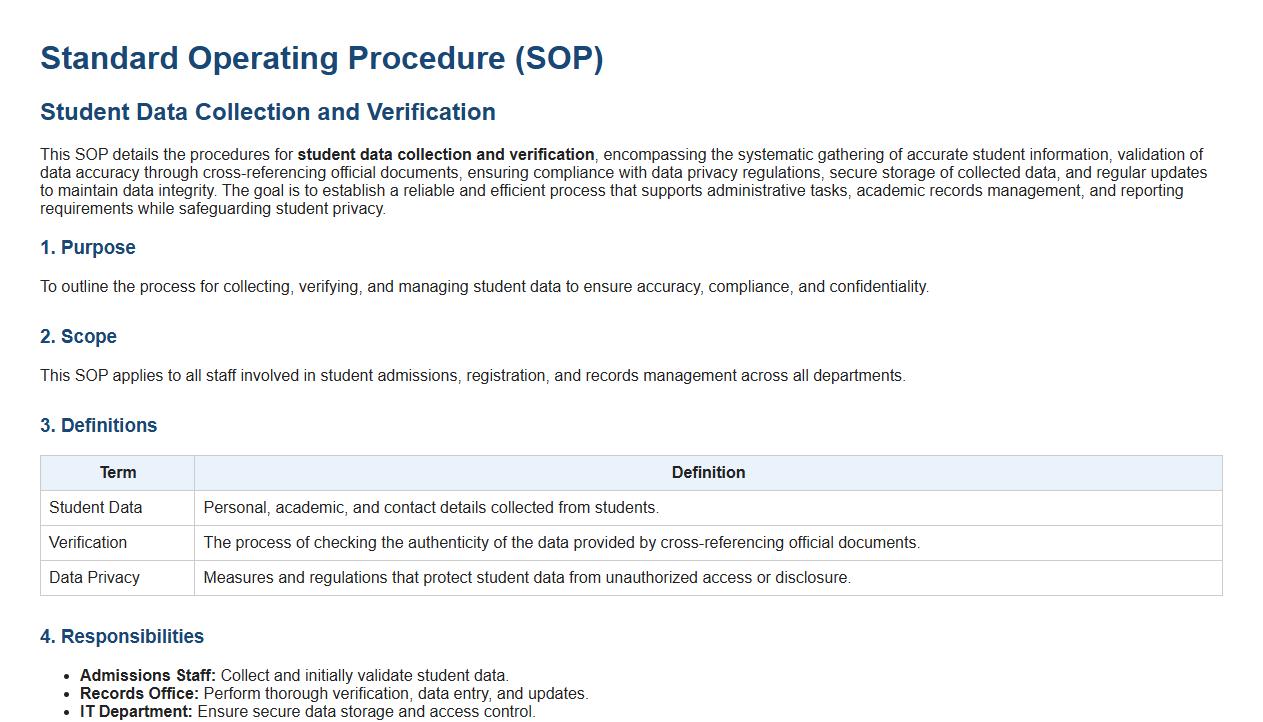
This SOP details the procedures for student data collection and verification, encompassing the systematic gathering of accurate student information, validation of data accuracy through cross-referencing official documents, ensuring compliance with data privacy regulations, secure storage of collected data, and regular updates to maintain data integrity. The goal is to establish a reliable and efficient process that supports administrative tasks, academic records management, and reporting requirements while safeguarding student privacy.
Academic record entry and data input procedures.
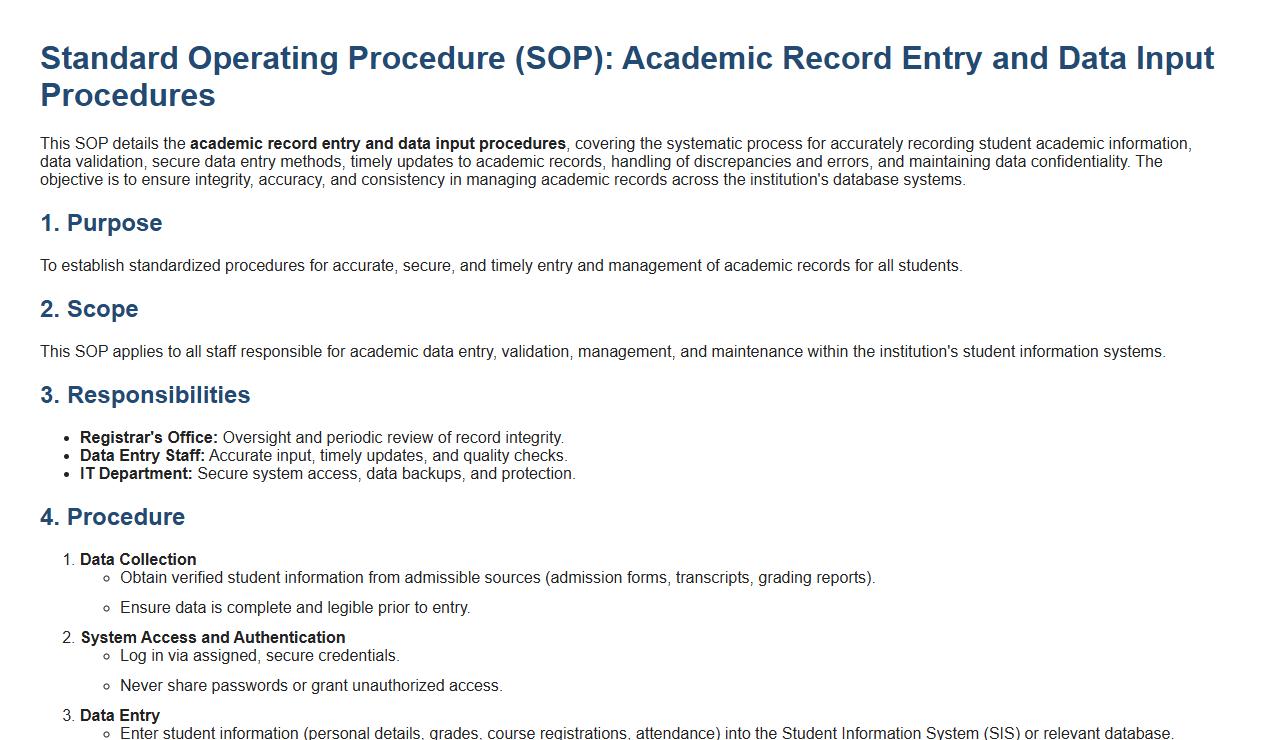
This SOP details the academic record entry and data input procedures, covering the systematic process for accurately recording student academic information, data validation, secure data entry methods, timely updates to academic records, handling of discrepancies and errors, and maintaining data confidentiality. The objective is to ensure integrity, accuracy, and consistency in managing academic records across the institution's database systems.
Secure storage and access control of records.
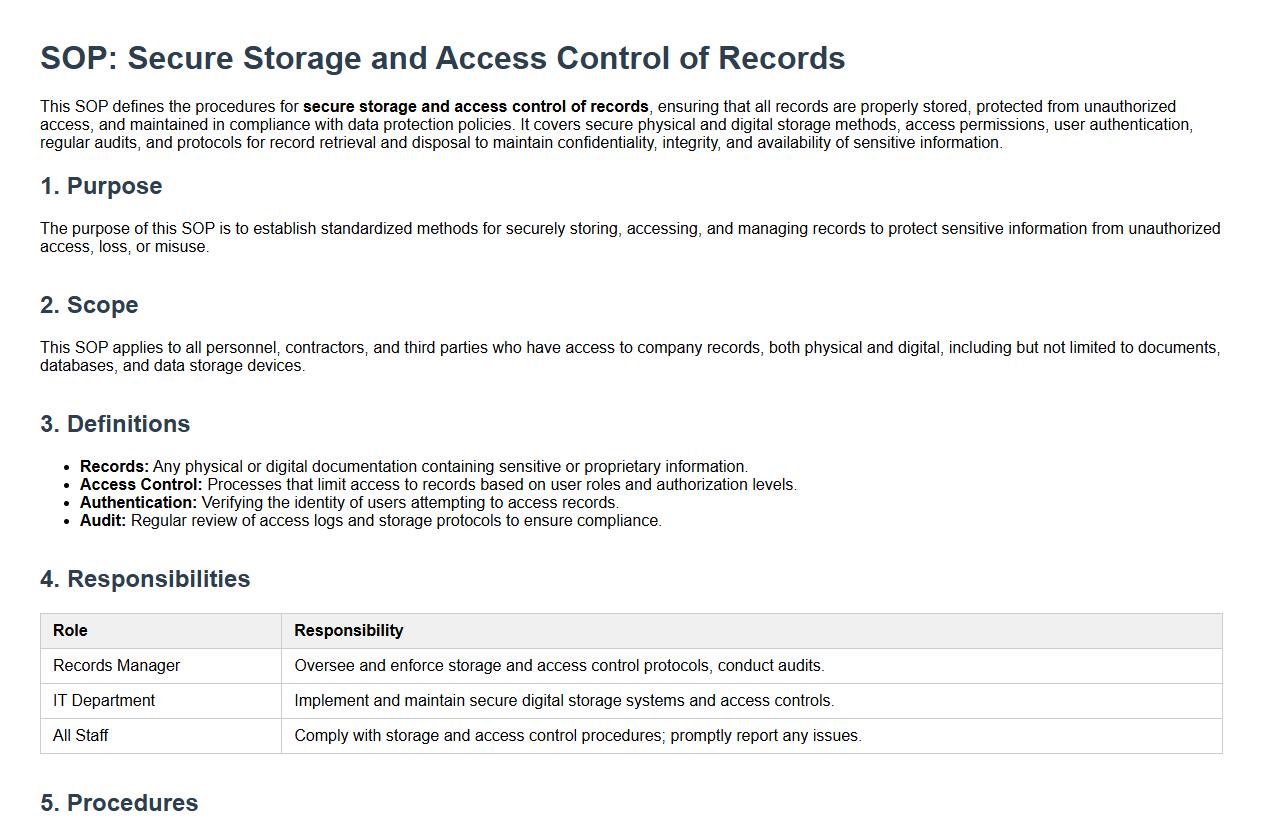
This SOP defines the procedures for secure storage and access control of records, ensuring that all records are properly stored, protected from unauthorized access, and maintained in compliance with data protection policies. It covers secure physical and digital storage methods, access permissions, user authentication, regular audits, and protocols for record retrieval and disposal to maintain confidentiality, integrity, and availability of sensitive information.
Grade submission, review, and amendment protocols.
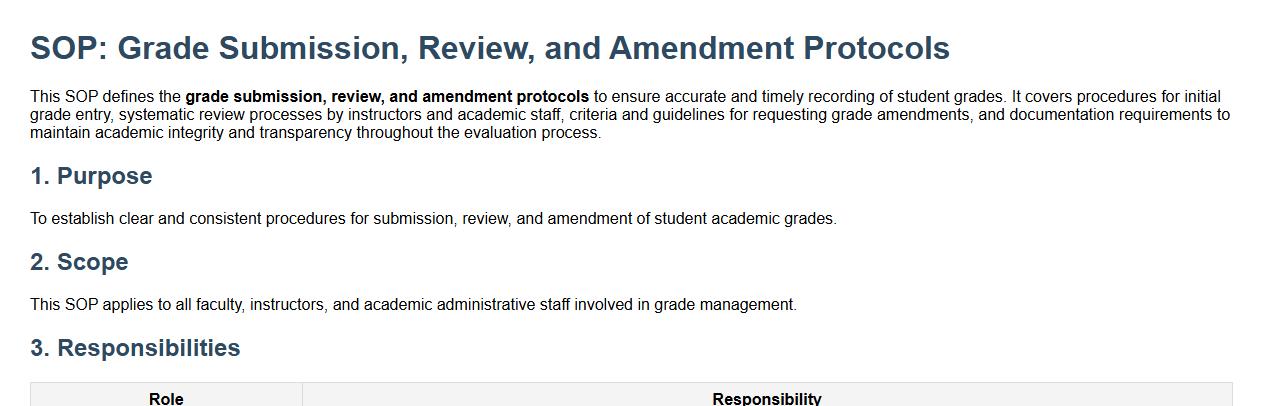
This SOP defines the grade submission, review, and amendment protocols to ensure accurate and timely recording of student grades. It covers procedures for initial grade entry, systematic review processes by instructors and academic staff, criteria and guidelines for requesting grade amendments, and documentation requirements to maintain academic integrity and transparency throughout the evaluation process.
Transcript preparation and issuance process.
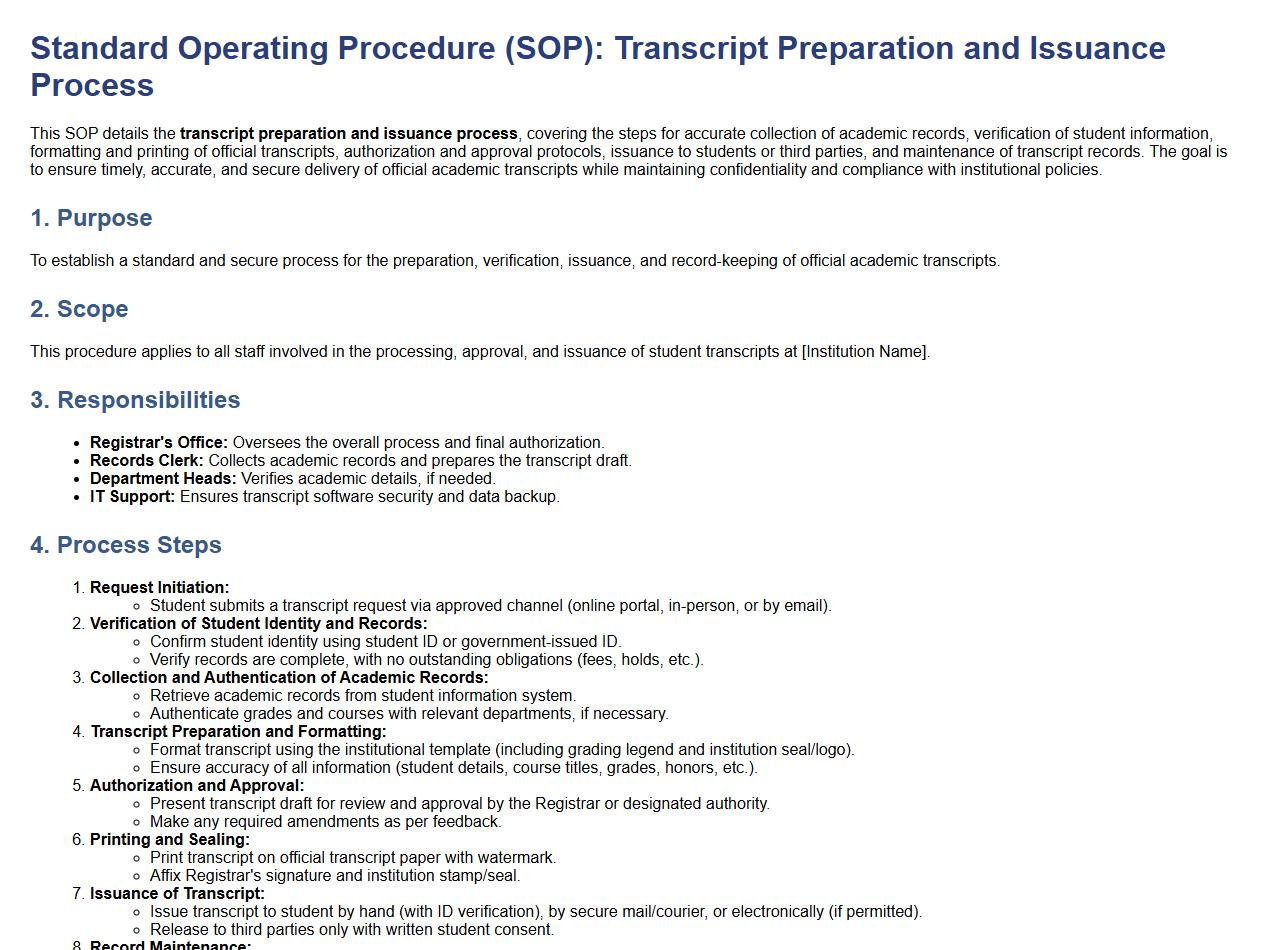
This SOP details the transcript preparation and issuance process, covering the steps for accurate collection of academic records, verification of student information, formatting and printing of official transcripts, authorization and approval protocols, issuance to students or third parties, and maintenance of transcript records. The goal is to ensure timely, accurate, and secure delivery of official academic transcripts while maintaining confidentiality and compliance with institutional policies.
Records updating and correction procedures.
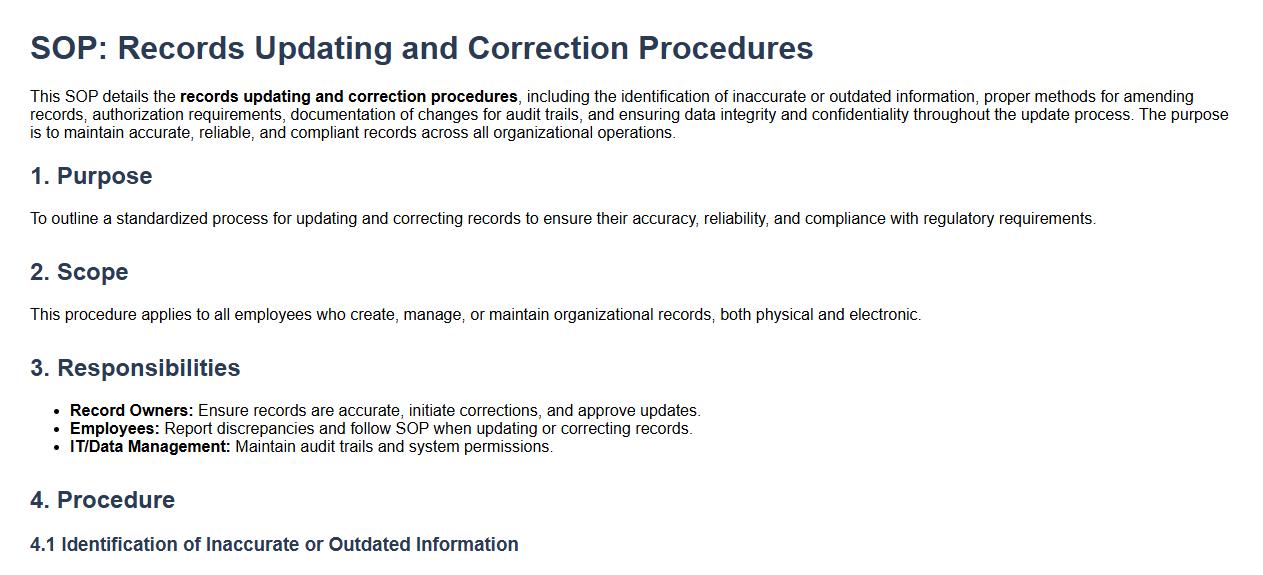
This SOP details the records updating and correction procedures, including the identification of inaccurate or outdated information, proper methods for amending records, authorization requirements, documentation of changes for audit trails, and ensuring data integrity and confidentiality throughout the update process. The purpose is to maintain accurate, reliable, and compliant records across all organizational operations.
Management of confidential and sensitive information.
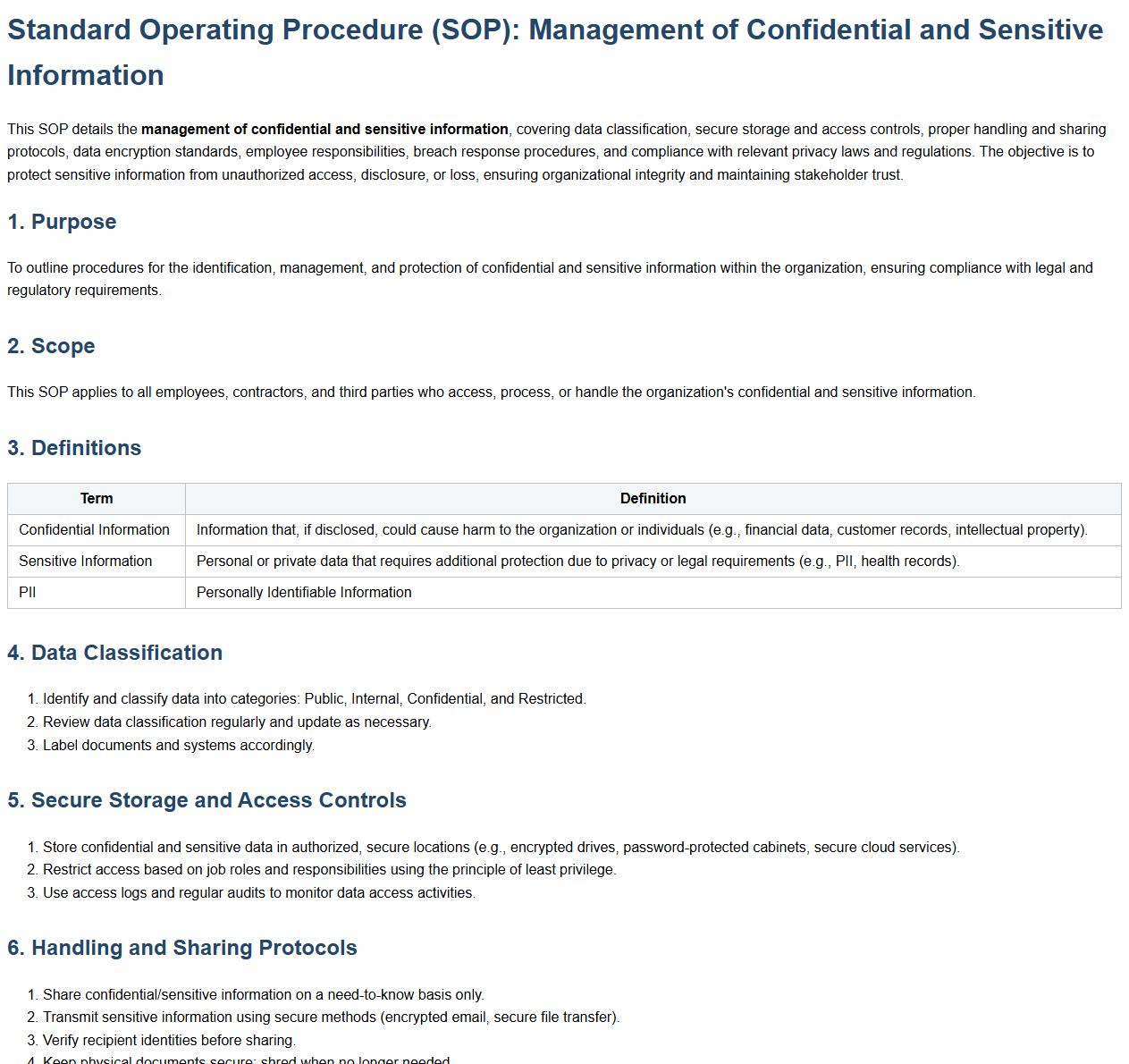
This SOP details the management of confidential and sensitive information, covering data classification, secure storage and access controls, proper handling and sharing protocols, data encryption standards, employee responsibilities, breach response procedures, and compliance with relevant privacy laws and regulations. The objective is to protect sensitive information from unauthorized access, disclosure, or loss, ensuring organizational integrity and maintaining stakeholder trust.
Data backup and disaster recovery routines.
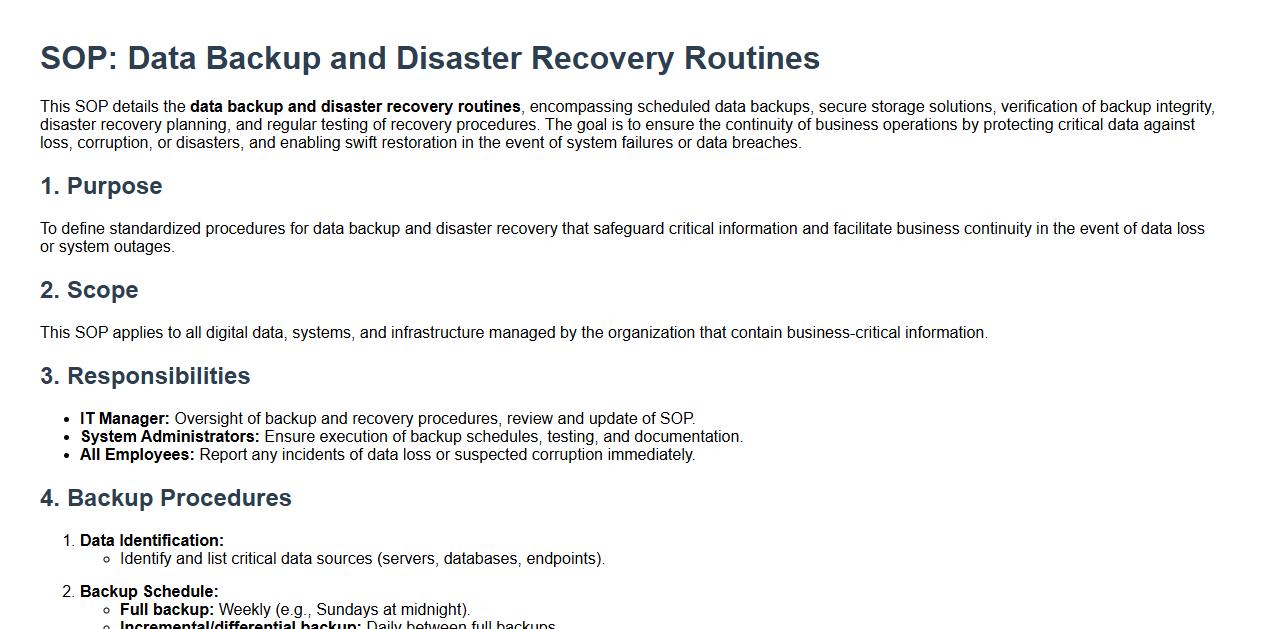
This SOP details the data backup and disaster recovery routines, encompassing scheduled data backups, secure storage solutions, verification of backup integrity, disaster recovery planning, and regular testing of recovery procedures. The goal is to ensure the continuity of business operations by protecting critical data against loss, corruption, or disasters, and enabling swift restoration in the event of system failures or data breaches.
Retention, archival, and record disposal policies.
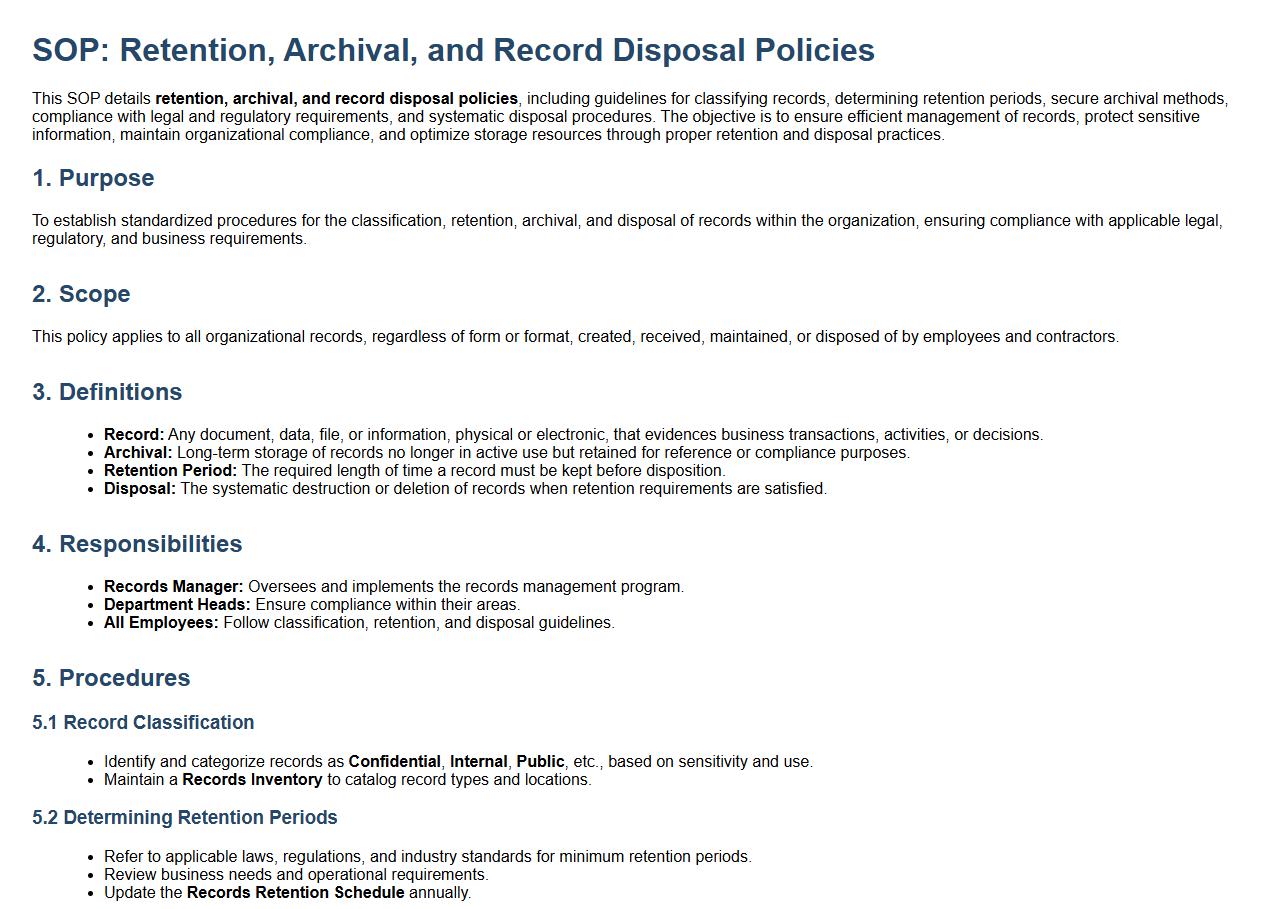
This SOP details retention, archival, and record disposal policies, including guidelines for classifying records, determining retention periods, secure archival methods, compliance with legal and regulatory requirements, and systematic disposal procedures. The objective is to ensure efficient management of records, protect sensitive information, maintain organizational compliance, and optimize storage resources through proper retention and disposal practices.
Periodic audit and compliance checklist.
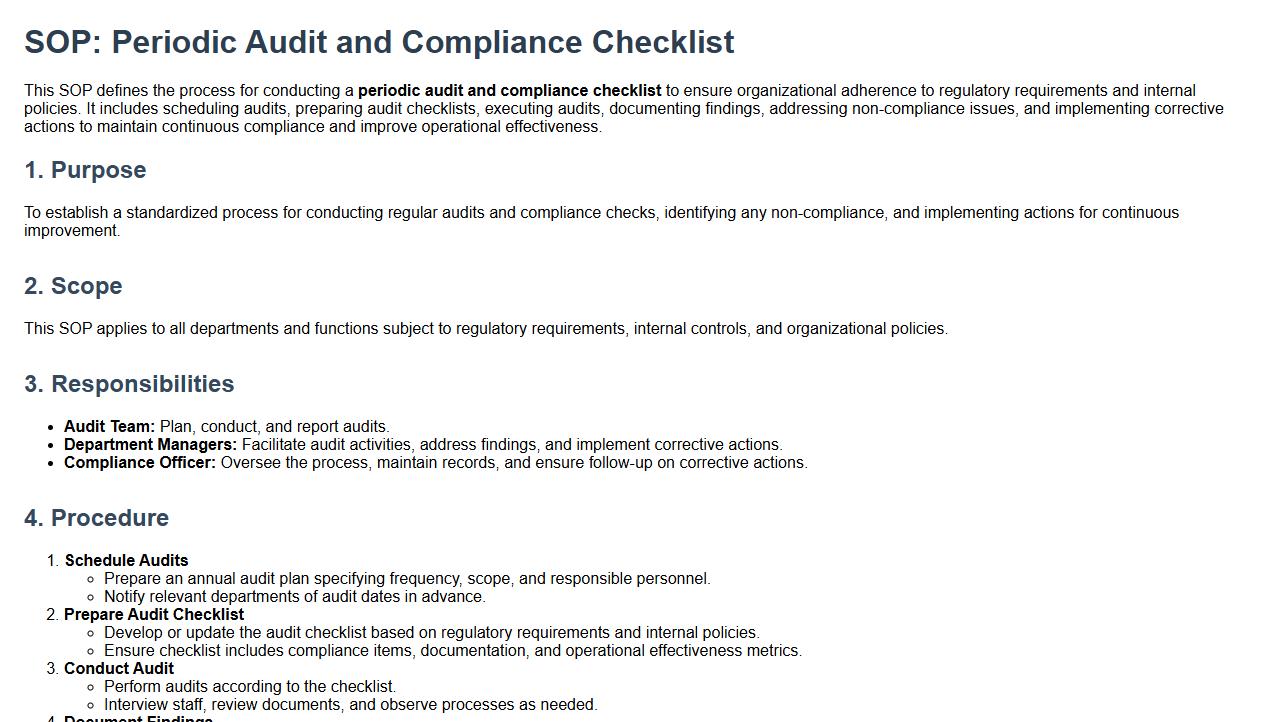
This SOP defines the process for conducting a periodic audit and compliance checklist to ensure organizational adherence to regulatory requirements and internal policies. It includes scheduling audits, preparing audit checklists, executing audits, documenting findings, addressing non-compliance issues, and implementing corrective actions to maintain continuous compliance and improve operational effectiveness.
What are the required procedures for updating and archiving academic records according to the SOP?
The Standard Operating Procedure (SOP) mandates that academic records must be updated promptly after any official changes are verified. All updates require proper documentation and approval from authorized personnel to ensure accuracy. Additionally, archived records must be securely stored in compliance with retention policies to maintain their integrity for future reference.
Which data security measures must be implemented to protect academic records as outlined in the SOP?
The SOP requires comprehensive data security measures including encryption, access controls, and regular system audits to safeguard academic records. Multi-factor authentication must be enforced to prevent unauthorized access. Furthermore, all data transfers should utilize secure channels to mitigate the risk of breaches or data leaks.
Who is authorized to access and modify academic records under the current SOP guidelines?
Access and modification rights to academic records are restricted exclusively to designated authorized personnel as specified in the SOP. These typically include registrars, academic advisors, and administrative staff with proper credentials. Any access must be logged and monitored to ensure compliance with privacy and security standards.
What is the standard process for handling discrepancies or errors in academic records as defined by the SOP?
The SOP outlines a formal discrepancy resolution process that begins with identifying and reporting the error to the records management team. Upon verification, corrections are made only after receiving approval from the appropriate academic authority. Documentation of the issue and resolution steps must be maintained to preserve accountability and transparency.
How often must academic records be reviewed and audited, based on the SOP requirements?
According to the SOP, academic records must undergo a comprehensive review and audit at least annually to ensure accuracy and compliance. Interim audits may be conducted as necessary based on institutional policies or external regulatory requirements. Regular audits help detect anomalies, maintain data integrity, and support continuous improvement in record management.